

metro
FG Calls on Western Allies to Declare Bandits, Boko Haram, IPOB as Terrorists
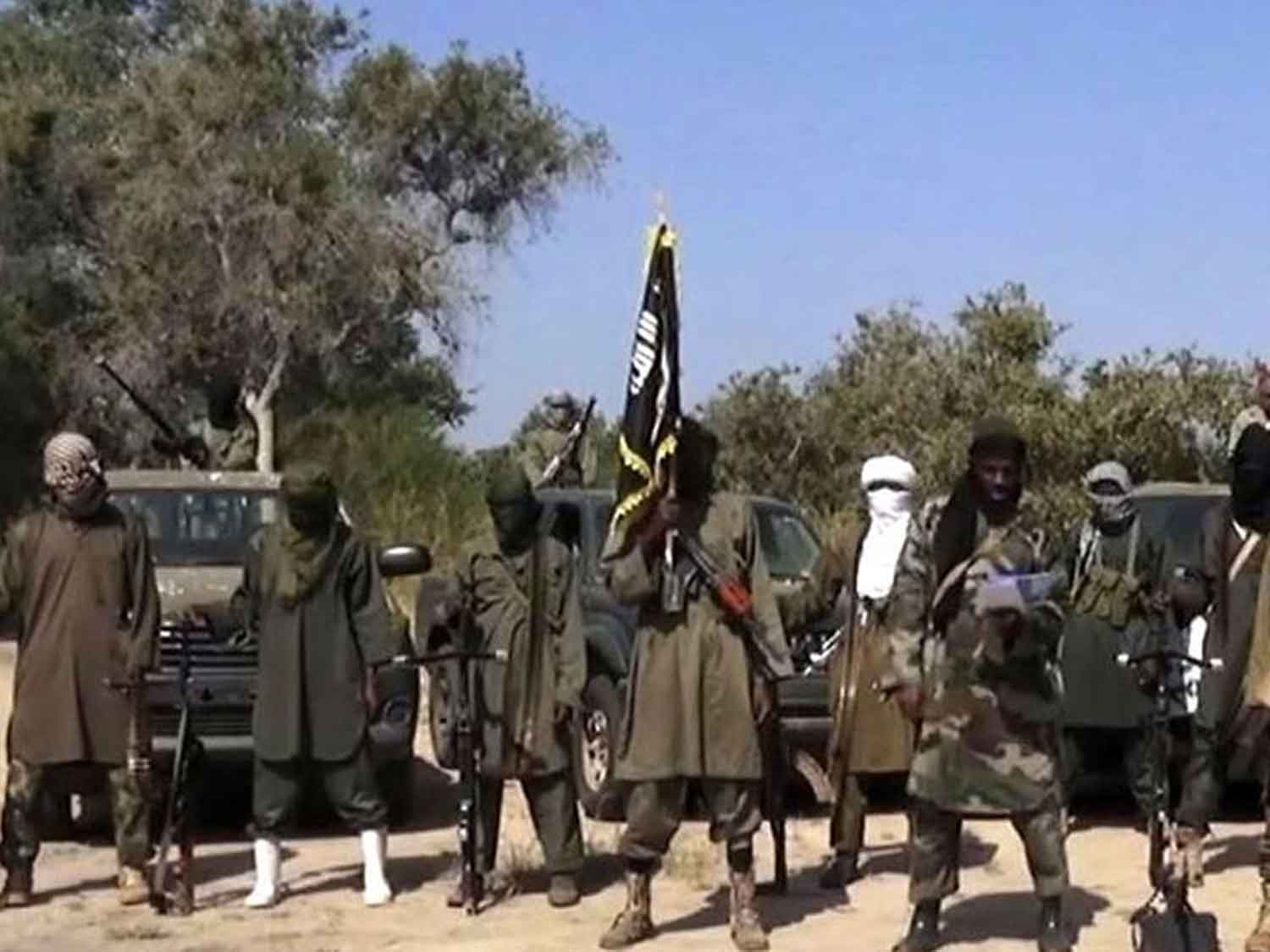
The federal government yesterday said that it was continuing to put pressure on its western allies to “proscribe” bandits, Boko Haram and the Indigenous People of Biafra (IPOB) as terrorists.
The government said that doing so would severely reduce the funding for the groups, noting that it was doing all within its powers to ensure that a stop is put to the killings throughout the country.
Senior Special Assistant to President Muhammadu Buhari on Media and Publicity, Mr Garba Shehu, made the assertion yesterday in reaction to an editorial by Daily Trust newspaper titled: “Life Has Lost Its Value Under Buhari’s Nigeria.”
While the federal government had earlier designated both Boko Haram and IPOB as terrorist organisations, last month, it finally got a Federal High Court in Abuja presided over by Justice Taiwo Taiwo to add bandits to the list.
The presidential spokesman stated that aside proscribing the three groups, its friends in the West should partner Nigeria in areas of trade and investment to deplete the reservoir of unemployed Nigerians where the various violent groups recruit their members from.
According to the presidency, the economic instability that the Covid-19 pandemic has wreaked has further proven an effective recruitment tool for bandits and terrorists across the nation in particular and the African continent as a whole.
“Even as the West continues to extricate itself from Africa militarily, we are lobbying our Western allies aggressively for partnership, investment and support in other areas, such as proscribing Boko Haram, bandits and IPOB as terrorist groups.This would severely dent their funding
READ ALSO:
- Panic grips Zamfara communities as gunmen demand over N1m levy
- ‘Taxing carbonated drinks will reduce rate of diseases’
- I spent 28 years on death row for nothing — Onwuche, 68-year-old cook
“(We are asking) them for investment in trade and infrastructure, to help lessen economic instability; and to help with technical assistance, advanced weaponry, intelligence and ordinance,” the presidency stressed.
Shehu explained that although this will likely be small comfort to the families and loved ones of those already lost, ridding the country of avoidable deaths is a battle the federal government is fighting without let up.
Stating that the growing instability and violence in the north of Nigeria and elsewhere were unacceptable, the federal government pointed out that no one, not least the presidency underestimates the seriousness of the situation.
“Every day, the president holds the victims and their families in his thoughts and prayers. Above all, he wishes to reassure them – and all Nigerians – that tackling the scourge of banditry and terrorism remains this government’s first priority,” the government added.
However, Shehu argued that in respect of violence and terrorism, Nigeria is not unique, arguing that violence and terror have risen steadily across the entire African continent over the last decade.
He maintained that the “Economist magazine” in a recent publication wrote about “The Next Afghanistan,” warning the global community of the horrifying security in its neighbourhood, citing specifically the states of Mali, Burkina Faso and Niger.
Noting that the presidency understood the frustrations of the newspaper and Nigeria’s northern communities about the ongoing challenges of security, Shehu noted that the Buhari administration is no less worried by the situation.
The Buhari government argued that it is only fair to say that Nigeria’s persistent and continued efforts to suppress the instability have seen results, with terror group Boko Haram, among others “reduced to a shell of its former self”
“Yet now we Nigerians face a new threat: the worst global health crisis in living memory. Even Nigeria that proudly holds the mantle of Africa’s largest economy is not immune from the debilitating economic impact of COVID-19.
“ The economic instability that the pandemic has wreaked has proven an effective recruitment tool for bandits and terrorists across the continent.
“Indeed, the Daily Trust has correctly identified the source of the violence as ‘an amalgam of many complex issues’ such as poverty and unemployment. It is equally right to note that, in tackling the violence, ‘force alone will not be enough.
“It is quite wrong, however, to suggest the problem of insecurity is intractable, and more wrong still to claim apathy on the part of the government,” the presidency argued.
Continuing on what the federal government was doing to ameliorate the situation, Shehu stated that the Nigerian military efforts have not let up, but admitted that it is true that in the face of today’s growing number of threats from Boko Haram, bandits, kidnappers and IPOB to run of the mill bandits, the forces were stretched increasingly thin.
“Second, alongside military force, this government is seeking to address the violence at its economic source. Massive infrastructure projects like the coastal rail and new train from the southern coast through the north-east to our neighbour Niger aim to expand employment and opportunity across the country, bringing hope to our more remote and poorer regions where bandits and terrorists thrive,” he said.
The spokesman maintained that the Daily Trust’s suggestion that the president exchanges violence for the support he got electorally was “beneath a publication that claims any kind of political neutrality or integrity.”
According to the presidency, the focus as Nigerians must be on coming together and ending the violence pervading the country.
“As President Buhari wrote recently of the terrorists in UK paper ‘The Financial Times’: “We will defeat them, one highway, one rail link – and one job – at a time,” the statement added.
Thisday







metro
Kubwa Explosion: Vehicle Crashes Into Gas Outlet, Damages Nine Shops
Kubwa Explosion: Vehicle Crashes Into Gas Outlet, Damages Nine Shops
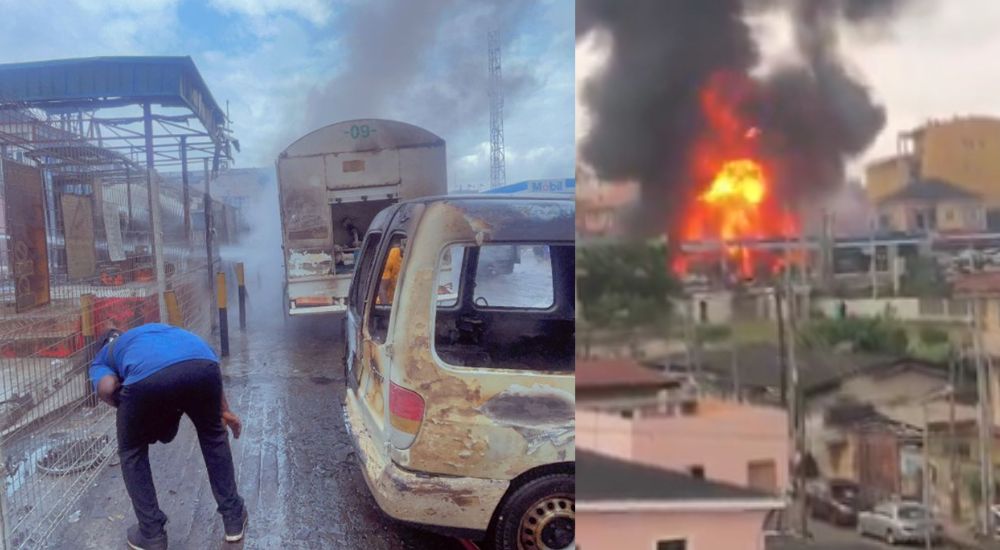
Panic broke out in Kubwa, Abuja, on Sunday morning after a gas explosion rocked the Liberty Junction area, following a vehicle crash into a roadside gas retail outlet.
The incident occurred at about 6:15 a.m., sending a powerful blast through the area and causing nearby buildings to shake, while thick smoke and flames rose from the affected facility.
The vehicle reportedly veered off the road and crashed into the gas outlet, triggering the explosion and subsequent fire.
The impact affected several businesses around the junction, with reports indicating that nine shops were damaged or destroyed by the ensuing fire.
A nearby police traffic post was also reportedly uprooted by the force of the explosion, while other structures and sections of the surrounding area were damaged.
The vehicle involved in the crash was badly burnt in the incident. Emergency responders, however, reportedly rescued the driver and a child from the wreckage.
The injured driver was taken to a medical facility for treatment, while emergency personnel worked to prevent the fire from spreading to other shops and properties in the densely populated area.
READ ALSO:
- Newlywed Arrested After Allegedly Excreting 72 Cocaine Wraps at Enugu Airport
- Bauchi Police Arrest Four Over Alleged Gun-Making, Rape
- Tinubu to Nigerians: We Are Correcting Past Mistakes, Give Us More Time
The explosion triggered panic among residents and commuters, with people reportedly rushing away from the scene as the fire continued to burn.
Emergency response agencies, including the Federal Fire Service, FCT Fire Service, National Emergency Management Agency (NEMA), Nigeria Security and Civil Defence Corps (NSCDC) and the Nigeria Police Force, were deployed to the scene.
Firefighters battled the flames for hours before the situation was brought under control.
The incident also caused significant traffic disruption around Liberty Junction and the Kubwa axis, as motorists slowed down and emergency responders worked at the scene.
Security personnel subsequently moved people away from the immediate area and helped manage traffic while the damaged vehicle and other debris were cleared.
Initial reports did not indicate a confirmed death from the explosion, although the driver was reported to have sustained injuries.
Authorities had yet to provide a detailed official account explaining why the vehicle veered off the road or confirming the full extent of the damage and injuries as of the time of reporting.
The incident has again drawn attention to safety concerns surrounding gas outlets located close to busy roads, shops and residential areas, particularly in densely populated parts of the Federal Capital Territory.
Further assessment by relevant authorities is expected to establish the precise circumstances of the crash, the extent of the property damage and whether any safety breaches contributed to the incident.
Kubwa Explosion: Vehicle Crashes Into Gas Outlet, Damages Nine Shops
metro
Newlywed Arrested After Allegedly Excreting 72 Cocaine Wraps at Enugu Airport

Newlywed Arrested After Allegedly Excreting 72 Cocaine Wraps at Enugu Airport
Operatives of the National Drug Law Enforcement Agency (NDLEA) arrested a 53-year-old Nigerian passenger at the Akanu Ibiam International Airport, Enugu, after he allegedly ingested 72 wraps of cocaine weighing 1.253 kilogrammes.
The suspect, identified as Lovely Chukwulobelu, was arrested on December 3, 2021, during the outward screening of passengers travelling on an Ethiopian Airlines flight from Enugu to Rome, Italy, via Addis Ababa, Ethiopia.
According to the NDLEA, the suspect was detected during the airport’s screening process after operatives suspected that he had ingested drug pellets.
He was subsequently placed under observation, during which the 72 wraps of cocaine were recovered after he excreted them.
The total weight of the recovered cocaine was put at 1.253kg, according to the anti-narcotics agency.
During questioning, Charley allegedly told NDLEA officials that he was expected to receive €4,000 after successfully delivering the drugs in Italy.
The suspect reportedly told investigators that he had been living in Italy for more than 20 years and attributed his alleged involvement in the drug trade to the downturn in his business during the COVID-19 pandemic.
READ ALSO:
- Tinubu to Nigerians: We Are Correcting Past Mistakes, Give Us More Time
- Fake Agency Scandal: Gbajabiamila Says He Never Betrayed Tinubu’s Trust
- Deputy Director’s Death: NLC Shuts Delta Secretariat, Begins Indefinite Strike
The arrest formed part of a wider series of drug-trafficking interceptions reported by the NDLEA at Nigerian airports and other locations at the time.
At the same period, the agency reported the arrest of another Nigerian passenger, Uzoh Ndubuisi Johnson, who allegedly arrived at the Enugu airport from Brazil through Addis Ababa with 6.7kg of cocaine concealed in clothes.
The NDLEA also reported the arrest of John Kadja, a 25-year-old passenger of Ghanaian and Nigerian parentage, at the Nnamdi Azikiwe International Airport, Abuja, with 2kg of methamphetamine allegedly concealed in the false bottom of his luggage.
The agency said the arrests demonstrated the methods being used by suspected drug traffickers to move illicit substances through Nigeria’s international airports.
The then Chairman and Chief Executive Officer of the NDLEA, Brig. Gen. Mohamed Buba Marwa (retd.), commended officers involved in the interceptions and urged them to remain vigilant in efforts to prevent the trafficking of illicit drugs.
The agency has continued to deploy passenger profiling, luggage searches, body scanning and other screening measures at international airports to detect attempts to move cocaine and other illicit drugs across Nigeria’s borders.
The Enugu case also illustrates one of the methods used by suspected traffickers, in which drug pellets are allegedly swallowed before a passenger boards a flight and later recovered under controlled observation.
The allegation against Charley was made by the NDLEA, and the reported arrest and drug recovery do not by themselves constitute a conviction. Any criminal liability would ultimately be determined through the appropriate judicial process.
Newlywed Arrested After Allegedly Excreting 72 Cocaine Wraps at Enugu Airport
metro
Bauchi Police Arrest Four Over Alleged Gun-Making, Rape
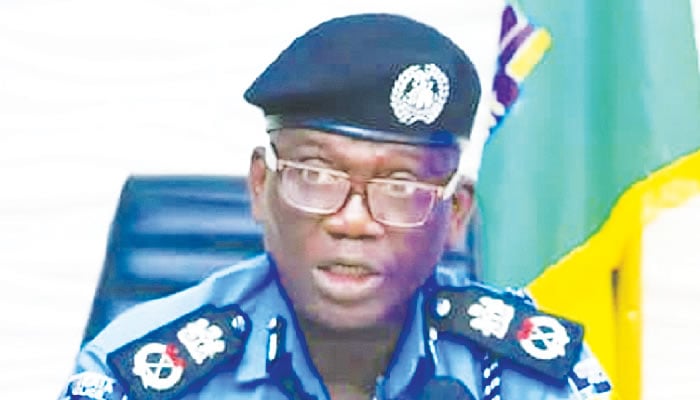
Bauchi Police Arrest Four Over Alleged Gun-Making, Rape
The Bauchi State Police Command has arrested four suspects in two separate cases involving alleged illegal firearm possession and fabrication and the alleged rape of a 50-year-old woman in the state.
The arrests involved three suspects in Misau Local Government Area, who were allegedly linked to the fabrication and possession of locally made firearms, and a 26-year-old man arrested in Gamawa Local Government Area over an alleged sexual offence.
In the firearm case, police operatives attached to the Misau Division reportedly intercepted Abubakar Ahmad, 30, also known as Tino, on September 25, 2026, while on duty at Chief Magistrate Court 1, Misau.
According to the police, Ahmad was found in possession of a locally fabricated pistol loaded with a live cartridge and was allegedly attempting to hand the weapon over to Tijjani Yakubu, 35, of the same address.
Yakubu was already being held at a correctional centre over allegations of criminal conspiracy, theft and receiving stolen property, police said.
During preliminary investigation, Yakubu allegedly admitted ownership of the firearm and told investigators that he had given it to Ahmad for safekeeping.
READ ALSO:
- Tinubu to Nigerians: We Are Correcting Past Mistakes, Give Us More Time
- Fake Agency Scandal: Gbajabiamila Says He Never Betrayed Tinubu’s Trust
- Deputy Director’s Death: NLC Shuts Delta Secretariat, Begins Indefinite Strike
He also allegedly identified Bappah Kawu, 48, a welder from Tashar Masu in Misau, as the person who supplied the weapon.
Police subsequently arrested Kawu, who allegedly admitted that he fabricated and sold the pistol to Yakubu for ₦30,000.
A search of Kawu’s workshop reportedly led to the recovery of two locally made Dane guns and tools allegedly used for firearm fabrication, including a hacksaw, files and long iron pipes.
The three suspects were taken into custody, while the firearm case was transferred to the State Criminal Investigation Department (SCID), Bauchi, for further investigation.
In a separate incident in Gamawa Local Government Area, police arrested Lukman Alhaji Nasiru, 26, of Garin Malam Village over the alleged rape of a 50-year-old woman.
Police said the alleged incident occurred on September 22, 2026, at about 12:15 p.m., when Nasiru allegedly lured the woman to an isolated area on the outskirts of Garin Malam.
The police alleged that the suspect had unlawful sexual intercourse with the woman.
The woman’s 40-year-old younger brother, who resides in Gauya Village in Jakusko Local Government Area of Yobe State, reportedly lodged a complaint at the Gamawa Divisional Police Headquarters on September 25.
Following the complaint, police arrested Nasiru and took both the suspect and the woman to General Hospital, Gamawa, for medical examination as investigations continued.
Police did not disclose further details of the medical examination.
The Bauchi Police Command said the separate investigations were ongoing, while Commissioner of Police Sani-Omolori Aliyu reiterated the command’s position against illegal firearms and sexual offences.
The commissioner also urged members of the public to provide timely and credible information to the police to assist investigations and prevent criminal activities.
The latest arrests form part of the command’s broader operations against crime in Bauchi State. The command had earlier reported the arrest of 29 suspects in September over various offences, including kidnapping, armed robbery, sexual assault, drug-related offences, vandalism and theft.
The allegations against the four suspects have not been established in court, and investigations into the cases are continuing.
Bauchi Police Arrest Four Over Alleged Gun-Making, Rape
-

 News2 days ago
Anambra Releases ₦473m Salary Arrears Document as Obi’s Debt Claim Sparks Fresh Dispute
-

 News2 days ago
Keyamo: ₦70,000 Minimum Wage No Longer Enough as Cost of Living Soars
-
 metro2 days ago
EFCC Chairman Raises Alarm Over Alleged Theft of Nigeria’s Public Funds
-

 Sports1 day ago
AFCON 2027 Qualifier: Nigeria Fight Back to Beat Madagascar 2-1 in Uyo
-
 Politics2 days ago
2027: Otti Explains Why He Supports Tinubu Despite Remaining in Labour Party
-
 metro2 days ago
Umahi Announces First Niger Bridge Reopening Next Week, Orders Tinubu Pictures
-
 metro1 day ago
Viral Anti-Obi Video: Lagos Police Move Against Inspector Osumah Frank
-
 metro2 days ago
Abia Police Arrest 20-Year-Old, Recover Gun, Suspected Cannabis, Three Motorcycles