

Politics
2023: ‘APC has better, qualified candidates than Jonathan’

***Those rooting for Jonathan are enemies of the party – Ex-Lawmaker
A founding member of the ruling All Progressive Congress, APC and former Deputy Minority Leader, House of Representatives, Abdulrahman Kawu Sumaila has on Wednesday tackled those rooting that the party’s 2023 presidential ticket be handed over to former President Goodluck Jonathan saying the party has better candidates in its midst for the plum job.
The former three-term member of the House of Representatives, Kawu who stated this in a statement he made available to newsmen, said pushing for Jonathan to become APC’s candidate would automatically mean the party has failed.
The former lawmaker, who also served as the Senior Special Assistant to the President on House of Reps Matters, noted that the APC has qualified and credible candidates from the southern part giving names such as Amaechi, Osinbajo, Nwajiuba, who he said can eminently contest for the APC presidential ticket in 2023.
He further said that those rooting for the candidature of the former president, Goodluck Jonathan, for the 2023 presidential elections under the APC were doing a great disservice to the party and were enemies of the party.
“I don’t think those pushing for Jonathan to succeed President Muhammadu Buhari under our great party wish the APC well. Yes, Jonathan is a reformed democrat who deserves our commendation.
READ ALSO:
- Buhari: I won’t disclose my favourite presidential candidate
- FIRS collects N6.4 trillion as taxes in 2021 — Executive Chairman
- Oromoni: Family rejects DPP’s report, appeals to Buhari for justice
“But he had played his own role under the PDP. Nobody will take away the credit of conceding defeat as a sitting president and handing over power to the opposition peacefully from Jonathan. As a matter of fact, he is better than some of the people in our party.
“However, we cannot as a party say Jonathan should come and pick our presidential ticket when we have better candidates in our midst. That will mean we have failed,” he said.
Kawu said if APC is interested in giving his presidential ticket to the southern part of the country, there are stalwarts of the party that contributed immensely to the success of the party.
He said, “From example, from the South-South, the likes of Minister of Transportation, Rotimi Amaechi, who served as the Director General of the APC presidential campaign twice should be considered.


Politics
Sheikh Nuru Khalid Speaks on Tinubu, Atiku, Mosque Visits, Warns Against Mixing Politics With Religion
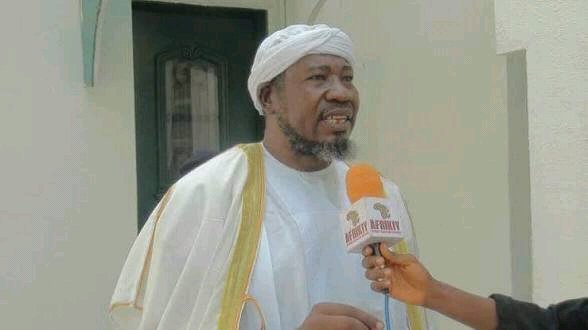
Sheikh Nuru Khalid Speaks on Tinubu, Atiku, Mosque Visits, Warns Against Mixing Politics With Religion
ABUJA — Prominent Islamic cleric, Sheikh Muhammad Nuru Khalid, has cautioned Nigerians against politicising religious activities, insisting that political affiliations should not determine where individuals choose to observe their prayers.
The outspoken cleric made the clarification amid public discussions surrounding the mosque attendance of prominent political figures, including President Bola Tinubu and former Vice President Atiku Abubakar.
Sheikh Khalid maintained that no political leader should be pressured to change their choice of mosque simply because another politician or public office holder has previously worshipped there.
According to him, choosing a place of worship is a personal right that should not be subjected to political sentiments, rivalry or unnecessary public controversy.
The cleric stressed that mosques should remain places dedicated to the worship of Allah, spiritual development and the promotion of unity, rather than becoming platforms for partisan political interests.
He warned against the growing tendency to attach political meanings to the religious activities of public figures, noting that such attitudes could create unnecessary divisions among worshippers.
Sheikh Khalid also called on religious leaders and members of the public to exercise tolerance and respect the freedom of individuals to worship wherever they choose.
He maintained that turning routine religious activities into political controversies would only distract Nigerians from more pressing national issues and undermine religious harmony.
The cleric’s position reinforces the need to maintain a clear distinction between religious responsibilities and partisan political interests, particularly as political activities gradually gather momentum ahead of the 2027 general elections.
He urged Nigerians to prioritise mutual respect, peaceful coexistence and national unity over political disagreements.
Sheikh Nuru Khalid Speaks on Tinubu, Atiku, Mosque Visits, Warns Against Mixing Politics With Religion
Politics
Presidency Deletes AI-Generated Tinubu Rally Photo After Public Outcry
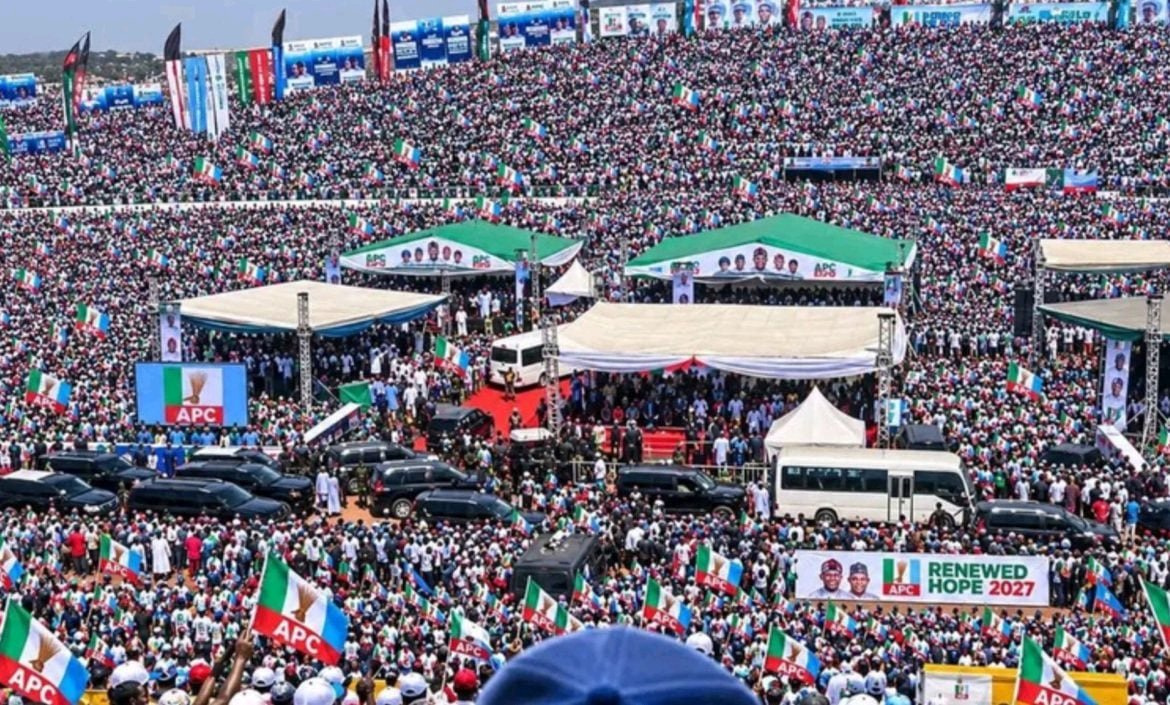
Presidency Deletes AI-Generated Tinubu Rally Photo After Public Outcry
The Presidency has come under fresh public scrutiny after a controversial photograph shared by President Bola Ahmed Tinubu’s media aide, Dada Olusegun, purporting to show a massive crowd at the All Progressives Congress (APC) campaign rally in Plateau State, was deleted following accusations that it had been generated or manipulated using Artificial Intelligence (AI).
The development has sparked debate over the use of digitally manipulated images in political communication, particularly as political parties intensify preparations for the 2027 general elections.
Olusegun, Special Adviser to the President on Social Media, had reportedly shared the photograph on Sunday, November 15, with the caption, **“Plateau State for PBAT.”**
The image depicted what appeared to be a densely packed stadium, with thousands of supporters, APC flags, campaign banners and other political paraphernalia, creating the impression that the ruling party enjoyed overwhelming support at the rally.
However, the photograph soon attracted criticism after social media users began questioning its authenticity and comparing it with other photographs and video recordings from the same event.
The contrasting visuals reportedly showed sections of the stadium with considerably fewer spectators than those portrayed in the controversial photograph.
The controversy eventually drew attention to the authenticity of the image, with critics accusing the presidential camp of using artificial intelligence to exaggerate the rally’s attendance and create a misleading impression of popular support.
An investigation by the Foundation for Investigative Journalism (FIJ), published on November 16, examined the controversial photograph using digital image verification tools, including Google SynthID and Image Whisperer.
According to the investigation, Google SynthID returned an indication that the image had been made or edited with OpenAI technology.
FIJ also reported that two of the four principal detection tools used in its Image Whisperer examination identified strong indications of AI involvement, recording scores of 98 and 99 respectively.
However, the investigation acknowledged that the results were not unanimous, as two other detection tools did not support the AI-generated finding.
The report further explained that the available evidence could not conclusively establish whether the entire photograph was generated artificially or whether an original photograph had subsequently been modified using AI.
One of the visual inconsistencies identified was the appearance of Tinubu and Vice-President Kashim Shettima on a stadium banner, with their faces reportedly differing from their actual appearances.
The controversial photograph was associated with the APC North-Central presidential campaign rally held at Zaria Road Stadium in Jos, Plateau State, on Saturday, November 14.
President Tinubu attended the political gathering alongside Vice-President Kashim Shettima, Senate President Godswill Akpabio, APC National Chairman Nentawe Yilwatda, Plateau State Governor Caleb Mutfwang and other prominent party figures.
The rally formed part of the ruling party’s political activities ahead of the 2027 general elections.
Although the rally itself was confirmed, the debate centred on whether the disputed photograph accurately represented the number of people who attended the gathering.
Videos and photographs circulated by social media users became central to the controversy, with critics questioning why an image that appeared inconsistent with other available footage had been presented as a genuine representation of the event.
The subsequent deletion of the controversial photograph has further intensified public discussion.
Rather than ending the controversy, the development has raised additional questions about the circumstances surrounding its publication, the process through which it was produced and why it was removed after attracting criticism.
As of the time of filing this report, no detailed public explanation from Olusegun regarding the photograph’s creation, publication and deletion had been established in the reports reviewed.
The incident has also renewed concerns about the responsibility of government officials and political communication teams to ensure that photographs shared through official or government-associated platforms accurately represent events.
The controversy comes at a time when artificial intelligence is increasingly being deployed in political campaigns, digital advertising and public relations.
While AI tools can assist with content creation, image enhancement and campaign communication, their misuse can undermine public confidence when manipulated visuals are presented as authentic records of real-life events.
For a country approaching another fiercely contested election cycle, the incident has highlighted the growing importance of transparency and responsible use of digital technology in political messaging.
Ultimately, the controversy has shifted attention from the APC’s political gathering in Plateau State to a more fundamental question: should Nigerians trust campaign photographs circulated by political actors without independent verification?
Presidency Deletes AI-Generated Tinubu Rally Photo After Public Outcry
Politics
2027: Suspected Thugs Attack Kwankwaso’s Convoy in Kano, Injure Supporters
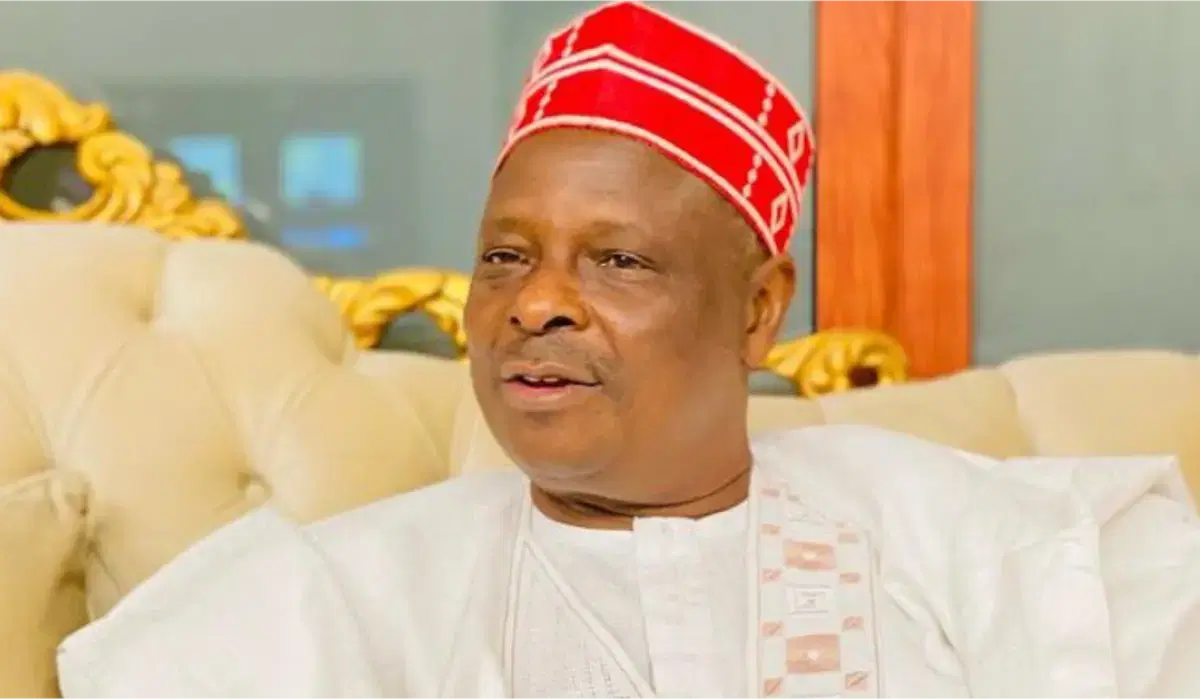
KANO – The campaign convoy of former Kano State Governor and Nigeria Democratic Congress (NDC) vice-presidential candidate, Rabiu Musa Kwankwaso, has reportedly been attacked by suspected political thugs in Bichi Local Government Area of Kano State, leaving several supporters injured and at least seven vehicles damaged.
The incident occurred on Sunday, November 15, 2026, during a political tour involving Kwankwaso and the NDC governorship candidate in Kano State, Aminu Abdussalam Gwarzo, as the party intensifies its activities ahead of the 2027 general elections.
The attack was confirmed by Ibrahim Garba Shu’aibu, spokesperson for Gwarzo’s campaign organisation, who alleged that the assailants attacked members of the delegation with stones and other weapons.
According to Shu’aibu, the campaign team had earlier visited Tofa, Rimingado, Kabo, Gwarzo, Shanono and Bagwai local government areas without experiencing any major security disturbance.
However, the situation reportedly changed as the delegation approached Bichi.
Shu’aibu said the campaign team received information that some individuals opposed to its activities had barricaded the road leading into the community.
READ ALSO:
- Eight Dead in New York Building Collapse as Nigerian Landlord’s Troubling Past Emerges
- Regulatory Violations: NSCDC Seals Seven Security Firms, Arrests 13 Guards in Delta
- Bahrain Under Attack as Iran Targets US Military Installation With Drones
Despite the warning, the delegation proceeded with its political engagements in the area.
The situation allegedly escalated after the convoy passed the Bichi Local Government Secretariat, where some youths reportedly emerged with weapons and began attacking vehicles belonging to members of the delegation.
The attackers allegedly hurled stones at the vehicles, smashed windscreens and damaged other parts of the cars.
Shu’aibu said he personally counted about seven vehicles damaged during the incident, adding that several members of the campaign team sustained injuries.
He did not provide a detailed breakdown of the number of injured persons or the severity of their injuries.
The campaign spokesperson maintained that the incident would not discourage the party from continuing its political activities and engaging with residents across Kano State.
Saifullahi Hassan, a media aide to Kwankwaso, also drew attention to the reported attack in a Facebook post.
As of the time of filing this report, the Kano State Police Command had not issued an official statement confirming the incident or providing details of any investigation.
The identities of the alleged attackers, their motives and whether any arrests had been made remained unclear.
The Kano incident comes amid growing concerns about political violence as parties and their supporters intensify activities ahead of the 2027 elections.
It also follows an earlier disruption of an NDC town hall meeting along Kudirat Abiola Way, Oregun, Ikeja, Lagos State, where suspected hoodlums reportedly attacked the venue.
The Lagos meeting was scheduled to feature the party’s presidential candidate, Peter Obi, and his running mate, Kwankwaso. However, neither politician had arrived when the violence reportedly broke out.
Following the incident, the NDC accused supporters of the ruling All Progressives Congress (APC) of involvement in the disruption.
The APC Presidential Campaign Council, through its spokesperson, Dele Alake, denied the allegation, condemned the violence and called on security agencies to identify and apprehend those responsible.
The latest reported attack in Bichi has further raised questions about the security of political campaigns, party gatherings and public engagements as preparations for the 2027 Nigerian general elections gather momentum.
Political parties and security agencies are expected to ensure that campaign activities can take place without intimidation, attacks or threats to the lives and property of participants.
Meanwhile, further clarification from the Kano State Police Command is expected to establish the circumstances surrounding the incident and identify those responsible.
2027: Suspected Thugs Attack Kwankwaso’s Convoy in Kano, Injure Supporters
-
 Politics2 days ago
Peter Obi, NDC in Fresh Storm as Keyamo Gives Dickson 48 Hours Over Old National Anthem, Raises Secession Alarm
-

 metro2 days ago
Kwankwaso’s Daughter, Kano Governor’s Wife, Files for Divorce, Offers to Refund Dowry
-

 metro2 days ago
“I Cheated Because I’m Human Too” — Divorced Restaurant Owner Accuses Ex-Husband of Sleeping With Over 16 Women
-

 Business2 days ago
OPay Faces ₦994m Regulatory Fines Over Money Laundering, Terrorism Financing Breaches
-
 metro1 day ago
Tragedy: “I Suffered With This Man When He Had Nothing” — Woman Who Begged Alleged Rival To Leave Her Family Dies At 39
-
 metro2 days ago
Pastor Remanded Over Viral Video of Toluwanisings’ Corpse After Failed Attempt to Raise Singer From Dead
-

 metro2 days ago
Zamfara Bloodbath: 53 Killed as Vigilantes Ambush Bandits After Kidnapping Spree
-
 metro1 day ago
Zamfara Attack: Bandits Kill Governor Dauda Lawal’s Aide While Observing Fajr Prayer