

News
Relief as Pfizer’s COVID-19 vaccine proves 90% effective

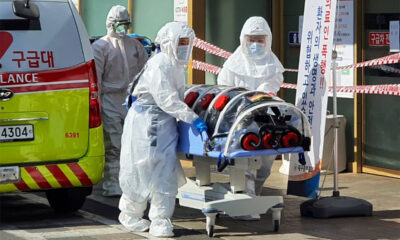
A coronavirus vaccine from Pfizer has reportedly proved more than 90 per cent effective in a preliminary analysis of a trial involving thousands of enrollees, a major milestone in the race for shots that can reel in the pandemic.
The drug maker said it tallied 94 infections in trial participants and looked at who received the vaccine, versus the placebo, to determine its efficacy.
Recipients were said to have achieved protection 28 days after the second dose of the vaccine.
“Today is a great day for science and humanity. The first set of results from our Phase 3 COVID-19 vaccine trial provides the initial evidence of our vaccine’s ability to prevent COVID-19,” Pfizer Chairman and CEO, Dr Albert Bourla, said.
The news is likely to reverberate around the world with the US recording over 100,000 new infections per day, signalling a potentially rocky road ahead as winter looms.
“We are reaching this critical milestone in our vaccine development programme at a time when the world needs it most with infection rates setting new records, hospitals nearing over-capacity and economies struggling to reopen,” Bourla said.
He added, “With today’s news, we are a significant step closer to providing people around the world with a much-needed breakthrough to help bring an end to this global health crisis.”
Pfizer will not seek emergency approval of its candidate immediately.
The Food and Drug Administration wants two months of safety data from half of the trial participants after their second dose, pushing the timeline to the latter half of November.





News
Tinubu Unveils 5-Year Plan to End Insecurity, Approves Recruitment of 78,000 Soldiers, Police Officers
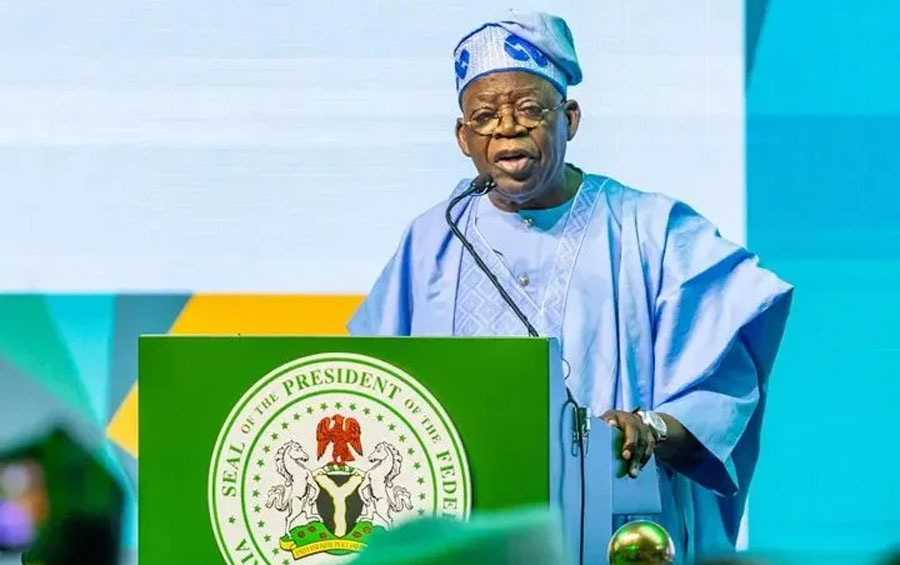
ABUJA – President Bola Ahmed Tinubu is preparing to implement a comprehensive five-year strategic defence operations plan aimed at tackling terrorism, banditry, kidnapping and other security threats across Nigeria.
The All Progressives Congress (APC) Presidential Campaign Council (PCC) announced on Sunday, November 15, 2026, that the Five-Year Strategic Defence Operations Plan was ready, describing it as a major component of the administration’s efforts to strengthen national security and improve the operational capacity of security agencies.
The council’s spokesperson, Dele Alake, disclosed this in a statement, explaining that the proposed framework would provide a long-term strategy for aligning defence priorities, military requirements, equipment acquisition, personnel development and government expenditure with Nigeria’s security challenges.
According to Alake, the plan is designed to promote a more coordinated, intelligence-led, technology-enabled and prevention-oriented approach to addressing insecurity.
He said the initiative would strengthen the country’s security architecture and improve the ability of the military and other security agencies to respond to emerging threats.
Alake also claimed that military operations conducted across the country over the past three years had resulted in the elimination of more than 15,000 Boko Haram terrorists and bandits.
He further claimed that over 130,000 Boko Haram fighters and their dependants had surrendered through Operation Safe Corridor, the Federal Government’s rehabilitation programme for former insurgents.
The figures, according to the campaign council, demonstrate the administration’s combination of military operations and non-military interventions in addressing insecurity.
Expansion of Army Divisions, Recruitment of 28,000 Soldiers
As part of efforts to strengthen military operations, Tinubu has approved the creation of four additional Nigerian Army divisions and the restructuring of existing military formations.
Alake said the reforms were intended to expand operational coverage, decentralise military activities and enable troops to respond more quickly to security threats in different parts of the country.
READ ALSO:
- 2027: How We’ll Defeat Tinubu — Amaechi Reveals ADC’s Strategy
- 2027: Suspected Thugs Attack Kwankwaso’s Convoy in Kano, Injure Supporters
- Eight Dead in New York Building Collapse as Nigerian Landlord’s Troubling Past Emerges
The President has also approved the establishment of two additional Army depots in Osogbo, Osun State, and Amasiri-Edda, Ebonyi State, to increase the military’s recruitment and training capacity.
Each facility is designed to accommodate 6,000 recruits at a time, giving the two depots a combined capacity of 12,000 trainees.
According to Alake, 5,210 recruits are already undergoing training at the Osogbo facility.
The council also disclosed that Tinubu had approved the recruitment of an additional 28,000 soldiers to increase the military’s manpower and strengthen its presence in areas facing security challenges.
The expansion is expected to address manpower shortages, improve deployment capacity and enable the military to respond more effectively to attacks by terrorists, bandits and other criminal groups.
50,000 Additional Police Officers Approved
Beyond the military, the administration is also planning a significant expansion of the Nigeria Police Force.
Alake disclosed that Tinubu had approved the recruitment of 50,000 additional police officers as part of broader efforts to strengthen internal security and improve policing across the country.
The proposed recruitment, alongside the additional soldiers, represents an intended expansion of 78,000 personnel across the military and police.
The campaign council said the initiative would improve security coverage, reinforce law enforcement and strengthen the country’s capacity to tackle kidnapping, armed robbery, terrorism and other criminal activities.
New Military Barracks, Improved Welfare
The five-year security strategy also places emphasis on military infrastructure, accommodation and personnel welfare.
One of the projects highlighted by the council is a proposed 700-unit military barracks in Ikere-Ekiti, Ekiti State.
The facility is designed to provide accommodation and operational support for military personnel, with the broader objective of improving their working and living conditions.
Alake said the administration recognises that investments in equipment and manpower must be supported by adequate infrastructure, training and welfare provisions to improve the effectiveness of security personnel.
He added that the expansion of military training facilities would help accelerate recruitment and ensure more soldiers are available for deployment.
Technology, Intelligence to Drive Security Operations
Another major component of the proposed five-year defence plan is the use of intelligence, surveillance and modern technology to improve security operations.
According to Alake, the administration intends to ensure that defence spending and operational decisions are guided by identified threats, national security priorities and clearly defined military requirements.
The approach is expected to strengthen intelligence gathering, improve coordination among security agencies, enhance combat readiness and address gaps in military capabilities.
The campaign council said the strategy would also promote better utilisation of available resources and reduce unnecessary expenditure in the defence sector.
The proposed framework is intended to address multiple security threats, including terrorism, banditry, kidnapping and other forms of organised criminality.
Tinubu Reaffirms Commitment to Defeating Insecurity
The announcement comes amid persistent security challenges in several parts of Nigeria, including attacks on rural communities, mass kidnappings, killings and displacement.
Tinubu had earlier reaffirmed his administration’s determination to overcome insecurity while addressing supporters at an APC political gathering in Dutse, Jigawa State, on November 10.
The President said his administration was strengthening the armed forces and police to improve their ability to protect lives and property.
He also promised to improve the welfare of security personnel, irrespective of their backgrounds or deployment locations.
“We will conquer insecurity. We’ve been through many wars. We will defeat our enemies. Enemies of unity, enemies of stability. Enemies of hope. I assure you that we are doing that,” Tinubu said.
The announcement of the five-year strategic defence plan provides further details of the administration’s proposed approach to tackling the country’s security challenges.
However, the success of the initiative will depend on effective implementation, adequate funding, improved intelligence coordination, accountability and the ability of security agencies to translate the proposed reforms into measurable improvements in public safety.
The APC Presidential Campaign Council said the plan would strengthen Nigeria’s defence architecture and provide a coordinated framework for responding to both existing and emerging security threats.
Tinubu Unveils 5-Year Plan to End Insecurity, Approves Recruitment of 78,000 Soldiers, Police Officers
News
Chatham House Protest: UK-Based Lawyer Alleges Anti-Amupitan Demonstrators Were Paid Actors
Chatham House Protest: UK-Based Lawyer Alleges Anti-Amupitan Demonstrators Were Paid Actors
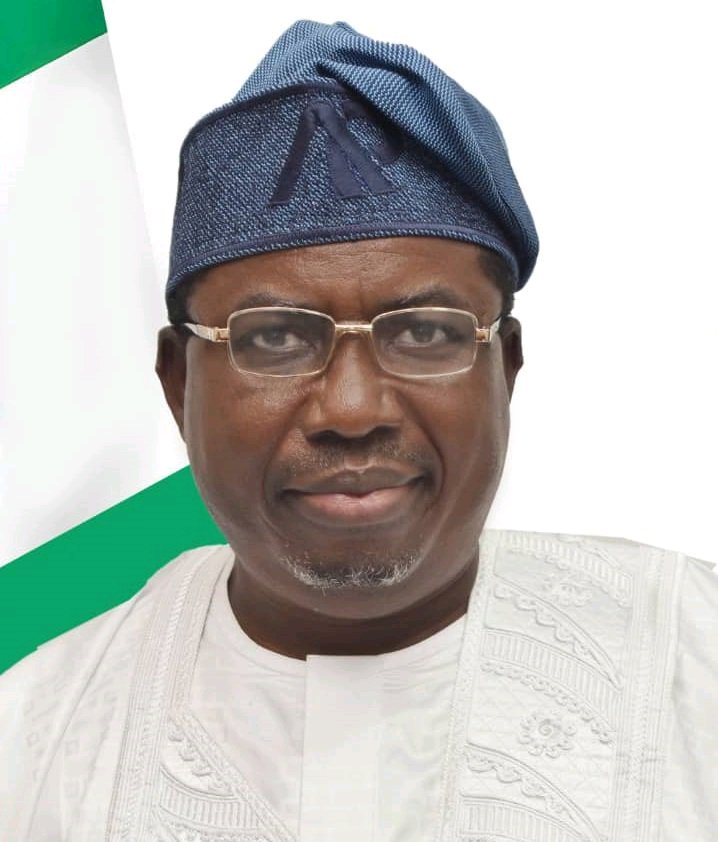
LONDON — Fresh controversy has emerged over the protest against the Chairman of the Independent National Electoral Commission (INEC), Professor Joash Amupitan, outside Chatham House in London, following allegations by a United Kingdom-based Nigerian lawyer, Otunba Dayo Babalola, that the demonstrators were allegedly paid to stage the confrontation.
Babalola dismissed the demonstration as an attempt by a small group of individuals to create a misleading impression about the position of Nigerians living in the United Kingdom on the leadership of the electoral commission.
The controversy followed Amupitan’s engagement at Chatham House, where he reportedly discussed electoral reforms and measures being considered by INEC to strengthen the credibility and integrity of Nigeria’s electoral process ahead of the 2027 general elections.
However, shortly after the engagement, a group of protesters reportedly confronted the INEC chairman outside the venue, surrounding his vehicle, chanting slogans and demanding his resignation over allegations of compromised electoral integrity.
The demonstrators, estimated by eyewitnesses to number between 10 and 15, reportedly attempted to block the chairman’s movement as they expressed dissatisfaction with his leadership of the electoral commission.
Reacting to the incident, Babalola argued that the demonstration should not be presented as the collective position of Nigerians in the United Kingdom.
According to him, nearly 200 Nigerian stakeholders and members of the diaspora attended the formal engagement inside Chatham House, making it misleading to portray the actions of a relatively small group outside the venue as representative of the wider Nigerian community.
The lawyer further alleged that the protesters were not necessarily acting out of genuine civic concerns but had allegedly been mobilised and paid to disrupt the event and attract public attention.
He also reportedly drew attention to political memorabilia worn by some of the demonstrators, suggesting that their appearance raised questions about possible political affiliations and the motivation behind the protest.
Babalola maintained that the formal engagement inside Chatham House and the demonstration outside the building were two separate events which should not be conflated.
He warned against using the actions of a handful of protesters to suggest that the wider Nigerian diaspora had collectively rejected the INEC chairman.
The allegations, however, have not been independently established, and the protesters’ account of the circumstances surrounding the demonstration remains important to a complete understanding of the incident.
The confrontation comes amid growing political disagreements over the preparedness of INEC for the 2027 general elections, particularly concerning the credibility of the voters’ register, electoral transparency, institutional independence and the security of the voting process.
Opposition figures and other critics have continued to scrutinise the commission’s activities, while INEC and its supporters have maintained that the electoral body should be allowed to carry out its constitutional responsibilities without undue political interference.
The London protest has consequently added another dimension to the debate over public confidence in Nigeria’s electoral institutions.
As of the time of filing this report, no independent evidence had been presented to establish Babalola’s allegation that the demonstrators were paid, while no formal response from the protest organisers addressing the claim was available.
The incident has also generated renewed discussions about the role of Nigerians in the diaspora in holding public institutions accountable and the need to distinguish genuine civic protests from demonstrations allegedly organised for political purposes.
Chatham House Protest: UK-Based Lawyer Alleges Anti-Amupitan Demonstrators Were Paid Actors
News
Tinubu-Aregbesola Rift: ‘They Still Have Deep Affection for Each Other’ — Adeyeye

Tinubu-Aregbesola Rift: ‘They Still Have Deep Affection for Each Other’ — Adeyeye
ABUJA — A chieftain of the All Progressives Congress (APC), Professor Sola Adeyeye, has disclosed that President Bola Ahmed Tinubu and former Osun State Governor, Rauf Aregbesola, have met about three times since their political relationship deteriorated.
Adeyeye, who is the Director of Electioneering Planning of the APC 2027 Presidential Campaign Council in the South-West, said efforts were ongoing to reconcile the two former political allies, expressing optimism that their relationship could eventually be restored.
The former senator made the disclosure in an interview published by The Punch on Sunday, November 15, 2026.
According to him, Tinubu and Aregbesola had enjoyed a close personal and political relationship before their disagreement, making the breakdown of their relationship particularly painful.
“I know that they’ve met about three times since the rift between them started,” Adeyeye said.
He added that the two men must take responsibility for resolving their differences, although he remained hopeful that reconciliation was possible.
Adeyeye, however, declined to disclose further details about the meetings or the circumstances surrounding the former allies’ disagreements.
READ ALSO:
- OPay Faces ₦994m Regulatory Fines Over Money Laundering, Terrorism Financing Breaches
- 2027: Atiku, Makinde Move Closer to Alliance Deal to Unseat Tinubu
- Bandits Kill Two Abducted Victims After Collecting ₦6m Ransom in Niger State
He said he did not know exactly what went wrong between Tinubu and Aregbesola, but maintained that both men had previously shared a strong personal bond.
“Honestly, I don’t know. They both liked each other. I just pray that the time will come when they will be together again. That’s my prayer,” he said.
When asked about his efforts to reconcile them, the APC chieftain replied that he had done everything expected of him but would not reveal further details.
He also dismissed suggestions that a conspiracy might be frustrating the reconciliation process, saying the responsibility ultimately rested with Tinubu and Aregbesola.
According to Adeyeye, disagreements between close friends can produce deeper emotional wounds, but he believes time could help heal their differences.
The political disagreement between Tinubu and Aregbesola has attracted considerable attention within the APC, particularly in Osun State, where their political camps have remained divided.
Aregbesola, who served as Osun governor from 2010 to 2018 and later as Minister of Interior, was previously a key political ally of Tinubu. Their relationship subsequently deteriorated amid disagreements over the control and leadership of the APC in Osun.
Adeyeye’s disclosure of three meetings between the two politicians offers a fresh indication that communication has continued despite their publicly known political differences. However, he did not disclose when the meetings took place or whether they produced any concrete agreement.
The professor also discussed efforts to bring other influential South-West politicians into the APC’s 2027 re-election campaign.
He disclosed that he met former Ogun State Governor Ibikunle Amosun on Wednesday, November 4, and former Ekiti State Governor Kayode Fayemi the following day.
Adeyeye described Fayemi as a brilliant politician and said personal disagreements should not overshadow the larger political contest ahead.
He expressed confidence that the APC would work towards securing victory in the January 16, 2027 election, stressing the importance of defending the party’s right to seek the people’s mandate through a free and fair electoral process.
The APC chieftain also defended Tinubu’s political strategy, including his adoption of a broad-based coalition involving politicians from different backgrounds, arguing that building alliances was necessary to win elections and form a government.
He maintained that political differences should not prevent politicians from working together when they share common objectives.
Tinubu-Aregbesola Rift: ‘They Still Have Deep Affection for Each Other’ — Adeyeye
-

 Politics2 days ago
Peter Obi, NDC in Fresh Storm as Keyamo Gives Dickson 48 Hours Over Old National Anthem, Raises Secession Alarm
-

 metro2 days ago
Kwankwaso’s Daughter, Kano Governor’s Wife, Files for Divorce, Offers to Refund Dowry
-

 metro2 days ago
“I Cheated Because I’m Human Too” — Divorced Restaurant Owner Accuses Ex-Husband of Sleeping With Over 16 Women
-

 Business1 day ago
OPay Faces ₦994m Regulatory Fines Over Money Laundering, Terrorism Financing Breaches
-

 metro16 hours ago
Tragedy: “I Suffered With This Man When He Had Nothing” — Woman Who Begged Alleged Rival To Leave Her Family Dies At 39
-

 metro2 days ago
Pastor Remanded Over Viral Video of Toluwanisings’ Corpse After Failed Attempt to Raise Singer From Dead
-

 metro1 day ago
Zamfara Bloodbath: 53 Killed as Vigilantes Ambush Bandits After Kidnapping Spree
-
 metro19 hours ago
Zamfara Attack: Bandits Kill Governor Dauda Lawal’s Aide While Observing Fajr Prayer
You must be logged in to post a comment Login