

Auto
No engineering defects on Otedola Bridge, overloading major cause of tanker accidents – FRSC boss, Oyeyemi
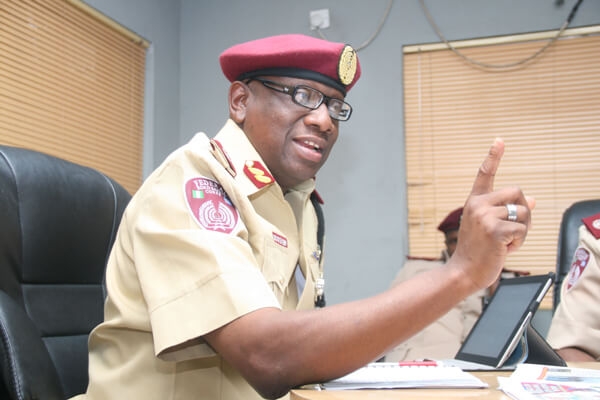
The Corps Marshal of the Federal Road Safety Corps, Boboye Oyeyemi, in this interview with some journalists in Abuja, including NewsTrends, speaks on the frequency of tanker accidents, enforcement of safety helmet among motorcycle riders, speed limiting device, among other issues.
Going by the high of number road accidents ascribed to speed, will it not be right to say the FRSC crusade of encouraging motorists to install speed limiting device in their vehicles has failed?
That is the matter of the moment. This year is the year of enforcement and full compliance with the speed limiting device. We’ve seen from the data that 52 per cent of the accidents recorded in Nigeria today are speed-induced crashes. Innocent people are dying. And many of them are lone crashes. Why? The roads are getting better. For instance, the Lagos-Ibadan expressway, the completed portions look like runway to motorists. People go on testing the capacity of their vehicles. And you know road traffic crash requires just the minutest fraction of a second of lack of concentration; just changing a CD and running into a pothole without having a firm grip on the steering could take the moving vehicle up and result in a serious accident. And because of the speed, it has turned into an aircraft taking off. Vehicles and aircraft move in the same way. The only difference in the aircraft is that the lever is lifted and it takes off and continues. Tyre blowout will make the vehicle to be lifted but because there is no mechanism to propel it up, it comes down and continues; it summersaults either vertically or horizontally. That is why 52 per cent accounts for road crashes in the country today.
The FRSC management has taken a decision to focus on this. We have already given instructions to the field commands to commence full enforcement and compliance with the installation of the speed limiting device. There are more than enough registered speed-limiting device vendors; the prices have crashed because it is being manufactured in Nigeria. The technology has been transferred. There is no going back. I must commend the organized transport sector such as the ABC, God is Good and those that have complied. The problem has to do with commercial drivers. They are the ones carrying the larger members of the public. We need to address this first.
This first quarter, we have raised the level of awareness; even all my activities from the beginning of the year have been focused on the speed limiting device. In my address for the end of the year review, the key thing I focused on was the speed limiting device. Let’s commend the government; the roads are getting better nationwide Lagos-Ibadan road will be completed this year; the Second Niger Bridge construction has gone far; Enugu-Awka-Onitsha is under full reconstruction; Enugu-Port Harcourt; Abuja-Kaduna-Kano; Kano-Maiduguri are undergoing construction.
The presidential directive on the device was 2016; that is six years ago. We must be serious about the compliance. Ideally, we should be getting to about 98 per cent compliance level now and start looking at getting the private vehicle owners to comply. But we have not got the expected level of compliance from the commercial drivers. All this has to do with lives of human beings. If we don’t do it, we’re in trouble.
What is the penalty for failure to install the speed limiting device?
We are still a bit humane for this period. If you don’t install, your vehicle is impounded. You will go to the authorized vendor, pay the prescribed fee and the vendor will come and install it in your vehicle. There is a portal to check those that have complied. The patrol team only needs to check to verify. We will continue to engage the NURTW and other transport unions for full compliance. I must commend the multinationals such as the Nigerian Breweries, Guinness and Dangote; they have complied. Dangote has a fleet of over 7,000 vehicles and they have complied.
How will you access the infrastructural support from the government to the FRSC in the last seven years?
This regime since 2015 has been very supportive. First, in 2016, they approved intervention funds that led to the procurement of about 343 vehicles. There was another approval in 2020, which we are working on now to inject more vehicles to support the operations of the corps. On infrastructure, this is the administration that has devoted more support for the FRSC in terms of release of funds for infrastructural development. Within the seven and a half years, we have constructed, inaugurated and equipped 16 state sector commands. All the abandoned projects in the academy have been fully completed. We now have the four training institutions running; for the road marshal assistants, we have the training school in Jos, to be relocated soon to Shendam. For the Marshal Inspectorate, that was the one inaugurated by Vice-President Yemi Osinbajo last year, which was built for the corps by the people and government of Delta State. All the infrastructure in our academy has been fully completed. We have received the approval of the National University Commission to commence post-graduate degree programmes. All the facilities required for the training of cadets at the post-graduate school are on the ground.
My focus when I came on board was infrastructural development. Every landlord continues to increase their rent. This affects our projections. With these 16 offices fully built, we are out of rent payment. We appreciate Mr President for providing the funds for the projects. We are landlord on our own now. And these are strategic structures in different parts of the country.
Why do you have the same number plate for motorcycles and tricycles?
The Joint Tax Board has just approved that the use of single vehicle number plate for tricycle. This will soon come on board.
Why did FRSC fail in the enforcement of helmets for motorcycle riders?
We did not fail. We have to slow down a bit. When implementing, we met a brick wall in terms of religious and cultural issue. Many of our staff members were physically assaulted and some were killed. So we have to review the situation and be strategic in our implementation. You don’t expose your personnel to such dangers. But now the United Nations is calling for the wearing of safety helmets. It is an approach that we must be tactical about. We will start reaching the unions again. And they have different factions. It requires a tactical approach today because of this cultural issue. It is normal; when you see things that can threaten the peace of the country in implementing a programme, you slow down and review the strategy. But riding a motorcycle without wearing the helmet is like the rider has signed a death warrant. Majority of the injuries from the accidents are head injuries. When government of Lagos State, for instance, banned okada on major roads, the crash rate dropped drastically. Okada riders’ nuisance value is high and worrisome. They are violent and aggressive. And you can’t blame them. They are mostly graduates who are bottled up. They are unemployed people who saw okada as a means of sustaining their family. That is why I said we must be strategic when enforcing the compliance. Most of the states have banned them from the urban areas and restrict them to the fringes. The Highway Code/traffic regulations do not permit motorcycles and tricycles to be on the expressway. And this is one area the minister of works and housing has requested us to do the enforcement.
And why do we have okada? It is the crisis in our public transportation system that brought okada. If the state governments had implemented the resolutions of the National Council on Works and National Council on Transportation to provide and sustain high-capacity buses for public transportation, okada would not have been there. That is why we have appealed to the state governments to address the issue of transportation by providing high-capacity buses for commercial transport. Also, states that have the facility to provide intermodal system should also do this in order to reduce the pressure on the road.
What can be done to ameliorate the frequent tanker accidents on highways?
The frequency is not as alarming as it seems. The data last year is not as high as in the previous year. I must commend the leadership of NUPENG-PTD for this. The issue is that once there is a crash involving a tanker, the situation is worrisome; it usually leads to monumental losses. There was one tanker explosion at a village after Gboko, Benue State, last year; it almost razed the whole village because it was during the dry season.
We have carried out about six studies on why tanker accidents occur on the Otedola Bridge in Lagos; the last one was directed by the Honourable Minister of Works and Housing (Babatunde Fashola). The studies show that there are no engineering defects on the bridge. There was no problem. It’s just that all those tankers are over 30 years. They are aged. We have again seen that most of those tankers were not designed to be pulling 60,000 litres of petroleum products. There is a serious axle load violation. A tanker used to be designed for 33,000 litre product; later it was reviewed to maximum load of 45,000 litres. Now, you see these tankers carrying 60,000 litres, 75,000 litres. NUPENG even told us that some carry 99,000 litres on a road designed for 33,000 litres. This is why our roads do not last up to the expected time. When some of these trucks are climbing, the capacity of the heads cannot pull the load they carry; they end up drawing back and eventually hit the concrete.
Some of the trucks are even designed for oil rigs but they got converted to carry fuel on the highways. There is an agency that is supposed to certify the tankers before allowing them to carry petroleum products. When agencies concerned are not doing what they are expected to do effectively, this is the price the nation pays. The absence of weighbridges on our roads led to this abuse. The same thing with the trailers; a trailer that is supposed to carry 600 bags of cement is seen carrying 1,000 bags of cement. The pressure is on the road. That is why we are working with the Federal Ministry of Works to make sure that the weighbridges are brought back. It is part of the decisions of the National Council on Works that even if we cannot have the full weighbridges, let us have the mobile weighbridges. And randomly, you stop those trucks and check them.
Buy why has the FRSC not been able enforce the compliance by tanker drivers violating the regulations?
Enforcement is a collective responsibility. If you observe when we started dealing with operators of unlatched trailer beds, they stopped travelling in the day time. In three months, we impounded over 3,000 trucks and prosecuted them at mobile courts. In Lagos, they started going through Ikorodu and Ota; they abandoned the expressway. We pursued them. Our advocacy, enlightenment and education with the enforcement are working; at least, there is respite. The key issue now is the compliance with the axle load specification by the articulated vehicles. If there are no weighbridges, the mandatory period the roads are supposed to last will not be achieved. That is why weighbridges and toll plazas are coming back. The minister of works has said so. FEC has approved it. If we have toll plazas, we automatically will have weighbridges. The law is very firm; you must weigh your load and if there is excess, you warehouse it. The toll plaza is also for security administration. It will also bring revenue to the government to maintain the roads.
You now use Dr as an appellation before your name these days. Is your doctorate honorary or academic?
Mine is not honorary; it is academic.
How did you study for a doctoral degree when you are still active in service?
I started the doctoral degree programme in Yola in 2002. I deferred it; went back and completed it. I defended it with my seminar papers. Doctorate is the simplest programme to do. Once you can finish the course work, the seminars can be done at your own time. In my own case, all that I did were road safety-related. You can commission people to get data for you and you do your analysis, proposition and move on.






Auto
NADDC Pushes Affordable Auto Loans to Boost Vehicle Ownership, More Jobs
NADDC Pushes Affordable Auto Loans to Boost Vehicle Ownership, More Job
The National Automotive Design and Development Council has called for far-reaching reforms in vehicle financing to make car ownership more affordable while boosting local vehicle assembly, job creation and industrial development.
The Council said a properly structured financing system could turn vehicle credit from a mere consumer lending product into a major economic tool for expanding productive mobility and strengthening Nigeria’s automotive value chain.
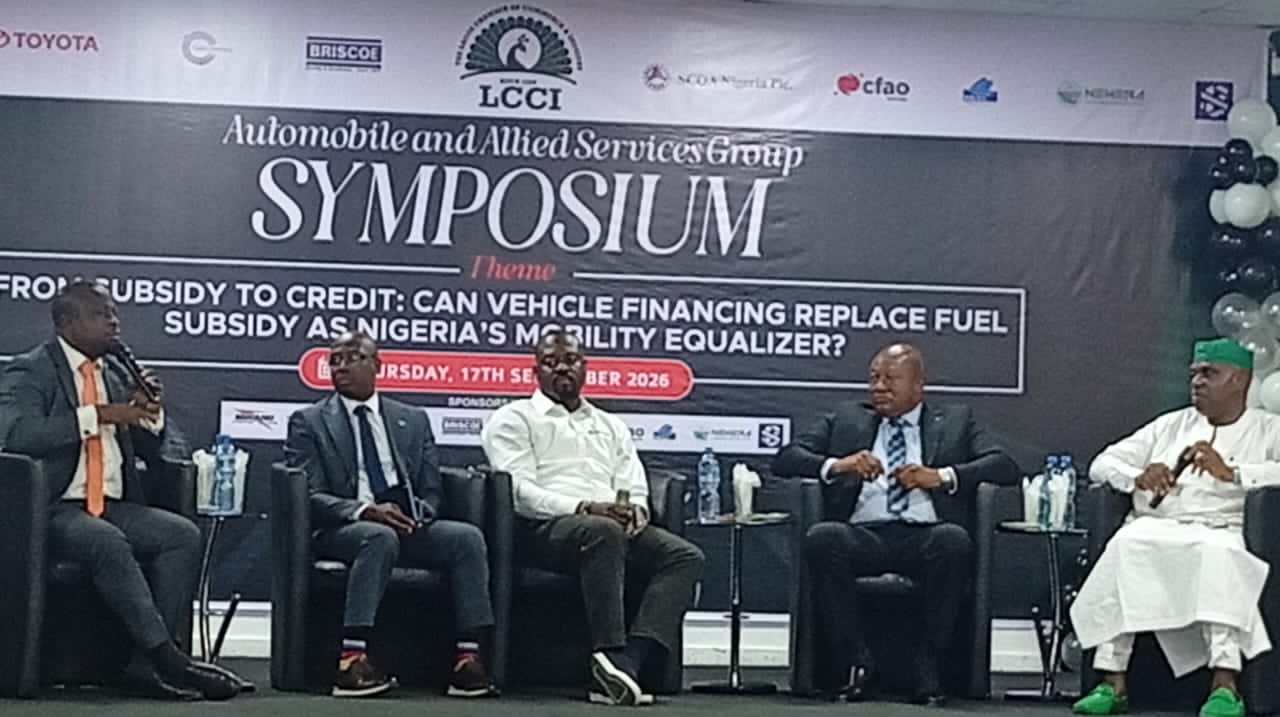
Director-General of NADDC, Otunba Joseph Oluwemimo Osanipin, stated this in an address delivered on his behalf by the Council’s Principal Information Officer, Tanko Kyumnom, at the Lagos Chamber of Commerce and Industry (LCCI) Auto Sectoral Group Symposium in Lagos.
The symposium, held on Thursday, September 17, 2026, at the Henry Fajemirokun Hall of LCCI, was themed: “From Subsidy to Credit: Can Vehicle Financing Replace Fuel Subsidy as Nigeria’s Mobility Equaliser?”
Osanipin said the growing cost of mobility had made it necessary to explore financing models that would enable individuals, businesses and transport operators to acquire vehicles without bearing the full cost of ownership upfront.
According to him, spreading vehicle payments over an agreed period could provide a more sustainable pathway to vehicle acquisition, provided that the financing products are affordable, accessible and structured around the economic realities of Nigerian consumers.
He, however, cautioned that simply making credit available would not be enough.
“Vehicle financing offers a more sustainable approach by enabling individuals, businesses and transport operators to acquire vehicles and pay for them over time,” Osanipin stated.
The NADDC DG said the bigger opportunity lies in linking vehicle financing with the growth of locally assembled and Nigerian-made vehicles.
He explained that increased access to credit for locally produced vehicles could generate wider economic benefits by stimulating demand for domestic assembly, supporting component manufacturers, creating jobs and strengthening local supply chains.
Osanipin therefore urged stronger collaboration among government institutions, financial institutions, vehicle manufacturers and other stakeholders in designing financing schemes capable of supporting both mobility access and automotive industrialisation.
The NADDC boss identified affordable vehicle loans, leasing arrangements, fleet financing, credit guarantees and appropriate interest-rate support as mechanisms that could broaden access to vehicle ownership and productive mobility.
lt also stressed the need for repayment structures that take into account the earning patterns and business realities of Nigerians, particularly transport operators and small businesses whose vehicles are directly linked to their income-generating activities.
Osanipin maintained that the objective should extend beyond increasing the number of vehicles on Nigerian roads.
“The goal is not simply to put more vehicles on Nigerian roads. It is to ensure that Nigerians can access productive mobility without placing an unsustainable burden on government finances or household incomes,” he said.
According to him, a properly structured automotive financing system could create a stronger connection between mobility, economic inclusion and domestic vehicle production.
“With the right policies and partnerships, vehicle financing can become a powerful instrument for mobility, economic inclusion and automotive industrial development,” Osanipin added.
The NADDC’s position places vehicle financing within the broader effort to build a sustainable automotive ecosystem in Nigeria—one in which access to credit supports vehicle users while also creating stronger demand for local assembly, components and associated automotive services.
Auto
Jetour T1 Storms Abuja as Automaker Accelerates Nigeria Expansion
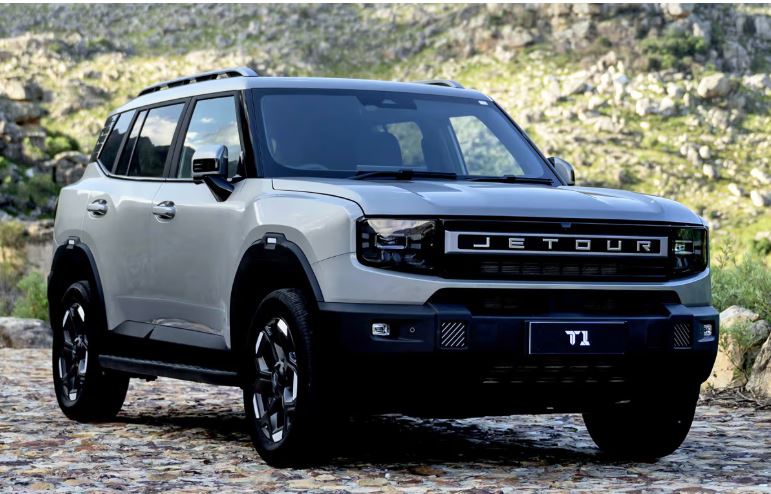
Jetour T1 Set to debut in Abuja as Expansion Gains Momentum
Following a successful debut in Lagos, Jetour Nigeria will host the Jetour Experience Abuja from September 22 to 24, 2026, positioning its all-new T1 model as a major competitor in the country’s growing adventure SUV market.
The three-day event in the Federal Capital Territory will give prospective buyers and motoring enthusiasts direct access to product demonstrations, expert-led technical sessions, and hands-on test drives.
“Strong participation, extensive test drives, and significant sales enquiries at the Lagos edition, coupled with growing demand from Abuja residents, influenced the decision to bring the experience to the nation’s capital,” the company said in a statement. The show holds at Maha Event Centre, Area 8, Garki.
To support its growing national footprint, Jetour Nigeria has established a network of seven accredited dealers: Elizade Nigeria Limited, New Era AutoVehicle Services Limited, Kojo Motors, Germaine Auto Centre, Tab Autos Limited, R.T. Briscoe Motors, and Mandilas Autos. The partnerships cover retail sales, genuine spare parts supply, and comprehensive after-sales maintenance.
READ ALSO:
- Kidnapped Female Police Officer Found Dead in Ebonyi as Suspect Leads Police to Remains
- CNN, MS NOW, Politico Sue Trump Over White House Access Ban
- JAMB Allows Candidates to Change Lost SIM, Email Addresses
The T1 enters the market with a focal point on balance—combining off-road capability with urban comfort.
The smart T1 has the following features-
Dimensions: 4,705mm (L) x 1,967mm (W) x 1,843mm (H) |; Wheelbase: 2,800mm; and
Powertrains: 1.5L Turbo / 2.0L Turbo (254 hp, 390 Nm torque).
The drivetrain is BorgWarner XWD Intelligent 4WD | 7-Speed DCT or 8-Speed Automatic. Terrain Capability: 199mm ground clearance, 600mm wading depth, and 28° approach/departure angles.
Other features include 15.6-inch HD touchscreen, Qualcomm Snapdragon 8155 platform, 8-speaker audio, 5-seater configuration with 574 litres of rear luggage space, 85 percent high-strength steel chassis alongside a Level 2 Advanced Driver Assistance System (ADAS), which includes Adaptive Cruise Control, Lane Keeping Assist, Forward Collision Warning, and Autonomous Emergency Braking.
Since its Nigerian market entry, Jetour has secured several local and international automotive honors, including Fastest Growing Auto Brand of the Year and Auto Brand of the Year.
Jetour T1 Set to debut in Abuja as Expansion Gains Momentum
Auto
Abuja Demand Rises as Jetour Brings X70 Plus Experience to FCT
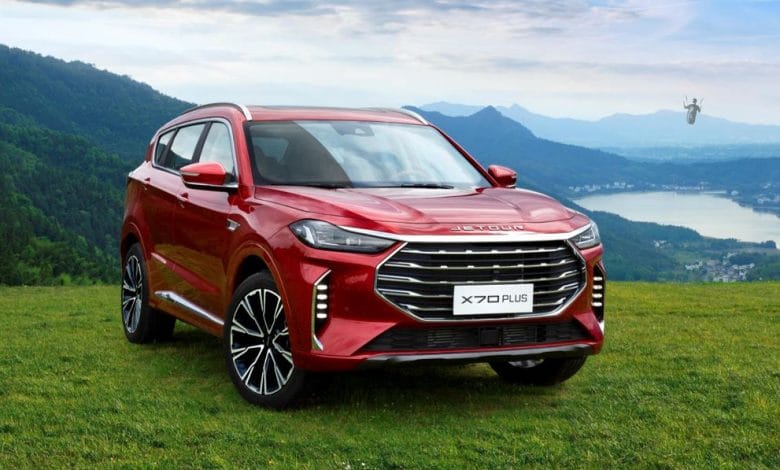
Abuja Demand Rises as Jetour Brings X70 Plus Experience to FCT
Jetour Nigeria is taking its seven-seater X70 Plus SUV to Abuja as rising interest from motorists in the Federal Capital Territory and neighbouring states fuels the brand’s latest push to deepen its presence across Nigeria.
The X70 Plus will headline the Jetour Experience Abuja, holding from September 22 to 24 at Maha Event Centre, Area 8, Garki, following the strong response recorded during the Lagos edition, where motorists turned out for test drives and made enquiries about Jetour models.
The Abuja activation is designed to give prospective buyers direct access to the X70 Plus and other models, with opportunities to test-drive the vehicles, engage product specialists and experience their technology, safety and comfort features.
The X70 Plus is positioned as a family-oriented SUV, offering seven-seat capacity and a range of features targeted at customers seeking comfort, technology and practicality.
The SUV is available with 1.5-litre and 1.6-litre turbocharged engine options, with outputs of up to 145kW and 290Nm of torque, paired with a dual-clutch automatic transmission.
READ ALSO:
- Enough Is Enough: Muslim Supporters Demand New Man United Owners
- Stray Bullet Kills 400-Level IBBU Student During Land Dispute in Niger
- Oyo Police: Student Who Died by Suicide Was Charged With Assault, Not ₦8,000 Debt
Its safety equipment includes front, side and curtain airbags, Vehicle Stability Control, Hill-Start Assist, Hill-Descent Control and a 360-degree panoramic camera with 2D and 3D viewing modes. Advanced Driver-Assistance Systems are also available.
Inside the cabin, the X70 Plus features a 10.23-inch LCD touchscreen, dual-zone climate control with air purification, wireless charging, a panoramic sunroof and an eight-speaker audio system.
Jetour Nigeria, the authorised distributor of the brand in the country, currently operates through seven accredited dealers: Elizade Nigeria Limited, Mandilas Autos, R.T. Briscoe Motors, Germaine Auto Centre, Kojo Motors, Tab Autos Limited and New Era Auto Vehicle Services Limited.
The company said the dealer network supports vehicle sales, genuine spare-parts supply and after-sales services across the country.
Jetour has also received recent industry recognition in Nigeria, including Fastest Growing Auto Brand by the Nigeria Auto Journalists Association and Auto Brand of the Year at the Nigeria Transport Lecture and Awards.
The Abuja experience is expected to provide prospective customers in the FCT and surrounding states with direct access to the X70 Plus and other Jetour models as the brand continues its national market expansion.
Abuja Demand Rises as Jetour Brings X70 Plus Experience to FCT
-

 metro2 days ago
Lagos Arrests Man Over Viral Video of Toddler Being Flogged
-
 metro2 days ago
Police Probe Alleged Self-Kidnapping of Adeleke’s Aide in Osun
-

 Sports2 days ago
Former Super Eagles Captain Troost-Ekong Embraces Islam, Recites Shahadah in Doha
-

 Politics2 days ago
Osun APC Warns Adeleke Govt Over Alleged Victimisation of Local Govt Workers
-
 News1 day ago
Anambra Releases ₦473m Salary Arrears Document as Obi’s Debt Claim Sparks Fresh Dispute
-
 metro2 days ago
Tinubu, Fani-Kayode Face Proposed $36m US Lawsuit Over Alleged Threats
-
 metro1 day ago
EFCC Chairman Raises Alarm Over Alleged Theft of Nigeria’s Public Funds
-
 News20 hours ago
Keyamo: ₦70,000 Minimum Wage No Longer Enough as Cost of Living Soars