

Education
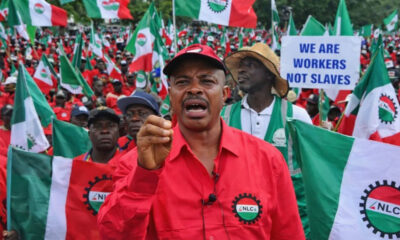
Strike: Ngige hits back at NANS, ASUU
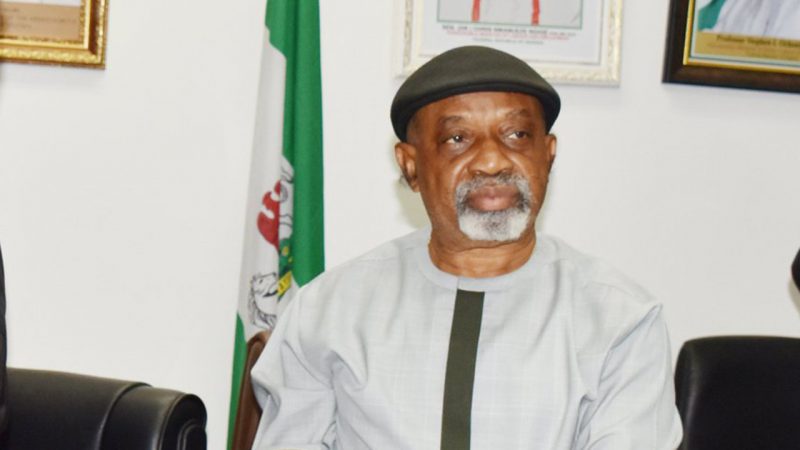
•Says labour, employment ministry not employers of striking lecturers
Minister of Labour and Employment, Dr. Chris Ngige, yesterday, said that his ministry is the conciliator in the ongoing dispute disputes between the Academic Staff Union of Universities (ASUU) and Ministry of Education.
The minister stated this in a reaction to a statement credited to the President of the National Association of Nigeria Students (NANS), Sunday Isefon, which accused him of insensitivity in the ongoing four-week warning strike by ASUU.
The NANS president had also threatened to mobilise students to disrupt the activities of the Ministry of Labour and Employment.
However, a statement signed by Charles Akpan, spokesperson for the Ministry of Labour and Employment on behalf of Senator Ngige, informed NANS that the ministry was not the employer of the striking university teachers.
“First is to note that university lecturers who operate under a union of workers, the Academic Staff Union of Nigerian Universities (ASUU) affiliated to the Nigeria Labour Congress (NLC) are employees of the universities being overseen on behalf of the Federal Government by the National Universities Commission, a parastatal under the Ministry of Education. The Federal Ministry of Education being in charge of everything education is hence the employers of all workers in the education sector, including academic and non-academic staff of federal universities. The Ministry of Labour for clarity is the conciliator of disputes between workers and their employers in various ministries, in this case ASUU and Ministry of Education.
READ ALSO:
- NSCDC seals petrol station, arrests 2 over adulterated fuel
- APC Governors Divided over National Convention, Choice of Consensus
- Man dies in Rivers hotel after sex romp with lady
“It is thus completely false that the Minister of Labour and Employment hasn’t paid attention to monitoring the implementation of the December 2020 ASUU/ FG Memorandum of Action. Apart for the Federal Ministry of Education , other ministries, departments and agencies involved in the agreement include the National Universities Commission, Federal Ministry of Finance, Budget & National Planning, Budget office of the Federation, Office of the Accountant General of the Federation and National Information Technology Development Agency, (NITDA). Though not assigned to it in the MOA, the Minister of Labour and Employment has been monitoring the implementation of the MOA to ensure compliance.”
The statement further said the President Muhammadu Buhari-led administration and the Ministry of Labour and Employment have done a lot since 2015 to enthrone a peaceful national industrial milieu to put an end to the unending ritual of strike by ASUU.
“The Ministry since November 2015 have successfully conciliated 1786 trade disputes, would wish to join issues with students who certainly do not have enough information about the commitment of the Honourable Minister of Labour and Employment, Senator Chris Ngige to the return of stability and excellence to the universities, indeed his untiring efforts to enthrone a peaceful national industrial milieu, it is imperative we make salient clarifications on the misinformation and misrepresentation on what has become an unending ritual of strike by ASUU vis a vis the ongoing action.”
READ ALSO:
- Soldier on development course caught with cannabis, charms
- IPOB out to destroy me, says Abba Kyari
- BREAKING: Kanu may go blind, Ozekhome tells court
The statement said the ministry never received any official communication from ASUU on any impending strike as required by Labour Laws. He questioned why ASUU was in regular breach of the laid down procedure for embarking on strike.
On the 2009 renegotiated agreement, the minister said: “A committee on this had initially headed by Dr. Wale Babalakin SAN and later Professor Manzalli. This is an Education Ministry’s internal committee mandated by the parties to look into the issues of salaries/allowances in the universities and other item of conditions of Service. ASUU reported at the last conciliation that the committee had finished its work and handed in but the Education Minister reported to me when he came back from a long sick leave that the committee was being reconvened to complete their work after which it would be forwarded to the conciliation meeting from where if both parties agree on the work, it would be forwarded to the Presidential Committee on Salaries(Wages)
“The Minister of Labour made this explanation and advised ASUU to get back to the Minister of Education so as to forward that aspect of the negotiation as their employers so that it will also be transmitted fast to PCS. With all these explanation, it’s clear that the Minister of Labour has continued to be proactive on matters affecting ASUU and in fact all the Universities based workers union like NASU,SSANU, SSARTRAI and other to prevent undue disruption of academic activities in the university system.
“NANS should appreciate the uncommon efforts and tireless work put in even far into the nights by the Labour Ministry and staff particularly when issues pertaining to education and health, two critical areas in our Industrial relations between employers and employees, now made very sour by increased cost of living and low purchasing power of present wages.”
Sun







Education
CIoTA Set to Inaugurate New Council, Install Odewumi as National President
Odewumi Takes CIoTA Helm as Institute Unveils New Governing Council
The Chartered Institute of Transport Administration of Nigeria (CIoTA) is set to usher in a new era of leadership with the investiture of Professor Samuel G. Odewumi as its National President and Chairman of Council, alongside the inauguration of its new National Executive Committee and Governing Council.
The ceremony, scheduled for Thursday, December 3, 2026, will hold at Makanjuola Hall, Lagos State University (LASU), Ojo, Lagos, beginning at 10:00 a.m.
With the theme, “Transportation to the Rescue in Nigeria: Piloting Up National Development and Driving Down Poverty, A New Clarion Call,” the event is expected to attract transport professionals, government representatives, academics, industry operators and other stakeholders.
It will provide a platform for discussions on how an efficient and professionally managed transportation system can accelerate economic growth, promote national integration and help address poverty.
Speaking at the institute’s pre-investiture press briefing, the Deputy President-Elect of CIoTA and Vice-Chancellor of the Federal University of Transportation, Daura, Professor Umar Adam Katsayal, called for stronger collaboration among professional bodies, academic institutions, government agencies and industry operators to build a modern and globally competitive transport system.
Katsayal, who delivered the welcome address on behalf of the institute’s elected leadership and members, described transportation as a critical driver of national development, economic growth, regional integration and social mobility.
He stressed that stakeholders across the transport ecosystem had a collective responsibility to promote excellence, innovation, sustainability and professionalism in transportation administration and management.
According to him, the pre-investiture engagement was designed to encourage meaningful interaction, knowledge exchange and constructive discussions on the challenges and opportunities confronting Nigeria’s transport industry.
He expressed confidence that sustained engagement among stakeholders would generate practical solutions, strengthen institutional capacity and contribute to the development of the sector.
The Deputy President-Elect further underscored the importance of cooperation between professional bodies, universities, government institutions and private-sector operators, noting that such partnerships were essential to achieving international standards in transportation administration.
He also urged media organisations to deepen their engagement with transport stakeholders and contribute informed perspectives that would enrich the deliberations and strengthen the institute’s leadership and administration.
The investiture will feature Emeritus Professor Peter Okebukola (MON) as the guest speaker. He is expected to deliver a presentation titled “Banking as a Tool for Transport Development.”
The Vice-Chancellor of Lagos State University, Professor Ayodeji O. Lawunmi, is listed as the Special Guest of Honour, while Pastor (Chief) Reuben Wilson, Managing Director/Chief Executive Officer of Reuwills Oil and Gas Nigeria Limited and Founder of the Leadership, Peace and Cultural Development Initiative, will chair the investiture ceremony.
Beyond the formal installation of Odewumi and inauguration of the new leadership, the event is expected to draw attention to the critical role of effective transportation administration, professional standards, access to financing and institutional partnerships in advancing Nigeria’s development agenda.
CIoTA said the engagement would further reinforce the need for professionalism, innovation and sustainable practices in managing the country’s transport sector.
Education
NANS Threatens UNIOSUN Shutdown Over Arrest of Three Student Leaders
NANS Threatens UNIOSUN Shutdown Over Arrest of Three Student Leaders
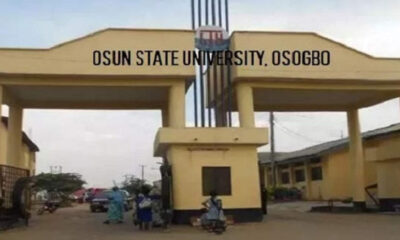
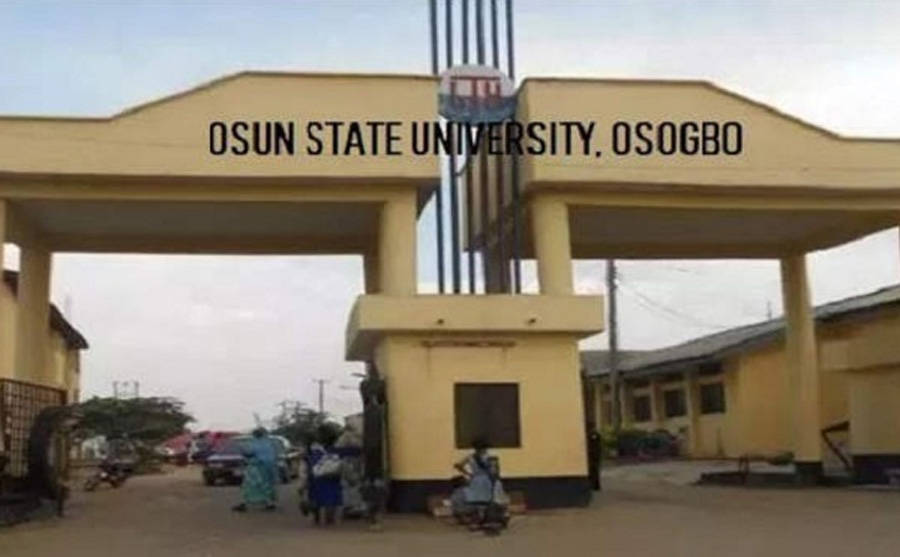
The National Association of Nigerian Students (NANS) and the management of Osun State University (UNIOSUN) have disagreed over the arrest and arraignment of three Students’ Union Government (SUG) officials accused of assaulting a 100-level student.
The disagreement followed NANS’ threat to mobilise students nationwide to shut down the university and occupy the Osun State Government Secretariat over the arrest of the SUG president.
NANS National President, Babatunde Akinteye, accused the university’s Vice-Chancellor, Professor Clement Adebooye, of allegedly ordering the arrest of the student union president, describing the development as an attack on the rights and dignity of Nigerian students.
In a statement issued on Tuesday, November 24, Akinteye said the SUG president had been arrested, charged before a court and remanded in prison.
He subsequently directed the NANS zonal coordinator and the Osun State Joint Campus Committee chairman to mobilise students for a coordinated shutdown of UNIOSUN and a peaceful occupation of the state government secretariat to demand the Vice-Chancellor’s removal.
He also said NANS structures nationwide had been activated to relocate to Osun State until the matter was resolved.
However, the university management gave a different account, saying the three student leaders were arrested and prosecuted over their alleged involvement in the assault of a 100-level student, Emmanuel Onifade.
READ ALSO:
- ADC Asks Tinubu to Resign or Face Impeachment Over Kano Court Allegation
- Kwankwasiyya Supporters Carry Sticks But Never Harm Anyone – Obi
- Iran Flogs Singer, Four Others 74 Times Over Hijab-Free Performance
The university’s Public Relations Officer, Ademola Adesoji, said the incident occurred on Friday night, November 20, and involved three student union executives.
The accused students were identified as Layonu Idowu Akintayo, a 500-level Medicine and Surgery student and SUG president; Adesanmi Tijesunimi, a 400-level Computer Science student and assistant general secretary; and Oyedeji Samsideen, a 400-level Information Technology student and faculty chairman.
According to the university, preliminary findings indicated that the disagreement started after Onifade allegedly used the institution’s logo and the Office of Student Affairs as the identity of a WhatsApp platform.
He was also accused of threatening another student, Oyebode Oluwatobi Jomiloju Barnabas, a 200-level Computer Science student, over a video posted on social media concerning the university.
The management said Oyebode reported the matter to the Students’ Union executives, after which the union president contacted Onifade and asked him to meet at the downtown area of the university’s main campus.
The university alleged that Onifade was subsequently taken in a Students’ Union vehicle to a mechanic workshop in Osogbo, where he was beaten and seriously injured by the assistant general secretary and other individuals.
It further alleged that the victim was taken to another location, where he encountered the union president and was assaulted again by the assistant general secretary and Samsideen.
The university said Onifade was eventually released with serious bodily injuries, prompting his father to report the incident at the Oja-Oba Divisional Police Headquarters in Oke Baale, Osogbo.
Following the complaint, the three student leaders were handed over to the police and subsequently charged before a magistrate’s court in Oke-Fia, Osogbo.
The university disclosed that the accused students had been granted administrative bail, while the case was adjourned until December 23, 2026.
As part of its response to the incident, UNIOSUN management announced the indefinite suspension of all Students’ Union activities pending the resolution of the issues surrounding the alleged assault.
The institution reaffirmed its commitment to students’ safety and welfare, urging members of the university community to conduct themselves responsibly and in accordance with the law.
NANS Threatens UNIOSUN Shutdown Over Arrest of Three Student Leaders
Education
South-West Leaders Challenged to Emulate Kwankwaso, Invest in Education of Poor Children

South-West Leaders Challenged to Emulate Kwankwaso, Invest in Education of Poor Children
A call has been made to political leaders across Nigeria’s South-West region to invest more deliberately in the education and professional development of brilliant children from poor and disadvantaged backgrounds, with emphasis on overseas scholarships and specialised skills acquisition.
The call was made by a concerned citizen, Adeagbo Suraj Ademola, who questioned the commitment of political leaders in the region to sustainable human capital development, arguing that the transformation of young people from economically disadvantaged families should be considered one of the greatest measures of good governance.
Ademola, in a statement, drew attention to reports about the scholarship initiative introduced by former Kano State Governor, Senator Rabiu Musa Kwankwaso, under which thousands of young people from the state were reportedly sponsored to pursue postgraduate studies abroad.
He cited the account of a Hausa man who reportedly benefited from the programme, travelled to the United States for further studies and eventually became a university lecturer in America.
According to him, the reported figure of more than 3,000 beneficiaries under the initiative raises important questions about the priorities of political leaders in the South-West, particularly regarding investments in education and opportunities for children whose parents cannot afford quality education.
He recalled similar initiatives introduced by former Osun State Governor, Ogbeni Rauf Aregbesola, noting that his administration sponsored 85 medical students of Osun State University (UNIOSUN) to Ukraine to complete their medical education.
Ademola also highlighted the decision of the Aregbesola administration to sponsor 31 graduates to Germany for specialised training in automobile mechatronics, while another 20 young people were reportedly sent to Germany for advanced agricultural training.
He described the mechatronics initiative as particularly significant, recalling that a friend of his, whose mother was a local leaf seller, benefited from the programme.
According to him, the experience demonstrated how government-sponsored educational and professional opportunities could transform the lives of young people from ordinary homes who would otherwise struggle to access such opportunities.
He maintained that programmes of this nature should not be treated merely as political empowerment schemes but as strategic investments capable of producing skilled professionals who would contribute to national development.
The South-West leaders were also reminded of the scholarship initiative introduced by former Ekiti State Governor, Dr Kayode Fayemi, during his first administration.
The programme, known as the Fayemi Scholars initiative, reportedly supported outstanding graduates to pursue postgraduate studies in reputable institutions in countries including the United Kingdom, the United States and China.
For Ademola, these examples demonstrate that visionary leadership goes beyond the construction of roads, bridges and public buildings. It also involves identifying talented young people, providing them with opportunities and preparing them to become future professionals and leaders.
He, however, argued that the South-West could achieve much more if its six state governments adopted deliberate and sustainable programmes to sponsor brilliant but financially disadvantaged young people for specialised education and professional training.
He proposed that each state should consider sponsoring at least 500 or even 1,000 qualified young people annually to study specialised courses in reputable institutions within and outside Nigeria.
According to him, such an initiative could significantly strengthen the region’s capacity in critical sectors, including medicine, engineering, artificial intelligence, agriculture, manufacturing, technology and scientific research.
He stressed that the benefits would extend beyond the individual scholarship recipients, as the region and the country would eventually gain from the expertise, innovation and professional contributions of the beneficiaries.
Ademola further argued that political leadership should not be assessed exclusively by the number of infrastructure projects executed, political appointments made or conventional empowerment programmes organised.
Rather, he said, the number of ordinary children whose lives have been transformed through access to quality education, specialised training and life-changing opportunities should also be an important measure of governance.
He therefore challenged governors and other political leaders across the South-West to explain the deliberate, sustainable and transparent programmes they have established to identify, train and support brilliant children whose parents lack the financial resources to provide them with opportunities available to children from wealthy families.
He emphasised that many of the country’s future professors, medical experts, engineers, innovators, researchers and national leaders could currently be growing up in communities where poverty has limited their access to quality education and professional development.
The statement further called for scholarship programmes that would be transparent, merit-based and sustainable, ensuring that beneficiaries are selected based on their academic abilities and potential rather than political connections or family backgrounds.
Ademola maintained that investing in disadvantaged children was not simply an act of charity but a strategic responsibility that could determine the economic and technological future of the region.
He argued that the greatest legacy of any administration should not be limited to physical structures constructed during its tenure but should also include the quality of human beings it prepares to sustain development long after leaving office.
He concluded with a message to political leaders across the South-West, urging them to place greater emphasis on human capital development and deliberately create opportunities for children from poor families.
“We must invest in PEOPLE, not just PROJECTS,” he declared.
The statement was signed by Adeagbo Suraj Ademola of Adenle Onile-Aran’s Compound
South-West Leaders Challenged to Emulate Kwankwaso, Invest in Education of Poor Children
-
 metro2 days ago
‘I Paid My Ex-Husband Before He Slept With Me’ – Islamic Preacher Kaola Makes Shocking Revelation
-
 metro10 hours ago
Oyoland Grand Chief Imam Moves to End Feud, Seeks Reconciliation Among Markaziyya, Adabiyyah, Mahdul ‘Arabi
-

 Politics3 days ago
Kwankwaso Made Me Swear on Qur’an to Join APC After Election Victory — Gov Yusuf Reveals Tinubu Deal
-

 Education2 days ago
South-West Leaders Challenged to Emulate Kwankwaso, Invest in Education of Poor Children
-

 News24 hours ago
Omokri Arrives in Mexico to Assume Duty as Nigerian Ambassador, Thanks Govt for Ministerial Reception
-
 Politics2 days ago
2027: Makinde Invokes 1966 Coup, Questions Obi-Kwankwaso Ticket
-
 Politics1 day ago
Uduere Killings: Ughelli Chairman Accuses Omo-Agege’s Camp of Triggering Deadly Clash, Demands IGP Probe
-

 metro2 days ago
‘Shame on You’: Fayose Blasts Nigerian Youths Over Poor Protest Turnout