

metro
Man bags life imprisonment for raping, robbing student at UNILAG

An Ikeja Domestic Violence and Sexual Offences Court on Tuesday sentenced a man, Collins Okechukwu, to life imprisonment for raping and robbing a 25-year-old student (name withheld) at the University of Lagos.
Delivering judgement, Justice Abiola Soladoye, who described Okechukwu as a “pathological liar,” held that prosecution proved the charges of rape and robbery against him beyond reasonable doubt.
The judge sentenced Okechukwu to life imprisonment for rape and 21 years imprisonment for robbery.
The judge, however, ordered that the two sentences should run concurrently.
Soladoye said: “The testimony of the defendant portrayed him as a pathological liar in the sense that he claimed that University of Lagos Guest House was fully booked and the survivor was sex starved, which made them have sex on bare floor.
“This is unbelievable and watery.
“The defendant lured the survivor into the Admin Block, brought out a pistol, raped her and robbed her of her valuables thereafter.
“The claim of the defendant to have met the survivor at the guest house and she agreed to have sex with him was consistently laced with irregularities and found unreliable.
READ ALSO:
- 2023: We’ll Bar Parties That Violate Electoral Law – INEC
- 2023: Atiku, Saraki, Wike, Others To Lock Horns As PDP Throws Presidential Ticket Open
- Insecurity: EU to supply 30 boats, forensic equipment to Nigeria, others
“The defendant is found guilty as charged of the two offences and thereby sentenced to life imprisonment in respect to rape and 21 years’ jail term for robbery.
“The sentences shall run concurrently.
“He should have his name entered in the Sex Offenders Register of the Lagos State Government.”
Sholadoye also cautioned female students in tertiary institutions against giving out their telephone numbers to strangers.
The Judge said: “What manner of a woman is the victim herself?
“She should desist from giving out her numbers for unnecessary frolicking.”
The News Agency of Nigeria reports that four witnesses testified at the trial and three exhibits tendered.
According to prosecution counsel, Peter Owolabani, the convict committed the crimes on December 17, 2017 at 9pm behind the Faculty of Arts Building, UNILAG.
Owolabani said that the convict also robbed the survivor of her phones, money and a gold chain.
He also submitted that the survivor met the convict one year after the incident, invited him to her supposed birthday party and got him arrested.












metro
School Bus Driver Turns Kidnapper, Collects ₦503,000 Ransom, Rapes 14-Year-Old Delta Student
School Bus Driver Turns Kidnapper, Collects ₦503,000 Ransom, Rapes 14-Year-Old Delta Student
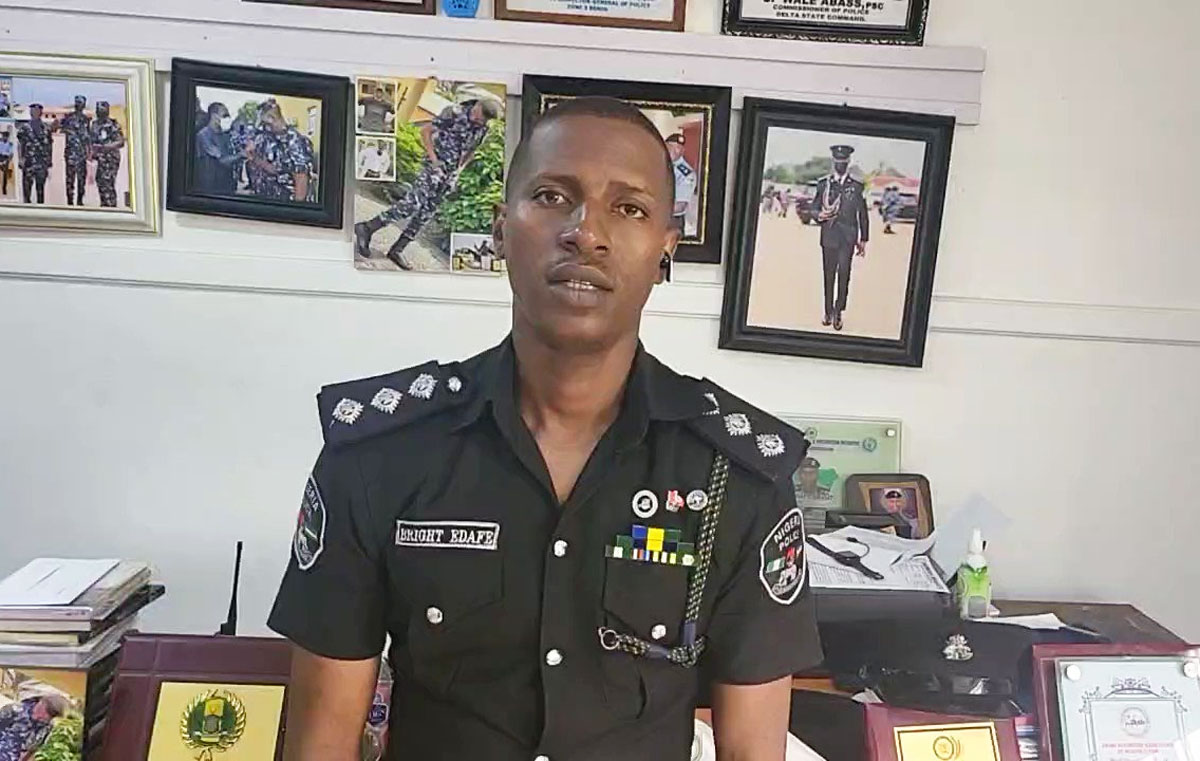
SAPELE, DELTA STATE — The Delta State Police Command has arrested a 28-year-old school bus driver, Onome Lucky Ughagha, for the horrific kidnapping and sexual assault of a 14-year-old female student in Sapele, after extorting a ransom from her desperate father.
According to a statement by the Command’s Public Relations Officer, SP Bright Edafe, the nightmare unfolded on October 20, 2026, when the victim’s father reported that his daughter was abducted while preparing for school .
Police investigations revealed that Ughagha, who was entrusted with the safety of the minor, contacted the father and demanded a ransom of ₦503,000, threatening to kill the girl if the money was not paid . Following the payment, the suspect allegedly abandoned the traumatized teenager along Oton Road in Sapele, where she was reunited with her family .
Medical examinations later indicated that the minor had been sexually assaulted . The suspect had abandoned the school bus and fled the scene, prompting an intense manhunt by operatives of the Sapele Area Command .
Acting on credible intelligence, police traced Ughagha to his hideout in the Ajimele area of Sapele, where he was arrested on October 23, 2026 . During preliminary interrogation, the suspect reportedly confessed to his involvement in the crime .
The school’s principal and vice-principal have been invited for questioning as investigations continue . Ughagha is currently being transferred to the State Criminal Investigation Department (SCID) in Asaba for further investigation .
Delta State Commissioner of Police, Samuel Erale, condemned the incident, reaffirming the command’s commitment to protecting children from violence and exploitation . He assured the public that the investigation would be thorough and urged school authorities and transport operators to exercise greater vigilance in safeguarding children .
School Bus Driver Turns Kidnapper, Collects ₦503,000 Ransom, Rapes 14-Year-Old Delta Student
metro
Massacre in Taraba: Death Toll Soars to 48 as Fleeing Villagers Drown in Desperate Escape
Massacre in Taraba: Death Toll Soars to 48 as Fleeing Villagers Drown in Desperate Escape
JALINGO, Taraba State — A horrific wave of bloodletting has swept through Binnari village in Taraba State, leaving at least 48 people dead in its wake, police confirmed on Sunday. The grim discovery followed a terrifying four-hour rampage by gunmen that forced panicked residents into a nearby river, where dozens drowned in a desperate bid to escape the slaughter.
The death toll has continued to climb as search parties comb through the surrounding bushes and riverbanks, with rights group Amnesty International warning that as many as 52 people may have been killed in the attack on the Karim Lamido area community.
According to the Taraba State Police Command, the nightmare unfolded shortly after midday prayers on Friday when a heavily armed gang swooped into the remote village. The assailants—reportedly riding a convoy of about 50 motorcycles—unleashed terror, looting shops and setting homes ablaze during an orgy of violence that lasted up to four hours.
Taraba State Police spokesperson, Assistant Superintendent Victor Mshelizah, confirmed the escalating toll on Sunday. He revealed that while the initial recovery yielded 10 bodies bearing gunshot wounds, the weekend search uncovered a far more macabre scene. Mshelizah stated that several victims, including women and children, had drowned in a nearby river while frantically trying to outrun the attackers, while others were found executed in the surrounding undergrowth.
“The attackers were very familiar with the terrain, which made immediate pursuit difficult,” Mshelizah said, noting that police were only able to disperse the gunmen after they had already fled the scene.
However, the official police account conflicts sharply with the chilling testimonies of survivors and the findings of human rights organizations. Amnesty International’s Nigeria director, Isa Sanusi, stated that the organization had independently verified 52 deaths, adding that 37 victims had already been hurriedly buried in a mass funeral by grieving families.
Community leader Malam Abubakar Saifullahi described the sheer scale of the assault, revealing that the bandits, traveling two per motorcycle, methodically looted shops for cash and foodstuffs before seizing the motorcycles abandoned by fleeing residents.
The most harrowing accounts come from those who survived the chaos. Resident Bashir Mamuda Musa provided a devastating timeline of the recovery effort: “On Friday, we found seven bodies after the bandits attacked our community. The following day, Saturday, we discovered another 43 bodies in the river, bringing the total to 50.”
Survivor Isiyaku Musa recounted the sheer panic that drove villagers toward the water. “People were running in different directions to escape the attack. Nobody knew where it was safe to go,” he said. The mass drowning occurred as dozens of terrified residents fled toward the river, only to be mercilessly pursued into the water by the advancing gunmen.
The brutal massacre has drawn fierce condemnation from rights groups, who accuse authorities of systemic failure. In a blistering post on X, Amnesty International stated: “The consistent failure of the authorities to bring the suspected perpetrators to justice is clearly emboldening impunity.”
The Binnari bloodbath underscores the worsening security crisis plaguing Nigeria’s rural heartlands. Criminal gangs—locally known as bandits—continue to operate with devastating impunity across regions bordering the northeast and central zones, leaving a trail of death, abduction, and destruction.
As security forces continue to comb the grim landscape, authorities have warned that the final death toll may rise even further once all missing persons are accounted for.
Massacre in Taraba: Death Toll Soars to 48 as Fleeing Villagers Drown in Desperate Escape
metro
Court Sentences POS Operator to Death for Role in Kidnap That Killed 83-Year-Old Man, Driver

Court Sentences POS Operator to Death for Role in Kidnap That Killed 83-Year-Old Man, Driver
An Imo State High Court has sentenced a 28-year-old point-of-sale (POS) operator, Isaac Okorie, to death by hanging for his role in the kidnapping and murder of an 83-year-old man, Chief Alexander Chukwuma Okoli, and his driver, Daniel Sarki, despite the payment of ransom by the victims’ family.
Justice Matthew Ijezie, sitting at the High Court in Urualla, within the Orlu Judicial Division, delivered the judgment on Tuesday, October 20, 2026, after finding Okorie guilty on six counts bordering on armed robbery, hostage-taking and murder.
The court held that the prosecution had proved its case beyond reasonable doubt through the evidence presented during the trial.
According to the judgment, the incident occurred on October 14, 2023, at Isiekenesi in Ideato South Local Government Area of Imo State, when Okoli and his driver were abducted by members of an armed criminal gang.
The court heard that Okorie conspired with other members of the gang, who were armed with guns, to seize the two men and take them into a bush.
The kidnappers also reportedly stole Okoli’s gold-coloured Toyota Corolla, with registration number AAH 989 RM.
The gang subsequently demanded a ransom of ₦100 million from the victims’ family in exchange for their release.
However, the family eventually paid ₦2.515 million, but the payment did not secure the safe return of the two men.
According to the court’s account, the gang killed both victims despite receiving the money and later sent photographs of their lifeless bodies to the family.
The remains of Okoli and his driver had yet to be recovered as of the time the judgment was reported, leaving their family members without the opportunity to give them a proper burial.
During the trial, the court heard that police investigations identified Okorie’s role in the criminal operation as receiving ransom payments from the families of kidnapping victims.
The evidence linking him to the operation formed part of the prosecution’s case, which the court found sufficient to establish his guilt on all six counts.
Following the conviction, the court gave Okorie an opportunity to plead for leniency before sentencing, a procedure known as allocutus.
Okorie reportedly appealed to the court for mercy, but Justice Ijezie proceeded to sentence him to death by hanging.
Reacting to the judgment, Ikenna Obi, a senior state counsel with the Imo State Ministry of Justice who prosecuted the case, described the ruling as significant.
Obi said the judgment would provide some measure of relief to the victims’ family, despite the continuing uncertainty surrounding the whereabouts of their remains.
He expressed hope that the conviction would deter individuals involved in kidnapping, armed robbery and other violent crimes, while discouraging others from joining criminal gangs.
The prosecutor also commended the judge for delivering what he described as a well-considered judgment in accordance with the law.
Amanda, the daughter of one of the victims, also reportedly expressed relief that the court had punished the convict.
She, however, said the family remained deeply distressed by the failure to recover the bodies of her father and his driver.
Although the judgment offered the family some comfort, she expressed hope that security agencies would intensify efforts to locate the remains and arrest other suspects who were still at large.
The conviction marks a significant development in the case, which began with the abduction of the elderly man and his driver nearly three years before the judgment.
However, the family’s search for closure remains incomplete, as the recovery of the victims’ remains and the prosecution of any outstanding suspects remain unresolved.
Court Sentences POS Operator to Death for Role in Kidnap That Killed 83-Year-Old Man, Driver
-

 News2 days ago
EFCC Opens Recruitment for Nigerians, Sets Age Limits for Four Job Categories
-

 News2 days ago
41 Days in Bandits’ Den: Five Islamic Clerics Still Held After Tinubu Re-Election Prayer Trip
-

 Politics2 days ago
2027: Remi, Seyi Tinubu Reportedly Differ Over APC Youth Mobilisation
-

 Politics2 days ago
Igbo Presidency: Soludo Tells South-East to Back Tinubu for Future Power Shift
-

 Politics1 day ago
2027: APGA Chairman Says South-East Must Back Tinubu to Secure Igbo Presidency
-

 metro2 days ago
Police Arrest Suspect Eight Months After Retired Teacher’s Killing in Ogun
-

 metro1 day ago
Borno: Troops Kill 15 Terrorists in Midnight Air Strike
-

 Sports2 days ago
Kane Beats Yamal to Win Major Football Award Ahead of Ballon d’Or Ceremony