

Politics
Abiodun, Amosun Clash Over Alleged US Criminal Records

Ogun State governor, Dapo Abiodun and his predecessor, Senator Ibikunle Amosun, have clashed over the governor’s alleged criminal records in the United States.
Abiodun and Amosun have been battling for the control of the All Progressives Congress (APC) in the state.
A petition submitted to the national secretariat of the APC had sought Abiodun’s disqualification from the party’s governorship primaries over fraud allegations.
A member of the party in the state, Ayodele Oludiran, had in the April 12 petition alleged that the governor had been accused of ‘concealing criminal offenses he allegedly committed in the USA in the 1980s’.
Oludiran insisted that Abiodun’s candidacy would portend danger for the APC with the damning allegations against him.
However, documents allegedly featuring the mugshot of Abiodun and his purported court conviction for criminal offences which bordered on credit card fraud, petty theft, and forgery surfaced online on Monday.
Reacting to the allegations, Dapo Abiodun Campaign Organisation (DACA) accused Amosun of sponsoring a smear campaign to malign the governor.
The group in the statement, in Abeokuta on Tuesday by the spokesman of APC, Tunde Oladunjoye, accused Senator Amosun and his loyalists of fabricating ‘malicious, unfounded and totally false allegations to incriminate the governor and present him as one who is ineligible to contest the high office he’s occupying’.
But, Amosun in a statement by his media aide, Bola Adeyemi, described the allegations as ‘wild and callous’.
He implored Abiodun to employ every legal means to bring whoever is involved in any ‘smear campaign’ against him to book.







Politics
2027 Presidency: ‘Atiku Should Forget His Ambition, Wait Until 2031’ – Bode George

Former Deputy National Chairman of the Peoples Democratic Party (PDP), Chief Olabode George, has urged former Vice-President Atiku Abubakar to abandon his ambition to become Nigeria’s president in 2027, arguing that the South should complete its eight-year turn before power returns to the North in 2031.
George maintained that Atiku’s continued presidential ambition runs contrary to the principle of power rotation between northern and southern Nigeria, which he believes should guide the country’s political leadership and promote fairness, equity and national unity.
The PDP chieftain made his position known on Wednesday, November 25, 2026, during a news conference in Lagos to mark his 81st birthday.
He argued that the understanding among the political leaders who established Nigeria’s current democratic dispensation was that the presidency and other strategic national positions should be shared equitably among the country’s six geopolitical zones.
According to him, the arrangement was designed to ensure that neither the North nor the South monopolises presidential power, with the presidency alternating between the two regions after every eight years.
George recalled that he opposed Atiku’s presidential ambition in 2023 when the former Vice-President contested to succeed former President Muhammadu Buhari, who had completed two terms in office.
He argued that allowing another northerner to succeed Buhari would have undermined the political understanding that power should shift to the South after eight years of northern leadership.
The former PDP national officer insisted that the same principle should apply to the 2027 presidential election, maintaining that President Bola Ahmed Tinubu should be allowed to complete the South’s eight-year tenure before power returns to the North.
George said he had consistently opposed Atiku’s ambition because he believed the former Vice-President should have respected the power-sharing arrangement in 2023.
READ ALSO:
- Phone-Tapping Claim: I Lied to Unsettle Tinubu Government – El-Rufai
- IGP Suspends Wanted Declaration Against Obaigbena, Eight Others, Orders Fresh Probe
- ‘I Came to Nigeria for Love, Now I’m Stranded, Begging for Rent’ — American Woman Married to Enugu Man Cries Out
“This was why I kicked against his ambition. He went ahead and did everything possible but failed.
“And now, he is back, still seeking to be president when the South has not yet completed eight years. I am still against his presidential ambition,” George said.
Questioning Atiku’s determination to contest the presidency again, George asked whether the former Vice-President was the only northern politician interested in leading Nigeria.
“Is Atiku the only Northerner in Nigeria? Why is he contesting for this office every four years? Why is he inordinately ambitious? He is 80 years old already.
“I want to advise him to forget his presidential ambition next year. He should return in 2031 when the seat returns to the North. By then, he will be close to 85 years old, and Nigerians will decide if they want to vote for him or not,” he added.
Atiku, who has contested several presidential elections, is the African Democratic Congress (ADC) presidential candidate for the 2027 general election.
However, George’s position on presidential zoning represents a political argument rather than a constitutional requirement. Nigeria’s Constitution does not expressly mandate presidential power rotation between the North and South, although zoning and power-sharing arrangements have influenced political party decisions and electoral negotiations since the return to democratic rule in 1999.
Beyond Atiku’s presidential ambition, George expressed concern about what he described as selfish political interests, disregard for democratic principles and the manipulation of national institutions.
He particularly criticised inconsistencies in judicial decisions concerning political disputes ahead of the 2027 general election, warning that conflicting judgments from courts of coordinate jurisdiction could create uncertainty for political parties and aspirants.
The elder statesman urged judicial authorities to resolve outstanding political disputes promptly and uphold public confidence in the judiciary.
George also expressed concern about the continued detention of former Kaduna State Governor Nasir El-Rufai and called on the judiciary to review his bail conditions.
He argued that bail should be administered in accordance with constitutional principles, fairness and the presumption of innocence, rather than being influenced by political considerations.
“Bail is not a favour granted at the pleasure of authority; it is a constitutional right rooted in justice, fairness and the presumption of innocence,” he said.
George appealed to the judicial authorities to allow El-Rufai to return home while continuing to attend court proceedings.
On the political atmosphere ahead of the 2027 elections, the former governor of Lagos State expressed concern over reported attacks on opposition gatherings and political rallies in some parts of the country.
He called on President Tinubu to caution members and supporters of the ruling All Progressives Congress (APC), as well as politicians across other parties, against violence, intimidation and actions capable of undermining democratic participation.
George insisted that opposition parties must be allowed to organise, express their views and participate in elections without fear.
He also urged the National Peace Committee, led by former Head of State General Abdulsalami Abubakar, to intensify efforts towards preventing political violence before, during and after the 2027 general elections.
His comments come amid growing political realignments, disagreements over presidential zoning and disputes over party leadership as political parties prepare for the 2027 elections.
The debate over Atiku Abubakar’s 2027 presidential ambition is expected to remain a major issue in discussions about political succession, regional power-sharing and the future of Nigeria’s opposition politics.
2027 Presidency: ‘Atiku Should Forget His Ambition, Wait Until 2031’ – Bode George
Politics
APC Chieftain Admits ‘Huge Mistake’ Over Opposition to Jonathan’s Fuel Subsidy Removal
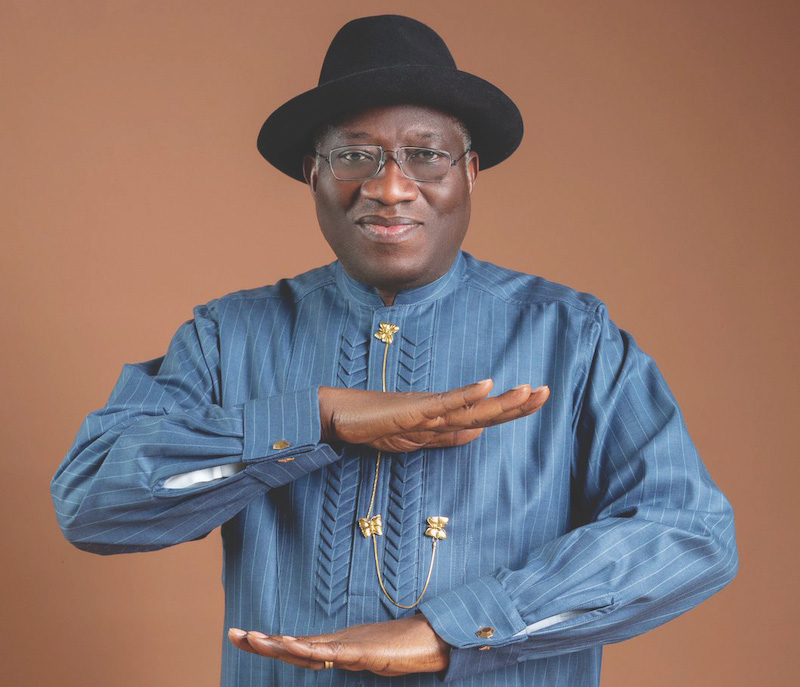
APC Chieftain Admits ‘Huge Mistake’ Over Opposition to Jonathan’s Fuel Subsidy Removal
The All Progressives Congress (APC) governorship candidate in Rivers State, Kingsley Chinda, has admitted that he and other federal lawmakers made a huge mistake by opposing former President Goodluck Jonathan’s proposed fuel subsidy removal, acknowledging that they failed to understand the wider economic implications of retaining the subsidy.
Chinda made the admission while speaking at the inauguration of the President Bola Ahmed Tinubu (PBAT) Door-to-Door Movement in Port Harcourt, the Rivers State capital.
Reflecting on the controversy surrounding Jonathan’s proposed policy, the former federal lawmaker described the position taken by members of the National Assembly at the time as a period of ignorance.
According to him, lawmakers who resisted the policy genuinely believed they were protecting ordinary Nigerians from the anticipated hardship associated with higher petrol prices.
However, he said they did not fully appreciate the economic consequences of maintaining the subsidy regime.
“We were in a period of ignorance when we stood against fuel subsidy removal under Jonathan’s administration,” Chinda said.
He explained that members of the House of Representatives, under the leadership of former Speaker Aminu Tambuwal, had gone as far as convening a parliamentary sitting on a Sunday to oppose the proposal.
The lawmakers, who were members of the Peoples Democratic Party (PDP) at the time, took the position despite Jonathan also belonging to the same party.
Chinda Questions Earlier Opposition
Chinda further argued that the opposition to subsidy removal was based on an incomplete understanding of how the subsidy arrangement affected Nigeria’s economy.
He said lawmakers and many Nigerians had been made to believe that the subsidy was an entirely free benefit, without appreciating the financial burden it placed on government revenue.
He subsequently described the subsidy arrangement as detrimental to the country’s economic development.
“Fuel subsidy is not just a scam. It is against the interests of this country. It is against the development of this country. It is against you and your future,” he declared.
The APC governorship candidate also recalled the financial difficulties experienced by the Federal Government and state administrations before the subsidy was discontinued.
According to him, the Federal Government frequently approached the National Assembly for approval to obtain loans to meet salary obligations, creating disagreements among lawmakers.
He alleged that some funds previously approved for capital projects were diverted from their intended purposes, making legislators reluctant to approve additional borrowing.
Chinda said the situation eventually forced lawmakers to reconsider their position because of the need to ensure that government workers received their salaries.
Defends Tinubu’s Subsidy Removal
Chinda also used the occasion to defend the removal of petrol subsidy by President Bola Tinubu, arguing that the decision had increased revenue available to the three tiers of government.
He maintained that the additional funds accruing to federal, state and local governments had helped ease the financial difficulties previously associated with meeting salary obligations.
“Today, all that is history. Salary is no longer a problem, both at the local government, state and federal levels. Why? Because you have more money to the states and more money to the local governments,” he said.
However, he acknowledged that the economic reforms had brought considerable difficulties to Nigerians, particularly households and businesses struggling with rising living costs.
He urged citizens to remain patient, expressing optimism that the country would gradually overcome its economic challenges.
“Things are not easy, but for every difficulty you face, just be rest assured that this country is gradually and slowly coming out of the abyss,” he added.
Jonathan’s 2012 Subsidy Controversy Revisited
Chinda’s comments have brought renewed attention to one of the most controversial economic decisions of Jonathan’s presidency.
On January 1, 2012, Jonathan’s administration announced the removal of petrol subsidy, triggering nationwide protests popularly known as the Occupy Nigeria movement.
The decision initially pushed petrol prices from ₦65 to about ₦141–₦145 per litre, provoking widespread public opposition, labour strikes and demonstrations.
Following the protests, the government partially reversed the decision, reducing the pump price to ₦97 per litre.
The International Monetary Fund (IMF) documented the controversy as one of Nigeria’s major attempts at fuel subsidy reform, highlighting the resistance that followed the policy announcement.
More than a decade later, Tinubu announced the removal of fuel subsidy during his inauguration on May 29, 2023, triggering another round of petrol price increases and economic pressures on households and businesses.
Chinda’s latest remarks therefore revisit the political disagreements surrounding the 2012 decision, particularly the role played by lawmakers who opposed Jonathan’s proposed reform.
His admission also raises questions about how political actors assess economic policies after years of implementation and changing economic circumstances.
The remarks were reported by Daily Post on November 25, 2026, following his appearance at the inauguration of the PBAT Door-to-Door Movement in Port Harcourt.
APC Chieftain Admits ‘Huge Mistake’ Over Opposition to Jonathan’s Fuel Subsidy Removal
Politics
2027: Makinde Reveals Plan With Atiku, Peter Obi To Stop Tinubu’s Re-Election
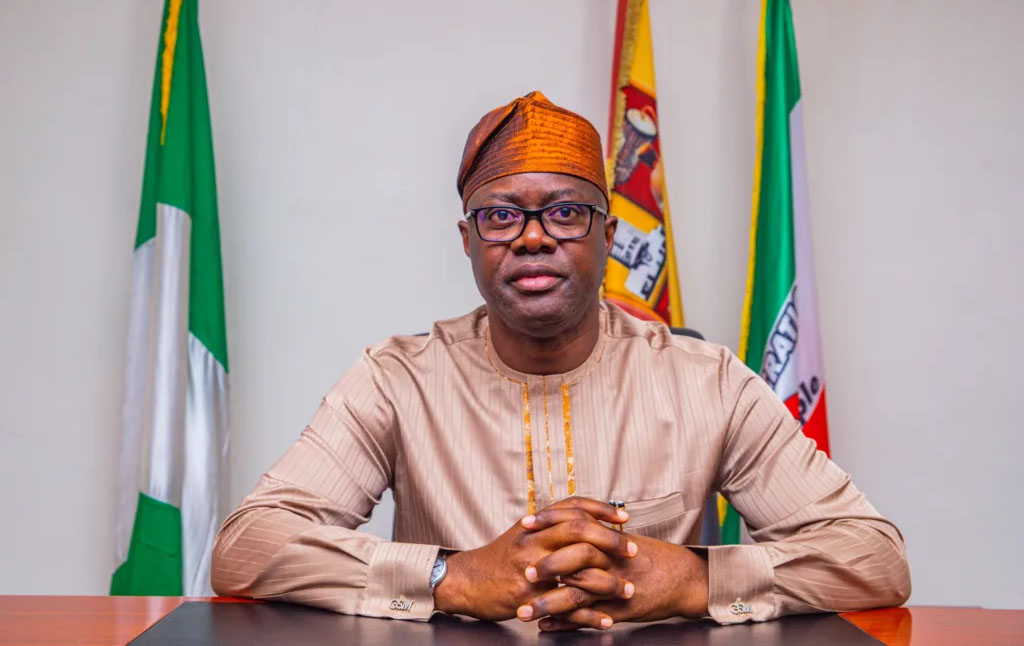
2027: Makinde Reveals Plan With Atiku, Peter Obi To Stop Tinubu’s Re-Election
Oyo State Governor, Seyi Makinde, has disclosed that he is working towards a political arrangement involving former Vice-President Atiku Abubakar and former Anambra State Governor Peter Obi to prevent President Bola Ahmed Tinubu from securing a second term in the 2027 presidential election.
Makinde, who is also the presidential candidate of the Allied Peoples Movement (APM), said the proposed understanding among the three opposition figures would be aimed at presenting a formidable challenge to the ruling All Progressives Congress (APC).
The governor made the disclosure during a conversation with Nigerian media personality, Chude Jideonwo, where he discussed the political calculations and possible opposition alliances ahead of the 2027 general elections.
According to Makinde, the proposed arrangement would not necessarily involve a formal merger of political parties, as witnessed during the formation of the APC ahead of the 2015 general elections.
He explained that the opposition figures were considering a different political understanding that could enable them to work together towards defeating Tinubu at the polls.
“There will be an arrangement between myself, Atiku, and Obi to stop President Tinubu from winning the 2027 presidential election, but it won’t be a coalition like the one Tinubu led in 2015 when opposition parties merged before the 2015 general election,” Makinde was quoted as saying.
The governor’s latest revelation comes amid growing consultations among opposition leaders seeking a common political strategy to challenge the APC’s hold on power in 2027.
Makinde has previously confirmed that discussions were ongoing between him, Atiku and Obi over a possible working relationship ahead of the election.
During an earlier interview with ARISE Television, the Oyo State governor indicated that the outcome of the discussions would depend on political realities, available data, public sentiment and the ability of the opposition to identify the most viable path forward.
He also maintained that the negotiations should be guided by national interest rather than individual presidential ambitions.
Makinde’s position suggests that opposition leaders may be considering a political arrangement that goes beyond conventional party alliances, particularly as they seek to avoid splitting votes among major contenders against the incumbent president.
However, the governor did not provide further details about the proposed arrangement, including whether it would involve a consensus presidential candidate, an agreement to support one of the three politicians or another form of electoral cooperation.
At the time of filing this report, neither Atiku Abubakar nor Peter Obi had publicly reacted to Makinde’s latest statement.
The development is expected to generate fresh debate within opposition political circles, particularly over the possibility of putting aside individual ambitions to present a united challenge to Tinubu in 2027.
With the next presidential election approaching, the ability of opposition leaders to reach an acceptable political understanding could become a major factor in determining the strength of the challenge against the ruling APC.
2027: Makinde Reveals Plan With Atiku, Peter Obi To Stop Tinubu’s Re-Election
-
 metro1 day ago
Oyoland Grand Chief Imam Moves to End Feud, Seeks Reconciliation Among Markaziyya, Adabiyyah, Mahdul ‘Arabi
-
 metro3 days ago
‘I Paid My Ex-Husband Before He Slept With Me’ – Islamic Preacher Kaola Makes Shocking Revelation
-
 News2 days ago
Omokri Arrives in Mexico to Assume Duty as Nigerian Ambassador, Thanks Govt for Ministerial Reception
-

 Education3 days ago
South-West Leaders Challenged to Emulate Kwankwaso, Invest in Education of Poor Children
-
 Politics3 days ago
2027: Makinde Invokes 1966 Coup, Questions Obi-Kwankwaso Ticket
-
 Politics2 days ago
Uduere Killings: Ughelli Chairman Accuses Omo-Agege’s Camp of Triggering Deadly Clash, Demands IGP Probe
-

 metro2 days ago
‘Shame on You’: Fayose Blasts Nigerian Youths Over Poor Protest Turnout
-
 metro2 days ago
Tinubu Gives Igboho Fresh Security Mandate Across South-West