

metro
Army defends killer soldiers, police kick, widow abandoned

The Lagos State Police Command on Wednesday slammed the Nigerian Army after the immediate past General Officer Commanding, 81 Division, Umar Musa, said the soldiers linked to the death of an Inspector, Monday Orukpe, reacted to a gunshot fired by the policeman.
Musa, a Major-General, was handing over to the new GOC, 81 Division, Obinna Ajunwa, when he made the statement at the division’s headquarters in the Victoria Island area of Lagos State.
While noting that investigations were still ongoing, Musa said preliminary findings revealed that the police officer shot at one of the soldiers during the altercation, adding that the bullet missed the soldier’s vital parts.
“The other soldiers reacted to the shot fired by the police officer and this led to their beating the policeman to death. We have paid a condolence visit to the Commissioner of Police to tell him that we will take necessary measures to prevent future occurrences of such nature.
“The injured soldier is in hospital receiving treatment and investigation is ongoing to ascertain the next line of action to be taken,” Musa said according to the News Agency of Nigeria.
Reacting to the statement, the state Police Public Relations Officer, SP Benjamin Hundeyin, in a rebuttal posted on his Twitter page on Wednesday, said no soldier was shot, adding that the soldiers attacked the policemen unprovoked.
He wrote, “Inasmuch as the Lagos State Police Command is in a grieving mood and has decided to toe the line of civility, it is pertinent to stand against misinformation.
READ ALSO:
- How we ‘captured’ those behind Owo Catholic Church attack – CDS
- 12-year-old kills Nigerian mother in US, blames intruder
- Tinubu, Peter Obi in war of words over fake news allegations
“The fact remains that on Wednesday, August 3, 2022, at the Trade Fair area of Lagos State, about 30 privates of the Nigerian Army attacked five policemen for stopping vehicles along their lane to pave way for a heavy-duty truck joining the expressway.
“After the soldiers had brutalised the ASP leading the team, taken out his magazine, and abducted two Inspectors with their rifles, the next Inspector they attempted to attack fired a single shot into the air – an act that made the soldiers retreat.
“At no point was anyone hit. While we mourn our fallen hero and pray for the total recovery of the second abducted Inspector, we urge Nigerians to disregard the claim that a soldier was shot as there is absolutely no truth to it.
“Meanwhile, the Lagos State Police Command looks forward to the fishing out of the soldiers behind the torture and murder of Inspector Monday Orukpe.”
Meanwhile, the wife of the late Inspector, Favour, while speaking to our correspondent on Tuesday, said she and her four children, alongside her husband’s relatives, had yet to receive any official visit from the army and the police authorities.
The mother of four, while demanding justice, said she started suspecting that something had happened to her husband after efforts to reach him on his mobile number proved abortive.
She said, “Normally, he is the type that always calls home to check on us. But on Wednesday, I didn’t hear from him and around 12pm and 2pm, I became worried but thought he was busy. Around 4pm, I called him but he didn’t pick the call. Around 8pm, I called again and he didn’t pick the call.
“Immediately, I started contacting his co-workers and got across to one of them around 5.30am the next day. He said my husband went out and promised he would call back when he returned.
“I searched for the admin number of the police station where my husband worked and the policeman that picked my call told me he went on a special duty across the river.”
Favour said she was making efforts to locate the whereabouts of her husband when she got the news that he was tortured to death by soldiers.
Describing her husband’s death as sudden, Favour said she was still nursing a three-month-old baby, Covenant, whose siblings, Divine, 13; Emmanuel, 11, and Praise, 7, had been distraught by the tragic loss of their father.
“They (army and police) just abandoned me; I have not heard from the Commissioner of Police, or the army, and not even his co-workers. They abandoned us because we are nobody. He (Monday) was our breadwinner.
“I want the soldiers that killed him to be brought to book. I also want the army to say what they would do for my children because I can’t take care of them alone. His corpse is still with the army,” she added.
Reacting to Favour’s allegation, Hundeyin said, “The command will not be that insensitive as to abandoning them. As a matter of fact, the Commissioner of Police, Abiodun Alabi, was in Abuja when the incident happened and for that reason, he took the next available flight back to Lagos.
“On his return, he had a meeting with the leadership of the Nigerian Army in Lagos. Three Brigadier-Generals came to the office and the CP demanded that the perpetrators of this act be fished out and made to face the law.
“The CP has delegated the Area Commander in FESTAC to represent the command and pay a visit to the family of the fallen hero.”
The spokesperson, 81 Division, Nigerian Army, Major Olaniyi Osoba, said, “The army has already paid a condolence visit to the police and the case is still under investigation. It’s an unfortunate incident but it is still undergoing administrative procedure.”
Punch












metro
Police Arrest Mother Over Alleged Brutal Abuse of 7-Year-Old Girl in Anambra
Police Arrest Mother Over Alleged Brutal Abuse of 7-Year-Old Girl in Anambra
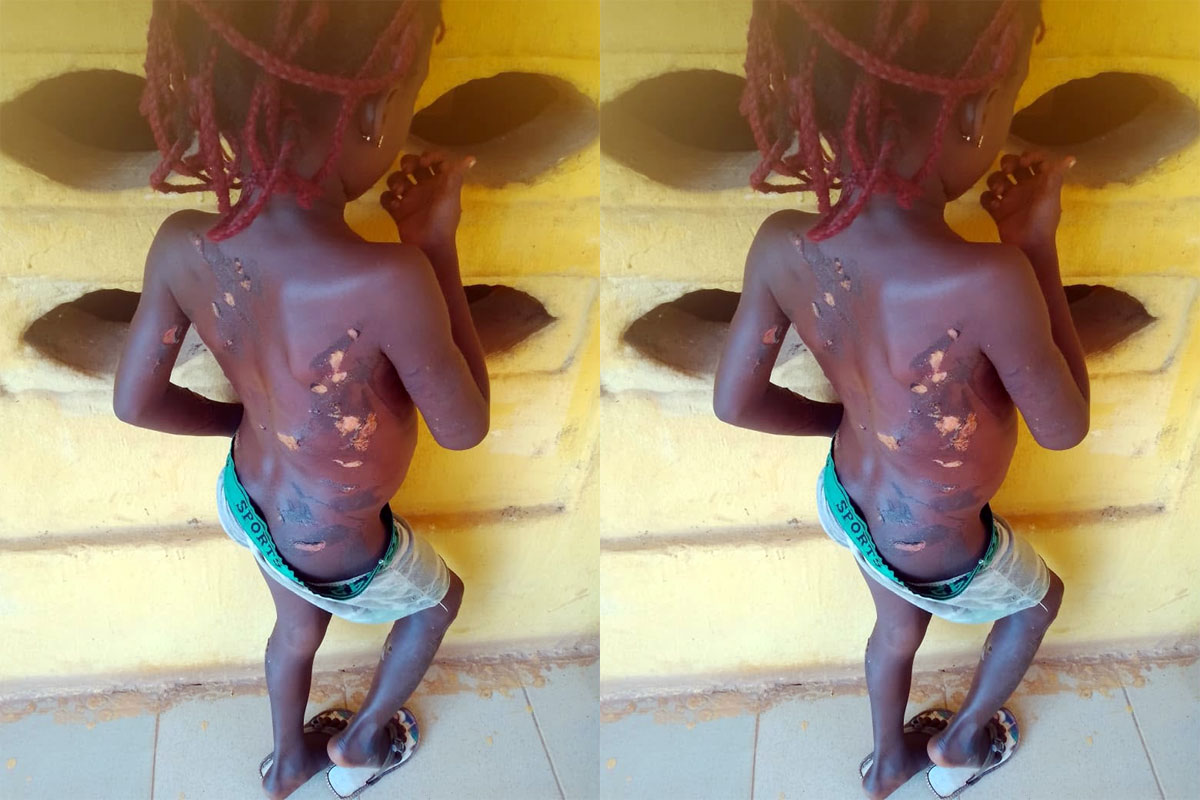
The Anambra State Police Command has arrested a 32-year-old woman, Mrs Ogechi Ofoma, following the alleged brutal physical abuse of her seven-year-old daughter in Obosi, Idemili North Local Government Area of the state.
The incident was reported to the police on the evening of Sunday, September 13, 2026, after the child was reportedly found with severe bodily injuries in the Awada-Obosi area.
According to the police, security personnel from the Ibollo Community and concerned residents intervened after becoming aware of the alleged abuse. The intervention led to the rescue of the child and the arrest of her mother.
Preliminary findings indicate that the girl suffered serious physical injuries. The police said the injuries were reportedly inflicted with a hot knife, although investigations are still ongoing to establish the circumstances surrounding the alleged assault.
The child has been taken under the care and protection of relevant authorities, while the Anambra State Commissioner for Women Affairs and Social Welfare is working with the Commissioner of Police, CP Nnanna Oji Ama, to facilitate urgent medical attention and welfare support for the victim.
READ ALSO:
- King’s College Concession: 115 Unity Colleges Shut as Education Workers Defy FG
- Petrol Price Hits N1,450/Litre as Middle East Crisis Pushes Oil Above $108
- Police Arrest Herbal Drink Producer as Ondo Death Toll Hits 29
The police have commenced an investigation into the incident to determine what led to the alleged abuse and whether any other person was involved.
Mrs Ofoma remains in police custody as investigators work to establish the full circumstances of the case and determine the appropriate legal action.
The intervention by the Ibollo Community security personnel and residents has also drawn attention to the role of communities in protecting children and reporting suspected cases of child abuse.
Cases involving children who suffer physical violence can require intervention from law enforcement, social welfare authorities and other child-protection agencies to ensure the victim’s immediate safety and access to appropriate care.
The Anambra Police Command commended the community members who responded to the situation and helped secure the child’s rescue.
The case comes amid continuing concerns over child abuse in Nigeria, particularly physical violence against children who may be unable to protect themselves or report their experiences.
Authorities are expected to establish the nature and extent of the girl’s injuries, examine available evidence and determine whether additional suspects should be questioned or arrested.
The outcome of the investigation will determine the next legal steps in the case.
Police Arrest Mother Over Alleged Brutal Abuse of 7-Year-Old Girl in Anambra
metro
Petrol Price Hits N1,450/Litre as Middle East Crisis Pushes Oil Above $108

Petrol Price Hits N1,450/Litre as Middle East Crisis Pushes Oil Above $108
The petrol price in Nigeria has climbed to as high as ₦1,450 per litre in Abuja and about ₦1,400 in parts of Lagos, following a fresh increase in the price of refined petroleum products amid a sharp rise in international crude oil prices.
The latest increase comes after the Dangote Petroleum Refinery raised its petrol gantry price by ₦85, from ₦1,265 to ₦1,350 per litre, effective September 12, 2026.
The adjustment, representing a 6.7 per cent increase, has added fresh pressure to the downstream petroleum market as international crude prices surge amid escalating Middle East tensions and concerns over disruptions to global oil supplies.
The latest Dangote adjustment is the refinery’s fourth increase in about three weeks. Its petrol gantry price has risen by roughly 15.9 per cent since August 21, when the price stood at ₦1,165 per litre.
The impact has already become visible at filling stations, although pump prices vary from one location and marketer to another depending on supply costs, transportation expenses, existing stock and pricing decisions.
In Abuja, some filling stations have raised their prices to ₦1,450 per litre, while others are selling between ₦1,395 and ₦1,400. The increases have also been recorded in Lagos and Ibadan, with several outlets reviewing their prices upwards.
The latest retail movements are coming against a dramatic surge in the international oil market. Brent crude, the global benchmark, has risen above $107 per barrel, with prices reaching about $108.33 amid renewed concerns over global supply.
The oil price rally has been driven by escalating military tensions in the Middle East, attacks on energy infrastructure and growing concerns over the movement of crude through major international shipping routes.
READ ALSO:
- Police Arrest Herbal Drink Producer as Ondo Death Toll Hits 29
- Troops Arrest Six Kidnap Suspects in Adamawa as Boko Haram, ISWAP Fighter Surrenders in Borno
- Labour Party Disowns Arabambi Over Peter Obi Records Lawsuits
A drone attack also forced Saudi Arabia to temporarily shut its East-West Pipeline, a key route that allows the country to transport crude to the Red Sea without passing through the Strait of Hormuz. The disruption has heightened concerns about the availability of global oil supplies.
The Strait of Hormuz remains another major source of concern for the global energy market because of its importance to international crude and petroleum-product shipments. Any prolonged disruption to the waterway could further tighten supplies and push oil prices higher.
The current oil shock is already having consequences beyond crude prices. Refiners and fuel suppliers around the world are facing higher replacement costs, while disruptions to shipping and refining infrastructure are increasing the cost of moving petroleum products.
That situation has direct implications for Nigeria despite the country’s growing domestic refining capacity.
The Dangote Refinery, which has become a major supplier of refined petroleum products in Nigeria, has itself adjusted its prices in response to changing international market conditions.
The refinery also increased its coastal price from ₦1,669,543 to ₦1,783,530 per metric tonne, an increase of ₦113,987 or 6.8 per cent.
The latest increase highlights the extent to which global crude prices continue to influence Nigeria’s domestic petroleum market even as local refining expands.
The refinery has also been increasing its crude purchases from Nigeria. It has secured at least 16 million barrels of Nigerian crude for October, equivalent to about 520,000 barrels per day, representing a substantial share of its roughly 700,000-barrel-per-day operating capacity.
The growing availability of locally refined petrol has reduced Nigeria’s dependence on imported finished products, but it does not completely insulate consumers from international oil-price movements. Crude is traded in a global market, while refinery economics, product replacement costs, shipping and other downstream expenses remain sensitive to international conditions.
The latest development is particularly significant because Nigeria’s petrol market is deregulated, meaning retail prices can respond to changes in crude prices, exchange rates, supply costs and competition among marketers.
The current increase could therefore put additional pressure on transport operators, logistics companies, manufacturers and households that depend heavily on petrol.
For consumers, higher pump prices can translate into increased transportation and distribution costs, while businesses that use petrol-powered generators and vehicles may also face higher operating expenses.
The effect could extend to food and other consumer goods if higher fuel and logistics costs are passed through the supply chain.
The renewed pressure comes at a time when the global refining industry is also facing significant disruptions.
David Bird, chief executive of the Dangote Refinery, recently warned that global fuel shortages could continue beyond the current Iran-related conflict because of damage to Middle Eastern refining infrastructure, high refinery utilisation rates and efforts by countries to rebuild depleted fuel inventories.
According to the refinery, the combination of the Middle East conflict and the Russia-Ukraine war has placed additional pressure on global refining capacity and fuel supplies.
Dangote has said it expects to expand its Nigerian refinery capacity further, with plans aimed at increasing its ability to supply refined products to Nigeria and international markets.
For Nigeria, greater domestic refining capacity could strengthen supply security over the long term, but the immediate impact of higher global crude prices is being felt through the cost of petroleum products.
The latest ₦1,450 per litre petrol price in parts of Abuja therefore reflects a combination of domestic pricing adjustments and a rapidly changing international oil market.
There is no uniform national pump price, and motorists in different states and even within the same city may continue to encounter different prices.
However, the movement of petrol towards ₦1,400–₦1,450 per litre at several filling stations signals renewed pressure on Nigerian consumers.
With Brent crude above $108 per barrel, continuing uncertainty around the Strait of Hormuz and other major oil routes, and concerns about global refining capacity, further volatility in petrol prices remains possible.
Unless international oil prices retreat significantly or supply disruptions ease, Nigerian motorists and businesses may continue to face pressure from elevated fuel prices in the coming days.
Petrol Price Hits N1,450/Litre as Middle East Crisis Pushes Oil Above $108
metro
Police Arrest Herbal Drink Producer as Ondo Death Toll Hits 29

Police Arrest Herbal Drink Producer as Ondo Death Toll Hits 29
The Ondo State Police Command has arrested Oloruntoba Babatunde, popularly known as “Meko”, over the alleged production of herbal drinks suspected to be linked to the deaths of 29 people in Odigbo Local Government Area of Ondo State.
The arrest followed reports of sudden and unexplained deaths among residents, particularly young people, in several communities after the consumption of suspected contaminated alcoholic drinks and herbal concoctions.
The Ondo State Government has confirmed 29 deaths and 60 suspected cases connected with the incident, prompting authorities to intensify measures against the production, sale and distribution of unverified alcoholic drinks and potentially dangerous herbal mixtures.
Police spokesman, DSP Abayomi Jimoh, said Babatunde was arrested after investigators traced suspected harmful substances to him. He is currently assisting the police as investigations continue into the source, production and distribution of the drinks.
The police said substances suspected to contain methanol were recovered and submitted for forensic examination. The laboratory analysis is expected to establish the exact composition of the substances and determine whether there is a direct link between them and the reported deaths.
The command stressed that the suspected presence of methanol has not yet been established as the definitive cause of all the deaths, as forensic examinations and post-mortem procedures are still ongoing.
The bodies of the deceased are undergoing medical and forensic procedures, with the police saying the outcome of the post-mortem examinations should provide additional evidence concerning the actual causes of death.
READ ALSO:
- Troops Arrest Six Kidnap Suspects in Adamawa as Boko Haram, ISWAP Fighter Surrenders in Borno
- Labour Party Disowns Arabambi Over Peter Obi Records Lawsuits
- ‘Completely False’ — Moreno Denies Using AI to Prepare Games
In a related enforcement operation, the police arrested 14 other suspects over alleged violations of the ban on the sale and consumption of dangerous alcoholic drinks and concoctions in the affected communities.
The suspects comprise people allegedly involved in selling or consuming the prohibited products. They have been transferred to the State Criminal Investigation Department (SCID) in Akure for further investigation.
The enforcement operation followed directives from the Commissioner of Police, CP Felix Ohagwu, targeting alcoholic drinks and concoctions considered dangerous or potentially life-threatening.
According to the police, investigators are examining every relevant lead, including the source, production, composition, distribution and consumption of the suspected drinks.
The development has also triggered intensified medical intervention in the affected communities. Health officials have been attending to people who consumed the suspected drinks, with affected residents taken to health facilities for assessment, testing and treatment.
The state government earlier moved to halt the production and distribution of unverified alcoholic beverages following the rapid increase in deaths.
The state Health Commissioner, Banji Awolowo-Ajaka, confirmed the 29 deaths and 60 suspected cases, with the affected communities spread across the Odigbo area. Earlier reports had put the death toll at 24 and later 27 before the government confirmed the figure of 29.
The police said the immediate situation had been brought under control following coordinated security, medical and investigative measures, but the investigation into the deaths remains active.
The authorities are expected to rely on laboratory results, post-mortem findings, recovered substances, statements from survivors and other evidence to establish exactly what caused the deaths and whether any individuals should face criminal charges.
The incident has renewed concerns over the dangers associated with unregulated alcoholic drinks and herbal concoctions, especially products whose ingredients and production processes are unknown or have not been subjected to safety checks.
Residents in the affected communities have been urged to avoid consuming unverified alcoholic or herbal products and to promptly seek medical attention if they develop symptoms after consuming suspicious substances.
The arrest of Babatunde and the 14 other suspects does not amount to a finding of guilt. They remain suspects while the police investigation and forensic examinations continue.
The authorities are yet to make a final determination on the precise cause of the deaths or establish through forensic evidence whether methanol contamination was responsible for the entire outbreak.
The outcome of the ongoing investigation is expected to determine whether the suspected producer and other persons arrested will face prosecution and what additional action may be taken against those involved in the manufacture, distribution or sale of potentially harmful drinks.
Police Arrest Herbal Drink Producer as Ondo Death Toll Hits 29
-

 metro3 days ago
Woman disguises as Muslim woman in Niqab to steal in Ado-Ekiti market, video sparks outrage
-

 metro3 days ago
Ondo Herbal Drink Tragedy: Survivor Vows Never to Drink Again as Death Toll Tops 30
-
 Business2 days ago
Dangote: ₦525 Refinery Shares Could Rise to ₦10,000
-

 metro3 days ago
Sokoto Cleric Stabbed Twice in Neck After Juma’at Prayer, Attacker Killed
-
 News1 day ago
SERAP Threatens Legal Action Over ₦126bn INEC Electoral Funds
-

 metro2 days ago
MURIC fires back at Peter Obi: Forget Sallah ceremony, free Nigerian Muslims
-
 metro2 days ago
Abia Police Arrest Father, Three Others Over Alleged Attempt to Sell 16-Month-Old Daughter
-

 International2 days ago
Trump Tells Supporters to ‘Cheat Like Hell’ Ahead of US Election