
News
Be impartial arbiters in election matters, Buhari tells judges

President Muhammadu Buhari has urged the judiciary to sustain the rule of law in Nigeria and ensure the integrity of participatory democracy by remaining impartial arbiters in pre and post-election matters.
He gave the advice on Thursday at the inauguration of the Body of Benchers Complex in Abuja.
Buhari at another event recalled how the signing of a peace accord with former President Goodluck Jonathan and other presidential candidates in the build-up to the 2015 elections contributed to the peaceful outcome of the polls.
He spoke at State House, Abuja, while receiving the National Peace Committee (NPC), led by former military Head of State, General Abdusalami Abubakar.
Speaking while inaugurating the Body of Benchers Complex in Abuja, the President noted that the judiciary had a major role to play in safeguarding fairness in the 2023 elections and ensuring the sanctity of the democratic process.
He said, “As the 2023 general election draws near, the significance of the legal profession becomes even more pronounced considering the vital roles you play in the electioneering process, both at the pre and post-election stages. I hope you maintain the position of an honest arbiter.”
He said his administration would continue to respect and elevate the rule of law, adding, “Adherence to the rule of law is critical to the progress of any society and this administration has not reneged in its commitment to this ideal.”
While congratulating the Body of Benchers, chaired by Chief Wole Olanipekun, for the successful completion of the complex started in 2008, the President commended the body for keeping the wheel of justice turning by providing a solid foundation for the rule of law, with over five decades of proven track record.
He said, “I am aware that the Body of Benchers is responsible for the formal call-to-Bar of persons seeking to become legal practitioners as well as ensuring the highest standard of discipline within the profession.
“I consider this body as critical to the legal profession. I say this because the membership of the body cuts across all facets of government and the legal profession, particularly the executive, legislature, judiciary and the bar.
“Furthermore, all Justices of the Supreme Court, retired Chief Justices of Nigeria, who are alive, president of the Court of Appeal and Presiding Justices, chief judges of the high courts, the federal and state attorneys general, chairmen of the judiciary committees in the two houses of the National Assembly, leading members of the Bar, and others constitute this body.
“I am unaware of any other institution or organ in the legal profession that draws its membership from all segments of the profession like the Body of Benchers. No wonder, the statute describes it as consisting of men of the highest distinction in the legal profession.”
Buhari pledged to support improvement in the welfare of staff of the judiciary after an on-going review.
He added, “I recall that on the 28th July, 2022 when I played host to the leadership of the Body of Benchers, its Chairman, Chief Wole Olanipekun, SAN, was very emphatic in making a case for the welfare of judicial officers in the country. I am not unaware of the passion and commitment of Chief Olanipekun in championing the cause of the welfare of judicial officers in Nigeria, as well as the commitment of the body on this matter.
“May I restate my commitment towards this ideal? In similar vein, I have been intimated of the engagement of consultants by the Body, through its Judiciary Advisory Committee, to amongst other things, come up with a peer review of the conditions of service of judicial officers in Nigeria with other countries and jurisdictions, within and outside Africa.
“I earnestly look forward to the completion of this peer review and the submission of recommendations, as this will assist us to review the welfare packages. A society, where justice thrives is one that can be assured of development. For Nigeria to effectively embrace sustainable development, institutions such as the legal profession must remain deeply committed towards promoting good governance.”
Buhari praised the initiative of the Body of Benchers to build the complex, and extend invitation to his office for the inauguration.


Earlier, Olanipekun explained that the idea of the complex was mooted in 1992, and the ground-breaking ceremony was held on November 28, 2008.
“So much time, talent and treasure has been invested in this facility,” he said, explaining that the complex has a 3,000 sitting capacity hall, 240 capacity meeting room, 1000 capacity banquet hall, another 1000 capacity multipurpose hall, offices for staff and a library.
Chief Justice of Nigeria, Justice Olukayode Ariwoola, in his remarks, said the sacrifices of past chairmen and presidents of the Body of Benchers had eventually paid off.
Ariwoola urged the body to put the facility to good use, particularly, in hosting the call to bar.
Attorney General of the Federation and Minister of Justice, Abubakar Malami, SAN, congratulated Ariwoola on his confirmation, and noted that the Body of Benchers complex transcended a physical structure
He said the edifice captured the essence of the body in the conscience of legal professionals and created an enabling environment for the administration of the rule of law.
Meanwhile, Buhari while playing host to the NPC, said, “You may recall that President Goodluck Ebele Jonathan and I signed the first National Peace Accord before the 2015 elections. It is my conviction that it contributed significantly to the peaceful outcome of the 2015 election.”
He urged all signatories to the 2023 election Peace Accord and their supporters to abide by its content and spirit.
Buhari said the signing of the First National Peace Accord by the presidential candidates in the 2023 election earlier at a separate event on Thursday was aimed at committing political parties, aspirants and their supporters to conduct their campaigns in a peaceful manner, devoid of ethnic, religious and hate speeches that could mar the upcoming elections.
The President said, “The timing of the First National Peace Accord is significant considering political party campaigns have already commenced in the country. The initiatives undertaken by the NPC are commendable, as these efforts would ensure issue-based campaigns.
“I look forward to the second phase of the signing of the National Peace Accord coming up in January 2023. It is my hope that the National Peace Committee continues this important work post-2023.”




News
Former Minister Diezani Speaks on Emotional Toll of 11-Year Battle
Former Minister Diezani Speaks on Emotional Toll of 11-Year Battle
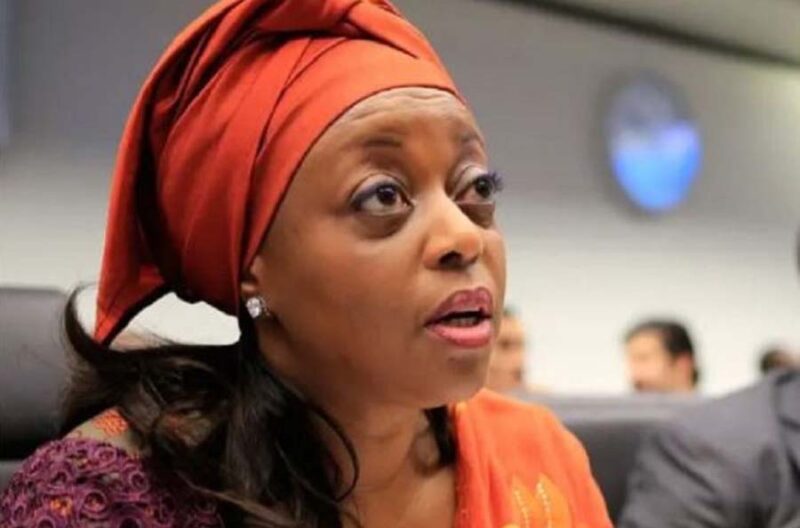
Former Minister of Petroleum Resources, Diezani Alison-Madueke, has described her nearly 11-year legal and personal ordeal as “arduous” and “traumatic,” saying her faith in God and family support have remained central to helping her endure the long-running experience.
In a video circulating online and first reported by Tribune Online, Alison-Madueke reflected on what she said has been almost 11 years of challenges linked to her time in public office, stating that the experience has affected not only her but also members of her immediate family.
She specifically referenced the emotional toll on her elderly mother in Port Harcourt and her son, noting that the prolonged period of uncertainty had placed significant strain on close relatives who continued to support her throughout the process.
The former minister expressed gratitude to friends and associates who stood by her during the years of legal scrutiny and public controversy, saying she had remained “surrounded by friends” despite the difficulties.
According to her, the support system around her played a crucial role in sustaining her through what she described as a prolonged period of hardship and emotional pressure.
READ ALSO:
- Iyabo Obasanjo Secures PDP Senate Ticket After Party Switch
- P-Square Feud: Peter Okoye’s Absence Delays Jude Okoye’s N1.3bn Fraud Trial
- 2027: I’ll Negotiate With Bandits Who Seek Peace, Fight Those Who Choose Violence — Peter Obi
Alison-Madueke, who served as Nigeria’s petroleum minister between 2010 and 2015, has faced multiple corruption-related allegations in Nigeria and abroad, including accusations linked to the management of oil revenues during her tenure. She has consistently denied wrongdoing.
Her legal challenges have included investigations and proceedings in the United Kingdom, where authorities previously sought to recover alleged proceeds of corruption, as well as ongoing scrutiny from Nigerian anti-corruption agencies over her time in office.
Despite the controversies, she reiterated her belief that her eventual vindication lies in divine judgment, maintaining a strong religious tone throughout her remarks.
“God will always do as God wills, and God will be God,” she said, adding that “God is not a man that He should lie.”
She further stated:
“It has been almost 11 years I’ve been here. I did my job to the best of my ability… God is not a man that He should lie. God is God, and we thank Him. Praise the Lord.”
Alison-Madueke’s comments add to ongoing public interest in her case, which remains one of the most high-profile corruption-related controversies involving a former Nigerian government official.
The video has continued to generate reactions online, with renewed discussion around accountability, due process, and the personal toll of prolonged legal battles involving former public office holders.
Former Minister Diezani Speaks on Emotional Toll of 11-Year Battle
News
NLC, TUC Demand New Minimum Wage as Inflation Bites
NLC, TUC Demand New Minimum Wage as Inflation Bites
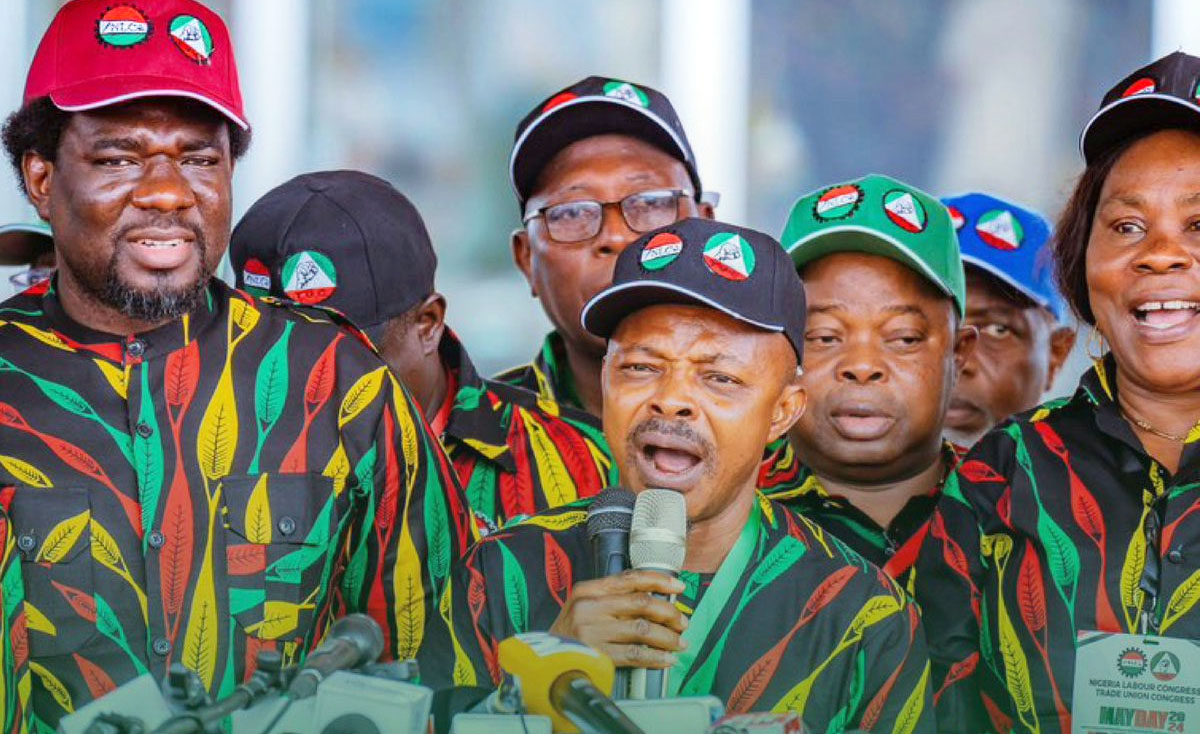
The Nigeria Labour Congress (NLC) and the Trade Union Congress (TUC) have announced plans to begin negotiations with the Federal Government in July 2026 for a fresh minimum wage review, insisting that the current N70,000 minimum wage can no longer sustain Nigerian workers amid rising inflation and worsening economic hardship.
The labour unions disclosed their position during a joint address at the 114th International Labour Conference (ILC) in Geneva, Switzerland, where they called for the introduction of a “living wage” that reflects current economic realities.
According to the unions, soaring prices of food, transportation, housing, healthcare, electricity and other essential services have significantly eroded the value of workers’ earnings since the implementation of the current wage structure in 2024.
The NLC and TUC argued that while the wage increase approved by President Bola Tinubu’s administration provided temporary relief, persistent inflation and the depreciation of the naira have left millions of workers struggling to meet their basic needs.
Nigeria’s current N70,000 minimum wage was signed into law by President Bola Tinubu on July 18, 2024, following months of negotiations between organised labour, state governors and the Federal Government.
The wage law initially provided for a three-year review cycle. However, the Federal Government later adjusted the framework, making the review period every two years, effectively setting 2026 as the next review point.
In preparation for the review, labour leaders said they would formally engage the government in July 2026 to avoid the delays and disputes that characterised previous wage negotiations.
“The current Act expires early next year, and we have announced that renegotiation will commence by July 2026 to avoid the painful delays of the past,” the unions stated.
They added that organised labour would immediately write to the Federal Government to demand the commencement of discussions on a new wage framework.
READ ALSO:
- Gunmen Kill Two Soldiers, Police Officer in Plateau Midnight Raid
- Emeka Ike Files N10bn Lawsuit Against INEC, Wike’s Aide Over Voter Data Leak
- Why I Have Not Resumed as Ambassador to Mexico — Reno Omokri
The labour centres also strongly opposed any attempt to impose taxes on minimum wage earners, describing such proposals as anti-worker and insensitive to the current economic realities.
According to the unions, taxing low-income earners would worsen poverty and deepen hardship for millions of Nigerians already battling high living costs.
“We demand nothing less than a genuine living wage that reflects today’s harsh economic realities. We also demand immediate relief measures by governments at all levels until a new minimum wage is signed into law. We reject outright any attempt to tax the minimum wage or impose further burdens on the poor,” the labour leaders said.
Beyond wage negotiations, the unions urged federal and state governments to implement emergency relief programmes to cushion the effects of inflation on workers and vulnerable citizens.
They argued that many Nigerians are facing severe financial pressure due to rising costs of transportation, education, healthcare, rent and utilities.
According to labour leaders, waiting until the completion of wage negotiations could leave workers exposed to further economic hardship.
The NLC and TUC also used the Geneva conference to highlight Nigeria’s growing security challenges, warning that insecurity is increasingly affecting workers and economic activities across the country.
The unions said persistent attacks by terrorists, bandits and kidnappers have disrupted livelihoods, displaced communities and made commuting unsafe in several parts of Nigeria.
They noted that thousands of Nigerians have reportedly been killed or displaced by violence in recent months, with the situation negatively impacting productivity and national development.
Labour leaders warned that worsening insecurity could trigger wider social and industrial tensions if urgent measures are not taken to address the crisis.
The unions further expressed concern over rising poverty and unemployment, arguing that economic reforms have yet to translate into improved living standards for ordinary Nigerians.
According to organised labour, millions of citizens continue to struggle with declining purchasing power despite government efforts aimed at stabilising the economy.
The labour leaders maintained that future wage negotiations must focus on protecting workers’ real incomes rather than simply announcing nominal salary increases that are quickly eroded by inflation.
Ahead of the 2027 general elections, the NLC and TUC disclosed plans to develop a charter of demands that will guide their engagement with political parties and candidates.
The charter is expected to focus on key issues including security, job creation, wage reforms, healthcare, education, social protection and respect for labour rights.
The unions said support from organised labour would be reserved for political actors willing to commit to policies that improve workers’ welfare and address Nigeria’s economic challenges.
The labour organisations also accused some state governments of interfering in union affairs and attempting to undermine democratically elected labour leadership structures.
They insisted that organised labour would resist any effort to weaken union independence, stressing that workers’ rights and collective bargaining must remain protected.
The NLC and TUC maintained that the forthcoming minimum wage negotiations will be crucial in determining whether Nigerian workers receive a wage that reflects current economic realities or continue to face declining living standards amid rising inflation.
NLC, TUC Demand New Minimum Wage as Inflation Bites
News
Shot by Bandits, Saved by Soldiers: Dramatic Rescue of General’s Wife in Katsina

Shot by Bandits, Saved by Soldiers: Dramatic Rescue of General’s Wife in Katsina
Nigerian Army troops have rescued the wife of retired Major General Rabe Abubakar, a former Director of Defence Information, following a fierce gun battle with armed bandits in Katsina State.
The dramatic rescue came days after the woman was abducted by gunmen in Matazu Local Government Area, one of several communities in Katsina that have come under repeated attacks by bandits involved in kidnapping, cattle rustling and other violent crimes.
The operation, conducted by troops of Operation FANSAN YANMA under the military’s ongoing Operation CLEAN SWEEP III, was launched after intelligence reports pinpointed the movement of the kidnappers and their victim.
Security analyst Zagazola Makama disclosed the development in a report posted on his verified X account on Monday night, citing military sources.
According to the sources, troops tracked the kidnappers to Tunga village, where they engaged the criminals during a search-and-rescue mission. Overwhelmed by the military offensive, the bandits reportedly fled the area, abandoning their captive.
READ ALSO:
- If Nigeria Is Not Divided, We Will Never Have Any Sense in the North
- Trump Says Iran Deal ‘All Signed’ As Strait Of Hormuz Partially Reopens
- UK Announces Social Media Ban for Children Under 16
“The bandits shot her and fled when we made contact at Tunga village. We have rescued Mrs. Abubakar. She is bleeding. We have given her first aid and are moving her for urgent medical attention,” a military source was quoted as saying.
Although injured during the encounter, Mrs. Abubakar was stabilised by military personnel and evacuated for urgent medical treatment.
The rescue is being viewed as a significant breakthrough in the fight against banditry in the North-West, particularly in Katsina State, which has remained one of the epicentres of the security crisis despite sustained military operations.
Maj.-Gen. Abubakar, who served as Director of Defence Information between 2015 and 2018, was the military’s chief spokesman during some of Nigeria’s most challenging security operations. His wife’s abduction had heightened concerns about the growing audacity of criminal gangs operating across the region.
In recent months, troops of Operation FANSAN YANMA have intensified offensives against bandit enclaves in Katsina, Zamfara, Sokoto and parts of Kebbi States, leading to the rescue of several kidnapped victims and the neutralisation of scores of armed criminals.
Military authorities have yet to issue an official statement on the latest operation, but security sources described the rescue as a major success in ongoing efforts to restore security across the North-West.
Shot by Bandits, Saved by Soldiers: Dramatic Rescue of General’s Wife in Katsina
-

 Politics3 days ago
BREAKING: Court Orders Deregistration of ADC, Four Other Political Parties
-

 News2 days ago
Shot by Bandits, Saved by Soldiers: Dramatic Rescue of General’s Wife in Katsina
-

 metro2 days ago
Drugged, Beaten, Forced to Sleep with 60 Men Daily: Teenage Girl’s Harrowing Escape from Lagos Traffickers
-
 Politics3 days ago
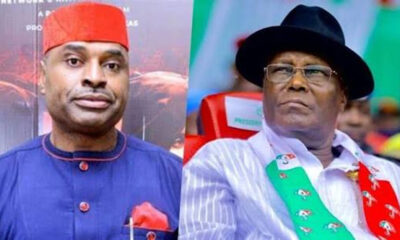
BREAKING: Kenneth Okonkwo Withdraws Support for Atiku
-

 Opinion2 days ago
If Nigeria Is Not Divided, We Will Never Have Any Sense in the North
-

 metro12 hours ago
BREAKING: UK Court Clears Diezani Alison-Madueke of All Bribery Charges
-
 Politics3 days ago
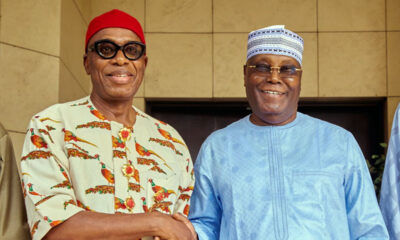
Just in: ADC Formally Unveils Atiku-Amaechi Presidential Ticket
-

 Politics2 days ago
Atiku Camp Rejects Court-Ordered ADC Deregistration, Alleges Plot to Cripple Opposition