

Politics
Democrats retain US Senate control, House undecided, Trump makes unsubstantial claims

The Democrats will retain majority control of the US Senate after winning a pivotal race in the state of Nevada.
Senator Catherine Cortez Masto is projected to defeat Republican challenger Adam Laxalt, who was backed by former President Donald Trump.
The results amount to the best midterm performance for a sitting party in 20 years.
US President Joe Biden said he was incredibly pleased, and it was time for Republicans to decide “who they are”.
Democratic Senate Majority leader, Chuck Schumer, said the results showed the American people had rejected what he called the “violent rhetoric” of the Republican Party.
The Democrats will now have 50 Senate seats, with Republicans currently on 49.
The remaining seat, Georgia, is going to a run-off in December. In the event of the Senate being divided equally between the two parties, Vice-President Kamala Harris has the casting vote.
Republicans could still take control of the US House of Representatives as votes continue to be tallied from a handful of districts after Tuesday’s elections.
If the Republicans win the House they could still thwart much of Biden’s agenda.
“I’m not surprised by the turnout. I’m incredibly pleased. And I think it’s a reflection of the quality of our candidates,” Biden said in Cambodia, where he is attending a summit.
Schumer said the country “showed that we believed in our democracy and that the roots are strong and it will prevail as long as we fight for it”.
Ms Cortez Masto was neck-and-neck with her challenger Adam Laxalt throughout the midterm elections.
The Republican gained notoriety two years ago for championing defeated former President Trump’s false claims of election fraud. One recent poll had Laxalt making inroads with Latino voters, who make up one in five eligible voters in Nevada.
But Cortez Masto managed to secure victory, and this decided her party’s control of the Senate.
The result is a big blow to the Republicans, who were hoping for a “red wave” – an electoral rout which would deliver a harsh rebuke of President Biden and his Democrats.
While the Republicans have made modest gains and remain favoured to win the House of Representatives, the Democrats have performed much better than expected.

Trump – who continues to insist, falsely, that he won the 2020 presidential election – has been making unsubstantiated claims about the midterms.
“The Democrats are finding all sorts of votes in Nevada and Arizona. What a disgrace that this can be allowed to happen!” he posted on his Truth Social platform on Friday.
Trump is expected to announce that he will run for president again in 2024, but candidates he backed received mixed results in the midterms.
Republican Senator Josh Hawley – who represents Missouri – said after the Senate result that the old party was “dead” and it was time for something new.
Source: BBC News except the headline











Politics
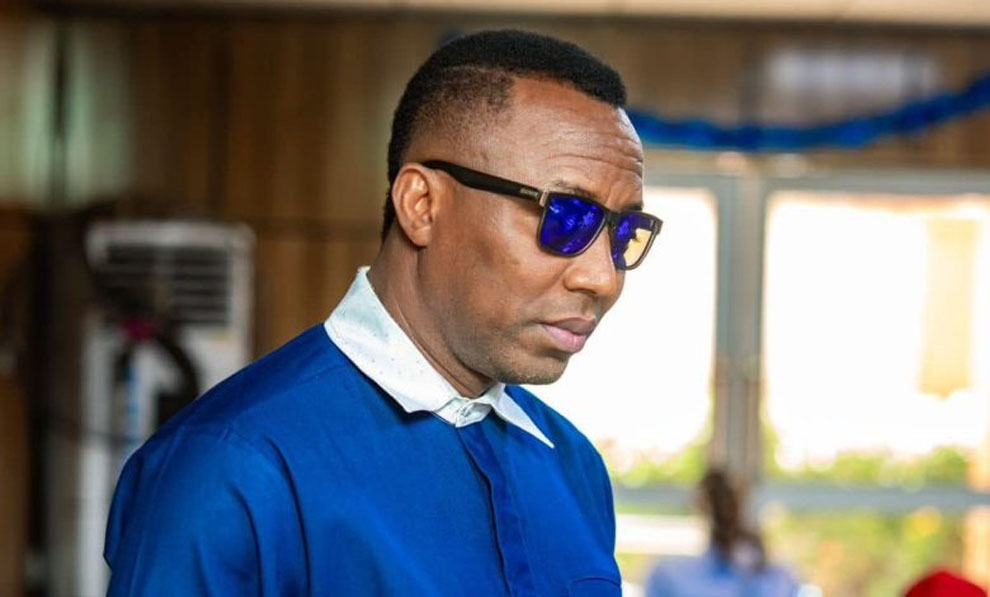
Sowore Vows to Restore Petrol Subsidy If Elected President in 2027
Sowore Vows to Restore Petrol Subsidy If Elected President in 2027
Politics
2027 Elections: Atiku Raises Alarm Over Outdated BVAS Software, Warns of Manipulation Risks

2027 Elections: Atiku Raises Alarm Over Outdated BVAS Software, Warns of Manipulation Risks
Former Vice President and African Democratic Congress (ADC) presidential candidate Atiku Abubakar has raised serious concerns over the continued use of an outdated operating system on the Bimodal Voter Accreditation System (BVAS), warning that the technology could expose Nigeria’s 2027 electoral process to cybersecurity threats and manipulation. Atiku’s concerns follow the recent mock accreditation exercise conducted in Osun State on August 1, 2026, and comments by the Independent National Electoral Commission’s (INEC) Director of ICT, Dr Lawrence Bayode. During an interview on Arise TV, Bayode disclosed that the BVAS devices, first introduced into Nigeria’s electoral process in 2021, currently operate on Android version 10.
In a statement issued by his Media Office in Abuja on Tuesday, Atiku pointed out that Android 10 reached its end-of-life status in 2023 and no longer receives regular security updates or patches. He argued that running critical electoral infrastructure on an end-of-life operating system creates a broad attack surface that could be exploited by cybercriminals. The ADC presidential candidate questioned why INEC, despite what he described as its substantial budget, had failed to upgrade the BVAS software ahead of the 2027 general elections. He also asked why upcoming off-cycle elections, including the Osun governorship election, could not be used as an opportunity to test an upgraded system.
Describing INEC’s handling of the matter as “suspicious,” Atiku alleged that continued reliance on outdated technology could undermine public confidence in the electoral process. He warned that vulnerabilities in the legacy operating system could potentially be exploited to gain unauthorised access to BVAS devices and tamper with stored voter accreditation information or polling unit result data before transmission. The former Vice President also expressed concern over the transmission of polling unit results through public telecommunications networks to the INEC Result Viewing Portal (IReV). He argued that outdated security and cryptographic components could expose the transmission process to cyber threats, including attempts to intercept, block, or manipulate electoral data. He specifically warned of the risk of Man-in-the-Middle attacks, through which sophisticated actors could intercept, block, or manipulate data packets over the air.
READ ALSO:
- Nigerian Army Opens 2026/2027 Short Service Combatant Commission Recruitment – Apply Now
- US, Iran Nearing Peace Agreement, Pakistan Defence Minister
- Jingir Defends Muslim-Muslim Ticket Stance, Insists Position Predates Tinubu Administration
Atiku further raised questions about the biometric functions of BVAS, which rely on fingerprint and facial recognition technologies for voter accreditation. He argued that an outdated biometric framework could affect the accuracy and reliability of the accreditation process and potentially make the system more vulnerable to attempts to bypass its verification mechanisms. He also warned that software defects associated with legacy systems could result in application crashes, particularly during periods of heavy usage, leading to delays in voter accreditation at polling units. Against this backdrop, Atiku backed calls by cybersecurity experts for an independent and comprehensive audit of the BVAS hardware and software before the 2027 elections. He maintained that deploying critical national infrastructure on an end-of-life operating system could widen the system’s attack surface and expose Nigeria’s electoral process to avoidable risks.
In a related development, a coalition of civil society organisations under the aegis of the Nigerian Civil Society Situation Room has raised concerns over INEC’s introduction of an electronic EC8A on the BVAS and a new backend validation process before results are published on IReV. The groups warned that the validation process is not visible to the public, polling agents, or election observers, while INEC has yet to explain what is being validated, who conducts the review, or how long the process should take. The CSOs argued that the introduction of the electronic EC8A could create multiple versions of the same polling-unit result, potentially generating confusion in the event of discrepancies. They urged INEC to abolish the backend validation of transmitted results before publication on IReV or, at the very least, subject the process to public and independent scrutiny.
However, INEC has previously stated that upgrades have been introduced to the BVAS system to curb manipulation of results transmitted to IReV. INEC Chairman Prof. Joash Amupitan disclosed that the BVAS system now performs internal validation checks to ensure that the total votes entered do not exceed the number of accredited voters, with over-voting automatically flagged. Amupitan noted that these upgrades were tested during the FCT Area Council election and found to work correctly, with an average of 97 per cent of results uploaded to IReV. The commission has also indicated it is considering conducting a comprehensive audit of its electoral technology systems and staging a mock presidential election as part of efforts to strengthen preparations for the 2027 general elections.
2027 Elections: Atiku Raises Alarm Over Outdated BVAS Software, Warns of Manipulation Risks
Politics
Keep Religion Out of Nigeria’s ‘Dirty Politics,’ Gumi Tells Jingir

-

 Sports2 days ago
After Cameroon Heartbreak, Falcons Battle Banyana Thursday for World Cup Lifeline
-

 Business2 days ago
Xenophobia: MTN, Stanbic IBTC, other South African firms face pressure in Nigeria
-

 Politics2 days ago
Aregbesola: I’ve never slept with another woman since marriage
-

 metro2 days ago
“I Begged for Years” – Nigerian Man Says Wife Never Forgave Him Over Social Media Incident
-

 metro2 days ago
ISWAP Executes Four Shura Council Members Amid Deepening Leadership Crisis
-

 News3 days ago
Italy-Based Businessman Excretes 98 Wraps of Cocaine at Enugu Airport
-

 News2 days ago
Nigeria Immigration Deploys Passport Intervention Team to UK to Clear Application Backlog
-

 Education2 days ago
Nigerian Mother Gifts Son a Live Goat After Polytechnic Graduation