

News
N89tn stamp duty biggest Nigeria’s financial scam – Sowore

- Cartel, NIPOST workers embezzle stamp duty funds – Garba Shehu
Pro-democracy campaigner and presidential candidate of the African Action Alliance, Omoyele Sowore, has accused Attorney-General of the Federation and Minister of Justice, Abubakar Malami, and the Central Bank Governor, Godwin Emefiele, of colluding to cover up N89.09tn stamp duty alleged scam.
Sowore, who spoke on Tuesday described the stamp duty issue as “monumental corruption” and Nigeria’s biggest financial scam.
A member of the House of Representatives from Jigawa, Gudaji Kazaure, had in a video that had gone viral, accused Emefiele of attempts to cover up facts surrounding the collection of the controversial N89.09 trillion Stamp Duty funds.
The lawmaker further alleged that he was deliberately being denied access to present a preliminary report of a committee set up by President Muhammadu Buhari to look into the alleged stamp duty funds being withheld by the CBN led by Emefiele.
Kazaure also appealed to President Buhari to either allow him to present his report to him or immediately order a thorough investigation of the alleged stamp duty funds fraud.
However, the presidency through the Senior Special Assistant on Media and Publicity to President Buhari, Malam Garba Shehu, described Kazaure’s committee as illegal which was dissolved on the directive of Mr President.
Shehu said, “he entire net worth of the nation’s financial sector, the assets of the banking sector put together are not worth N50 trillion, not to talk of the kind of money he is talking about.”
In his reaction, Sowore listed five national focal financial problems the alleged diverted N89.09tn Stamp Duty funds could solve, adding that it was unfortunate that many Nigerian media and most Nigerians kept mute over the matter.
This was despite Kazaure’s revelation that the Department of State Services arrested the CBN governor but granted him bail after claiming he had heart issues.
“The Stamp Duty Scam is likely Nigeria’s biggest financial scam in recent times. It was perpetrated by the Central Bank Governor, Godwin Emefiele ,and President Muhammadu Buhari and his cronies,” said Sowore.
Cartel, NIPOST workers embezzle stamp duty funds – Garba Shehu
Meanwhile, the Presidency has alleged that a cartel colluded with some staff of the Nigerian Postal Service (NIPOST), to embezzle money realised from Stamp Duty.
Senior Special Assistant to the President on Media and Publicity, Garba Shehu, made the allegation on Tuesday, in a response to the challenge thrown at him by a member of the House of Representatives, Muhammadu Gudaji Kazaure.
Kazaure alleged that N89 trillion collected as Stamp Duty had gone missing.
The lawmaker also claimed that President Muhammadu Buhari constituted a committee, with him as secretary, to recover the missing fund.
But Shehu, in a statement issued Tuesday, noted that President Buhari disbanded the committee because of lack of progress in its assignment.
He said on assumption of office in 2015, the President had noticed an anomaly in the law which mandates the collection of a token on banking transactions and attempted to rectify it.
Shehu said the cartel that had been prevented from stealing the collection, came back in the form of consultants to recover the Stamp Duty.
The statement read, “President Muhammadu Buhari came into office in 2015 to find that a law, which stipulated for the collection of a token on banking transactions existed but was not being correctly implemented
“This anomaly arose because certain characters apparently formed a cartel with collaborators in the Nigerian Postal Service, NIPOST and were allegedly collecting and pocketing this money.
“Soon after, a non-government organisation posited to the administration that the Nigerian government had lost the sum of over N20 trillion to the Nigerian Inter-bank Settlement System (NIBSS) between 2013-2016 in this regard, claiming that the said sum could be recovered and paid back into the government coffers.
“The consultants asked to be paid a professional fee of 7.5 percent and were placed under the supervision of the Secretary to the Government of the Federation, SGF.
“Following the lack of progress in the promised recovery, the late Chief of Staff to the President, Abba Kyari, wrote on March 8, 2018, to the SGF conveying a presidential directive that following the lack of progress and several expressed concerns received, the activities of the consultants be discontinued.
“In the aftermath of this dismissal, the consultants sued the government.
“A court of competent jurisdiction subsequently ruled in favour of the government.
“Arising from the outcome of the litigation and the well known controversy on the legally responsible agent for collecting this levy, the administration went to the National Assembly and caused an amendment to the law and removed NIPOST from the duty of its collection.
“Having lost a potentially “lucrative” line of “business”, the sacked characters returned to the drawing board to formulate one form of trick or another to intimidate the government, but the vigilant teams of the administration kept them at bay.
“Lately, they returned to the government through Hon. Muhammadu Gudaji Kazaure with a plan to track the so-called lost stamp duties with the erstwhile consultant as chairman and Hon. Gudaji as secretary.
“When it emerged that the petitioner and lead consultant of the committee the President had dissolved via the late Abba Kyari’s letter of March 28 had masqueraded himself and re-emerged as the chairman of the new recovery committee championed by the Hon. Gudaji, the President rescinded the approval he gave and asked that it be stopped from operating under the seal of his office.
“In addition to this committee being chaired by a petitioner, there were also other concerns relating to natural justice and fair hearing in having the Chief Justice of the Federation as a committee member and a serving member of the House of Representatives as Secretary, which are not in line with Section 5(1),(a)&(b) of the 1999 constitution of the Federal Republic of Nigeria (as amended).
“Once the President rescinded his approval to constitute this Committee, lost all legitimacy.
“Arguments have in recent days been flying left and right over the rightfulness of a committee being dissolved.
“People are entitled to hold opinions. But these opinions do not change the fact that under our constitution, the power of the president to appoint and remove persons or groups is duly entrenched and unless such powers are shared with the Parliament, the President can hire and fire literally at will, and in line with the law.
“To go back to the main issue though, it is now evident that the consultants and petitioners’ claims of a missing N89 trillion from stamp duty appears false and a figment of their malicious imaginations.
“The same set of consultants claimed in 2016 there was N20 trillion to be collected. It was found to be false. The entire banking sector deposit is not even up to half of N89 trillion.
“Indeed, if the Federal Government can find N89 trillion, it can pay off all its debt, both foreign and local currency and all state government debts and still have over N10 trillion left.
“So, the claim by these so-called consultants and the disbanded committee is totally ridiculous and a complete mockery.
“Our good friend and a committed party member, Hon Gudaji, has tried to draw me into a public debate which I don’t consider a good idea.
“In a video clip in Hausa and a press release in English both by this good friend of the administration, Hon. Gudaji Kazaure invited me to answer questions, some of which are completely lacking in imagination.
“I would have ignored the allegations therein. Yet, a wise man once said that a lie can travel the world, while the truth is still wearing his shoes.
“It is on the basis of the above that I decided to put some things straight and respond directly to Hon. Kazaure’s questions posed to me.
“Specifically, I will respond to each of his questions as follows:
(A) The money with CBN I & E window Account stood at $171 billion dollars as at 2020 what is the source of that money?”
To my knowledge, the CBN-established Investors and Exporters (I&E) Window is a foreign exchange trading platform where banks and other authorized dealers can buy or sell foreign exchange. These trades are recorded by the CBN daily and reported as turnover or activity in the market.
Contrary to Hon. Kazaure’s assertion, the I&E window is NOT an “account” where foreign exchange is deposited. It is simply a platform for trading foreign exchange. As of April 2020, the total amount of foreign exchange traded (either bought or sold) in the window was about $171 billion. The size of this amount suggests that there is adequate liquidity or availability of foreign exchange and that anyone who wants to buy or sell would easily find a counterparty to trade with. The amount does not mean that we have $171 billion stacked away in some vault or saved in any account.
Note that both the CBN and authorised dealers are free to bring foreign exchange to the window, and in fact, the CBN is not the major seller of Foreign Exchange in that segment of the market.
(B) “The N23.4 trillion CBN gave as a loan to some banks, what is the source of that money?”
The CBN is best placed to respond to this question though I must say the assertion itself is both baseless and misleading. The total balance sheet of the CBN is not anywhere near N23 trillion. So how can it give such an amount in loans to any or some banks?
(C) The N13 trillion loan to the federal government from FMDQ, what is the source of that?”
According to the DMO, the total amount of Nigeria’s domestic debt as of September 2022 is N21.6 trillion. Is Hon. Kazaure suggesting that a small company in Lagos holds over 60 percent of Nigeria’s domestic debt? More also, of the N21.6 trillion domestic debt, only N4.5 trillion are in Treasury Bills? How then can a company in Lagos hold more treasury bills (N13 trillion) than the entire treasury bills issued by the Federal Government? For the avoidance of doubt, I also took time to reach out to the FMDQ ( Financial Markets Derivative Quotes) and understand from their audited financial statements that their holdings of FGN Treasury bills is just N7.99 billion as of December 2021.
(D) Finally, what is the total equity of CBN and its National budget?”
Anyone who understands this question should provide an answer. I can offer this information: on an annual basis and in line with the Fiscal Responsibility Act, the CBN transfers 80 percent of its operating surplus to the Federal Government as part of the budget revenues. In the last 6 years, this contribution has amounted to over N150 billion.
Let me inform you that Mr President has not completely ignored these matters. Indeed, a duly authorised committee under the Attorney-General and Minister of Justice, Abubakar Malami (SAN), is working to reconcile, recover and transfer all Stamp Duties into Stamp Duties Central Account.
The work is ongoing, it is not finished yet and the President will continue to show his keen interest in the matter of Stamp Duty collection.




News
Despite Tegbe’s 72-Hour Promise, Nigerians Still Battle Power Outages
Despite Tegbe’s 72-Hour Promise, Nigerians Still Battle Power Outages
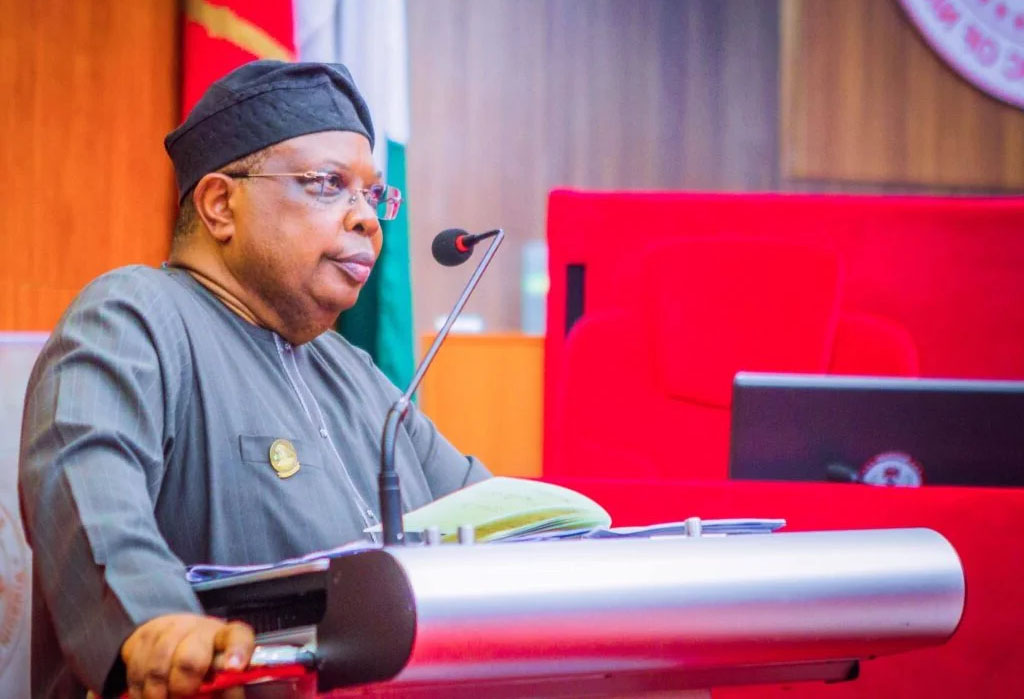
Nigeria’s electricity generation has risen to 4,020.41 megawatts (MW), up from about 3,500MW, but the improvement has yet to translate into reliable power supply for households and businesses across the country.
The development comes amid growing frustration over prolonged power outages, particularly in Lagos and other states, despite assurances by the Minister of Power, Joseph Tegbe, that electricity supply would improve within 48 to 72 hours.
Data from the Nigerian Independent System Operator (NISO) showed that generation increased on Monday, November 9, 2026, following disruptions linked to maintenance at the Egbin Power Station, gas supply constraints and damage to critical transmission infrastructure.
The increase followed the Federal Government’s intervention to restore damaged transmission infrastructure and return affected generating units to operation. However, electricity consumers continued to report inadequate supply, highlighting the gap between improved generation figures and the actual amount of electricity reaching homes and businesses.
According to the reported figures, electricity generation reached a peak of 4,253.6MW on Sunday before standing at 4,020.41MW on Monday. The Afam VI power plant contributed the largest share at 519MW, followed by the Shiroro hydroelectric plant with 445MW and the Azura-Edo plant with 438MW.
However, the Egbin Power Station, which has an installed capacity of 1,320MW, was generating only 108MW at the time of the reported assessment.
READ ALSO:
- Trump Makes Stunning Admission: ‘I Will Always Hate Some of My Enemies’
- Fayose Petitions IGP, Threatens Lawsuit Over Rape, Torture Allegations
- INEC Flags 268 Voter Records Over AI-Generated Photos, Begins Cleanup Ahead of 2027 Elections
The combined electricity allocation to the 11 distribution companies (DisCos) stood at approximately 3,195MW by late Monday afternoon, with Abuja DisCo receiving 581MW, Ikeja Electric 467MW and Eko Electricity Distribution Company 458MW.
The Minister of Power, Joseph Tegbe, had earlier attributed the worsening electricity situation to planned maintenance at the Egbin Power Station, inadequate gas supply to some thermal power plants and the vandalism of critical transmission infrastructure.
In an update issued on Friday, November 6, Tegbe explained that maintenance activities and gas supply constraints had reduced the volume of electricity available on the national grid, forcing operators to introduce load shedding in some areas.
He also disclosed that the vandalism of key transmission lines had restricted alternative routes for delivering electricity, particularly to Lagos.
The minister subsequently apologised to Nigerians over the disruptions, acknowledging the difficulties experienced by households, businesses and public institutions.
He said the government was working with generating companies, the Transmission Company of Nigeria (TCN), NISO and electricity distribution companies to restore affected facilities and improve supply.
Tegbe had promised that the first affected generating units would return to operation within 48 to 72 hours, while repairs to damaged transmission infrastructure would be accelerated.
In a further update on Monday, the minister announced that the vandalised Benin-Egbin 330-kilovolt transmission line had been repaired and returned to service.
According to him, the restoration increased electricity supply to the Lagos electricity complex to more than 1,000MW, bringing it back to the level recorded before the disruption.
Tegbe said electricity had been restored to several previously affected areas in Lagos, Ogun, Oyo, Kwara and the Federal Capital Territory, although some locations were still awaiting full restoration.
He also disclosed that the government was working to repair another important transmission route, the Osogbo-Ikeja West 330kV line, which has reportedly remained out of service for about 18 months.
The line could deliver an additional 400MW to Lagos when restored. However, about six transmission towers along the route have been vandalised, making repairs difficult because of the swampy terrain.
The minister said the government expected the restoration work to be completed by the end of November.
Despite the recent disruptions, Tegbe has expressed confidence that Nigeria could achieve more stable electricity supply within the next three to five years.
He said the Federal Government was considering a proposed $2 billion east-west super grid designed to strengthen the country’s transmission infrastructure and increase its capacity to 19,000MW.
The proposed project is expected to connect several locations, including Funtua, Gwagwalada, Ikot Ekpene, Benin, Epe and Ilorin.
Tegbe said the government had commenced the procurement process and expected the project to improve the resilience of the national electricity network.
He also stressed the need to address longstanding infrastructure problems, noting that some electricity equipment was between 40 and 50 years old.
Meanwhile, he maintained that the government was working to improve electricity supply through better coordination among generation, transmission and distribution operators.
The latest development highlights the continuing challenges in Nigeria’s electricity sector, where improvements in generation do not automatically guarantee adequate supply to consumers because of limitations in transmission and distribution infrastructure.
For millions of Nigerians, the major concern remains whether the increased generation figures and government interventions will translate into more consistent electricity supply.
Despite Tegbe’s 72-Hour Promise, Nigerians Still Battle Power Outages
News
Edo APC Chieftain Hacked to Death by Son Over Alleged Prophecy
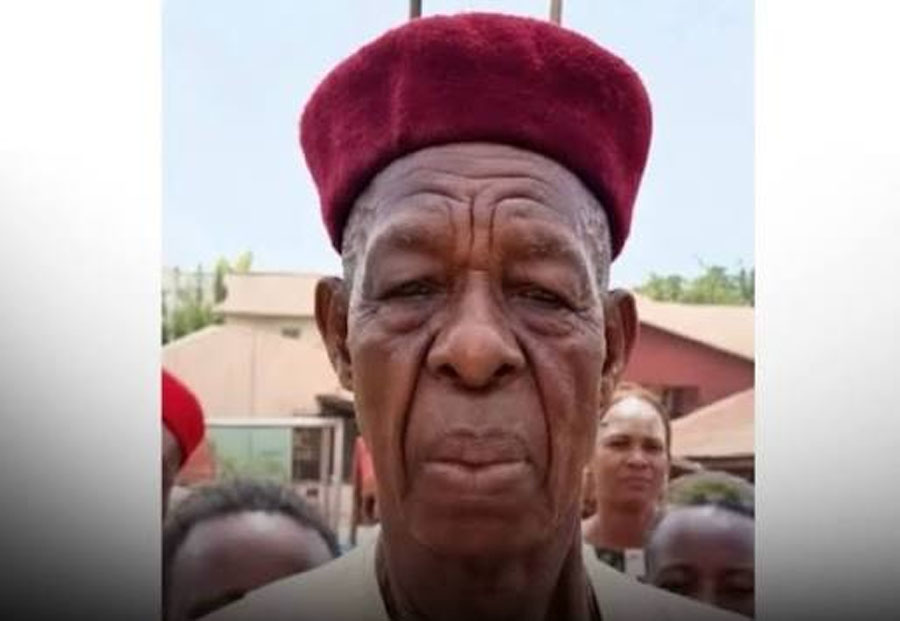
A chieftain of the All Progressives Congress (APC) in Edo State, Julius Bello, popularly known as De Lord Ogata, has reportedly been hacked to death by his son following claims that a prophet blamed him for the younger man’s financial struggles.
Bello, who was the APC Ward Three Chairman in Fugar, Etsako Central Local Government Area, was allegedly attacked with a sledgehammer by his son, identified as Irobudo, on Sunday, November 8, 2026.
The incident reportedly occurred shortly after the suspect returned from Lagos over the weekend.
According to reports, the suspect struck his father on the head with the weapon, inflicting fatal injuries.
Family sources linked the attack to an alleged prophecy that reportedly portrayed Bello as being spiritually responsible for his son’s prolonged poverty and inability to make financial progress.
READ ALSO:
- Fayose Petitions IGP, Threatens Lawsuit Over Rape, Torture Allegations
- INEC Flags 268 Voter Records Over AI-Generated Photos, Begins Cleanup Ahead of 2027 Elections
- Tension in Delta as Task Force Members Protest Over Colleague’s Killing at NDC Rally
The claims were said to have fuelled resentment against the deceased before the fatal attack. However, the alleged prophecy and its connection to the killing have not been independently verified, and the police have not established it as the motive.
The Edo State Police Command confirmed the killing and said an investigation had commenced.
The command’s spokesperson, Eno Ikoedem, disclosed that the suspect was still at large as of Monday, November 9, while police operatives were working to apprehend him.
According to the police, investigations would establish the circumstances surrounding the killing and the events that preceded the attack.
The incident has thrown Bello’s family and residents of Fugar into mourning, particularly because the suspected attacker is his own son.
The killing has also raised concerns about the potential consequences of unverified spiritual accusations when they fuel suspicion, hostility and violence within families.
The police investigation is expected to establish the full circumstances of the incident, determine the motive and bring the suspect to justice.
Edo APC Chieftain Hacked to Death by Son Over Alleged Prophecy
News
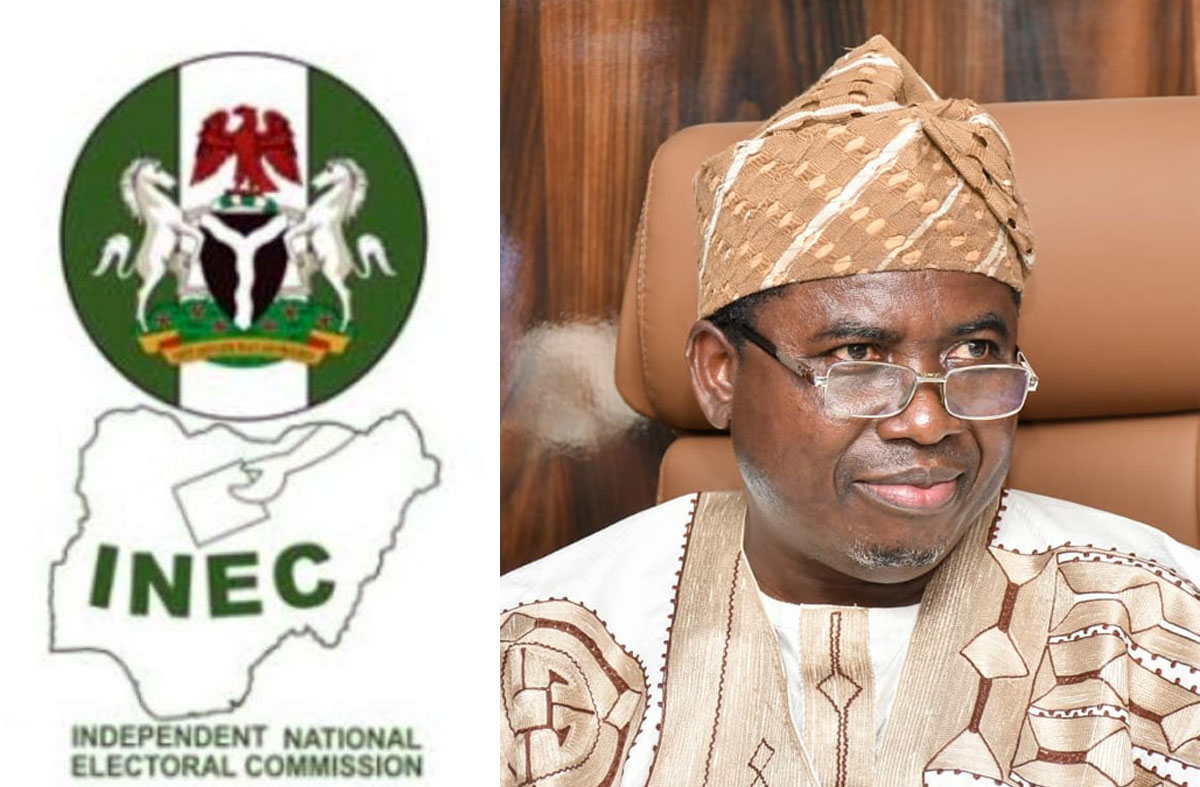
INEC Flags 268 Voter Records Over AI-Generated Photos, Begins Cleanup Ahead of 2027 Elections
INEC Flags 268 Voter Records Over AI-Generated Photos, Begins Cleanup Ahead of 2027 Elections
ABUJA, Nigeria – The Independent National Electoral Commission (INEC) has commenced the removal of questionable records from Nigeria’s preliminary Register of Voters after its biometric verification system flagged 268 entries over suspected artificial intelligence-generated photographs and other irregularities.
The development comes amid growing public concerns over the credibility of the voters’ register ahead of the 2027 general elections, following the discovery of suspicious photographs, duplicate registrations and names of deceased persons in the preliminary database.
INEC’s Director of Information and Communication Technology, Lawrence Bayode, disclosed the development during an interview on Channels Television’s Sunday Politics, explaining that the commission’s Automated Biometric Identification System (ABIS) had identified 268 records requiring further examination.
Bayode said the commission had begun reviewing the affected entries and removing those confirmed to be irregular.
He also explained that some registration officers allegedly exploited their authorised access to introduce questionable records into the database.
According to him, some of the irregularities involved the misuse of a special registration option designed for persons with disabilities who have incomplete or missing fingers.
However, the INEC official clarified that not every photograph enhanced with artificial intelligence would lead to the exclusion of the affected voter.
He distinguished between genuine photographs improved with AI-powered applications on mobile phones and images generated entirely by artificial intelligence, stressing that only confirmed fraudulent images would be removed.
The controversy followed INEC’s publication of its preliminary Register of Voters online on October 26, which triggered public outrage after screenshots showing suspicious photographs and other questionable entries circulated on social media.
Some of the disputed records reportedly included entries from parts of Edo State, prompting questions about the commission’s registration and verification procedures.
INEC Chairman, Professor Joash Amupitan, subsequently confirmed that the commission was examining the questionable records and would take corrective action based on verified findings.
The commission has maintained that the preliminary register is not the final certified document, explaining that the verification and public scrutiny exercises are intended to identify inaccuracies and irregularities before certification.
INEC has scheduled December 15, 2026, for the certification of the final Register of Voters after completing the necessary verification, adjudication and data-cleanup processes.
The commission has also encouraged Nigerians to participate in scrutinising the register and report suspicious entries to help safeguard the credibility of the electoral process ahead of the 2027 general elections.
INEC Flags 268 Voter Records Over AI-Generated Photos, Begins Cleanup Ahead of 2027 Elections
-

 Sports3 days ago
BREAKING: Flamingos Make History, Defeat Japan 2–1 to Win First FIFA U-17 Women’s World Cup
-
 News3 days ago
Power Outage: Tegbe Gives Nigerians 72-Hour Timeline as FG Moves to Restore Electricity
-

 News2 days ago
One Killed, Five Injured as Violence Disrupts Obi-Kwankwaso Rally in Delta
-

 Sports2 days ago
Messi Breaks MLS Record, Becomes First Player To Win Back-to-Back Golden Boots
-
 Politics2 days ago
‘My History Is Traceable’: Atiku Fires Back at Tinubu Over University Funding
-

 metro2 days ago
[ICYMI] Lagos Summons DisCos, Regulators Over Persistent Power Outages, Seeks 24-Hour Electricity
-
 metro2 days ago
Zamfara: Bandits Allegedly Burn 13 Family Members Alive After Locking Them Inside Room
-

 Auto1 day ago
Four-day Abuja International Motor Fair begins tomorrow Nov 10