

Opinion
Nigeria at risk of becoming a failed state ― Financial Times
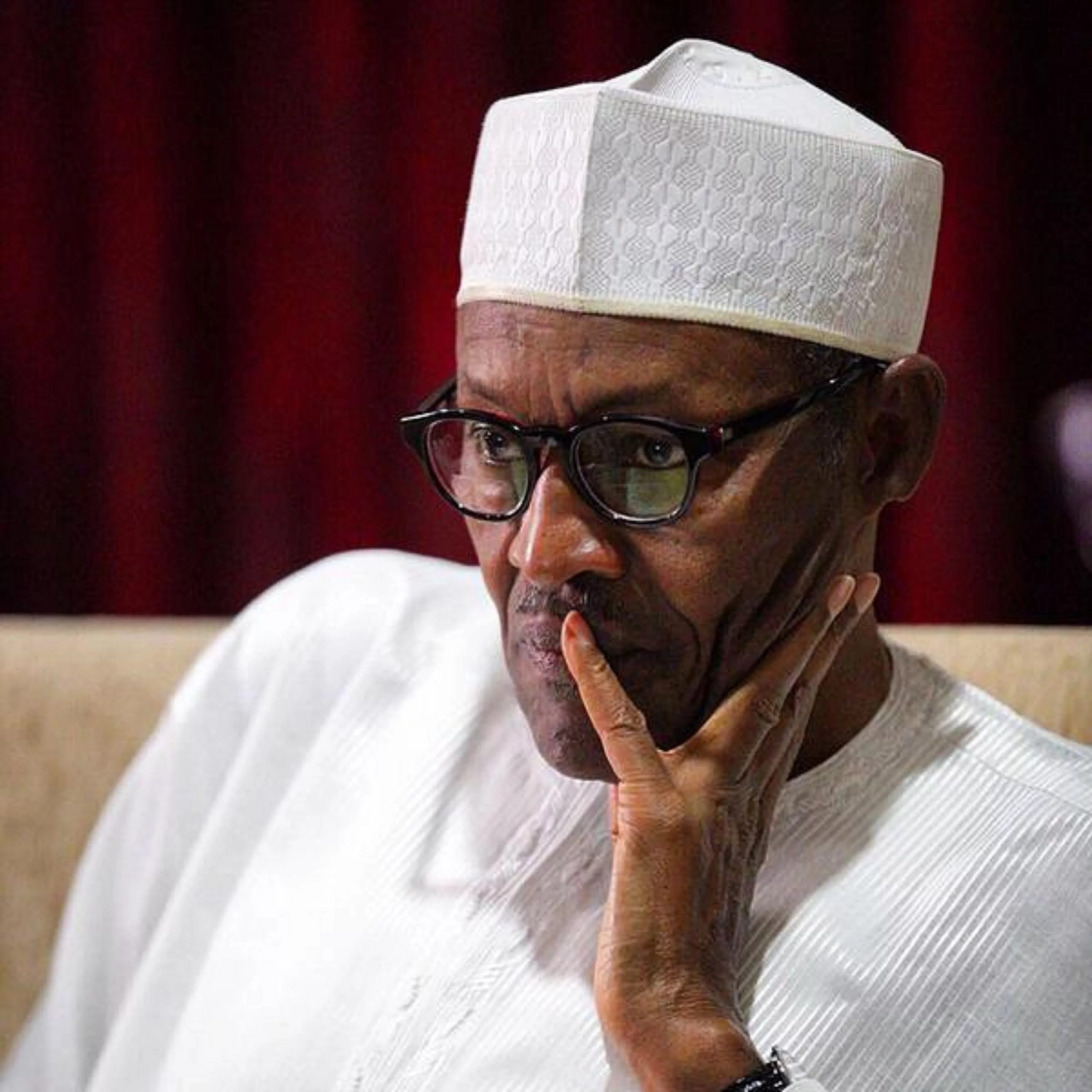
A UK-based newspaper, The Financial Times, has reported that Nigeria is at risk of becoming a failed state.
It stated this in an editorial published on Tuesday, noting that the spate of insecurity in the country showed “the government is no longer in control.”
Financial Times stated that Nigeria and its government “must redouble efforts to get a grip on security.”
The editorial also stated that Nigeria “needs to restore trust in key institutions, among them the judiciary, the security services and the electoral commission, which will preside over the 2023 elections.”
Even as it declared that the young people in Nigeria were more than capable to turn the country round, the editorial warned that if nothing was done before the population would double to 400 million by 2050, Nigeria could become a problem far too big for the world to ignore.
The editorial is presented below:
More than 300 Nigerian schoolboys were reunited with their families last weekend, days after they had been abducted by kidnappers from their dormitory in the country’s North-West.
The kidnapping revived memories of the 276 Chibok schoolgirls abducted in Borno State in 2014. Just as then, Boko Haram, the militant Islamist group, claimed responsibility.
But the government insisted no ransom was paid.
A failed state is one where the government is no longer in control. Africa’s most populous country is said to be teetering on the brink.
President Muhammadu Buhari in 2015 pronounced Boko Haram “technically defeated”.
But Boko Haram has remained a constant threat.
And if the latest kidnapping turns out to be its work, it would mark the spread of the terrorist group from its north-eastern base.
Even if the mass abduction was carried out by “ordinary” bandits — as now looks possible — it underlines the fact of chronic criminality and violence. Deadly clashes between herders and settled farmers have spread to most parts of Nigeria. In the oil-rich, but impoverished, Delta region, extortion through the sabotage of pipelines is legendary.
Extortion is a potent symbol for a state whose modus operandi is the extraction of oil revenue from central coffers to pay for a bloated, ruinously inefficient, political elite. Security is not the only area where the state is failing. Nigeria has more poor people, defined as those living on less than $1.90 a day, than any other country, including India. In non-Covid-19 years, one of every five children in the world out of school lives in Nigeria, many of them girls.
The population, already above 200m, is growing at a breakneck 3.2 per cent a year. The economy has stalled since 2015 and real living standards are declining. This year, the economy will shrink four per cent after COVID-19 dealt a further blow to oil prices. In any case, as the world turns greener, the elite’s scramble for oil revenue will become a game of diminishing returns. The country desperately needs to put its finances, propped up by foreign borrowing, on a sounder footing.
In its three remaining years, the government of Mr Buhari must seek to draw a line in the sand. It must redouble efforts to get a grip on security. It also needs to restore trust in key institutions, among them the judiciary, the security services and the electoral commission, which will preside over the 2023 elections.
More than that, Nigeria needs a generational shift. The broad coalition that found political expression this year in the EndSARS movement against police brutality provides a shard of optimism. At least Nigeria has a relatively stable democracy. Now Nigeria’s youth — creative, entrepreneurial and less tainted by the politics of extraction — should use that system to reset the country’s narrative.
A new, slimmed-down state — ideally one with fewer, bankrupt regional assemblies — must concentrate on the basics: security, health, education, power and roads. With those public goods in place, Nigeria’s young people are more than capable of turning the country round. At the present trajectory, the population will double to 400m by 2050. If nothing is done, long before then, Nigeria will become a problem far too big for the world to ignore.
Governors Forum Decries Insecurity In North-West
LATEST NEWS
By Tribune Online On Dec 22, 2020
Share
The Chairman, Nigeria Governors Forum, Dr Kayode Fayemi, the Governor of Ekiti State has expressed the concerns of the forum over the security situation in the North- West and the country at large, promising to collaborate with the Federal Government to bring an end to the menace.
Dr Fayemi made this assertion when he led the Governors of Sokoto, Kebbi and Jigawa states on a solidarity visit to Katsina State Governor Aminu Bello Masari at the Government House Katsina, on Tuesday.
“For us, the Nigeria Governors Forum, we believe that we not only have to be tough on banditry, on kidnapping, on criminality generally, but we also have to be tough on the cause of the problem.
“Socio inequality, poverty are key issues, and we need to be able to ensure that our states pry away our young people from the merchants of death who are using them as cannon fodder of this criminal brigandage,” he said.
“And we can only do that by providing them with alternative means of livelihood and support system that’ll not entice them to these elements that are endangering the whole of our country.”
“However, we as governors are still very concerned about the security situation in the North-West and in the entire country. This is almost a daily occurrence,” he said, adding that, the governor is spending the state lean resources on both material and human on this priority issue which pervades the whole of our country.
“We want to thank His Excellency, the President for being abreast of the situation and for working closely with the governor of Katsina state in ensuring that the kids were retrieved from the forest in Zamfara with the assistance of the players who were critical to that retrieval- Miyetti Allah, the military, our brother the governor of Zamfara State,” he added.
ALSO READ: 253 died in Kwara road crashes in 11 months ― FRSC
“And this is something that we are committed to as governors in working with Mr President in working with all our colleagues so that we don’t keep talking about the same thing over and over again”.
“We’re all tired, we’re all frustrated that these issues are happening, but we know that with concerted efforts on our part as governors and commitment of the federal government and professional conduct of our security services and our social investment programme intensified; we shall see to the end of this criminality, this brigandage in our states,” the NGF boss said.
“And this is something that we are committed to as governors in working with Mr President in working with all our colleagues so that we don’t keep talking about the same thing over and over again”, Fayemi concluded.
In his remark, Masari thanked his colleagues for the concern, urging them to join hands together to defeat the enemies and safeguard the lives and properties of their people.
“The issue of security is the issue of all citizens, people should not join security with politics; no leader wishes the people he swore to protect are in turn being killed.”









Opinion
Onaiyekan: Is Tinubu insensitive to Nigerians’ plight? By Bolanle BOLAWOLE
Onaiyekan: Is Tinubu insensitive to Nigerians’ plight? By Bolanle BOLAWOLE
turnpot@gmail.com 0705 263 1058
(Published in the ON THE LORD’S DAY column in the Sunday Tribune edition of Sunday, 9 August 2026).
The Catholic Bishops’ Conference of Nigeria (CBCN) recently held a closed-door meeting with President Bola Ahmed Tinubu after which one of the bishops, John Onaiyekan, Bishop Emeritus of Abuja, went public with the contents of the meeting. The public was aghast when the president was reported as saying that hunger has been in the land before he was born!
But is it a lie? It is not! Tinubu reportedly asked the church leaders to feed the people if they – the church leaders – actually knew the people were hungry! Is it not a fact that many church leaders and denominations today behave like the scribes and Pharisees of Jesus Christ’s era – whom the Lord described as “serpents and generation of vipers”! – who “bind heavy burdens and grievous to be borne, and lay them on men’s shoulders; but they themselves will not move them with one of their fingers”? As many as eight times, Jesus said unto them: “Woe unto you, scribes and Pharisees, hypocrites!” He also repeatedly called them “fools and blind guides.” (See Matthew 23: 1 – end).
How many of the Catholic bishops who confronted Tinubu with the case of hungry Nigerians do not have hungry parishioners under their watch? How many of the hungry do they feed? Are they themselves among hungry Nigerians? How many of them, having two coats, give one to the naked (Luke 3:11)? How many follow the example of the Fathers (Acts 4: 32 – 37) or the Marxian doctrine of “From each according to his ability and to each according to his need”?
Despite the hardship in the land, which the Bishops went to Tinubu to complain about, are Church leaders not demanding tithes, vows, first fruit, and all manner of offerings – love offering, sacrificial offering, seed offering, thanksgiving offering, etc. from the same suffering masses? Before our very eyes, are they not building cathedrals worth billions of Naira, driving expensive cars, flying private jets, and living life to the hilt? Are they not?
However, this is an uncomfortable truth no one wants to hear! I should know because I am involved – if you know what I mean! Without speaking for Tinubu – because I, too, have my own grievances! – this must have been what he hinted at but which, understandably, was interpreted as an act of insensitivity. But since I, too, was born, up to date, I make bold to say that notable Nigerian musicians one after the other have complained of hard times. It is as if there has never been a time when things were okay in this country – except when we look back! Better times are usually behind us. No matter how bad a government might have been, succeeding governments always appear worse! That has been the narrative!
READ ALSO:
- “Don’t Paint What Doesn’t Exist”: Kamo State Addresses Funke Akindele Speculation
- Osun 2026: Police arrest commissioner over APC rally gunshots as Adeleke alleges political intimidation
- “We Are the Victims, Not Adeleke” — APC Candidate Denies Violence Claims as Osun Election Nears
It appears to me that Tinubu loves to be audacious once in a while. Like when he made his “O lu’le” speech at Abeokuta, detailing how the then President Muhammadu Buhari contested election thrice but failed until he, Tinubu, came to the rescue. The icing on the case at the occasion was his angry reference to Gov. Dapo Abiodun, as “eleyi”, meaning “this one!” Consider as well his wandering off-script “subsidy is gone” statement in his very first speech and on his very first day as President and Commander-in-Chief!
Tinubu possesses enough knowledge of the media to guess what kind of headlines his statements can attract. In the case of the Catholic bishops, maybe he thought he was safe behind the iron curtain of confidentiality – until one of the bishops chose to tear the veil, forcing the Presidency to respond.
Presidential response to Onaiyekan
The response by Temitope Ajayi, Senior Special Assistant to President Tinubu on Media and Publicity, compelled this intervention lest we, again, throw the baby away with the bath water. Often, once we have pitched our tents for or against, we fail to see the merits in opposing advocacies – all to the chagrin of our collective good. Let’s hear from Ajayi:
“There is something fundamentally inappropriate about Cardinal John Onaiyekan granting a television interview to offer his own account and interpretation of what transpired during the private meeting between the Catholic Bishops’ Conference of Nigeria and President Bola Tinubu. It is, in my view, an abuse of clerical privilege.
“The bishops requested an audience with the president. He granted the audience graciously. They presented, as was their right, a catalogue of the country’s economic, social, and security challenges as they saw them. Except for their grudging acknowledgement of the benefits of NELFUND, they were dismissive of the other great things done by the administration. The bishops were notably acerbic in their submission, but the president listened to them patiently and responded.
“That should ordinarily have been where the matter rested. None of the issues raised by the bishops is beyond scrutiny or rebuttal. Their assessment is neither scripture nor an article of faith. It is a perspective, and perspectives can be challenged with facts and evidence.
“President Tinubu did exactly that, responding point by point to the issues they raised. On the bishops’ demand for the return of schools to their owners, the President was surprised that such an issue could be tabled before him, as it is a matter for the states to resolve, in line with our Constitution. So, he asked the bishops to take the matter to the governors and reminded them he returned mission schools in Lagos State (to their original owners) when he was (the) governor.
“The President argued that the bishops’ characterization of the country’s current condition was incomplete and, in several respects, inaccurate. He pointed to measurable progress on the economic, social, and security fronts. He did not pretend that Nigeria’s problems had disappeared. He acknowledged that significant economic and security challenges remain. His point was that the country has emerged from ‘a dark tunnel’, that his administration has laid the foundations for recovery and that the next phase is to ensure the greatest number of Nigerians feels the gains.
READ ALSO:
- FG to supply six-seater electric tricycles, charging station to Offa Polytechnic
- Jorge Messi, Father and Agent of Lionel Messi, Dies at 68 After Long Illness
- Edo Spiritualist Arrested for $1,100 Sextortion of Indian Woman – EFCC
“What the clerics often overlook in these interventions is that governing a country is fundamentally different from shepherding a church. In a democracy, every interest group, including the Catholic Church, has every right to demand more from (the) government. That is part of democratic engagement. But the president of a nation of more than 200 million people is required to make difficult choices every single day. Those choices involve competing interests, limited resources, and imperfect options…There is no president…who can wave a magic wand and make Nigeria’s accumulated problems disappear overnight.
“It is easy to compile a list of national problems. It is far more difficult to acknowledge the disasters that have been averted. Whatever anyone thinks of President Tinubu’s policies, it is impossible to ignore the fiscal crisis he inherited and the measures taken to pull the country away from the edge of a financial cliff. Even the bishops themselves should recognize that one tangible consequence has been the restoration of greater fiscal stability across many states.
“Countless civil servants and pensioners who, for years, endured unpaid salaries and pensions are now receiving them more regularly. That was certainly not the reality in many states from around 2014. Even about four years ago, 27 state governments struggled to meet even their most basic obligations. Many of those civil servants and pensioners are themselves parishioners in Catholic churches. They know, from lived experience rather than official pronouncements, that there has been real relief in the regular payment of salaries and pensions. While this does not erase the discomfort many Nigerians still face, it is wrong to dismiss or ignore those improvements casually.
“So when President Tinubu reminded the bishops of these facts during the meeting, he was not, as Cardinal Onaiyekan later suggested, being aloof or dismissive. He was presenting evidence to support his argument that the country is not standing still. A disagreement over facts should not be interpreted as arrogance. The same applies to security. The bishops declared that Nigeria is bleeding. The President thinks otherwise. President Tinubu did not deny the seriousness of the security situation. Rather, he acknowledged the challenges while outlining the gains recorded by the Armed Forces and intelligence agencies across different theatres of operation…
“Cardinal Onaiyekan’s Arise News interview also reflected a familiar error that many ideological and professional critics make. They often assume that only critics speak truth to power while everyone around a leader is either unwilling or incapable of doing so. It is an attractive narrative, but it is rarely true. What truth does anyone really need to tell President Tinubu that he does not already know? As president, he has multiple channels for feeling the pulse of the country…
“The Catholic Bishops discharged what they considered their moral obligation by presenting their concerns to the president. President Tinubu, for his part, accorded them respect by granting them an audience and responding to every issue they raised. That exchange reflected the civility expected in a constitutional democracy.
“Reciprocity should have dictated that the confidentiality and dignity of that engagement be preserved. As such, it was inappropriate for one of the participants to emerge almost immediately on national television to provide his own version of what was essentially a private conversation with the president…” That was Temitope Ajayi, SSA to the President for President Bola Ahmed Tinubu.
Obligations of confidentiality
I asked Google: Is it appropriate to divulge the specifics of a closed-door meeting without the other party’s consent or prior knowledge? Google: “No, it is generally inappropriate and a breach of professional trust to divulge the details of a closed-door meeting without the other party’s consent or prior agreement. Why it is inappropriate: Breaches trust: Closed-door meetings imply an expectation of privacy and confidentiality so participants can speak freely. Damages relationships: Revealing private discussions destroys mutual respect and makes future cooperation difficult. Distorts context: Sharing only one side of a private conversation often misleads the public or other stakeholders who were not in the room.”
Again, I asked: Was Onaiyekan mandated by the CBCN to address the media after their meeting with President Tinubu? Google: “There is no official indication or report that Cardinal John Onaiyekan was specifically mandated or designated by the CBCN to grant media interviews or brief the press following their meeting with President Bola Tinubu…”
Then I asked: Is Onaiyekan the official leader of CBCN? Google: “No, Cardinal John Onaiyekan is not the current leader of CBCN; he is the Archbishop Emeritus of Abuja and previously served as CBCN president from 2000 to 2006.” The current president of CBCN is Most Rev. Matthew Man-Oso Ndagoso, the Metropolitan Archbishop of Kaduna.
Answering another question, Google described Onaiyekan as “a forthright and consistent critic of President Bola Tinubu’s electoral legitimacy and economic policies…” Arising from the above, we can see that Onaiyekan and Tinubu are no strangers to one another but are “old customers”, so to say!
Neither here, nor there
That said, Onaiyekun enjoys freedom of speech as enshrined in our Constitution, regardless how acerbic or far from the truth those views may be. Tinubu, too, has the right of reply which his being a sitting president does not deny him. Achebe said “Let the kite perch and let the eagle perch too. If one says ‘No’ to the other, let his wing break.” China’s revolutionary leader, Mao Zedong, put it this way: “Let a hundred flowers blossom, let a hundred schools of thought contend.” Scriptures cap it all in Proverbs 11: 14 thus: “Where no counsel is, the people fall: but in the multitude of counsellors there is safety.”
Tinubu’s man described the president meeting with the bishops as a privilege; no, it wasn’t! It was their right – and the president’s duty. There is nothing “gracious” in it; it is an obligation duly discharged.
Onaiyekan, however, ought to know that closed-door meetings should be accorded the confidentiality they deserve. To break this important rule is to burn bridges and destroy trust. As journalists, we do not rush to press with information gotten from such sources; we store them to be discretely leveraged in future.
That Onaiyekan was not specifically mandated by the CBCN to speak on its behalf makes his case worse. If it was so important for the bishops to speak, why not their president?
It is not everyone that understands the nuances of Nigeria’s prebendal politics. Femi Adesina, media adviser to President Muhammadu Buhari, said they were flying with Buhari when news of Tinubu’s “O lu’le” atomic bomb dropped on Buhari at Abeokuta reached them. Who was detailed by Buhari’s kinsmen on the same flight to break the news to Buhari? Adesina! Why him? And, now, why Onaiyekan? Dirty jobs reserved for who?
* Former editor of PUNCH newspapers, Chairman of its Editorial Board and Deputy Editor-in-chief, BOLAWOLE was also the Managing Director/Editor-in-chief of The Westerner news magazine. He writes the ON THE LORD’S DAY column in the Sunday Tribune and TREASURES column in New Telegraph newspaper on Wednesdays. He is also a public affairs analyst on radio and television.
Onaiyekan: Is Tinubu insensitive to Nigerians’ plight? By Bolanle BOLAWOLE
Opinion
WHO WILL SPEAK FOR WASILAT? WHEN TRADITION BECOMES HUMILIATION, JUSTICE MUST SPEAK

WHO WILL SPEAK FOR WASILAT? WHEN TRADITION BECOMES HUMILIATION, JUSTICE MUST SPEAK
A young Nigerian lady, Wasilat, has become the centre of a disturbing controversy that should concern every defender of human rights, justice, and the rule of law.
According to her own account during a live interview on Lagelu FM, she did not film the Olóòlù masquerade itself. She said she only recorded the gathering of people and later uploaded the video to TikTok. She further stated that she was advised to remove the video, and she complied.
If her account is true, the events that followed should alarm every conscientious citizen.
She alleged that she was arrested the following day by followers of the olóòlù and later detained by the police. Images that circulated widely on social media appeared to show her publicly humiliated—made to wear a red wrapper, adorned with ritual objects, compelled to carry a live She-goat, and having her head shaved in public while being filmed. She also stated that these rituals were arranged between her mother and those involved while she was in detention not with her own consent.
Whether one believes in the spiritual significance of the Olóòlù tradition is beside the point.
The questions are:
1- Can any Nigerian be deprived of liberty, publicly humiliated, or compelled to participate in rituals against their will simply because of a traditional belief?
2- If the belief is that any woman who sees Olóòlù will automatically suffer supernatural consequences, why would human beings need to arrest, detain, and punish the alleged offender the next day?
3- If the supernatural claim is true, why was human intervention necessary?
4- If it is not true, then what justification exists for the alleged humiliation?
These are legitimate questions. They are not attacks on culture. They are questions about justice.
Nigeria is governed by law, not fear.
The Constitution guarantees the dignity of every human person. It protects personal liberty. It protects freedom of conscience. It prohibits degrading treatment.
No tradition, however ancient, should become a licence for intimidation, coercion, or public disgrace.
Culture deserves respect.
Human dignity deserves greater respect.
If Wasilat’s account is accurate, then what happened to her represents far more than a disagreement over tradition. It raises concerns about arbitrary arrest, coercion, degrading treatment, invasion of privacy, and possible violations of her constitutional rights.
Even more troubling is the public circulation of images depicting her alleged humiliation. In the digital age, such images can haunt a victim for years, affecting education, employment, mental well-being, and social acceptance.
Justice cannot remain silent.
Today it is Wasilat.
Tomorrow it could be another young woman.
The silence of good people is often the greatest ally of injustice.
This is therefore a call—not for violence, not for hatred against any cultural group—but for lawful action.
We call upon human rights organisations, the legal community, civil society organisations, women’s rights advocates, youth groups, and all lovers of justice to demand an impartial investigation into these allegations.
Let the truth be established.
If Wasilat’s rights were violated, those responsible should be held accountable in accordance with the law.
If public officials participated in or enabled unlawful conduct, they too should answer before the law.
No Nigerian should be subjected to degrading treatment in the name of culture.
No woman should be publicly humiliated because of superstition.
No citizen should lose her dignity because others choose fear over justice.
A society is judged not by how it treats the powerful, but by how it protects the vulnerable.
Justice delayed encourages injustice.
Justice denied encourages oppression.
Justice done restores confidence in both culture and the law.
Today, let us ask one simple question:
If this happened to your daughter, your sister, your wife, or your mother, would you remain silent?
If your answer is “No,” then now is the time to speak—not with anger, but with courage; not with violence, but with justice; not with vengeance, but with the unwavering conviction that every Nigerian deserves dignity, liberty, and equal protection under the law.
Justice for Wasilat is justice for every Nigerian woman.
Almudeer Ajiginni
Director, The City of knowledge /SSA to National chairman PCRC
4/8/2026.
WHO WILL SPEAK FOR WASILAT? WHEN TRADITION BECOMES HUMILIATION, JUSTICE MUST SPEAK
Opinion
Five days in Salvador, Brazil’s Yoruba city, By Farooq Kperogi
Five days in Salvador, Brazil’s Yoruba city, By Farooq Kperogi
-

 News3 days ago
FG to Attach 300 NYSC Corps Members to CNG Workshops for Skills Training
-
 International3 days ago
Iran Had Detailed Intel on Trump’s Location Before Secret Turkey Escape
-
 metro3 days ago
Seven Miners Killed in Plateau Mining Pit Collapse, Renewing Urgent Calls for Safety Reform
-
 Politics3 days ago
INEC reprints Osun ballot papers, result sheets, includes SDP candidate
-

 News1 day ago
UK Opens 2026/27 Commonwealth Fellowship Applications for Nigerians – How to Apply
-

 Education2 days ago
JAMB Aggregate Score 2026/2027: How Nigerian Universities Calculate Your Admission Chances
-
 Politics3 days ago
Osun Governorship: Accord Party Faction Withdraws Support for Adeleke, Endorses APC’s Oyebamiji
-
 Sports3 days ago
WAFCON: Chawinga sisters fire Malawi into historic final
You must be logged in to post a comment Login