

metro
‘GenCos sell cheap power to neighbouring countries’
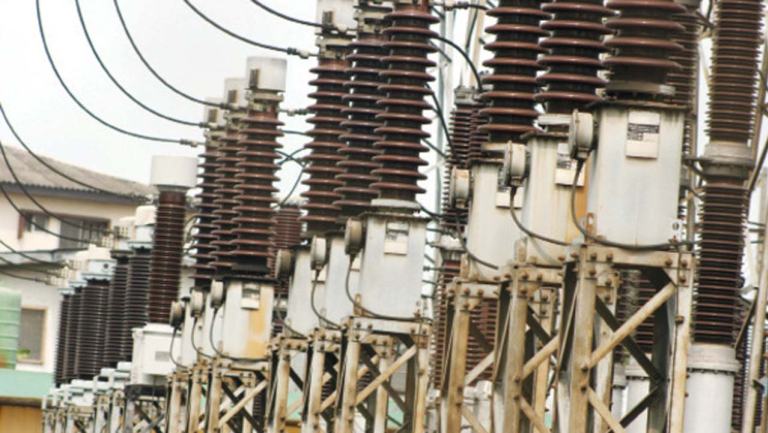
‘GenCos sell cheap power to neighbouring countries’
Some electricity Generating Companies (GenCos) sell electricity to neighbouring countries at a lower cost than the Distribution Companies (DisCos) in Nigeria, a document obtained at the weekend by The Nation has shown.
Although the document did not show the price differentials, it said the errant GenCos were carrying “unregulated sales or secret deals” to earn foreign exchange at all cost” and in defiance of an existing Federal Government directive.
The GenCos are also said to be sidelining the Nigerian Bulk Electricity Trading Plc (NBET), a government agency in charge of the novation of international agreements. There are 24 registered GenCos in the country.
The Federal Government has been losing revenue from the sales of electricity to the neighbouring, it was learnt.
According to the document, in Q2 and Q4 of 2022, about $16.92 million in invoices were exchanged between GenCos and international customers in Niger, Benin Republics and Togo.
Investigation showed the breaches by the few GenCos include the violation of the transfer Order made pursuant to Section 10 of the Electric Power Sector Reform Act (EPSRA) by the National Council on Privatisation (NCP).
READ ALSO:
- DSS: We did not arrest Yari for not picking Tinubu’s call
- No agency raided our office for documents on Tinubu – CCB
- I worked against Atiku, PDP in last elections – Fayose
Worried by non-adherence to International Power Sale Agreement (IPSA), the administration of ex-President Muhammadu Buhari waded in to guide the GenCos.
In a memo dated July 12, 2019, the Presidency directed NBET to oversee IPSA.
An industry source, who spoke on the development, called on President Bola Tinubu to take ”a serious look at the breaches being committed by the GenCos on international power sales“
The source, who declined to be named, said: ”What has been happening is the sidelining of NBET. Electricity is now being sold to neighbouring countries in an unregulated way.
“Buhari had directed that all international sales and purchase agreements must be negotiated directly with NBET unless otherwise approved by him ( ex-President).
“The directive became necessary in order to align with the configuration of the Nigerian electricity industry after privatisation. But this is not the case.
“The sales of electricity to foreign countries were backed up by international cooperation agreements between Nigeria on the one hand and the Republic of Benin and Togo for CEB (Communaute Electrique Du Benin) and Niger Republic for NIGELEC (Societe Nigerine D’electricite)
“As a matter of fact, wheeling of electricity to these countries was being channelled through the network of the Transmission Company of Nigeria(TCN) as there is no dedicated network between the private generating companies and the foreign countries.
READ ALSO:
- Abuse of office: PSC dismisses 3 senior police officers, demotes 9 others
- Disregard fake police recruitment advert on social media -Force PRO
- 14 die in Lagos-Badagry expressway accident
“Prior to these directives and upon the commencement of the Transitional Electricity Market in February 2015, the TCN that received the proceeds of the sale of electricity to international customers began crediting the international customers’ receipts to the account of NBET for payment to GenCos while NBET in turn shares among all the GenCos in a transparent process and in accordance with the approved waterfall.
“The former President’s directive reinforced the earlier directive from the Federal Ministry of Power, Works and Housing to the TCN vide a letter referenced FMP/OPS/360/I dated September 7, 2016, but, despite these, Nigerians were made to purchase expensive energy by selling the cheapest ones to the foreign countries.”
Another source privy to the “secret deals” said: “The quarterly reports released by the Nigerian Electricity Regulatory Commission for 2022 reveal how a few generating companies under the disguise of selling electricity to the international customers are milking Forex at the expense of other GenCos.
“The sales by the few GenCos are without any transparent procurement process known to any Nigerian Law.
“In 2022, Q 2 alone, the errant GenCos reaped in $7.98 million while $8.94 million invoice was exchanged between them for Q 4 of 2022.
“Part of the energy being sold to the international customers by Nigeria came from the Hydro Electric Generating Companies which is the cheapest cost of energy in Nigeria when compared with the thermal generating plants. The cost of energy from the latter is about six times the cost of the former.
“Prior to when the few GenCos cornered the forex from the international customers, inflows from such transactions were always shared among the entire GenCos in the portfolio of NBET to ameliorate the challenges faced by them in sourcing for foreign exchange.”
‘GenCos sell cheap power to neighbouring countries’
The Nation











metro
NAHCON Seeks Phased Implementation of Saudi Hajj Reform, Warns Against Abrupt Shift
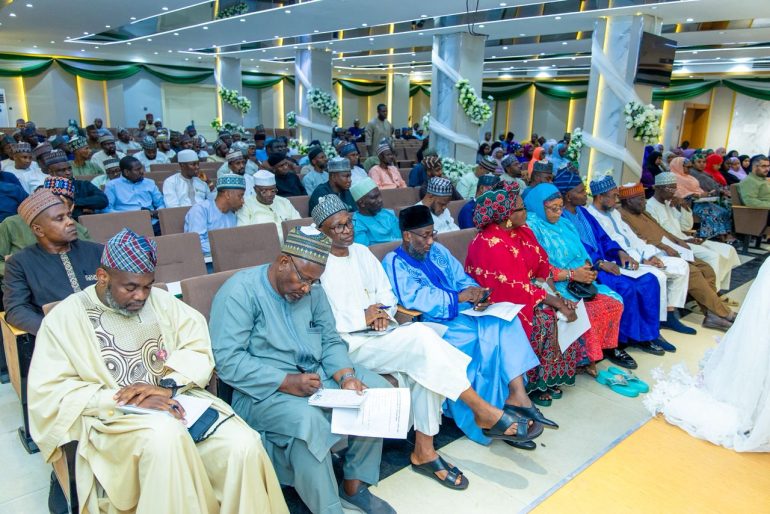
NAHCON Seeks Phased Implementation of Saudi Hajj Reform, Warns Against Abrupt Shift
- The National Hajj Commission of Nigeria has proposed a gradual transition to Saudi Arabia’s new business-to-business model, arguing that an immediate overhaul could disrupt the country’s well-established pilgrimage administration and hurt ordinary pilgrims.
The National Hajj Commission of Nigeria (NAHCON) has said it will pursue a phased implementation of the Saudi Arabian government’s proposed business-to-business model for future Hajj operations, arguing that an immediate migration to a private tour operator framework would be impractical and disruptive. Chairman of the Commission, Ambassador Ismail Abba Yusuf, disclosed this while speaking with journalists at the State House, Abuja, after briefing government officials on the proposed reforms by the Saudi Ministry of Hajj and Umrah. He noted that though the commission has received an official policy communication from the Saudi authorities about the decision, it is proposing a phased implementation of the new arrangement due to the significant economic and operational risks. Yusuf said the Saudi authorities had officially communicated their intention to transfer about 98 per cent of Nigeria’s traditional public Hajj quota to private tour operators, but stressed that such a sweeping reform could not be implemented overnight given Nigeria’s long-established Hajj administration system. He explained that the country’s Hajj operations have for decades been coordinated through NAHCON in collaboration with State Muslim Pilgrims’ Welfare Boards, making an abrupt transition to a predominantly private sector model both operationally and economically challenging.
The NAHCON chairman warned that an immediate adoption of the new arrangement could undermine existing government-to-government agreements between Nigeria and Saudi Arabia, disrupt established operational processes, weaken the statutory responsibilities of State Pilgrims’ Welfare Boards and negatively affect the affordability and accessibility of Hajj for ordinary Nigerian pilgrims. He explained that the structural shift of the proposed policy would disrupt established operational arrangements and adversely affect the orderly management of Hajj for millions of Nigerian Muslims. Yusuf said the Commission was particularly concerned about ensuring that any reform does not compromise the orderly management of Nigeria’s annual Hajj exercise or place additional financial burdens on intending pilgrims. He maintained that while Nigeria fully supports Saudi’s digital transformation agenda and the expansion of private sector participation in Hajj operations, the Commission believes that such reforms should be implemented through mutual consultation and a carefully managed transition.
READ ALSO:
- Naming Atiku as My Running Mate in 1999 My Biggest Political Error – Obasanjo
- Woman Strangles Co-wife’s 3-Year-Old Daughter to Death in Kwara
- Court Awards N12m Damages Against Police for Abduction, Unlawful Detention of Journalist
Vice President Kashim Shettima has expressed support for the ongoing reforms aimed at making Hajj administration more efficient, transparent and sustainable. Receiving NAHCON officials at the Presidential Villa, Shettima commended the commission for the “near-flawless” conduct of the 2026 Hajj, which involved more than 38,000 Nigerian pilgrims, and urged stakeholders to build on the success as Nigeria embraces a new model for pilgrimage administration. “The performance of the team in the 2026 exercise should be the benchmark going forward, particularly as authorities move towards adopting a more sustainable model that guarantees a 100 per cent hitch-free pilgrimage,” the vice president said. Under the proposed arrangement, NAHCON would maintain its regulatory and supervisory responsibilities while operational aspects of the pilgrimage would increasingly be handled by private-sector operators. Ambassador Yusuf said the commission had already begun preparations to implement the new framework and remained committed to delivering on its expanded regulatory responsibilities.
The 2026 Hajj marked significant operational reforms, including expanded digital processes, stricter medical screening requirements, enhanced coordination with Saudi service providers, and closer collaboration with state pilgrims’ welfare boards. The commission successfully coordinated the airlift of 38,052 Nigerian pilgrims through 97 outbound and return flights. However, NAHCON has also acknowledged areas requiring improvement. No fewer than 109 Nigerian pilgrims circumvented mandatory medical screening requirements during the 2026 Hajj, which the commission described as one of the major compliance failures. Ambassador Yusuf identified this alongside lapses in catering services, accommodation challenges, and weaknesses in monitoring and enforcement mechanisms as issues requiring urgent corrective measures. Following the conclusion of the Hajj, NAHCON launched a comprehensive post-Hajj review and reform process to improve future operations. At its Post-Hajj Stakeholders’ Summit in Abuja, the commission unveiled a reform agenda centred on digital transformation, accountability, improved pilgrim services and greater transparency ahead of the 2027 Hajj exercise.
Ahead of the 2027 Hajj operations, NAHCON has also commenced diplomatic efforts to restore Nigeria’s Hajj allocation to 95,000 pilgrims from the approximately 50,000 who performed the 2026 Hajj. The commission’s Director of Administration, Alhaji Alidu Shuti, disclosed that NAHCON would engage Saudi Arabian authorities to reverse the reduction in Nigeria’s Hajj quota. Stakeholders at the summit called for greater transparency in Hajj slot allocation and urged the commission to involve tour operators in selecting service providers in Saudi Arabia. The state Pilgrims’ Welfare Boards Forum also called for the introduction of a standard pilgrims’ education module to ensure uniform orientation across Nigeria. Ambassador Yusuf expressed confidence that through sustained engagement with the Saudi authorities, a workable implementation framework that balances reform with operational stability could be achieved.
NAHCON Seeks Phased Implementation of Saudi Hajj Reform, Warns Against Abrupt Shift
metro
Police Arrest Suspect, Hunt Two Others for Allegedly Killing Woman Accused of Witchcraft in Bauchi

Police Arrest Suspect, Hunt Two Others for Allegedly Killing Woman Accused of Witchcraft in Bauchi
- The Bauchi State Police Command has arrested one suspect and launched a manhunt for two others over the killing of a 30-year-old woman, Habse Ubale, who was allegedly hacked to death after being accused of witchcraft in Garin Malam Village.
The Bauchi State Police Command has arrested one suspect and is hunting for two others in connection with the killing of a 30-year-old woman, Habse Ubale, who was allegedly hacked to death after being accused of witchcraft in Garin Malam Village, Gamawa Local Government Area of the state. The Police Public Relations Officer, SP Nafiu Habib, disclosed this in a statement issued on Friday, July 31, 2026, saying the suspects were being investigated for criminal conspiracy, house trespass, assault and culpable homicide. According to him, the incident was reported to the Gamawa Divisional Police Headquarters on July 29 by a 45-year-old resident of the community.
Habib said preliminary findings showed that on July 28 at about 2:28am, the principal suspect, identified as Garba Daudu (35) , allegedly conspired with two others, identified as Ya’u Garba and Musa, who is yet to be fully identified, to invade the residence of one Audu Sabo. The suspects attacked Audu Sabo on the allegation that his wife, Habse Ubale, was a witch. During the attack, the suspects also assaulted Sale Audu (12) and Yakubu Audu (14) with sticks, while Habse Ubale was attacked with a machete. As a result, all the victims sustained varying degrees of serious injuries. The police spokesman said a combined team of police operatives, hunters and vigilantes was immediately deployed to the scene, while the victims were evacuated to the General Hospital, Gamawa, for treatment. He added that Ubale was later confirmed dead by a medical doctor, while one of the injured victims remained on admission and the other two victims were treated and discharged.
READ ALSO:
- Woman Strangles Co-wife’s 3-Year-Old Daughter to Death in Kwara
- Court Awards N12m Damages Against Police for Abduction, Unlawful Detention of Journalist
- INEC Rejects Jonathan’s 2027 Presidential Nomination Submitted by PDP Faction
Habib added that police operatives swiftly arrested one suspect, while efforts had been intensified to apprehend the two fleeing suspects. He said the case had been transferred to the State Criminal Investigation Department in Bauchi for discreet investigation and possible prosecution. The Commissioner of Police in the state, CP Sani-Omolori Aliyu, condemned the killing, warning residents against jungle justice and acts of violence driven by superstition. He assured the public that the command remained committed to ensuring justice for the victim and bringing all those involved in the crime to justice.
The command urged residents to remain calm, law-abiding and provide credible information that could assist security operatives in arresting the remaining suspects. The police reiterated their commitment to protecting lives and property and called on community members to refrain from taking the law into their own hands.
Police Arrest Suspect, Hunt Two Others for Allegedly Killing Woman Accused of Witchcraft in Bauchi
metro
Woman Strangles Co-wife’s 3-Year-Old Daughter to Death in Kwara
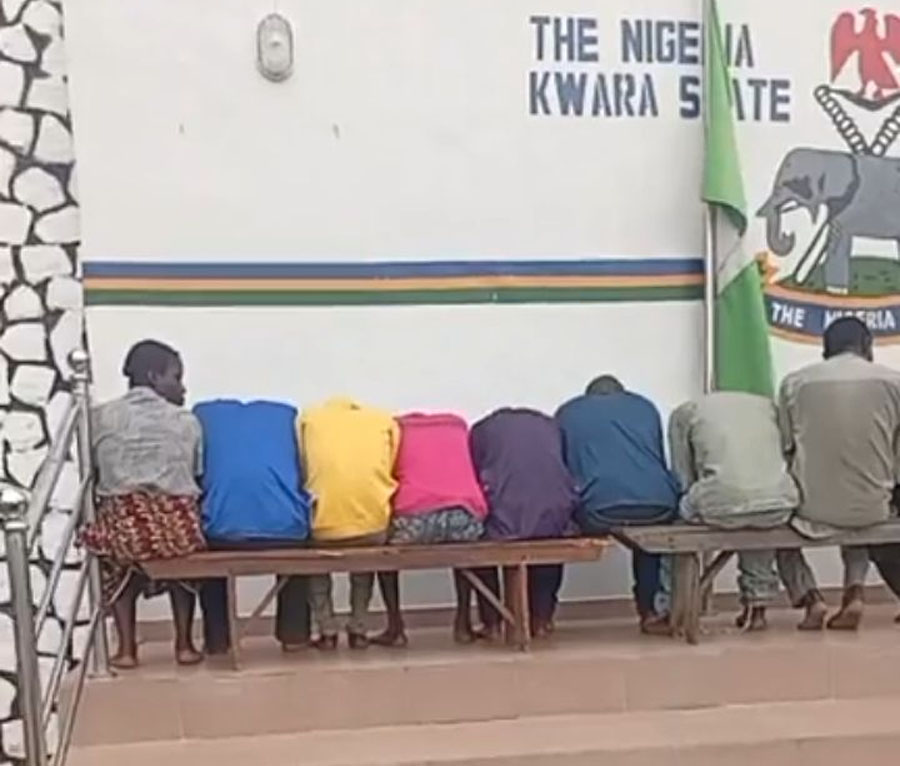
Woman Strangles Co-wife’s 3-Year-Old Daughter to Death in Kwara
- The Kwara State Police Command has arrested Sadiat Yunusa for allegedly killing her co-wife’s three-year-old daughter out of jealousy and resentment over a prolonged domestic dispute.
The Kwara State Police Command has arrested a woman, Sadiat Yunusa, for allegedly strangling her co-wife’s three-year-old daughter to death in Kaiama, Kaiama Local Government Area of the state. The state Commissioner of Police, Adekimi Ojo, disclosed this while briefing journalists in Ilorin on Friday, July 31, 2026, on operational successes recorded recently by the command. He said the act by the suspect was motivated by resentment and jealousy arising from a prolonged domestic dispute. According to the CP, the case was reported at Kaiama Divisional Police Headquarters on July 25, 2026. Preliminary findings revealed that the three-year-old girl, Ummaiyat, had been left in the care of a family member while her mother went to the Kaiama Central Market.
READ ALSO:
- Court Awards N12m Damages Against Police for Abduction, Unlawful Detention of Journalist
- INEC Rejects Jonathan’s 2027 Presidential Nomination Submitted by PDP Faction
- Five days in Salvador, Brazil’s Yoruba city, By Farooq Kperogi
During that period, the suspect, Sadiat Yunusa, allegedly lured the child away to a nearby farm settlement, where she unlawfully caused her death by strangulation. The police said the child’s mother had entrusted her daughter to a family member while she went to the market, but Yunusa took advantage of the situation to carry out the alleged attack. “Prompt investigative efforts led to the arrest of the suspect, who, during interrogation, voluntarily confessed to the commission of the offence,” the CP said. “She disclosed that the act was motivated by resentment and jealousy arising from a prolonged domestic dispute, alleging that her husband had neglected her and her three children in favour of his second wife.”
The police boss said the command has concluded preliminary investigations and the suspect has been charged to court. Ojo also reiterated the command’s resolve to tackle violent crimes across Kwara State through intelligence-driven policing and community collaboration. He urged residents to promptly report suspicious activities and domestic disputes that could escalate into violence, stressing that early intervention often helps prevent tragic outcomes. The case has generated concern within the community due to the age of the victim and the circumstances surrounding her death. It is important to note that while the police have presented these allegations, the suspect is presumed innocent until proven guilty in a competent court of law.
Woman Strangles Co-wife’s 3-Year-Old Daughter to Death in Kwara
-

 Aviation1 day ago
Obi Must Apologise, Pay ₦25,000 or Face FAAN Action — Keyamo Issues Ultimatum
-

 News2 days ago
Police detain Osun SSG, five others as ₦4.8m, voter cards are recovered
-

 Politics1 day ago
Where Will Peter Obi’s Votes Come From? I Can’t See It – Keyamo Predicts Tinubu’s Landslide Victory
-

 metro1 day ago
‘We’ll Marry Beautiful Ones, Kill the Rest’ – Terrorists Reject N155m Ransom for 176 Kwara Captives
-
 metro2 days ago
Grand Chief Imam warns Bennylee against religious provocation, urges respect for judicial process
-

 metro1 day ago
IGP Redeploys Osun CP to Force Headquarters Ahead of August 15 Governorship Election
-
 metro2 days ago
Suspect admits hitting UNIJOS student with plank over missing phone
-
 metro1 day ago
42 Cows Die Mysteriously in FCT Community, Herder Collapses in Shock