

Opinion
Tinubu’s risky Niger gamble, Shetty’s embarrassment, by Farooq Kperogi
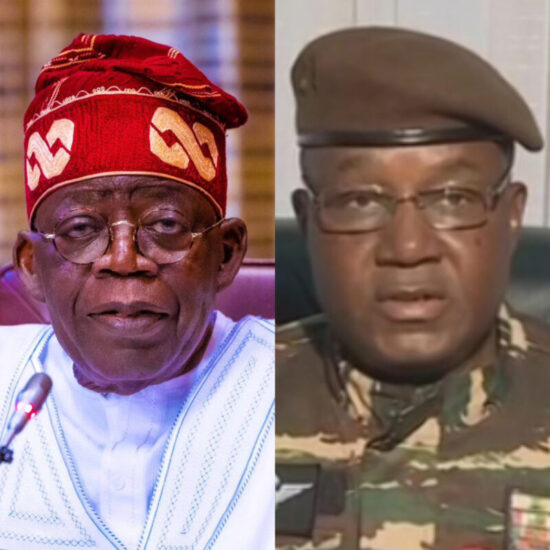
Tinubu’s risky Niger gamble, Shetty’s embarrassment, by Farooq Kperogi
President Bola Ahmed Tinubu recently wrote to the Senate to inform it of an impending “Military build up and deployment of personnel for military intervention to enforce compliance of the military junta in Niger should they remain recalcitrant.” This is a dangerous, ill-advised, potentially self-destructive gamble Tinubu would do well to give up because it has the potential to consume not just him but also Nigeria.
I detest military regimes because I am repulsed by any system that imposes unequal, predetermined structural limits on the aspirational compass to leadership. It is for the same reason that I despise the unearned, inherited authority that monarchies represent. Everyone should, at least in theory if not in practice, have the latitude to aspire to the highest level of leadership in the land.
Military rule limits leadership to professional people, as monarchies limit leadership to bloodline.
Additionally, as someone who came of age during totalitarian military regimes, I loathe the brutality and dehumanization that accompany all military rules and wish that no country would ever have to endure the nightmare of military monocracies.
But going to war with another country because it unfortunately devolved into a system of government that, in our judgement, is abhorrent, is unwarranted arrogant, provocative, and reckless. This is particularly more so because, at least for now, the new military junta in Niger Republic enjoys enormous goodwill among the vast majority of the citizens of the country.
I have seen massive demonstrations in support of the new military regime in rural and urban Niger— and against President Bola Tinubu whom demonstrators have rechristened “Ebola Tinubu” to signal the toxicity and ‘unwelcomeness’ of his intrusion into the internal affairs of their country. Nigeriens obviously have no problems at the moment with the junta in power. When they do, they’ll find a way to deal with it. Who are we to tell them how they should conduct their affairs and whom they should prefer as their rulers?
Plus, in Nigeria, the tide of public opinion is overwhelmingly against any form of Nigeria-led military aggression to restore civilian rule in Niger. Nigeria is itself wracked by disabling internal turmoil on multiple fronts, which the Tinubu administration hasn’t yet shown any willingness to confront, much less contain. Why is Tinubu igniting a fire in another person’s home to “resolve” a squabble there instead of putting out the enduring conflagration in his?
And who is paying for this unsolicited, foolhardy misadventure? Nigerians have been pushed to the very edge of existence (and several have already fallen off the cliff) by the cruel removal of fuel subsidies, yet the Tinubu administration will expend billions (that it repeatedly says the country doesn’t have) to start a needless and avoidable war in a country that is at peace with its anomaly.
Is it the 1 trillion naira the government claimed it has saved from the removal of subsidies that it will use to fight a thoughtless war in Niger that has neither tactical nor strategic benefits for Nigeria? It makes absolutely no sense.
Nigeriens don’t want a war. Nigerians, too, don’t. On whose behalf is Tinubu starting this pointless war then? “Democracy”? Whose “democracy”?
Well, if preservation of civilian rule is the sole motivation for Tinubu’s intervention in Niger, why is he unconcerned about military rule in Mali, Burkina Faso, and Guinea, which are also members of the Economic Community of West African States (ECOWAS)?
True, Tinubu wasn’t president when these other coups took place, but what’s stopping him from adding Mali, Burkina Faso, and Guinea to his list of West African countries that must reinstate their ousted civilian presidents if “democracy” is his overriding concern?
The only thing that makes sense at this point is the widespread insinuation that Tinubu is doing the bidding of Western imperialist powers whose approval he seems insanely desperate for. Since his conservative, stultifying, and asphyxiating economic policies, which have paralyzed the country, are already merely a page from the World Bank and the IMF, it’s apparent that his greatest aspiration isn’t to serve Nigerians but to be a dutiful poodle of the West.
On the instructions of the West, he is killing his people with hunger. On the instructions of the same West, he wants to kill his neighbors with war.
In a private communication, famous University of Texas history professor Toyin Falola pointed out that this is France’s war. “France can give up Mali and Burkina Faso, but Niger is the only country it will not give up without a fight,” he said. “Agadez is the life wire of France, without which it will be using generators like Nigeria. No gas from Russia, and uranium is what it uses for its nuclear energy power. Nigeria cannot use its resources and army to work for France.”
Is Tinubu committing Nigeria to a violent entanglement with Niger on behalf of France because Paris is now his second home—like London used to be Buhari’s second home?
Another dimension to the situation in Niger that Tinubu and his advisers seem oblivious of is that Mohamed Bazoum was a deeply unpopular president who, as Professor Falola said, didn’t win his election. “His predecessor planted him there and gave his [i.e., predecessor’s] son a cabinet appointment,” Falola said. “Niger is a democracy on paper. The mafia distributes rent. Niger has the highest number of land cruisers per capita in Africa.”
What Professor Falola describes isn’t exclusive to Niger, of course. It’s the feature of most “democracies” in Africa. But when you throw Niger’s identity politics into the mix, you are staring at a really combustible situation.
Bazoum comes from Niger’s Arab ethnic minority (with roots in Libya) who constitute less than one percent of the population.
The Hausa constitute a little over 50 percent of the population. The Zarma (whom Hausa people call Zabarma, which probably influenced the Yoruba Sabarumo) are a distant second with a little over 20 percent of the population, although they dominate Niger’s military and civil service. There are other minor groups in the country such as Dendi (whose language is mutually intelligible with Zarma but who consider themselves different from the Zarma), Tuaregs, Kanuri, Fulani, and Gurma.
Former President Mahamadou Issoufou is Hausa, but for personal gains he rigged Mohamed Bazoum, a minority Arab, as his successor. Bazoum was overthrown by Abdourahamane Tchiani who appears to be Zarma going by the region of the country he comes from, but who enjoys the support of the Hausa.
The Zarma and the Hausa (who together constitute more than 70 percent of the population) were resentful that an Arab (with a minimal command of the Hausa language and probably zero proficiency in Zarma and whose people are less than one percent of the population) was imposed as president over them without actually winning a legitimate election.
Forcing the return of Bazoum as president would be a declaration of war against more than 70 percent of the country’s population. But that’s not even my worst fear. In the event of an all-out war, there would be refugees from Niger all over northern Nigeria, which could, in fact, flare up a Yoruba-Hausa ethnic strife in Nigeria because the narrative would be that a Yoruba man is killing Hausa people.
Should that happen, that could end the Tinubu presidency. Is it worth it? I don’t think so.
Maryam Shetty’s Unexampled Ministerial Embarrassment
I had no idea who Maryam Shetty was until I saw what seemed like an unremitting cornucopia of congratulatory messages directed at her on Facebook on her appointment as a minister by President Bola Ahmed Tinubu.
I saw jokes about how almost every (northern) Nigerian on social media somehow found a way to establish connections to her. I was going to join the joke by saying I was connected to her, too, because she shares the same first name as my second daughter, graduated from my alma mater in Nigeria, and even got some sort of certification from Emory University in Atlanta where I live.
Then I woke up Friday morning to the shocking news that her nomination had been withdrawn. I don’t recall if there is any precedent for this kind of embarrassment. Why was her name announced when the president hadn’t made up his mind that he wanted her on his cabinet? The public ridicule she has been subjected to can’t be redeemed by any compensatory appointment.
I thought her appointment sent a symbolic message to young women that they, too, matter. Kwara State governor Abdulrahman Abdulrazaq has already blazed a trail in appointing everyday young women with no roots in political dynasties into commissionership—to the annoyance of political old stagers. I thought President Tinubu was following in Abdulrazaq’s lead and was going to write a full-length column to commend this.
The embarrassing but totally preventable flip-flopping of the Tinubu administration is becoming truly unsettling.
* Kperogi is a Nigerian-American professor and columnist







Health
“Cheap Alcohol Fuels Banditry”: NAFDAC Chief Stands Firm on Sachet Ban
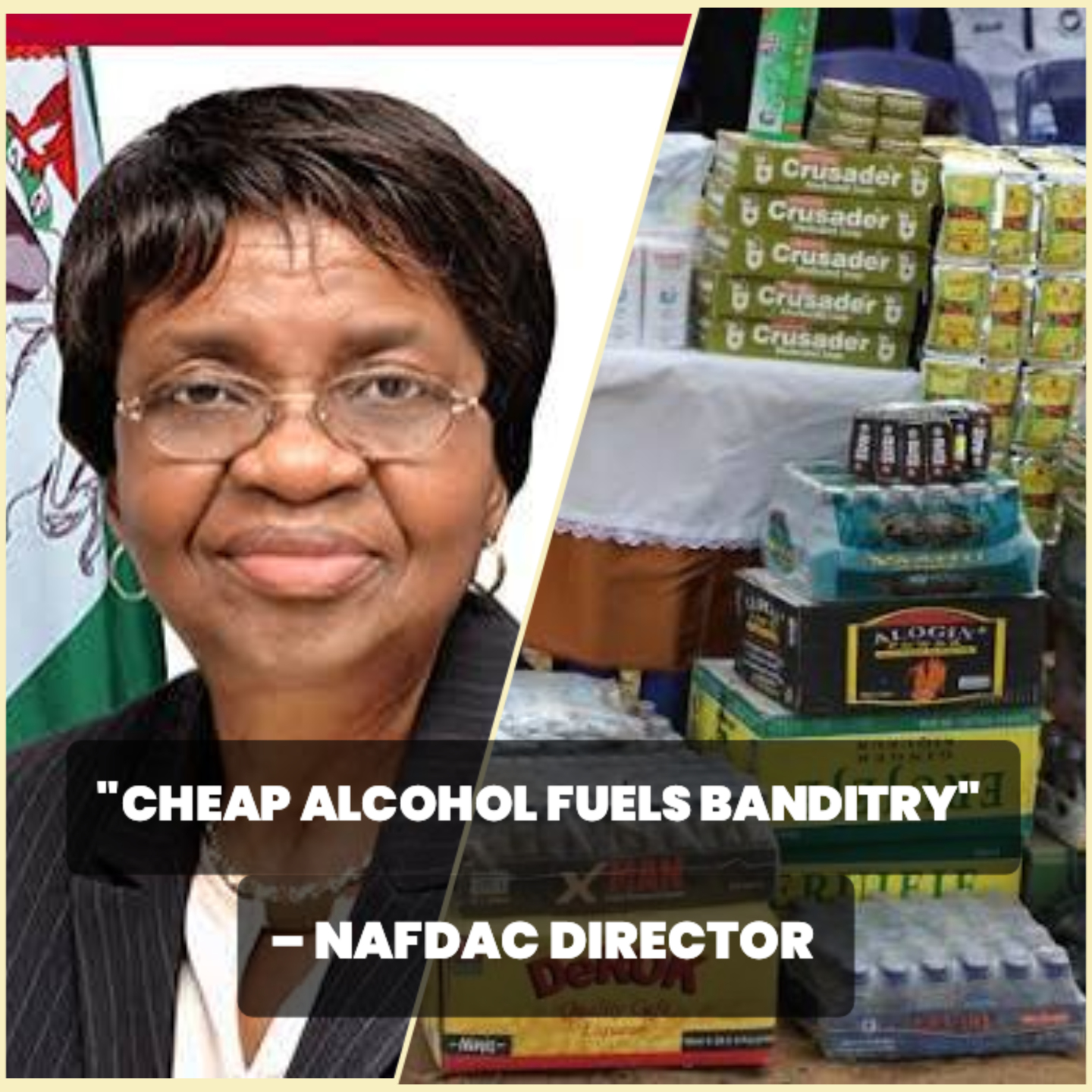
Nigeria’s top food and drug regulator has linked the widespread availability of pocket-sized alcohol directly to violent crime and a mounting public health crisis.
Opinion
2027: Tinubu May Get Less Than 10% of Northern Votes — Ard
2027: Tinubu May Get Less Than 10% of Northern Votes — Ard
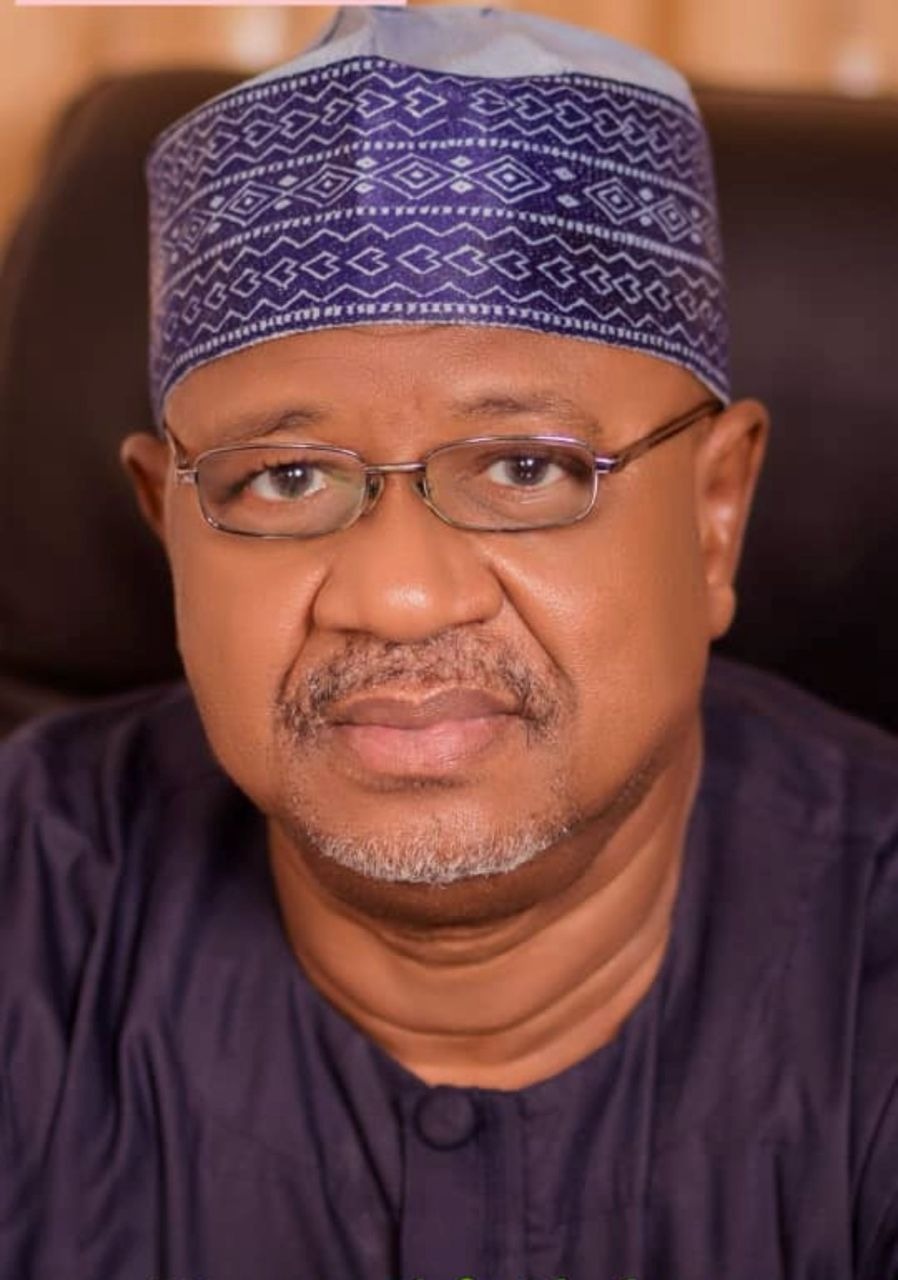
President Bola Tinubu could suffer a dramatic collapse in his Northern support in the 2027 presidential election, securing less than 10 per cent of votes from the region if the poll is free and credible, Convener of the League of Northern Democrats and key promoter of the All-Democratic Alliance (ADA), Dr Umar Ardo, has predicted.
Ardo made the prediction on Monday in an interview on Frontline, a current affairs programme on Eagle 102.5 FM, Ilese-Ijebu, Ogun State, arguing that the outcome would largely reflect how Northern voters assess the Tinubu administration’s performance.
He identified insecurity, worsening poverty, economic hardship and the rising cost of living as major issues likely to influence voting decisions in the region.
According to him, the persistent insecurity affecting communities, farmers, traders and businesses remains one of the administration’s biggest challenges.
READ ALSO:
- JUST IN: Tension in Benue as Suspected Thugs Attack Peter Obi’s Convoy, Block Access
- FIFA, CAF suspend NFF election as Nigeria football reforms face fresh review
- NNPC Disowns Cannabis-Laden Tanker, Threatens Legal Action Over Brand Misuse
“You can solve the issue of insecurity and insurgency in one year,” he said, insisting that the Federal Government could significantly reduce the crisis with the right strategy and sufficient political will.
Ardo also faulted the administration’s economic reforms, particularly the removal of fuel subsidy, questioning whether ordinary Nigerians had experienced corresponding benefits.
“Subsidy removal, is it a benefit?” he asked, arguing that the reforms had eroded purchasing power and made basic necessities increasingly unaffordable.
He said the impact had been particularly severe in Northern Nigeria, where a large proportion of the population is economically vulnerable.
“The economic reform has pushed from the state of poverty to destitution,” he said.
The political commentator also raised concerns about political representation under the Tinubu administration, arguing that the composition of government could shape public perception of its commitment to different regions.
Ardo said Northern voters should not be assumed to be permanently aligned with the voting pattern recorded in 2023, stressing that prevailing economic and security conditions would determine their choices in 2027.
“If a free, fair and credible election is conducted in Nigeria, Tinubu can’t get 10 percent of the Northern part,” he declared.
His prediction puts the spotlight on the opposition’s capacity to exploit any erosion of Tinubu’s Northern support, with former Vice President Atiku Abubakar and other opposition figures potentially positioned to benefit from any major electoral realignment.
2027: Tinubu May Get Less Than 10% of Northern Votes — Ard
Opinion
Beyond the Ballot: Shaping a Bar That Works for All
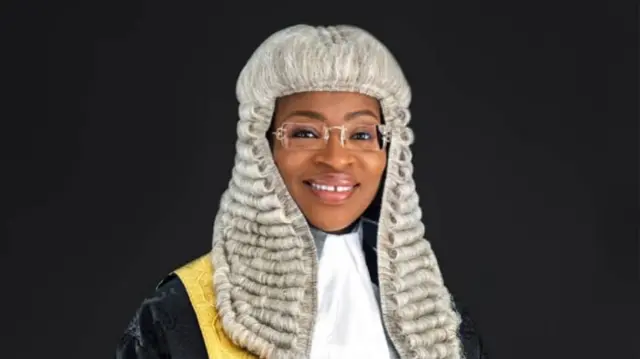
Beyond the Ballot: Shaping a Bar That Works for All
By Asiwaju Kunle Kalejaye, SAN
The inaugural address of Mrs. Oyinkansola Badejo-Okusanya, SAN, titled “From the Call to the Cause,” marks a historic turning point for the legal community as she officially assumes office as the 33rd President of the Nigerian Bar Association (NBA) as she wa sworn in by her predecessor, Afam Osigwe, SAN, at the High Court complex in Port Harcourt, Rivers State.
Her leadership, the hiccup of her emergence notwithstanding, represents a historic milestone as the first woman elected to the NBA presidency through a competitive, though highly disputed, national ballot. Her address presents a powerful vision for a “bolder Bar” that actively confronts internal fractures, deep professional disconnects, and economic vulnerabilities. Central to her message is the core understanding that an association tasked with safeguarding judicial independence and speaking truth to power cannot effectively fulfill its national mandate if it remains internally fragmented. By focusing on the professional survival of young lawyers and vowing to act decisively against public misconduct, Badejo-Okusanya highlights an urgent reality: institutional strength requires collective solidarity and institutional determination. Fostering lasting unity within the NBA under this administration demands a deliberate shift from performative governance to deeply institutionalized, structural changes that build bridges across classes, factions, generations, and geographical divides.
To bring the NBA together, the new administration must incorporate proactive mechanisms for post-election reconciliation directly into its governance framework. The leadership must deliberately distance itself from divisive rhetoric and provocative nuances. The competitive nature of Bar elections often leaves behind lingering bitter factions that can stunt long-term cooperation and slow down progressive policies. By building an “olive branch” initiative that integrates runner-up contestants and their core campaign stakeholders into strategic national committees, the leadership can transform former rivals into active co-creators of the Bar’s future. Indeed this strategy which I dubbed the Abraham Lincoln strategy remains an eternal clincher.
Abraham Lincoln won the 1860 presidential election and famously appointed his chief Republican nomination rivals to key cabinet positions. Lincoln believed the country faced extreme peril during the crisis leading into the Civil War l. He wanted the most capable and influential leaders in his administration regardless of past personal competition. He valued robust debate over agreement, using differing viewpoints to make better decisions. This inclusivity must simultaneously bridge the widening economic and generational gap between senior practitioners and younger advocates. Enforcing standardized minimum remuneration and welfare requirements across all local branches will help reduce the economic alienation felt by younger members. To make this sustainable, the administration should establish joint mentorship hubs where senior legal practitioners collaborate with tech-savvy young lawyers on modern areas of practice, such as artificial intelligence, data privacy, and digital commerce, turning a generational divide into a symbiotic avenue for mutual professional empowerment.
True unity also requires restoring civil digital discourse through a comprehensive Digital Ethics Enforcement framework, fulfilling the President’s explicit warning against the breakdown of professional etiquette on social media. The profession has lost some vast mileage due to the digital posture of some members. To achieve this, the NBA can look to established global precedents where foreign bar associations have successfully navigated the complexities of digital misconduct. For instance, the American Bar Association (ABA) successfully integrated technological expectations into its framework via the Ethics 20/20 Commission, explicitly modifying its Model Rules of Professional Conduct such as Rules 1.6 and 8.4 to govern online confidentiality, misleading public statements, and deceptive digital behaviour. Similarly, the Law Society of England and Wales updated its practice note and compliance frameworks to penalize offensive online remarks, reinforcing that comments made by a lawyer in a personal capacity can still be actively disciplined as professional misconduct if public trust is damaged. By adopting a similar structure, the NBA can expand its own Rules of Professional Conduct into a clear code for online behaviour, utilizing its network of regional Ethics and Disciplinary Committees to monitor digital spaces and safely review flagged misconduct via secure portals.
Backing this framework with public disciplinary actions and a tiered system of sanctions will allow the NBA to decisively penalize cyberbullying, transitioning professional disputes into mediated internal forums rather than chaotic public platforms. This digital accountability should be reinforced by introducing mandatory continuing legal education (CLE) modules in digital etiquette, ensuring that practitioners maintain technological and behavioral competence.
Immediately, the NBA must dismantle the persistent perception that it is a “Lagos-Abuja centric” organization. Actively decentralizing national activities, rotating National Executive Council (NEC) meetings across various geopolitical zones, and providing direct financial and technical resources to smaller, rural branches will make every lawyer feel valued regardless of geography. Ultimately, by integrating these targeted, practical strategies and internationally proven ethical standards into the foundational ideals of her inaugural address, the administration can successfully unite its members and establish a cohesive, resilient front capable of defending the rule of law across Nigeria.
The new administration must pursue a deliberate policy towards attracting many docile members back into its fold.
If the new administration must know, the opaque electoral processes that had dogged the association in recent history has adversely affected the morale of a significant number but silent members of the Association. Chief Yomi Alliyu graphically stated the disturbing position when he posited in an opinion piece that: “The NBA has been hijacked by political lawyers to the disaffection of real practitioners of law. “Elections from 2016 or so vide e-voting had been manipulated to favour members of this class.”
The new administration must therefore consciously pursue reconciliatory steps that rein in all members. As at now, the silent class war must end for NBA to achieve its full potential.
I was sorely tempted to headline this peice: Nigerian Bar Association: the road to Kigali. I refrained because I still saw a silver lining which this new administration can latch on to save the NBA from itself!
The “road to Kigali” serves as a grim warning about the risk of total institutional fracture, polarization, and potential irrelevance. If proactive steps are not taken to unify and reform the body, it faces the danger of fracturing into competing, ethnicized, or regionalized professional factions, effectively ending the era of a single, unified voice for the Nigerian Bar.
The 1992 Port Harcourt Conference Crisis, was a definitive moment that brought the NBA to the brink of permanent destruction. Today, unless we play the ostrich, the cries of war are abroad but the present leadership could etch their names in gold if the NBA is consciously, deliberately and clinically steered from self implosion. Their job is cut out for them.Failure to seize the moment may end up placing us all on the road to Kigali.
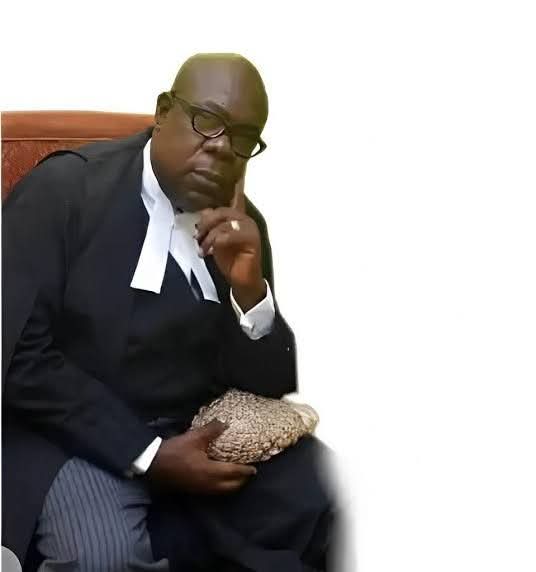
Asiwaju Kunle Kalejaye SAN
Eagle102.5 FM Ilese-Ijebu
-
 Politics2 days ago
Why Did Peter Obi Attend Seyi Makinde’s Campaign Launch? Here’s What He Said
-

 News2 days ago
Lagos Moves to Slash Agency Fees, Curb Rent Hikes With New Tenancy Bill
-
 metro3 days ago
El-Rufai Demands ₦10bn from Defence Minister Over Southern Kaduna Killings Allegation
-
 metro3 days ago
Catholic priest leaves priesthood, weds Kenyan woman after 12 years in Kenya
-
 metro2 days ago
Osun Police Arrest Woman After Vigilante Member Dies During Sexual Encounter in Ile-Ife
-
 Education2 days ago
FG opens six-month teacher certification for BSc, HND, ND holders – How to Apply
-
 Politics8 hours ago
Remi Tinubu Appeals To South-East Voters, Says She Wants To ‘Enjoy Nigeria’ In Old Age
-

 Politics12 hours ago
Amaechi will be caged politically, Wike shouldn’t bother about Ikwerre votes — Wihioka