

International
UK inflation in surprise drop to 18-month low – Reports
UK inflation in surprise drop to 18-month low – Reports
British inflation unexpectedly slowed in August, data showed Wednesday, hitting an 18-month low and sparking hope this week’s widely-forecast interest rate hike by the Bank of England could be its last for now.
The Consumer Prices Index dropped slightly to 6.7 percent from 6.8 percent in July, the Office for National Statistics said in a statement on the eve of the BoE’s latest monetary policy decision.
That was the lowest since February 2022 and confounded expectations for an acceleration to 7.1 percent on higher energy prices.
Wednesday’s news sent the pound sliding almost 0.4 percent to $1.2347 in morning deals, with the US Federal Reserve set to hold rates later in the day.
Finance minister Jeremy Hunt said his Conservative government’s plan to lower inflation is “working” but conceded that the rate is “still too high”.
It comes one day after data showed eurozone inflation also slowed slightly in August.
READ ALSO:
- Cleric bags 21 years jail sentence for attempted sexual assault
-
I was mocked for returning N15m forgotten by passsenger – Kano Keke rider (Photo)
-
US court gives Chicago university 2-day ultimatum to release Tinubu’s records to Atiku
“The surprise fall in UK inflation triggered a kneejerk selloff in sterling, as today’s data cements the expectation that the Bank of England’s next rate hike could also be its last,” said Swissquote Bank analyst Ipek Ozkardeskaya.
Health workers strike
Despite the drop, British inflation remains the highest in the G7 group of rich nations, after peaking at a 41-year high of 11.1 percent in October last year.
Elevated inflation has prompted almost 18 months of regular stoppages by public and private-sector workers whose pay is failing to keep pace.
In the latest walkout, medical consultants and junior doctors working in England for the country’s National Health Service held their first ever joint strike on Wednesday.
The BoE has so far ramped up its key interest rate 14 times in a row to the current level of 5.25 percent in a bid to bring down red-hot inflation.
UK inflation in surprise drop to 18-month low – Reports









International
More Than 1,000 Migrants Rescued Off West Africa in One Week
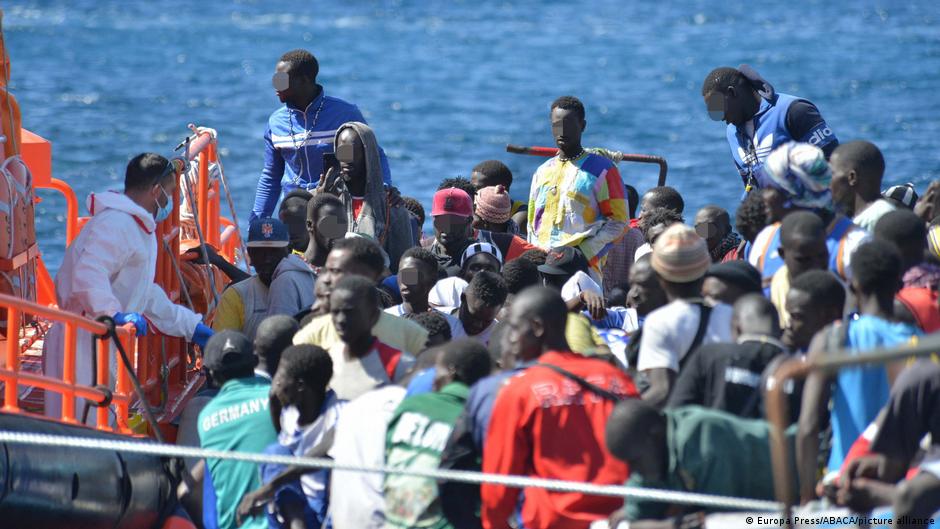
More than 1,000 migrants attempting to reach Spain’s Canary Islands have been rescued from the Atlantic Ocean after seven boats reportedly broke down during the dangerous journey from West Africa.
International
UN Adopts New World Map Showing Africa Bigger, US Smaller in Landmark 2026 Vote
UN Adopts New World Map Showing Africa Bigger, US Smaller in Landmark 2026 Vote
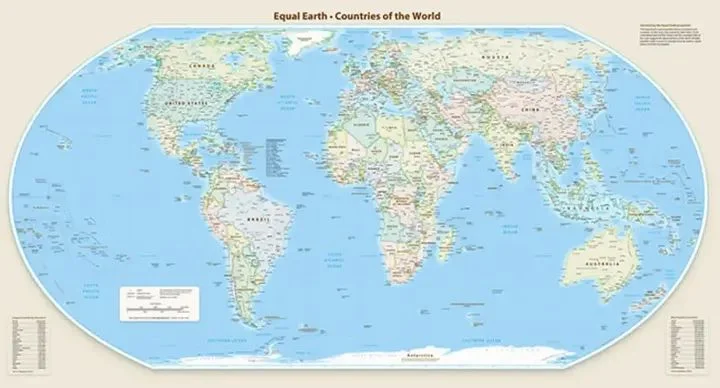
The United Nations General Assembly has approved a historic resolution encouraging countries to adopt a new world map that more accurately reflects the true size of continents — a move that makes Africa appear significantly larger while shrinking North America and Europe. The United States was the only nation to vote against it.
On September 4, 2026, the UN General Assembly passed the resolution with 164 votes in favour, 6 abstentions, and just one opposed — the United States. The six countries that abstained were Ukraine, Moldova, Georgia, Serbia, Lithuania, and Estonia. The resolution, spearheaded by the West African nation of Togo and backed by the African Union, encourages governments, schools, and technology companies to phase out the centuries-old Mercator projection in favour of the Equal Earth projection developed in 2018. Togo’s Foreign Minister Robert Dussey, who presented the resolution, declared: “A fair world begins with a fair map.”
The resolution seeks to correct a distortion that has shaped global perceptions for over 450 years. The Mercator projection was created in 1569 by Flemish cartographer Gerardus Mercator specifically for maritime navigation. While it preserves accurate angles and directions, it severely distorts land area proportions: regions near the poles appear much larger than they actually are, while equatorial regions appear smaller. The most glaring example of this distortion is the comparison between Africa and Greenland. On a standard Mercator map, the two landmasses appear roughly the same size. In reality, Africa is 14 times larger than Greenland — Africa covers about 30.3 million square kilometres, while Greenland covers just 2.1 million. Advocacy groups point out that Africa could contain the United States, China, India, Japan, Mexico, and most of Europe within its area and still have space left.
READ ALSO:
- Kneeling to Propose Is Why Western Marriages Fail — Pete Edochie Sparks Fresh Debate
- US Strikes Three Iranian Oil Tankers in Retaliation for Missile Attack on Navy Ships
- Ondo Tragedy: 3 Siblings, Including Twins, Found Dead Near River on Family Farm
The Equal Earth projection, developed by cartographers Bojan Savric, Bernhard Jenny, and Tom Patterson in 2018, preserves the relative surface areas of continents while maintaining recognisable shapes. Under this new projection, Africa appears in its true massive scale — dramatically larger than in the familiar Mercator map. North America and Europe, by contrast, appear noticeably smaller. “Equal Earth preserves the relative surface areas of continents and, as much as possible, shows their shapes as they appear on a globe,” cartographer Bojan Savric told AFP in 2025. “Correcting the map means restoring to continents in the minds of people the reality of the true dimensions,” said Togo’s Foreign Minister Robert Dussey. He stressed that the campaign is “not directed against any nation, region, or civilization” but serves a “universal goal: to promote knowledge based on scientific rigour, respect for truth, and the equal dignity of peoples.”
American representatives dismissed the resolution as a distraction from pressing global issues. Speaking before the vote, US representative Yaryna Ferencevych argued that “such resolutions and the ideological agenda they promote hinder the work of this institution and lead to a decline in its credibility.” She urged member states to reject the text and focus instead on “genuine issues of international peace, prosperity, or good relations between nations.” Despite the US objection, the resolution passed overwhelmingly. It carries no legal force and does not mandate the replacement of existing maps — rather, it encourages institutions to educate the public on the limitations of flat maps and to adopt more accurate representations. The resolution “in no way challenges the use of the Mercator projection for maritime and aerial navigation, for which it remains fully suited,” the Togolese ministry said in a statement.
African leaders hailed the vote as a significant victory for continental representation. The African Union Mission to the UN welcomed the resolution as a “significant step towards ensuring that the map of the world reflects Africa’s true scale and place in the world.” Togo’s Dussey announced that Togo would become the first country to replace its geography textbooks with the new maps by the end of 2026, and the nation plans to engage with African Union members and other supporters to promote adoption globally. France, a co-sponsor of the resolution, expressed strong support. Foreign Minister Jean-Noël Barrot said in a speech at the Sorbonne: “Changing the map obviously won’t change the world… but correcting a distorted representation is itself an act of truth.” The advocacy group “Unfiltered Africa,” which promotes the Equal Earth map, welcomed the UN decision, stating: “We hope to see accurate maps in schools, textbooks, newsrooms, businesses, and the digital platforms used by billions of people every day.”
UN Adopts New World Map Showing Africa Bigger, US Smaller in Landmark 2026 Vote
International
US Strikes Three Iranian Oil Tankers in Retaliation for Missile Attack on Navy Ships
US Strikes Three Iranian Oil Tankers in Retaliation for Missile Attack on Navy Ships
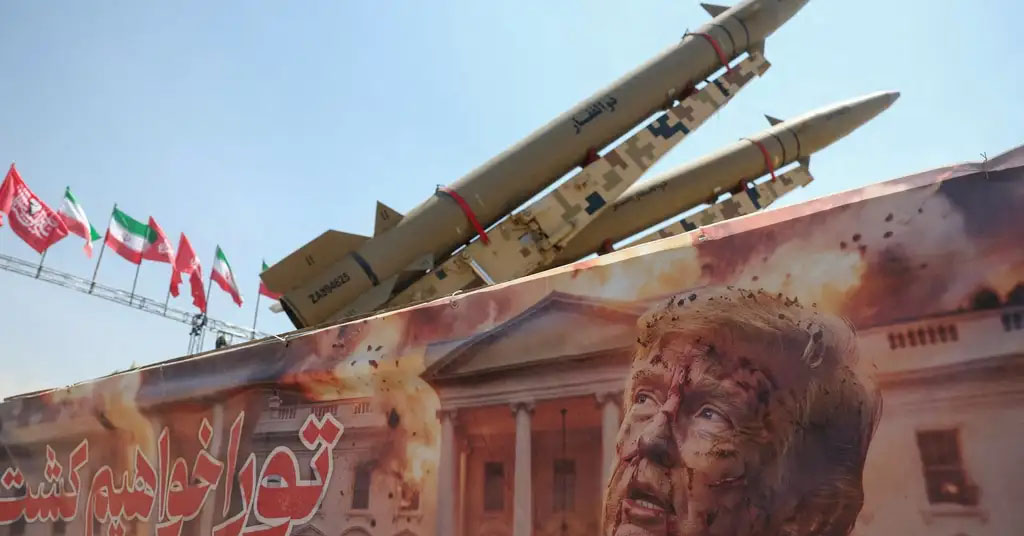
Tensions in the Gulf of Oman escalated dramatically on September 5, 2026, as the United States military struck and disabled three Iranian crude oil carriers, following missile and drone attacks by Iran’s Islamic Revolutionary Guard Corps (IRGC) on U.S. Navy warships patrolling regional waters.
The confrontation began when the Islamic Revolutionary Guard Corps (IRGC) launched ballistic missiles toward two U.S. Navy warships operating in the region. According to U.S. Central Command (CENTCOM), an American aircraft carrier and a guided-missile destroyer successfully evaded multiple Iranian attacks, with no American personnel harmed. The IRGC claimed, however, that its missiles struck and damaged both vessels, forcing them to withdraw from the area.
In response to what it described as “unprovoked” Iranian attacks, CENTCOM forces permanently disabled two Iranian crude oil carriers—the M/T Downy off the coast of Kharg Island and the M/T Stark 1 near Jask. American forces also completely destroyed the unladen crude oil carrier M/T Kylo, also known as the “Noxen,” in the Gulf of Oman, striking it at multiple critical locations after the crew was directed to abandon ship. The U.S. military later released video footage showing the vessel sinking into the Gulf of Oman.
READ ALSO:
- Ondo Tragedy: 3 Siblings, Including Twins, Found Dead Near River on Family Farm
- Three killed, 20 injured in Ife-Ilesa Expressway crash
- Kano Political Earthquake: Kwankwaso Loyalists Dump NDC, Defect to APC in Major 2027 Blow
According to CENTCOM, the three tankers were part of a multibillion-dollar Iranian “shadow network” allegedly used to finance the IRGC and its regional proxy groups. The command noted that Iran has no means to defend these vessels. CENTCOM Commander Adm. Brad Cooper issued a stark warning to the IRGC, stating: “Let the message to the IRGC be clear: If you shoot at two of our ships, we will impose an even higher economic cost —taking out three of yours. We will not hesitate to defend American forces, and if necessary, destroy Iran’s limited and exposed oil fleet.”
U.S. Secretary of War Pete Hegseth also issued a direct warning to Tehran via social media: “It’s simple: if Iran shoots at US ships, we will destroy (and sink) their oil tankers. All they have to do is not shoot at @USNavy. Iran’s oil tanker fleet is defenceless — Iran has no navy or air force. Our planes, ships & subs can strike them all.” The strikes marked the first reported U.S. attacks on Iranian oil tankers in the Persian Gulf since the beginning of the conflict, adding a new dimension to the confrontation and raising concerns over the security of Iran’s maritime energy infrastructure.
Iran’s Foreign Ministry strongly condemned the U.S. attacks, describing them as “illegal and irresponsible” and a continuation of U.S. military aggression, naval blockade, and economic warfare against Iran. The ministry stated that the actions constituted a violation of Article 2(4) of the United Nations Charter, a war crime, and a threat to international peace and security, adding that the consequences would rest with the United States and its allies. A senior Iranian military official, Brigadier General Habibollah Sayyari, said Iran had withstood attacks despite facing an adversary with extensive technological and military capabilities, describing the conflict as a test of will and endurance. The IRGC warned that continued U.S. military action would draw “heavier” responses from Iran’s armed forces.
Following the attacks, the U.S. Embassy in Bahrain issued a security alert urging American citizens in Bahrain and across the region to exercise heightened vigilance and prepare for possible flight cancellations, airspace closures, and other travel disruptions amid heightened regional tensions.
The latest clashes have cast new doubt on the already fragile ceasefire between the U.S. and Iran, which had been announced on April 8, 2026, through Pakistani mediation. The U.S. has maintained its naval blockade of Iranian ports since April 13, with CENTCOM stating that more than 70 oil tankers are currently being prevented from entering or leaving Iranian ports, with the capacity to transport over 166 million barrels of Iranian oil worth an estimated $13 billion. As both sides accuse each other of violations and vow further retaliation, the risk of a wider military escalation remains high.
US Strikes Three Iranian Oil Tankers in Retaliation for Missile Attack on Navy Ships
-

 Education3 days ago
FG Opens N2.5bn Grant Window For 50 Student Innovators Under “Next Moonshot Initiative”
-
 Politics3 days ago
Peter Obi, Others Challenging Tinubu Cannot Transform Nigeria — Datti Baba-Ahmed
-

 Auto2 days ago
Kaduna to Lead Govt Patronage of Local Vehicles as Sani Unveils Peugeot 5008
-

 metro2 days ago
Socialite Igho ‘Tiny’ Ubiribo Dies After Penis Enlargement Surgery
-

 metro1 day ago
El-Rufai Demands ₦10bn from Defence Minister Over Southern Kaduna Killings Allegation
-

 metro1 day ago
Catholic priest leaves priesthood, weds Kenyan woman after 12 years in Kenya
-

 metro2 days ago
Three Women Killed, 10 Injured in Multiple Crash on Lagos-Ibadan Expressway Bridge
-
 metro1 day ago
No US Case Against Tinubu, Family Enjoy Unimpeded Transit for UNGA — Ambassador Ibrahim