

metro
VIOs can arrest traffic offenders – FRSC

VIOs can arrest traffic offenders – FRSC
The Federal Road Safety Corps says Vehicle Inspection Officers (VIOs) have legal backing to arrest traffic offenders depending on the state within which they operate.
Deputy Corps Marshal at the FRSC, Mr Bisi Kazeem, stated in Abuja that the motoring public should give maximum cooperation to VIOs for the enhancement of safety on the roads
A unit commander of the FRSC in Abuja had earlier declared that VIOs did not have the right to arrest road traffic violators, including those operating overloaded vehicles or motorists caught using phones while driving.
READ ALSO:
- Lady found dead in Lagos hotel
- Just in: I can name companies employing foreign prisoners as expatriates – Oshiomhole
- Lagos-Ibadan rail to get three more trains as NRC opens two new stations
But the Corps Marshal of the FRSC, Mr Dauda Biu, has ordered the immediate withdrawal of the unit commander to the national headquarters for necessary administrative and disciplinary actions.
“The general public is advised to disregard the unit commander’s statement as it had no approval of the FRSC Corps Marshal and does not in any way reflect the corporate or general position of the FRSC.
“In line with sustaining the Corps’ resolve that road safety is a collective responsibility, we acknowledge the role VIOs play in complementing the responsibilities of the FRSC through the enforcement of traffic laws,’’ Kazeem stated.
He enjoined the motoring public to always comply with all established traffic regulations and to cooperate with security agencies deployed to maintain law and order on the highways, irrespective of their corporate mandate.
VIOs can arrest traffic offenders – FRSC
(NAN)







metro
NAFDAC Probes Corps Member’s Death at Enugu Camp as Fake Drug Claims Emerge
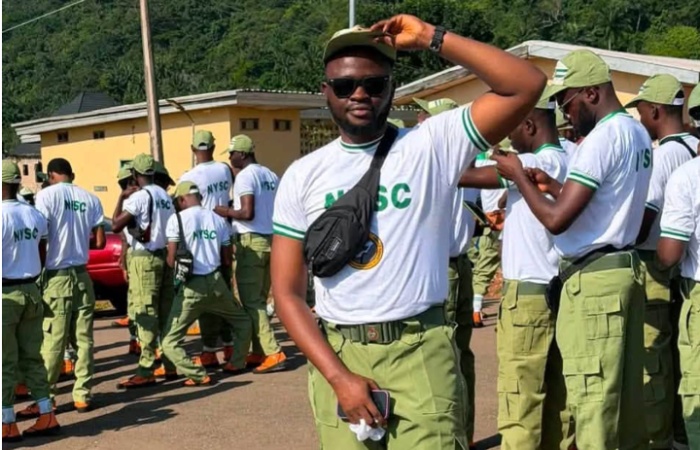
The National Agency for Food and Drug Administration and Control (NAFDAC) has launched an investigation into the death of Etimbuk Daniel, a National Youth Service Corps (NYSC) member who died at the Awgu Orientation Camp in Enugu State, following allegations that substandard or falsified medicines may have contributed to his death.
The agency said it had collected samples of the medicines administered to the deceased for laboratory analysis as part of efforts to establish the circumstances surrounding the incident.
NAFDAC Director-General, Professor Mojisola Adeyeye, disclosed that the agency’s officers had visited the camp clinic, interviewed medical personnel and other workers, and taken samples of the drugs for further investigation.
The investigation comes amid public concern over the circumstances surrounding Daniel’s death and questions about the quality of medical care available to corps members during their mandatory three-week orientation programme.
According to NAFDAC’s preliminary account, Daniel was brought to the camp clinic by two fellow corps members at about 9pm on Wednesday, October 7, 2026, with symptoms suggestive of severe malaria. The agency also stated that he had a history of peptic ulcer disease.
He was reportedly stabilised with an intramuscular antimalarial drug and other supportive medications administered intravenously before being placed on bed rest for observation.
NAFDAC said he was discharged on the morning of Thursday, October 8, with oral medications after receiving treatment.
However, Daniel returned to the clinic unaided on Saturday, October 10, complaining of pain in his right thigh. He was reportedly advised to consult a physiotherapist.
READ ALSO:
- Kano: Soldiers Kill Two Kidnappers, Rescue Victim, Recover ₦10m
- Oyo Baby Trafficking Scandal: Mother, Doctor Arrested Over Alleged ₦2m Sale of Infant
- Nairobi Mother Says Husband Abandoned Her During Childbirth, Paid Dowry for Another Woman
His condition subsequently raised concern when the attending doctor noticed that he was sweating profusely. A check of his blood pressure reportedly showed a critically low reading of 80/40mmHg.
The agency said he received intravenous normal saline to stabilise his condition, but repeated monitoring showed persistent episodes of low blood pressure.
His poor urine output, despite fluid treatment, prompted the medical team to refer him to the University of Nigeria Teaching Hospital (UNTH), Ituku-Ozalla, Enugu State.
He was transported in an ambulance accompanied by another doctor but reportedly slipped into a coma around the time he arrived at the hospital. Efforts to resuscitate him were unsuccessful.
NAFDAC further disclosed that a friend of the deceased later informed the camp clinic doctor that Daniel had been vomiting for two days after his initial admission. The doctor was reportedly unaware of the development while treating him.
According to the agency, the doctors’ preliminary assessment suggested that Daniel died from acute kidney injury secondary to severe dehydration and shock. However, the investigation and laboratory analysis are expected to provide further information about the circumstances of his death.
Addressing allegations that fake or substandard medicines caused the tragedy, NAFDAC said the same medications had been administered to other patients at the camp, who reportedly recovered after treatment. It added that doctors, pharmacists and other healthcare workers at the clinic had prescribed or used the medicines themselves at different times.
The agency’s statement did not include the results of any laboratory tests, and its preliminary account does not constitute a final determination of whether the medicines contributed to Daniel’s death.
NAFDAC urged members of the public to remain calm while the investigation continues, assuring Nigerians of its commitment to ensuring that medicines available in the country are safe, effective and of acceptable quality.
Meanwhile, the Senate has ordered a separate investigation into Daniel’s death and the state of medical facilities and emergency healthcare services at NYSC orientation camps nationwide.
The resolution followed a motion of urgent public importance sponsored by Senator Aniekan Bassey, who represents Akwa Ibom North-East Senatorial District.
The Senate directed relevant committees to investigate the circumstances surrounding the death in collaboration with the Nigeria Police Force and the Department of State Services.
The lawmakers are also expected to examine the adequacy of medical infrastructure, emergency response arrangements and referral procedures at orientation camps, with a view to preventing similar incidents.
Daniel, who hailed from Akwa Ibom State, was the immediate past president of the Students’ Union Government of Akwa Ibom State University. His death has drawn attention to the responsibility of the authorities to provide adequate healthcare and emergency support for young Nigerians participating in the national service scheme.
The outcome of the NAFDAC investigation, including the laboratory analysis of the collected medicine samples, is expected to help clarify the role of the drugs, if any, in the incident.
NAFDAC Probes Corps Member’s Death at Enugu Camp as Fake Drug Claims Emerge
metro
SERAP Sues INEC Over ₦126bn Electoral Funds, Demands Full Accountability
SERAP Sues INEC Over ₦126bn Electoral Funds, Demands Full Accountability
The Socio-Economic Rights and Accountability Project (SERAP) has sued the Independent National Electoral Commission (INEC) over its alleged failure to account for more than ₦126.46 billion allocated for electoral operations, asking the Federal High Court in Abuja to compel the commission to disclose how the public funds were spent.
The lawsuit, filed last week and marked FHC/ABJ/CS/2507/2026, followed findings attributed to the Auditor-General of the Federation’s 2023 audited report, published on August 7, 2026. The reported irregularities relate mainly to transactions carried out in 2022, with some extending into 2023.
SERAP is seeking a court order compelling INEC to provide a detailed financial and documentary account of the funds, including the amounts released and paid, the beneficiaries, the contractors involved and the beneficial owners of the companies that received the payments.
The organisation also wants the commission to provide evidence that the goods and services covered by the transactions were delivered, explain how the electoral materials were used and disclose their present location and condition.
According to SERAP, the money was intended for the procurement of ballot boxes, electoral devices, sensitive election materials, result sheets, vehicles and accreditation equipment, as well as audit services, consultancy, digital archiving and other electoral operations.
The organisation said the Auditor-General’s report raised concerns about several transactions, including more than ₦112.15 billion allegedly paid for ballot boxes, electoral devices and other materials without competitive bidding or a Certificate of No Objection from the Bureau of Public Procurement (BPP).
READ ALSO:
- Akpabio Under Fire as Senators Move to Secure His Return as Senate President in 2027
- Lamine Yamal Shines as Barcelona Thrash Real Betis 5-2
- Tinubu Scraps Recruitment Waiver Requirement for Federal Universities
SERAP said the audit findings indicated that there was no evidence that the items had been procured. It also cited concerns that contracts were awarded to companies whose competence, experience, operational capacity, addresses and factory locations were reportedly unknown.
The Auditor-General reportedly raised the possibility that the funds had been diverted and recommended their recovery. However, the allegations remain subject to verification and do not, by themselves, establish that the entire amount was stolen.
Another transaction highlighted by SERAP involved approximately ₦1.06 billion allegedly paid for Toyota Prado TXL 2021-model vehicles without the required advertisement, competitive bidding, bid evaluation or procurement clearance.
The organisation also cited more than ₦3.13 billion allegedly paid to four contractors for ballot guides, sensitive materials and result sheets before the contracts were awarded. According to SERAP, the audit raised questions about the transactions and the possibility that the money had been diverted.
A further ₦9.24 billion was reportedly paid under 22 contracts covering similar goods and services. SERAP said the Auditor-General questioned whether the contracts had been split to circumvent procurement rules and whether payments had been made for items that were not supplied.
Other transactions cited in the lawsuit included ₦129.37 million paid to 19 accounting firms for financial audit services without sufficient supporting evidence, more than ₦504 million for accreditation devices under questioned procurement arrangements, and about ₦235.1 million paid to contractors for sleeping mats and digital archiving.
SERAP wants INEC to provide documentary and physical evidence showing that the electoral materials covered by the disputed payments were actually procured. It is also asking the court to compel the commission to identify the contractors, suppliers, consultants and public officials who authorised or processed the transactions.
The organisation further wants INEC to ensure that electoral equipment and other public assets covered by the audit findings are not disposed of, transferred, destroyed or written off in ways that could frustrate investigations, transparency or the recovery of public funds.
SERAP argued that Nigerians have a right to know how money appropriated for elections was managed, particularly as the country prepares for the 2027 general elections.
It maintained that transparency in electoral spending is necessary to protect public confidence in INEC and ensure that funds allocated for credible elections are used for their intended purposes.
The organisation cited provisions of the 1999 Constitution, as amended, national anti-corruption laws and Nigeria’s obligations under the United Nations Convention against Corruption in support of its demand for accountability.
The suit was filed on SERAP’s behalf by lawyers Kolawole Oluwadare, Kehinde Oyewumi and Andrew Nwankwo.
No hearing date had been announced as of Sunday, October 18, 2026.
The case follows an earlier demand by SERAP in September, when the organisation gave INEC seven days to explain the expenditure and called for investigations into transactions flagged by the Auditor-General.
The latest legal action seeks to compel the electoral commission to provide the requested information through a court order.
SERAP Sues INEC Over ₦126bn Electoral Funds, Demands Full Accountability
metro
Borno Highway Blast: Soldiers Killed as Military Vehicle Hits Landmine
Borno Highway Blast: Soldiers Killed as Military Vehicle Hits Landmine
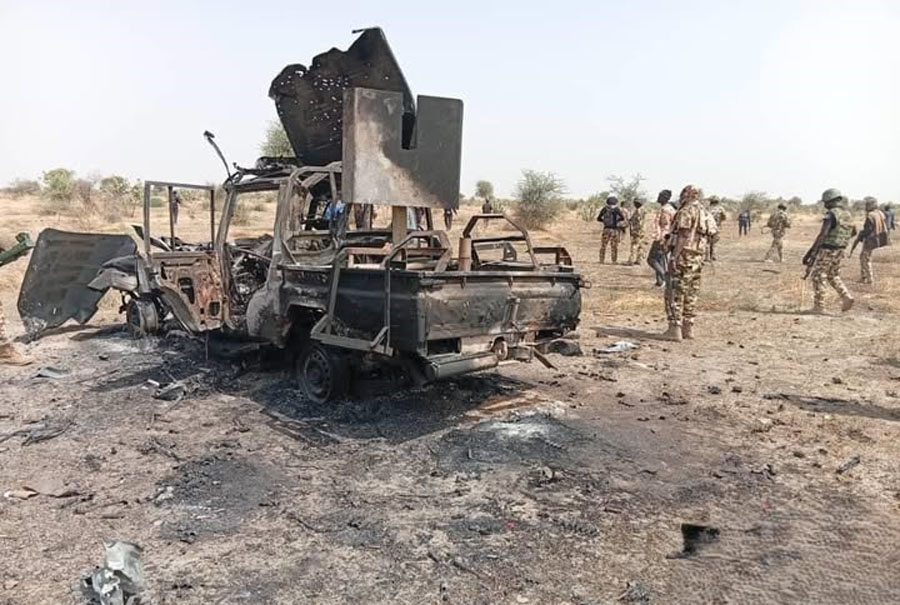
At least eight Nigerian soldiers have been killed after a military patrol vehicle struck a landmine along a highway in Borno State, north-east Nigeria.
The incident occurred on Saturday in Kinuba village, about 25 kilometres from Gamboru, near Nigeria’s border with Cameroon, according to defence sources cited by AFP.
The soldiers were reportedly travelling along the highway while inspecting members of an anti-insurgency militia involved in clearing thick vegetation beside the road when their vehicle ran over the explosive.
The blast killed all eight soldiers aboard the vehicle, while a militia member supervising the vegetation-clearing operation sustained shrapnel injuries.
READ ALSO:
- Kano: Soldiers Kill Two Kidnappers, Rescue Victim, Recover ₦10m
- Oyo Baby Trafficking Scandal: Mother, Doctor Arrested Over Alleged ₦2m Sale of Infant
- Nairobi Mother Says Husband Abandoned Her During Childbirth, Paid Dowry for Another Woman
A member of the militia, Ibrahim Liman, said the explosive had been planted on the dusty road and detonated remotely.
The attack was blamed on the Islamic State West Africa Province (ISWAP), an armed group that operates in the region and has repeatedly targeted security personnel and civilians.
The highway attack came amid renewed violence in Borno, where insurgents have continued to target military formations and patrols despite ongoing counter-insurgency operations.
The incident also occurred on the day the Chief of Army Staff, Lieutenant General Waidi Shaibu, visited Maiduguri, the state capital, following a separate attack on a military base that reportedly killed 15 soldiers and five members of the Civilian Joint Task Force.
ISWAP and its rival, Boko Haram, have increasingly used improvised explosive devices and landmines against military convoys and other road users in the North-East.
The latest incident underscores the continuing security risks along major highways in Borno, where thick vegetation can provide cover for insurgents to plant explosives and launch attacks on passing vehicles.
Borno Highway Blast: Soldiers Killed as Military Vehicle Hits Landmine
-
 metro3 days ago
₦130m Toyota Tundra Wrecked: Lagos Dealer Questions Police Over Suspect’s Release
-
 News3 days ago
₦200m Fake Alcohol Packaging Uncovered as NAFDAC Raids Aba Market
-

 metro2 days ago
Suspended Archbishop Ibezim Drags Anglican Primate to Court, Challenges Six-Month Leave
-

 Sports3 days ago
Real Madrid Demand Tebas’ Exit After Explosive Nazi Propaganda Row
-

 Entertainment3 days ago
ToluwaniSings’ Final Hours: Aide Reveals Desperate Search Across 8 Hospitals
-
 Education3 days ago
Nigerian Universities Producing Certificate Holders, Not Problem-Solvers, Says Ojuolape
-

 metro2 days ago
Imodi-Ijebu Muslim Community Bets on 20 Chiefs to Drive Education, Economic Growth
-
 Politics3 days ago
2027: Kwankwaso Signals Fuel Subsidy Comeback as NDC Vows to Crash Petrol Prices