
News
Hardship: TUC asks FG to immediately begin food importation

Hardship: TUC asks FG to immediately begin food importation
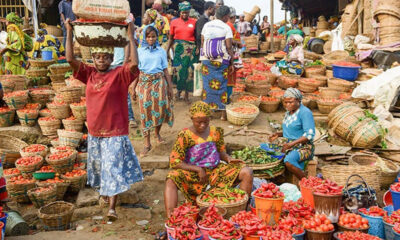
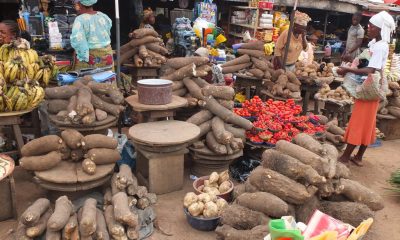
President of Trade Union Congress (TUC), Festus Osifo, has advised the Federal Government to commence the immediate importation of essential food items to cushion effects of rising food prices across the country.
He spoke during a press conference on the economic hardship ravaging the country on Monday, February 26, 2024. in Abuja.
Osifo lamented that Nigerians had never witnessed this level of hardship before even during military regimes. He added that the problems were mainly due to the government’s poor patronage of locally made products and services, and lack of capable hands at the helm of affairs.
Osifo said, “Nigerians must live to see tomorrow before we can understand how beautiful a government policy is. The national pride of striving to achieve food sufficiency locally should be temporarily relaxed.
“Governments at all levels should immediately purchase sufficient quantities of food items from different parts of the world and share them with vulnerable Nigerians.
“Importing food abroad at this point will assist to reduce the hyper-inflation of food in the country. FG should allow importation of food items for Nigerians consumption within the next two weeks.’’
The TUC president advised President Bola Tinubu to strengthen the economic management team of his administration and look beyond party or tribal lines to headhunt the best Nigerians throughout the world who could sit down and develop homegrown solutions to the hardship menace.





News
Nigeria Rejects Fresh IMF Loans Amid Push for Economic Reforms
Nigeria Rejects Fresh IMF Loans Amid Push for Economic Reforms
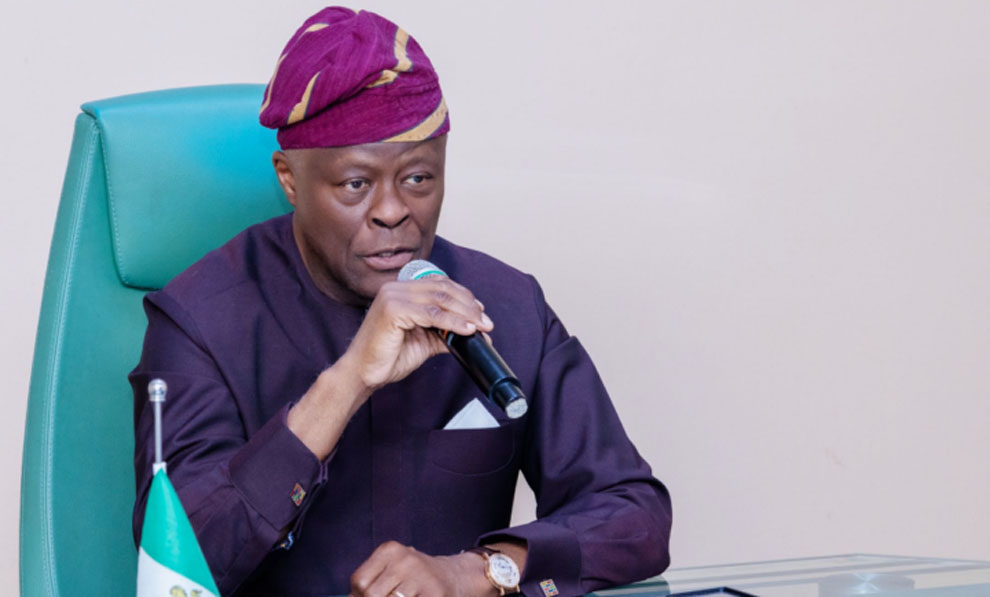
Nigeria has ruled out any immediate plans to seek loans from the International Monetary Fund (IMF) or other multilateral financial institutions, according to the Minister of Finance and Coordinating Minister of the Economy, Wale Edun.
Edun made the position known on Thursday during the Finance Ministers’ press briefing at the ongoing IMF–World Bank Spring Meetings in Washington, D.C., stressing that the country is not currently considering new external borrowing from the IMF.
“Nigeria has no plans at the moment to approach the IMF or any other institution to borrow funds,” he said.
He explained that the decision reflects both fiscal strategy and broader concerns about the cost of borrowing, particularly the high interest rates faced by African economies in global financial markets.
According to him, elevated debt servicing costs are placing significant pressure on government revenues, limiting the ability of many countries to invest in critical sectors such as health, education, and infrastructure.
READ ALSO:
- FG Ends Physical Certificate Verification as Process Goes Fully Digital
- Trump Says Iran Agrees to Hand Over Enriched Uranium in Nuclear Deal Talks
- OPM Founder Suspends Marriage Plan for Autistic Daughter After 1,000 Applications
“At the elevated interest rates that African countries pay, the premium on commercial debt is out of reason and contributes to debt distress,” Edun said, noting that a large portion of national revenue in many developing economies is now directed toward debt repayment.
He added that reducing borrowing costs across Africa would require stronger economic reforms, improved debt-to-GDP ratios, and increased use of technology to enhance efficiency and revenue generation.
Edun also reiterated President Bola Tinubu’s call for a review of the high risk premiums charged on African borrowing, arguing that fairer global financing terms would improve development outcomes across the continent.
As part of broader regional financial planning, Nigeria is also pushing ahead with efforts to host the African Monetary Institute, a key step toward deeper monetary cooperation and financial integration in Africa ahead of its planned rollout in 2026.
On global financial support, the minister urged the IMF to accelerate the disbursement of proposed assistance packages, including a suggested $50 billion support programme for economies affected by global conflicts and economic shocks.
He noted that many vulnerable economies, particularly in Africa, stand to benefit from such funding but stressed the importance of timely and large-scale disbursement.
Edun also highlighted Nigeria’s ongoing domestic reforms, including the removal of fuel subsidies, which he said previously consumed as much as 5 percent of GDP, as part of efforts to strengthen fiscal sustainability and reduce dependence on external borrowing.
He maintained that the government’s focus remains on stabilising the economy through reforms that improve revenue generation, reduce inefficiencies, and attract private sector investment rather than relying on new IMF facilities.
Nigeria Rejects Fresh IMF Loans Amid Push for Economic Reforms
News
INEC Revises Osun Governorship Campaign Deadline
INEC Revises Osun Governorship Campaign Deadline
The Independent National Electoral Commission (INEC) has adjusted the campaign deadline for the Osun State governorship election, aligning it with the recently shifted election date.
INEC had earlier, on February 26, 2026, revised the electoral timetable and moved the Osun governorship election from August 8 to August 15, 2026, as part of broader scheduling adjustments ahead of the 2027 general elections.
In a statement issued on Thursday, INEC National Commissioner and Chairman of Information and Voter Education, Mohammed Haruna, confirmed that political campaigns will now end at midnight on Thursday, August 13, 2026.
He explained that the adjustment complies with Section 98(1) of the Electoral Act, which mandates that all political campaigns must cease 24 hours before election day.
READ ALSO:
- Tinubu Mocks Atiku, Obi, Aregbesola, Says They Need ‘Jigi-Bola Glasses’ to See APC Achievements
- UK Court Jails Nigerian Couple Over £433,000 TfL Tax Fraud
- World Athletics Blocks Favour Ofili’s Switch from Nigeria to Turkey
INEC emphasised that all political parties, candidates, and stakeholders must strictly adhere to the updated timeline to ensure a smooth and credible electoral process.
The commission also reiterated its commitment to delivering free, fair, credible, and inclusive elections, urging parties to conduct issue-based campaigns and avoid actions capable of inciting tension.
The Osun governorship election is a key off-cycle poll expected to test INEC’s preparedness and operational capacity ahead of the 2027 general elections, with multiple political parties already gearing up for what is anticipated to be a closely contested race.
The adjustment of the campaign deadline is part of INEC’s broader efforts to maintain compliance with electoral laws while ensuring adequate time for logistical preparations and stakeholder coordination.
INEC Revises Osun Governorship Campaign Deadline
News
Atiku, Obi, Kwankwaso Camps Clash as ADC Grapples with Leadership Dispute

The Atiku, Obi, Kwankwaso Camps Clash as ADC Grapples with Leadership Dispute
The race for the presidential ticket of the African Democratic Congress (ADC) has intensified internal divisions within the party, as supporters of leading aspirants remain sharply divided ahead of its primaries.
The unfolding crisis comes amid unresolved leadership disputes that have left the party without formal recognition from the Independent National Electoral Commission (INEC), raising concerns about the legitimacy of its internal processes.
INEC’s position follows a ruling by the Court of Appeal in a suit challenging the emergence of key figures, including David Mark and Rauf Aregbesola, as members of the party’s National Working Committee.
The leadership tussle has splintered the ADC into three factions, each laying claim to the party’s structure. This fragmentation has stalled activities across several state chapters, many of which have been unable to conduct congresses.
Despite the uncertainty, the party proceeded with its national convention in Abuja on Tuesday without INEC monitoring—a move political observers have described as risky and potentially undermining the party’s credibility.
At the centre of the crisis are three prominent political figures—Atiku Abubakar, Peter Obi, and Rabiu Kwankwaso—all believed to be eyeing the party’s presidential ticket for the 2027 general election.
The trio, who recently defected from different political platforms, have become rallying points for competing interests within the ADC.
Tensions escalated further following a proposal from Atiku’s camp advocating a joint ticket with Obi. The suggestion, championed by media personality and politician Dele Momodu, was based on their previous alliance in the 2019 elections.
“I’d pair him with Peter Obi because they worked together in 2019,” Momodu said, arguing that such a combination could broaden the opposition’s electoral appeal.
However, the proposal has been firmly rejected by Obi’s supporters, who insist that the party’s presidential ticket should be zoned to the South.
The National Coordinator of the Obedient Movement, Tanko Yunusa, stressed that zoning remains crucial to the party’s success in 2027. He argued that once the ticket is zoned to the South, Obi should emerge as the candidate, with Kwankwaso as his running mate.
According to Yunusa, Obi enjoys widespread acceptance within the party, warning that failure to respect zoning arrangements could jeopardize the ADC’s chances at the polls.
“It’s a Southern presidency; anything short of that will only lead to defeat,” he said.
Within the party, there is also a growing perception that Atiku, owing to his extensive political experience, could have an advantage in a competitive primary. This has heightened concerns among Obi’s supporters, who believe zoning the ticket would ensure a level playing field.
Meanwhile, Obi has reiterated his opposition to what he described as “transactional” primaries, warning that he would not participate in any process lacking transparency and fairness.
Reacting to the deepening divisions, ADC National Publicity Secretary, Bolaji Abdullahi, assured party members that all aspirants would be given equal opportunity. He maintained that the party remains committed to conducting a credible and transparent primary process despite its ongoing internal challenges.
As the 2027 general election approaches, the ADC’s ability to resolve its leadership crisis and unify its ranks may prove decisive in determining its viability as a formidable opposition platform.
The Atiku, Obi, Kwankwaso Camps Clash as ADC Grapples with Leadership Dispute

-
 metro3 days ago
Tension in Osogbo as Protesters Demand Respect for Court Judgments in LG Dispute
-
 metro2 days ago
UNILAG Lecturer Sexual Assault Trial: Student Testifies in Lagos Court
-

 metro2 days ago
Grandfather in police net for impregnating granddaughter
-

 International2 days ago
US Senate Rejects Measure to Limit Trump’s Iran Military Powers
-

 Education1 day ago
FG Ends Physical Certificate Verification as Process Goes Fully Digital
-

 News2 days ago
Atiku, Obi, Kwankwaso Camps Clash as ADC Grapples with Leadership Dispute
-

 metro1 day ago
Power Supply Drops in Lagos as Transmission Faults Trigger Load Shedding
-

 News3 days ago
Hajia Sofuratu Seghosime Emerges ICAN President-Elect