

News
NIN linkage: Millions to lose access to their money as banks ‘move’ to block accounts
NIN linkage: Millions to lose access to their money as banks ‘move’ to block accounts
Over 70 million bank customers are at risk of losing access to their accounts when the Central Bank of Nigeria’s directive on restricting accounts without Bank Verification Numbers (BVN) and National Identification Numbers (NIN) goes into effect.
The CBN had on December 1, 2023, in a circular directed that a ‘Post no Debit’ restriction be placed on all bank accounts without the BVN and NIN from Friday, March 1, 2024.
‘Post No Debit’ is a term used to describe a restriction imposed by banks on specific accounts, preventing customers from making withdrawals, transfers, or any other debits from such accounts. This measure effectively freezes the funds in the account, rendering them inaccessible for the duration of the restriction.
The circular, jointly signed by the Director, Payments System Management Department, Chibuzo Efobi; and Director, Financial Policy and Regulation Department, Haruna Mustapha, read, “It is mandatory for all Tier-1 bank accounts and wallets for individuals to have BVN and/or NIN. It remains mandatory for Tiers 2 & 3 accounts and wallets for individual accounts to have BVN and NIN.
“For all existing Tier-1 accounts/wallets without BVN or NIN: Effective immediately, any unfunded account/wallet shall be placed on ‘Post No Debit or Credit’ until the new process is satisfied. Effective March 1, 2024, all funded accounts or wallets shall be placed on ‘Post No Debit or Credit’ and no further transactions permitted. The BVN or NIN attached to and/or associated with all accounts/wallets must be electronically revalidated by January 31, 2024.”
The circular went on to warn banks in the country that a “comprehensive BVN and NIN audit shall be conducted shortly and where breaches are identified, appropriate sanctions shall be applied.”
As the deadline approached, some banks sent out messages to their customers to regularise their accounts in line with the new CBN directive. While some asked customers to visit their physical branches, others made provisions for customers to update their accounts online.
READ ALSO:
- Economy Hardship: What Nigeria should do – Dangote
- Ex-Power Minister, Agunloye files N1bn suit against EFCC for declaring him wanted
- Why Nigeria’s best is always in its past – Farooq Kperogi
FirstBank Nigeria in an email to customers said, “Please ensure that your Bank Verification Number and National Identification Number are linked to your account number on or before February 29, 2024.
“You can seamlessly update your account information with your BVN and NIN by visiting any FirstBank branch close to you. Please note that the Central Bank of Nigeria through its circular: PSM/DIR/PUB/CIR/001/053 dated December 1, 2023, has directed that effective March 1, 2024, all funded accounts without BVN shall be placed on ‘Post No Debit or Credit’ and no further transactions permitted.”
Ecobank Nigeria wrote, “Please be informed that the Central Bank of Nigeria through its circular dated December 1, 2023, has announced that all accounts without Bank Verification Number and/or the National Identity Number would not be able to carry out transactions from March 1, 2024.
“Consequently, you will be required to update your account information with your National Identification Number and Bank Verification Number if you have not done so already.” It, however, offered an online solution.
Fintech firm, OPay, also called on its customers to complete the regularisation of their accounts by linking their BVN or their NIN as mandated by the apex bank, offering them both online and offline options.
A Tier-1 account refers to a bank account that can be opened with minimal or no form of documentation. Such an account can be opened with a passport photograph and has a limit of N50,000 deposit and an operating balance of N200,000 and is mostly not linked to the BVN and is targeted at the unbanked population.
This space is dominated by fintech firms and there are concerns that the lax Know Your Customer requirements are loopholes that are being used to perpetuate fraud.
The National President of the Association of Mobile Money and Bank Agents in Nigeria, Sarafadeen Fasasi, who called for an extension of the deadline, said while the policy was a good move to improve banks’ KYC requirements, its implementation was worrisome.
He said, “We are all aware that it is a good policy for the system for us to have good KYC, but unfortunately, what we have a challenge with is the implementation. This is another wrong implementation. Before you give a deadline, you must have provided the access points. As of today, we have about 104 million NINs out of 200 million people expected to have NINs. So, there is a gap of about 100 million.
“It is the same thing with the BVN, which as of the last report was about 59.9 million out of 134 million expected bank accounts. That means we have over 70 million accounts, which will be affected.”
According to data from Statista, as of 2021, the number of active bank accounts in the country was around 133.5 million, with savings accounts making up about 120 million.
READ ALSO:
- Ukraine donates grains to Nigeria amidst food price spike
- Forex: Cardoso dancing around the problem, Bwala asks Tinubu to sack bank execs
- Just in: CBN revokes licences of 4,173 bureau de change operators
Fasasi claimed that the National Identity Management Commission lacked the capacity to deliver 100 million NINs within the required timeframe.
He said, “The question is, can the NIMC deliver the gap of about 100 million NINs within the deadline? The answer is no, so why should this drive Nigerians into another problem? For BVNs, we have a huge gap to deliver and only bank branches can enrol BVN as of today.
“Based on our research, about 300 local government areas out of the 774 LGAs in Nigeria have no bank branches; so, who are those who are going to provide BVN enrolment at those LGAs? It means that people are going to run into trouble.
“Also, the highest that the banks have done is 500,000 enrolment per month. We are not ready for this. Why the rush? Why not plan that every month, this is what we want to achieve based on our capacity and access points?”
He lamented that this was coming at the same time as the National Communications Commission had directed telecom companies to bar mobile lines without the NIN.
“Who is pursuing us in Nigeria in this critical period where everyone is groaning under adverse economic conditions? They want to add extra trauma; I think we need to reconsider this,” he concluded.
The Chairman, Consumer Rights Awareness, Advancement and Advocacy Initiative, Moses Igbrude, said the apex bank ought to assess the level of compliance before wielding the big stick.
He said, “You must check the challenges and the parties who are responsible for the NIN and BVN. What of Nigerians in the Diaspora? They should give more time for this linkage so that they will not disrupt the banking system.
“It is a multifaceted issue involving many players. What is the infrastructure required for them to work? Otherwise, they will use a legal way to disenfranchise a lot of people.”
The President, Bank Customers Association of Nigeria, Dr Uju Ogubunka, called for an extension of the deadline to enable more bank customers regularise their accounts in line with the CBN directive.
Ogubunka said, “We know that some of our members have linked their accounts with the BVN/NIN as directed by the CBN. At this point, I think it will be wise to give an extension, because the telecom network has been a bit inclement and, then of course, you talk about power; some of us were unable to charge our phones for some time because there was no power. And these things are happening almost everywhere.
“People are willing to do what they’re supposed to do, but conditions within the environment are a bit difficult. So, I will personally suggest that we consider what is happening and give some extension.”
He went on to suggest that a test run where restrictions would be placed on some affected accounts might be of help in sensitising people to the importance of the directive.
“Another thing that they can do is maybe do a test run so that people will know that it is something that can be done. Some people may not even believe that it is possible to restrict transactions. So, if you do a test run for one day or even a few hours, you announce that those who have not linked up will be unable to access their accounts temporarily, maybe for 24 hours or 12 hours, then give an extension. That should help,” Ogubunka added.
READ ALSO:
- Hardship: Zaria residents ‘ambush’ BUA truck carrying foodstuffs, loot cartoons of noodles
- ‘Death to Israel’: Pro-Palestine protesters vandalize iconic New York ‘Charging Bull’ sculpture
- Tinubu appoints new FGN power company management team
He stated that there had been no reports that banks had started to restrict bank accounts without the BVN and NIN.
“No one has reported that to us yet. But then, they may not know until they want to make use of the accounts. It is not as if they are using the bank accounts every minute of the day. It is only when they want to make use of it and then see that they can’t get through, that is when they have an issue. So far, we don’t have any report on that,” he said.
Multiple bankers, who spoke on condition of anonymity, said the banks had not yet started to restrict accounts without the BVN and NIN.
They said directives had been issued from their headquarters to create a seamless linking process to avoid account deactivation.
A bank official said, “No one is deactivating accounts yet. They have been sending emails to customers to calm down so that a more seamless linking process will be communicated to customers. They will be reached via text and email. Some people used the NIN to open or update their accounts already so they won’t need to do it again.”
On the number of possible affected customers, the official stated, “We haven’t got the affected number yet. It has to be spooled by our IT team from the backend.”
Another official confirmed the directive to assist more customers via email.
“The deadline still stands; however, not all accounts are blocked because some opened theirs with the national ID from the inception. But we will be reaching out via email and text,” the official wrote to one of our correspondents.
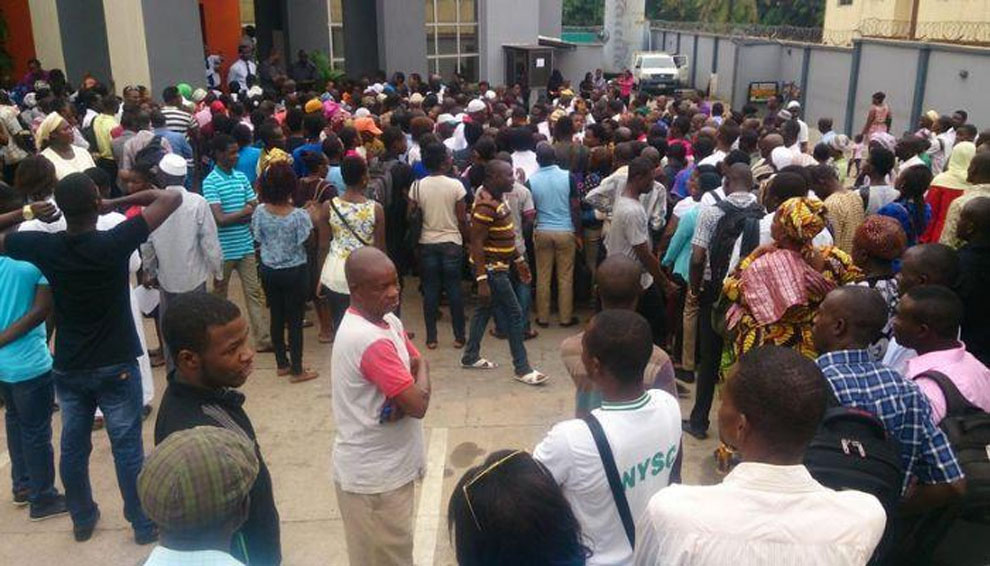
A News Agency of Nigeria report on Friday revealed that customers continued to besiege various bank branches in Lagos to meet the CBN deadline for linking BVN and NIN to their accounts.
The customers also asked the CBN to extend the deadline for them to link their BVNs and NIN with their accounts.
With the implementation of the directive, there was a significant gathering of customers at various banks as early as 8am on Friday to link their NINs with their bank accounts.
A security officer at a Guaranty Trust Bank branch in the Abule Egba area, while addressing customers who were eager to gain entry into the banking hall, said the message sent out by the bank to its customers concerning the directive was a random one.
He said not all customers that got the message were affected by the directive. This got the customers infuriated, as they said the bank should have sent out messages to only those affected. At another GTB branch in Egbeda, the bank advised customers to register online using specified codes displayed on the walls outside the banking hall.
However, at Polaris Bank, the crowd was not allowed to converge, and those who went into the banking hall were told by the customer service desk to produce their NIN slips.
Those without the slips were turned back. Customers who explained their mission to the bank’s security officers before entering the banking hall were told to get the slips.
Two bank employees used mini computers to do the first registration at the entrance before the security guards allowed the customers into the banking hall.
At Providus Bank on Nnamdi Azikiwe Road, customers were given forms and were assisted with registration simultaneously. The situation was similar at Wema Bank on Broad Street and other banks visited on Lagos Island.
Meanwhile, calls and text messages sent to the CBN spokesperson, Hakama Sidi, yielded no response as of the time of filing this report.
NIN linkage: Millions to lose access to their money as banks ‘move’ to block accounts
(PUNCH)







News
Omokri Arrives in Mexico to Assume Duty as Nigerian Ambassador, Thanks Govt for Ministerial Reception
Omokri Arrives in Mexico to Assume Duty as Nigerian Ambassador, Thanks Govt for Ministerial Reception
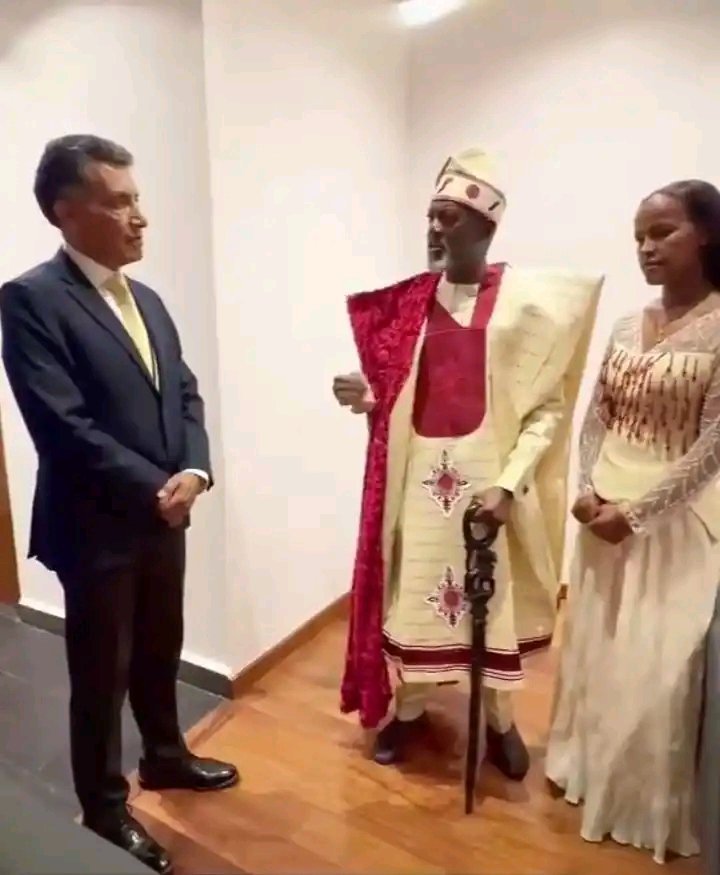
MEXICO CITY, Mexico — Former presidential aide and political commentator, Bemigho Reno Omokri, has arrived in Mexico City to take up his appointment as Nigeria’s Ambassador Extraordinary and Plenipotentiary to the United Mexican States.
Omokri announced his arrival in a social media post on Tuesday, November 24, expressing appreciation to the Mexican government for the reception accorded him and his family upon their arrival in the Mexican capital.
The newly appointed Nigerian envoy particularly acknowledged the decision of the Mexican authorities to assign a minister to welcome him, describing the gesture as a demonstration of diplomatic courtesy.
In his statement, Omokri said:
“I thank the Government of the United Mexican States for sending a minister to receive my family and I upon my arrival in Mexico City to resume as Nigeria’s Ambassador.”
His arrival marks an important development in his diplomatic career and brings an end to months of uncertainty surrounding his deployment following his appointment by President Bola Tinubu.
Eight-Month Wait Before Mexico’s Approval
Omokri’s diplomatic journey to Mexico followed a lengthy approval process that generated public attention after his appointment was announced by the Federal Government.
President Tinubu nominated him for an ambassadorial position in November 2025, alongside several other prominent Nigerians, including former Minister of Aviation, Femi Fani-Kayode, and former Chairman of the Independent National Electoral Commission, Professor Mahmood Yakubu.
The Senate subsequently confirmed the ambassadorial nominees in December 2025.
On March 6, 2026, President Tinubu approved the posting of 65 ambassadors-designate and high commissioners to their respective countries, with Omokri assigned to Mexico.
However, his deployment could not proceed immediately because the Mexican government had yet to communicate its formal acceptance of his appointment.
In August 2026, Nigeria’s Ministry of Foreign Affairs disclosed that Mexico and Japan were among the countries that had not communicated formal acceptance of outstanding ambassadorial appointments.
Mexico Eventually Grants Diplomatic Approval
The uncertainty surrounding Omokri’s posting was resolved in October 2026 when Mexico formally granted the diplomatic approval required for his appointment.
The approval, known as agrément, was delivered to Nigeria’s Ministry of Foreign Affairs by the Chargé d’Affaires of the Mexican Embassy in Abuja, José Manuel Briseño Flores.
The document was presented to the ministry’s Director of Protocol, Ambassador Babagana Wakil.
Omokri subsequently announced the development, expressing gratitude to the Mexican government for accepting his appointment.
He also confirmed that his diplomatic responsibilities would extend beyond Mexico, covering concurrent accreditation to Guatemala, Honduras and Nicaragua.
Omokri Had Earlier Addressed Rejection Claims
Before Mexico granted its approval, speculation had emerged in some quarters that the North American country might have rejected Omokri’s nomination.
However, the former presidential aide dismissed such suggestions during an appearance on Channels Television’s Politics Today in June 2026.
He maintained that Mexico had not rejected his appointment, explaining that diplomatic procedures and other administrative considerations were responsible for the delay.
Omokri also linked the timeline to preparations for the 2026 FIFA World Cup, which Mexico is co-hosting with the United States and Canada.
The Ministry of Foreign Affairs had similarly indicated that diplomatic engagements were ongoing with countries yet to communicate their acceptance of some Nigerian ambassadorial nominees.
Diplomatic Responsibilities and Next Steps
With his arrival in Mexico City, Omokri is expected to begin representing Nigeria’s diplomatic, economic and strategic interests in Mexico and the three other countries under his concurrent accreditation.
His responsibilities will include strengthening bilateral relations, promoting trade and investment opportunities, facilitating cooperation in areas of mutual interest and advancing Nigeria’s interests within the region.
However, the date for his formal presentation of letters of credence to the Mexican President has not yet been publicly announced.
The presentation of letters of credence is a significant stage in diplomatic accreditation, formally recognising an ambassador’s authority to represent his country before the receiving state’s head of state.
Omokri previously served as a media aide to former President Goodluck Jonathan before becoming widely known as an author, social commentator and political commentator.
His arrival in Mexico City represents the transition from his previous public engagements in Nigeria to a formal diplomatic assignment representing the Federal Republic of Nigeria abroad.
Omokri Arrives in Mexico to Assume Duty as Nigerian Ambassador, Thanks Govt for Ministerial Reception
News
Katsina Govt Restricts Emir of Daura’s Official Duties, Sets Up Probe Panel Over Sexual Assault Allegation
Katsina Govt Restricts Emir of Daura’s Official Duties, Sets Up Probe Panel Over Sexual Assault Allegation
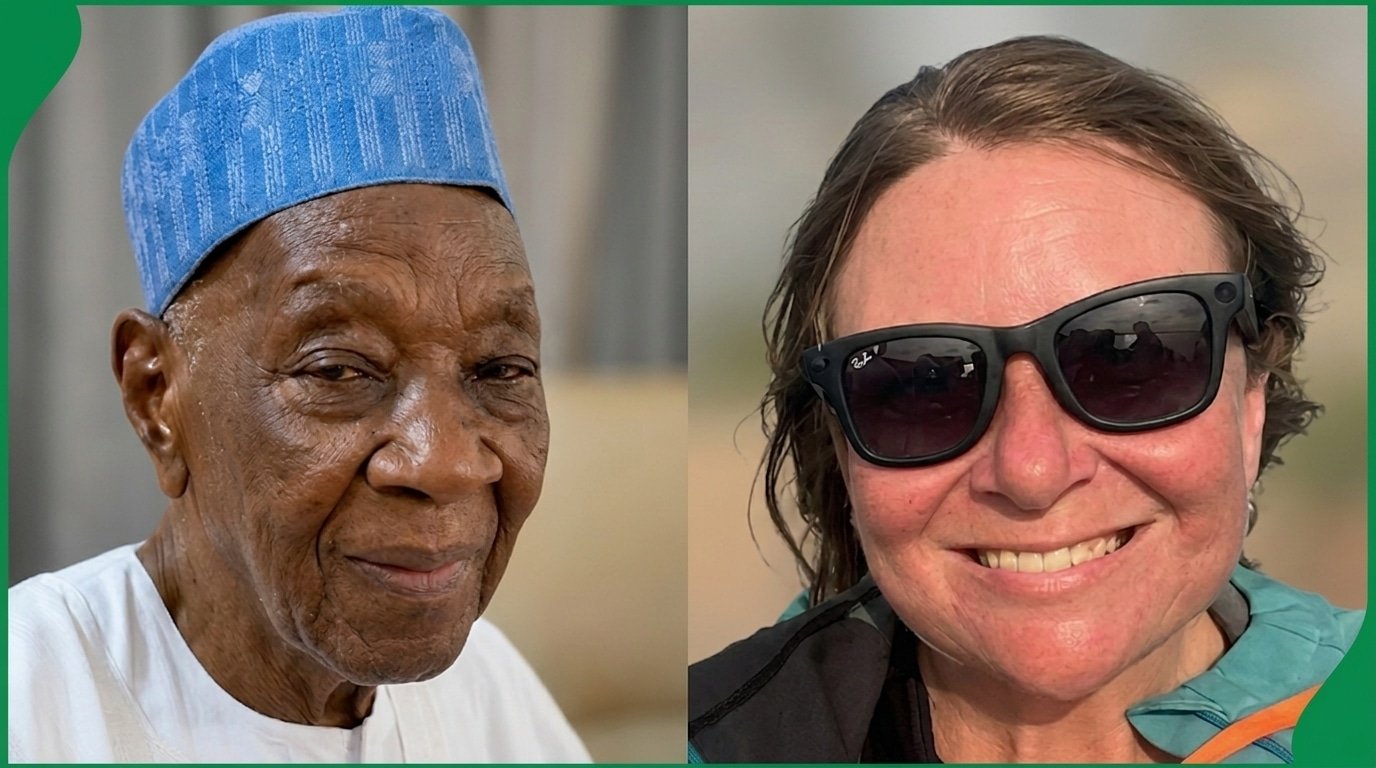
The Katsina State Government has constituted an investigative committee to probe allegations of sexual assault involving the Emir of Daura, Alhaji Umar Faruk Umar, and a foreign female tourist, following widespread public outrage over a viral video purportedly showing an encounter between the traditional ruler and the visitor inside his palace.
As part of its immediate response, the state government has suspended the Emir’s official engagements and travels pending the conclusion of the investigation.
The decision represents a significant development in the controversy surrounding the 92-year-old monarch, whose alleged conduct has generated intense debate across Nigeria and attracted the attention of international human rights organisations.
The state government’s position was contained in a statement issued on Tuesday, November 24, by the Commissioner for Information and Culture, Dr Bala Salisu Zango, on behalf of the government.
According to the statement, Governor Dikko Umaru Radda expressed serious concern over the allegations and directed the immediate establishment of an investigative committee to examine the circumstances surrounding the reported incident.
The committee is expected to investigate the allegations, establish the relevant facts and advise the government on the appropriate steps to take.
The government also assured residents that the committee’s findings and recommendations would be fully implemented, stressing its commitment to ensuring that justice is served.
It further appealed to members of the public to remain calm, law-abiding and refrain from actions capable of disrupting public peace while the investigation continues.
How the Controversy Started
The controversy erupted after a Polish female tourist, identified as Mirka Czee, who operates the Instagram account @beduinqa, shared a video and an account of what she described as an unpleasant encounter with the Emir during her visit to his palace in Daura on November 14, 2026.
READ ALSO:
- BREAKING: Court Sacks Omo-Agege as NDC Senatorial Candidate, Orders INEC to Remove His Name
- Fraud, Drugs, Money Laundering: US Targets 157 Nigerians for Deportation
- Breaking: Senegal Reclaim AFCON Title As CAS Overturns CAF Ruling
The tourist had reportedly completed a 30-day tour of Nigeria, during which she visited several cities and communities, including Lagos, Ibadan, Abeokuta, Osogbo, Ilorin, Abuja, Jos, Bauchi, Kano, Zaria, Katsina and Daura.
According to her account, she was welcomed to the Emir’s palace, where she was introduced to the traditional ruler and subsequently taken around the palace to learn about the history and cultural significance of Daura.
She said she was later brought back to meet the Emir and was left alone with him in a large room.
Recounting the incident, Mirka alleged that the monarch asked her to sit close to him before holding her hand and playing with it in a manner that made her uncomfortable.
She claimed that despite expressing her discomfort, the Emir continued the physical interaction.
The tourist further alleged that as she prepared to leave, the monarch hugged her, kissed her on the cheek and subsequently touched her breasts without her consent.
She said she repeatedly protested against the alleged conduct, expressing disbelief that such an encounter could happen inside the palace of a traditional ruler.
Mirka also disclosed that she recorded portions of the encounter using Meta smart glasses equipped with a camera.
She explained that she decided to make the incident public after leaving Nigeria because she believed other women might have experienced similar situations without having the opportunity to document or report them.
Emirate Council Begins Examination of Viral Video
Following the circulation of the video, the Daura Emirate Council confirmed that it was aware of the allegations and had commenced an examination of the footage.
READ ALSO:
- Tinubu Gives Igboho Fresh Security Mandate Across South-West
- Uduere Killings: Ughelli Chairman Accuses Omo-Agege’s Camp of Triggering Deadly Clash, Demands IGP Probe
- ‘Shame on You’: Fayose Blasts Nigerian Youths Over Poor Protest Turnout
The council’s spokesman, Ibrahim Murtala, reportedly disclosed during a telephone interview with Alfijir Radio that the traditional institution was investigating the authenticity of the recording.
He said the council was examining whether the video was genuine or had been manipulated or digitally altered using modern technology.
According to him, the Emirate Council would issue an official statement after completing its examination.
Meanwhile, a palace source who spoke anonymously to PUNCH reportedly dismissed the tourist’s allegations, insisting that nothing untoward happened during her visit.
The source acknowledged that the woman visited the palace but described her account as fabricated.
However, the source was not authorised to speak officially on behalf of the Emirate Council.
Amnesty International, Other Groups Demand Investigation
The controversy has also attracted reactions from human rights organisations, particularly Amnesty International, which called on the Katsina State Government and the Nigeria Police Force to conduct an independent and transparent investigation.
Amnesty described the allegations as disturbing and insisted that nobody should be above the law, regardless of age, position or traditional authority.
The organisation also called for accountability if the allegations were established, while emphasising the importance of a fair legal process.
Similarly, the Centre for Information Technology and Development (CITAD), through its Male Feminists Network, demanded an independent investigation and urged the authorities to preserve and examine all available evidence.
The Human Rights Writers Association of Nigeria (HURIWA) also called for justice for the tourist, insisting that the investigation should not be compromised by the status of the traditional ruler.
Police Position and Calls for Accountability
The development followed growing calls for the Emir’s suspension by prominent Nigerians.
Former Military Governor of Kaduna State, Colonel Abubakar Dangiwa Umar (retd.), had written an open letter to Governor Radda, urging him to suspend the monarch pending a thorough and impartial investigation.
Umar argued that the suspension would not amount to a declaration of guilt but would demonstrate that traditional authority should not place anyone beyond accountability.
He further maintained that if the allegations were established, the appropriate authorities should take decisive action, including the possibility of removing the Emir from the throne.
Meanwhile, Premium Times reported on November 23 that the Katsina State Police Command had said it had not received a formal complaint concerning the alleged incident.
Investigation Expected to Determine Next Steps
The Katsina State Government’s decision to restrict the Emir’s official engagements and travels while establishing an investigative committee has introduced a new dimension to the controversy.
The outcome of the investigation is expected to determine the next steps the government may take concerning the traditional ruler.
For now, the allegations remain unproven, and the establishment of the committee should not be interpreted as a finding of guilt against the Emir.
The matter has nevertheless generated important questions about accountability, the responsibilities attached to traditional institutions and the protection of visitors, particularly women, within places of authority.
As the investigation begins, attention will be focused on whether the committee can establish the facts surrounding the encounter and deliver findings capable of addressing the concerns raised by the tourist and the wider public.
Katsina Govt Restricts Emir of Daura’s Official Duties, Sets Up Probe Panel Over Sexual Assault Allegation
News
Court Freezes Nigerian Governors’ Forum Accounts Over N135.5bn Paris Club Funds
Court Freezes Nigerian Governors’ Forum Accounts Over N135.5bn Paris Club Funds
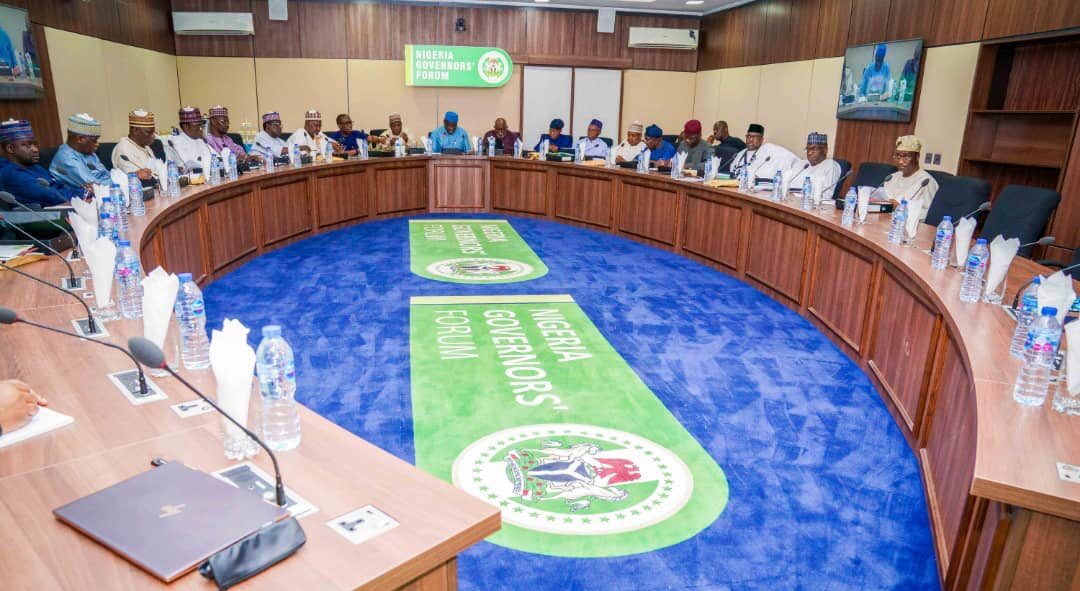
ABUJA, Nigeria — The Nigerian Governors’ Forum (NGF) has suffered a major legal setback following an order by the High Court of the Federal Capital Territory (FCT), Abuja, directing the freezing of $100 million, equivalent to approximately N135.58 billion, linked to the controversial Paris Club refunds dispute.
The court also ordered 29 commercial banks operating in Nigeria to preserve funds belonging to the NGF in their custody up to the disputed amount, pending further proceedings in a legal battle over outstanding professional fees allegedly owed to a legal practitioner.
The interim order was granted on November 19, 2026, by Justice O.C. Agbaza, following an ex parte application filed by Dr Ted Iseghohi-Edwards, who is seeking to recover the money under an indemnity allegedly issued by the governors’ umbrella body.
The case involves the Incorporated Trustees of the Nigerian Governors’ Forum as the first respondent, while 29 commercial banks were joined as co-respondents.
Court Restrains NGF From Accessing Disputed Funds
In granting the application, Justice Agbaza issued an interim Mareva injunction restraining the Incorporated Trustees of the NGF, their agents, representatives and other persons acting on their behalf from withdrawing, transferring, dissipating, concealing or otherwise dealing with the disputed $100 million or its naira equivalent.
The restriction is intended to preserve the funds while the court considers the substantive application for an interlocutory injunction.
The judge also extended the restrictions to the 29 banks, directing them not to release, transfer, convert, withdraw or otherwise deal with funds belonging to the NGF within their custody up to the aggregate amount covered by the order.
The financial institutions were further directed to disclose, within 48 hours of receiving the court order, whether the NGF maintains accounts with them containing the disputed funds.
They are also required to identify the relevant accounts, disclose their currencies and available balances, and state the amounts preserved in compliance with the order.
How The N135.5bn Dispute Started
The dispute reportedly arose from an indemnity dated December 20, 2018, allegedly issued by the Nigerian Governors’ Forum to Dr Iseghohi-Edwards.
The arrangement was connected to the Federal Government’s payment of $100 million to the NGF as a stakeholder in the Paris Club refunds controversy.
According to the claimant’s case, the money was held under an arrangement pending the determination of the Federal Government’s liability for professional legal and consultancy fees arising from the refund transactions.
Iseghohi-Edwards is contending that the condition contained in the indemnity has been fulfilled, thereby making the $100 million payable to him.
He is consequently seeking to recover the amount, which translates to approximately N135.58 billion based on the applicable exchange rate used in the court proceedings.
The claimant reportedly maintained that the indemnity issued by the NGF established its obligation to pay him once the relevant condition concerning the Federal Government’s liability had been satisfied.
Claimant Alleges NGF Failed To Honour Payment Undertaking
In pursuing the matter, Iseghohi-Edwards told the court that he formally demanded payment from the NGF through a letter dated October 8, 2026.
However, he alleged that the forum failed to honour the undertaking contained in the indemnity, prompting him to seek judicial intervention to recover the disputed amount.
He expressed fears that the money could be transferred, disbursed or otherwise dissipated before the determination of his substantive claim, potentially making it difficult to enforce any eventual judgment in his favour.
The claimant also reportedly informed the court that he could not independently establish the specific bank accounts holding the funds without an appropriate judicial order.
He therefore argued that the interim injunction was necessary to preserve the subject matter of the dispute and prevent the proceedings from being rendered ineffective.
The application was brought pursuant to Orders 30(3) and 32(1) of the High Court of the Federal Capital Territory Civil Procedure Rules, alongside the court’s inherent jurisdiction.
The claimant also undertook to abide by any order for damages should the court subsequently determine that the interim injunction ought not to have been granted.
29 Commercial Banks Affected By The Order
Among the financial institutions listed as respondents in the case are Access Bank, Alpha Morgan Bank, Ecobank Nigeria, Fidelity Bank, First Bank of Nigeria, Sterling Bank, United Bank for Africa, Unity Bank, Zenith Bank and Jaiz Bank.
Others include Guaranty Trust Bank, Keystone Bank, Stanbic IBTC Bank, Standard Chartered Bank, Wema Bank, Union Bank of Nigeria, First City Monument Bank, Lotus Bank, Parallex Bank and Polaris Bank.
The remaining banks are Globus Bank, SunTrust Bank, Citibank Nigeria, Nova Bank, Optimus Bank, Premium Trust Bank, Signature Bank, Tatum Bank and Titan Trust Bank.
The order requires the banks to preserve any funds belonging to the NGF in their custody up to the aggregate sum of $100 million or its naira equivalent.
The directive also requires them to provide the necessary account information within the stipulated 48-hour period after service of the order.
Court Fixes December 1 For Further Hearing
Justice Agbaza has adjourned the matter until December 1, 2026, for the hearing of the claimant’s Motion on Notice seeking an interlocutory injunction.
The claimant was also directed to serve the court order and relevant originating processes on all the respondents.
The interim Mareva injunction is a preservation measure intended to prevent the disputed funds from being moved or dissipated while the court considers the application for further relief.
It does not, in itself, amount to a final determination that the NGF is liable to pay the claimant or that the money has been awarded to him.
The December 1 hearing is therefore expected to be an important stage in the legal battle over the disputed $100 million linked to the Paris Club refunds controversy.
The development adds another dimension to the longstanding controversy surrounding professional fees, consultancy payments and financial obligations arising from Nigeria’s Paris Club loan refund transactions.
Court Freezes Nigerian Governors’ Forum Accounts Over N135.5bn Paris Club Funds
-

 metro3 days ago
Chibok Girl Escapes After Eight Years in Boko Haram Captivity, Reveals 20 Classmates Still Held
-

 metro2 days ago
‘I Paid My Ex-Husband Before He Slept With Me’ – Islamic Preacher Kaola Makes Shocking Revelation
-

 Politics2 days ago
Kwankwaso Made Me Swear on Qur’an to Join APC After Election Victory — Gov Yusuf Reveals Tinubu Deal
-

 Education2 days ago
South-West Leaders Challenged to Emulate Kwankwaso, Invest in Education of Poor Children
-
 Politics2 days ago
2027: Makinde Invokes 1966 Coup, Questions Obi-Kwankwaso Ticket
-

 News17 hours ago
Omokri Arrives in Mexico to Assume Duty as Nigerian Ambassador, Thanks Govt for Ministerial Reception
-
 Politics3 days ago
Shehu Sani Warns Northerners Against Celebrating Abuja Attack on Tinubu, Fears Ethnic Reprisals
-
 Politics1 day ago
Uduere Killings: Ughelli Chairman Accuses Omo-Agege’s Camp of Triggering Deadly Clash, Demands IGP Probe