

metro
Court Freezes 71 Banks’ Accounts Over N1.34bn Access Bank Cyber Fraud
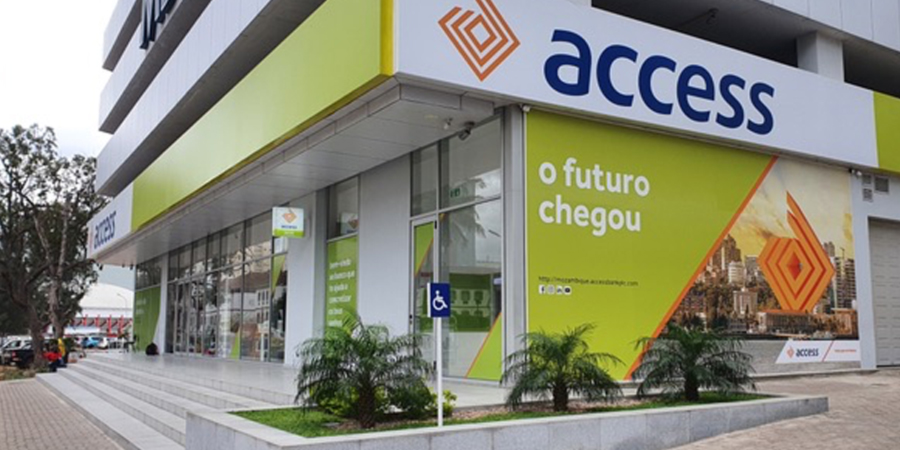
Court Freezes 71 Banks’ Accounts Over N1.34bn Access Bank Cyber Fraud
Justice Akintayo Aluko of the Federal High Court in Lagos has granted interim orders freezing accounts across 71 financial institutions following an alleged N1.34 billion cyber fraud perpetrated against Access Bank Plc through its internet banking platform. The court’s ruling, delivered on Friday, August 15, 2026, came after Access Bank filed an ex-parte application seeking urgent judicial intervention to prevent further dissipation of funds allegedly stolen from four of its customers’ accounts. The bank discovered the fraud upon resumption of operations on August 12, 2026, after noticing suspicious transactions on its Access SME App, an internet banking platform designed for business customers.
Access Bank’s internal investigation revealed that a total of N1,340,425,393 had been transferred without authorisation from four customer accounts. According to an affidavit deposed to by Sodiq Jimoh, a litigation clerk with Country Hill Attorneys & Solicitors, the stolen funds were traced to multiple accounts domiciled with Access Bank and 71 other financial institutions. The affected customer accounts included MIB TXN Bullion (Aba Branch), from which ₦590,975,889 was allegedly stolen; AIICO General Insurance Company Limited, which lost ₦420,449,504; Apogee Engineering Limited, which was defrauded of ₦136,000,000; and Sims Nigeria Limited, which lost ₦193,000,000. The bank’s investigation further identified the Bank Verification Numbers (BVNs) of alleged beneficiaries and other accounts linked to those BVNs, enabling a comprehensive tracing of the illicit funds across the financial ecosystem.
Access Bank filed an ex-parte motion marked FHC/LAG/MISC/1168/2026, seeking four principal reliefs from the court, with the bank represented by lawyers from Country Hill Attorneys and Solicitors, including Ifeoma Esther Enyinnaya, Aishat Nurudeen, and Faith Itua-Oboh. The bank sought Post-No-Debit (PND) restrictions on all accounts and BVNs that received portions of the unauthorised funds, pending the determination of the substantive suit; affidavits of disclosure from the respondent banks stating the amounts salvaged in the beneficiary accounts; watchlisting of BVNs linked to the beneficiary accounts until the full N1.34 billion is recovered, to the extent received by each beneficiary; and the reversal of recovered funds into a designated Access Bank account belonging to the applicant. Justice Akintayo Aluko granted the first three reliefs, holding that the essence of the application was to preserve the funds from further dissipation and that the court had a duty to protect the subject matter of the case. However, the judge declined to grant the fourth relief seeking immediate reversal of the salvaged funds, ruling that such an order would amount to a final determination of a substantive issue at the interlocutory stage. The judge also directed Access Bank’s counsel to file an undertaking as to damages in the event that the orders are subsequently determined to have been unwarranted, and the matter has been adjourned to August 31, 2026, for further proceedings.
READ ALSO:
- Customs Intercepts Over $73,000, £15,957, 827,800 Saudi Riyals Hidden in Shoes at Kano Airport
- Customs Names Importers of 399 Pump-Action Rifles, Hands Over Weapons to NSA Office
- TCN Injects 220MVA Into Lagos Grid, Boosts Power Supply to 134,000 Residents
The 71 financial institutions named as respondents in the suit represent a cross-section of Nigeria’s financial services sector and include major commercial banks such as First Bank, Fidelity Bank, Ecobank, FCMB, Guaranty Trust Bank, Keystone Bank, Stanbic IBTC Bank, Sterling Bank, Union Bank, United Bank for Africa, Wema Bank, Zenith Bank, Globus Bank, and Jaiz Bank, among others. The list also includes fintech companies like OPay Digital Services, PalmPay, Moniepoint Microfinance Bank, Kuda Microfinance Bank, Paga, Carbon Microfinance Bank, FairMoney Microfinance Bank, and Branch International Financial Services, as well as payment service providers including eTranzact International, KongaPay, MoMo Payment Service Bank, SmartCash Payment Service Bank, and 9Payment Service Bank. These institutions are now required by court order to place PND restrictions on the identified accounts and BVNs, and to provide affidavits disclosing the amounts recovered from the affected accounts.
In its court filing, Access Bank argued that urgent judicial intervention was necessary to prevent further dissipation of the funds, disclosing that it had already contacted the respondent institutions and requested them to preserve the funds, with some institutions already placing temporary PND restrictions. However, the bank said a court order was required to sustain those restrictions, stating in its affidavit that there was an urgent need for the order of the court to preserve the funds and every other account in receipt of the funds to avoid further dissipation. The bank further argued that granting the application would help combat cybercrime, which it said had the potential to undermine economic and national interests. It also undertook to pay damages should the court subsequently determine that the order ought not to have been granted, and warned that failure to act urgently could lead to financial losses and irreparable damage.
This case highlights the increasing vulnerability of Nigeria’s financial system to cyber fraud, particularly through digital banking platforms, as fraudsters become more sophisticated in exploiting vulnerabilities. The Access SME App breach demonstrates how a single point of weakness can be exploited to siphon massive sums across multiple financial institutions within a short period, with the rapid movement of stolen funds across banks and fintech platforms posing significant challenges for recovery efforts. The court’s intervention in this case underscores the importance of judicial cooperation in preserving assets and ensuring that victims of fraud have a path to recovery. For financial institutions, this case serves as a reminder of the critical need for robust cybersecurity measures, real-time transaction monitoring, and rapid incident response protocols, as well as the importance of regular security audits and penetration testing to identify and patch vulnerabilities before they can be exploited.
For customers, particularly businesses that rely on digital banking platforms, this case highlights the importance of regular monitoring of account activity to detect unauthorised transactions, prompt reporting of suspicious activity to banks, understanding the limits of bank liability in cases of fraud, and maintaining proper documentation to support claims. The case also raises important questions about the liability of banks and fintechs in safeguarding customer funds and the effectiveness of current regulatory frameworks in addressing emerging cyber threats. The interim orders granted by the court mean that the focus is now on preserving whatever portion of the alleged N1.34 billion remains in the identified accounts while the case progresses, with respondent institutions expected to comply with the court’s orders by placing PND restrictions on all accounts and BVNs identified, filing affidavits disclosing the amounts recovered, and watchlisting the relevant BVNs to prevent further movement or dissipation of funds.
The court has adjourned the matter to August 31, 2026, for further proceedings, at which hearing the court will likely consider whether to extend or modify the interim orders and may also address the substantive issues in the case. For Access Bank and the wider financial system, the case underscores the growing risks of cyber fraud in Nigeria’s banking sector and the critical role of the judiciary in protecting the integrity of the financial system. As digital banking continues to expand, the need for robust cybersecurity frameworks, effective regulatory oversight, and swift judicial intervention will only become more urgent.
Court Freezes 71 Banks’ Accounts Over N1.34bn Access Bank Cyber Fraud












metro
Lagos Coastal Road Crash: One Killed, Three Seriously Injured

Lagos Coastal Road Crash: One Killed, Three Seriously Injured
One person has been killed and three others seriously injured in a road accident on the Lagos Coastal Road inward Eko Hotel in Lagos.
The crash, which occurred on Friday, involved a grey Lexus Jeep 350 with registration number LSD 554 KV.
Preliminary information from the Lagos State Traffic Management Authority (LASTMA) indicated that the vehicle lost control, crashed into a roadside pole and overturned.
The impact left one person dead, while three others sustained serious injuries. The injured victims were reportedly trapped in the wreckage before passersby assisted in bringing them out.
They were subsequently taken to Duck-Yard Hospital within the Military Zone for medical treatment.
LASTMA officials who responded to the scene secured the area and coordinated the emergency operation. Security personnel from the Victoria Island area also assisted in managing the situation.
The damaged Lexus was later removed from the road to prevent further danger to motorists and help restore normal traffic movement along the affected section.
LASTMA General Manager, Olalekan Bakare-Oki, expressed condolences to the family of the deceased and urged motorists to exercise greater caution while using the road.
READ ALSO:
- Military Personnel Begin Receiving FG-Approved Salary Increase
- Trump Threatens Iran With ‘Very Hard’ Response Over Flydubai Attack
- Phyna Knocks Out Nkechi Blessing in Fourth Round, Wins ₦50m, New Car
He advised motorists to avoid excessive speed, reckless driving and other dangerous practices that could result in loss of vehicle control.
The latest Lagos Coastal Road accident has also renewed attention on road safety along the Lagos section of the Lagos-Calabar Coastal Highway, particularly as construction and traffic movement continue on parts of the route.
Federal officials have previously raised concerns about motorists exceeding the recommended speed on the highway. However, authorities have not established that speeding was the direct cause of Friday’s Lexus crash.
The incident follows another fatal crash reported on the Coastal Road in August, when a trailer reportedly lost control and collided with a Toyota mini truck, leaving one person dead and two others injured.
LASTMA urged motorists to remain vigilant and comply with traffic regulations while using the Lagos Coastal Highway. Members of the public were also advised to report road crashes, vehicle breakdowns and obstructions through the agency’s toll-free emergency line, 3367.
Lagos Coastal Road Crash: One Killed, Three Seriously Injured
metro
Nigeria Launches 11-Character Digital Postcode System for Every Addressable Building

Nigeria Launches 11-Character Digital Postcode System for Every Addressable Building
The Federal Government has launched Nigeria’s National Digital Alphanumeric Postcode System, giving addressable buildings across the country unique 11-character digital postcodes linked to their precise geographical locations.
The system was officially launched on October 1, 2026, through the Nigerian Postal Service (NIPOST) as part of efforts to modernise Nigeria’s addressing infrastructure and make it easier to identify homes, businesses, schools, farms, offices and other locations.
The new digital postcode system uses Geographic Information System technology to provide a precise and verifiable digital reference for buildings. Unlike the traditional postcode system, which generally identifies broader geographical areas, the new system is designed to pinpoint individual addressable buildings.
The 11-character code is organised across five geographical levels: state, local government area, district, area and building. The characters progressively narrow the location down to a specific building.
The Federal Government said the system is designed to address longstanding problems associated with inaccurate or incomplete addresses, including missed deliveries and difficulties faced by emergency responders, businesses and government agencies.
Minister of Communications, Innovation and Digital Economy, Bosun Tijani, said accurate location information was essential to improving commerce, public services and economic participation.
Tijani urged Nigerians to find, save and use their digital postcodes, saying the system could help businesses reach customers, enable families to provide precise locations during emergencies and support government agencies in delivering services.
The government estimates that Nigeria loses between ₦50 billion and ₦80 billion annually through missed and failed deliveries associated with poor addressing. Officials said the impact extends beyond logistics to emergency response, security operations, financial services, business activities and government planning.
READ ALSO:
- Military Personnel Begin Receiving FG-Approved Salary Increase
- Trump Threatens Iran With ‘Very Hard’ Response Over Flydubai Attack
- Phyna Knocks Out Nkechi Blessing in Fourth Round, Wins ₦50m, New Car
The NIPOST digital postcode belongs to a building rather than an individual. This means the code remains associated with the property even when residents or businesses occupying it change.
The new system is also designed to complement existing street addresses and mapping services rather than replace them. Users can provide their digital postcode alongside their conventional address when receiving deliveries or accessing services.
Nigerians can search for their postcode through the official Digital Postcode platform or mobile application. Users can search for their building or use location services to identify the building where they are.
Where a building cannot be found, users can submit its location and address details for verification and assignment of a postcode.
The service allows individuals to find, save and share their postcodes with family members, businesses, delivery companies and other service providers that require accurate location information.
Organisations can also integrate the digital postcode into their platforms for functions including address verification, customer and merchant onboarding, logistics, deliveries and location-based services.
The system is expected to have significant applications in e-commerce and last-mile delivery, where inaccurate addresses and dependence on informal landmarks can cause delays and additional costs.
Emergency response agencies are also expected to benefit from the system because responders can use a standard location reference to identify specific buildings during emergencies.
Security agencies, financial institutions, government departments and other organisations can similarly use the location data for planning, verification and service delivery.
The launch followed preparatory work by NIPOST, including a nationwide postcode validation exercise aimed at improving the accuracy and reliability of location data ahead of the national rollout.
The Federal Government has described the initiative as an important part of Nigeria’s digital infrastructure, with potential applications in logistics, e-commerce, emergency services, security, financial inclusion, urban planning and digital public services.
NIPOST is encouraging Nigerians to identify their 11-character digital postcode and begin using it whenever precise location information is required.
The rollout is expected to provide Nigeria with a common digital location reference and reduce some of the challenges associated with identifying and reaching specific buildings across the country.
Nigeria Launches 11-Character Digital Postcode System for Every Addressable Building
metro
Military Personnel Begin Receiving FG-Approved Salary Increase

Military Personnel Begin Receiving FG-Approved Salary Increase
Personnel of the Nigerian Armed Forces have begun receiving their September salaries with the Federal Government-approved salary increase reflected in their payments, the Defence Headquarters (DHQ) has confirmed.
The Director of Defence Information, Maj.-Gen. Samaila Uba, confirmed the development on Wednesday, saying the implementation marked the fulfilment of the Federal Government’s commitment to improving the welfare and conditions of service of military personnel.
The revised military salary structure followed President Bola Ahmed Tinubu’s approval in August and took effect from September 1, 2026.
Under the approved arrangement, personnel from the rank of Private to Sergeant are entitled to an 80 per cent salary increase, while those from Warrant Officer to Colonel are to receive a 50 per cent increase.
Officers from the rank of Brigadier-General and above are to receive a 30 per cent increase.
The Federal Government had said the adjustment would raise the annual salary bill for the Armed Forces from about ₦660 billion to ₦924 billion, representing an additional ₦264 billion in personnel expenditure.
READ ALSO:
- 2027 Hajj: Nigeria Secures 10,000 Extra Slots, Allocation Hits 60,000
- [UPDATED] Imo Highway Attack: 10 Rescued as Gunmen Abduct NYSC Prospective Members
- Workers to Begin Nationwide Warning Strike Over Petrol Price, Wage Award
The implementation comes as the military continues operations against terrorism, banditry, kidnapping, oil theft and other security threats across the country.
The government has linked the salary review to broader efforts to improve troop welfare and conditions of service, alongside investments in military infrastructure, equipment and manpower.
The Defence Headquarters’ confirmation also comes amid the Federal Government’s wider expansion of the Armed Forces. The Nigerian Army is being expanded from eight to 12 divisions, while additional personnel are being recruited to strengthen the military’s operational capacity.
In a related development, the Federal Government is also implementing infrastructure projects aimed at improving accommodation and living conditions for military personnel and their families.
The revised pay structure is expected to provide increased remuneration for serving personnel according to their ranks, while further implementation details will determine how the new salary package is reflected across the different services and categories of personnel.
The Army, Navy and Air Force remain covered by the revised salary arrangement as the government continues its broader military welfare programme.
Military Personnel Begin Receiving FG-Approved Salary Increase
-

 metro2 days ago
$2.1m Land Suit: Court Orders Wike’s Son to Produce American Passport
-

 metro3 days ago
Hamzat Clarifies Lagos Traffic ‘Lifestyle’ Remark After Backlash
-

 metro2 days ago
Osogbo Food Bonanza: Angry Customers Loot Warehouse After Operators Vanish
-

 metro3 days ago
Chimamanda Adichie: Hospital Seeks to Stop Inquest Into Son’s Death
-

 Sports3 days ago
Nigeria XI vs Guinea-Bissau: Awoniyi, Lookman, Adams Lead Super Eagles Attack
-
 Business1 day ago
Dangote Sets 40-Month Deadline for $16bn East Africa Refinery in Kenya
-

 News2 days ago
Tinubu Returns After 30 Days in Europe, Says ‘I’m Healthy and Ready to Work’
-

 Politics1 day ago
2027: Amaechi Recalls How APC Defeated PDP, Orders ADC Mobilisation