

metro
Okada rider rapes female passenger in Ogun

Okada rider rapes female passenger in Ogun
A commercial motorcycle rider has been apprehended for raping a female passenger in Ogun.
The state’s police command made the disclosure on its official X handle on Friday.
It said the suspect would soon be charged to court.
READ ALSO:
- US says Israel may have breached international law with American weapons in Gaza
- We kidnap, rape male victims — Arrested Lagos gays
- Naira becomes worst performing currency in one month – Report
The suspect, after picking up the passenger, was said to have diverted to a different destination where he allegedly committed the crime.
It read, “Commercial Motorcycle Rider Arrested For Rape: One Afeez Mustapha is in SCID for sexual assault on a female passenger, after diverting to a route different from that of the passenger, and subsequently had unlawful carnal knowledge of her.”
Okada rider rapes female passenger in Ogun











metro
Adeyanju Rejects Payment for Niger Miners’ Probe, Vows to Expose Any Cover-Up

Adeyanju Rejects Payment for Niger Miners’ Probe, Vows to Expose Any Cover-Up
Human rights lawyer and activist Deji Adeyanju has rejected any payment, stipend or honorarium for his participation in the Federal Government’s investigation into the deaths of 37 suspected illegal miners in Nigeria Security and Civil Defence Corps (NSCDC) custody in Niger State, describing the assignment as a national duty.
Adeyanju, who was appointed to the 10-member independent committee constituted by the Federal Government, said he accepted the role primarily to ensure that the interests of the victims are represented and that the circumstances surrounding their deaths are fully established.
Adeyanju urged the government not to make any financial provision for members of the committee, saying he would personally pay for his accommodation, transportation and other expenses arising from his participation in the investigation.
He also pledged not to tolerate any attempt to compromise the process, suppress evidence or shield anyone found responsible for the deaths.
Adeyanju warned that any attempt to protect those responsible or suppress the truth would be exposed, stressing that the victims deserved justice.
His position came shortly after the Federal Government established the 10-member independent committee following President Bola Ahmed Tinubu’s directive for a comprehensive and transparent investigation into the incident.
The committee is chaired by retired Department of State Services (DSS) Deputy Director-General Jonathan Kure, while Professor Isa Hayatu Chiroma, SAN, former Director-General of the Nigerian Law School, serves as secretary.
Other members include retired Assistant Inspector-General of Police Hosea Hassan Karma, Professor Olayinka Buhari, representatives of the Minna Emirate Council and Niger State Government, Liman Sulaiman of the Miners Association of Nigeria, journalist Zainab Suleiman Okino of Blueprint Newspaper and public affairs analyst Dr George Agbakahi.
The panel has been directed to establish the identities of the deceased and examine the circumstances surrounding their arrest, detention and deaths. It is also expected to determine whether negligence, misconduct, complicity or other wrongdoing contributed to the incident and recommend appropriate action, including compensation where applicable.
READ ALSO:
- Kano TikToker Remanded Over Alleged Defamation of Politician
- Trump Bans CNN, MS NOW, Politico From White House Over ‘Fake News’
- Jetour Unleashes F700 Hybrid Pickup as Abuja Experience Begins Tuesday
The committee has two weeks to complete its assignment and submit its report to the Minister of Interior, Olubunmi Tunji-Ojo. It has also been authorised to access relevant documents and facilities, visit locations connected to the incident, receive memoranda from members of the public and co-opt experts where necessary.
The government has separately suspended 20 NSCDC officers in connection with the deaths, in addition to the earlier suspension of the Niger State NSCDC Commandant, Suberu Aniviye, pending the outcome of the investigation.
The deaths occurred after suspected illegal miners were arrested during enforcement operations in the M.I. Wushishi and Lukoto areas of Niger State on September 15 and 16.
The exact number of people held before the deaths has become part of the controversy, with conflicting accounts emerging over the number of detainees and the conditions in which they were held.
The cause of death remains officially unresolved.
The NSCDC initially said a suspected disease outbreak might have been responsible and that the bodies were sent for medical examination. However, survivors have provided accounts suggesting that overcrowding and poor ventilation may have contributed to the deaths.
One survivor, Dauda Shehu, reportedly said detainees were packed into a poorly ventilated cell and that those inside began struggling to breathe before some of them collapsed. He also alleged that detainees called for help as the situation deteriorated.
Another survivor reportedly alleged that a substance resembling perfume was sprayed inside the cell shortly before detainees began experiencing difficulties. The allegation has not been independently established and remains among the issues that investigators will have to examine.
The conflicting accounts have heightened demands for an independent determination of the cause and circumstances of the deaths, rather than reliance on preliminary explanations.
The incident has also triggered public protests in Minna, the Niger State capital, with residents demanding answers and accountability over the deaths. Security authorities moved to contain the unrest, while a curfew was imposed following disturbances.
The Federal Government has called for calm and said that anyone found culpable would face appropriate consequences, while insisting that the investigation should be allowed to establish the facts before conclusions are reached.
The government’s response has also included efforts to preserve potential evidence connected to the incident, while the suspended NSCDC personnel remain subject to investigation.
The deaths have generated broader concerns about custodial conditions, treatment of detainees and accountability within security agencies, alongside the government’s continuing campaign against illegal mining.
Illegal mining remains a major challenge in several parts of Nigeria, with authorities raising concerns about environmental degradation, loss of government revenue and the activities of criminal networks associated with illegal mining operations.
However, the investigation into the Niger State deaths is focused specifically on what happened to the people after they were arrested and placed in NSCDC custody.
For Adeyanju, the priority is to ensure that the committee’s work is not compromised by political, institutional or financial considerations.
His decision to reject payment means he will participate without accepting a stipend or honorarium from the government, while personally covering expenses associated with his role.
The committee’s findings are expected to address the conditions under which the detainees were held, the medical attention they received, the events immediately preceding the deaths, the precise cause of death and whether any individual or institution bears responsibility.
Until those findings are released, the circumstances surrounding the 37 deaths in NSCDC custody remain subject to investigation.
Adeyanju has said he will use his position on the committee to represent the victims’ interests and oppose any attempt to suppress the truth as the Federal Government seeks to determine what led to the tragedy and whether anyone should be held accountable.
Adeyanju Rejects Payment for Niger Miners’ Probe, Vows to Expose Any Cover-Up
metro
Kano TikToker Remanded Over Alleged Defamation of Politician

Kano TikToker Remanded Over Alleged Defamation of Politician
A Kano-based TikToker, Khadija Muhammad Yar Lele, has been remanded in custody following her arraignment over allegations of defamation and insulting a politician in Kano State.
Yar Lele was brought before the court after a complaint was filed over content allegedly published or circulated by her on social media. The case has drawn attention to the increasingly complex relationship between social media activity, freedom of expression and defamation laws in Nigeria, particularly as TikTok and other digital platforms have become major avenues for political commentary and public debate.
The TikToker was reportedly arraigned over allegations arising from statements made against the politician. Following the proceedings, the court ordered that she be remanded in a correctional facility pending the continuation of the case.
The allegations against Yar Lele have not been established as fact by the court. Her remand is also not a conviction, and she remains entitled to the presumption of innocence until the matter is determined.
The available report did not provide the full text of the statements allegedly made by the TikToker. It therefore remains important to distinguish between the allegations contained in the complaint and facts that may eventually be established through evidence before the court.
READ ALSO:
- Trump Bans CNN, MS NOW, Politico From White House Over ‘Fake News’
- Jetour Unleashes F700 Hybrid Pickup as Abuja Experience Begins Tuesday
- “She Wanted to Stay Single”: Rema Opens Up About Rejection That Inspired Hit Song ‘Oh No’
The development comes at a time when social media users and content creators in Nigeria increasingly comment on political, social and public-interest issues before large online audiences. Platforms such as TikTok have transformed the way information and opinions are shared, allowing individual creators to reach thousands or even millions of people without going through traditional media organisations.
That increased reach, however, can also expose users to legal disputes when posts or videos are alleged to contain defamatory statements about identifiable individuals.
In Nigeria, a person who believes their reputation has been harmed by statements made or published about them may pursue legal remedies depending on the circumstances and the applicable law. Where criminal allegations are involved, the prosecution must still establish the required elements of the alleged offence before the court.
The Kano case is therefore being watched in the context of the wider debate over online speech and accountability. The remand order means that Yar Lele will remain in custody while the judicial process continues, unless the court subsequently grants bail or makes another order affecting her custody.
The court is expected to consider the allegations and evidence presented by the parties as the case progresses. For the defence, the proceedings provide an opportunity to challenge the allegations, present its own arguments and contest any evidence relied upon by the prosecution.
The case also highlights the importance of caution when publishing allegations concerning politicians and other public figures on social media, particularly where statements may be interpreted as assertions of fact rather than opinion or criticism.
Political commentary and criticism of public officials form an important part of public discourse, but the legal consequences of particular statements depend on their content, context, manner of publication and the law under which a complaint is brought.
The case involving Yar Lele will ultimately be determined by the court based on the evidence and arguments presented during the proceedings. Until then, the allegations against the Kano TikToker remain allegations, while the remand order represents an interim step in the judicial process rather than a finding of guilt.
Further proceedings are expected as the court continues to hear the case.
Kano TikToker Remanded Over Alleged Defamation of Politician
metro
Niger Gold Mine Scandal: IBB Breaks Silence, Rejects Ownership Claim
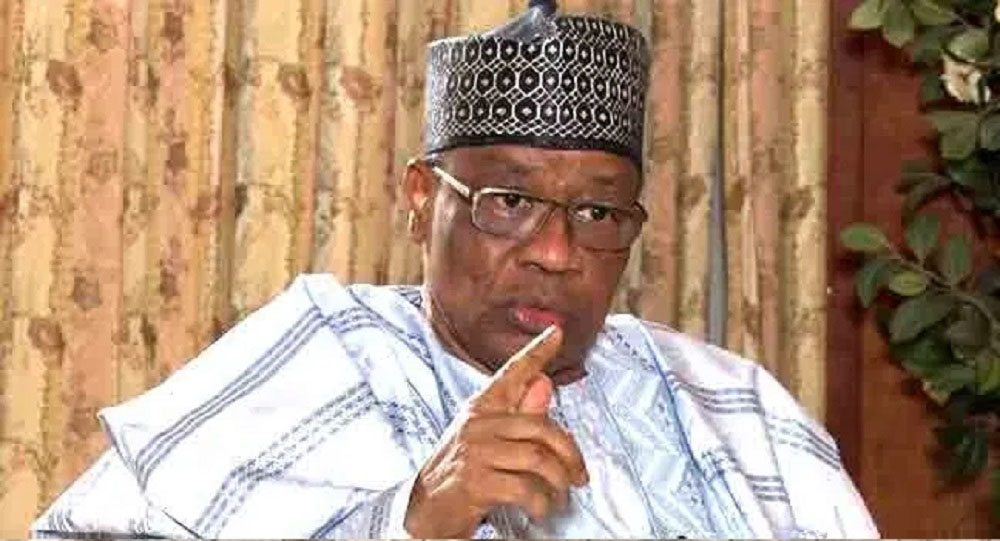
Niger Gold Mine Scandal: IBB Breaks Silence, Rejects Ownership Claim
Former military Head of State, General Ibrahim Badamasi Babangida (retd.), has denied any connection with the gold-mining site in Niger State where dozens of suspected illegal miners were arrested before 37 of them died in the custody of the Nigeria Security and Civil Defence Corps (NSCDC).
Babangida’s denial came after a survivor of the incident allegedly identified the former military ruler as the owner of the mining site where the miners were arrested.
The allegation has added a fresh dimension to the controversy surrounding the deaths, which have already triggered investigations by federal and state authorities.
The survivor, identified as Malam Babawo Tudun Nasera, reportedly made the claim while recounting the arrest and death of his 17-year-old brother, Salim, who was among those detained by NSCDC personnel.
According to reports, Nasera said the miners were ordered to stop working at the site by security personnel but that the owner had allegedly directed them to continue mining.
When asked who owned the site, the survivor reportedly answered that it belonged to Babangida and later clarified that he was referring to the former military Head of State. He also alleged that Babangida had instructed the miners to continue their activities.
However, the ownership allegation has not been independently established.
Reacting to the report, Babangida, through his representative, Dr Danladi Umar Abdulhameed, strongly denied any involvement with the mining operation.
Abdulhameed described the allegation as “false, baseless and completely without foundation,” insisting that Babangida had no connection whatsoever with the mining site.
He demanded that the impression created by the report be corrected and urged members of the public to disregard the allegation.
The representative’s statement came after the survivor’s account was published, with the report itself noting that the ownership claim could not independently be verified. It was also unclear whether the survivor’s reference to Babangida concerned ownership of the mining operation, a mining lease, the land or another form of connection.
The ownership controversy comes against the backdrop of a major security and human-rights controversy in Niger State, following the deaths of suspected miners in NSCDC custody.
READ ALSO:
- “She Wanted to Stay Single”: Rema Opens Up About Rejection That Inspired Hit Song ‘Oh No’
- Ronaldo Included in Portugal’s Nations League Squad as Jorge Jesus Begins New Era
- Rivers Fire: Mother, Four Children Die in Okochiri House Inferno
At least 37 suspected illegal miners died while in NSCDC custody after they were arrested during enforcement operations around the M.I. Wushishi and Lukoto areas of Niger State on September 15 and 16, 2026.
Niger State Governor, Mohammed Umaru Bago, confirmed the deaths and disclosed that 67 artisanal and suspected illegal miners had been detained in an NSCDC cell before 37 died.
The governor said the actual cause of death had not been established, stressing that medical, forensic and autopsy examinations were required before any definitive conclusion could be reached.
The NSCDC initially linked the deaths to a suspected disease outbreak. However, other accounts have raised concerns about the conditions under which the suspects were detained.
Reports have cited allegations of overcrowding and poor ventilation, while authorities have also considered possible exposure to hazardous substances associated with mining activities as one of the issues requiring investigation.
The deaths have prompted strong action from the Federal Government.
The Niger State NSCDC Commandant, Suberu Siyaka Aniviye, was suspended following the incident, while authorities ordered a comprehensive investigation into what happened to the detainees.
The NSCDC also constituted an investigative team to examine the circumstances surrounding the deaths, including the condition of the suspects when they were arrested, the period they spent in custody, the conditions in which they were detained and the medical attention provided to them.
The Niger State Government equally established a committee of inquiry and ordered autopsies to help determine the cause of death.
The Federal Government has also constituted an independent committee to investigate the incident following President Bola Ahmed Tinubu’s directive for a comprehensive and transparent probe.
The committee is expected to establish what happened, determine responsibility where applicable and make recommendations arising from its findings.
The deaths sparked anger in Minna, with protests reported around NSCDC facilities.
Police reportedly used tear gas to disperse protesters as tension rose over the circumstances surrounding the deaths.
The state government subsequently appealed for calm and warned youths against resorting to violence while investigations continued.
Governor Bago had earlier announced mourning arrangements for the victims and expressed concern over the deaths, saying the authorities were working to establish the identities of the deceased and contact their families.
The incident has also raised wider questions about the treatment of suspects in detention and the conditions under which they were held.
Some survivors and witnesses have alleged that the detainees were packed into an overcrowded facility, while other accounts have raised allegations of physical abuse and exposure to harmful substances.
These allegations remain part of the ongoing investigations and have not been established as the official cause of the deaths.
The authorities have stressed the importance of allowing medical and forensic investigations to establish the facts before definitive conclusions are reached.
Amid the controversy, Amnesty International has also questioned the blanket description of the deceased as “illegal miners”, arguing that the designation should not be treated as established guilt, particularly because the deceased would no longer be able to defend themselves.
The allegation linking Babangida to the mining site has therefore introduced another dimension to the unfolding controversy.
For now, there are two sharply conflicting accounts: the survivor’s allegation identifying Babangida as the alleged owner of the site and the former military ruler’s categorical denial that he has any connection with the mining operation.
No publicly available evidence cited in the reports reviewed has independently established Babangida’s ownership or involvement in the mining site.
The central questions surrounding the deaths — including why the miners were detained, the conditions under which they were held, what caused the deaths and whether any officials or other individuals should bear responsibility — remain subjects of investigation.
As the various probes continue, attention is expected to focus on the findings of the medical examinations, autopsies and independent investigations, which could determine the circumstances that led to the deaths of the 37 detainees.
Until those investigations are completed, claims concerning the cause of death, responsibility for the fatalities and the alleged ownership of the mining site remain subject to verification.
Niger Gold Mine Scandal: IBB Breaks Silence, Rejects Ownership Claim
-

 metro3 days ago
Niger Mosque Abductions: Terrorists Execute 30 of 500 Captive Muslim Worshippers
-

 Business2 days ago
Fuel Prices Climb to ₦1,500 per Litre Across Nigeria, Sparking Calls for Urgent Action
-

 News2 days ago
OAU Investigates Death of Final-Year Student as Police Begin Probe
-
 News1 day ago
ECOWAS Biometric Card Expands as Seven Countries Begin Rollout
-
 metro3 days ago
US-Based Nigerian Lawyers Disbarred: Full List of Fraud, Theft and Misconduct Cases
-

 Politics2 days ago
Aisha Buhari Visits Atiku Amid Opposition Coalition Activities
-

 Business2 days ago
NCAA Moves Against Airlines Over Rising Flight Delays
-

 Interview2 days ago
He Does Not Lose Elections”: Abdulmumin Jibrin Predicts 65% Landslide for Tinubu in 2027