

News
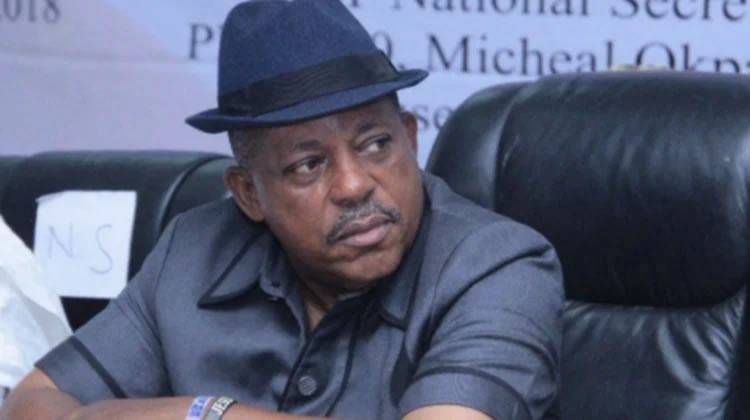
Wike working against Rivers State, says ex-PDP Chairman Secondus
Wike working against Rivers State, says ex-PDP Chairman Secondus
Former National Chairman of the Peoples Democratic Party, Prince Uche Secondus, has accused the Minister of the Federal Capital Territory, Nyesom Wike, of being the mastermind of the current charged political atmosphere in Rivers State.
The former PDP national chairman made the accusation on the heels of Wike’s incessant feud with the Rivers State governor, Siminalayi Fubara, saying the FCT minister had been demarketing the state because Governor Fubara had blocked all loopholes that could grant him access to the revenues in the coffers of Rivers State.
Secondus alleged that Wike had instructed his aides and political associates to continuously malign and sabotage the peace, progress, and prosperity of Rivers State by ceaselessly attacking Governor Fubara and other leaders of the state in the media.
He further stated that Wike’s media attacks against the political leaders of Rivers were “unwarranted and diversionary.”
Meanwhile, the FCT minister said he has never asked Governor Fubara, his estranged political godson, or anyone else to worship him in the state.
This is just as he assured members of the State House of Assembly loyal to him that nobody can remove them from office.
Wike stated this while speaking at an event to honour former Senator, George Senior in Ogu in Ogu/Bolo Local Government Area of the state on Saturday.
READ ALSO:
- Accident: After brother’s death, Tijani Babangida’s son dies, wife loses eye
- EPL: Man City go top after thrashing Fulham
- British High Commission shuns Prince Harry, Meghan ceremonies in Nigeria
Recall that Governor Fubara at a recent function in Port Harcourt while commenting on the crisis in the state had said he respects and acknowledges Wike’s pivotal role in his governorship emergence, but that he would not worship any man.
Also, at the burial of the late mother of former Rivers State Governor, Celestine Omehia in Ubima, Ikwerre local government area of the State, Fubara has said ‘I won’t Govern Rivers on bended knees’.
But Wike in his reply wondered where the issue of ‘worship’ which his successor mentioned emanated from.
He said, “I came because I respect people who appreciate what God has done for them and what God has used people to do for them.
“God does not come down. God uses people to help people. I have never told anybody to worship me. Nobody can worship man. All of us believe that we only have one God. And it is only that God we worship; and we will continue to worship that God.
“As politicians, we appreciate people who have helped. Ogu-Bolo people when I came to ask you to support me, you supported me. Did I worship you? But I have to appreciate you. I never said I would worship you. Did I tell you to worship me? So why did the issue of worship come.”
READ ALSO:
- Soldiers killing: Okuama returnees collapse on seeing destroyed homes
- Why I claimed Ooni is my father – Man recants, apologises (+ VIDEO)
- Fuel scarcity will be over soon, days Senate leader
He commended the chiefs and people of Ogu-Bolo for not allowing politics to divide them, saying, “You have not allowed politics to make you dishonour your son. That shows people who have leaders of their community in mind.”
He apologised to the people for what he termed wrong judgment, which he said, shows that man is prone to errors.
“In life when you make a mistake, there is nothing you can do about it. I have made a mistake, I didn’t know it all. I say God forgive me and I say all of you forgive me.
“But we will correct it at the appropriate time. I’m a human being. I’m bound to make mistakes. My judgment can be wrong. So forgive me for making a wrong judgment. That is part of life, so nobody should kill himself,” the FCT minister said.
On Fubara’s recent remarks that some of the lawmakers stayed with him and he paid their children’s fees, Wike jested that he never knew the latter was so rich.
“See the Assembly people in their different constituencies. I never knew you were saying rich. I never knew your father was the Managing Director of Shell.
“You were feeding the Assembly people, paying their children’s school fees. I never knew that. It is unfortunate. “
‘We’re in full control’
Also, the Peoples Democratic Party has declared full control over Rivers State, asserting that Governor Siminalayi Fubara and the party now dominate the state’s political landscape.
READ ALSO:
- Aisha Yesufu under fire for celebrating naira fall
- Fuel scarcity will be over soon, days Senate leader
- Man shoots stepmom trying to hug him during graduation ceremony
In a statement by its National Publicity Secretary, Debo Ologunagba, on Saturday, the party claimed that all legislators who defected to the All Progressives Congress have forfeited their seats, citing constitutional provisions.
Recall that on Tuesday, the state government dismissed a call by the state APC for the pro-Wike House of Assembly to commence impeachment proceedings against Gov. Fubara.
Ologunagba emphasised that legal considerations now overwhelmingly favour the PDP, dismissing the APC’s claims as futile attempts to subvert Nigeria’s constitution.
He stated, “It is indeed pathetic for the APC to think that the facts and true import of Section 109 (1) (g) of the Constitution of the Federal Republic of Nigeria, 1999 (as amended) to the effect that the former lawmakers have since lost their seats can be muddled and lost in litigation and lengthy press statements.
“Interestingly, in the failed bid to subvert the Constitution to give the former members of the Rivers State House of Assembly a lifeline, the APC ended up admitting the clarity of the provision of Section 109(1)(g) of the 1999 Constitution (as amended) in voiding their seats upon their defection.”
In a similar vein, the Rivers State Police Command has explained why its operatives occupied the entrances of the State House of Assembly in Port Harcourt.
Recall that about 30 armed policemen and over 25 patrol vans were stationed at both entrances leading to the Assembly quarters located along Aba Road in the state capital.
READ ALSO:
- Binance runs into trouble in Canada, fined $4.38m
- Anxiety as another aircraft skids off Lagos airport runway
- EFCC insists on naira, bans foreign currencies at embassies
The state governor, Siminalayi Fubara, had visited the legislative quarters unannounced with a retinue of security aides and other plain cloth operatives on Wednesday, sending cold shivers down the spine of the Martin Amaewhule-led 27 lawmakers loyal to the Minister of the Federal Capital Territory, Nyesom Wike.
Reacting to the unscheduled visit which he described as unfortunate, Amaewhule alleged that Governor Fubara has concluded plans to demolish the facility built by his predecessor and estranged political godfather, Nyesom Wike.
However, the spokesperson of the state police command, Grace Iringe-Koko, in a statement late on Friday night said the deployment of its operatives at the Assembly quarters was to prevent a breakdown of law and order.
The statement is entitled “Rivers State Police Command Clarifies Presence at Rivers State House of Assembly Quarters’ and sent to newsmen.
It reads, “The Rivers State Police Command wishes to clarify the recent reports regarding our presence at the Rivers State House of Assembly quarters.
“Our deployment in the area is solely aimed at ensuring peace and preventing any possible breakdown of order.
“We assure the public that there is no cause for alarm, and all individuals are encouraged to continue their lawful activities without fear.
“Your cooperation is greatly appreciated as we work towards maintaining a safe and secure environment for all.”
Wike working against Rivers State, says ex-PDP Chairman Secondus





News
Wike to Governors: Account for Subsidy Funds, Stop Hiding Behind NGF

Wike to Governors: Account for Subsidy Funds, Stop Hiding Behind NGF
FCT Minister Nyesom Wike challenges state governors to account individually for increased allocations from petrol subsidy removal, insists President Tinubu has no power to dictate sub-national spending, and takes aim at opposition figures Atiku Abubakar and Peter Obi over their policy positions.
The Minister of the Federal Capital Territory (FCT), Nyesom Wike, has issued a direct challenge to state governors across Nigeria, demanding that they publicly account for how they have spent the additional revenues received following the removal of the petrol subsidy. Speaking during a media chat with journalists in Port Harcourt, Rivers State, on Wednesday, Wike said each state government, rather than the Nigeria Governors’ Forum (NGF), should explain to its citizens how the increased funds had been used. He argued that the additional allocations to the three tiers of government had given states greater capacity to fund projects, pay salaries and pensions, and improve public services. According to him, the NGF, as an association, could not replace individual governors’ responsibility to account to their citizens.
“What you call the Nigerian Governors’ Forum is an association. I’m a governor of State A, I should be able to defend my State A,” Wike said. He added that governors were elected by the people of their respective states and should therefore answer directly to them. “Rivers State Government is accountable to the citizens of Rivers State. Anambra State Government is accountable because they have been elected by citizens of those states, not by the entire Federation of Nigeria,” he stated. Wike said governors should be able to point to projects and programmes financed with the additional revenue generated after the subsidy removal. “If Governor Diri says, ‘Look, challenge me. The money that came, see what I’ve done for Bayelsa State,’ fine,” he said, referring to Bayelsa State Governor Douye Diri.
Wike defended President Bola Tinubu’s decision to remove the petrol subsidy, saying it had increased revenues available to the federal, state and local governments. According to him, the impact of the policy should be assessed by what governments had achieved with the additional resources. “Today, the states are saying, unlike before, we can’t pay salaries, we can’t pay pensions, strikes all over the places. Are there strikes again now? They can tell you, no,” he said. He maintained that governments at all levels must remain accountable for how the additional funds were spent.
READ ALSO:
- Uber exits Nigeria after 12 years
- Ceasefire in Name Only: Over 1,300 Killed in Gaza Since October Truce
- Atiku, Obi Unite in Fresh Bid to Unseat Tinubu as 2027 Election Campaign Heats Up
Wike also responded to comments by the Nigeria Democratic Congress (NDC) presidential candidate, Peter Obi, on the management of funds from subsidy removal. According to Wike, Obi should have directed his questions to state and local governments rather than the federal government. “All he should have asked is, ‘Having removed the subsidy, what do you do with the gains?’ This is what I think a reasonable person should talk about,” Wike said. The FCT minister emphasised that President Tinubu has no constitutional authority to dictate how states and local governments spend their allocations. “Now, the government has said the gains have been shared among sub-nationals. Tinubu has no power to say, ‘State, this is what you should do with the funds that you’ve brought in from the fuel subsidy.’ He has no power to tell local governments what to do with their money. All tiers of government are independent,” Wike explained.
Wike also criticised politicians who, he said, changed their positions on major policy issues to suit political interests. “One thing you must take me on is that I am a consistent politician,” he said. He questioned politicians who had previously supported subsidy removal but later promised to restore it during election campaigns. “If a candidate says yesterday, at the moment you have your vote for me, I’m going to remove subsidy; today the candidate says, ‘No, vote for me, I’m going to bring back subsidy,’ I mean, what kind of candidate is that?” he asked. He said political candidates should clearly explain their policy positions rather than make campaign promises aimed solely at attracting votes.
Wike specifically targeted former Vice President and African Democratic Congress (ADC) presidential candidate Atiku Abubakar, who recently pledged to restore the subsidy if elected in 2027. Wike recalled that Atiku had, in 2022, advocated the removal of fuel subsidy, describing it as fraudulent. “Now, in 2026, he is not going to remove the fuel subsidy. Is he going back to the fraud, which he had alleged that fuel subsidy was?” Wike asked. He described Atiku as a “voodoo economist” who, in his view, says whatever he believes will appeal to voters. “Atiku, who is confused, who acts like a voodoo economist, Atiku will say anything just to be president,” Wike said. He argued that consistency was essential for anyone seeking to lead the country, accusing Atiku of changing his position depending on the political circumstances.
READ ALSO:
- We were offered $3m to drop Tinubu records campaign — US firm
- NDA Releases 78th Regular Combatant Course Admission List, Sets Reporting Date
- Ogogo’s N25m Surfaces After Death, Ilaro Chief Imam Returns Actor’s Money
The FCT minister also questioned how a future government would operate a petrol subsidy under Nigeria’s current petroleum industry structure. He pointed to the commercialisation of the Nigerian National Petroleum Company Limited and the emergence of private refineries, particularly the Dangote Refinery. According to Wike, NNPCL is no longer the sole importer or producer of petroleum products, making the traditional subsidy arrangement more complicated. “He is living in the past. If not, he will know that with the Petroleum Industry Act, NNPC is now fully commercialised. It has transformed the old NNPC into a limited liability company (NNPC Limited), and no longer the sole importer or producer of fuel,” he said. Wike asked whether a government led by Atiku would subsidise petrol produced by private refiners. “Will Atiku, as President (which he never be) pay subsidy on fuel produced by Dangote Refinery?” he asked. He argued that restoring fuel subsidies would reverse the market-oriented reforms introduced under the Petroleum Industry Act and could discourage investment in the petroleum sector.
The subsidy debate has resurfaced ahead of the 2027 general elections, with major opposition figures taking different positions on the policy. Atiku Abubakar said in an August 25 post on X that he remained committed to restoring the subsidy if elected. “On the question of subsidy, my position has not changed and will not change: I will restore it! A nation as blessed as ours has no business abandoning its citizens to hardship. Nigeria is rich enough to look after her own,” Atiku wrote. Peter Obi, however, has maintained his support for the removal of the subsidy, arguing that alleged mismanagement of its proceeds should not be used as justification for returning to the subsidy regime. Speaking during a panel session at the Nigerian Bar Association Annual General Conference in Port Harcourt on August 25, Obi said the removal was necessary but should have been accompanied by a clear and organised plan for deploying the resources recovered from the policy.
President Tinubu announced the end of the petrol subsidy during his inauguration on 29 May 2023, declaring “Fuel subsidy is gone.” The policy has remained one of the defining economic decisions of his administration. Tinubu has repeatedly urged state governments to ensure the increased allocations translate into tangible development. On 30 July, while receiving a delegation of traditional rulers from Oyo State, the President said states were now receiving four to five times what they previously received from the Federation Account. “The cost of operation is high. But the money that I’m pushing to the states, if you had it during your own time, or during my time, it would have been different. They are taking four to five times their money. Nobody is borrowing money to pay salaries now. Pensioners are receiving their pay,” Tinubu said.
Responding to concerns that infrastructure development in Abuja had not translated into better living conditions, Wike disagreed with the view that housing alone should be used to measure residents’ quality of life. He said investments in roads, public transportation and other public infrastructure had improved access and mobility across the Federal Capital Territory. “Why do we have to only think until everybody gets houses? That’s only when the quality of life has changed. That is wrong,” he said. Wike argued that improvements in transport, road infrastructure and other public services should also be considered indicators of better living standards.
In a related development, the Socio-Economic Rights and Accountability Project (SERAP) has called on Nigeria’s 36 state governors and the FCT Minister to publicly account for an estimated ₦14 trillion in fuel subsidy savings reportedly received through the Federation Account Allocation Committee (FAAC) since mid-2023. In separate Freedom of Information requests, the organisation urged the governors and the FCT minister to disclose full details of how the funds have been spent, including locations of projects executed, implementation status, and completion reports. SERAP’s request follows rising concerns that despite massive increases in state allocations since the removal of fuel subsidy, millions of Nigerians are yet to see improvements in public services such as healthcare, education, and social welfare. “There is a legitimate public interest for governors and the FCT minister to urgently explain how they have spent the money they have so far collected from the subsidy savings,” SERAP said in the letter. The organisation has given the governors and the FCT minister seven days to comply, warning of legal action if they fail to respond.
On his reported reconciliation with political associates, the minister said the disagreements had been resolved but declined to discuss the details. “Personal, political, everything settled,” he said. He added that he had invited the concerned political associate for talks but would not disclose what was discussed.
Wike to Governors: Account for Subsidy Funds, Stop Hiding Behind NGF
News
Ogogo’s N25m Surfaces After Death, Ilaro Chief Imam Returns Actor’s Money
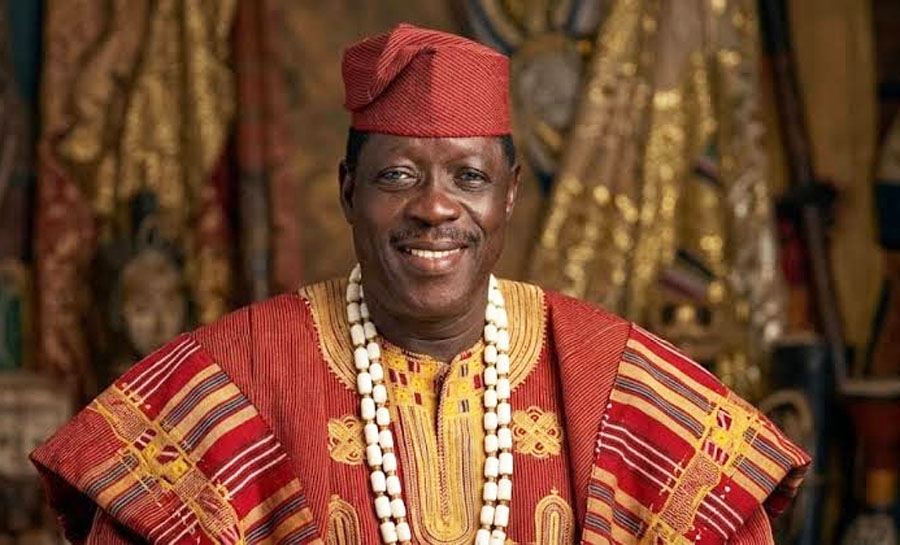
Ogogo’s N25m Surfaces After Death, Ilaro Chief Imam Returns Actor’s Money
Family confirms receipt of cash kept by late actor for house project
The death of veteran Yoruba actor, Taiwo Hassan, popularly known as Ogogo, has brought to light a startling financial revelation, with his family confirming the recovery of N25 million the late thespian had entrusted to the Chief Imam of his hometown, Ilaro, Ogun State.
The money, kept with Sheikh Muhammad Tajudeen Mustapha Adewunmi, was reportedly given to the cleric by Ogogo with a specific instruction — to ensure that the funds were used to complete a family house the actor was building in Ilaro.
The revelation came during the eighth-day Fidau prayer held in honour of the deceased, where the cleric and members of Ogogo’s family reportedly confirmed the return of the N25 million.
The development has triggered widespread commendation for Sheikh Adewunmi, with many hailing the cleric for resisting the temptation that could have accompanied being in possession of such a substantial amount belonging to a deceased person.
Rather than keeping the money or allowing uncertainty to surround its whereabouts, the cleric reportedly returned the funds to Ogogo’s family, reinforcing the confidence reposed in him by the late actor.
The Chief Imam had earlier disclosed that Ogogo entrusted the money to him while he was alive and directed him to assist with the completion of the family property in Ilaro.
READ ALSO:
- Lagos Cleric, 74, Remanded Over Alleged Defilement of 9-Year-Old Granddaughter
- 2027: Atiku vows to review NELFUND, forgive qualifying student loans
- Nollywood Actress Atinuke Kareem Dies After Brave Battle with Breast Cancer
The disclosure, as reported by BBC Yoruba, has also opened another window into the private life of the late actor, particularly his financial strength and his enduring affection for his hometown.
While Ogogo was best known to the public for his decades-long career in the Yoruba movie industry, the N25 million revelation suggests that he had also made substantial financial plans for his family and maintained a deep emotional and material connection with Ilaro.
For many of his admirers, the house project was more than a mere investment. It was seen as another testament to the actor’s attachment to his roots and his desire to leave something lasting behind for his family in the town.
The return of the money has consequently become one of the striking stories emerging from the mourning period, shifting attention briefly from Ogogo’s celebrated career to the legacy, trust and values he left behind.
The incident has equally placed Sheikh Adewunmi in the spotlight, with Nigerians and members of the Ilaro community commending what they described as an uncommon demonstration of integrity at a time when disputes over the assets of deceased persons are not uncommon.
Ogogo’s passing had earlier sent shock waves through the Yoruba film industry, with colleagues, friends, fans and admirers mourning the loss of one of its familiar faces.
But amid the grief, the recovery of the N25 million has provided the actor’s family with not only financial relief but also another remarkable chapter in the story of a man whose connection to Ilaro, according to those close to him, remained strong until his death.
Ogogo’s N25m Surfaces After Death, Ilaro Chief Imam Returns Actor’s Money
News
NANS rejects Atiku’s fuel subsidy plan, demands accountability for savings
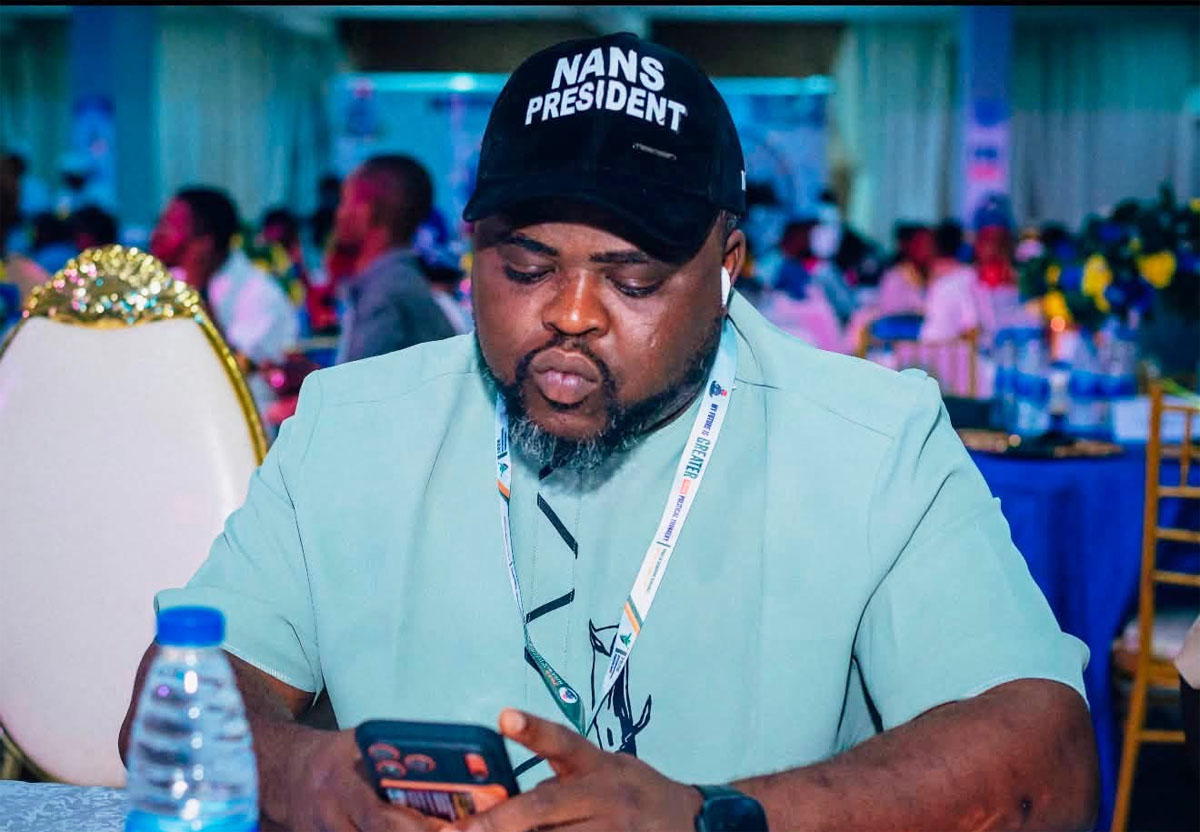
NANS rejects Atiku’s fuel subsidy plan, demands accountability for savings
The National Association of Nigerian Students (NANS) has rejected calls to restore Nigeria’s fuel subsidy, urging Nigerians, particularly young people, to focus instead on how the money saved from subsidy removal is being utilised.
NANS National President, Babatunde Akinteye, said Nigeria should not return to a system that successive administrations struggled to sustain, arguing that the priority should be ensuring that resources freed by the reform are transparently invested in programmes that improve the lives of Nigerians.
Akinteye made the position known on Tuesday in Akure, Ondo State, while speaking at a youth summit sponsored by the Minister of Interior, Olubunmi Tunji-Ojo. The summit was themed “Unlocking Ondo State Students’ Potentials for Economic Growth.”
The NANS president said Nigeria had operated the fuel subsidy regime for about four decades, but the policy failed to eliminate problems such as fuel scarcity and placed a significant financial burden on government.
He urged Nigerians to demand greater accountability over the resources saved from the removal of the subsidy rather than supporting proposals to restore the previous arrangement.
Akinteye said the focus should be on monitoring the money saved from subsidy removal and ensuring that it is channelled into projects and programmes that benefit Nigerians rather than returning to a system where public resources could be diverted.
He argued that Nigeria should learn from the experience of the subsidy era, when government spent heavily on petrol support while Nigerians still experienced periods of fuel scarcity.
According to him, restoring the subsidy without addressing the structural weaknesses associated with the old system could expose the country to renewed fiscal pressure.
Akinteye also warned against returning to a situation in which governments borrowed to finance recurrent expenditure, including subsidy payments.
He acknowledged that the removal of the subsidy had imposed considerable hardship on Nigerians, particularly through increased petrol prices, transportation costs and living expenses, but argued that reversing the policy was not necessarily the solution.
READ ALSO:
- Lagos police deny tear-gassing pensioners as #EndBadGovernance demands CP’s sack
- US launches fresh strikes on Iran as Strait of Hormuz crisis escalates
- JAMB, WAEC introduce one-off ₦4,000 WASSCE result verification for admission seekers
Instead, he called for the savings from the reform to be directed towards education, healthcare, infrastructure, agriculture and other productive sectors capable of improving living conditions.
The NANS leader cited interventions such as the Nigerian Education Loan Fund (NELFUND) as examples of programmes that could provide meaningful support to young Nigerians when properly funded and managed.
He further urged political aspirants ahead of the 2027 presidential election to present clear and sustainable economic policies rather than making promises that offer immediate relief without explaining how such programmes would be financed.
The NANS position comes amid an intensifying political dispute over fuel subsidy restoration involving former Vice President Atiku Abubakar, the African Democratic Congress (ADC) and the ruling All Progressives Congress (APC).
Atiku has proposed a new form of government intervention in the petroleum sector if elected in 2027. His camp has argued that the proposal is different from Nigeria’s former import-subsidy system.
Under the proposed model, government intervention would be targeted, capped, transparently budgeted and independently audited, with the stated objective of reducing energy costs while supporting domestic production and refining.
Atiku’s camp has also clarified that the proposal is not intended to simply recreate the old subsidy structure. His Senior Special Assistant on Public Communication, Phrank Shaibu, said the plan was designed around domestic production and would seek to reduce production and transportation costs while providing relief to consumers.
The clarification followed comments suggesting that an Atiku administration could restore the subsidy before eventually removing it. His camp rejected that interpretation and maintained that the proposal was not a return to the previous import-subsidy arrangement.
Despite the clarification, the proposal has continued to generate strong political reactions.
The APC has criticised Atiku’s position, arguing that restoring fuel subsidies could reverse the fiscal gains associated with President Bola Tinubu’s economic reforms.
APC National Chairman Nentawe Yilwatda warned that a return to the old subsidy system could put pressure on government finances and affect spending on workers’ wages, education, infrastructure and other public programmes.
The ruling party has also maintained that the previous subsidy arrangement contributed to fiscal distortions and placed an unsustainable burden on government finances.
The ADC, however, has rejected the APC and Federal Government’s position, insisting that Atiku’s proposed petroleum intervention is financially sustainable and fundamentally different from the previous subsidy regime.
The opposition party has also demanded greater transparency over the additional revenue generated since the implementation of the Federal Government’s economic reforms, arguing that Nigerians deserve to know how the funds have been utilised.
Atiku has continued to frame the debate around the rising cost of living, arguing that Nigerians need practical measures to reduce energy and transportation costs.
The former vice president has criticised the Federal Government over the high cost of petrol and the wider economic hardship being experienced by households across the country.
The debate has therefore increasingly shifted from a simple question of whether to restore or remove subsidy to the broader issue of what form of government intervention, if any, can lower energy costs without recreating the weaknesses associated with the previous system.
Other political figures have also called for a different approach.
The New Nigeria People’s Party (NNPP) presidential candidate, Suleiman Dikwa, has urged the Federal Government to move beyond the subsidy argument and concentrate on investments that create jobs, generate foreign exchange and strengthen Nigeria’s productive capacity.
For NANS, however, the priority remains ensuring that the benefits of subsidy removal are translated into tangible improvements for citizens.
Akinteye maintained that Nigerians, particularly students and young people, should scrutinise the economic plans of political aspirants and demand details on how proposed policies would be funded.
He said politicians seeking votes in 2027 should not simply promise cheaper petrol but should explain how their proposed interventions would remain financially sustainable and benefit the wider population.
The fuel subsidy debate is expected to remain a major issue ahead of the 2027 elections, particularly as Nigerians continue to grapple with high transportation costs, food prices and other effects of the wider economic reforms.
While Atiku and his supporters argue that a carefully designed intervention could provide relief without repeating the failures of the past, NANS and the APC maintain that returning to the subsidy system risks recreating the fiscal problems that prompted its removal.
For the students’ body, the immediate challenge is therefore not simply whether subsidy should return, but whether the savings from subsidy removal are being properly accounted for and invested in areas that can deliver lasting economic benefits to Nigerians.
NANS rejects Atiku’s fuel subsidy plan, demands accountability for savings
-
 Education2 days ago
FG Opens N10 Billion TETFund Research Grant Applications — How Lecturers Can Apply
-
 Business3 days ago
Fuel subsidy removal: Falana demands accountability over N15.8tr resources, warns against ‘scam’ era
-
 metro1 day ago
Lagos Govt Warns Husbands: Forcing Sex on Wife Can Lead to Life Imprisonment
-
 Politics2 days ago
Mother Arrested for Smuggling ‘Colos’ to Son on Death Row in Ogun Prison
-
 metro2 days ago
Lagos pensioners tear-gassed during protest as Sowore demands justice
-

 Politics2 days ago
Gunmen kill Kano APC chairman, two others in fresh Bebeji attack
-
 News1 day ago
Ilorin Youth Group Demands Disbandment of Iru-Ekun Over Alleged Obstruction of Tani-Olohun’s Arrest
-
 Politics2 days ago
2027: Donald Duke warns divided opposition could hand Tinubu victory