
Business
FEC approves $26m for power projects in Borno, Yobe, Adamawa
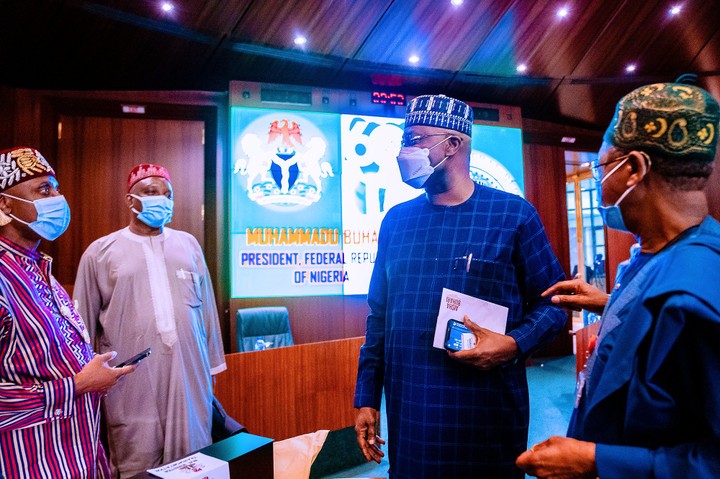
The Federal Executive Council on Wednesday approved about $26 million (N30.77bn) for various power projects in Borno, Yobe and Adamawa states.
Minister of Power, Sale Mamman, made this known to State House correspondents at the end of the council meeting in Abuja.
He said the $1.62 million of the amount ($26m) was the payment of the claims and the variation of onshore and offshore cost of the existing contract for the construction of 1×1 50 MBA three 31, 32, 33 KV sub-stations at Damaturu and 1×330 KV land by extension at Gombi, Adamawa.
He revealed that an additional N102.9 million was approved for the affected project.
The minister also disclosed that the remaining $24.38 million of the total approval was meant for the design, manufacturing and supply of four fabricated sub-stations of 2×100 MBA 132 33 KV power transformers with complete accessories for deployment to Damaturu, Potiskum, Biu, and Maiduguri.
He said, “Today, the Federal Executive Council has graciously approved two memos from the Federal Ministry of Power.
“One, it approved the payment of the claims and the variation of onshore and offshore cost of the existing contract for the construction of 1×1 50 MBA three 31, 32, 33 KV sub-stations at Damaturu and 1×330 KV land by extension at Gombi in favour Msssr Kadlak International Limited in the sum of $1,621,423.88 cents plus N102,905,606.07.
“The other one is the approval of the contract for the design, manufacturing and supply of four fabricated sub-stations of 2×100 MBA 132 33 KV power transformers with complete accessories for deployment to Damaturu, Potiskum, Biu, and Maiduguri for the Transmission Company of Nigeria (TCN) in favour of Msssr Kidon T Good Electric Company Limited and Incomtel Engineering Limited in the sum of $24,387,850.22 cents plus N1,475,204,584.34. Altogether, it is N10,730,393,742.82.”
The Minister of Finance, Budget and National Planning, Zainab Ahmed, also told the correspondents that the Federal Government had budgeted N396 billion for the provision of COVID-19 vaccine in the 2022 Appropriation.
She said: “Sometime in January, the President has, based on the request by the Ministry of Health, given in principle approval for the Ministry of Health to work with the Ministry of Finance, budget and National Planning to prepare and take to the National Assembly a supplementary budget for COVID-19 vaccination.
“The submission that was made to Mr. President at that time was in the sum of N399 billion, but included in this N399 billion was a N103 billion for building of primary healthcare centres.
“So we have worked with that and met several times with the ministry, we have agreed to back out from this building of primary health care centres, that can wait till later.
“So there is still a provision of 396 billion for COVID-19 vaccinations for 2021 and 2022.’’
The minister explained that the delay in the submission of the supplementary budget on COVID-19 was because the government wanted to confirm the vaccines donation that Nigeria was expecting from donors.
“There have been some delays because we expected the ministry to confirm the vaccines donation that Nigeria is expecting. We are expecting a total of not less than 43 million doses of vaccines.
“So they are supposed to find out when those ones will come. Because, if we are going to get back the donated vaccines, and at the speed of the current rollout, we have to slow down on what we are buying ourselves.
“So the ministry is working with partners that are donating these vaccines.
“We see the timelines of the donations and see the gap that the government needs to fill in 2021, but we have already provided to the ministry funds to enable them roll out the four million vaccines that have been brought already into the country, and the vaccination process is ongoing.
“So for us, it is still work in progress. We hope in the next couple of days, we will have clarity on the schedule of vaccines expected from donors, and then we will now be able to firm up what government has to provide for in 2021. And therefore the 2021 component we will provide it during the 2022 appropriations.”
It would be recalled that President Muhammadu Buhari and the leadership of the National Assembly led by the Senate President, Dr Ahmad Lawan, and the Speaker of the House of Representatives, Femi Gbajabiamila, met on Tuesday and agreed on supplementary budget for COVID19 vaccination and procurement of military hardware.






Auto
Massilia Motors Slashes Mitsubishi L200 Price to ₦42m for Anniversary Campaign

Massilia Motors Slashes Mitsubishi L200 Price to ₦42m for Anniversary Campaign
Massilia Motors Nigeria has unveiled a special anniversary pricing offer on the new Mitsubishi L200 pickup truck to celebrate one year of the latest model’s introduction into the Nigerian market, with prices now starting from ₦42 million.
The company, the sole authorised distributor of Mitsubishi Motors in Nigeria and a joint venture between the CFAO Group and the Chanrai Group, said the limited-time offer applies to all variants of the L200, urging prospective buyers to take advantage of the promotion while stocks last.
The latest-generation L200 entered the Nigerian market backed by strong international recognition. The pickup won the Design Car of the Year award at the 2024–2025 Japan Car of the Year Awards, earning praise for its bold “Beast Mode” styling and practical interior design. It also clinched the Best Mid-size Pickup title at the 2024 Arab Car of the Year Awards for its performance, durability and reliability.
Since its launch, the vehicle has gained acceptance among operators in key sectors of the economy, including construction, agriculture, mining and logistics, where ruggedness, payload capacity and dependable performance are critical.
Built on Mitsubishi’s long-standing expertise in pickup engineering, the L200 combines off-road capability and commercial-grade toughness with modern comfort, safety and technology features.
Massilia Motors said the pickup’s growing popularity reflects the increasing demand for versatile vehicles capable of handling Nigeria’s diverse operating conditions while meeting the expectations of both fleet operators and individual customers.
The company added that ownership of the L200 is supported by a comprehensive aftersales package, including genuine spare parts availability, certified service support and a warranty covering three years or 100,000 kilometres, whichever comes first.
Speaking on the milestone, the Managing Director of Massilia Motors Nigeria, Olivier Lamoure, said the L200 had lived up to expectations since its introduction to the market.
“One year in, the L200 has proven exactly what we believed it would — that the Nigerian market has a real appetite for a pickup truck that is built to work without compromise,” Lamoure said.
He noted that the anniversary pricing offer was designed to reward existing customers and provide an opportunity for prospective buyers to acquire the vehicle at a more attractive price.
According to him, the special pricing will only be available for the remainder of the month, making it a timely opportunity for businesses and individuals considering the pickup.
Massilia Motors provides vehicle sales, genuine parts and certified aftersales support to individual and fleet customers through its operations in Lagos, Abuja, Port Harcourt and other locations across the country.
Aviation
FG Approves New York, Canada, Dubai Routes for United Nigeria Airlines
FG Approves New York, Canada, Dubai Routes for United Nigeria Airlines
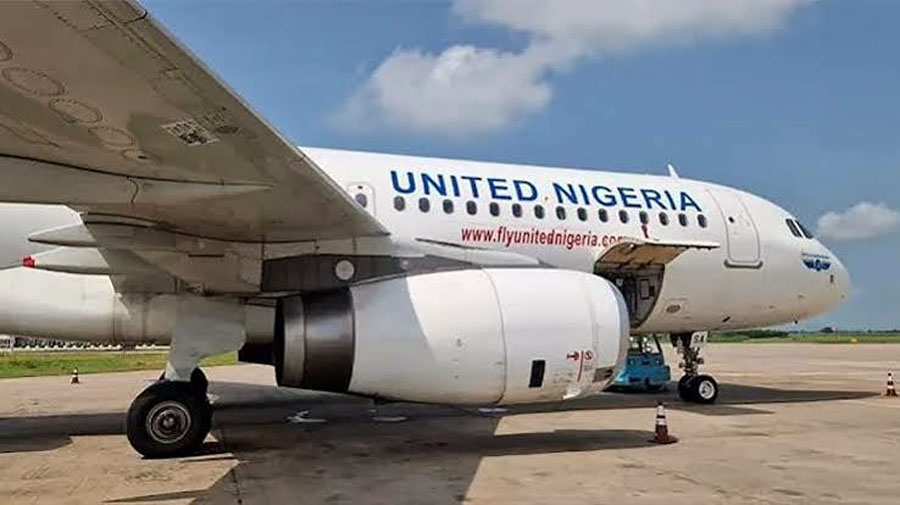
The Federal Government has approved several international routes for United Nigeria Airlines, including New York, Canada, and Dubai, in a move aimed at boosting the participation of indigenous carriers in the lucrative global aviation market.
Minister of Aviation and Aerospace Development, Festus Keyamo, disclosed the development on Thursday during the unveiling of two newly acquired Boeing 737-800 Next Generation (NG) aircraft by the airline in Lagos.
According to the minister, the route approvals form part of the government’s broader strategy to ensure Nigerian-owned airlines secure a larger share of international passenger traffic, which has long been dominated by foreign carriers.
“We are giving United about four or five routes now. We are giving them New York. We are giving you Canada. We are giving you Dubai. We are giving you some very fruitful routes now,” Keyamo said.
Keyamo lamented that foreign airlines currently control between 90 and 95 per cent of passenger traffic from Nigeria to major destinations across the world, despite bilateral agreements that grant Nigerian airlines reciprocal rights to operate those routes.
The minister stressed that the government is determined to empower local carriers to compete effectively on international routes and retain a larger share of aviation revenue within the country.
“That market is our market. It doesn’t belong to anybody. Under those bilateral service agreements, we also have reciprocal rights to run those routes. They have to enter that market and eat part of that market,” he said.
READ ALSO:
- Take Terrorists Off Front Pages, FG Tells Nigerian Media Outlets
- ‘Privacy Is Peace to Me’ – Baba Ijesha’s Wife Abiodun Tokunbo Finally Speaks Out
- NGF, Attorneys-General Hold Consultations on State Police Implementation
The minister noted that the newly approved routes were granted ahead of the airline’s full capacity to operate them, expressing confidence in the carrier’s ongoing expansion programme.
The announcement came as United Nigeria Airlines unveiled two newly acquired Boeing 737-800NG aircraft, further strengthening its fleet and operational capabilities.
The aircraft, registered as 5N-CFB and 5N-CFC, were named after His Royal Majesty Igwe Nnaemeka Achebe, the Obi of Onitsha, and legendary Nigerian novelist Professor Chinua Achebe.
The airline said the new aircraft will help improve operational efficiency, reduce flight disruptions, and support its plans for regional and international expansion.
Industry observers see the acquisition as a major milestone in the airline’s ambition to become one of West Africa’s leading carriers.
Keyamo also revealed that President Bola Tinubu approved the establishment of a Nigerian aircraft leasing company designed to support domestic airlines in acquiring aircraft through government-backed financing arrangements.
According to him, access to affordable aircraft financing remains one of the biggest challenges facing local airlines, and the initiative is expected to ease fleet acquisition and expansion.
The minister described the route approvals as the outcome of more than two years of policy reforms and stakeholder engagement aimed at revitalising Nigeria’s aviation sector.
“It took about two and a half years for us to begin to reap the fruits of the policy direction that we laid down,” he said.
Beyond route approvals, Keyamo disclosed that the Federal Government is partnering with the Abia State Government to develop an international airport in the state.
He said United Nigeria Airlines is expected to eventually use the facility as one of its operational hubs, while Enugu International Airport is being positioned as a major cargo hub for the South-East region.
The minister also defended the government’s decision to support private airlines instead of reviving a national carrier, citing the collapse of Nigeria Airways as an example of how political interference can undermine airline operations.
Speaking at the event, Boeing representative Moore Ibekwe commended reforms introduced by the Ministry of Aviation and the Nigerian Civil Aviation Authority (NCAA).
He highlighted recent efforts to improve aircraft financing, technical training, safety standards, and regulatory efficiency, describing them as critical to the future growth of Nigeria’s aviation industry.
Ibekwe also noted that Boeing recently launched a technical training programme in Nigeria to support the development of local pilots and engineers.
According to him, Africa is expected to require about 1,200 new aircraft over the next 20 years, creating significant opportunities for Nigerian airlines.
“When I look at these two aircraft behind us today, I see much more than two airplanes. I see enormous potential. I would like to see United Nigeria grow into a 50-aircraft airline within the next decade,” he said.
The airline’s expansion plans align with previous disclosures by its Chairman, Professor Obiora Okonkwo, who said the carrier intends to significantly increase its fleet and expand beyond domestic and regional operations.
United Nigeria Airlines currently operates across major Nigerian cities and serves regional destinations, including Accra, Ghana.
The airline has outlined plans to launch services to destinations such as London, Rome, Jeddah, Dubai, and New York, as it seeks to establish itself as a major player in international aviation.
For many industry stakeholders, the approval of the new routes represents a significant boost for United Nigeria Airlines and a major step toward increasing Nigeria’s presence in the global aviation market.
FG Approves New York, Canada, Dubai Routes for United Nigeria Airlines
Business
Fixing Nigeria’s Logistics Crisis: Oyetola, Stakeholders Demand Seamless Multimodal Infrastructure
Fixing Nigeria’s Logistics Crisis: Oyetola, Stakeholders Demand Seamless Multimodal Infrastructure
As Nigeria’s logistics and transportation landscape face a critical turning point, top government officials and industry experts have united to demand a shift away from the country’s heavy reliance on road travel.
Minister of Marine and Blue Economy, Dr. Adegboyega Oyetola, alongside transport experts and industry stakeholders, specificall called for the urgent integration of road, rail, maritime, inland waterways and aviation networks to accelerate economic growth and reduce logistics costs.
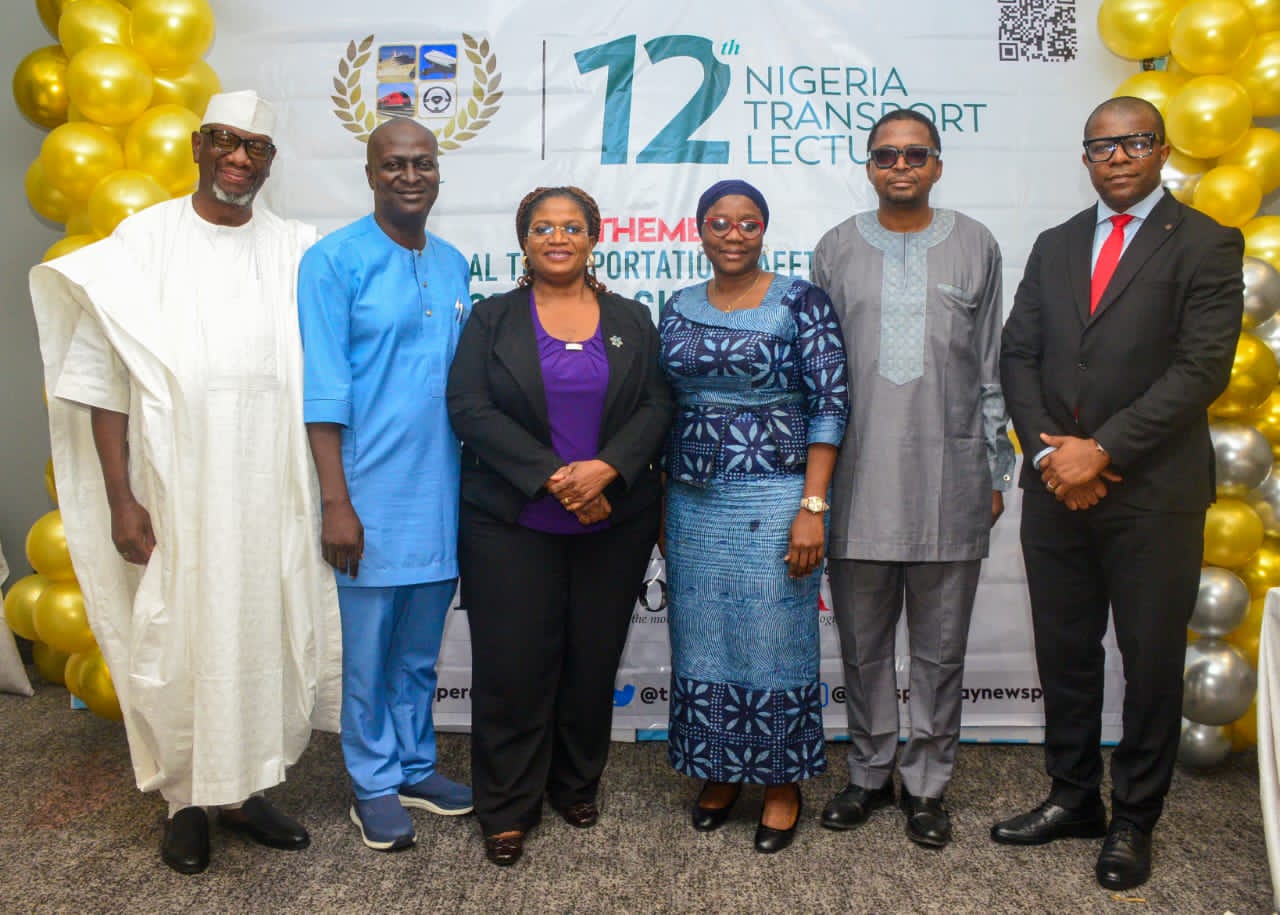
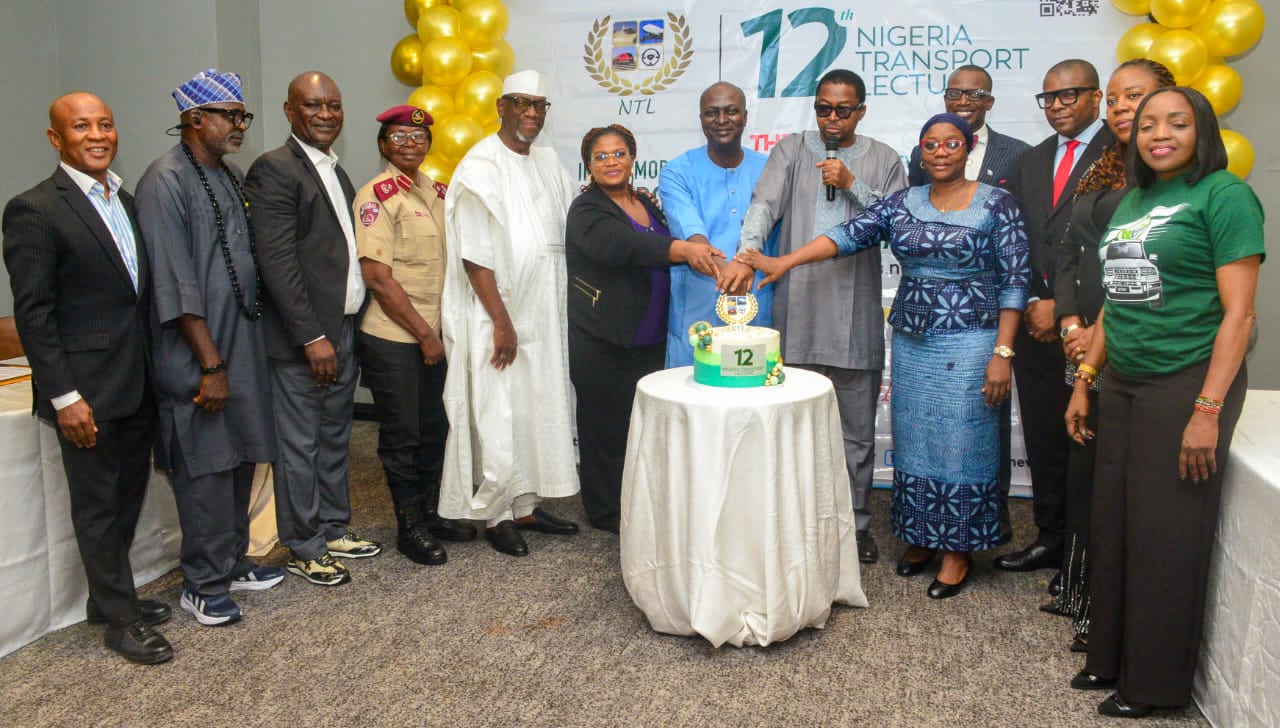
The consensus emerged at the 12th Nigeria Transport Lecture organised by Transport Day Newspapers at the Radisson Blu Hotel, Ikeja, Lagos, where participants stressed that Nigeria cannot achieve its full economic potential without a coordinated multimodal transportation framework.
Represented by a director in the ministry, Mrs Rashidat Yusuf, Oyetola described transportation as the backbone of economic development, trade facilitation and industrial growth, noting that the maritime sector remains central to Nigeria’s international trade and must be effectively linked with other modes of transport.
According to the minister, ongoing government investments in maritime security, port modernisation, digital transformation and inland waterway development are already yielding positive results by improving cargo movement, reducing logistics bottlenecks and enhancing investor confidence.
He said recent successes in combating piracy and other maritime crimes in the Gulf of Guinea have strengthened Nigeria’s position as a regional trade hub, while efforts to improve connectivity between seaports, rail lines and highways are expected to further boost economic productivity.
Oyetola, however, identified infrastructure deficits, weak inter-agency coordination, inadequate maintenance, regulatory bottlenecks and human capacity gaps as major obstacles to the sector’s growth, urging stakeholders to collaborate in addressing the challenges.
Delivering the keynote lecture titled, “Multimodal Transport Safety in Nigeria: Prospects, Challenges and Contribution to National Growth Pursuant to the Renewed Hope Agenda,” former Corps Marshal of the Federal Road Safety Corps and Chairman of the Council of the Chartered Institute of Logistics and Transport, Dr Boboye Oyeyemi, warned that Nigeria’s heavy dependence on road transport is undermining safety, increasing costs and limiting economic growth.
Oyeyemi disclosed that nearly 90 per cent of freight and passenger movement in the country is carried out by road, placing enormous pressure on infrastructure, accelerating road deterioration and heightening accident risks. He added that only about 40 per cent of Nigeria’s road network is paved, further compounding the challenge.
The transport expert noted that although Nigeria possesses one of Africa’s largest transportation systems, it has yet to maximise the benefits of a fully integrated multimodal network.
He pointed to ongoing rail projects, including the Lagos-Ibadan Standard Gauge Railway and the Abuja-Kaduna corridor, as evidence of progress towards reducing pressure on the roads.
He further noted that plans to achieve 24-hour port operations, improve rail connectivity to seaports and expand the commercial use of inland waterways could significantly enhance logistics efficiency and strengthen Nigeria’s competitiveness under the African Continental Free Trade Area (AfCFTA).
In a lead paper titled, “From Port to Hinterland: Rethinking Safety Governance Along Nigeria’s Intermodal Freight Corridors,” Associate Professor of Transport and Logistics at Lagos State University, Dr Ogochukwu Ugboma, called for a fundamental shift in the management of freight transportation in Nigeria.
She argued that safety should be treated as a governance issue rather than merely an operational concern, stressing that fragmented oversight across different transport modes continues to undermine logistics efficiency and freight safety.
According to Ugboma, more than 85 per cent of cargoes destined for Nigeria’s hinterland leave the ports by road, contributing to congestion, infrastructure damage, truck crashes, cargo theft and supply chain disruptions.
She advocated corridor-based governance, unified safety standards, shared databases, coordinated inspections and real-time monitoring systems to improve freight movement.
Also speaking, the Registrar of the Council for the Regulation of Freight Forwarding in Nigeria, Mr Kingsley Igwe, said the country possesses immense potential to develop a world-class intermodal transportation system.
He, however, identified inadequate infrastructure connectivity, regulatory fragmentation, poor maintenance culture, security challenges, human capacity deficits and limited deployment of data and technology as major impediments to progress.
Igwe urged the government to accelerate the adoption of water-based transportation, arguing that greater use of inland waterways would ease highway congestion, reduce freight delays and lower logistics costs that contribute to inflation and rising business expenses.
Earlier, the Publisher and Managing Editor of Transport Day Newspapers, Frank Kintum, said the annual lecture was established to provide a platform for regulators, operators and policymakers to identify challenges and develop practical solutions for the transport sector.
Participants at the event unanimously agreed that sustained infrastructure investment, stronger safety governance and seamless integration of all transport modes are critical to building a modern transportation system capable of driving Nigeria’s economic transformation under the Renewed Hope Agenda.
-

 metro3 days ago
BREAKING: UK Court Clears Diezani Alison-Madueke of All Bribery Charges
-

 metro22 hours ago
‘Privacy Is Peace to Me’ – Baba Ijesha’s Wife Abiodun Tokunbo Finally Speaks Out
-

 metro3 days ago
‘They Assigned One Girl to 3 or 4 Men Daily’: Survivor Recounts 20 Days of Rape, Torture in Bandits’ Den
-

 metro23 hours ago
Bandits Fear Death, Not God, Says Ex-NYSC DG Tsiga After 56-Day Captivity
-

 News2 days ago
FG Launches FreeTV, Offers Nigerians Over 100 Free Digital TV Channels
-

 metro2 days ago
Court Declares PENGASSAN Strike Against Dangote Refinery Illegal, Labels Crude Supply Disruption ‘Economic Sabotage’
-

 metro24 hours ago
Alaafin Owoade I Steps In, Resolves Oyo Muslim Community Feud
-

 metro3 days ago
Woman Sentenced to Death for Supplying Ammunition to Bandits in Katsina