

International
Netanyahu gives stringent condition for Gaza deal
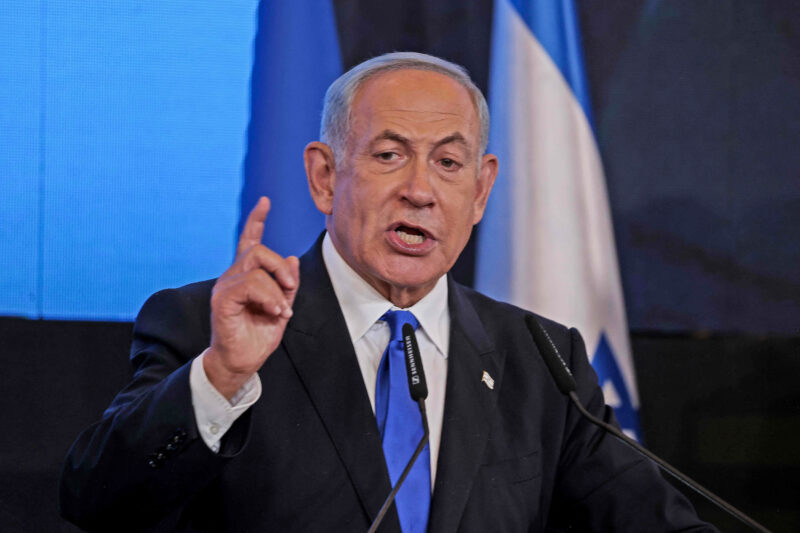
Netanyahu gives stringent condition for Gaza deal
CAIRO/JERUSALEM: Any Gaza ceasefire deal must allow Israel to resume fighting until its objectives are met, Prime Minister Benjamin Netanyahu said on Sunday, as talks over a US plan aimed at ending the nine-month-old war were expected to restart.
Five days after Hamas accepted a key part of the plan, two officials from the Palestinian militant group said the group was awaiting Israel’s response to its latest proposal.
Netanyahu was scheduled to hold consultations late on Sunday on the next steps in negotiating the three-phase plan that was presented in May by US President Joe Biden and is being mediated by Qatar and Egypt.
It aims to end the war and free around 120 Israeli hostages being held in Gaza.
Hamas has dropped a key demand that Israel first commit to a permanent ceasefire before it would sign an agreement. Instead, it said it would allow negotiations to achieve that throughout the six-week first phase, a Hamas source told Reuters on Saturday on condition of anonymity.
But Netanyahu said he insisted the deal must not prevent Israel from resuming fighting until its war objectives are met. Those goals were defined at the start of the war as dismantling Hamas’ military and governing capabilities, as well as returning the hostages.
“The plan that has been agreed to by Israel and which has been welcomed by President Biden will allow Israel to return hostages without infringing on the other objectives of the war,” Netanyahu said.
The deal, he said, must also prohibit weapons smuggling to Hamas via the Gaza-Egypt border and should not allow for thousands of armed militants to return to northern Gaza.
US Central Intelligence Agency Director William Burns is to meet with the Qatari prime minister and the Israeli and Egyptian intelligence chiefs on Wednesday in Doha, said a source familiar with the issue who asked not to be further identified.
READ ALSO:
- Former Imo governor’s aide arrested over alleged kidnapping
- Senior Hamas official killed as Israel orders fresh evacuation
- Varsity workers to begin nationwide protests on Tuesday
Burns is also expected to visit Cairo this week, along with an Israeli delegation, Egypt’s Al Qahera News TV reported on Sunday, citing a high-ranking source.
A Palestinian official close to the talks said the proposal could lead to a framework agreement if embraced by Israel, and would end the war.
“We have left our response with the mediators and are waiting to hear the occupation’s response,” one of the two Hamas officials told Reuters, asking not to be identified.
Another Palestinian official with knowledge of the ceasefire deliberations said Israel was in talks with the Qataris and that a response was expected within days.
Protests in Israel
In Israel, protesters took to the streets across the country to press the government to agree to the Gaza ceasefire deal, which would bring back hostages still being held in Gaza.
They blocked rush-hour traffic at major intersections across the country, picketed politicians’ houses and briefly set fire to tires on the main Tel Aviv-Jerusalem highway before police cleared the way.
In Gaza, Palestinian health officials said at least 15 people were killed in Israeli strikes.
Among them were Ehab Al-Ghussein, the Hamas-appointed deputy minister of labor whose wife and children were killed in May, and three other people killed in a strike at a church-run school in western Gaza City sheltering families, Hamas media and the Civil Emergency Service said.
The Israeli military said that after it took steps to minimize the risk of civilians being harmed there, it struck militants who were hiding in the school, as well as a facility in the vicinity where weapons were being made.
READ ALSO:
- Atiku, Obi, Kwankwaso, Amaechi must work together to remove Tinubu, says Lukman
- Nigerian Oladip Oshodi jailed 25 years in London for rape
- BREAKING: Tinubu re-elected ECOWAS chairman
In central and northern areas of Rafah, on the southern Gaza border with Egypt, Israeli tanks deepened their raids. Health officials there said they had recovered three bodies of Palestinians killed by Israeli fire in the eastern part of the city.
The armed wings of Hamas and Islamic Jihad said fighters had attacked Israeli forces in several locations Gaza Strip with anti-tank rockets and mortar bombs.
The Israeli military said its forces had killed 30 Palestinian gunmen in Rafah in the past day, and that one of its soldiers was killed in combat.
In Shejaia, an eastern suburb of Gaza City, the military said its forces had killed several gunmen, and located weapons and explosives. It published a drone video showing gunmen, some appearing to be wounded or dead, in a house.
Reuters could not immediately verify the video.
The conflict was triggered on Oct. 7 when fighters led by Hamas, which controlled Gaza, attacked southern Israel, killing 1,200 people and taking around 250 hostages, according to Israeli figures.
More than 38,000 Palestinians have been killed in Israel’s military onslaught, according to Gaza health officials, and the coastal enclave has largely been reduced to rubble.
Gaza’s health ministry does not distinguish between combatants and non-combatants, but officials say most of the dead throughout the war have been civilians. Israel has lost 324 soldiers in Gaza, and says at least a third of the Palestinian dead are fighters.
Netanyahu gives stringent condition for Gaza deal




International
Musk Breaks Silence After $458M Gamble Backfires in Historic Democratic Sweep

Musk Breaks Silence After $458M Gamble Backfires in Historic Democratic Sweep
WASHINGTON, D.C. — Billionaire technology entrepreneur Elon Musk has broken his silence following a stunning Democratic victory in the 2026 United States midterm elections, making sarcastic remarks after spending hundreds of millions of dollars to support Republican candidates who suffered major electoral setbacks.
Musk, the world’s richest man and founder of SpaceX and Tesla, reportedly committed approximately $458 million to political groups and candidates backing Republicans in the elections, making him the biggest individual political donor in the 2026 election cycle.
However, the massive financial investment failed to prevent Democrats from securing a sweeping victory, taking control of both chambers of Congress and recording significant gains in several traditionally Republican strongholds.
Reacting to the outcome on Tuesday night, Musk took to his social media platform, X, where he appeared to make light of the electoral setback.
“Data centers in space looking pretty appealing right now,” he wrote.
In another post, the billionaire added: “Guess my election-interfering space lasers didn’t work this time.”
The comments, which attracted considerable attention online, appeared to reflect his frustration with the outcome, although they were delivered in his characteristic sarcastic style.
Musk’s political investment had been directed towards strengthening Republican chances of retaining control of Congress, with substantial financial backing going to political action committees and groups supporting candidates across several states.
One of the most expensive political battles involved Texas, where Musk reportedly spent more than $200 million supporting Republican Senate candidate Ken Paxton.
Despite the enormous financial backing, Democratic candidate James Talarico defeated Paxton, delivering a major blow to the Republican campaign and another setback for Musk’s political influence.
Other Republican-backed candidates also suffered significant defeats, reinforcing the scale of the Democratic resurgence.
The results have raised fresh questions about the influence of wealthy political donors in American elections, particularly whether massive campaign spending can overcome voter dissatisfaction with government policies and political leadership.
Meanwhile, Musk appeared to acknowledge the significance of the election outcome when he reacted with a brief “Interesting” to exit polling data suggesting that although Republican voters remained supportive of President Donald Trump’s immigration policies, the ongoing conflict involving Iran had become a major electoral liability for the party.
The election results suggest that economic concerns, rising living costs and dissatisfaction with the Trump administration, alongside the Iran conflict, played significant roles in shaping voters’ decisions.
The Democratic victories have also created a major political challenge for Trump, whose administration is expected to face increased congressional scrutiny during the remaining two years of his presidency.
With Democrats now controlling both chambers of Congress, the party will have greater power to obstruct Republican legislative proposals, scrutinise government activities and investigate policies of the Trump administration.
For Musk, the outcome represents a significant setback after his unprecedented financial involvement in the election cycle.
Although political donations do not automatically translate into electoral victories, the results have reignited debate over the limits of billionaire influence in American democracy.
His latest comments also suggest that the billionaire may be turning his attention back to his ambitious space technology projects as the political consequences of the Democratic victory begin to unfold.
Musk Breaks Silence After $458M Gamble Backfires in Historic Democratic Sweep
International
Abdul El-Sayed Makes History, Defeats Republican Rival To Become First Muslim US Senator
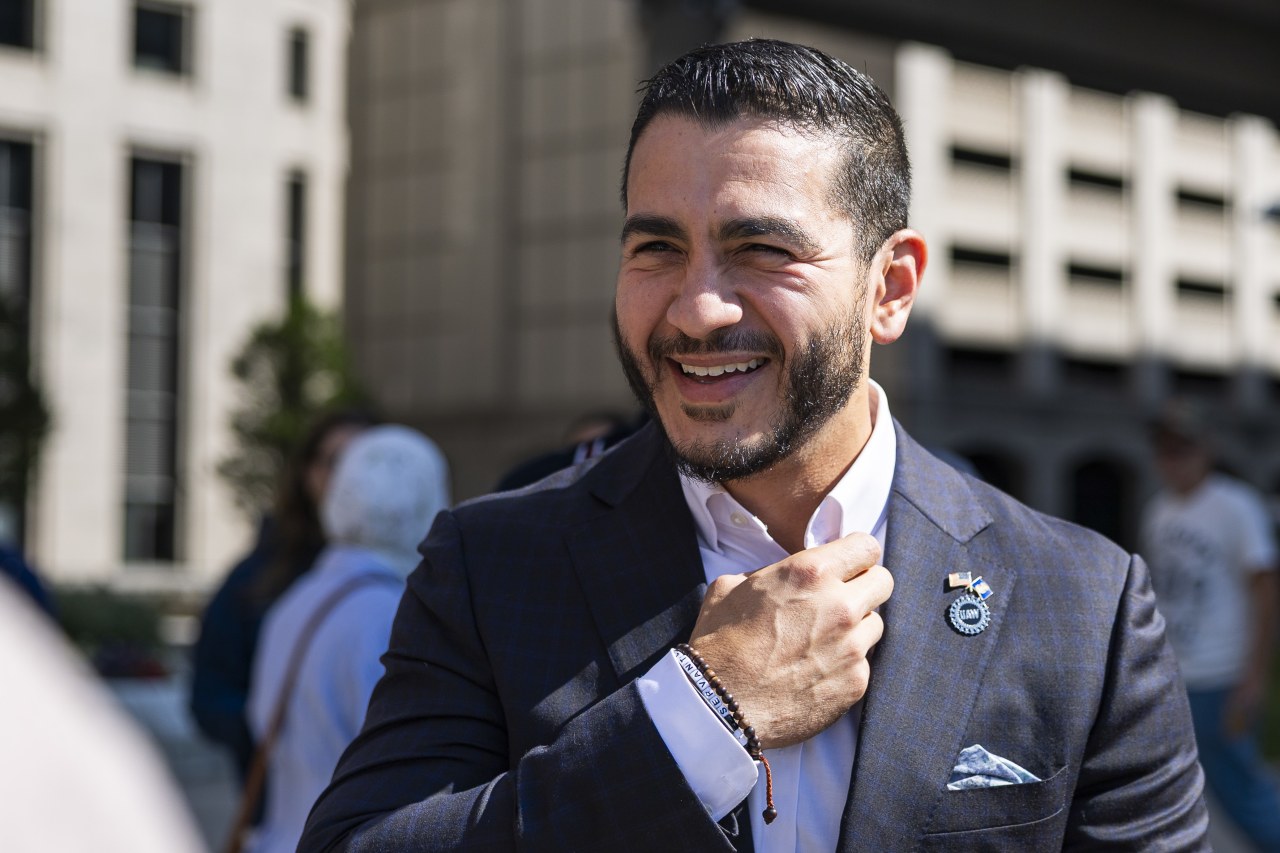
Abdul El-Sayed Makes History, Defeats Republican Rival To Become First Muslim US Senator
Democrat Abdul El-Sayed has won Michigan’s closely watched United States Senate election, making history as the first Muslim to be elected to the US Senate.
El-Sayed defeated Republican candidate Mike Rogers in the November 3, 2026, midterm elections, according to projections by the Associated Press.
His victory marks a historic milestone for Muslim representation in American politics and brings an end to more than two centuries without a Muslim serving in the US Senate.
The election was one of the most closely watched contests in the country, as Democrats and Republicans battled for control of the Senate.
According to Michigan Advance, the Associated Press called the race for El-Sayed with approximately 85 per cent of the votes counted. He was leading Rogers with 51.9 per cent against 46.1 per cent.
The victory means El-Sayed will succeed retiring Democratic Senator Gary Peters, who did not seek re-election.
Born on October 31, 1984, in Rochester Hills, Michigan, El-Sayed is the son of Egyptian immigrants.
The 42-year-old politician built his career around public health before venturing into electoral politics.
He graduated from the University of Michigan in 2007, earning degrees in biology and political science. He subsequently obtained a doctorate in public health from the University of Oxford as a Rhodes Scholar and later earned a medical degree from Columbia University in 2014.
In 2015, at the age of 30, he was appointed Detroit’s health director, making him one of the youngest officials to occupy the position.
He later served as head of Wayne County’s health department from 2023 to 2025.
Although he previously contested the Michigan governorship in 2018, he lost the Democratic primary to Gretchen Whitmer.
His election to the Senate therefore represents a significant turning point in his political career.
During the campaign, El-Sayed promoted an ambitious progressive agenda, including universal healthcare, popularly known as Medicare for All.
He also advocated measures to address medical debt, increase taxes on billionaires, reduce corporate influence in politics and limit the role of wealthy interest groups in election financing.
On foreign policy, he called for an end to the war involving Iran and a reassessment of America’s relationship with Israel, particularly over the conflict in Gaza.
His positions attracted support from prominent progressive politicians, including Senator Bernie Sanders and Congresswoman Alexandria Ocasio-Cortez.
Former President Barack Obama and former Vice President Kamala Harris also campaigned in Michigan in support of his candidacy.
El-Sayed’s campaign was marked by controversies surrounding his Muslim faith, Egyptian heritage and criticism of Israel.
President Donald Trump and other Republican figures questioned his loyalty to the United States and made allegations linking him to extremist organisations.
El-Sayed rejected the allegations, while the Associated Press reported that there was no evidence supporting claims of terrorist links.
His Democratic primary opponent, Congresswoman Haley Stevens, also endorsed Republican candidate Mike Rogers shortly before election day, following disagreements over El-Sayed’s positions.
Despite the divisions, El-Sayed secured the Democratic Party’s support and went on to defeat Rogers in the general election.
El-Sayed’s election is particularly significant for Muslim representation in the United States Congress.
Although Muslims have previously served in the House of Representatives, including Keith Ellison, Ilhan Omar and Rashida Tlaib, no Muslim has ever served in the US Senate.
His victory will therefore open a new chapter in the representation of Muslims in America’s highest legislative chamber.
He is expected to assume office in January 2027, succeeding retiring Senator Gary Peters.
His victory also gives progressive Democrats a prominent new figure in Washington as the party prepares for future political contests.
For El-Sayed, the historic achievement marks the culmination of a political journey that began with public health advocacy and has now taken him to the United States Senate.
Abdul El-Sayed Makes History, Defeats Republican Rival To Become First Muslim US Senator (more…)
International
US Midterm Elections: ‘Americans Said No To War,’ Iran Speaker Declares As Democrats Take Control Of Congress

US Midterm Elections: ‘Americans Said No To War,’ Iran Speaker Declares As Democrats Take Control Of Congress
Iranian Parliament Speaker Mohammad Bagher Ghalibaf has described the Democratic Party’s victories in the United States midterm elections as a rejection of war, warning the Trump administration against ignoring the wishes of American voters.
Ghalibaf made the declaration on Wednesday, November 4, in a statement posted on his official X account, shortly after Democrats secured control of both chambers of the US Congress in Tuesday’s elections.
The results represent a major setback for President Donald Trump and the Republican Party, with Democrats gaining several previously Republican-held seats in the Senate and House of Representatives.
Reacting to the development, the Iranian parliament speaker linked the Democrats’ electoral success to public dissatisfaction with the ongoing US-Israeli war against Iran and the rising cost of living in America.
In his statement, Ghalibaf wrote:
“Conscience or the cost of living, Americans said NO TO WAR, and we endorse this message.
“If the US govt betrays their public will to serve international paymasters and blackmailers, it will learn our NO comes with a Nightmare.”
His remarks appeared to suggest that the American electorate had used the midterm elections to express opposition to Washington’s mil2itary involvement in the Middle East.
The Iranian leader’s comments also came amid continuing tensions between Washington and Tehran, with diplomatic efforts ongoing to prevent a further escalation of the conflict.
The conflict between the United States, Israel and Iran, which began following joint US-Israeli military action in February 2026, featured prominently in the political debate ahead of the midterm elections.
The war has contributed to rising energy prices and economic uncertainty, adding to concerns about inflation and the cost of living among American households.
Other issues, including President Trump’s tariff policies, domestic political divisions and concerns about the economy, also featured prominently in the election campaign.
According to reports, Democrats made significant gains across several states, winning congressional seats previously held by Republicans and securing control of both chambers of Congress.
The outcome is expected to complicate Trump’s legislative agenda during the remaining two years of his presidency.
President Trump has also acknowledged that the conflict with Iran contributed to the Republican Party’s poor performance in the elections.
Speaking during an interview with Fox News following the results, Trump admitted that the war was one of the factors behind the party’s losses.
“I think a part of it was Iran, but at the same time, people understood the importance of what I’ve done with Iran,” he said.
However, the president rejected suggestions that the election results amounted to a personal repudiation of his leadership, maintaining that voters understood his administration’s position on the conflict.
Trump also indicated that he would resist some legislative proposals from the incoming Democratic-controlled Congress, saying he would veto bills he considered unacceptable.
With Democrats taking control of both the Senate and House of Representatives, the administration is expected to face increased congressional scrutiny over its foreign policy decisions, military spending and handling of the Iranian conflict.
The new congressional majority will have greater powers to conduct investigations, organise oversight hearings and challenge aspects of the president’s legislative programme.
The election outcome also places additional pressure on the Trump administration to address domestic economic concerns while managing its foreign policy challenges.
For Tehran, the Democratic victories present an opportunity to amplify its argument that continued military confrontation carries significant political and economic consequences for Washington.
However, Ghalibaf’s interpretation of the election results remains Iran’s political position, as American voters also considered several domestic issues when casting their ballots.
The developments come as diplomatic efforts continue amid uncertainty over the future of US-Iran relations and the wider security situation in the Middle East.
US Midterm Elections: ‘Americans Said No To War,’ Iran Speaker Declares As Democrats Take Control Of Congress
-

 Sports1 day ago
Super Falcons Receive $100,000 Each as Tinubu Finally Fulfils WAFCON Pledge
-
 Politics1 day ago
APC Dumps Adeleke’s Campaign Structure, Unveils Separate 168-Member Council in Osun
-

 metro1 day ago
Three Homeless Men Shot Dead in Midnight Attack at Lagos Bus Stop
-
 metro2 days ago
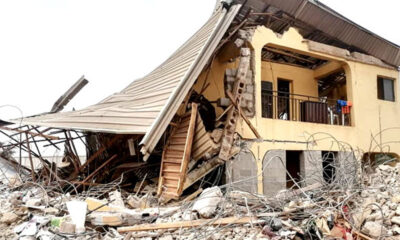
Three Dead, Five Rescued as Two-Storey Building Collapses in Osun
-

 Auto3 days ago
Nigeria’s Auto Dealers Face New Challenge as After-Sales Service Takes Centre Stage
-

 International2 days ago
Badenoch Rejects Slave Trade Apology, Says African Kingdoms Also Profited From Slavery
-

 metro3 days ago
NDLEA Arrests Woman With 266 Rounds of Live AK-47 Ammunition on Abuja-Kaduna Expressway
-

 metro2 days ago
Court Orders 18-Year-Old Fraudster To Pay ₦1.2m Over $800 Lottery Scam