

Auto
Updated: FG, NURTW set to launch CNG initiative in Lagos

Updated: FG, NURTW set to launch CNG initiative in Lagos
The Federal Government in collaboration with the National Union of Road Transport Workers (NURTW) will Saturday launch the highly anticipated Compressed Natural Gas (CNG) initiative in Lagos State.
Apart from rolling out CNG-powered vehicles, the government has also unveiled plans to convert one million petrol and diesel vehicles to run on CNG.
Commuter vehicles belonging to members of recognised transport associations including NURTW are to be converted free of charge with FG bearing the cost 100 per cent.
The CNG initiative was first launched in Kaduna State, while the Lagos version is next in line for the roll-out.
This initiative aims to provide a cleaner, safer and more cost-effective alternative to traditional fuels for the transportation sector.
Speaking on the project, Chairman, Board of Trustees (BOT) of the NURTW, Alhaji Najeem Usman Yasin, said the CNG initiative is expected to significantly reduce greenhouse gas emissions, improve air quality, and enhance the overall transportation experience for millions of Nigerians.
He added that the project would create new job opportunities, stimulate economic growth, and contribute to the country’s sustainable development goals.
According to him, the Federal Government and NURTW have been working tirelessly to ensure the successful implementation of this project.
The launch event will be attended by dignitaries from the government, transportation sector, and other stakeholders.
With the CNG initiative, Nigeria is poised to join the ranks of countries leading in sustainable energy solutions.










Auto
Dangote Sinotruk Unveils Nigeria’s First Locally Assembled Electric Truck, Targets West African Market

Dangote Sinotruk Unveils Nigeria’s First Locally Assembled Electric Truck, Targets West African Market
…Milestone positions Nigeria as emerging hub
Nigeria has taken a significant step towards clean-energy transportation and advanced automotive manufacturing with the rollout of its first locally assembled electric heavy-duty truck by Dangote Sinotruk West Africa Limited.
The historic development, which also marks the assembly of what Sinotruk described as the first new-energy truck on the African continent, signals the entry of Nigeria’s commercial vehicle industry into a new phase of electric mobility and reinforces the country’s ambition to become a major automotive manufacturing hub in West Africa.
The electric truck was unveiled at the company’s assembly facility in Ikeja, Lagos, at an event attended by senior officials of the Dangote Group, Sinotruk Group, Lagos State Government, industry stakeholders, customers and business partners.
The development represents a major expansion of the Dangote-Sinotruk joint venture beyond conventional commercial vehicle assembly into new-energy mobility, adding electric heavy-duty trucks to its existing range of trucks, tippers, pickups, light commercial vehicles and buses.
Speaking at the event, Group Vice-President of Dangote Industries Limited, Devakumar V.G. Edwin, described the rollout as another important milestone in the evolution of the partnership, reaffirming the group’s commitment to technological innovation, environmental sustainability and local industrial development.
He said the introduction of electric trucks followed the company’s earlier investment in compressed natural gas (CNG) technology and reflected its determination to keep pace with the changing dynamics of the global automotive industry.
“Today, we are taking an important further step as the global economy is looking for sustainable business, that is, vehicles which will also be protective of the environment. So, we went into CNG technology and now we are going into the electric technology. This is a technology which is revolutionising the whole world,” Edwin said.
According to him, electric commercial vehicles offer considerable opportunities for transport and logistics operators, particularly through reduced operating costs and lower tailpipe emissions, depending on electricity tariffs, vehicle applications and the availability of charging infrastructure.
“The electric commercial vehicle offers the potential for lowering the operating cost and reducing the tailpipe emissions. Depending on the application, the electricity cost and the charging infrastructure, it is going to be highly beneficial to the people,” he added.
Edwin acknowledged that the successful adoption of electric trucks would depend on the availability of reliable charging facilities, technical expertise, spare parts and efficient after-sales services.
He said the company was already putting the necessary structures in place, including developing its technical support team and preparing to assist customers with charging infrastructure and other requirements for operating electric commercial vehicles.
“We recognise that this successful adoption will also require reliable charging facilities, technical expertise and spare parts and a strong after-sales support. So, we are already getting ready with a strong after-sales support. We are setting up our team,” he said.
Beyond the introduction of electric trucks, Edwin said the Dangote Group’s broader ambition was to transform the joint venture into one of West Africa’s leading automotive assembly and manufacturing businesses.
He explained that the partnership was established to strengthen local production capacity, facilitate technology transfer, develop Nigerian technical expertise and create employment opportunities while reducing dependence on imported vehicles.
Edwin recalled that the Dangote Group undertook extensive assessments of Chinese truck manufacturers before selecting Sinotruk as its technology partner.
He said the company would continue to deepen local assembly, increase local content and equip Nigerian engineers and technicians with the skills required to participate in advanced vehicle manufacturing.
As part of the technology-transfer programme, Sinotruk is expected to provide specialised training for Nigerian personnel, including opportunities for selected engineers and technicians to receive practical exposure at its facilities in China.
“This is more than a launch of new vehicles. It’s a statement of our commitment to innovation, our commitment to green energy, and the future of mobility,” Edwin said.
Africa’s first new-energy truck
President of Sinotruk Group, Liu Wei, described the rollout as a historic achievement for Nigeria, the joint venture and the wider African automotive industry.
He said the electric heavy-duty truck represented a practical contribution to Nigeria’s energy-transition objectives and a major step towards localising the production of new-energy commercial vehicles on the continent.
“Today, we gather in the beautiful city of Lagos to witness the official roll-off of the first electric heavy-duty truck from the joint venture. More importantly, it represents a substantial step forward for Nigeria and West Africa in driving localised manufacturing and the green transition of new-energy commercial vehicles,” Liu said.
He noted that the initiative aligned with Nigeria’s long-term carbon-neutrality objectives and efforts to modernise its energy mix, reduce transportation emissions and strengthen domestic industrial capacity.
Tracing the evolution of the partnership, Liu said the relationship between Sinotruk and the Dangote Group began in 2010, while the joint venture was formally established in 2014.
The first heavy-duty truck rolled off the assembly line in 2017, while the commissioning of a commercial vehicle welding and e-coating paint line in 2024 marked another significant advancement in the company’s local manufacturing capabilities.
He disclosed that the joint venture had so far assembled more than 8,000 vehicles in Nigeria, adding that the company would continue investing in production technology, skills development and local manufacturing to serve the Nigerian and wider West African markets.
Liu also emphasised the importance of developing local technical capacity, particularly by providing Nigerian engineers and young people with opportunities to acquire the specialised skills required in electric vehicle manufacturing and maintenance.
Lagos Government hails milestone
The Lagos State Government welcomed the development, describing it as a defining moment for Nigeria’s industrial and transportation sectors.
A representative of the Commissioner for Transportation said the locally assembled electric truck demonstrated Nigeria’s growing capacity to participate in the global transition towards cleaner transportation rather than remain dependent on imported automotive technologies.
The government representative highlighted the potential of electric commercial vehicles to reduce transportation-related emissions, lower long-term operating costs for logistics operators and create new employment opportunities in engineering, vehicle assembly and technical services.
The government also commended Dangote Sinotruk for combining international automotive technology with local industrial capacity, urging the company to sustain its investment in local manufacturing and skills development.
The rollout marks another important phase in the growth of Dangote Sinotruk West Africa Limited, which has progressively expanded its product range and manufacturing operations to meet the demands of Nigeria’s transportation, construction and logistics sectors.
With electric heavy-duty trucks now added to its portfolio, the company is positioning itself at the intersection of commercial transportation, automotive industrialisation and the emerging green-energy economy.
For the Dangote Group, the development reinforces its broader industrialisation strategy of building local production capacity, transferring technology, creating jobs and developing Nigerian businesses capable of competing in regional markets.
As Nigeria’s first locally assembled electric heavy-duty truck prepares to enter the commercial transportation market, the milestone offers a glimpse into the future of the country’s automotive industry, where global technology, local manufacturing and cleaner energy could combine to reshape the movement of goods across Nigeria and West Africa.
Auto
Osanipin, FRSC Corps Marshal to Lead Dignitaries at 19th NAJA Auto Awards

Osanipin, FRSC Corps Marshal to Lead Dignitaries at 19th NAJA Auto Awards
The Director-General of the National Automotive Design and Development Council (NADDC), Chief Joseph Oluwemimo Osanipin, and the Corps Marshal of the Federal Road Safety Corps (FRSC), Shehu Mohammed, are among the high-profile dignitaries expected at the 19th Nigeria Auto Journalists Association (NAJA) International Auto Awards scheduled for December 3, 2026, in Lagos.
The two senior government officials have confirmed their attendance at the prestigious annual event, which will bring together leading automobile manufacturers, vehicle assemblers, distributors, policymakers, industry executives and other stakeholders to celebrate excellence and innovation in Nigeria’s automotive sector.
The ceremony will take place at the Civic Centre, Victoria Island, Lagos.
Osanipin’s participation is expected to add significant weight to the occasion, considering NADDC’s pivotal role in implementing the Federal Government’s automotive industrialisation policy and driving the development of the local automotive industry.
The council is at the forefront of initiatives aimed at promoting local vehicle assembly, developing indigenous automotive technology, building technical capacity and attracting investments into the sector, particularly as Nigeria explores opportunities in electric mobility and other alternative-energy solutions.
Similarly, the confirmation of the FRSC Corps Marshal as a Special Guest highlights the critical relationship between road safety and the growth of the automotive and transportation industries.
The FRSC plays a central role in road safety enforcement, driver education, vehicle safety advocacy and the promotion of responsible motoring practices across the country.
Chairman of the 2026 NAJA Awards Planning Committee, Frank Kintum, expressed satisfaction with the confirmation of the two government officials, saying their participation would further elevate the profile of the ceremony.
He said preparations were progressing steadily to deliver a memorable event that would recognise outstanding contributions, innovation and professionalism across the automotive value chain.
NAJA Chairman, Theodore Opara, said the awards had remained a credible platform for identifying and celebrating individuals and organisations whose contributions were advancing Nigeria’s automotive industry.
Now in its 19th edition, the NAJA International Auto Awards has grown into one of the industry’s major annual gatherings, recognising excellence among automobile manufacturers, vehicle assemblers, distributors, after-sales service providers and other key players.
This year’s awards will cover several segments of the industry, including Car of the Year, SUV of the Year, Bus of the Year, Pickup of the Year, automotive distribution, alternative-energy mobility, after-sales services and outstanding individual contributions.
The Car of the Year category is expected to be one of the major highlights of the evening, with established automotive brands and emerging players likely to compete for the coveted industry recognition.
The event is expected to attract leading personalities and corporate organisations whose investments, innovations and professional contributions continue to shape the future of Nigeria’s automotive industry.
Auto
Toyota Urban Cruiser: The Compact SUV Set to Make a Big Statement in Nigeria
Toyota Urban Cruiser: The Compact SUV Set to Make a Big Statement in Nigeria
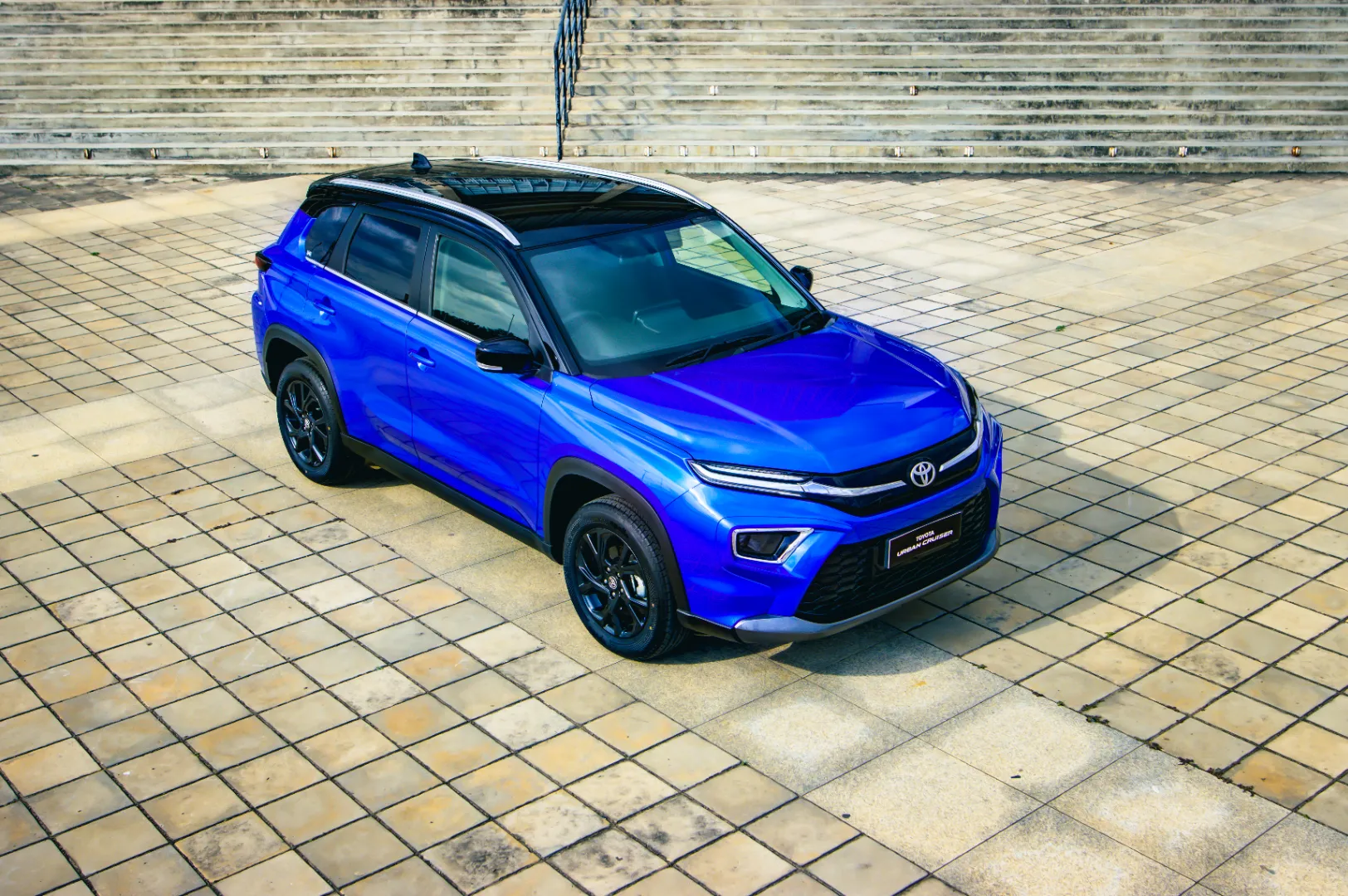
As Nigerian motorists increasingly seek vehicles that combine fuel economy, comfort, safety and the versatility of an SUV, Toyota is positioning the Urban Cruiser as a compelling option in the country’s growing compact sport utility vehicle market.
Designed to deliver the practicality of an SUV without the bulk of larger models, the Toyota Urban Cruiser brings together a 1.5-litre petrol engine, modern connectivity features and safety technologies aimed at making everyday motoring more convenient and reassuring.
Listed on the official website of Toyota (Nigeria) Limited (TNL), the Urban Cruiser represents the Japanese automaker’s offering in the mini-subcompact SUV category, a segment that appeals to motorists looking for a vehicle suitable for urban commuting as well as occasional long-distance journeys.
The model’s appeal lies in its combination of compact proportions, functional design and everyday usability, qualities that could make it attractive to Nigerian professionals, young families and individuals seeking an upgrade from conventional passenger cars.
Engine and performance
At the heart of the Urban Cruiser is an economical 1.5-litre, four-cylinder petrol engine, which Toyota Nigeria identifies as one of the vehicle’s major selling points.
The engine configuration is designed to provide a balance between everyday performance and fuel efficiency, making it relevant to motorists who must contend with rising vehicle ownership and operating costs.
Toyota Nigeria lists both automatic and manual transmission options for the model, giving prospective buyers the opportunity to select a configuration that suits their driving preferences.
READ ALSO:
- Fresh Legal Storm for Atiku as Court Rejects ADC Resignation Letter, Nullifies 2027 Ticket
- Traffickers Target Schoolchildren With Fake Scholarships, Jobs, Private Photo Threats – NAPTIP
- Tinubu Rewards Flamingos With ₦100m Each After Historic World Cup Triumph
The availability of an automatic option is particularly relevant to motorists navigating congested urban roads, where frequent stopping and starting can make driving demanding.
Beyond its engine and transmission, the Urban Cruiser is presented as a compact SUV designed to offer the elevated driving experience and versatility associated with the sport utility vehicle category.
Exterior design and interior appeal
The Urban Cruiser adopts the familiar SUV styling language, combining a commanding road presence with a compact body structure that makes it suitable for everyday use.
Its design is intended to balance functionality and contemporary styling, offering motorists the visual appeal of an SUV without the dimensions of larger, more expensive models.
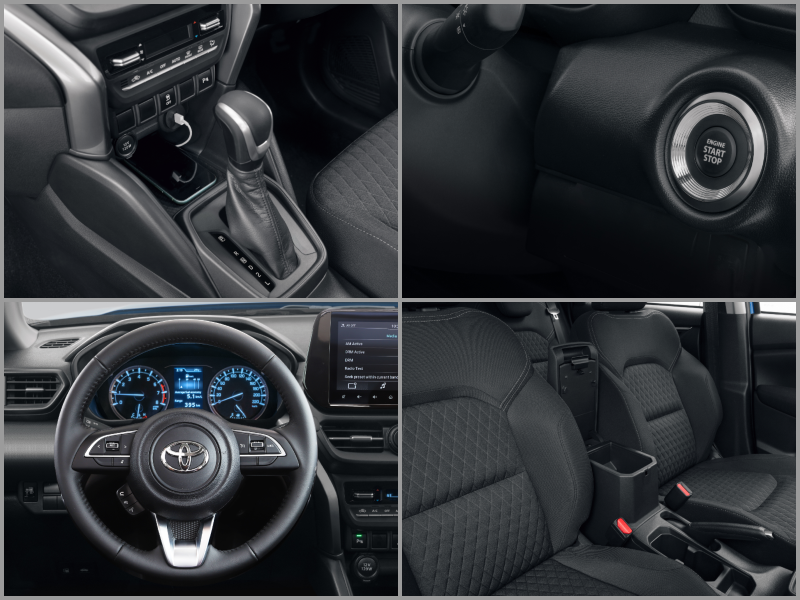
Inside, Toyota highlights technology and connectivity as important elements of the vehicle’s appeal.
The manufacturer says the Urban Cruiser allows drivers to connect their mobile devices and access multimedia functions, including audio, hands-free telephone operation, reverse-camera functions and smartphone integration.
Voice-command functionality also enables drivers to interact with selected features while maintaining attention on the road.
These features reflect the increasing importance of in-car technology to modern motorists, particularly younger buyers who expect their vehicles to provide seamless connectivity and convenience.
Safety takes centre stage
Safety is another important feature highlighted by Toyota Nigeria in its presentation of the Urban Cruiser.
The vehicle incorporates Toyota’s Total Effective Control Technology (TECT) body structure, developed to help absorb and disperse impact energy in the event of a collision.
This structural approach is designed to enhance occupant protection by managing the forces generated during an accident.
The model also features an Anti-lock Braking System (ABS), which helps drivers maintain steering control during braking, particularly on slippery road surfaces.
These safety provisions underline the manufacturer’s emphasis on combining driving convenience with occupant protection.
For Nigerian motorists, who frequently encounter varying road conditions, unpredictable traffic situations and changing weather, safety technologies remain important considerations when choosing a vehicle.
A proposition for Nigeria’s changing automotive market
The Urban Cruiser’s positioning comes at a time when affordability, fuel consumption and maintenance considerations are increasingly influencing vehicle purchasing decisions in Nigeria.
With the cost of acquiring and operating vehicles remaining a major concern for many households and businesses, compact SUVs offer an alternative to larger sport utility vehicles for buyers seeking a combination of practicality, comfort and manageable proportions.
The Urban Cruiser’s 1.5-litre engine could therefore be an important consideration for motorists seeking a relatively modest engine capacity without sacrificing the SUV experience.
Its compact configuration also makes it relevant to city driving, where manoeuvrability and ease of handling are important advantages.
However, its appeal will ultimately depend on factors such as acquisition cost, availability, financing arrangements, fuel consumption under Nigerian driving conditions and the cost of routine maintenance.
Toyota’s dealer and after-sales advantage
Beyond the vehicle itself, Toyota’s established presence in Nigeria offers an important consideration for prospective buyers.
Toyota (Nigeria) Limited, trusted distributor of Toyota Motor Corporation in the country, operates through seven accredited dealers.
The company identifies Elizade Nigeria Limited, R.T. Briscoe (Nig.) Plc, Omoregie Motors, Germaine Auto Centre, Kojo Motors, Mandilas Motors and Metropolitan Motors Limited as members of its accredited dealership network.
Its after-sales infrastructure comprises a service centre in Lagos, a parts depot, vehicle diagnostics, mobile workshop services, body and paint facilities and genuine spare parts distribution, among others.
The availability of these facilities is particularly important in a market where access to genuine components, qualified technicians and dependable maintenance services can influence long-term ownership experience.
For buyers considering the Urban Cruiser, the strength of the distributor’s after-sales network could therefore form part of the vehicle’s overall value proposition.
A compact SUV with practical appeal
The Toyota Urban Cruiser brings together several attributes that are increasingly relevant to Nigeria’s changing automotive market: a 1.5-litre petrol engine, transmission choices, modern connectivity, safety provisions and the versatility of a compact SUV.
While its eventual market performance will depend considerably on pricing, availability and customer experience, the model gives Toyota another option for motorists seeking a vehicle that combines everyday practicality with contemporary SUV styling.
As competition intensifies in Nigeria’s compact SUV segment, the Urban Cruiser will be judged not only by its design and equipment but also by how convincingly it delivers on the fundamentals of fuel economy, reliability, comfort and ownership value.
For Toyota, the challenge and opportunity lie in translating the Urban Cruiser’s product attributes into a compelling proposition for Nigerian motorists.
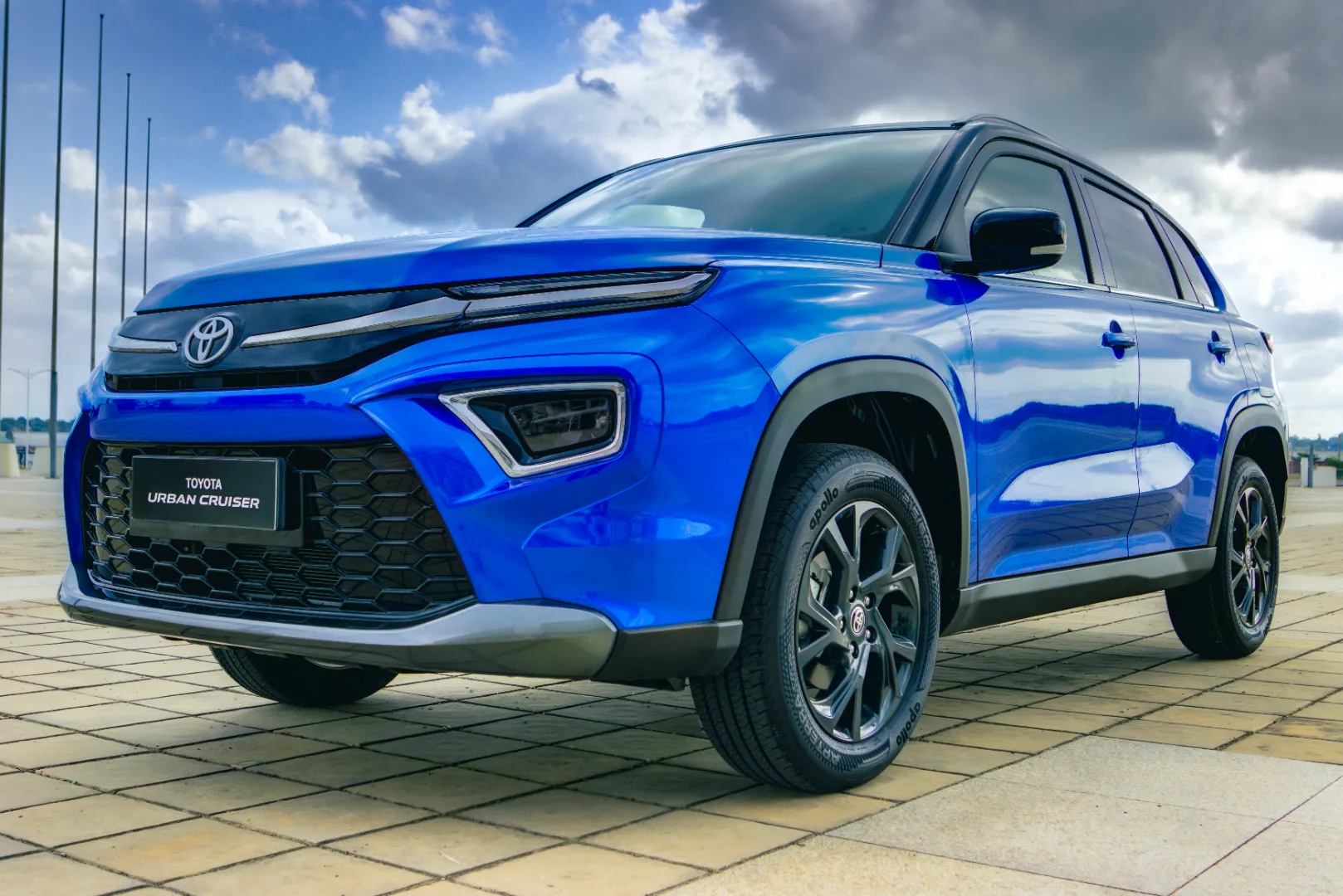
Toyota Urban Cruiser: The Compact SUV Set to Make a Big Statement in Nigeria
-

 metro3 days ago
Goodluck Jonathan’s Second Wife, Ayima, to Unveil Memoir ‘Gold Dust’ in Abuja at 50
-

 Business3 days ago
Petrol Prices Crash as Dangote Refinery, NNPCL, MRS Adjust Rates Nationwide
-

 metro18 hours ago
Viral Video: Nigerian Army Explains Why Soldiers, DSS Operatives Met Bandits In Kwara Forest
-

 Politics3 days ago
Sheikh Nuru Khalid Speaks on Tinubu, Atiku, Mosque Visits, Warns Against Mixing Politics With Religion
-

 International2 days ago
Canada: Eight Nigerians Among 12 Arrested in $4.5m Auto Theft Bust, 96 Vehicles Recovered
-

 Sports3 days ago
Bukayo Saka, Fiancée Tolami Benson Spark Breakup Rumours Over Alleged Prenup Dispute
-

 News2 days ago
BREAKING: Fountain Of Life Crisis Deepens As Trustees Reaffirm Jimmy Odukoya’s Removal, Appoint Interim Leader
-

 metro2 days ago
Reports Claim Fountain Of Life Church Removes Jimmy Odukoya As Senior Pastor Over Succession Dispute