
International
Palestinians urge world to end Israel’s illegal occupation after ICJ ruling

Palestinians urge world to end Israel’s illegal occupation after ICJ ruling
Activists and legal experts in the West Bank say Friday’s ruling by the International Court of Justice (ICJ), which has found that Israel’s occupation of the Palestinian territories is unlawful, will do little to improve life for Palestinians.
Other states must now apply collective pressure on Israel to end its rule over Gaza and the West Bank, including annexed East Jerusalem, if the situation there is to change, they say.
The world’s highest court concluded on Friday – with 12-3 judges in favour – that Israel is forcibly displacing Palestinians from their lands, exploiting water sources, annexing large swaths of the occupied territory “by force” and is violating the right of Palestinians to “self-determination”.
The ICJ also ruled that Israel must stop all building of settlements in the West Bank and should compensate Palestinians for human rights violations in the occupied territory.
The ruling is a non-binding advisory opinion, which was sought by the United Nations General Assembly in 2022, seeking to clarify the legal implications of Israel’s occupation of the West Bank.
The ICJ called on the UN – especially the Security Council and General Assembly – to take action to bring Israel’s unlawful occupation to a “rapid” end.
However, Zainah el-Haroun, the spokesperson for Al-Haq, a Palestinian nonprofit organisation based in the West Bank that monitors human rights violations, said previous ICJ rulings have not led to global action against Israel.
She referenced the ICJ’s 2004 advisory opinion that found Israel’s separation wall and settlements on occupied Palestinian land illegal. Settlements have not only remained in the West Bank since the ruling, but the number of Israeli settlers living there has also risen from 250,000 in 1993 to more than 700,000 in 2023.
READ ALSO:
- Biden rejects calls to step down from presidential race
- Why I won’t go back to Peter Obi – Okupe
- DSS operatives raid kidnappers hideout in Kaduna, kill one, arrest another
“These rulings mean nothing if third states and the international community fail to hold Israel accountable,” she told Al Jazeera.
“The ICJ has ruled that Israel’s occupation is unlawful and must end immediately. Third states must ensure the full and total realisation of the Palestinian people to self-determination and sanction Israel’s illegal occupation, which breaches international law,” she added.
Little to celebrate
Palestinian activists in the West Bank said they cannot celebrate the ICJ’s ruling when the situation across the occupied territory is worse than ever before.
They cited Israel’s war in Gaza, which has killed at least 38,848 Palestinians – the vast majority of them civilians – and has rendered the enclave uninhabitable. Gaza is also witnessing an outbreak of diseases such as polio and cholera while nearly the entire population is struggling to survive food shortages brought on by Israel’s siege of the enclave.
Israel’s war on Gaza followed Hamas-led attacks on military outposts and communities in southern Israel on October 7, in which 1,139 people were killed and 251 taken captive.
The global attention – and shock – over Israel’s war ever since has distracted attention from its settlement expansion in the West Bank, observers said.
“A year ago, a ruling like this would have been great. We all would have thought this was a great step forward,” said Tasame Ramadan, a human rights activist from the West Bank city of Nablus. “But right now, the priority is a permanent ceasefire [in Gaza] and an end to the occupation.”
Mohamad Alwan, a Palestinian rights activist monitoring settler attacks in the West Bank, expressed a similar wariness about what the ruling will mean on the ground.
He said that while he recognises the ruling hurts Israel’s image abroad, there is no way for the court to apply or enforce it.
In addition, Alwan said he is pessimistic about whether states will take action against Israel after the ruling. He cited perceived indifference to the ICJ’s binding order in January, in which the court called on Israel to scale up aid and prevent further harm to civilians in Gaza after concluding that “the rights of Palestinians were at risk” under the Genocide Convention.
“In my opinion, this decision will have no immediate impact on the situation on the ground,” he told Al Jazeera.
READ ALSO:
- Police didn’t stop NASU, SSANU Abuja protest – CP
- Blackout looms in Abuja as TCN threatens to disconnect AEDC from grid
- CBN gives new directive on dormant accounts, unclaimed bank balances
“However, in the long run, there might be an impact. The world has seen now how Israel kills people and kills children, and their views are changing about Israel and its occupation.”
‘Nakba is where it all started’
Palestinian activists stressed that the ICJ’s advisory ruling on Friday must be understood in the context of the Nakba, or “Catastrophe”, of 1948 when Zionist militias expelled about 750,000 Palestinians from their lands to create the state of Israel.
Diana Buttu, a Palestinian legal expert, said she wished the ICJ had referenced the Nakba to highlight the historic pattern of Israel’s behaviour in the occupied territory.
“While I’m happy about the outcome of this case, I also think that this focus just on the West Bank and Gaza ignores the bigger picture of the origins of this situation and the ways in which Israel was created, which was through the ethnic cleansing of Palestinians,” Buttu told Al Jazeera.
She criticised the Palestinian Authority (PA), which governs large swaths of the West Bank and represents the Palestinian people internationally, for how the issue of Israel-Palestine is typically framed by and within the global community.
She accused the PA of having long given up advocating for stateless Palestinians to be able to exercise the right of return to their former homes and lands lost during the Nakba or calling for an end to the discrimination that Palestinian citizens of Israel face.
Experts and activists have previously attributed the PA’s shortcomings to the Oslo Accords, the first of which was signed in 1993 by then-Palestinian leader Yasser Arafat and then-Israeli Prime Minister Yitzhak Rabin on the lawn of the White House.
“The PA a long time ago took a position that it is all about the two-state solution and ending occupation, so their entire discourse has just been about that,” Buttu said.
Ramadan agreed on the importance of centring the Nakba whenever speaking about Israel’s settlements expansion and its war in Gaza.
“The Nakba is where this all started. How can we not mention the cause of the issue and where this all started? This is not the right way to address an issue like this,” she said.
“We would definitely like to see the international community recognise the Nakba, recognise all the people we lost in 1948 and to recognise the consequences of the Nakba that we are still living through today.”
Palestinians urge world to end Israel’s illegal occupation after ICJ ruling










International
Trump Slams Iran Over Strait of Hormuz as Middle East Ceasefire Talks Stall

Trump Slams Iran Over Strait of Hormuz as Middle East Ceasefire Talks Stall
US President Donald Trump has accused Iran of doing a “very poor job” in its handling of oil shipments through the strategic Strait of Hormuz, insisting that Tehran’s actions “are not the agreement we have” amid rising uncertainty over regional ceasefire arrangements.
The Strait of Hormuz, a critical global energy corridor through which about a fifth of the world’s oil and liquefied natural gas (LNG) passes, has become a renewed flashpoint as competing claims emerge over maritime control, tanker fees, and compliance with ceasefire-linked understandings involving Iran, Israel, and Western mediators.
Trump’s remarks, made in a recent interview and reinforced through his Truth Social posts, came as reports suggested Iran may be imposing new conditions on shipping traffic through the waterway. He warned that any unilateral changes or restrictions could threaten global energy stability.
His comments also reflect broader tensions surrounding a fragile and uneven ceasefire framework in the Middle East, where overlapping conflicts involving Israel, Lebanon, and Iran-backed groups continue to complicate diplomacy.
Meanwhile, Israeli Prime Minister Benjamin Netanyahu said Israel is preparing to begin direct talks with Lebanon, with discussions expected to focus on disarming Hezbollah and exploring long-term arrangements aimed at stabilising the border region.
READ ALSO:
- Man Admits Stabbing Wife 22 Times in Front of Four Children
- Melania Trump Denies Epstein Links, Calls for Public Hearings for Survivors
- CAF President Denies Corruption Claims Over AFCON Senegal–Morocco Controversy
A U.S. State Department official confirmed that Washington will host a meeting next week to advance ceasefire discussions involving Israel and Lebanon, signalling renewed diplomatic efforts to contain escalating violence.
However, contradictions remain over the scope of any ceasefire agreement. Netanyahu has insisted that “there is no ceasefire in Lebanon,” even as diplomatic channels continue to operate. Israeli airstrikes reportedly continued across southern Lebanon, targeting what the military described as Hezbollah rocket launch sites, though some operations appeared to slow overnight.
Trump, referencing a call with Netanyahu, told NBC News that Israel would “scale back” military operations in Lebanon to support ongoing peace efforts. “He’s going to low-key it,” Trump said, urging restraint to allow negotiations to progress.
The conflict has had severe humanitarian consequences. The World Health Organization (WHO) reported that evacuation orders in Beirut’s southern districts, including Jnah, have placed major hospitals at risk, with hundreds of patients—including intensive care cases—unable to be safely moved.
Lebanon’s Health Ministry has said more than 1,100 people were wounded and at least 300 killed during recent waves of Israeli strikes, intensifying pressure on medical facilities already operating beyond capacity.
Confusion also persists over earlier ceasefire arrangements, with conflicting interpretations from Iran, Israel, the United States, and mediators regarding whether Lebanon was included in the agreement. This ambiguity has contributed to renewed strikes and diplomatic friction.
Iran, meanwhile, has accused Israel of violating ceasefire terms and previously signalled potential retaliatory measures, including disruptions in the Strait of Hormuz, further heightening global concern over energy security.
Analysts warn that continued instability in both Lebanon and the Persian Gulf could have far-reaching implications for global oil prices, shipping routes, and broader regional security, especially if diplomatic talks fail to produce a unified enforcement mechanism.
Diplomatic meetings are expected to continue in Washington and through regional channels in the coming days as mediators attempt to clarify ceasefire terms and prevent further escalation across multiple fronts.
Trump Slams Iran Over Strait of Hormuz as Middle East Ceasefire Talks Stall
International
Melania Trump Denies Epstein Links, Calls for Public Hearings for Survivors
Melania Trump Denies Epstein Links, Calls for Public Hearings for Survivors
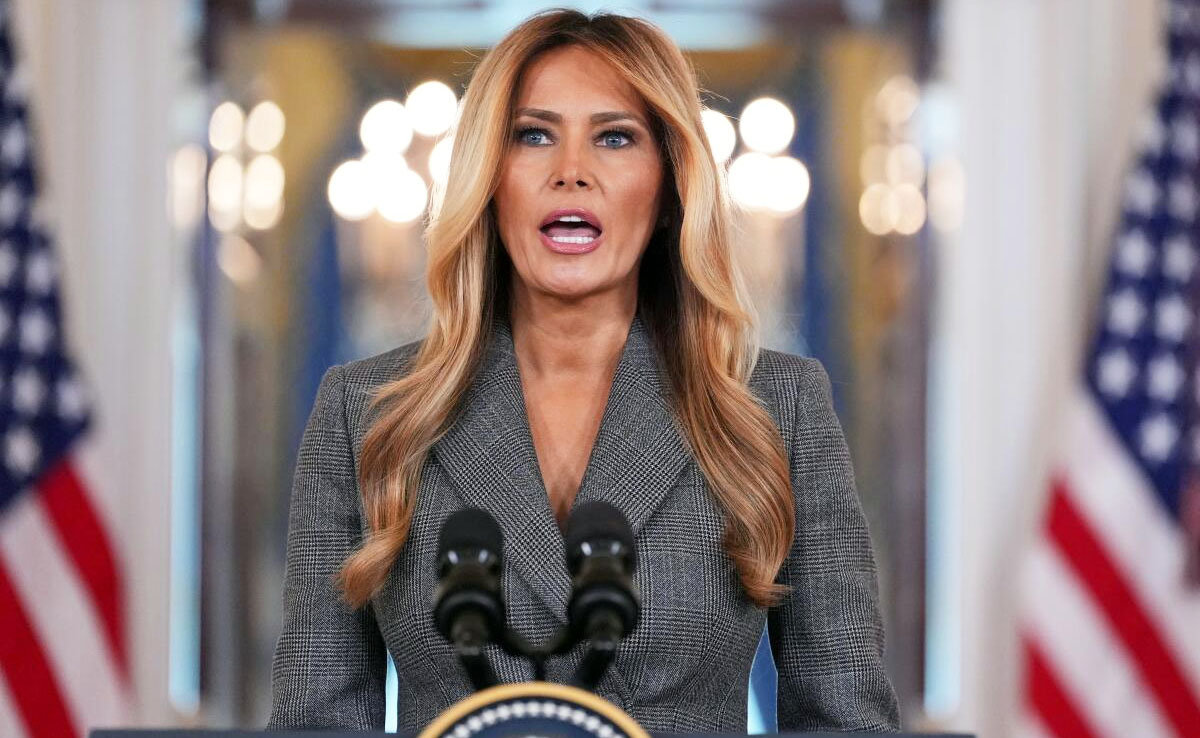
Melania Trump has denied any connection to disgraced financier Jeffrey Epstein, calling recent allegations linking her to him false and urging that such claims “end today.”
Speaking at the White House, Melania said she had only briefly “crossed paths” with Epstein in 2000 and insisted she had no involvement in his criminal activities or any knowledge of abuse allegations connected to him. She also rejected claims circulating online that Epstein introduced her to Donald Trump, describing the suggestion as a “misleading and mean-spirited attempt” to damage her reputation.
Melania Trump urged the United States Congress to hold formal hearings for Epstein survivors, saying victims should be given the opportunity to testify under oath. She called for survivors to publicly share their experiences if they wish, adding that their testimonies should be entered into the congressional record to ensure transparency and accountability. Her comments are expected to intensify ongoing political discussions in Washington over how Congress and federal agencies should handle remaining questions around Epstein’s network and past associations.
READ ALSO:
- CAF President Denies Corruption Claims Over AFCON Senegal–Morocco Controversy
- Pope Leo XIV Launches 11-Day Africa Tour Across Four Nations
- Hip-Hop Pioneer Afrika Bambaataa Dies at 68 After Battle With Cancer
She also dismissed claims linking her to Ghislaine Maxwell, saying she does not know her personally. She referred to a previously reported 2002 email exchange, describing it as “casual correspondence” and a routine polite response, rather than evidence of a relationship.
Epstein survivors and advocacy groups have responded cautiously to the statement. Some welcomed renewed attention on congressional hearings, while others warned that further public scrutiny could place additional emotional burden on victims who have already testified or are bound by legal restrictions.
Lawmakers from both parties have also reacted, with some supporting the idea of renewed hearings and others urging caution to avoid politicising survivors’ experiences.
The remarks come amid continued debate in the United States over the handling of investigations related to Epstein and the disclosure of related documents. While former President Donald Trump has acknowledged knowing Epstein socially in the past, he has previously stated that their relationship ended before Epstein’s legal troubles became public.
Authorities have not accused Melania Trump of any wrongdoing in connection with the Epstein case. Her statement is expected to further fuel public and political debate over transparency, accountability, and the handling of high-profile abuse allegations in the United States.
Melania Trump Denies Epstein Links, Calls for Public Hearings for Survivors
International
Israel Questions Pakistan’s Credibility as Mediator in US‑Iran Ceasefire Talks

Israel Questions Pakistan’s Credibility as Mediator in US‑Iran Ceasefire Talks
Israel has publicly doubted Pakistan’s role as a mediator in the ongoing United States–Iran ceasefire negotiations, describing Islamabad as “not a credible player” in the diplomatic process. The comments from Israel’s ambassador to India, Reuven Azar, come ahead of scheduled direct talks between U.S. and Iranian officials in Islamabad on April 11, reportedly to be attended by U.S. Vice President JD Vance.
Azar acknowledged that the United States may have strategic reasons for using Pakistan’s facilitation, but he emphasized that Israel’s primary concern remains the removal of Hezbollah’s terrorist infrastructure in southern Lebanon. He highlighted recent Israeli air operations that reportedly eliminated over 250 Hezbollah operatives and reiterated that disarming the group south of the Litani River is essential to protect Israeli communities.
READ ALSO:
- Making Up for Lost Sleep Might Be Healthier Than Experts Once Believed — What Science Says
- Sleeping Positions: How They Affect Your Health and Which Ones to Avoid
- Thousands Rally Across Iran to Honour Late Supreme Leader Khamenei
Drawing parallels with past U.S. diplomatic efforts, Azar compared Pakistan’s mediation to previous roles played by Qatar and Turkey in negotiating truces in Gaza, suggesting such mediators were sometimes selected for convenience rather than effectiveness. He stressed that Israel’s objective is to remain closely aligned with the United States on the substance and outcome of any regional agreement.
Regarding the U.S.–Iran ceasefire, Azar expressed support for the two-week truce while noting that Israel considers Lebanon outside its scope. He warned that continued Iranian and Israeli military actions in Lebanon could jeopardize the fragile agreement, potentially destabilizing the Strait of Hormuz and broader Middle East security.
The ceasefire talks themselves remain delicate. While Pakistan has positioned itself as a facilitator, Tehran has acknowledged Islamabad’s role but continues to insist on substantive agreements over nuclear development, missile programs, and regional security obligations. Meanwhile, Israel maintains a firm stance that its operations in southern Lebanon are necessary to neutralize threats from Hezbollah.
The diplomatic dispute over Pakistan’s credibility highlights deep divisions among key stakeholders in the region, underscoring the challenges in maintaining a fragile truce while addressing the security concerns of multiple actors. Observers will closely monitor whether the upcoming Islamabad talks can reconcile these differences and produce a sustainable agreement.
Israel Questions Pakistan’s Credibility as Mediator in US‑Iran Ceasefire Talks

-

 metro3 days ago
FG Deports US Missionary Alex Barbir Over Alleged Role in Nigeria Insecurity
-

 Entertainment3 days ago
Veteran Nollywood Actor Davis Ofor ‘Clarus’ of New Masquerade Dies at 85
-

 Africa20 hours ago
ECOWAS Recruitment 2026: Over 30 Job Vacancies Open for Nigerians (How to Apply)
-

 metro2 days ago
2026 NYSC Batch A Stream II: Registration, Swearing-In Dates Announced
-

 metro3 days ago
Lagos Announces Partial Road Closures for Project Commissioning
-

 Entertainment2 days ago
Saheed Osupa Defends Juju Use Amid Backlash From Islamic Clerics
-

 Politics1 day ago
Court Stops ADC Congress, Orders Status Quo in Leadership Row
-
 News3 days ago
Iran Lists Tough Conditions for Peace Talks with US