

International
US, allies prepare to defend Israel, Netanyahu in ‘multi-front war’ with Iran

US, allies prepare to defend Israel, Netanyahu in ‘multi-front war’ with Iran
TEL AVIV, Israel: Israel is already in a “multi-front war” with Iran and its proxies, Israeli Prime Minister Benjamin Netanyahu told a Cabinet meeting Sunday, as the United States and allies prepared to defend Israel from an expected counterstrike and prevent an even more destructive regional conflict.
Tensions have soared following nearly 10 months of war in Gaza and the killing last week of a senior Hezbollah commander in Lebanon and Hamas’ top political leader in Iran. Iran and its allies have blamed Israel and threatened retaliation. Hamas says it has begun discussions on choosing a new leader.
Netanyahu said Israel was ready for any scenario. Jordan’s foreign minister was making a rare trip to Iran as part of diplomatic efforts — “We want the escalation to end,” Ayman Safadi said — while the Pentagon has moved significant assets to the region.
“We are doing everything possible to make sure that this situation does not boil over,” White House deputy national security adviser Jon Finer told ABC.
In Israel, some prepared bomb shelters and recalled Iran’s unprecedented direct military assault in April following a suspected Israeli strike that killed two Iranian generals. Israel said almost all the drones and ballistic and cruise missiles were intercepted.
A stabbing attack on Sunday near Tel Aviv killed a woman in her 70s and an 80-year-old man, according to Israel’s Magen David Adom rescue service, and two others were wounded. The police said the attack was carried out by a Palestinian militant, who was “neutralized.”
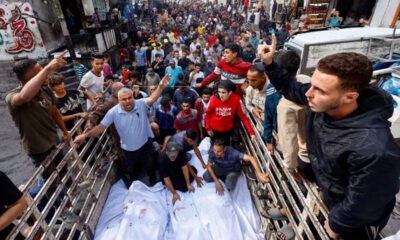
Inside Gaza, the Health Ministry said at least 25 people were killed and 19 others injured when Israel struck two schools in Gaza City. AP video showed at least one child among the dead. Israel’s military, which regularly accuses Palestinian militants of sheltering in civilian areas, said it hit Hamas command centers.
“As you can see, there is no equipment to recover the injured. Rescuers are digging with their hands,” said one man, Yusuf Al-Mashharawi.
READ ALSO:
- Kamala Harris set to name running mate ahead of swing state tour
- Protesters threaten greater showdown, business shutdown after Tinubu broadcast
- Mali cuts diplomatic ties with Ukraine over Wagner ambush claims
Earlier, Israeli strikes killed at least 18 people. One hit a tent camp for thousands of displaced Palestinians in the courtyard of Al-Aqsa Martyrs Hospital, killing four people, including one woman, the Health Ministry said. The Israeli military said it targeted a Palestinian militant in the strike, which it said caused secondary explosions, “indicating the presence of weaponry in the area.”
The hospital in Deir Al-Balah is the main medical facility operating in central Gaza as many others in the territory no longer function. A separate strike on a home near Deir Al-Balah killed a girl and her parents, according to the hospital.
Another strike flattened a house in northern Gaza, killing at least eight, including three children, their parents and their grandmother, according to the Health Ministry. Another three people were killed in a strike on a vehicle in Gaza City, according to Civil Defense first responders.
Palestinian militants in Gaza fired at least five projectiles at Israeli communities near the border without causing casualties or damage, the military said. The military later told people in some parts of the southern Gaza city of Khan Younis to evacuate.
The Health Ministry also said an Israeli strike on Saturday at a school-turned-shelter in Gaza City killed at least 16 people. Israel’s military said it struck a Hamas command center.
The war in Gaza was triggered by Hamas’ Oct. 7 attack into Israel that killed some 1,200 people, mostly civilians, and took around 250 people hostage.
Israel’s massive offensive in response has killed at least 39,580 Palestinians, according to Gaza’s Health Ministry, which does not distinguish between civilians and combatants. Heavy airstrikes and ground operations have caused widespread destruction and displaced the vast majority of Gaza’s 2.3 million people, often multiple times.
The militant group Hezbollah and Israel have continued to trade fire along the Lebanon border since the war began, with the severity growing in recent months. The Lebanese state-run National News Agency said an Israeli strike targeted a house in Beit Lef, and the Lebanese Health Ministry said two people were critically wounded.
Hezbollah says it’s aimed at relieving pressure on fellow Iran-backed ally Hamas. A growing number of countries, including the US, are encouraging citizens to leave Lebanon after last week’s killing of a senior commander.
US, allies prepare to defend Israel, Netanyahu in ‘multi-front war’ with Iran
ARAB NEWS




International
Truly Depraved Rapist Jailed for 17 Years After Violent Attack on Woman
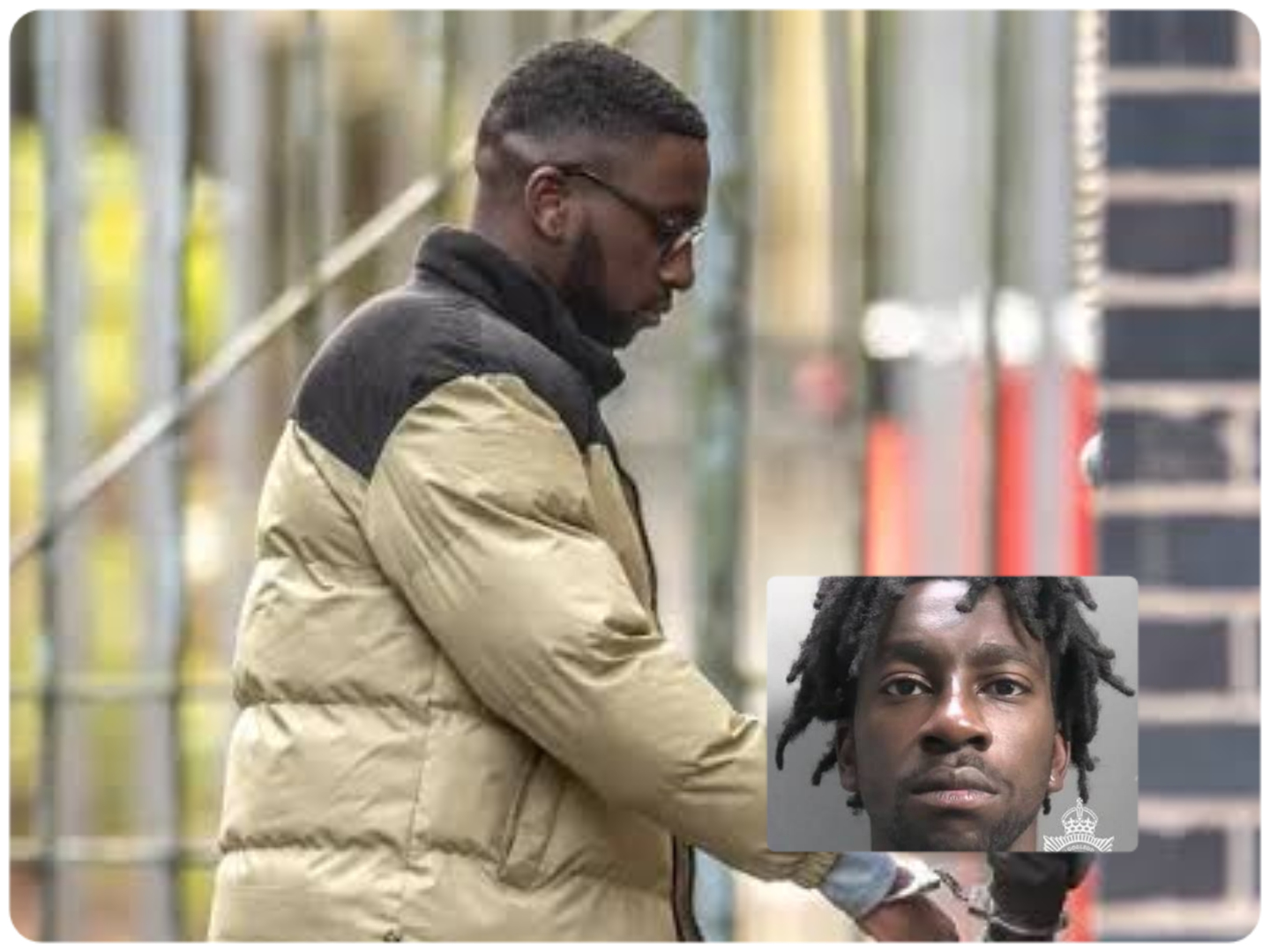
A 24-year-old Nigerian national, Gift Oladele, dragged a young woman into woodland and violently raped her has been jailed for 17 years after a judge described his actions as “truly depraved”.
Gift Oladele carried out the attack in Wrexham, North Wales, in September last year after approaching the victim, who was 19 at the time, as she walked home from a night out.
Oladele was convicted of rape and sexual assault at Mold Crown Court in March. He was sentenced on Thursday.
How the Attack Happened
The court heard that Oladele approached the woman and her friends outside a takeaway in Wrexham city centre. He initially appeared friendly and flirtatious before offering to walk home with her.
According to prosecutor James Coutts, Oladele accompanied the woman until they reached an isolated area, where he grabbed her by the mouth and forced her into the woods.
He then carried out a violent rape.
“She described being terrified,” Coutts told the court. “She did what she thought she needed to do to get through the attack.”
Oladele threatened to find and harm the victim if she reported the rape. He also threatened to take photographs of her and post them online.
Despite the threats, the woman returned home and immediately told her parents, who contacted the police.
Oladele was arrested the following day at his cousin’s home in Wrexham. Officers said he had attempted to hide a mobile phone, which contained searches relating to sexual attacks.
The court heard that Oladele had a “fascination in forced sexual abuse and rape” and that he appeared to be acting out a fantasy shown in the videos he had searched for.
Victim Describes Lasting Trauma
In a victim impact statement, the woman told the court that she continued to wake up from nightmares in which Oladele had tracked her down.
“I’m petrified,” she said.
She also described taking medication to prevent HIV infection after the assault and suffering long-term emotional and psychological effects.
“I feel ashamed, and somehow damaged, since what he did to me,” she said.
“The emotional impact has been very significant.
“I can’t go anywhere on my own anymore.
“I feel unsafe.”
Judge Simon Mills praised the woman for her courage during and after the attack.
“You showed exceptional courage during the incident and afterwards,” he told her.
Previous Conviction and Deportation Appeal
At the time of the Wrexham attack, Oladele was already on bail over another rape allegation in Manchester dating from November 2024.
He had also been jailed in 2022 for a sexually motivated attack.
The court heard that Oladele was later due to be deported to Nigeria but successfully challenged the decision on human rights grounds.
An immigration tribunal judge described the deportation case as “finely balanced”, acknowledging the seriousness of Oladele’s previous offence and the public interest in deporting foreign criminals.
However, the tribunal also considered his ties to the United Kingdom, where he had grown up, and the consequences of relocating to Nigeria.
The Home Office made two attempts to appeal the decision, but both appeals were rejected.
Judge Calls Defendant Dangerous
During sentencing, The Judge described Oladele’s actions as “truly depraved”.
“You subjected her to a terrible violation,” he said.
“You are a dangerous offender.”
The judge said Oladele posed an exceptionally high risk of harm to young women and had shown “absolutely no remorse whatsoever”.
The Home Office described the case as horrific and said Oladele’s imprisonment was the right outcome.
The victim’s account has highlighted not only the brutality of the attack but also the lasting fear and emotional damage that sexual violence can cause long after the offender has been convicted.
International
More Than 1,000 Migrants Rescued Off West Africa in One Week
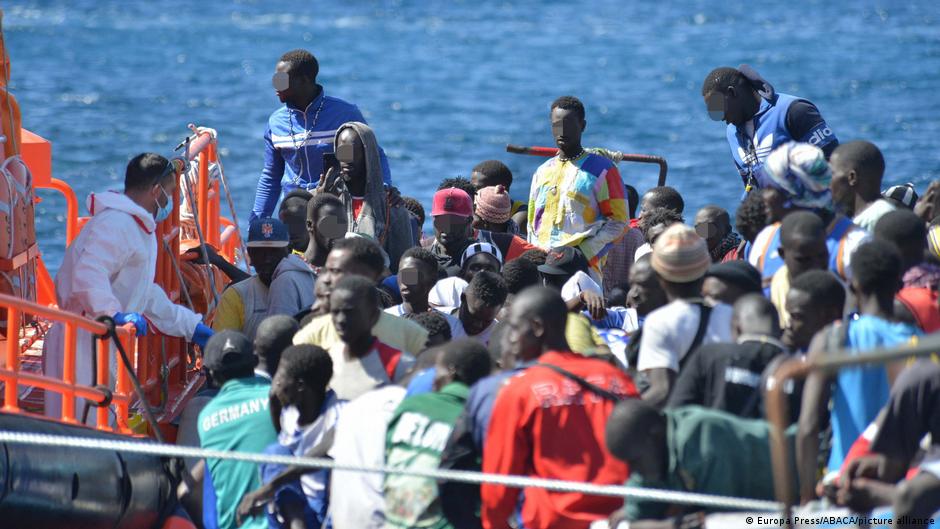
More than 1,000 migrants attempting to reach Spain’s Canary Islands have been rescued from the Atlantic Ocean after seven boats reportedly broke down during the dangerous journey from West Africa.
International
UN Adopts New World Map Showing Africa Bigger, US Smaller in Landmark 2026 Vote
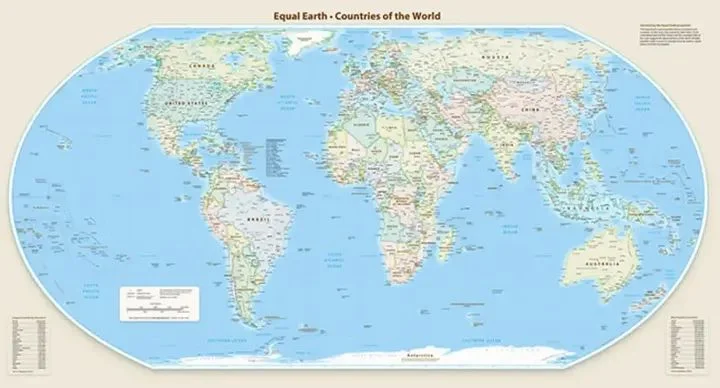
UN Adopts New World Map Showing Africa Bigger, US Smaller in Landmark 2026 Vote
The United Nations General Assembly has approved a historic resolution encouraging countries to adopt a new world map that more accurately reflects the true size of continents — a move that makes Africa appear significantly larger while shrinking North America and Europe. The United States was the only nation to vote against it.
On September 4, 2026, the UN General Assembly passed the resolution with 164 votes in favour, 6 abstentions, and just one opposed — the United States. The six countries that abstained were Ukraine, Moldova, Georgia, Serbia, Lithuania, and Estonia. The resolution, spearheaded by the West African nation of Togo and backed by the African Union, encourages governments, schools, and technology companies to phase out the centuries-old Mercator projection in favour of the Equal Earth projection developed in 2018. Togo’s Foreign Minister Robert Dussey, who presented the resolution, declared: “A fair world begins with a fair map.”
The resolution seeks to correct a distortion that has shaped global perceptions for over 450 years. The Mercator projection was created in 1569 by Flemish cartographer Gerardus Mercator specifically for maritime navigation. While it preserves accurate angles and directions, it severely distorts land area proportions: regions near the poles appear much larger than they actually are, while equatorial regions appear smaller. The most glaring example of this distortion is the comparison between Africa and Greenland. On a standard Mercator map, the two landmasses appear roughly the same size. In reality, Africa is 14 times larger than Greenland — Africa covers about 30.3 million square kilometres, while Greenland covers just 2.1 million. Advocacy groups point out that Africa could contain the United States, China, India, Japan, Mexico, and most of Europe within its area and still have space left.
READ ALSO:
- Kneeling to Propose Is Why Western Marriages Fail — Pete Edochie Sparks Fresh Debate
- US Strikes Three Iranian Oil Tankers in Retaliation for Missile Attack on Navy Ships
- Ondo Tragedy: 3 Siblings, Including Twins, Found Dead Near River on Family Farm
The Equal Earth projection, developed by cartographers Bojan Savric, Bernhard Jenny, and Tom Patterson in 2018, preserves the relative surface areas of continents while maintaining recognisable shapes. Under this new projection, Africa appears in its true massive scale — dramatically larger than in the familiar Mercator map. North America and Europe, by contrast, appear noticeably smaller. “Equal Earth preserves the relative surface areas of continents and, as much as possible, shows their shapes as they appear on a globe,” cartographer Bojan Savric told AFP in 2025. “Correcting the map means restoring to continents in the minds of people the reality of the true dimensions,” said Togo’s Foreign Minister Robert Dussey. He stressed that the campaign is “not directed against any nation, region, or civilization” but serves a “universal goal: to promote knowledge based on scientific rigour, respect for truth, and the equal dignity of peoples.”
American representatives dismissed the resolution as a distraction from pressing global issues. Speaking before the vote, US representative Yaryna Ferencevych argued that “such resolutions and the ideological agenda they promote hinder the work of this institution and lead to a decline in its credibility.” She urged member states to reject the text and focus instead on “genuine issues of international peace, prosperity, or good relations between nations.” Despite the US objection, the resolution passed overwhelmingly. It carries no legal force and does not mandate the replacement of existing maps — rather, it encourages institutions to educate the public on the limitations of flat maps and to adopt more accurate representations. The resolution “in no way challenges the use of the Mercator projection for maritime and aerial navigation, for which it remains fully suited,” the Togolese ministry said in a statement.
African leaders hailed the vote as a significant victory for continental representation. The African Union Mission to the UN welcomed the resolution as a “significant step towards ensuring that the map of the world reflects Africa’s true scale and place in the world.” Togo’s Dussey announced that Togo would become the first country to replace its geography textbooks with the new maps by the end of 2026, and the nation plans to engage with African Union members and other supporters to promote adoption globally. France, a co-sponsor of the resolution, expressed strong support. Foreign Minister Jean-Noël Barrot said in a speech at the Sorbonne: “Changing the map obviously won’t change the world… but correcting a distorted representation is itself an act of truth.” The advocacy group “Unfiltered Africa,” which promotes the Equal Earth map, welcomed the UN decision, stating: “We hope to see accurate maps in schools, textbooks, newsrooms, businesses, and the digital platforms used by billions of people every day.”
UN Adopts New World Map Showing Africa Bigger, US Smaller in Landmark 2026 Vote
-

 Auto2 days ago
Kaduna to Lead Govt Patronage of Local Vehicles as Sani Unveils Peugeot 5008
-
 metro1 day ago
El-Rufai Demands ₦10bn from Defence Minister Over Southern Kaduna Killings Allegation
-
 metro1 day ago
Catholic priest leaves priesthood, weds Kenyan woman after 12 years in Kenya
-

 metro2 days ago
Socialite Igho ‘Tiny’ Ubiribo Dies After Penis Enlargement Surgery
-
 Politics3 days ago
Demystifying the Political Monolith: Wike’s ‘See Finish’ Doctrine and Nigeria’s New Political Calculus
-

 Politics1 day ago
Why Did Peter Obi Attend Seyi Makinde’s Campaign Launch? Here’s What He Said
-
 metro1 day ago
No US Case Against Tinubu, Family Enjoy Unimpeded Transit for UNGA — Ambassador Ibrahim
-

 News1 day ago
Lagos Moves to Slash Agency Fees, Curb Rent Hikes With New Tenancy Bill