

News
Protests: Nigeria won’t tolerate foreign interference, says minister
Protests: Nigeria won’t tolerate foreign interference, says minister
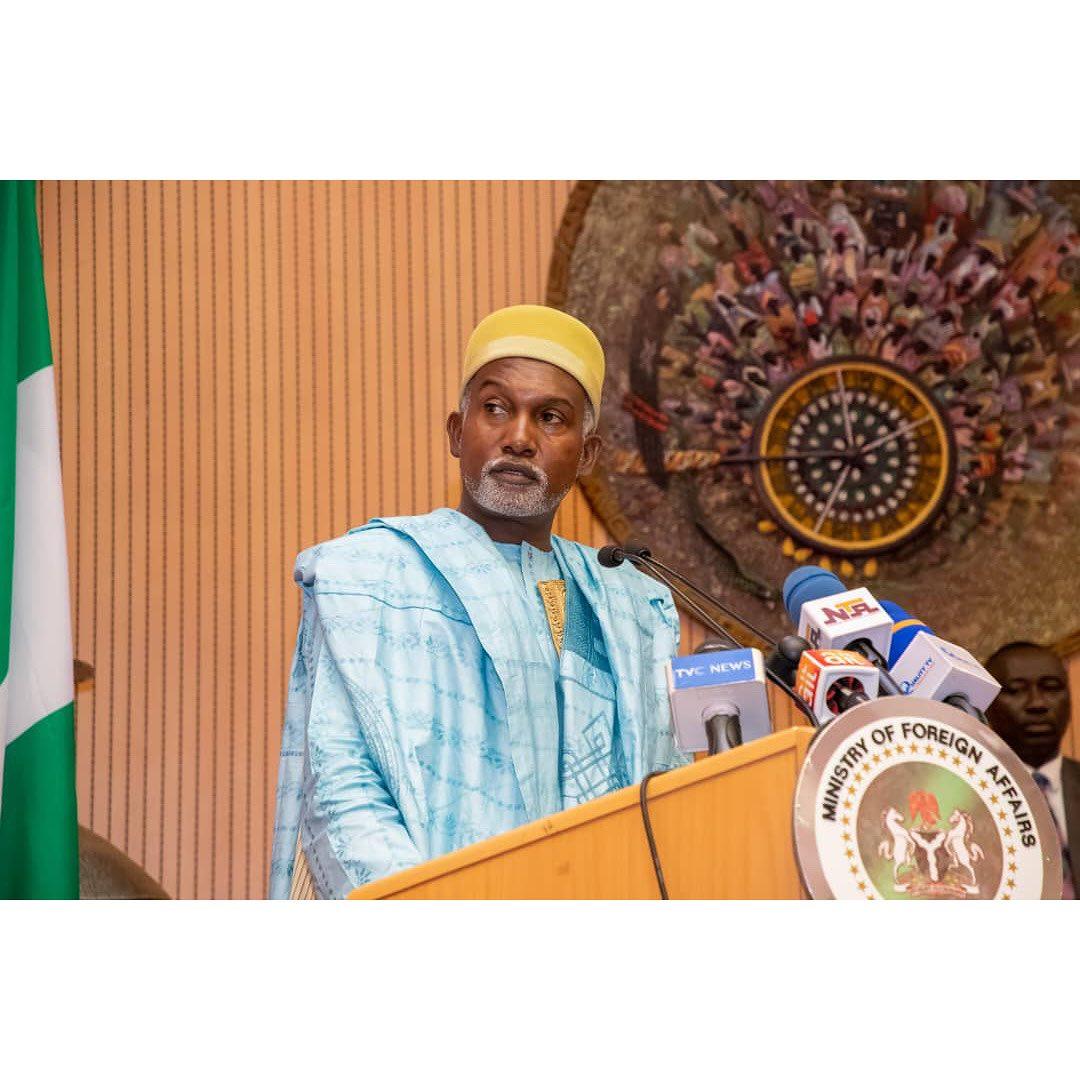
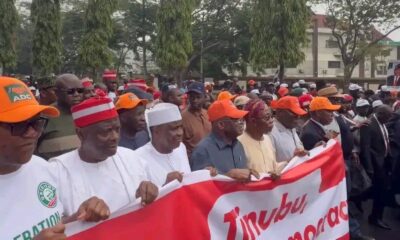
Nigeria will not tolerate any foreign interference in the #EndBadGovernance protests, which degenerated into violence in some parts of the country.
Minister of Foreign Affairs, Yusuf Tuggar, sounded the warning on Wednesday when he met with members of the diplomatic corps in Abuja.
He said the government would not spare anyone funding the protests both within and outside Nigeria.
Tuggar said, “No nation tolerates foreign interference in its domestic affairs and that of its citizens. Nigeria is not an exception.
“The government would take appropriate action against any foreign entity residing in Nigeria that is found to have directly or indirectly supported the protesters by whatever means or seeks to interfere in the internal affairs of the country.
“Nigeria cherishes and continues to value the cordial relationships that happily subsist between her and your individual countries and organizations and will not do anything to undermine or take for granted such relationships.
“Indeed, more than any time before now, we solicit your understanding and collaboration in the ongoing efforts of the Federal government in addressing the economic challenges confronting the country, to achieve a better life for every Nigerians at home and abroad.”
The minister highlighted the government’s efforts to enhance socio-economic development, which he said had resulted in a reduction of debt servicing from 97% to 68%.
Tuggar stated that the past few days had seen bad narratives on social media currently threatening the peace and stability of the nation.
He, however, assured diplomats in the country that the Nigerian government remained committed to protecting members of the diplomatic corps as well as Nigerians in line with international laws.
The meeting was also attended by the Minister of Information, Mohammed Idris; representatives of the National Security Adviser, the Inspector General of Police, lawmakers and others.








News
Lagos Moves to Slash Agency Fees, Curb Rent Hikes With New Tenancy Bill
Lagos Moves to Slash Agency Fees, Curb Rent Hikes With New Tenancy Bill
The Lagos State Government has unveiled a proposed tenancy law aimed at overhauling the relationship between landlords, tenants and estate agents, with measures designed to curb arbitrary rent increases, excessive agency charges, fraudulent property transactions and prolonged tenancy disputes.
The proposed Lagos State Tenancy and Recovery of Premises Bill, 2025, currently before the Lagos State House of Assembly, seeks to replace the existing tenancy framework with a more comprehensive regime covering rent payments, advance rent, agency fees, eviction, dispute resolution and the conduct of landlords and property agents.
The bill, however, has not yet become law and remains subject to legislative consideration and possible amendments.
One of the most significant provisions in the proposed legislation is the plan to reduce estate agency fees to five per cent of annual rent.
The proposal has attracted considerable attention because tenants in Lagos routinely complain about the financial burden of agency, agreement and other charges demanded when securing accommodation.
The Lagos State House of Assembly had previously stated during deliberations on the bill that the agency commission would be reduced from the existing 10 per cent benchmark to five per cent. An agent who charges above the prescribed rate under the proposed law could face sanctions, including refund of the excess, a fine of up to N1 million or imprisonment for up to two years, or both.
The bill also proposes compulsory registration of estate agents with the Lagos State Real Estate Regulatory Authority, LASRERA.
Under the proposal, operating as an estate agent without the required registration would become an offence. The government says the measure is intended to check the activities of fraudulent and unregistered operators accused of collecting money from unsuspecting members of the public, engaging in multiple transactions on the same property and imposing questionable charges on prospective tenants.
READ ALSO:
- Why Did Peter Obi Attend Seyi Makinde’s Campaign Launch? Here’s What He Said
- JUST IN: Tension in Benue as Suspected Thugs Attack Peter Obi’s Convoy, Block Access
- FIFA, CAF suspend NFF election as Nigeria football reforms face fresh review
The proposed legislation further requires agents handling rent or other funds on behalf of property owners to account for such money and remit it within a stipulated period. Legal reviews of the draft bill put the remittance period at seven working days and require agents to issue receipts for transactions.
One-year limit on advance rent
Another major proposal is the restriction on advance rent.
The draft legislation seeks to prevent landlords from demanding excessive periods of rent upfront. Under the proposed framework, a new tenant would generally not be required to pay more than one year’s rent in advance, while sitting tenants who ordinarily pay monthly would not be compelled to make excessive advance payments.
The measure is expected to address one of the biggest challenges facing accommodation seekers in Lagos, where prospective tenants often complain of demands for one, two or even more years’ rent before they are allowed to occupy a property.
Landlords may face scrutiny over rent increases
The proposed law also seeks to tackle what it describes as unreasonable increases in rent.
Under the bill, a tenant who considers a rent increase excessive could challenge it, with the court empowered to consider factors including rents charged for comparable properties and evidence presented by both the landlord and tenant.
The proposal is significant in a city where rapid increases in rental values have become a major concern for residents, particularly low- and middle-income earners.
The bill also provides protection for tenants who challenge an allegedly unreasonable increase, including restrictions on eviction while the matter is before the court.
Faster resolution of landlord-tenant disputes
Perhaps one of the most ambitious aspects of the proposed legislation is its attempt to speed up tenancy-related litigation.
The bill provides for tenancy proceedings through originating summons and proposes mechanisms designed to shorten the time between filing a case and hearing it.
It also empowers courts to sit on weekends and public holidays for tenancy matters and provides for virtual hearings.
The proposed framework further provides for mediation as an alternative to prolonged litigation, with the aim of resolving disputes more quickly and reducing the backlog of landlord-tenant cases.
The government has argued that faster dispute resolution would benefit both landlords and tenants by reducing the cost and uncertainty associated with lengthy court proceedings.
Tenants to provide evidence
The Lagos State Commissioner for Housing, Moruf Akinderu-Fatai, said tenants seeking legal action would be required to provide evidence including proof of rent payments and updated utility bills.
READ ALSO:
- NNPC Disowns Cannabis-Laden Tanker, Threatens Legal Action Over Brand Misuse
- Bauchi Man, 25, Allegedly Shoots Friend Dead With Dane Gun During Quarrel
- 87-Year-Old Man Arraigned for Severing Judge’s Hand in Adamawa Cutlass Attack
According to the government, the requirement is intended to ensure that tenancy disputes are supported by verifiable documentation rather than mere allegations.
Protection against self-help eviction
The proposed framework also strengthens legal protection against arbitrary eviction and other forms of self-help.
The draft bill provides for lawful procedures that landlords must follow when seeking possession of their properties. It seeks to discourage practices such as forcibly ejecting tenants, interfering with access to premises or taking other unilateral measures without following due process.
It also contains provisions relating to abandoned premises, recovery of possession and enforcement of court orders.
Service charges, deposits and professional fees
The bill goes beyond rent and agency commissions to address other financial issues associated with tenancy.
Among the proposed provisions are rules concerning service charges, facility and security deposits, as well as professional fees.
The draft framework seeks greater transparency in the handling of tenants’ money and provides for accountability concerning service charges and refundable deposits. Legal reviews of the bill indicate that security deposits would generally be refundable, subject to documented deductions for damage or other legitimate claims.
LASRERA intensifies enforcement
The proposed reforms come against the backdrop of increased enforcement by LASRERA against fraudulent operators in Lagos’ property market.
The Commissioner for Housing disclosed that the regulatory agency recovered more than N270 million from fraudulent estate agents between 2025 and 2026.
The government says the enforcement campaign, combined with the proposed legislation, is intended to restore confidence in the state’s real estate sector and protect residents from exploitation.
Stakeholders raise concerns
While the proposed reduction in agency fees has been welcomed by tenant advocates, housing stakeholders have also raised concerns about possible loopholes.
Spaces for Change, which participated in the 2025 public hearing on the bill, warned that agents could attempt to circumvent a five per cent cap by introducing additional charges under different descriptions.
The organisation recommended that the prescribed five per cent ceiling should cover other related charges in order to prevent agents from simply shifting costs from “agency fee” to documentation, inspection or other charges.
There have also been calls for the bill to provide clearer safeguards around the collection, storage and use of tenants’ personal information, given the large amount of sensitive data prospective tenants routinely submit to landlords and estate agents.
Bill still awaiting passage
Despite the publicity surrounding the proposed reforms, tenants and landlords have been urged not to assume that the new provisions are already enforceable.
The Lagos State Tenancy and Recovery of Premises Bill remains a proposal before the Lagos State House of Assembly. Until it is passed by the Assembly and receives the necessary assent, the existing tenancy law remains the applicable legal framework.
If eventually enacted, however, the proposed law could represent one of the most far-reaching changes to landlord-tenant relations in Lagos in years, particularly through its proposed five per cent agency-fee cap, restrictions on advance rent, compulsory registration of agents, stronger protections against arbitrary rent increases and faster mechanisms for resolving tenancy disputes.
For millions of Lagos residents struggling with rising accommodation costs, the central question will now be whether the proposed reforms can move from the pages of the bill to effective enforcement across the state’s notoriously expensive and complex rental market.
Lagos Moves to Slash Agency Fees, Curb Rent Hikes With New Tenancy Bill
Business
Dangote Refinery Sets ₦525 Per Share for Landmark IPO
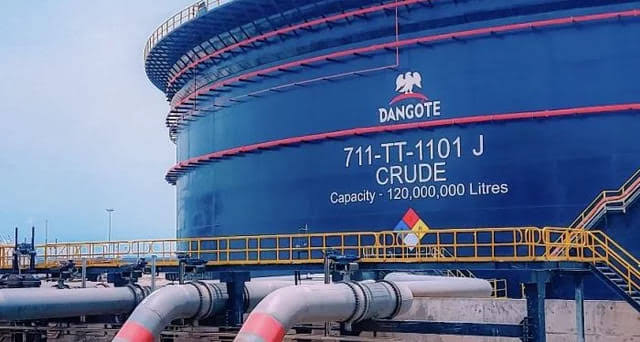
For ₦5,250, Nigerians could soon own a piece of the refinery that has reshaped the country’s fuel market.
News
Hate Speech, Threats During Campaigns Attract ₦10m Fine, 12 Months Jail – INEC
Hate Speech, Threats During Campaigns Attract ₦10m Fine, 12 Months Jail – INEC
The electoral commission says inflammatory rhetoric crosses into intimidation when it incites ethnic or religious hostility, as political actors ramp up campaign activities ahead of the 2027 general elections.
ABUJA, Nigeria – The Independent National Electoral Commission (INEC) has warned politicians and political parties against using abusive, inflammatory, or threatening language during campaigns for the 2027 general elections, cautioning that offenders risk heavy financial penalties and possible imprisonment under the Electoral Act 2026. INEC’s Chief Press Secretary and Media Adviser to its Chairman, Adedayo Oketola, in a telephone interview on Sunday, said campaign rhetoric crosses the legal threshold into electoral intimidation the moment it moves beyond robust partisan debate or policy critique and enters the realm of coercion, hate speech, or the threat of harm. He cited Section 96 of the Electoral Act 2026, which states: “A political campaign or slogan shall not be tainted with abusive language directly or indirectly likely to injure religious, ethnic, tribal or sectional feelings.” The law further prohibits “abusive, intemperate, slanderous or base language, insinuations, innuendoes designed or likely to provoke violent reaction or emotions” in political campaigns. According to Oketola, rhetoric becomes punishable intimidation when it incites ethnic, religious, or regional hostility through language explicitly designed to provoke violent emotions or target specific groups. He explained that campaigns transition into outright intimidation when they threaten force or violence—whether by directly or indirectly warning voters, candidates, or electoral officials of physical harm, economic reprisal, or social ostracisation to compel or suppress support for a candidate. He stressed that political campaigns must not create an atmosphere of fear calculated to deter voter turnout or disenfranchise specific demographics.
Oketola disclosed that Section 96(7) of the Electoral Act 2026 prescribes severe statutory penalties for offenders. Candidates convicted of abusive campaign offences face a maximum fine of ₦5 million or imprisonment for 12 months, while political parties found liable risk a fine of ₦10 million for the first offence, and ₦2 million for each subsequent violation. While clarifying that INEC is not a security agency, Oketola explained that Section 95 of the Electoral Act 2026 explicitly prescribes the security architecture for political rallies in relation to the operational roles of the Nigeria Police Force, the Nigeria Security and Civil Defence Corps (NSCDC), and other security institutions. He noted that beyond inter-agency security coordination, INEC is statutorily empowered to monitor political campaigns and enforce compliance with the Code of Conduct for Political Parties.
READ ALSO:
- Market Fire in Indonesia Kills 11, Including Six Children
- Three Women Killed, 10 Injured in Multiple Crash on Lagos-Ibadan Expressway Bridge
- Socialite Igho ‘Tiny’ Ubiribo Dies After Penis Enlargement Surgery
The warning comes amid a fresh wave of threats by political office holders against dissenting voters, as parties intensify preparations for the 2027 elections. Among the most prominent cases is that of Osun East Senator, Francis Adenigba Fadahunsi, who was invited and questioned by the Nigeria Police Force over a viral video in which he was heard telling All Progressives Congress (APC) supporters in Ilesa, “Until the day of election, when you see any Accord party member here in Ilesa, kill them.” Governor Ademola Adeleke rejected his media office’s subsequent clarification, describing the remarks as a national security threat and demanding his arrest. Fadahunsi later claimed the video was AI-generated and that his statement was metaphorical—a “call to kill by votes.” In the Federal Capital Territory, the Chairman of Kuje Area Council, Samuel Danjuma Shekwolo, stirred controversy after warning residents who do not support the APC to relocate ahead of 2027. Amnesty International Nigeria condemned the remarks as a “call to violence” and an attack on freedom of association. In Borno State, the Commissioner for Youth and Sports Development, Sainna Buba, threatened that those who refuse to support the APC in 2027 “will be flogged,” while separately warning that anyone who crossed the ruling party would have a finger broken. In Yobe State, the state chairman of the APC, Alhaji Mohammed Gadaka, triggered widespread condemnation after urging married women to leave their husbands if the men stood in the way of their voting for the party—promising to personally settle the “new bride price” for any woman who ended her marriage on account of her loyalty to the party. He later withdrew the remark following public outcry. Other flashpoints include Kebbi State, where the Chairman of Gwandu Local Government Area, Alhaji Atiku Ahmad Mandiya, told supporters that anyone who spoke against Governor Nasir Idris “should be dealt with,” and Ebonyi State, where Governor Francis Nwifuru warned newly inaugurated local government chairmen that they would be removed from office if they failed to deliver their councils to the APC in 2027.
The International Republican Institute (IRI), in a pre-election assessment of Nigeria’s democratic environment, warned that persistent insecurity and election-related political violence are the biggest threats to Nigeria’s 2027 general elections. IRI President Daniel Twining stressed that where voters, candidates, and observers cannot participate without fear of violence or intimidation, technical improvements and legal safeguards have only limited effect. The IRI mission further warned that economic hardship, insecurity, and declining public trust in INEC pose significant threats to the credibility of the 2027 elections. It said grievances over the management of the 2023 presidential election continue to shape perceptions of INEC, while uncertainty over the implementation of new electoral provisions could deepen distrust. The mission recommended that INEC conduct more robust stress tests of its systems and mock elections to identify potential challenges with the Bimodal Voter Accreditation System (BVAS) and the INEC Result Viewing (IReV) portal. The National Peace Committee, through its Election Security Information Hub, recorded 2,510 election-related security incidents across the country in just 14 months, affecting at least 70 off-cycle elections, bye-elections and reruns since 2023. Zamfara, Borno, Kaduna, Niger, Benue and Plateau were identified as the states worst affected, with banditry, kidnapping and terrorism posing continuing threats to electoral activities.
Oketola insisted that electoral integrity cannot be preserved by INEC alone, describing it as a collective stakeholder duty. “The Nigeria Police Force and other security agencies have a clear duty to prevent the breakdown of law and order during political campaigns,” he said. He added that the media must actively play its watchdog role by calling out purveyors of incendiary statements, while traditional and religious leaders must also wade in, using their moral authority to encourage politicians to eschew inflammatory rhetoric and avoid provoking violence in the country. “Political campaigns should be platforms of competing ideas, not theatres of war,” Oketola said.
Hate Speech, Threats During Campaigns Attract ₦10m Fine, 12 Months Jail – INEC
-

 Auto3 days ago
NAJA 19th Auto Awards: Industry’s best to battle for honours December 3
-

 Politics3 days ago
15 northern states may collapse if fuel subsidy returns, OAU professor warns Atiku
-

 metro2 days ago
APC rally: Suspected thugs attack journalists, smash Radio Nigeria vehicle in Kano
-
 metro3 days ago
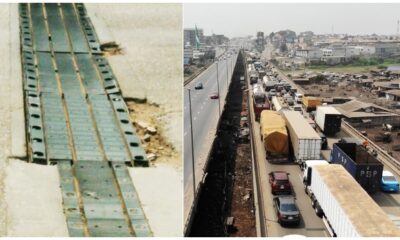
Lagos-Ibadan Expressway: FG begins Kara Bridge repairs Tuesday, deploys traffic agencies
-

 Auto3 days ago
Jetour Takes Rely R8 Premium Pickup to Abuja in Major FCT Debut
-
 Politics2 days ago
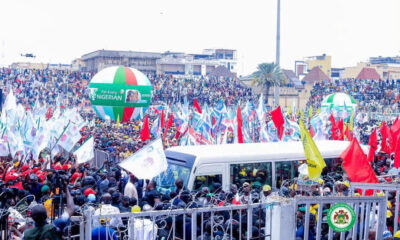
Kano Political Earthquake: Kwankwaso Loyalists Dump NDC, Defect to APC in Major 2027 Blow
-
 Politics2 days ago
Peter Obi, Others Challenging Tinubu Cannot Transform Nigeria — Datti Baba-Ahmed
-
 Education2 days ago
FG Opens N2.5bn Grant Window For 50 Student Innovators Under “Next Moonshot Initiative”