

metro
Just in: Borno finance commissioner found dead in his room
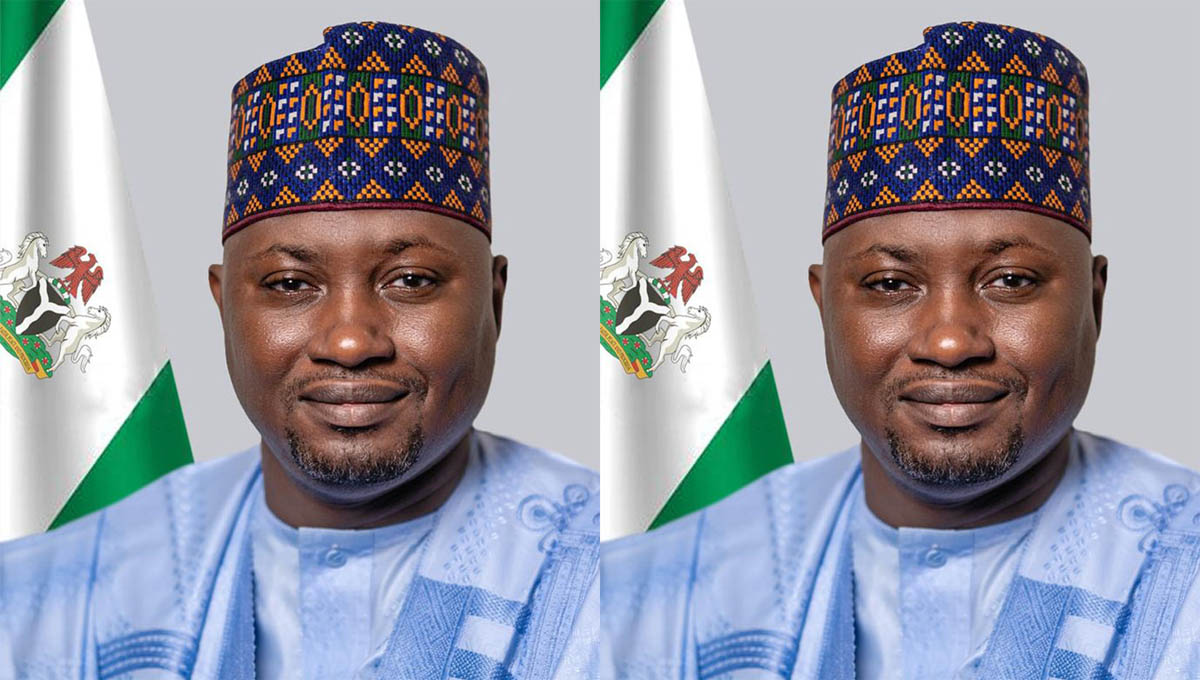
Just in: Borno finance commissioner found dead in his room
Details of his death are still sketchy, but sources familiar with the incident told our correspondent that the commissioner died inside his room on Monday morning.
The deceased was said to have exceeded the time he usually comes out in the morning.
His door was then forced open where his corpse was found.
“Oga is no more, he died early this morning,” the source told Daily Trust.
Borno State Government wishes to announce the death of Ahmed Ali Ahmed, the State Commissioner of Finance.
READ ALSO:
- Germany donates 100,000 Mpox Vaccine doses to combat outbreak in Africa
- Nigerian airlines can’t survive current economic crisis – Fairfax Africa boss alerts
- Shiites have declared war, says FCT police commissioner
The statement from the Commissioner of Information and Internal Security, Professor Usman Tar, in Maiduguri indicates that the burial is slated for 5:00 p.m. today at the family house of the late commissioner in Damboa Road behind Indimi’s residence.
In a statement, Borno State Government confirmed the death of Ahmed.
The statement signed by the Commissioner of Information and Internal Security, Professor Usman Tar, said the burial is slated for 5pm at the family house of the late commissioner in Damboa Road behind Indimi’s residence.
Governor Babagana Zulum has lost two of his cabinet members within one year.
Just in: Borno finance commissioner found dead in his room






metro
Akpabio Links Okowa’s APC Defection to EFCC Investigation
Akpabio Links Okowa’s APC Defection to EFCC Investigation
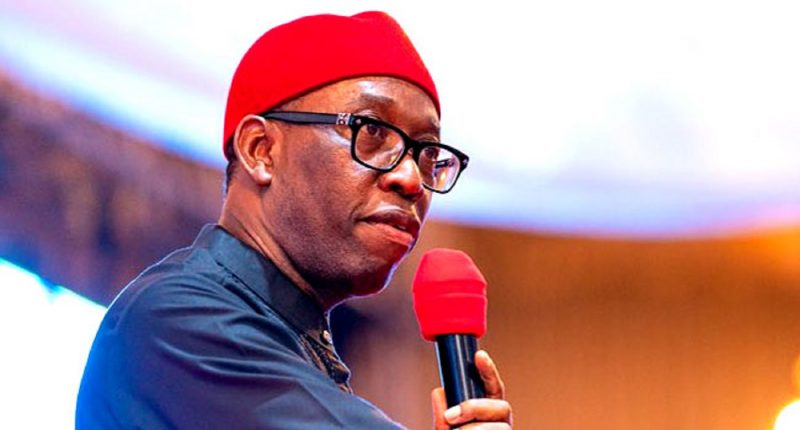
Senate President Godswill Akpabio has alleged that former Delta State Governor Ifeanyi Okowa joined the All Progressives Congress (APC) partly because of concerns over an ongoing investigation by the Economic and Financial Crimes Commission (EFCC).
Akpabio made the allegation while discussing political developments in Delta State in an audio recording involving Sandra Duru, which was circulated publicly and reported by Nigerian media organisations.
According to reports quoting the recording, Akpabio said Okowa’s defection to the APC was influenced by fears surrounding the corruption allegations against him, rather than solely by political considerations.
The Senate President was also quoted as saying that Okowa was not involved in discussions surrounding the emergence of the current APC leadership, claiming that key decisions had already been taken before the former governor joined the party.
Akpabio further claimed that he played a role in helping Okowa secure the APC senatorial ticket for Delta North ahead of the 2027 general elections.
The allegation has emerged against the backdrop of the EFCC investigation into Okowa, which dates back to his tenure as Delta governor between 2015 and 2023.
Okowa was arrested and questioned by the EFCC in November 2024 over allegations involving the management of funds accruing to Delta State through the 13 per cent derivation allocation from the Federation Account.
The investigation has also focused on alleged investments and assets associated with the former governor, including interests linked to the UTM Floating Liquefied Natural Gas (FLNG) project and properties in Asaba and Abuja.
Okowa has denied wrongdoing and previously said he was not afraid of being investigated, maintaining that funds belonging to Delta State were used appropriately during his administration.
The former governor’s political move to the APC did not bring the EFCC investigation to an end.
READ ALSO:
- Barau Sacks Aide Over ‘Abba Must Go’ Social Media Posts
- Niger Miners’ Deaths: FG Suspends 21 NSCDC Officers, Releases Names
- Adeyanju Rejects Payment for Niger Miners’ Probe, Vows to Expose Any Cover-Up
The anti-graft agency has previously stated that Okowa’s defection to the APC would not stop its investigation. In a more recent development, Okowa visited the EFCC’s Lagos office in June 2026 amid the continuing investigation.
Reports at the time said the visit was connected with efforts to secure the release of his international passport to enable him to travel abroad for medical treatment. There was no indication that the visit amounted to a fresh arrest.
The EFCC has maintained that the investigation remains active. Its Director of Legal and Prosecution, Sylvanus Tahir, SAN, was quoted as saying that the case was still undergoing investigation and that the commission would act based on its findings.
The continuing investigation is significant in assessing the context of Akpabio’s latest allegation, but the EFCC’s position does not establish that the investigation was the reason for Okowa’s defection.
Okowa joined the APC in April 2025, alongside his successor, Delta State Governor Sheriff Oborevwori, several commissioners, local government chairpersons and other political leaders who previously belonged to the Peoples Democratic Party (PDP).
At the time, Okowa explained the decision in terms of Delta State’s relationship with the Federal Government.
He said the state needed to establish stronger links with the Federal Government in Abuja because of its contribution to the national economy and the resources available at the federal level.
The former governor had previously served as the PDP’s vice-presidential candidate alongside Atiku Abubakar in the 2023 presidential election.
His subsequent move to the APC represented a significant political realignment in Delta State and brought him into the same party as Governor Oborevwori and other former PDP leaders in the state.
Okowa has since secured the APC ticket for the Delta North senatorial contest scheduled for the 2027 elections.
Akpabio, who represents Akwa Ibom North-West Senatorial District, has also become involved in the political arrangements surrounding Okowa’s new role within the APC.
The Senate President’s latest comments have nevertheless raised questions about the circumstances surrounding the former governor’s defection, particularly because the EFCC investigation remains unresolved.
However, no public evidence has established that Okowa joined the APC in order to stop or avoid prosecution by the EFCC. Akpabio’s statement is an allegation about the former governor’s motivation, while Okowa’s publicly stated reason for joining the APC centred on the political and developmental interests of Delta State.
The allegations also come as political parties and their leading figures intensify preparations for the 2027 general elections, with defections and alliances continuing to reshape party structures across the country.
For now, the established position is that the EFCC investigation involving Okowa remains ongoing, while the reason Akpabio has attributed to the former governor’s APC defection remains his own claim.
The outcome of the EFCC investigation and any future response from Okowa could provide further clarity on the issues surrounding the allegations.
Akpabio Links Okowa’s APC Defection to EFCC Investigation
metro
Niger Miners’ Deaths: FG Suspends 21 NSCDC Officers, Releases Names
Niger Miners’ Deaths: FG Suspends 21 NSCDC Officers, Releases Names
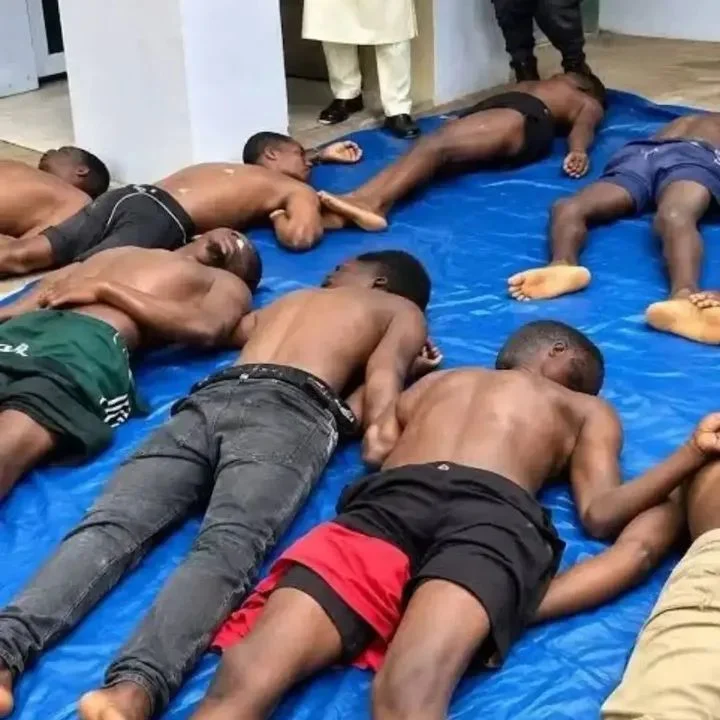
The Federal Government has suspended 21 officers of the Nigeria Security and Civil Defence Corps (NSCDC), including the Niger State Commandant, Suberu Siyaka Aniviye, following the deaths of 37 suspected illegal miners in the Corps’ custody in Minna, Niger State.
The suspension followed President Bola Ahmed Tinubu’s directive for a full, transparent and unhindered investigation into the incident, which has triggered public concern over custodial conditions, treatment of detainees and accountability within security agencies.
The Minister of Interior, Olubunmi Tunji-Ojo, announced the suspension of 20 additional officers on Saturday, September 19, bringing the total number of suspended NSCDC personnel connected with the incident to 21.
The officers suspended are:
- Suberu Siyaka Aniviye – Niger State Commandant, NSCDC.
- SC Usman Isah Ndamaka – Officer-in-Charge, Station Guard.
- ASCI Hassan Mohammed – Station Guard.
- CCA Bala Mohammed – Station Guard.
- CSC Oluwadare Sunday – Arresting Officer/Officer-in-Charge, Investigation.
- DCC Obafemi Elvis – Arresting Officer.
- CSC Annas Shitto Lamino – Arresting Officer.
- DCC Philip Ajayi – Head, Intelligence/Investigation.
- ACC Barr. Stephen Tsado – Officer-in-Charge, Legal.
- ASCI Alhassan Mohammed – Night Duty Officer.
- IC Abdullahi Sale – Guard Duty.
- IC Mohammed Sonfada – Guard Duty.
- CAI Liman Abubakar – Guard Duty.
- CAI Bala Usman – Guard Duty.
- IC Mohammed Jiya – Guard Duty.
- DSC Isah Suleiman – Guard Duty.
- CAI Ahmed Wushishi – Guard Duty.
- IC Sale Adamu – Guard Duty.
- IC Haruna Mohammed – Guard Duty.
- ASCI Aliyu Sallah – Guard Duty.
- CAI Isah Sanusi – Guard Duty.
The suspensions are administrative measures pending the outcome of the investigation and do not in themselves establish criminal or disciplinary guilt.
The Federal Government has also constituted a 10-member independent committee to establish what happened, identify the deceased and investigate their arrest, detention and deaths.
The committee is expected to determine the cause and circumstances of the deaths and establish whether there was negligence, misconduct, complicity or other wrongdoing. It is also mandated to recommend appropriate action and compensation where applicable.
The panel is chaired by retired Department of State Services Deputy Director-General Jonathan Kure, while Professor Isa Hayatu Chiroma, SAN, former Director-General of the Nigerian Law School, serves as secretary.
READ ALSO:
- Adeyanju Rejects Payment for Niger Miners’ Probe, Vows to Expose Any Cover-Up
- Kano TikToker Remanded Over Alleged Defamation of Politician
- Trump Bans CNN, MS NOW, Politico From White House Over ‘Fake News’
Other members include retired AIG Hosea Hassan Karma, Professor Olayinka Buhari, representatives of the Minna Emirate Council and Niger State Government, Liman Sulaiman of the Miners Association of Nigeria, human rights lawyer Deji Adeyanju, journalist Zainab Suleiman Okino of Blueprint Newspaper and public affairs analyst Dr George Agbakahi.
The committee has two weeks to complete its assignment and submit its report to the Minister of Interior. It can visit relevant locations, access documents and facilities, receive memoranda from members of the public and co-opt experts where necessary.
The deaths occurred after NSCDC personnel carried out operations against suspected illegal mining around the M.I. Wushishi and Lukoto areas of Niger State on September 15 and 16.
The NSCDC said scores of suspected illegal miners were arrested during the operation, with various exhibits recovered. The detainees were subsequently held at an NSCDC facility in Minna.
The number of people detained has, however, emerged as one of the issues requiring clarification.
Niger State Governor Mohammed Umaru Bago said 67 artisanal and suspected illegal miners were detained in NSCDC cells before 37 died. He said the detainees were held in three cells and that investigators were examining overcrowding and possible exposure to hazardous substances among the possible explanations for the deaths.
The governor stressed that the actual cause of death has not been established and called for urgent autopsies, medical examinations and forensic analysis.
He said medical, forensic and biological teams had been deployed to collect samples and examine evidence that could help determine what happened.
The state government is also examining whether people detained during the operation were all involved in illegal mining and whether some of those arrested were simply working around the affected areas.
The Nigeria Police Force has separately commenced an investigation into the deaths.
READ ALSO:
- Jetour Unleashes F700 Hybrid Pickup as Abuja Experience Begins Tuesday
- “She Wanted to Stay Single”: Rema Opens Up About Rejection That Inspired Hit Song ‘Oh No’
- Ronaldo Included in Portugal’s Nations League Squad as Jorge Jesus Begins New Era
Police authorities have secured the scene in an effort to preserve evidence and prevent the removal or alteration of material that could assist investigators. The Inspector-General of Police, Olatunji Disu, inspected the location alongside other officials as investigators began efforts to establish what happened.
The Federal Government has also deployed mining and technical experts to Niger State to assist with the investigation.
The experts are expected to establish whether activities at the mining sites, exposure to hazardous substances or other environmental and technical factors could have contributed to the deaths.
The NSCDC initially said the deaths could have been linked to a suspected disease outbreak, but the actual cause has not been established and medical and laboratory examinations are expected to provide further evidence.
Survivors, however, have given accounts raising concerns about the conditions inside the detention facility.
One survivor, Dauda Shehu, reportedly said a large number of detainees were packed into a poorly ventilated cell and began struggling to breathe.
The accounts have raised the possibility of suffocation linked to overcrowding, although this has not been established as the cause of death.
Governor Bago has also said investigators are examining possible exposure to poisonous or hazardous substances associated with mining activities as another line of inquiry.
The competing explanations have made the forensic investigation particularly important, with authorities expected to establish whether the deaths resulted from illness, suffocation, poisoning, environmental exposure or another cause.
The deaths sparked protests in Minna, with demonstrators gathering around the NSCDC headquarters and demanding answers.
Security personnel deployed to the area used tear gas to disperse protesters as the situation became tense. The unrest prompted the Niger State Government to impose a curfew in the state capital.
The incident comes amid intensified government efforts to tackle illegal mining in Nigeria, an activity authorities have linked to environmental degradation, destruction of farmland and other security concerns.
The Federal Government has maintained that the campaign against illegal mining will continue but that enforcement must be carried out lawfully and with respect for human dignity.
Human rights lawyer Deji Adeyanju, who is a member of the Federal Government’s investigative committee, has rejected any payment or honorarium for his participation, describing his involvement as a national duty.
Adeyanju has also said he would personally bear expenses connected with his participation and vowed to oppose any attempt to compromise the investigation, suppress evidence or shield anyone found responsible.
With the 21 NSCDC officers suspended, the police preserving evidence, forensic examinations underway and technical experts deployed, investigators are expected to establish the identities of the deceased, the number of people detained, the conditions in which they were held, the medical attention they received and the precise events that preceded the deaths.
Until those investigations and medical examinations are completed, the definitive cause of death of the 37 miners remains unresolved.
The outcome of the inquiry could determine whether disciplinary measures, criminal proceedings or other sanctions are warranted against any individual or institution found to have violated the law or failed in its responsibilities.
Niger Miners’ Deaths: FG Suspends 21 NSCDC Officers, Releases Names
metro
Adeyanju Rejects Payment for Niger Miners’ Probe, Vows to Expose Any Cover-Up

Adeyanju Rejects Payment for Niger Miners’ Probe, Vows to Expose Any Cover-Up
Human rights lawyer and activist Deji Adeyanju has rejected any payment, stipend or honorarium for his participation in the Federal Government’s investigation into the deaths of 37 suspected illegal miners in Nigeria Security and Civil Defence Corps (NSCDC) custody in Niger State, describing the assignment as a national duty.
Adeyanju, who was appointed to the 10-member independent committee constituted by the Federal Government, said he accepted the role primarily to ensure that the interests of the victims are represented and that the circumstances surrounding their deaths are fully established.
Adeyanju urged the government not to make any financial provision for members of the committee, saying he would personally pay for his accommodation, transportation and other expenses arising from his participation in the investigation.
He also pledged not to tolerate any attempt to compromise the process, suppress evidence or shield anyone found responsible for the deaths.
Adeyanju warned that any attempt to protect those responsible or suppress the truth would be exposed, stressing that the victims deserved justice.
His position came shortly after the Federal Government established the 10-member independent committee following President Bola Ahmed Tinubu’s directive for a comprehensive and transparent investigation into the incident.
The committee is chaired by retired Department of State Services (DSS) Deputy Director-General Jonathan Kure, while Professor Isa Hayatu Chiroma, SAN, former Director-General of the Nigerian Law School, serves as secretary.
Other members include retired Assistant Inspector-General of Police Hosea Hassan Karma, Professor Olayinka Buhari, representatives of the Minna Emirate Council and Niger State Government, Liman Sulaiman of the Miners Association of Nigeria, journalist Zainab Suleiman Okino of Blueprint Newspaper and public affairs analyst Dr George Agbakahi.
The panel has been directed to establish the identities of the deceased and examine the circumstances surrounding their arrest, detention and deaths. It is also expected to determine whether negligence, misconduct, complicity or other wrongdoing contributed to the incident and recommend appropriate action, including compensation where applicable.
READ ALSO:
- Kano TikToker Remanded Over Alleged Defamation of Politician
- Trump Bans CNN, MS NOW, Politico From White House Over ‘Fake News’
- Jetour Unleashes F700 Hybrid Pickup as Abuja Experience Begins Tuesday
The committee has two weeks to complete its assignment and submit its report to the Minister of Interior, Olubunmi Tunji-Ojo. It has also been authorised to access relevant documents and facilities, visit locations connected to the incident, receive memoranda from members of the public and co-opt experts where necessary.
The government has separately suspended 20 NSCDC officers in connection with the deaths, in addition to the earlier suspension of the Niger State NSCDC Commandant, Suberu Aniviye, pending the outcome of the investigation.
The deaths occurred after suspected illegal miners were arrested during enforcement operations in the M.I. Wushishi and Lukoto areas of Niger State on September 15 and 16.
The exact number of people held before the deaths has become part of the controversy, with conflicting accounts emerging over the number of detainees and the conditions in which they were held.
The cause of death remains officially unresolved.
The NSCDC initially said a suspected disease outbreak might have been responsible and that the bodies were sent for medical examination. However, survivors have provided accounts suggesting that overcrowding and poor ventilation may have contributed to the deaths.
One survivor, Dauda Shehu, reportedly said detainees were packed into a poorly ventilated cell and that those inside began struggling to breathe before some of them collapsed. He also alleged that detainees called for help as the situation deteriorated.
Another survivor reportedly alleged that a substance resembling perfume was sprayed inside the cell shortly before detainees began experiencing difficulties. The allegation has not been independently established and remains among the issues that investigators will have to examine.
The conflicting accounts have heightened demands for an independent determination of the cause and circumstances of the deaths, rather than reliance on preliminary explanations.
The incident has also triggered public protests in Minna, the Niger State capital, with residents demanding answers and accountability over the deaths. Security authorities moved to contain the unrest, while a curfew was imposed following disturbances.
The Federal Government has called for calm and said that anyone found culpable would face appropriate consequences, while insisting that the investigation should be allowed to establish the facts before conclusions are reached.
The government’s response has also included efforts to preserve potential evidence connected to the incident, while the suspended NSCDC personnel remain subject to investigation.
The deaths have generated broader concerns about custodial conditions, treatment of detainees and accountability within security agencies, alongside the government’s continuing campaign against illegal mining.
Illegal mining remains a major challenge in several parts of Nigeria, with authorities raising concerns about environmental degradation, loss of government revenue and the activities of criminal networks associated with illegal mining operations.
However, the investigation into the Niger State deaths is focused specifically on what happened to the people after they were arrested and placed in NSCDC custody.
For Adeyanju, the priority is to ensure that the committee’s work is not compromised by political, institutional or financial considerations.
His decision to reject payment means he will participate without accepting a stipend or honorarium from the government, while personally covering expenses associated with his role.
The committee’s findings are expected to address the conditions under which the detainees were held, the medical attention they received, the events immediately preceding the deaths, the precise cause of death and whether any individual or institution bears responsibility.
Until those findings are released, the circumstances surrounding the 37 deaths in NSCDC custody remain subject to investigation.
Adeyanju has said he will use his position on the committee to represent the victims’ interests and oppose any attempt to suppress the truth as the Federal Government seeks to determine what led to the tragedy and whether anyone should be held accountable.
Adeyanju Rejects Payment for Niger Miners’ Probe, Vows to Expose Any Cover-Up
-
 metro3 days ago
Niger Mosque Abductions: Terrorists Execute 30 of 500 Captive Muslim Worshippers
-
 Business2 days ago
Fuel Prices Climb to ₦1,500 per Litre Across Nigeria, Sparking Calls for Urgent Action
-
 News2 days ago
OAU Investigates Death of Final-Year Student as Police Begin Probe
-
 News1 day ago
ECOWAS Biometric Card Expands as Seven Countries Begin Rollout
-
 metro3 days ago
US-Based Nigerian Lawyers Disbarred: Full List of Fraud, Theft and Misconduct Cases
-

 Politics2 days ago
Aisha Buhari Visits Atiku Amid Opposition Coalition Activities
-

 Business2 days ago
NCAA Moves Against Airlines Over Rising Flight Delays
-
 Interview2 days ago
He Does Not Lose Elections”: Abdulmumin Jibrin Predicts 65% Landslide for Tinubu in 2027