

metro
Why I drugged my wife for dozens of men to rape – 70-year-old man under trial

Why I drugged my wife for dozens of men to rape – 70-year-old man under trial
A man on trial in France for drugging his wife and inviting dozens of men to r@pe her over a decade told a criminal psychologist that his wife was to blame for his actions because she wouldn’t go swinging with him.
Dominique Pelicot, 71, was excused from sitting through the hearing today, September 9, after his lawyer told the trial judge that he had suffered “medical problems” over the past 48 hours for which he had not received “adequate treatment”.
But psychologist Annabelle Montagne told the court in Avignon this morning that she interviewed the retired electrician in December 2020, a month and a half after he was taken into custody, where he admitted to carrying out the campaign of abuse of his wife Gisele.
The psychologist recounted: “Pelicot said, ‘My wife and I had a discussion about swinging but she didn’t agree so I drugged her’.”
Montagne said Pelicot maintained he loved his wife, but she added: “He sees his partner as an object to satisfy his sexual and narcissistic needs. His wife is then a partial object and no longer an object of total love.”
It comes as another prison psychologist this morning told the court that Pelicot had a “split personality”, lacked empathy and inherited the temper of his father, who was said to be a violent abuser.
She also revealed Pelicot maintains the sickening abuse of his wife would have continued if he had not been arrested and complained that his life had been ruined by the criminal charges brought against him.
The disturbing revelations into Pelicot’s mind were revealed before his two sons, David and Florian, took to the stand to give evidence against their father.
READ ALSO:
- Osimhen tips Ademola Lookman to win African Player of the Year Award
- Hackers laundered $49m Ethereum in one week using Tornado cash – Report
- Man kills grandfather, uncle in Ibadan
Psychologist Marianne Douteau this morning told the court how her client lamented his arrest, complaining that the case against him had ruined his life and that he and his wife could have continued in a happy marriage had his misdeeds not been discovered.
Douteau said: “(Pelicot) complains that this criminal case against him has destroyed his life.
“He claims everything could have continued as before if he had been arrested. He said: ‘Gisele would not have known anything, we would have continued to be happy”.”
Madame Douteau subsequently told the court of several major events in Pelicot’s upbringing, explaining that he revealed in a lengthy February 2021 interview with her that he was raped by a hospital nurse when he was aged just nine years old.
Meanwhile, Pelicot’s father Denis was said to be a vicious wife-beater who sent his son out to work from the age of 14 and took 80 per cent of his wages. His parents also took in a young girl, whom Denis is said to have abused.
The psychologist concluded that Pelicot had inherited a personality like that of his father – angry, stubborn and impulsive.
She said: “Dominique Pelicot comes from a troubled family in which young children were abused.
“[Pelicot] has a two-sided personality; he is a patriarch but he is also irresponsible and manipulative. Behind closed doors he does not respect limits.
“He has a split personality between the person he wants to be and the person he is.”
“He does not show any empathy – but he is not inauthentic [in his expressions of love for his wife],” she concluded.
The psychologist also explained how Pelicot admitted he was very sexually demanding and routinely sought out sex on the internet.
He told her: “I went on the internet every day, I was constantly on sites offering wife-swaps.”
The psychologist told how Madame Pelicot was cut off from her support network in Paris after the couple moved to the south of France in 2013 for their retirement, at which point Dominique Pelicot ramped up his heinous campaign of abuse until his eventual arrest in 2020.
Pelicot fell in love with Gisele, whom he considered “a saint,” when they were 18-year-olds and they married just two years later, setting up a home in the Paris region.
READ ALSO:
- Man electrocuted while attempting to vandalise transformer in Lagos
- High electricity will kill businesses – APC chieftain, Igbokwe, claims to spend N20,000 daily
- Many states to experience 3-day thunderstorms, rains from Monday – NiMet
They both recall having a happy marriage, although she had an affair with a work colleague about 14 years after tying the knot while he also engaged in extramarital adventures.
Pelicot trained as an electrician and worked for French energy giant EDF, but in the early 2000s decided to retrain and start a new career as an entrepreneur in real estate.
He divorced his wife in 2004 in what he described as a “strategic move” to shield her from huge debts he built up in a failed business venture to become an estate agent, with the couple forced to borrow cash from various different sources.
Despite their monetary issues, the couple remarried in 2007 to huge fanfare, with Gisele’s stable income from her position as a manager in a Paris-based company meaning they were ultimately able to make ends meet.
But the picture of an idyllic marriage painted by Dominique Pelicot was torn down by his brother along with his sons David and Florian, who described their dad as an angry liar who could not stand to be contradicted and flew off the handle when he was confronted with his failings.
The case, heard in the town of Avignon in France’s Provence, has appalled anyone who has listened to how former electrical engineer Dominique Pelicot abused his wife over a decade.
Madame Pelicot, 72, last week faced down the 51 men – including her husband – who have been accused of raping her, all of whom were stuffed into the Vaucluse Criminal Court each day as proceedings continued.
In a three-hour testimony last week, the grandmother-of-seven described the moment she learned from police officers how she was drugged unconscious and then raped by strangers as she laid motionless on the marital bed, while her husband watched on, recording the abuse on camera for his own personal pleasure.
READ ALSO:
- Horrific as man burns his mother alive in Warri
- Mass resignation: Soldiers free to quit service, says Nigerian Army
- We’re owed 30 months allowances, say Customs, Immigration borders officers
She told the court: “I was subjected on the altar of vice. It’s a dead woman on a bed. This isn’t a bedroom, it’s an operating theatre. They treat me like a garbage bag, a rag doll. These aren’t sex scenes, these are rape scenes, it unbearable.”
In her evidence, the couple’s only daughter Caroline Peyronnet told the court last week how her world fell apart when her mother called her to inform her of his crimes. Her agony was compounded when detectives discovered Mr Pelicot had also taken photographs of Caroline lying motionless on a bed in her mother’s underwear.
Caroline Peyronnet, 45, described her father as “one of the worst sexual predators of the last 20 years.”
The trial has heard that Pelicot’s perversion was only discovered after he was arrested for taking photos up women’s skirts at a supermarket near the couple’s home in the pretty village of Mazan, in the shadow of Mont Ventoux in September 2020.
A police search of his computer discovered 20,000 homemade films and photographs of men he met on the internet raping his wife dating back to 2011.
Detectives traced 50 of some 84 men that Pelicot had met on a now-defunct website and invited to his home to carry out the abuse.
They discovered that Pelicot routinely put powerful sedatives in his wife’s drink and food to render her unconscious for when her abusers arrived at the family home under cover of darkness.
Pelicot urged the men to sneak into the house and undress in the kitchen to leave no trace. Then, he turned on the camera and filmed as each man abused his wife, before meticulously filing and cataloguing the home moves under various skin-crawling titles.
The men, all from the Provence area of the south of France, are aged between 26 and 73 and include a fireman, a nurse, a civil servant, a plumber, a soldier and a journalist.
Detective traced 50 of these men and together with Pelicot, charged them all with r@pe.
About 16 of the accused, including Pelicot, have admitted the offence. But 35 maintain they are innocent, with one man telling police he believed Gisele Pelicot had consented as her husband was present.
Pelicot faces up to 20 years in jail. The other men face shorter sentences if found guilty.
The trial is set to last until December.
Why I drugged my wife for dozens of men to rape – 70-year-old man under trial









metro
Five Arraigned Over Kidnapping of 20 Prospective NYSC Members in Imo
Five Arraigned Over Kidnapping of 20 Prospective NYSC Members in Imo
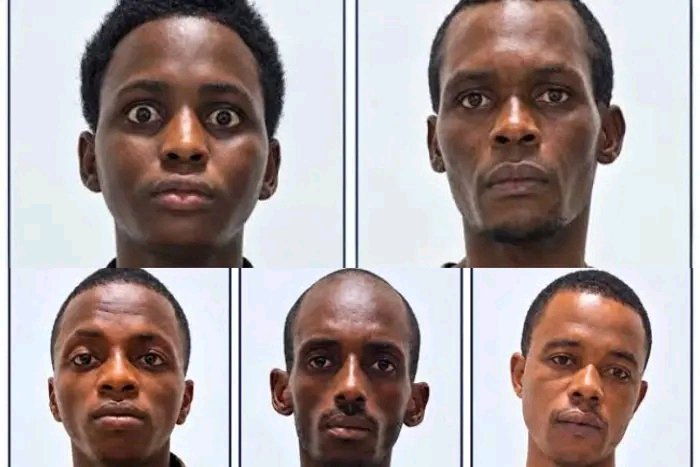
The Department of State Services (DSS) has arraigned five suspects before the Imo State High Court over the kidnapping of 20 prospective National Youth Service Corps (NYSC) members and four other individuals in two separate abduction cases that jolted the nation earlier this month.
The three prime suspects linked to the corps members’ abduction—Usman Aliyu (25), also known as Chonge; Babangida Aliyu (21); and Mohammed Ali (23), alias Smallie Pepper—were brought before the Oru Judicial Division of the High Court in Mgbidi on Tuesday. They face charges of conspiracy, hostage-taking, and unlawful possession of firearms. According to the charge sheet presented by the DSS, the trio and other suspects still at large allegedly abducted the prospective corps members on October 1, 2026, along the Owerri–Mgbidi–Onitsha Expressway. The victims were travelling from Ibadan, Oyo State, to their orientation camps in Abia and Akwa Ibom states when their vehicles were intercepted.
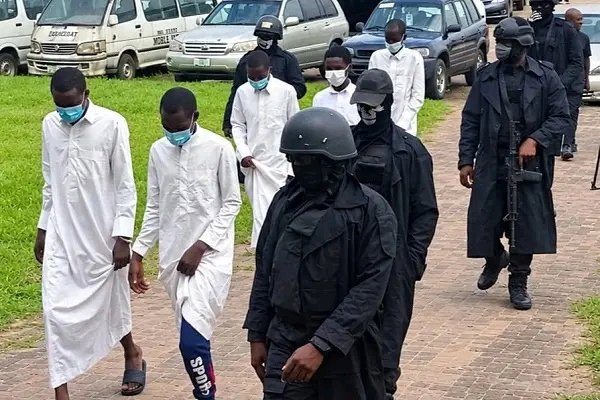
Prosecutors told the court that the defendants demanded a staggering ₦950 million ransom for the release of the 20 captives. It was further alleged that the suspects actually collected ₦48 million and an undisclosed amount in United States dollars before the victims regained their freedom. The DSS also accused the defendants of unlawfully possessing three AK-47 rifles, four magazines, a pistol, and 81 rounds of live ammunition. All five defendants pleaded not guilty to the charges when they were read to them. Following their plea, the trial judge, Justice Emeka Orafu, ordered that they be remanded at the DSS facility pending further proceedings. The case has been adjourned for hearing on various dates in late October.
In a related development, two other suspects—Aminu Haliru (27) and Tange Ibrahim (20), also known as Jijji—were arraigned in connection with the abduction of four individuals around Owerri and Mgbidi on October 4. The prosecution alleged that the pair and others at large collected ₦8 million for the release of those victims. They were also charged with illegal possession of an AK-47 rifle and a pump-action gun, with ₦1.8 million reportedly recovered from them.
The abduction of the 20 prospective corps members occurred in the early hours of October 1 along the busy Owerri-Onitsha road near Umunoha in the Mbaitoli Local Government Area of Imo State. The incident sparked widespread outrage and concern over the safety of young Nigerians travelling for national service. Following the abduction, security agencies launched a coordinated search-and-rescue operation. The Imo State Police Command had disclosed that its operatives located the kidnappers’ hideout using drone surveillance but faced difficulties accessing the camp after discovering it had been planted with improvised explosive devices (IEDs). Additional equipment, including bulldozers and armoured personnel carriers, was subsequently deployed. The victims were eventually released on October 7, exactly one week after their abduction. They were subsequently taken to the DSS hospital in Owerri for medical attention and debriefing.
While security agencies maintained that the victims were rescued through a joint operation involving the DSS, military, and police, the circumstances of their release have remained a subject of controversy. Some parents of the rescued corps members had earlier told journalists that they paid millions of naira in ransom to secure their children’s freedom, contradicting the official rescue narrative. Reports indicated that some families paid between ₦3 million and ₦6 million, with payments allegedly made in Ibadan and subsequently converted to dollars for delivery in Imo State. The Human Rights Writers Association of Nigeria (HURIWA) had called for transparency, questioning whether the victims were genuinely rescued by security forces or released after ransom negotiations. The Imo State Government, however, distanced itself from the ransom claims. The arraignment of the suspects marks a significant step in the investigation, as security agencies continue efforts to apprehend other members of the kidnapping gang who reportedly fled with gunshot wounds during the intelligence-led operations that led to the arrests in Port Harcourt and Aba between October 10 and 14.
Five Arraigned Over Kidnapping of 20 Prospective NYSC Members in Imo
metro
Ebola: Ogun Tracks 111 Travellers as FAAN Tightens Airport Surveillance

Ebola: Ogun Tracks 111 Travellers as FAAN Tightens Airport Surveillance
The Ogun State Government has stepped up surveillance and emergency preparedness, while the Federal Airports Authority of Nigeria has intensified health monitoring across airport operations following the confirmation of an Ebola Virus Disease case in the Federal Capital Territory.
Ogun said it had identified and monitored 111 persons of interest linked to travel from high-risk countries, while assuring residents that no Ebola case had been recorded in the state as of October 21, 2026.
The parallel measures by the state government and FAAN underscore growing efforts to strengthen surveillance, improve early detection and prevent the spread of the potentially deadly disease following the reported case in Abuja.
Ogun State Commissioner for Health, Dr Tomi Coker, disclosed the state’s response in a statement on Wednesday, saying the government had been on heightened alert since Ebola was declared in the Democratic Republic of the Congo in March 2026.
According to her, the 111 persons identified for monitoring had completed the required surveillance period and were subsequently discharged from follow-up.
Coker said the state’s Public Health Emergency Operations Centre was coordinating preparedness and response activities to ensure the prompt identification, reporting and management of suspected cases.
She added that the government had strengthened the capacity of Disease Surveillance and Notification Officers, port health officers, health educators, clinicians and community informants through training on appropriate response procedures.
Relevant national guidelines and protocols had also been adapted and deployed, while public sensitisation and infection prevention and control measures in healthcare facilities were being intensified.
The commissioner urged residents to remain vigilant, observe preventive measures and avoid panic or spreading unverified information.
She explained that Ebola is a serious viral disease capable of causing severe illness and death, with early symptoms that may resemble those of other common illnesses.
The symptoms include fever, severe weakness, fatigue, headache, muscle pain, sore throat, vomiting, diarrhoea and abdominal pain. Unexplained bleeding or bruising may also occur in some cases.
According to Coker, symptoms can develop between two and 21 days after exposure. However, she cautioned that experiencing these symptoms does not automatically mean a person has Ebola, stressing the importance of prompt professional medical assessment, particularly where there has been possible exposure or travel to a high-risk area.
She said the virus spreads through direct contact with the blood or body fluids of an infected person who has developed symptoms, the body of someone who has died from the disease, or materials contaminated with such fluids.
Meanwhile, FAAN said it had heightened health surveillance across airport operations in response to the confirmed case in Abuja.
In a statement issued on Tuesday by its Director of Public Affairs and Consumer Protection, Henry Agbebire, the authority said it was working with the Nigeria Centre for Disease Control and Prevention, Port Health Services, the Nigerian Civil Aviation Authority and other relevant agencies to support ongoing containment efforts.
FAAN noted that the early identification of the case and the commencement of contact tracing highlighted the importance of effective surveillance, established public health protocols and inter-agency collaboration in responding to potential health threats.
The authority said it would maintain heightened vigilance across airport operations and continue to coordinate with public health authorities to implement additional guidance and measures considered necessary to protect passengers, airport personnel and the wider public.
It also urged passengers, airport users, airlines and other stakeholders to remain calm, vigilant and cooperative with health officials.
Both the Ogun government and FAAN advised the public to rely on verified information from official health authorities and avoid circulating unconfirmed reports.
The developments highlight the importance of coordinated surveillance, timely reporting and public cooperation in containing potential outbreaks, particularly at points of entry and in communities with links to international travel.
metro
Atiku: US Lobbying Firm Raises Alarm Over Alleged Assassination Plot

Atiku: US Lobbying Firm Raises Alarm Over Alleged Assassination Plot
A United States-based lobbying and policy advisory firm, Von Batten-Montague-York, L.C., has reportedly expressed concern over allegations of a possible threat to the life of former Vice-President Atiku Abubakar, according to reports attributed to the firm.
The allegation, which has emerged amid growing political activity ahead of the 2027 general elections, was reportedly raised by Timi Frank, a former Deputy National Publicity Secretary of the All Progressives Congress (APC), who has called on US President Donald Trump and other international leaders to pay attention to concerns over Atiku’s safety.
Frank has alleged that the former vice-president could face threats to his life and political freedom. However, the claim remains an allegation and has not been independently substantiated by publicly available evidence.
According to the reports, Von Batten-Montague-York, a lobbying firm reportedly engaged by Atiku for government affairs and strategic advisory services in the United States, intends to bring the concerns to the attention of US officials, including members of Congress and the Trump administration.
The reported move does not, in itself, establish that an assassination plot exists or that US authorities have confirmed the allegations. No independently verified evidence presented in the reports establishes that President Bola Tinubu or his administration is involved in any plan to harm Atiku.
The APC Presidential Campaign Council has rejected the allegation, insisting that Tinubu and the council have no involvement in any plot to assassinate Atiku or any other opposition figure.
The council’s spokesperson, Dele Alake, reportedly challenged Frank to provide evidence to support his claims, maintaining that such a serious allegation should not be treated as established fact without credible proof.
The council also called for any information concerning a genuine threat to be brought before the appropriate security agencies for investigation. It reportedly disputed claims that security personnel attached to Atiku had been withdrawn and maintained that the former vice-president remained under the protection of the relevant authorities.
According to statements attributed to the council, Tinubu had directed security agencies to strengthen protection for political candidates ahead of the 2027 elections. These assurances, however, do not independently resolve the specific allegations raised by Frank.
Frank’s appeal has renewed debate over the security of opposition politicians as preparations for the next general election gather momentum. He has urged international leaders and institutions to engage with the Nigerian government and seek assurances regarding the safety of opposition figures.
The lobbying firm’s reported intention to raise the matter with US officials has also drawn attention to the possibility of international scrutiny of concerns about political security in Nigeria. However, there is no independently confirmed information establishing that US authorities have opened a formal investigation into the alleged plot.
The claims and counterclaims have yet to establish that an assassination plot exists or identify any verified perpetrators. Any credible evidence of a threat to Atiku’s life would need to be assessed by the appropriate security agencies, while allegations of responsibility should be supported by verifiable evidence.
Atiku, a former vice-president and prominent opposition politician, remains a significant figure in Nigeria’s political landscape ahead of the 2027 elections. The controversy highlights the need for transparent investigation of credible security threats and careful distinction between allegations, official responses and independently established facts.
Atiku: US Lobbying Firm Raises Alarm Over Alleged Assassination Plot
-

 metro3 days ago
SERAP Sues INEC Over ₦126bn Electoral Funds, Demands Full Accountability
-

 News2 days ago
FG Challenges World Bank’s 124% Debt-to-Revenue Warning, Cites Rising Income
-

 metro2 days ago
NAFDAC Probes Corps Member’s Death at Enugu Camp as Fake Drug Claims Emerge
-

 Politics2 days ago
Buhari Feared Tinubu Presidency, Resisted Pressure to Back Him – Baba-Ahmed Claims
-

 metro3 days ago
Okonjo-Iweala: My Mother Was Kidnapped After I Uncovered $2.4bn Subsidy Fraud
-

 metro15 hours ago
Army Major, Soldiers Killed in ISWAP Ambush in Yobe State
-

 Entertainment2 days ago
Nollywood Mourns as Actress, Beauty Queen Tenia Abraham Dies at 32
-

 metro2 days ago
Ogun House Fire Horror: Husband Arrested After Wife Dies Following Domestic Dispute