

News
We’re owed 30 months allowances, say Customs, Immigration borders officers
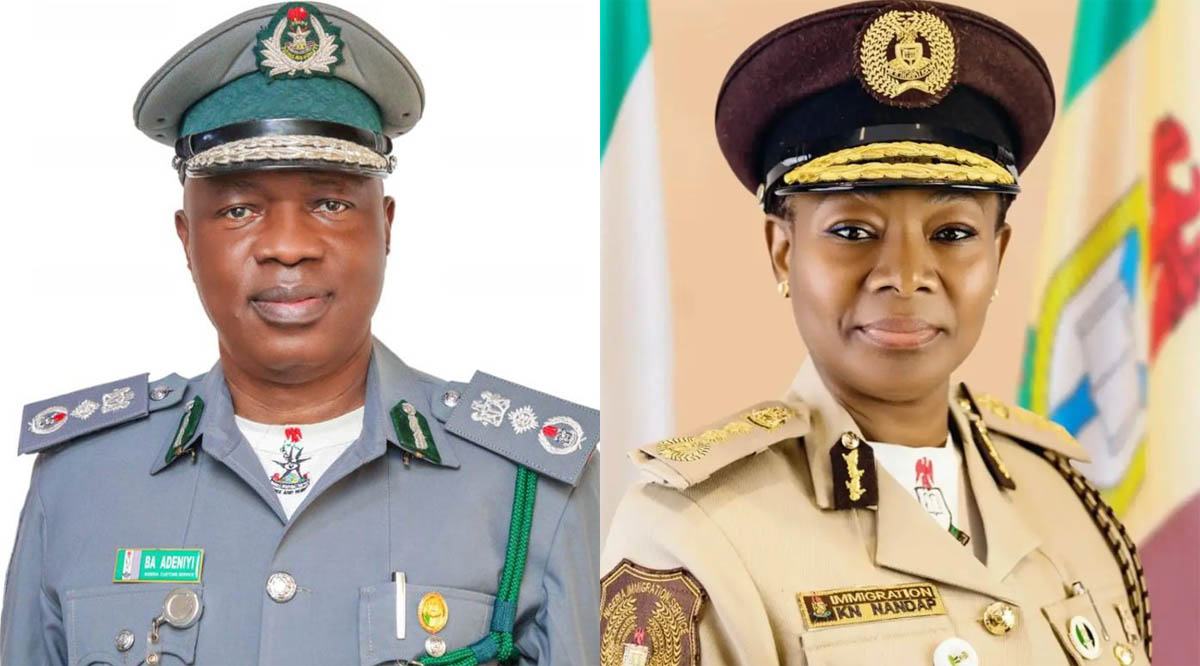
We’re owed 30 months allowances, say Customs, Immigration borders officers
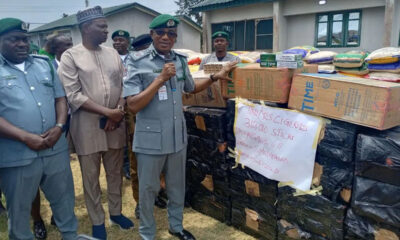
Some Nigeria Customs Service (NCS) and the Nigeria Immigration Service (NIS) personnel deployed to man Nigeria’s land borders have decried the non-payment of their allowances for two and a half years, leaving them in a deplorable working condition.
The personnel claimed that they had been stationed at the borders for over five years, dating back to the previous administration; a situation they said was unusual and discouraging.
Daily Trust reports that the immediate former National Security (NSA), Major General Babagana Monguno (Rtd), then said that porous borders had remained a major source of concern as they aided smuggling of prohibited items and irregular migration, as well as other transnational organised crimes and human trafficking.
Monguno disclosed this in Paris, France, in 2021, at the Nigeria International Partnership Forum held on the sidelines of the Paris Peace Forum.
The statement came some months after the formation of the Joint Border Patrol by his office.
He further said, “Nigeria is bordered to the North by Niger Republic, to the East by Chad and Cameroon and to the South by the Gulf of Guinea and the Atlantic Ocean and to the West by Benin Republic.
“However, Nigeria’s excessive land and maritime borders are incredibly porous and poorly managed and this places further responsibility on the border security agencies.
“In this regard, the Nigeria Customs Service has developed the E-Customs strategy while the Nigeria Immigration Service put in place an integrated border management system.
“It is necessary to observe that both strategies place premium on employing technology to complement other existing physical border security arrangements.’’
READ ALSO:
- 16 trafficked children rescued in Rivers, police arrest woman suspect (video)
- Blind man, teenager attempt suicide on Lagos Third Mainland Bridge over hardship
- Reno Omokri physically assaulted me, says ex-wife
‘We’re facing difficulties’
One of the security operatives deployed to the borders told the BBC Hausa Service yesterday that: “We are in a dire situation. We were deployed to the borders since President Buhari’s administration, and yet, we have not received our allowances for two and a half years.”
The personnel, who spoke on condition of anonymity, described their living conditions as “miserable” and appealed to the authorities to address their plight.
He further said, “Initially, we were deployed alongside the army, the police and the DSS. We were being paid all the allowances on time before things eventually went South.
“We have not been paid for 18 months. This started during the final days of President Buhari.
“Another cause for concern is that, usually when personnel are deployed to such places, they shouldn’t stay for over two and a half years, but here we are, now at the borders for five years.
“Now we haven’t been paid for 30 months, coupled with the worsening security problem that the country is grappling with. On their way to Kwara, our colleagues were kidnapped and some were killed by bandits.
“Because of this kind of situation, when we are deprived of our allowances for months, some bad elements among us could turn into moles to compromise efforts to tackle insecurity in the land.
“We are not praying for this to happen; we are determined to work selflessly and patriotically for the sake of our country and for posterity, no matter what.
“There is an urgent need to consider our issue; we are owed 30 months of allowances, while some security officers in places like Maiduguri receive their payments.
“Soldiers working there get their emoluments. We are also stationed in the jungle, where bandits operate. We live in constant fear and anxiety, with no allowances and a demanding job that keeps us away from our families for extended periods.
“Considering our dire situation and the high cost of living, we are appealing to the customs and immigration authorities and concerned officials to pay our emoluments.
READ ALSO:
- Three Israelis killed during attack on West Bank-Jordan border crossing
- Fugitive pastor wanted by FBI caught in Philippines
- 20-year-old man killed on Lagos street, police begin investigation
“Furthermore, we should be redeployed as assignments like this should not exceed a certain duration. We have spent five years here, which has become torturous.”
We’re reviewing the process – Customs
Reacting to the development while speaking to Daily Trust, the customs spokesman, Abdullahi Maiwada, said that the service was aware of the situation and was reviewing the process.
He said, “The whole process was started in 2019, which is now known as the Joint Border Patrol Team and is coordinated by the Office of the National Security Adviser.
“Before now, the police and military were part of the joint border patrol team, but it was taken over by the immigration and customs after a review of the modus operandi of the operation, and we are aware of the current challenges.
“What I can tell you is that the Nigeria Customs Service is only consolidating on the process they met on ground. These are ad hoc exercises being carried out and a current review is being undertaken and we will definitely get across to whoever is involved in this.
“This is a process that was met on ground and it has to be reviewed taking cognizance of the finance on ground as well. However, as for salaries, there is no customs officer who is not undergoing any disciplinary action that will say he is not receiving his/her salary as at when due.”
On why the military and police were not part of it any longer, he said, “The essence of border drill is to check smuggling and illegal migration. Consequently, movement of goods and services falls within the purview of the customs service while movement of people in and out of the country falls within the purview of the Nigeria Immigration Service.
“This is the standard practice globally and that is what we are implementing here in Nigeria as it concerns coordinated border management.”
Immigration mum
All efforts to get the reaction of the immigration service proved abortive.
The spokesperson of the service, Kenneth Udo, after he was contacted, promised to make an enquiry and revert to our correspondent.
A source at the NSA’s office told one of our correspondents that the collaboration was originally an ad hoc arrangement which was aimed to achieve specific goals.
READ ALSO:
- Abducted Borno high court judge Mshella released after 10 weeks
- Troops arrest female kidnappers’ informant, recover weapons in Taraba
- Jigawa man rapes 8-year-old girl, inserts dangerous weapons into her private part
He said, “We heard of the interview, but what I can tell you is that, that very officer who granted the interview is not in tune with what is happening.”
He said that the reason why the army and police were pulled out was to allow the customs and the immigration to carry on with their primary responsibilities.
He further said, “While we have established contact with the relevant authorities, it is indeed curious for an immigration official for instance to ask for a special assignment when he is directed to work around the border. It is his primary responsibility in the first place.
“There will be a formal response on all the allegations from the appropriate quarters.”
‘FG committed to border security’
In a recent statement from his office, the Minister of Interior, Dr Olubunmi Tunji-Ojo, reaffirmed that the priority of the ministry remained internal security and effective border control.
The minister stated this while receiving the interim report of the Inter-Ministerial Committee on Integrated Border Governance which conducted a rigorous assessment of Nigeria’s border security and management.
The minister commended the committee for its diligent work and expressed his resolve to implement the recommendations to improve Nigeria’s border governance standards.
Dr Tunji-Ojo highlighted the critical importance of border security for Nigeria’s sovereignty and stability, noting some of the longstanding challenges that had plagued the border centres which the ministry strived to address by deploying innovative solutions.
The statement reads in part: “Border security is the cornerstone of any nation’s defence. We have to take border management security seriously and work with border communities to create a sense of awareness and collaboration.”
Dr. Tunji-Ojo assured that the interim report would not be ignored but would serve as a guide for enhancing border governance in Nigeria.
He stressed the urgency of taking action based on the report’s findings and recommendations and promised to consult with stakeholders to strengthen border security measures.
Earlier, the Inter-Ministerial Committee, chaired by Dr Peter Egbodo, Director, Joint Services of the ministry presented the interim report to the minister, outlining the key observations and recommendations from the assessment.
The report proffered recommendations aimed at enhancing security measures and fortifying the nation’s borders, in line with the commitment of the President Tinubu’s administration to safeguard the country’s territorial integrity.
It also proposed integrated cutting-edge surveillance technology, such as drones, satellite imagery, and advanced screening methods, to enhance the effectiveness of border control measures.
Members of the committee included senior officials from the Ministry of Interior, the Nigeria Immigration Service, Nigeria Security and Civil Defence Corps, Federal Fire Service, National Boundary Commission, Border Communities Development Agency and Office of the Surveyor General of the Federation.
The committee visited five border posts in different regions of the country between October 13, 2023 and February 20, 2024.
We’re owed 30 months allowances, say Customs, Immigration borders officers
Daily Trust








Community
Monarch Dies Shortly After Being Rescued From Kwara Kidnappers
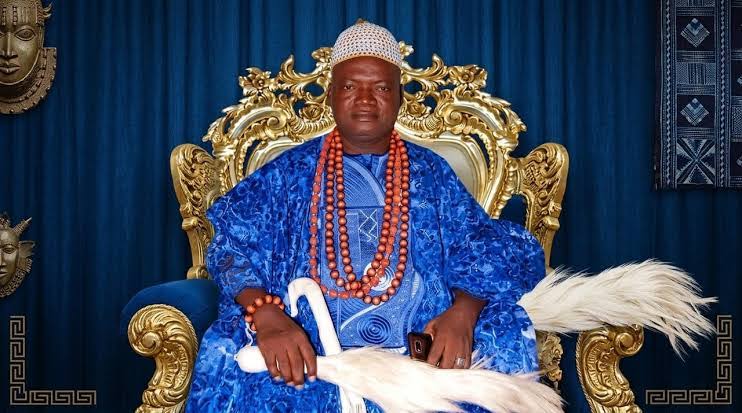
The Onigbesi of Igbesi Land in Kwara State, Oba Moses Oyinloye Iwedunmoye I, has died days after he was rescued from kidnappers.
The monarch passed away in the early hours of Saturday at a hospital, according to his son, Prince Olasunkanmi, who said his father had been receiving treatment following a brief illness.
“Yes, the news is true. He died after a brief illness following his release. We took him to the hospital, hoping he would survive, but he died there very early this morning,” Olasunkanmi said.
Oba Iwedunmoye was abducted on August 22 when armed men invaded Igbesi community in Isin Local Government Area.
He regained his freedom five days later after security forces launched an operation around the Elerin/Ijomu-Oro area, where three kidnapped victims were found.
The rescue followed a report received at the Oro Police Station from a vigilante member, who alerted authorities after one of his colleagues was shot while operating in the bush.
A combined team of police officers, soldiers and vigilantes was subsequently deployed to the area.
Police said the suspected kidnappers engaged the team in a gun battle after spotting the advancing operatives. One alleged kidnapper was killed during the exchange, while others escaped into the surrounding area.
The security team continued the search and eventually located the three victims, who were evacuated for medical treatment.
News of the monarch’s death was announced by Bisi Fakayode, National President of Omo Ibile Igbomina, who mourned the traditional ruler and prayed for the repose of his soul.
The circumstances surrounding the monarch’s illness and death have not been publicly disclosed beyond his family’s account that he fell ill after his release.
News
Police Arrest Woman Over Alleged Drug Trafficking in Delta
Police Arrest Woman Over Alleged Drug Trafficking in Delta
A 40-year-old woman, Joy Anthony, has been arrested by the Delta State Police Command over alleged involvement in the illegal drug trade.
Police said operatives attached to the Special Anti-Kidnapping Unit carried out the arrest in Agbor, Ika South Local Government Area, following intelligence received about suspected drug-related activities.
According to the command’s spokesperson, Bright Edafe, officers subsequently obtained and executed a search warrant at Anthony’s residence in Agbor-Obi.
READ ALSO:
- Dangote raises petrol price 6.7% to N1,350/litre
- Anambra Police Arrest Woman Over Alleged Sexual Abuse of Child, Rescue Four
- MURIC fires back at Peter Obi: Forget Sallah ceremony, free Nigerian Muslims
The search reportedly resulted in the recovery of several suspected illicit substances, including tramadol, codeine, swinol, Canadian loud and weeds suspected to be Indian hemp.
The suspect and the recovered exhibits have been taken into police custody as investigators continue to establish the circumstances surrounding the alleged offence.
Edafe said Anthony would be prosecuted after the investigation is completed.
Police have not disclosed the exact quantities of the substances recovered.
Police Arrest Woman Over Alleged Drug Trafficking in Delta
News
AI on the Roads: LASTMA Turns to China to Fix Lagos Traffic


AI on the Roads: LASTMA Turns to China to Fix Lagos Traffic
-

 metro1 day ago
Woman disguises as Muslim woman in Niqab to steal in Ado-Ekiti market, video sparks outrage
-

 metro3 days ago
Police Arrest Woman Over Fake OPay Shutdown Notice
-

 Politics3 days ago
Amaechi will be caged politically, Wike shouldn’t bother about Ikwerre votes — Wihioka
-
 metro3 days ago
Residents Cry Out Over Poorly Constructed Entrance of Ademola Abiola Street, Demand Urgent Intervention
-
 Politics3 days ago
Remi Tinubu Appeals To South-East Voters, Says She Wants To ‘Enjoy Nigeria’ In Old Age
-
 Business21 hours ago
Dangote: ₦525 Refinery Shares Could Rise to ₦10,000
-
 Politics3 days ago
Breaking the Cycle of Collective Guilt: When a Ruling Party Voice Backs Peter Obi
-

 metro1 day ago
Ondo Herbal Drink Tragedy: Survivor Vows Never to Drink Again as Death Toll Tops 30