News
FG mulls new system against fraud, to enhance identity verification
The Federal Government has raised concerns about foreigners misusing Nigerian identities and harming the country’s reputation abroad.
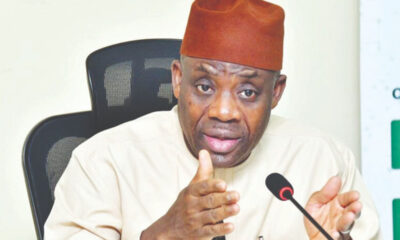
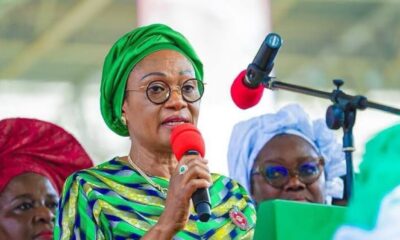
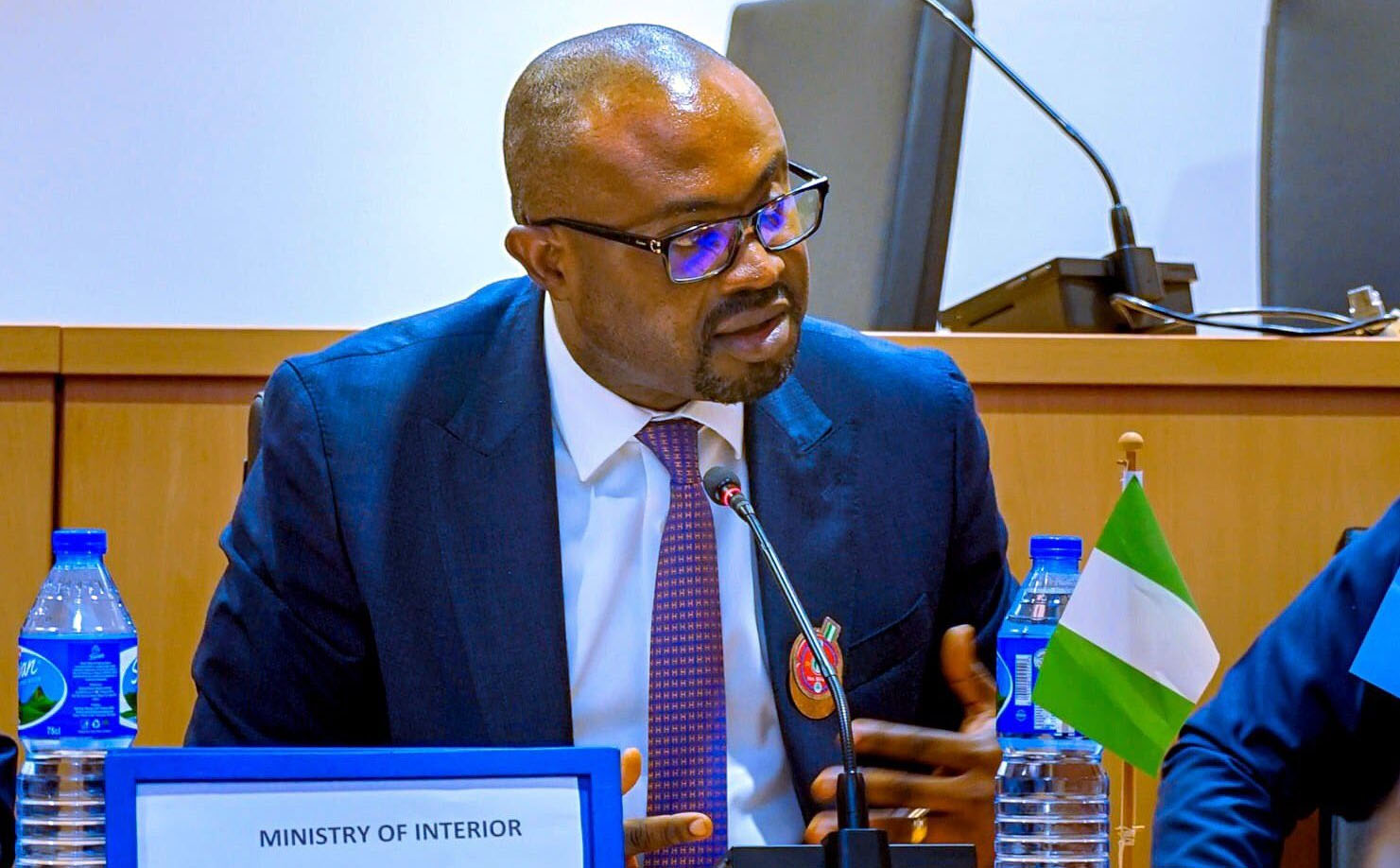
Dr. Olubunmi Tunji-Ojo, Minister of Interior, announced plans to harmonise Nigeria’s citizenship database to improve individual and corporate identity management.
Speaking at the start of a three-day national workshop on counter-terrorism financing, organised by the Inter-Governmental Action Group Against Money Laundering in West Africa (GIABA), Tunji-Ojo revealed that the new database will facilitate global verification of Nigerian identities, aiding in the fight against money laundering and terrorism financing.
Tunji-Ojo stressed the need to address identity fraud, stating, “Identity fraud must be reduced to nil. It should be impossible for one person to hold different accounts or identities.”
READ ALSO:
- Fresh trouble over supply volume in Dangote refinery petrol
- School teachers begin indefinite strike in Abuja
- Police parade suspected ritualists, armed robbers in Osun
He highlighted issues where individuals use multiple identities across borders, contributing to misuse of Nigeria’s passport and identity systems.
The minister noted that many individuals damaging Nigeria’s image abroad are foreigners carrying Nigerian passports.
He pledged to create a centralized system for real-time verification of all documents issued within Nigeria, aiming to enhance the accuracy and credibility of Nigerian identities globally.
Mrs. Hafsat Bakari, Director of the Nigerian Financial Intelligence Unit (NFIU), underscored the importance of tracking funds used for terrorism, stating, “Without funds, terrorists and terrorist organisations would not be able to carry out their acts.”
GIABA Director-General, Mr. Edwin W. Harris Jr., reaffirmed the organisation’s commitment to strengthening West African nations’ efforts against money laundering and terrorism financing.
FG mulls new system against fraud, to enhance identity verification
![]()
News
US Shuts Down Routine Visa Processing at Abuja Embassy, 24 Other African Missions
- The Trump administration’s restructuring aims to centralise visa services in regional hubs to enhance security and reduce costs.
The United States government has announced that routine visa processing at its embassy in Abuja and 24 other diplomatic missions across Africa will end from August 1, 2026, as part of a major restructuring of its overseas consular operations. The US Department of State said the move is aimed at centralising routine visa services in regional hubs to enhance national security, reduce government spending, and ensure greater consistency in visa screening, vetting and adjudication.
In a statement on the US Department of State website, the department said the reorganisation aligns with President Donald Trump’s administration’s priority of placing America’s interests and security first. “The Department of State is constantly evaluating its overseas operations in order to advance America’s priorities as efficiently and effectively as possible. This includes a visa process that maintains rigorous standards of security screening and vetting and aligns resources and operational capacity with America’s national interests,” the statement read. “The Trump administration has no higher priority than the safety and security of Americans, and the State Department will continue to provide Americans with appropriate consular services and assistance at diplomatic posts around the world.”
READ ALSO:
- Osun govt accuses police of raiding SSG, commissioners’ homes without warrants
- Mutfwang Clarifies Apology to Igbo Community: “My Words Were Twisted”
- Benue killings: Police neutralise two suspected bandits after 13 die in Otukpo attack
Besides Abuja, the affected diplomatic posts are located in Asmara (Eritrea), Bamako (Mali), Banjul (Gambia), Brazzaville (Republic of Congo), Bujumbura (Burundi), Conakry (Guinea), Cotonou (Benin), Durban (South Africa), Freetown (Sierra Leone), Gaborone (Botswana), Harare (Zimbabwe), Juba (South Sudan), Libreville (Gabon), Lilongwe (Malawi), Lusaka (Zambia), Maputo (Mozambique), Maseru (Lesotho), Mbabane (Eswatini), N’Djamena (Chad), Niamey (Niger), Nouakchott (Mauritania), Ouagadougou (Burkina Faso), and Windhoek (Namibia). The State Department clarified that the change affects only routine visa processing and does not alter the operational status of the embassies and consulates involved. All affected diplomatic missions will continue to provide consular services, including American Citizen Services (ACS), emergency assistance to US citizens, and carry out their regular diplomatic functions on behalf of the United States. The department further assured travellers that the policy does not invalidate visas that have already been issued.
The realignment applies to most routine visa services, including both nonimmigrant and immigrant visa categories. Nonimmigrant visas affected include B-1/B-2 visitor visas, F-1 student visas, J-1 exchange visitor visas, and employment-based categories such as H, L, O, and P visas. Immigrant visa services being realigned include Immediate Relative (IR) visas, Family Preference (FP) visas, Employment-Based (EB) immigrant visas, K fiancé(e) visas, adoption cases, Diversity Visa (DV) cases, and follow-to-join asylee and refugee (V92/V93) cases.
Under the new arrangement, applicants in affected countries will be required to access routine visa services through designated regional processing hubs. Routine visa services will continue at US embassies and consulates in Lagos, Abidjan, Accra, Addis Ababa, Cape Town, Dakar, Dar-es-Salaam, Djibouti, Johannesburg, Kampala, Kigali, Kinshasa, Lomé, Luanda, Malabo, Monrovia, Nairobi, Port Louis, Praia and Yaoundé. These designated hubs will continue to process all routine non-immigrant visas, including tourist, business and petition-based visas, as well as immigrant visas. The announcement is expected to impact thousands of Nigerian applicants who currently process US visas in Abuja, forcing them to travel to Lagos or other designated hubs on the continent. Nigeria has one of the highest volumes of US visa applications in Africa, with the US Embassy in Abuja and Consulate in Lagos being the two main processing centres for Nigerian applicants. The State Department advised citizens and residents of affected countries seeking US visas from August 1, 2026, to book appointments and pay required fees at designated processing hubs. The department also noted that similar regional hub arrangements had already been implemented successfully in several African countries and parts of Europe. The State Department further stated that visa suspensions imposed under Presidential Proclamation 10998, visa bond requirements and immigrant visa pauses for certain nationalities would remain in effect. Applicants who already have appointments at affected posts should monitor their email for specific guidance from the department.
US Shuts Down Routine Visa Processing at Abuja Embassy, 24 Other African Missions
![]()
News
Mutfwang Clarifies Apology to Igbo Community: “My Words Were Twisted”
- Governor Caleb Mutfwang insists his remarks were taken out of context, emphasizing reconciliation and Plateau’s legacy of peaceful coexistence
Governor of Plateau State, Caleb Mutfwang, has finally broken his silence over the firestorm of reactions that followed his recent apology to the Igbo community (Ndigbo) over Nigeria’s civil war atrocities. In a detailed statement on Wednesday, the governor firmly declared that his intentions were deliberately taken out of context and misrepresented by critics. The controversy erupted after Mutfwang, during a courtesy visit by Igbo leaders at the Government House in Jos, was quoted as saying: “I apologise to the Igbos so that we can put the past behind us… because our people were deceived into going to war, and we regret it.” The remarks sparked a national debate, drawing both praise from Igbo groups and sharp criticism from some Plateau stakeholders who felt the governor unfairly blamed his own people. Now, through his Director of Press Affairs, Dr. Gyang Bere, the governor has set the record straight.
In a statement released Wednesday, Mutfwang explained that his remarks were never intended to assign blame or diminish the suffering of any ethnic group. Instead, they were rooted in three key pillars: appreciation for the immense contributions of the Igbo community to Plateau State’s growth in commerce, education, healthcare, and industry; reconciliation through encouraging all Nigerians to build bridges of mutual respect and peaceful coexistence; and national unity by reminding citizens of the enduring responsibility to strengthen bonds rather than reopen old wounds. The governor emphasized through his spokesperson that at no point did he seek to diminish the painful experiences of any ethnic group or the historical realities surrounding Nigeria’s Civil War. He noted that the scars of that period remain part of our national history and deserve to be remembered with empathy, honesty and sensitivity. The governor emphasized that his apology to Ndigbo was not an indictment of any tribe but a gesture of solidarity—a reminder that Nigerians must learn from history rather than remain imprisoned by it.
READ ALSO:
- Benue killings: Police neutralise two suspected bandits after 13 die in Otukpo attack
- “God Revealed You’re My Wife”: Ghana Police Arrest Fake Pastor Over Romance Scam
- NDC Demands Suspension, Resignation of Lagos CP Over City Boy Movement Event Attendance
Mutfwang took the opportunity to highlight Plateau State’s historic role as a beacon of peaceful coexistence. He traced this tradition back to the post-civil war era, when leaders like JD Gomwalk and Chief Solomon Lar championed policies of inclusion. He specifically invoked General Yakubu Gowon’s “No Victor, No Vanquished” declaration and the 3Rs policy (Reconciliation, Rehabilitation, Reconstruction) , which he described as a globally recognized model for post-war healing. The governor noted that for decades, Plateau State has proudly stood as one of Nigeria’s foremost examples of peaceful coexistence among diverse peoples. He added that successive administrations have sustained this tradition by creating an environment where Nigerians from every region can live, work, worship, invest and flourish. The governor further noted that the Igbo community has leveraged this welcoming environment to make invaluable contributions to the state’s development, and his administration is committed to preserving and strengthening that legacy.
The meeting, however, was not without its political dimensions. During the visit, Igbo leaders from all 17 local government areas of Plateau State formally endorsed Governor Mutfwang for a second term ahead of the 2027 governorship election. Chief Chidi Onah, President-General of the Igbo Community in Plateau State, cited Mutfwang’s inclusive leadership and developmental strides as key reasons for their support. But the discussions also exposed underlying tensions. Community leaders raised unresolved compensation claims over land disputes—a reminder that even in states celebrated for harmony, the relationship between “indigenes” and “settlers” remains delicate.
The governor’s initial comments drew a polarized response. On the one hand, the Izu Umunna Cultural Association (IUCA) hailed Mutfwang’s apology as “courageous,” “healing,” and historic. They noted that the civil war remains “a scar in the psyche of every Igbo man” and that no national leader had previously shown the courage to accept such responsibility. On the other hand, former Sports Minister Solomon Dalung and former Commissioner for Information Dan Manjang criticized the governor, arguing he unfairly placed the burden of the civil war on the people of Plateau State.
Addressing his critics directly, Mutfwang urged Nigerians to resist attempts to inflame ethnic or regional divisions. He stated that at a time when our nation faces significant challenges, Nigerians must resist every attempt to inflame ethnic or regional divisions. Instead, he said, we should draw strength from our shared history, celebrate our diversity and recommit ourselves to building a nation founded on justice, mutual respect and peaceful coexistence. The governor reaffirmed that his administration believes Plateau’s greatest strength lies not in the differences among its people but in their ability to transform diversity into unity and shared prosperity. He concluded that Governor Caleb Mutfwang remains unwavering in his belief that every Nigerian, irrespective of ethnicity, religion or place of origin, deserves dignity, equal opportunity and a genuine sense of belonging. He urged the public to disregard any interpretations that assign unintended meanings to his remarks, describing such distortions as distractions from the broader message of unity and national cohesion.
Mutfwang Clarifies Apology to Igbo Community: “My Words Were Twisted”
![]()
News
Tinubu orders security forces to hunt down killers after 30 murdered in Kaduna attack
President Bola Ahmed Tinubu has directed the Nigerian Armed Forces, the Nigeria Police Force and relevant intelligence agencies to launch an intensified manhunt for those responsible for the deadly attack that claimed the lives of about 30 people in Naridon Village, Kamaru Ward, Kauru Local Government Area of Kaduna State.
The attack, which occurred in the early hours of Monday, left men, women and children dead, while several others sustained injuries. Homes and other property were also set ablaze, forcing many residents to flee the community.
Describing the incident as a “barbaric and cowardly” assault on innocent citizens, President Tinubu vowed that the perpetrators would be apprehended and made to face the full weight of the law.
The President said criminal elements would not be allowed to reverse the security gains recorded in Kaduna State and other parts of the country.
“I have directed the Armed Forces, police, and relevant intelligence agencies to intensify operations across the affected areas to track down the perpetrators swiftly and restore normalcy to the region.”
Tinubu reiterated his administration’s commitment to strengthening the country’s security architecture through improved intelligence gathering, enhanced operational capacity and sustained efforts to dismantle criminal networks threatening lives and property.
“Our administration has an unwavering commitment to strengthening security infrastructure, equipping response personnel, and neutralising criminal networks attempting to disrupt the peace of the nation.”
The President also appealed to residents of affected communities to support ongoing security operations by providing timely and credible intelligence that could help security agencies prevent future attacks and apprehend those responsible.
While expressing condolences to the families of the victims, Tinubu sympathised with Kaduna State Governor Uba Sani, the Kaduna State Government and residents of the state over the tragic loss of lives.
READ ALSO:
- Kaduna 2027: Uba Sani restores Muslim-Christian ticket with Jerry Adams
- Over 40 Bandits, 8 Commanders Killed as Security Forces Repel Katsina Attack
- Gunmen Kill 5 Siblings, 25 Others in Midnight Attack on Kaduna Community
He assured affected communities that the Federal Government would continue working closely with security agencies to restore peace and improve safety across Kaduna State and other troubled parts of the country.
The Kaduna State Government also condemned the attack, describing it as a senseless act of violence against innocent citizens. State authorities said security agencies had been directed to intensify operations in the affected area and ensure those behind the attack are arrested and prosecuted. The government reaffirmed its commitment to protecting lives and property while collaborating with federal security agencies to strengthen surveillance and prevent further attacks across vulnerable communities.
Meanwhile, the Southern Kaduna Peoples Union (SOKAPU) has urged the Kaduna State Police Command and other security agencies to adopt more proactive strategies to tackle the recurring killings, kidnappings and attacks in Southern Kaduna.
In an open letter addressed to Governor Uba Sani and the Commissioner of Police, SOKAPU National President, Engr. Tabara Kato, described the Naridon attack as another painful reminder of the persistent insecurity confronting communities in Kauru, Kajuru, Chikun and Zangon Kataf local government areas.
According to the union, repeated attacks have displaced families, destroyed homes and farmlands, disrupted farming activities and left thousands of residents living in fear.
SOKAPU called on security agencies to move beyond reactive responses by deploying tactical and counter-terrorism units to vulnerable communities and forest corridors believed to serve as hideouts for criminal groups.
The organisation also advocated increased intelligence-led operations, regular patrols of farming communities, improved surveillance and quicker responses to distress calls. It stressed that restoring public confidence would require consistent communication between security agencies and local communities, alongside decisive action against those responsible for violent attacks.
The latest killings have once again drawn attention to the security challenges facing parts of Kaduna State, particularly in Southern Kaduna, where communities have experienced repeated attacks, kidnappings and communal violence over the years.
The violence has resulted in significant loss of lives, mass displacement and destruction of livelihoods, while many farmers have been unable to cultivate their land due to persistent security threats.
Security analysts say sustained military operations, improved intelligence sharing and stronger collaboration among federal, state and local authorities will be critical to addressing the root causes of insecurity and preventing future attacks.
As investigations continue, residents of Naridon and neighbouring communities are hoping for swift justice and stronger security measures to enable them to return to their normal lives without fear.
Tinubu orders security forces to hunt down killers after 30 murdered in Kaduna attack
![]()
-
metro3 days agoNDLEA intercepts ₦10bn worth of cocaine, Loud, opioids in Lagos
-
Sports3 days agoSuper Falcons recover stolen cash after hotel theft suspect confesses
-
metro2 days agoKano Woman Arrested for Severing Boyfriend’s Manhood Over Plan to Marry Another
-
metro2 days agoGunmen Kill 5 Siblings, 25 Others in Midnight Attack on Kaduna Community
-
Politics16 hours agoTinubu tells 2027 rivals: We’ll wrestle ourselves to the finishing line
-
metro2 days agoThree-Storey Student Hostel Collapses Near Oko Polytechnic, Many Trapped
-
metro3 days agoGunshots, Teargas Rock Osun Motor Park as Thugs Defy Adeleke’s NURTW Suspension Order
-
metro3 days agoMURIC Tells Adeleke to ‘Pack Your Dancing Kits’ Ahead of Osun 2026 Election