

News
Details of observers damning reports on Edo gov election

Details of observers damning reports on Edo gov election
Controversy has expectedly continued to trail the Edo governorship election which saw the Independent National Electoral Commission (INEC) declaring Senator Monday Okpebolo of the All Progressives Congress (APC) the winner.
The results have been defended by the party that won and their sympathizers, but vigorously challenged by the two other candidates in the poll – Dr Asue Ighodalo of the Peoples Democratic Party (PDP) and Mr Olumide Akpata of the Labour Party (LP) – as well as their supporters. In this package, Sunday Vanguard publishes the verbatim reports of two observer groups to the election. Yiaga Africa’s report is signed by Dr. Aisha Abdullahi, Chair of the 2024 Edo Election Mission, and Samson Itodo, Executive Director, while Andrew Mamedu, Country Director, signed for ActionAid Nigeria.
Election failed integrity test/standards – Yiaga Africa, highlights inconsistencies in results
Introduction
On Saturday, September 21, 2024, Yiaga Africa deployed the Process and Results Verification for Transparency (PRVT) methodology to observe the Edo State governorship election.
This involved 300 stationary and 25 roving observers, covering a representative sample of polling units across all 18 LGAs.
The PRVT enables Yiaga Africa to independently assess the quality of Election Day processes and verify the accuracy of the official election results as announced by INEC.
Yiaga Africa observers also deployed to the state and LGA results collation centers to observe the process, ensuring timely and accurate reporting of the election process. Yiaga Africa has successfully deployed this methodology in two presidential elections and sixteen off-cycle governorship elections.
Yiaga Africa’s Election Day situation analysis statement highlighted logistical challenges that led to delays in the commencement of accreditation and voting at various polling units across the state. Inadequate planning in the supply of vehicles for transporting ad hoc officials and election materials, along with the absence of accompanying security personnel, further exacerbated the delays.
READ ALSO:
- 13 Usmanu Danfodio varsity students arrested for internet fraud
- NSCDC officer supplying drugs, ammunition to bandits dismissed
- I’m bigger than all PDP govs backing Fubara – Wike
Yiaga Africa also condemns acts of violence and disruption of voting and results collation process by political thugs and hoodlums, particularly violence directed at voters and election officials.
These unwholesome acts undermine the integrity of the elections.
Yiaga Africa extends its sympathies to citizens and polling officials who suffered severe injuries and loss of valuable properties due to these attacks and violence.
Yiaga Africa calls on security agencies to thoroughly investigate these cases of attacks and intimidation against voters and polling officials.
INEC’s official results
Yiaga Africa’s estimates are based on official results announced at the polling unit from a representative random sample of polling units.
As highlighted in our pre-election report, Yiaga Africa will, amongst other factors, consider the quality of Election Day processes in assessing whether the 2024 Edo governorship satisfies the electoral integrity test.
In this regard, Yiaga Africa considered the integrity of accreditation, voting, counting, and collation of results.
INEC consistently applied its guidelines in managing the accreditation and voting process in a significant number of polling units.
Despite some isolated incidents of inadequate election materials, the BVAS machines functioned optimally, and all voters in the queue by 2:30pm were allowed to vote, despite the late opening of polls.
The polling officials uploaded polling unit results on the IReV in a timely manner, making it possible for citizens to access polling unit level results.
However, the incidents of results manipulation and disruptions during ward and local government collation in Ikpoba/Okha, Etsako West, Egor and Oredo LGAs, including intimidation of INEC officials, observers and party agents and the collation of results, contrary to the provisions of the Electoral Act and INEC guidelines, severely undermine the credibility of the election results.
Inconsistencies
Based on reports received from the sampled polling units, Yiaga Africa can project the expected vote shares for each party within a narrow margin. However, Yiaga Africa is only able to verify the election outcome if it falls within its estimated margins.
If the official results do not fall within Yiaga Africa’s estimated ranges, then the results may have been manipulated.
According to INEC, the All Progressives Congress (APC) received 51.1% of the votes, People’s Democratic Party (PDP) 43.3% of the votes, and the Labor Party garnered 4.0% of the votes.
READ ALSO:
- N3.1bn fraud: $15.8m was delivered to Suswam residence – Witness
- Saudi condemns Israelis attack on ‘defenseless’ Palestinians
- Government can’t subsidise cost of passports – Minister
Based on reports from 287 of 300 (96%) sampled polling units, Yiaga Africa’s statistical analysis shows inconsistencies in the official results announced by INEC.
For instance, the official results announced by INEC for APC in Oredo and Egor, LGAs fall outside the PRVT estimate.
In Esan West LGA, the official results for PDP fall outside the PRVT estimates.
Also, in Oredo LGA, the official results as announced for LP fall outside the PRVT estimates.
These inconsistencies with Yiaga Africa’s PRVT estimates indicate that the results were altered at the level of collation.
The disparities between the official results released by INEC and Yiaga Africa’s PRVT estimates indicate manipulation of results during the collation process.
Yiaga Africa strongly condemns the actions of some biased INEC officials who altered figures during collation including the actions of some security officials who interfered with the collation process. Yiaga Africa notes that the cases of disruption in Ikpoba/Okha, Etsako West, Egor, and Oredo LGAs in the course of collation created opportunities for election manipulation, raising significant concerns about the credibility and integrity of the results collation process.
Turnout Estimates
INEC’s turnout and rejected ballots for the 18 LGA released are consistent with Yiaga Africa WTV PRVT estimates.
Yiaga Africa is able to estimate that turnout is between 20.9% and 24.1% (22.5% ± 1.6%), while INEC’s official result is 22.4%.
Similarly, Yiaga Africa estimates for rejected ballots are between 2.2% and 3.2% (2.7% ± 0.5%).
Yiaga Africa notes that in terms of turnout, voters did not meet the resilience test as voter turnout plummeted despite high PVC collection rates recorded for the governorship election.
READ ALSO:
- BREAKING: FG declares Tuesday public holiday to celebrate 64th Independence
- Tinubu makes new appointments
- Wike approves recruitment of 900 health workers, okays 25% salary increase for nurses
In this election, only 22.4% of the voters turned out to exercise their civic rights, lower than the 27% turnout observed in 2020.
Nevertheless, Yiaga Africa commends the resilience of the voters who turned out despite the rain and voting delays, staying back to fulfill their civic duties.
Recommendations
- Yiaga Africa calls for the immediate investigation and prosecution of polling officials and collation officers who are engaged in results manipulation and flagrant violations of the guidelines on results collation.
- Yiaga Africa calls on INEC to urgently clarify the inconsistencies in some of the results, especially election results from Oredo, Egor, Esan West and LGAs.
- INEC should issue detailed guidelines for exercising its powers to review declarations and returns made contrary to provisions of the Electoral Act and regulations and guidelines. This should include procedures for receiving complaints, timeframe, format and who is eligible to submit complaints.
- It is imperative to integrate the IReV and electronic transmission of results into the electoral legal framework to confer legality on polling unit level results uploaded on the portal. To this end, the National Assembly should expeditiously amend the Electoral Act to make electronic transmission of results mandatory.
Conclusion
As noted in our pre-election reports, Yiaga Africa emphasized that the 2024 Edo governorship election would be assessed against three key parameters: the resilience test, impartiality test, and integrity test.
On the resilience test, despite early warnings of potential violence and adverse weather conditions, voter turnout was low.
While voters were given the opportunity to exercise their rights, many chose not to participate, resulting in a partial failure of the resilience test. Nevertheless, Yiaga Africa commends the resilience and patience of voters who did turn out, particularly in the face of logistical challenges and rainfall that caused late opening of polls.
On the impartiality test, Yiaga Africa monitored the role of security agencies and their engagement with the process.
Details of observers damning reports on Edo gov election
Vanguard




News
41 Days in Bandits’ Den: Five Islamic Clerics Still Held After Tinubu Re-Election Prayer Trip
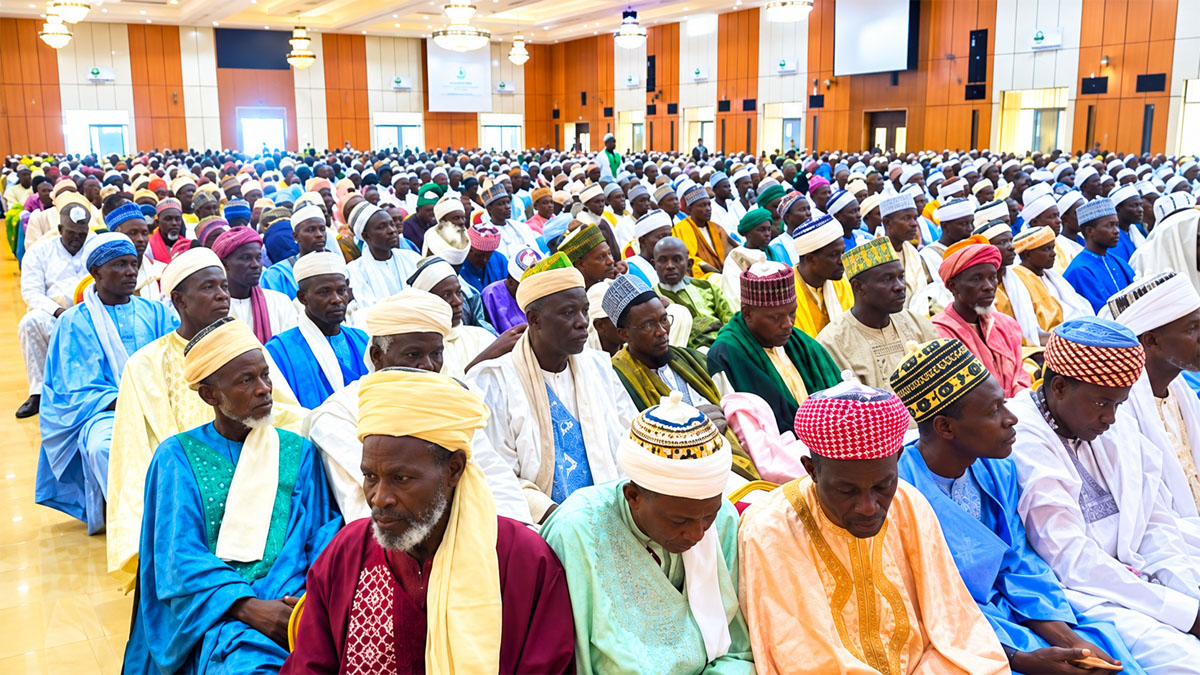
Five Islamic clerics abducted by suspected bandits in Zamfara State have remained in captivity for 41 days, renewing concerns over their safety and the persistent threat of kidnapping in Nigeria’s North-West.
The continued detention of the clerics was disclosed on Friday by conflict reporter Bakatsine, who appealed to Nigerians to continue praying for their safe return.
In an update shared on social media on October 23, 2026, Bakatsine said the Islamic scholars were still in the hands of their abductors and expressed hope that they would reunite with their families.
The clerics were reportedly abducted on September 12, 2026, while travelling towards Talata Mafara Local Government Area for a special prayer gathering organised in connection with President Bola Tinubu’s 2027 re-election bid.
The gathering was associated with Senator Abdul’aziz Abubakar Yari, a former Zamfara State governor and the Director-General of Tinubu’s re-election campaign council.
Reports identified the five clerics as Imam Yahuza, Magawata Abdullahi, Malam Shehu Dakko, Imam Bala Fagon and Na’ibi Tasi’u. They were said to have travelled from communities in Bakura and Talata Mafara local government areas to attend the gathering.
READ ALSO:
- Saudi Executions: Truth Behind Viral Kissing Claim
- MURIC petitions Oyo police over 2019 murder of Muslim cleric in Fiditi
- NEC Targets Cheaper Fares, Food Prices in 90-Day Plan to Ease Nigerians’ Hardship
However, the Nigerian Army clarified shortly after the incident that the clerics were not abducted at Yari’s residence, contrary to some initial reports. According to the military, intelligence indicated that the victims were seized while travelling from the Sububu Forest axis in Bakura towards Talata Mafara.
The Zamfara State Police Command also confirmed the incident, stating that armed men had intercepted the clerics’ vehicle along the Dakko–Damri feeder road in Bakura Local Government Area and that efforts were underway to rescue them.
There were initial reports that six Islamic clerics had been abducted, although the latest reports identifying those still in captivity named five victims.
Reports following the abduction indicated that the kidnappers demanded a ransom of ₦100 million from the victims’ families before the amount was reportedly reduced to ₦30 million during negotiations. However, there has been no confirmed public update on the progress of the negotiations or whether the demand has been met.
As of Friday, October 23, there was no confirmed information that the clerics had been released. Their current whereabouts and condition also remained unclear.
The prolonged captivity has heightened concerns over the security situation in Zamfara State, where armed groups have continued to abduct travellers and residents for ransom.
The incident has also drawn attention to the risks faced by people travelling between rural communities in the state, despite security operations aimed at curbing banditry.
Families of kidnapped victims and residents of affected communities have repeatedly called for stronger security measures and more effective rescue operations to prevent further abductions and secure the release of those still being held.
Bakatsine’s latest appeal has renewed calls for continued public concern over the fate of the five clerics as their families await news of their safe return.
41 Days in Bandits’ Den: Five Islamic Clerics Still Held After Tinubu Re-Election Prayer Trip
News
EFCC Opens Recruitment for Nigerians, Sets Age Limits for Four Job Categories

The Economic and Financial Crimes Commission (EFCC) has opened its 2026 nationwide recruitment exercise, inviting qualified Nigerians to apply for positions across four job categories, with age limits ranging from 18 to 40 years.
The Federal Character Commission (FCC), in a recruitment listing published on October 23, 2026, marked the exercise as ongoing and outlined the qualifications, age requirements and other eligibility conditions for prospective applicants.
The recruitment covers the Detective Superintendent, Detective Inspector, Detective Assistant, and Professionals/Skilled Workers cadres, providing opportunities for university graduates, National Diploma holders, secondary school certificate holders and experienced professionals.
According to the published notice, applications must be submitted online through the designated recruitment portal. The application process is free, and candidates are warned against paying individuals or organisations promising to secure employment for them.
For the Detective Superintendent cadre, applicants must possess a bachelor’s degree or Higher National Diploma (HND) from a recognised institution, alongside a valid National Youth Service Corps (NYSC) discharge or exemption certificate. The position corresponds to Assistant Superintendent of EFCC II on Grade Level 08, and applicants must be between 18 and 30 years old.
The Detective Inspector category is open to candidates with a National Diploma (ND) or National Certificate in Education (NCE) from a recognised institution. The position corresponds to Inspector of EFCC II on Grade Level 06, with an age requirement of 18 to 27 years.
READ ALSO:
- Saudi Executions: Truth Behind Viral Kissing Claim
- MURIC petitions Oyo police over 2019 murder of Muslim cleric in Fiditi
- NEC Targets Cheaper Fares, Food Prices in 90-Day Plan to Ease Nigerians’ Hardship
For the Detective Assistant cadre, applicants must have at least five credit passes in WAEC, NECO, GCE or NABTEB examinations, including English Language and Mathematics. The results must be obtained in no more than two sittings. The position corresponds to Detective Assistant II on Grade Level 04, and applicants must be between 18 and 25 years old.
The fourth category, Professionals and Skilled Workers, covers applicants with relevant academic qualifications, professional credentials or technical expertise. The stipulated age range is 18 to 40 years.
The professional and skilled-worker category covers several fields, including medicine, pharmacy, law, nursing, medical laboratory science, engineering and technology-related disciplines. The commission is also seeking qualified or experienced personnel in human resources management, financial analysis, media and publicity, policy analysis, legal services, research, planning, monitoring and evaluation, librarianship, information and communications technology, driving, and administrative or clerical support.
Applicants in this category are expected to possess qualifications relevant to their chosen positions. An NYSC discharge or exemption certificate is also listed among the requirements, while membership of a relevant professional association is an added advantage. A valid national driver’s licence is similarly listed as an advantage for applicants seeking professional and skilled-worker positions.
Beyond the academic and age requirements, the published recruitment notice states that applicants must be Nigerian citizens, possess basic computer skills and demonstrate good character and integrity. Candidates must also be medically fit and provide evidence of fitness from a government-approved hospital. Applicants with criminal records are ineligible, while the notice states that tattoos on any part of the body are not permitted.
Additional conditions apply to cadet applicants, who must be single at the time of application. Male cadet applicants must be at least 1.67 metres tall, while female applicants must have a minimum height of 1.64 metres. Prospective candidates are advised to review the requirements carefully and ensure they meet the conditions for their preferred category before submitting their applications.
Interested applicants are directed to complete their applications online through the designated EFCC recruitment portal at https://recruitment.efcc.gov.ng. The recruitment listing states that applications are expected to close one week after the commencement of the exercise. Applicants should therefore check the portal for the exact closing date and any additional instructions before applying.
Candidates who are shortlisted will be required to present printed copies of their completed application forms during screening. The commission’s recruitment process is stated to be entirely free of charge. Applicants should not pay recruitment agents, intermediaries or individuals claiming to have connections within the EFCC.
Candidates should also avoid unofficial websites and social media accounts requesting payment or sensitive personal information in exchange for employment opportunities. Qualified Nigerians are encouraged to rely on the designated recruitment portal and official EFCC and Federal Character Commission communication channels for updates on the exercise.
EFCC Opens Recruitment for Nigerians, Sets Age Limits for Four Job Categories
News
NEC Targets Cheaper Fares, Food Prices in 90-Day Plan to Ease Nigerians’ Hardship
NEC Targets Cheaper Fares, Food Prices in 90-Day Plan to Ease Nigerians’ Hardship
Nigerians struggling to cope with soaring food prices and transport fares may be in line for some relief as the National Economic Council has approved a 90-day economic action plan aimed at reducing the cost of living and making essential services more affordable.
At the heart of the initiative is a push to ensure that government economic reforms translate into tangible benefits for ordinary citizens, particularly commuters who spend a significant portion of their daily earnings travelling to work, trading centres and other places of livelihood.
The council has specifically directed federal and state governments to ensure that savings from the use of compressed natural gas-powered and electric vehicles are reflected in lower transport fares, rather than remaining with fleet owners and transport operators.
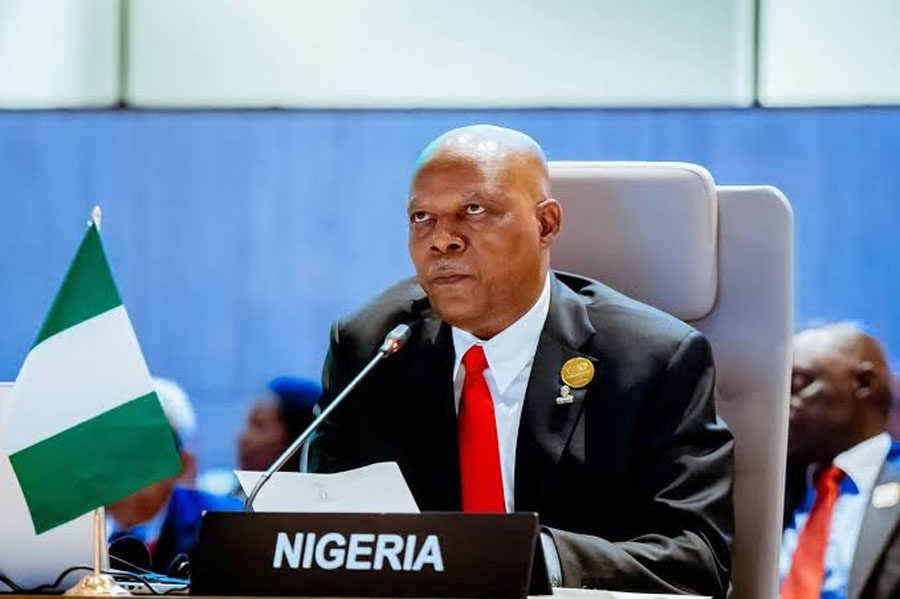
The plan was proposed by the Federal Ministry of Finance and endorsed on Thursday at the 161st meeting of the NEC, chaired virtually by Vice-President Kashim Shettima.
According to a statement by Stanley Nkwocha, the Senior Special Assistant to the Vice-President on Media and Communications, the 90-day programme has five priority areas: food affordability, tax harmonisation, completion of high-impact projects, removal of investment bottlenecks and regulated household support.
The council’s intervention comes amid persistent pressure on household budgets, with the rising cost of transportation and food leaving many Nigerians with less money to meet other essential needs.
For workers, traders, artisans and small business owners, cheaper transportation could mean retaining more of their daily earnings, while improved food affordability could ease the pressure on already stretched household incomes.
Speaking at the meeting, Shettima said the effectiveness of government policies should be judged by their impact on the daily lives of citizens, including access to affordable transportation, healthcare, employment and financial security.
“The first dividend of prosperity should be the confidence to plan a life. Our task is to make such confidence less dependent on fortune,” he said.
The Vice-President stressed that the National Compressed Natural Gas Bus Initiative should not be judged merely by the number of buses deployed but by how much it reduces the financial burden on commuters.
“The cost of reaching a livelihood should never consume the livelihood itself,” he said.
The council consequently resolved to establish a joint financing framework between the Federal Government and state governments to accelerate the deployment of CNG-powered and electric vehicles.
It also directed relevant authorities to engage transport unions and operators to ensure that the operational savings associated with the vehicles translate into lower fares for passengers.
The directive seeks to address a key concern surrounding the transition to alternative-energy transportation: whether the savings from cheaper fuel and more efficient operations will benefit commuters or simply improve operators’ profit margins.
Beyond transportation, the 90-day plan will focus on measures to improve food affordability, streamline taxation, remove barriers to investment and fast-track projects expected to deliver significant economic benefits.
The NEC also approved the establishment of a national dashboard to monitor projects across the country, with particular emphasis on transparency, accountability and tracking the utilisation of funds generated from the removal of petrol subsidies.
The monitoring mechanism is expected to strengthen oversight of public spending and improve the tracking of projects intended to cushion the effects of economic reforms.
Shettima called for closer cooperation between the Federal Government and state governments, warning that their separate responsibilities must not become excuses for failing to provide essential services.
However, the ultimate test of the 90-day plan will be whether Nigerians begin to experience measurable improvements in the cost of transportation, food and other necessities within the stipulated period.
For a worker who must spend a substantial part of a day’s wages getting to work, or a family struggling to put affordable meals on the table, the success of the initiative will not be determined by government announcements or the number of alternative-fuel buses introduced.
It will be measured by the money left in their pockets at the end of the day.
-

 Auto2 days ago
Hyundai Unveils Mufasa, Grand Creta SUVs to Strengthen Nigeria Line-up (Updated)
-
 metro2 days ago
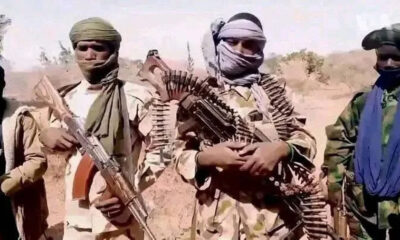
Horror in Sokoto: Bandits Intercept Vehicle, Massacre All Passengers Returning from City
-

 Education3 days ago
NELFUND Warns Schools: Student Loans Are Voluntary, Not Compulsory
-

 metro2 days ago
Nigerian Journalist Sentenced to 4 Years Over Facebook Post Criticising Police
-

 News3 days ago
UNILORIN VC to graduates: Let this investment count
-

 metro2 days ago
Fourth Gas Leak in Six Months: Over 100 Ogun Pupils Hospitalised, Schools Shut as Parents Panic
-

 metro2 days ago
Bauchi Mosque Removes Imam After Tinubu Campaign, Rejects Proposal to Rename Mosque
-

 metro3 days ago
Ebola Scare: NSCIA Directs Imams to Intensify Awareness in Friday Sermons