
International
Syrian rebels take control of half of Aleppo, observers say

Syrian rebels take control of half of Aleppo, observers say
Rebel forces in Syria have taken control of “half” of the country’s second-largest city, Aleppo, according to the UK-based monitoring group Syrian Observatory for Human Rights (SOHR).
SOHR said 277 people – including more than 20 civilians – have been killed since the offensive started on Wednesday.
The offensive is the largest against the Syrian government in years and the first time rebels fighting the forces of President Bashar al-Assad have reached Aleppo since being forced out by the army in 2016.
Aleppo’s airport and all roads leading into the city have been closed, military sources told Reuters news agency.
The rebels were able to capture “half of Aleppo” without meeting significant resistance, SOHR director Rami Abdel Rahman told AFP news agency early on Saturday.
There “has been no fighting, not a single shot was fired, as regime forces withdrew”, he added.
Earlier on Friday, government forces said they had regained positions in a number of towns in Aleppo and Idlib provinces, following the offensive launched by HTS and allied factions on Wednesday.
Video posted on a channel affiliated with the Islamist militant group Hayat Tahrir al-Sham (HTS) appears to show rebel fighters in vehicles inside the city.
BBC Verify has geolocated the footage to a western suburb of Aleppo.
More than half a million people have been killed in the civil war that erupted after the government cracked down on pro-democracy protests in 2011.
READ ALSO:
- Court strikes out Bobrisky’s fundamental rights suit against EFCC
- Over 2,000 Russian troops killed in last 24hrs – Ukraine’s military
- Police arrest 5 suspected trans-border arms dealers, recover 5 Israeli rifles, others
An array of armed groups opposed to the Assad government – including jihadists – took advantage of the turmoil to seize swathes of territory.
The Syrian government – with help from Russia and other allies – later retook most the areas it had lost.
Idlib, the last remaining opposition stronghold, is mostly controlled by HTS, but Turkish-backed rebel factions and Turkish forces are also based there.
Syrian and Russian planes carried out 23 air strikes near Idlib on Friday, according to SOHR.
The UK-based monitoring group, which uses a network of sources on the ground in Syria, said four civilians were killed and 19 others were injured in the Russian strikes.
Russia’s military said it had bombed “extremist forces”, according to Russian news agencies.
Kremlin spokesman Dmitry Peskov expressed his support for “the government of Syria to quickly restore order” and said the country’s sovereignty was under attack.
On Friday, a statement posted on a rebel-affiliated channel said: “Our forces have begun entering the city of Aleppo.”
Videos verified by the BBC show armed men running in a street about seven kilometres (4.3 miles) from Aleppo’s medieval citadel in the centre of the city.
Another clip verified by the BBC showed large groups of people carrying luggage walking away from an area near Aleppo University. That video was recorded 3km away from a location where HTS-affiliated media claim rebel forces have entered the city.
Aleppo resident Sarmad told AFP he could hear “the sounds of missiles and artillery shelling around the clock”.
“We’re scared that war will break out and we’ll be displaced from our homes again,” the 51-year-old said.
The UN’s deputy regional humanitarian co-ordinator for Syria, David Carden, said he was deeply alarmed by the impact of the escalating hostilities on civilians.
“Relentless attacks over the past three days have claimed the lives of at least 27 civilians, including children as young as eight years old”, he said.
Fighting in Idlib had largely wound down since 2020, when Turkey and Russia, Syria’s key ally, brokered a ceasefire to halt a push by the government to retake the province.
But on Wednesday HTS and its allies said they had launched their offensive to “deter aggression”, accusing the government and allied militias of escalation in the region.
It came as the Syrian government and its allies were preoccupied with other conflicts.
In neighbouring Lebanon, an Israeli military campaign has devastated the Iran-backed Hezbollah movement, whose fighters helped turned the tide of the Syrian civil war.
Israel has also stepped up its air strikes inside Syria on targets linked to Iran and Iran-backed groups.
Syrian rebels take control of half of Aleppo, observers say


International
30 Nigerians on US Deportation Portal Linked to N87bn Fraud
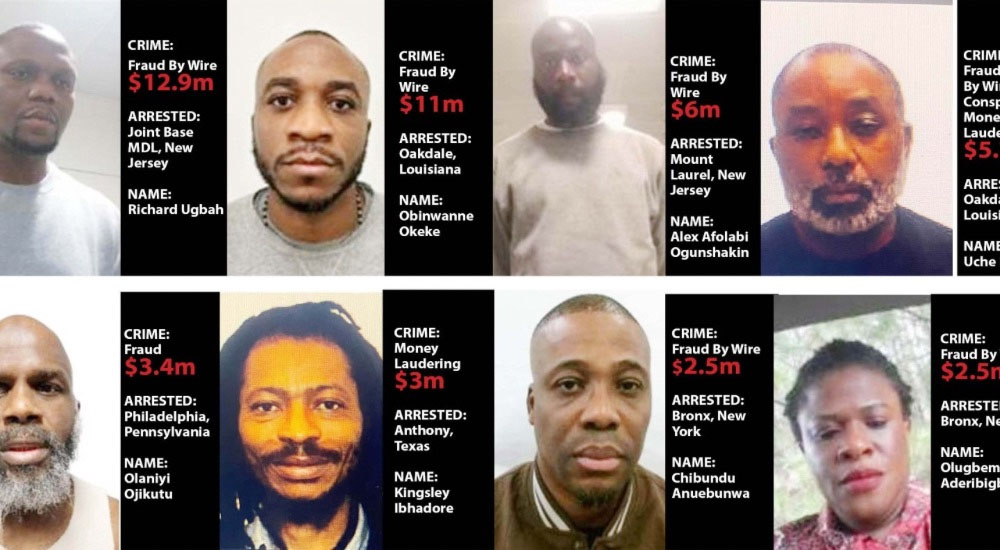
30 Nigerians on US Deportation Portal Linked to N87bn Fraud
International
Iran Halts Military Operation Against Israel, Warns of Stronger Response if Attacks Continue
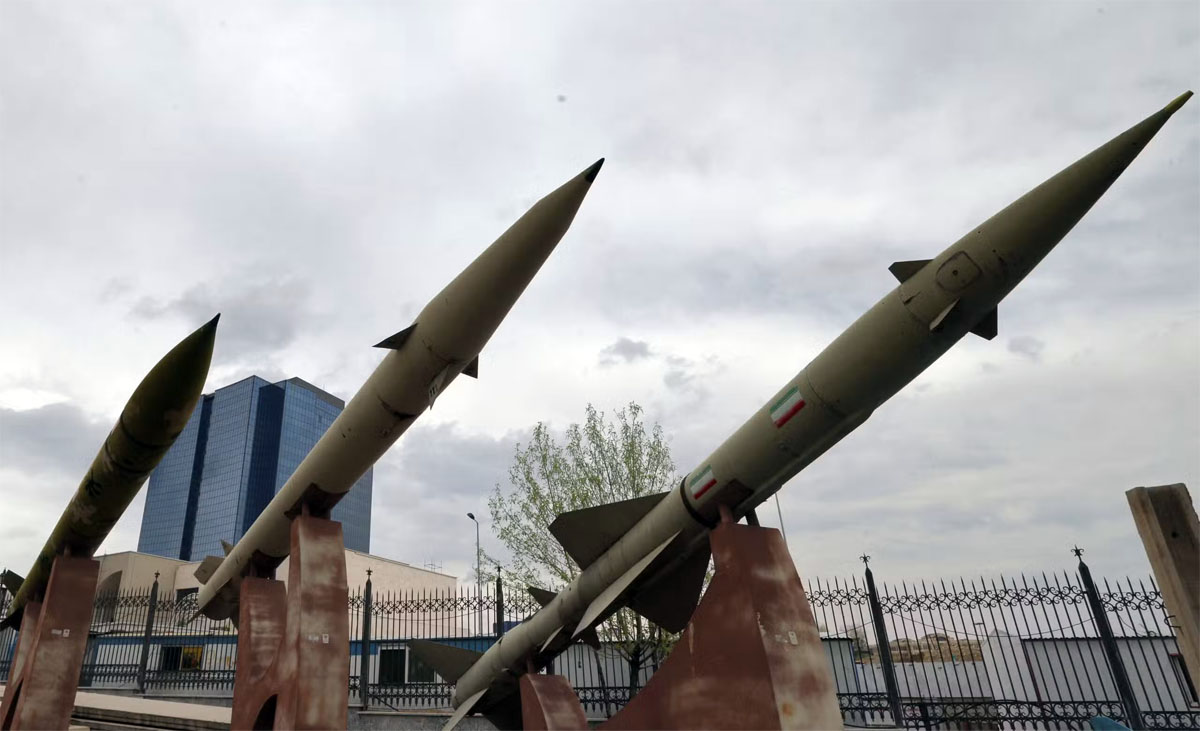
Iran Halts Military Operation Against Israel, Warns of Stronger Response if Attacks Continue
Iran’s military command on Monday announced the suspension of its operation against Israel after the two countries exchanged missile and air strikes for the first time since an April ceasefire.
In a statement broadcast on Iranian state television, the Khatam al-Anbiya Central Headquarters said Iran had delivered what it described as a “painful response” to Israeli actions and was therefore ending its current military operations against Israel.
“Accordingly, the cessation of armed forces operations is hereby announced,” the statement said.
However, the command warned that the halt was conditional and could be reversed if Israel continued what Tehran described as acts of aggression, particularly in southern Lebanon.
“It is emphasised that should acts of aggression and hostility continue, including in southern Lebanon, much more severe and crushing measures than before will follow,” the statement added.
The announcement came after a sharp escalation in regional tensions over the weekend. Iran launched multiple waves of missiles at Israeli targets after Israel carried out strikes linked to Hezbollah positions and other targets in Lebanon. Israel responded with air strikes on sites inside Iran, marking the most serious direct exchange between the two sides since the truce that took effect in April.
READ ALSO:
- NLC, TUC Threaten Nationwide Shutdown Over Escalating Insecurity
- Oyo Demolishes Kidnappers’ Hideout Used to Hold Adelabu’s Sister, Twin Sons
- NYSC Releases Step-by-Step Guide for Date of Birth Correction on Portal
The latest flare-up raised fears that the ceasefire brokered earlier this year could collapse entirely and trigger a broader regional conflict involving Lebanon’s Hezbollah movement and other Iran-backed groups.
Meanwhile, U.S. President Donald Trump urged both sides to stop military action and preserve ongoing diplomatic efforts aimed at securing a broader peace arrangement in the region. Following the exchange of strikes, both Tehran and Jerusalem indicated that they were pausing further attacks for the time being, although neither side ruled out renewed military action if provoked.
The confrontation also rattled global energy markets, with oil prices surging amid concerns that a prolonged conflict could threaten shipping routes and energy supplies in the Middle East before retreating after Iran announced the end of its current operation.
Despite the announcement, analysts cautioned that the situation remains highly fragile, with tensions over Lebanon, regional security, and Iran’s broader dispute with Israel and its allies continuing to pose a risk of renewed hostilities.
Iran Halts Military Operation Against Israel, Warns of Stronger Response if Attacks Continue
International
Israel Strikes Iranian Military Targets in Retaliation for Missile Attack
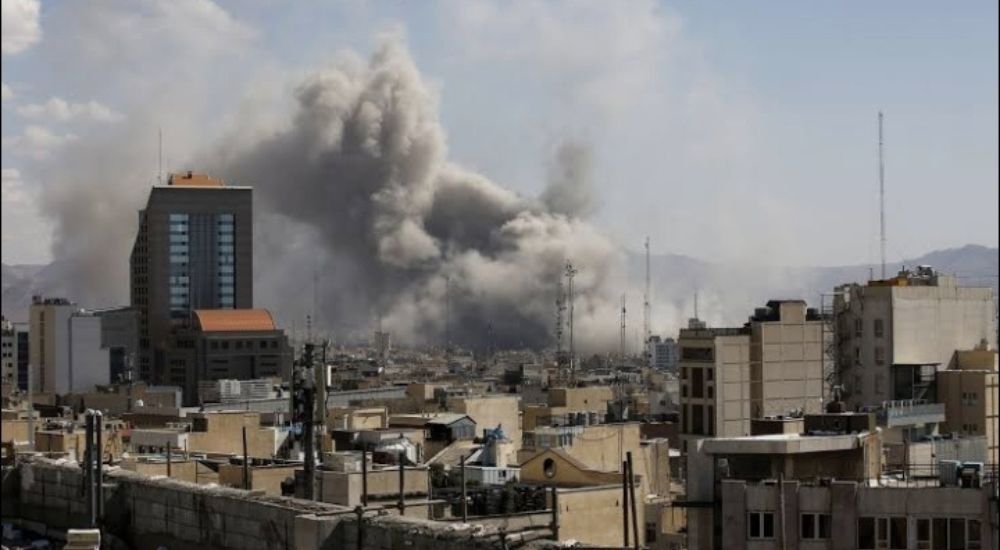
Israel Strikes Iranian Military Targets in Retaliation for Missile Attack
Jerusalem/Tehran – The Israel Defense Forces (IDF) launched airstrikes on military targets in western and central Iran early Monday, hours after Iran fired ballistic missiles at northern Israel in the first direct attack between the two nations since a fragile ceasefire took effect in early April.
The IDF said its aircraft struck military sites belonging to the “Iranian terror regime,” including areas near Tehran, Tabriz, and Isfahan. Iranian state media reported multiple explosions in those cities. The strikes also hit the Karun Mahshahr Petrochemical Company in Khuzestan Province, marking the first reported attack on an Iranian energy-related site since the April 8 ceasefire.
Israel’s ambassador to the United States, Yechiel Leiter, defended the strikes, stating that “no self-respecting country” would accept missile attacks on its territory. He added that Israel was targeting Iranian surface-to-surface missile launch sites and infrastructure not related to the energy sector.
Iran’s Islamic Revolutionary Guard Corps (IRGC) confirmed that Israel used air-launched ballistic missiles in the strikes and warned that if Israel expands its attacks on southern Lebanon or responds further, it will face more “crushing and regretful blows.”
The Iranian missile barrage on Sunday targeted Israel’s Ramat David Air Base in northern Israel, according to the IRGC. The attack was in response to recent Israeli strikes on Hezbollah positions in Beirut’s southern suburbs. The IDF said it intercepted the incoming projectiles, with no immediate reports of casualties or significant damage in Israel.
The IRGC claimed its forces struck two Israeli air bases—Nevatim and Tel Nof—during the operation it codenamed “Victory” (Nasr). Meanwhile, Iranian media reported that the Mahshahr special petrochemical economic zone was being evacuated following the Israeli strikes. The Tehran fire department confirmed that no urban areas in the capital had been targeted, with explosions limited to military sites. Iran temporarily closed the airspace around Tehran’s main international airport following the attacks.
READ ALSO:
- NYSC Releases Call-Up Letters for 2026 Batch B Stream I – See How to Print Yours
- Grammy-Winning Nigerian-British Singer Stabbed to Death in UK
- BREAKING: Iyabo Obasanjo Quits APC, Alleges Persistent Disrespect, Maltreatment
President Donald Trump reportedly urged Israeli Prime Minister Benjamin Netanyahu to exercise restraint and avoid retaliatory action to preserve de-escalation efforts, telling Axios, “Hopefully Israel is not going to retaliate… Each of them had their fun. We don’t need another one.” However, Israel proceeded with the strikes despite the president’s appeal. Trump told the Financial Times that Netanyahu “doesn’t call the shots” and would have “no choice” but to accept a deal with Iran, signaling a widening rift between the two allies as the administration seeks to wind down the conflict.
The exchanges mark the latest breach of the fragile ceasefire arrangements that followed the wider U.S.-Israeli military campaign against Iran, which began in late February 2026. A senior U.S. official described Israel’s strikes as “relatively limited” in scope. The escalation threatens to derail sensitive talks to end the wider conflict and cast the region back into chaos. Iran has demanded a ceasefire in Lebanon before an accord can be reached with the U.S., while Hezbollah last week rejected a U.S.-brokered ceasefire between Israel and Lebanon.
No immediate casualty figures were available from the Iranian side. Both countries have issued warnings of further escalation as the situation continues to develop, with the IDF calling up reserve battalions and reinforcing fronts, including forces continuing operations in southern Lebanon.
Israel Strikes Iranian Military Targets in Retaliation for Missile Attack
-

 metro3 days ago
UPDATED: Police Rescue Adelabu’s Sister, Twin Sons in Ibadan – See rescue, abduction Footage
-

 News2 days ago
NAF Tracks 46 Abducted Pupils, Teachers in Oyo as Tinubu Deploys Special Rescue Unit
-

 metro2 days ago
“Sharia Law Demand is False” — Kidnapped Oyo Vice Principal Reveals Real Condition for Release
-

 metro1 day ago
Oyo Govt Weaponising Kidnap Saga Against Islam, MURIC Alleges
-

 metro3 days ago
Ogbomoso Chief Imam Denies Terrorism Allegations, Threatens Legal Action Against Defamers
-
 metro2 days ago
Police Arrest Bandits Caught Displaying AK-47 Rifles in Viral Video
-
 International22 hours ago
30 Nigerians on US Deportation Portal Linked to N87bn Fraud
-
 metro2 days ago
Goods Worth N100m Lost as CNG Vehicle Explodes, Triggers Fire in Ibadan