

Opinion
Understanding Ahmad Gumi Controversy and Nigeria’s Security Power Structure
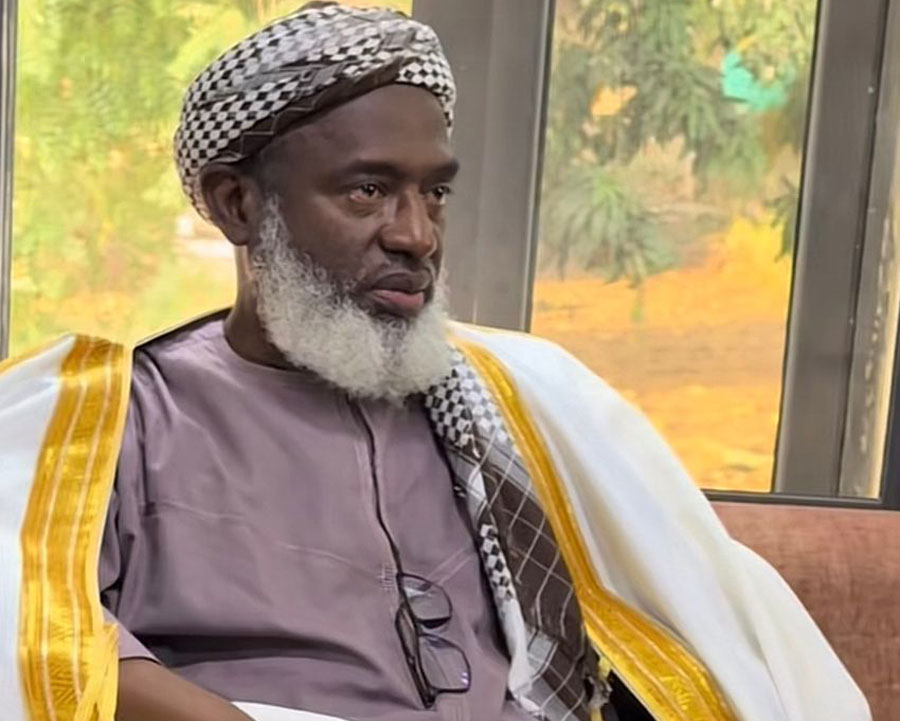
Understanding Ahmad Gumi Controversy and Nigeria’s Security Power Structure
By Mudashir “Dipo” Teniola
The conversation did not begin with Sheikh Ahmad Gumi. Like many discussions about Nigeria’s worsening insecurity, it started with another painful story — the abduction and killing of a schoolteacher in Oyo State. Frustration filled the room like thick harmattan dust before someone shifted the mood with a pointed remark:
“But this Gumi sef, despite everything, he’s still moving freely.”
That single sentence captured a deeper national confusion: how can a cleric repeatedly associated in public discourse with dialogues involving bandits, kidnappers, and armed groups continue to operate openly while the government’s response appears cautious and restrained?
To ask that question is not necessarily to defend or condemn Ahmad Gumi. Rather, it is to move beyond headlines and confront the complicated realities of Nigeria’s power structure — a system shaped by history, institutional relationships, religion, military culture, and elite influence.
Why Public Outrage Feels Understandable
Many Nigerians, especially in Southern Nigeria and among Northern Christian communities, react strongly to Gumi because their anger is rooted in lived trauma.
They remember the violence that plagued the Kaduna–Birnin Gwari corridor, the March 2022 Abuja–Kaduna train attack that left passengers kidnapped for months, and the repeated mass abductions in Zamfara and other northern states that normalised ransom negotiations and deepened public fear.
During some of the country’s darkest moments, Gumi’s visits to forest camps, his advocacy for negotiation alongside military action, and comments interpreted by critics as sympathetic to bandits generated widespread backlash.
For victims and their families, complex political analysis often matters less than justice and safety. Their frustration is therefore legitimate. When many Nigerians ask, “Why is this man still free?” they are expressing accumulated national pain and distrust in state institutions.
READ ALSO:
- UTME 2026: JAMB Gives Fresh Update on Original Result Slip Delay
- NYSC Charges Corps Members on Election Duties as Camp Closes in Osun
- Frank Edoho Faces Fresh Allegations as Estranged Wife Breaks Silence
Still, public anger alone does not fully explain the situation.
Who Ahmad Gumi Is Beyond the Headlines
Public conversations often reduce Gumi to a “controversial cleric,” but his background is far more layered.
He is:
- Son of the late Sheikh Abubakar Gumi, one of Northern Nigeria’s most influential Islamic scholars with longstanding ties to the old Ahmadu Bello political establishment.
- A trained medical doctor who served in the Nigerian Army Medical Corps and retired with the rank of captain.
- An Islamic scholar who furthered his religious studies in Saudi Arabia.
The military aspect of his identity is particularly important in understanding his influence.
In Nigeria, military affiliation often extends beyond active service. Retired officers frequently maintain strong institutional relationships, networks, and influence long after leaving the armed forces. This does not automatically provide immunity, but it can shape how the state approaches sensitive figures connected to security-related matters.
For many within government and security circles, Gumi is not viewed solely as a cleric. He represents a combination of religious authority, elite northern pedigree, and military familiarity — factors that complicate any simplistic interpretation of his role in Nigeria’s security discourse.
Nigeria’s Long History of Negotiating With Armed Groups
Another uncomfortable reality is that Nigeria’s security strategy has rarely relied on military force alone.
Successive governments have, at different times, adopted negotiation or reintegration strategies with violent non-state actors. Examples include:
- The Niger Delta Amnesty Programme introduced under late President Umaru Musa Yar’Adua.
- Reported backchannel discussions with factions linked to Boko Haram.
- Quiet engagement efforts by some northern governors seeking dialogue with armed bandit groups before publicly distancing themselves from such approaches.
Gumi has also claimed in previous interviews that elements within the Nigerian state were aware of, or indirectly involved in, some of his engagements with armed groups.
Whether Nigerians agree with that approach or not, these realities place him within a broader historical pattern of state inconsistency in handling insecurity.
READ ALSO:
- Yahaya Bello Sweeps Kogi Central APC Primary As Oshiomhole Wins Edo North
- Three Killed In California Mosque Shooting As Teen Suspects Die By Suicide
- NDC Confirms Peter Obi As Only Presidential Aspirant After Deadline
That inconsistency partly explains why many citizens struggle to understand why he has not faced harsher official consequences.
Why Many Nigerians Perceive Double Standards
For many observers in Southern Nigeria, comparisons are often drawn between Gumi and separatist figures such as Nnamdi Kanu or Sunday Igboho.
To such critics, the difference in state response reinforces perceptions of ethnic or religious bias within Nigeria’s power structure.
However, reducing the matter solely to religion or ethnicity oversimplifies a more complex system.
In Northern Nigeria, religious authority, military influence, bureaucracy, and political elite networks have historically overlapped in ways that differ from the more fragmented power structures in many southern states.
As a result, when Gumi speaks, some Nigerians hear not just an Islamic cleric but echoes of a broader establishment network with historical institutional influence.
At the same time, dismissing all criticism against him as Islamophobia or anti-Fulani sentiment is equally dishonest. Many citizens genuinely fear that rhetoric perceived as accommodating bandit grievances may unintentionally normalise criminality or deepen the suffering of victims.
The Bigger Lesson for Nigeria
The “Ahmad Gumi phenomenon” is not about mystery or untouchability. It reflects the layered realities of power in Nigeria.
In the country’s political and security landscape, influence is rarely straightforward. Military history, religious authority, elite networks, ethnicity, and institutional memory often intersect in ways outsiders may not immediately understand.
Recognising this complexity does not excuse insecurity, nor does it erase the pain of victims. But it helps explain why figures like Gumi occupy controversial yet enduring spaces within national conversations.
The killing of innocent Nigerians — from abducted teachers to victims of mass kidnappings — demands a more effective security strategy, stronger governance, and reduced tolerance for criminal economies built around ransom and violence.
Nigeria cannot move forward if outrage replaces analysis or if difficult national questions are reduced to simplistic talking points.
Understanding the structures that shape influence in the country is uncomfortable, but necessary. Nigeria is a deeply layered society, and navigating it requires the ability to hold multiple truths at once: anger over violence, awareness of institutional realities, and a commitment to justice without fear or favour.
Only then can the country move beyond endless outrage toward meaningful understanding and lasting solutions.
Understanding Ahmad Gumi Controversy and Nigeria’s Security Power Structure










Opinion
Ortom and His 23 Cars’ ‘Bonus’, by Dele Sobowale
Ortom and His 23 Cars’ ‘Bonus’, by Dele Sobowale
“As I talk to you, after I left office, vehicles that were given to me legitimately by government, this government went and seized them in a manner that was not befitting.” – Former Governor Samuel Ortom of Benue State
Last week, former Governor Donald Duke of Cross River declared that military rule was, in many respects, better than civil rule since 1999.
I cannot agree more.
I had the privilege of visiting about seven former military governors before 1999.
No military governor had up to 23 cars assigned to the Governor’s Office or residence.
By contrast, since 1999, a civilian governor with only 23 cars in the office alone would be regarded as extremely prudent.
Many have 50 or more.
Ortom’s 23 cars have triggered a dispute. Governors, on their way out of office, routinely take what they deem as their entitlements and thus render their states poorer than they met them.
Most commentaries on Ortom’s 23 cars have been superficial.
The impression they have created is that only 23 cars were taken away.
Nothing can be further from the truth.
Ortom was not the only beneficiary of that largesse.
It is quite possible that over 100 cars were taken away as parting gifts – with Ortom’s approval – as I will explain shortly.
Ortom revealed the hidden truth by saying, with a straight face, that the vehicles were allocated to him and other members of his administration through the State Executive Council, SEC, after they had been used for more than four years.
It was the worst defence for an assault on public funds ever uttered by a former official.
It provided a window into the minds of top government officials everywhere – irrespective of political party affiliation.
Every State Executive Council, SEC, comprises the governor, the deputy governor, the Secretary to the State Government and commissioners.
All the others are selected or appointed by the governor and, with the exception of the deputy governor, can be removed from office.
In other words, the SEC is created by the governor and can take no independent decision of its own.
READ ALSO:
- Abuja Demand Rises as Jetour Brings X70 Plus Experience to FCT
- Enough Is Enough: Muslim Supporters Demand New Man United Owners
- Stray Bullet Kills 400-Level IBBU Student During Land Dispute in Niger
It is not an autonomous body.
Stripped of the subterfuge surrounding it, the decision to allocate 23 cars to Ortom amounted to the governor deciding to go home with the cars and getting his echoes in the SEC to endorse it.
Ortom, inadvertently, disclosed that more cars than 23 were driven home by his government officials when he claimed that the SEC allocated the vehicles in dispute to him “and other members of his administration”.
Since “the other members of his administration” start with the SEC, it stands to reason that the deputy governor, the Secretary to the State Government, all the commissioners, the Chief of Staff, several Special Advisers, heads of state agencies, etc., were also allowed to go home with cars declared over four years old – even if by one day.
Nobody has documented the number of cars Ortom and “the other members of his administration” took away. Over 100 vehicles might be involved.
That leads to the next question because it strikes at the heart of why poverty is increasing in Nigeria.
IS A CAR FOUR YEARS OLD READY FOR THE JUNKYARD?
Most Nigerians known to me, including those driving corporate official cars, are driving vehicles more than five years old.
Mine is 12 years old and can still break the speed limit anywhere in the world.
I also own a LAGRIDE taxi, now four years old.
The Chinese-made car was offered four years ago at N4.8 million, with a down payment of N1.82 million and the balance to be paid in instalments. Today, the car costs N25 million new, and offers have been made to buy my used one for N11–N13 million.
Obviously, when any government gives away, at far less than market value, to departing officials, the public loses.
Ortom’s 23 cars, as well as the others allocated to members of his administration, would have fetched almost five times what the officials paid for them.
To put the matter in perspective, Benue State would have to pay nothing less than N6 trillion just to replace the vehicles.
Left untouched is the question: What else was taken away – furniture, generators, air-conditioners, borehole pumps?
Outgoing officials are never satisfied with taking cars with them.
“Laws grind the poor, and rich [as well as powerful] men rule the law.” – Oliver Goldsmith, 1728–1774
The other half of his self-defence concerns the legality of the allocations.
That the law is an ass has been well established; so is the fact that what we often call law might be injustice codified.
Strictly speaking, everything Abacha did was supported by laws passed as decrees. Justice was never considered.
Civilian governments also make laws which are inherently unjust to the masses.
READ ALSO:
- Oyo Police: Student Who Died by Suicide Was Charged With Assault, Not ₦8,000 Debt
- Delta Police Intercept Sienna With Military Uniforms, Suspected Drugs
- Jehovah’s Witnesses Adjust Blood Transfusion Rules, Allow Personal Choice
The regulation allowing some public servants appointed by the governor to take away very useful public properties cannot be regarded as equitable, given the fact that those who served for 30 or 35 years cannot take away a single pin without being prosecuted.
What exactly does an outgoing governor want to do with 23 cars?
MEANWHILE, GOVERNOR ALIA SETS BACK DEMOCRACY IN BENUE
Governor Hyacinth Alia, a Catholic cleric, honourably fought for justice by having the 23 cars taken away by Ortom retrieved.
It is not clear whether other cars allocated by Ortom’s SEC members were also seized.
If not, the measure would appear personal and discriminatory.
It would appear to be partial justice and tainted with vendetta.
Frequently, individuals transiently invested with near-absolute power, like Nigerian governors, cross the thin line between the divine and the ridiculous within a short time.
When Alia, for the second time, blocked Peter Obi from moving freely about in Benue State, he betrayed democracy and the Constitution of Nigeria he swore to uphold.
He failed the democracy test. He even failed the test of advanced education.
His tenure is limited by the Constitution. Obviously, he will become an ex-governor one day – without armed escorts to protect him and clear the way.
He has established a precedent which will make it legitimate for any governor in Nigeria to block his right of passage.
Two examples in Nigerian history should serve as a warning to Alia.
Military Head of State Obasanjo passed the decree under which General Gowon would have been executed in 1976 – if Britain had not granted the deposed leader political asylum.
The same decree, with slight amendment, was used by Abacha to nail his former boss.
He was saved by divine intervention.
Malam El-Rufai, as governor of Kaduna State, had critics living in other states arrested, brought to Kaduna State and detained without bail for days – before media protests got them released on bail.
Today, El-Rufai is in detention by the DSS and ICPC, without bail for almost six months.
The same media, held in contempt by El-Rufai, has now undertaken the campaign to get him released.
As one of our founding fathers, Dr Nnamdi Azikiwe, reminded us before passing to eternal life: “No condition is permanent.”
Governor Alia should climb down from his high horse and apologise to Obi and Nigerians.
Ortom and His 23 Cars’ ‘Bonus’, by Dele Sobowale
Opinion
2027: Competence, Not Zoning, Should Decide Nigeria’s Next President — Imasuagbon
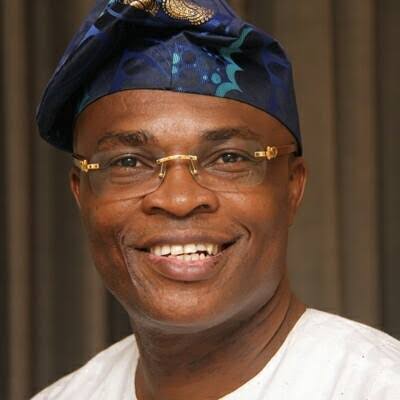
Nigerians should look beyond ethnicity, region and the longstanding debate over rotational presidency when choosing the country’s next leader, according to a chieftain of the African Democratic Congress (ADC), Kenneth Imasuagbon.
The former Edo State governorship aspirant said the priority ahead of the 2027 election should be finding a president with the ability to confront Nigeria’s economic, security and infrastructure challenges.
Speaking to journalists in Benin, Imasuagbon argued that presidential rotation is not a requirement of the Nigerian Constitution and should therefore not outweigh the question of competence.
He said voters should be more concerned about replacing poor schools with better ones, improving healthcare and addressing hardship than debating where the next president comes from.
Imasuagbon specifically appealed to voters in the South to support former Vice President Atiku Abubakar, who is contesting the 2027 presidency on the ADC platform.
According to him, Atiku has demonstrated the experience and determination needed to improve the country, describing the former vice president as someone capable of promoting national unity and fairness.
He also accused the Bola Tinubu administration of worsening economic pressure through policies including the removal of fuel subsidy, while expressing concern about the condition of roads, electricity and other infrastructure.
Imasuagbon argued that the next administration must focus on practical improvements in areas such as power, transportation, employment, security and public services.
The ADC chieftain also dismissed the idea that the ruling All Progressives Congress (APC) would automatically benefit from its incumbency advantage in 2027.
He maintained that the electorate ultimately determines the outcome of an election, arguing that voters could change the political direction of the country if they were determined to do so.
Imasuagbon further criticised what he described as regional and ethnic considerations in the distribution of political appointments and opportunities, insisting that the next president should give Nigerians across different parts of the country a sense of belonging.
His comments come as political parties and their candidates intensify preparations for the 2027 presidential election.
Opinion
Lesson from Dotun Oladipo’s Brave Daughters, by Bamidele Johnson
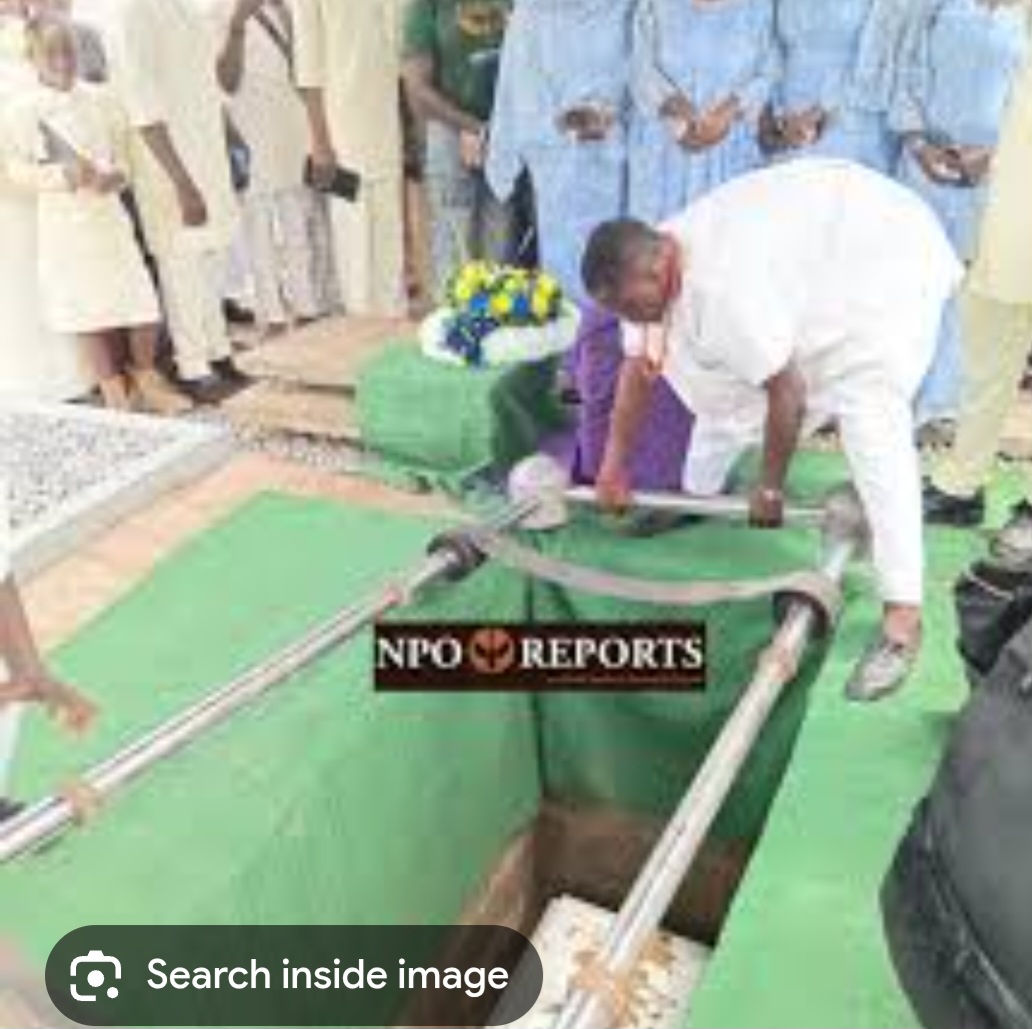
Lesson from Dotun Oladipo’s Brave Daughters, by Bamidele Johnson
I hope to grow old. I want to see my kids become real adults, find their own feet, make mistakes, recover from them, and perhaps one day complain that their own children are giving them grey hairs. I want that plainly stated before anything else, as everything that follows might read as a man agreeing to an early exit rather than a man simply being honest about the odds.
I want the decades. I want to become the grandfather who repeats the same stories until nobody bothers correcting him anymore. But wanting a thing and being granted are different things. The last year has made that difference harder to ignore than I would like. I have lost many friends recently to keep thinking that optimism is my natural resting state. Some of these men had better blood pressure than mine, better habits, better everything that is supposed to count. It did not save them.
There is no formula I know that reliably separates the men who make it to 70 from those who do not. Anyone who says he knows one is selling something. So, I do not assume that old age is an already booked destination. Even if I once did, which I doubt, the last three years have cured me of such an illusion. As such, I treat it as a hope rather than an expectation, and I have found that a more honest way to live.
It is exactly why I want something placed on record now, while I am still able to place things on record, rather than leave it for people to guess what my wishes were in the fog of a funeral week. If I do not make old bones, my children are not to be asked to read tributes at my funeral. Not one line, however short, however lovingly written.
This, for me, was settled today rather than re-opened. At Dotun Oladipo’s funeral service, his three daughters took turns to read their tributes to their dad, and I found myself watching them with awe. There was a kind of strength in them that I do not possess. It is the strength needed to stand in front of a hall brimming with grieving adults and speak about a man they have just lost. Forever. Strength, however, is not the same as ease. I could see plainly what that strength was costing them as they read. Their voices caught. Their composure held and then did not hold and then held again through sheer will.
In front of them, in the pews, men and women considerably older than them came undone in ways the girls themselves were somehow managing to resist. I went mightily close. Some of the sobbing was quiet, the type people try to fold into a handkerchief. Some of it was not quiet at all, the kind that announces itself whether or not you want it.
Those young women honoured their father with a grace that is beyond me. What they did was astonishing. So, what I am attempting is an observation of a custom I have now watched wound people. This was not the first time I had watched this particular ritual extract more than it should from people already running on fumes. I saw an earlier and harder version of it at a friend’s wake back in 2015.
The first son was called forward to read his father’s tribute, and he could not do it. He tried, but the words would not come, and he stood there in front of a crowd of mourners, with his grief simply refusing to organise itself into sentences. The officiating minister, rather than releasing him from the task, urged him to continue. I sat fizzing with sorrow and ire. He could not go on and, eventually, the minister accepted, but not before insisting a while longer than it should have reasonably taken. His younger brother was called up next, presumably on the theory that if one grieving son could not manage it, maybe another one could. He flunked it in the same way. Grief does not distribute itself more conveniently among siblings just because a programme has been printed and needs to be followed.
I have turned that memory over many times since, trying to work out why this part of the rites is treated as mandatory in the first place. I have not found a satisfying answer. Maybe it comes from a belief that a child’s words carry more weight than anyone else’s, which may even be true, but weight is exactly the problem when those carrying it are struggling to hold themselves together with nothing but adrenaline and the fear of dissolving in public.
Maybe it is simply inertia, the reason we still do a hundred things at funerals that nobody can explain the original purpose of. Either way, I have stopped looking for the justification. I no longer think one exists that is good enough to weigh against what I watched happen to that boy in 2015.
So, let this stand as my instruction rather than my preference, the kind of thing I would rather state plainly now than leave for my children to infer later from how uncertain I sound when the subject comes up in passing. If I do not get the old age I am hoping for, my children will not be asked to read a single word over my body. Someone else can speak for me. A friend, a stranger with a steadier voice and a smaller stake in the loss, anyone whose grief will not be quite so total that standing upright becomes almost impossible.
My children, of course, will sit in front and fall apart if that is what the day requires of them, but without the microphone. That, at least, is one small mercy I intend to arrange for them while I am still here to arrange it.
Dotun deserved every bit of the send-off his daughters gave him today, and I suspect he would have been the first to tell them to sit down and let someone else carry the weight for a while. He did not get a say in that, as none of us ever do once we are the ones being spoken of rather than the ones speaking. Rest well, Dotun. You raised three young women whose strength I will not soon forget. That alone says everything worth saying about the man you were.
-
 metro1 day ago
Workers to Begin Nationwide Warning Strike Over Petrol Price, Wage Award
-
 metro3 days ago
$2.1m Land Suit: Court Orders Wike’s Son to Produce American Passport
-

 metro3 days ago
Osogbo Food Bonanza: Angry Customers Loot Warehouse After Operators Vanish
-

 News3 days ago
Tinubu Returns After 30 Days in Europe, Says ‘I’m Healthy and Ready to Work’
-

 metro3 days ago
Two Nigerians Jailed 15 Years Over $2.4m US Cyber Fraud
-

 metro3 days ago
Flood Cuts Off Part of Agbarho-Ughelli Road, Strands Commuters in Delta
-

 Business2 days ago
Dangote Sets 40-Month Deadline for $16bn East Africa Refinery in Kenya
-

 Business3 days ago
Dangote Draws Battle Lines as Fuel Import Fight Heads Back to Court