Don’t add lies to the terrorist horror in Oyo, By Farooq Kperogi - Newstrends
Connect with us

Health

Don’t add lies to the terrorist horror in Oyo, By Farooq Kperogi

Published

on

Kperogi is a renowned columnist and United States-based professor of journalism.
Farooq Kperogi

Don’t add lies to the terrorist horror in Oyo, By Farooq Kperogi
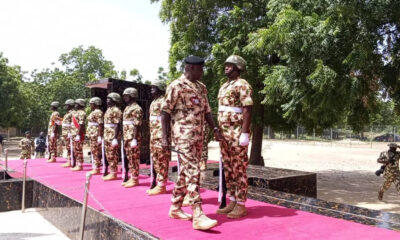
The kidnapping of schoolchildren and teachers in Oyo State is horrifying enough by itself. It does not need the embellishment of lies, half-truths, conjectures and opportunistic propaganda to make it more horrifying than it already is.

But that is precisely what appears to be happening with the viral, social-media-amplified list of “demands” allegedly made by the terrorist bandits who kidnapped schoolchildren and teachers in Oyo State.

According to the social media version of the story, the bandits have demanded four things as preconditions for releasing the innocent people in their captivity: one billion naira to be paid into an account in the Republic of Benin, the release of bandits supposedly being held in Agodi and Abolongo prisons, two Hilux vehicles and the amendment of Oyo State laws to introduce Sharia.

This list has travelled far and wide because it has all the elements that make rumors combustible in Nigeria. It involves money, foreign conspiracy, terrorism, prisons, Sharia and the implicit insinuation that some local Muslims must know more than they are saying. It is almost a perfect specimen of panic engineering.

The problem is that it has no firm evidentiary foundation. The abduction is, of course, real. So are the communal grief and the horrors people in Oyo and the Southwest are contending with now. But the four-point demand list that is now being hawked across social media as fact is not supported by any credible reporting.

The source of the social media-fueled four-point demand list appears to be a vague statement attributed to the Speaker of the Oyo State House of Assembly, Debo Ogundoyin. He was reported to have asked whether anyone would negotiate with terrorists if they asked for weapons, money or concessions on future laws of the land as part of their ransom.

That is a general, hypothetical-sounding formulation. But some people somewhere with a predetermined agenda sat down and chose to stretch this conjectural formulation from the Speaker as evidence of disclosure of a precise list of specific demands.

There is a world of difference between saying terrorists asked for “weapons, money or concessions on future laws” and saying they demanded “one billion naira into a Benin Republic account, two Hilux vehicles, release of detainees in Agodi and Abolongo prisons and the introduction of Sharia in Oyo State.” One is vague, perhaps even rhetorical. The other is specific, explosive and politically loaded. You cannot responsibly move from the first to the second without foolproof evidence.

READ ALSO:

Even the few newspaper reports that published the more sensational version were cautious and guarded in their language. They said, “reports indicate,” “reportedly attributed” and “according to the report” without once mentioning any “report.” That is lazy journalism’s way of saying, “We have no facts for this story.”

But certain people on social media have laundered the uncertainty into certainty, the allegation into fact, the list as a means to attract and monetize eyeballs, and the rumor into a psychological weapon.

The Sharia claim is the most suspicious part of the whole thing. Where will the Sharia be implemented? In the classrooms from which the children were abducted? In the Old Oyo National Park where the homicidal, blood-stained criminals are believed to be hiding? In the kidnappers’ forest camps? Or across Oyo State through a ransom note from bandits? The absurdity should detain us before outrage overtakes our capacity for critical thought.

The demand is also historically and empirically incoherent. Bandits and terrorists (who, in my dictionary, are indistinct) have murdered Muslims in states where Sharia already exists. They have attacked mosques. They have killed imams while they are leading prayers in mosques during Ramadan, Islam’s holiest month. They have kidnapped Muslim women, Muslim children, Muslim clerics and Muslim farmers.

They have devastated Zamfara, Katsina, Sokoto, Kebbi, Niger, Kaduna and other Muslim-majority communities such as Kwara North. Just last week, these insensate beasts abducted the wives and children of the Emir of Yasikiru in my natal local government of Baruten. Not done, they also burned the emir’s palace. This happened only a few months after murdering nearly 300 people and abducting nearly 300 women and children, most of whom are Muslims, in neighboring Kaiama Local Government.

To suddenly believe that the same species of criminals has discovered the virtues of Sharia and are championing its enshrinement in Oyo State’s laws is to suspend judgment in the service of prejudice.

READ ALSO:

The Benin Republic bank account story is also suspicious. Of course, no banking system is immune to criminal manipulation. Criminals use “mule accounts,” stolen identities and corrupt intermediaries everywhere. So, the existence of KYC and anti-money-laundering rules does not make the claim impossible. But it does make it evidentially demanding. If anyone claims that kidnappers asked for one billion naira to be paid into a named or unnamed Benin Republic account, the burden of proof should be higher than “according to reports.”

The danger of this rumor is not merely that it is false or unverified. It is that it has already acquired a social function. It is being used to suggest that Yoruba Muslims, especially those who have advocated the introduction of the civil aspects of Sharia to adjudicate issues like marriage and inheritance among Muslims, are somehow complicit in the crimes of these bandits.

It is also being used to imply that the abduction of Yoruba schoolchildren is part of an Islamic plot that local Muslims either endorse or secretly facilitate. This is how societies descend into self-sabotaging moral idiocy. Criminals commit crimes and innocent people who share a religion, ethnicity or language with the imagined identity of the criminals are made to bear the brunt of unjustified transferred aggression.

It bears stressing that Yoruba Muslims are not responsible for the abduction of schoolchildren in Oyo State. Muslim communities in Yorubaland are not accessories to banditry merely because a rumor says kidnappers demanded Sharia. The mere mention of Sharia in a viral post does not convert every Muslim in Oyo, Osun, Ogun or Lagos into a suspect. To argue otherwise is to accept the same collective guilt logic that has poisoned Nigeria’s intergroup relations for decades.

Terrorists murder Muslims, Christians, traditional worshippers and non-religious people. They murder Hausa, Fulani, Yoruba, Igbo, Tiv, Berom, Nupe, Baatonu and everyone else when doing so advances their greed, sadistic urges, murderous impulses or tactical objectives. They are not equal-opportunity humanists, of course. They often manipulate religion and ethnicity. They sometimes speak the language of faith while practicing the ethics of beasts. But their victims are not drawn from one religious community alone.

The fight against terrorism is weakened when we isolate innocent groups for demonization. It dissipates much-needed moral energy and produces enemies where allies are needed. It also encourages communities to hide behind siege mentalities instead of cooperating across religious and ethnic lines to expose criminals. The people who should be angry together are made to be angry at one another.

The people who kidnapped children in Oyo State are reprehensible, homicidal outlaws. The state must rescue the victims, punish the perpetrators, expose their collaborators and secure schools and forests. That is the task, and it is immense, urgent, ever-present and already morally overwhelming. It should not be complicated by people who are eager to graft their pre-existing animus onto other people’s pain.

Someone I discussed this issue with yesterday told me that the rumors of the list of demands are activated by an unusually heightened sense of vigilance. I get that. There is nothing wrong with vigilance. In fact, vigilance is now a condition for survival in Nigeria. But vigilance without verification can provoke self-annihilating hysteria and mob psychology.

The children and teachers in captivity deserve our full attention. Their families deserve empathy unpolluted by propaganda. Oyo State deserves security, not rumor-fed religious suspicion. Nigeria deserves a serious conversation about the collapse of state protection, the spread of kidnapping economies, the mass helplessness in the face of terror and the ungoverned spaces that have become refuge for terrorists and bandits.

What Nigeria does not need is another lie added to an already unbearable tragedy.

Don’t add lies to the terrorist horror in Oyo, By Farooq Kperogi


Kperogi is a renowned Nigerian columnist and United States-based Professor of Journalism.

Loading

Health

Kano diphtheria outbreak: Over 50 children reportedly dead as lawmakers demand urgent action

Published

on

Kano diphtheria outbreak: Over 50 children reportedly dead as lawmakers demand urgent action

Kano diphtheria outbreak: Over 50 children reportedly dead as lawmakers demand urgent action

The Kano State House of Assembly has called on Governor Abba Kabir Yusuf to urgently intervene in a reported diphtheria outbreak in Rano Local Government Area, where lawmakers say more than 50 children have died.

The alarm was raised during Monday’s plenary after the member representing Rano Constituency, Ibrahim Muhammad, presented a motion of urgent public importance before the House, presided over by Speaker Ismail Falgore.

Muhammad said the outbreak had particularly affected communities in Ridin and Sabuwar Kaura, where more than 50 children were reportedly killed by the disease.

He said emergency measures had already been initiated, including the purchase of medication and deployment of health workers to the affected communities. However, the lawmaker stressed that the response needed to be significantly strengthened to contain the outbreak and prevent additional deaths.

Muhammad appealed to Governor Yusuf and the Kano State Commissioner for Health to provide further emergency assistance to the affected communities, warning that the disease had spread extensively in the area.

He also expressed concern over the recurrence of the outbreak, noting that a similar incident had reportedly claimed several lives in the area last year.

The situation, according to another lawmaker, has also raised concerns beyond Rano. Supporting the motion, the member representing Kiru Constituency, Usman Abubakar Tasiu, said the outbreak had reportedly spread to communities in Kiru, including Kwarin Dangora, Dangora town and Yelwa.

READ ALSO:

Tasiu disclosed that an APC youth leader in Kiru reportedly lost two children to the disease within one day. He called for the establishment of an emergency committee to coordinate the response across affected local government areas.

He proposed that the emergency response should cover Rano, Tudun Wada, Kibiya, Bunkure, Bebeji and Kiru, amid concerns that transmission could spread further without stronger intervention.

Another lawmaker, Saleh Ahmad, representing Dawakin Tofa Constituency, urged the state government to intensify vaccination and other preventive measures. He warned that diphtheria is contagious and can spread rapidly to neighbouring communities.

The Majority Leader of the House, Lawan Husseini, also urged the state government to invoke the provisions of the state’s Health Protection Law to contain the outbreak.

According to Husseini, the law empowers the government to provide emergency relief and free healthcare while allowing authorities to isolate affected persons and restrict movement where necessary in areas affected by infectious diseases.

The Assembly subsequently approved the motion and directed its Committee on Health to engage the Ministry of Health on the implementation of the law and the provision of emergency relief to affected communities.

The latest development is particularly concerning because Kano has historically carried a large share of Nigeria’s diphtheria burden. Previous health surveillance data showed that Kano recorded thousands of suspected and confirmed cases during Nigeria’s prolonged diphtheria outbreak, alongside hundreds of deaths.

Diphtheria is a serious bacterial infection that can cause severe illness and death, particularly among people who are unvaccinated or inadequately vaccinated. The disease can spread through respiratory droplets and close contact, making rapid detection, treatment, contact tracing and vaccination important components of outbreak control.

The reported deaths in the current Rano outbreak are based on statements made by Kano lawmakers. The specific death toll should therefore be treated as reported by the Kano State House of Assembly pending further confirmation from relevant health authorities.

The lawmakers’ intervention puts additional pressure on the state government to verify the scale of the current outbreak, strengthen disease surveillance, provide medicines and other emergency supplies, intensify vaccination and ensure that affected residents have timely access to treatment.

The immediate priority is to prevent further deaths and stop the reported spread of the disease from Rano to neighbouring communities.

Kano diphtheria outbreak: Over 50 children reportedly dead as lawmakers demand urgent action

Loading

Continue Reading

Health

FG strengthens emergency response, releases medical hotlines for Nigerians

Published

on

FG strengthens emergency response, releases medical hotlines for Nigerians

FG strengthens emergency response, releases medical hotlines for Nigerians

The Federal Government has urged Nigerians to dial 112 whenever they face a medical emergency requiring urgent attention, as it released a list of emergency medical call centre numbers covering states across the country and the Federal Capital Territory (FCT).

The National Emergency Medical Service and Ambulance System (NEMSAS) said the toll-free 112 emergency number serves as a central access point for emergency medical assistance, while several states have additional dedicated numbers to facilitate faster responses.

NEMSAS said its emergency response system is designed to provide rapid intervention, professional medical care and life-saving services, with emergency responders available around the clock.

The agency released emergency contact numbers covering 35 states and the FCT, although it listed the emergency call centres in Benue and Imo as not operational.

Under the emergency contact arrangements, residents of Abia can call 112 or 08000000800, while those in Adamawa can use 112, 1755 or 07011111443.

In Akwa Ibom, the listed numbers are 112, 08000022322 and 08000022422, while residents of Anambra can call 112, 5111 or 08002200008.

Residents of Bauchi can dial 112 or 07038636433, while Bayelsa residents can use 112 or 08002200223. NEMSAS listed Borno as 112 or 08000000033, while Cross River has 112 as its listed emergency number.

For Delta, the listed contacts are 112, 07041008130 and 07041008131, while residents of Ebonyi can call 112, 08086446891 or 08086445736.

READ ALSO:

In Edo, residents can use 112, 739 or 09037999871, while Ekiti lists 112, 08000606606, 0811111122, 0811111133, 0811111144 and 0811111155.

Residents of Enugu can call 112, 09074996090 or 07066466429, while Gombe lists 112 or 07033825646. Jigawa has 112 as its listed emergency number, while Kaduna residents can call 112 or 08064111599.

For Kano, the listed emergency contacts are 112, 09019999920 and 09049999914. Katsina and Kebbi each have 112 listed as their emergency number.

Residents of Kogi can dial 112, while Kwara residents can call 112, 09062010001 or 09062010002.

In Lagos, the listed emergency numbers are 112 and 767, while Nasarawa residents can use 112 or 08144911269.

Residents of Niger State can call 112, 08022422953 or 08155577513, while those in Osun can use 112, 08111110532 or 08111110561.

For Ogun, the listed numbers are 112 and 08112000033, while Ondo residents can call 112 or 08055300300.

Residents of Oyo can dial 112 or 615, while Plateau lists 112 or 09136982496.

In Rivers, residents can call 112, 09040222281, 09040222283 or 09040222285, while Sokoto residents can use 112, 07045963318 or 07071765080.

For Taraba, the listed emergency contacts are 112, 07041122777 and 07041100777, while Yobe residents can call 112, 09169981792 or 08000090009.

Zamfara has 112 as its listed emergency number, while residents of the FCT can call 112, 09157892931 or 09157892932.

The release is part of ongoing efforts by the Federal Government to strengthen emergency medical services in Nigeria, improve ambulance response and reduce delays in transporting patients to appropriate healthcare facilities.

NEMSAS has previously disclosed that emergency medical service structures have been established across the 36 states and the FCT, although the level of operational readiness differs from one state to another.

The agency has also identified challenges affecting the nationwide use of 112, including connectivity problems and inadequate public awareness. It has called for stronger collaboration with telecommunications providers to improve access to the emergency line.

To complement the national number, NEMSAS has therefore encouraged states to maintain dedicated emergency call centres and provide alternative contacts for residents.

The Federal Government is also pursuing a digital emergency dispatch platform designed to connect emergency callers, ambulance operators and healthcare facilities. The system is expected to support faster dispatch, patient tracking, referrals and coordination between emergency responders and treatment centres.

NEMSAS has expanded the deployment of emergency response assets, including ambulances and other vehicles designed to reach communities that may be difficult to access with conventional emergency vehicles.

The agency’s Rural Emergency Service and Maternal Transport (RESMAT) programme is also aimed at improving access to emergency transportation for pregnant women, newborns and other residents in underserved communities.

NEMSAS has called for greater public awareness of emergency services and urged Nigerians not to delay seeking help when confronted with life-threatening situations.

The agency advised residents to save 112 and their relevant state emergency numbers on their mobile phones so they can quickly request assistance when needed.

NEMSAS stressed that its emergency medical response service operates 24 hours a day, seven days a week, and that prompt access to professional emergency care can be critical in saving lives.

FG strengthens emergency response, releases medical hotlines for Nigerians

Loading

Continue Reading

Health

Stage 4 Cancer: Understanding Ogogo’s Diagnosis and Treatment Options

Published

on

Stage 4 Cancer: Understanding Ogogo's Diagnosis and Treatment Options
Veteran Yoruba actor Taiwo Hassan, popularly known as Ogogo

Stage 4 Cancer: Understanding Ogogo’s Diagnosis and Treatment Options

The recent emotional appeals by the daughters of veteran Yoruba actor Taiwo Hassan, popularly known as Ogogo, have drawn national attention to the realities of stage-four cancer. The 66-year-old film icon’s family revealed he was diagnosed with the advanced disease about three weeks ago and that hospitals have indicated they can no longer continue chemotherapy. This has sparked confusion and concern, prompting a medical expert to clarify what a stage-four diagnosis truly means, how it is treated, and why palliative care is not the same as being abandoned.

Stage-four cancer is the most advanced stage in the commonly used TNM staging system. It generally means the cancer has spread from where it first developed to distant parts of the body—a process known as metastasis. Dr. Olusina Ajidahun, a medical doctor and health communicator known as The Bearded Dr Sina on X, explained it simply: “Stage 4 cancer means the cancer has left the primary organ and gone to other sites.” Cancer staging uses the TNM system to assess the size and extent of the main tumor, whether nearby lymph nodes are affected, and whether the cancer has spread to distant parts of the body. The stage given at diagnosis remains the same, even if the cancer worsens or spreads further.

Symptoms of cancer vary depending on the type and location of the disease. According to medical experts, possible symptoms include unexplained weight loss, persistent tiredness, unusual bleeding, persistent pain, a lump or swelling anywhere on the body, changes in bowel or bladder habits, persistent cough or hoarseness, difficulty swallowing, and changes to the skin. For metastatic cancer, symptoms depend on where the cancer has spread. Spread to the bones can cause pain or fractures, spread to the brain can cause headaches, seizures, or dizziness, spread to the lungs can cause shortness of breath, and spread to the liver can cause jaundice or abdominal swelling. It is important to note that many of these symptoms can be caused by other illnesses, and a persistent or unusual symptom should always be assessed by a healthcare professional rather than self-diagnosed. Some cancers may cause few or no noticeable symptoms in their early stages, which is why regular screenings are recommended for certain cancers and groups of people. Early diagnosis can significantly improve the chances that cancer will respond to treatment.

READ ALSO:

Yes, stage-four cancer can be treated. Treatment depends on several factors, including the type of cancer, where it has spread, the characteristics of the cancer, the patient’s general health, and how the cancer responds to treatment. Depending on the circumstances, doctors may use chemotherapy, immunotherapy, targeted therapy, hormone therapy, radiation therapy, or surgery. In October 2025, Nigeria launched its first immunotherapy program for metastatic colorectal cancer at National Hospital Abuja, marking a significant step forward in advanced cancer care in Sub-Saharan Africa. For many patients with metastatic cancer, the goals of treatment shift to shrinking or controlling the cancer, slowing its growth, relieving symptoms, helping the patient live longer, and maintaining quality of life. Research shows advancements in treatment options are helping people with metastatic cancer live longer and have a better quality of life overall.

Dr. Ajidahun clarified that when patients reach stage four and chemotherapy and other available therapies have been explored, doctors may recommend palliative care. “When patients have stage 4 cancer and chemo and/or other therapies have been explored, there is a form of care called PALLIATIVE CARE… which is end-of-life care and care for terminal diseases because at the point of the disease you cannot treat it, but you can manage associated symptoms and give the person a good quality of life before death,” he explained. He stressed that moving a patient to palliative care does not mean medical treatment has been withdrawn. Rather, it may reflect a change in the goal of care, particularly when doctors believe further aggressive treatment could cause more harm than benefit. Palliative care focuses on improving quality of life, managing symptoms such as pain, difficulty breathing, and other problems associated with cancer or its treatment. It does not necessarily mean that cancer treatment has stopped or that doctors have given up on the patient.

Dr. Ajidahun cautioned that describing the situation as hospitals refusing to treat the actor could create a misleading impression and potentially expose medical personnel to hostility. “Saying they don’t want to treat my father makes it look like they are intentionally rejecting him, and in the context of recent happenings in the health sector, it can trigger an insurrection and put a bad label on health care workers,” he said. In response to one of Ogogo’s daughters mentioning herbs as a possible option, Dr. Ajidahun issued a strong warning: “There are no herbs that will treat a stage 4 cancer.” He cautioned that unverified concoctions could damage more organs and cause further complications, ultimately wasting money and creating more problems. “These concoctions will end up damaging more organs and causing more complications. You’d end up wasting money and causing more problems,” he said.

Public information about Ogogo’s health remains limited. His daughters have publicly said that he is battling stage-four cancer and have appealed for medical assistance. According to reports, several hospitals have turned their father away because of his condition, and the family is seeking medical direction rather than financial donations. The public reports do not establish the specific type of cancer Ogogo has, the extent to which it may have spread, or his detailed medical prognosis. Those questions can only be properly assessed by his medical team after reviewing his diagnosis, scans, pathology results, treatment history, and overall health. Key takeaways from this explanation are that stage-four cancer means the cancer has spread to distant parts of the body, treatment is still possible and may aim to control the cancer, relieve symptoms, and prolong life, palliative care focuses on managing symptoms and improving quality of life and is not abandonment, herbal remedies for stage-four cancer are dangerous and unproven, and Ogogo’s specific prognosis cannot be determined from public information alone.

Stage 4 Cancer: Understanding Ogogo’s Diagnosis and Treatment Options

Loading

Continue Reading

Trending