

News
Supreme Court Affirms Death Sentence for Delta Kidnapper
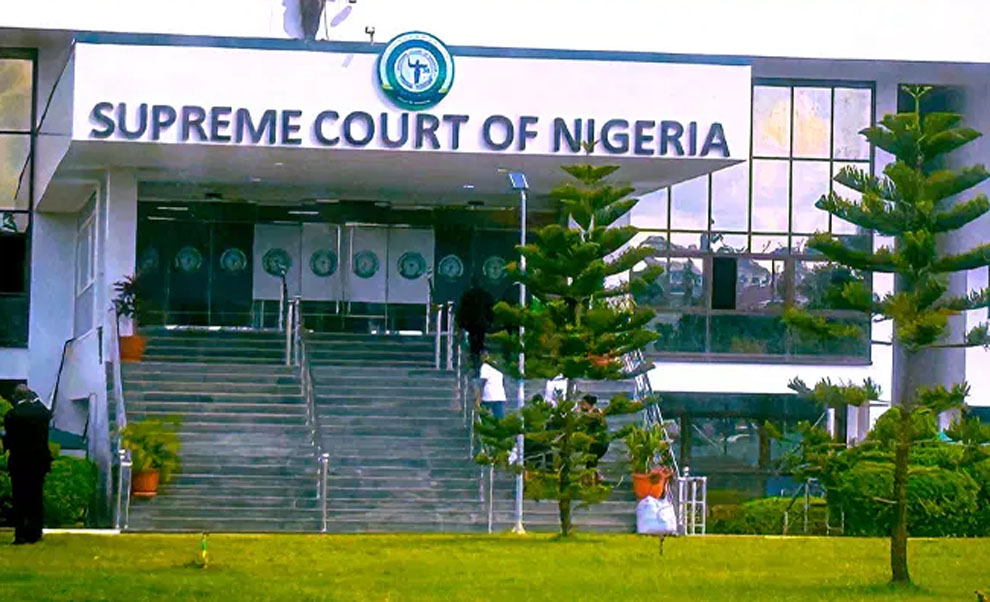
Supreme Court Affirms Death Sentence for Delta Kidnapper
ABUJA, Nigeria – The Supreme Court has affirmed the death sentence by hanging handed to a convicted kidnapper from Delta State, Chelynor Halim, bringing to a close a lengthy legal battle over his involvement in a high-profile abduction case that dates back to February 2014. In a unanimous ruling delivered on Friday, June 5, 2026, a five-member panel of the apex court dismissed Halim’s appeal and upheld the judgment of the lower courts, ruling that the evidence against him was overwhelming and sufficient to sustain his conviction. Delivering the lead judgment, Justice Chioma Nwosu-Iheme held that the prosecution successfully established the identity and participation of the appellant in the crimes, and that the evidence presented during trial clearly placed him at the scene and linked him directly to the kidnapping operation.
The case dates back to February 9, 2014, when Halim and his accomplices kidnapped Joan Osemene in the Ibusa area of Delta State. The victim was seized by the gang and taken to an unknown location, where she was subjected to a terrifying ordeal. According to court records, Halim slapped the victim, threatened her with a firearm, and later covered her nose with a cloth containing a substance that rendered her unconscious. The gang leader, identified as Edozie Obude, reportedly grabbed the victim by the throat, struck her neck with a metal object, and ordered that she be thoroughly searched. During the search, the gang dispossessed her of N10,000 in cash and her ATM card, which they later used to withdraw N55,000 from her bank account.
The victim testified that after the robbery, her hands and legs were tied and she was taken to another location where the gang abandoned her. In a dramatic turn of events, she eventually managed to free herself and escape. As she ran until she reached a major road, she flagged down a motorcyclist to help her move farther from the area. However, in an ironic twist, the motorcyclist turned out to be Chelynor Halim — one of her attackers. Upon recognizing him, she raised an alarm, prompting nearby bystanders to apprehend him before he could flee. He was subsequently handed over to the Department of State Services (DSS) for further investigation. During the probe, Halim reportedly provided information that led authorities to the gang’s hideout. A confrontation between security agents and the criminal group followed, resulting in the death of the gang leader, Edozie Obude, in a shootout. The second accused, Emeka Okeze, was arrested through information provided by Halim. Both men were subsequently tried and convicted.
READ ALSO:
- 49 Die of Thirst in Niger’s Sahara Desert After Truck Breakdown
- MFM Suspends Nationwide Night Vigils, Sets 8pm Cut-Off for Church Activities
- Nigeria to Evacuate Over 1,000 Citizens as Anti-Migrant Violence Spreads in South Africa
Halim was first convicted in 2017 by a High Court sitting in Asaba, Delta State, which held that the proof of evidence established his involvement in armed robbery and kidnapping. The presiding Judge, Justice Sylvester Okoh, found that the prosecution proved the case of conspiracy to commit armed robbery, kidnapping, and assault punishable under section 1(2)(a) of the Robbery and Firearms (Special Provisions) Act Cap R. 11 Volume 14, Laws of the Federation 2014 and under section 3(1)(a) of the Delta State Anti-Kidnapping and Anti-Terrorism Law 2013. Their defense was dismissed, and they were accordingly found guilty and convicted. Following the 2017 conviction, Halim appealed the judgment. However, the Court of Appeal upheld the conviction, leading to a final appeal to the Supreme Court. On Friday, the apex court dismissed the appeal marked SC/CR/913/2022 for lacking merit and affirmed the sentence of death by hanging earlier imposed on the convict.
Justice Chioma Nwosu-Iheme, who delivered the lead judgment, is a respected Justice of the Court of Appeal who herself survived a harrowing kidnapping ordeal in 2019. She was abducted in Benin City along with four others on October 30, 2019, and her police orderly of 12 years was fatally shot during the incident. She was held captive for 14 days before being released unharmed. Her kidnappers, who initially posed as uniformed policemen, reportedly treated her with respect after learning her identity from social media, calling her “Madam Justice” and acknowledging that she had “broken the internet.” The Nigerian Bar Association (NBA) had decried her non-release during the ordeal, calling it “disheartening and distressing.” Senior Advocate Mike Ozekhome also issued an open letter pleading with her captors to release her “unhurt, unmolested and unhurt.”
The Supreme Court’s judgment comes at a time when concerns over kidnapping and violent crimes remain high across Nigeria. Security agencies have continued efforts to tackle criminal networks responsible for abductions in several parts of the country. The case of Chelynor Halim serves as a significant legal precedent, demonstrating the full weight of the law against convicted kidnappers and armed robbers in the nation’s judicial system.
Supreme Court Affirms Death Sentence for Delta Kidnapper









News
Delta Mourns as Former Governor Uduaghan Dies After Brief Illness
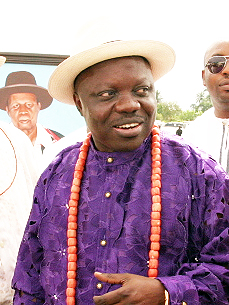
Delta Mourns as Former Governor Uduaghan Dies After Brief Illness
A former Governor of Delta State, Dr Emmanuel Eweta Uduaghan, has died at the age of 71 after a brief illness, his family announced on Monday.
Uduaghan, who governed Delta State for eight years between 2007 and 2015, died on the morning of October 19, 2026, according to a statement issued by the family and signed by Toju Andre Uduaghan.
The family described his death as a devastating loss, saying his life and years of public service touched many people across Delta State and Nigeria.
The statement, titled “Announcement of the Passing of His Excellency, Dr Chief Emmanuel Eweta Uduaghan,” read in part, “It is with hearts weighed down by immeasurable grief and profound sorrow that we announce the passing to glory of our beloved Father, Brother, Uncle, and Patriarch.”
The family said Uduaghan was a source of strength and a respected elder whose contributions to public service and family life would remain indelible.
“He served as Commissioner for Health from 1999 to 2003, Secretary to the Delta State Government from 2003 to 2007, and Governor of Delta State from 2007 to 2015,” the statement said.
It added that throughout his years in public service, the former governor demonstrated a commitment to the human and infrastructural development of the state.
The family described his death as a profound loss not only to his relatives but also to the people of Delta State and the country at large.
While expressing gratitude to God for his life and legacy, the family prayed for the repose of his soul and for divine comfort for those mourning his death.
“We pray that Almighty God, in His infinite mercy, will grant his soul eternal rest and comfort our family, friends, associates, former colleagues, and all who mourn this painful loss,” the statement added.
The family said Uduaghan’s memory would remain alive through the lives he touched and the legacy he left behind.
“Rest well, our beloved Father, Brother, and Uncle. Your memory will forever remain in our hearts, and your legacy will endure in the lives of those you touched,” it said.
The statement concluded with a prayer for the peaceful repose of his soul.
News
FG Challenges World Bank’s 124% Debt-to-Revenue Warning, Cites Rising Income
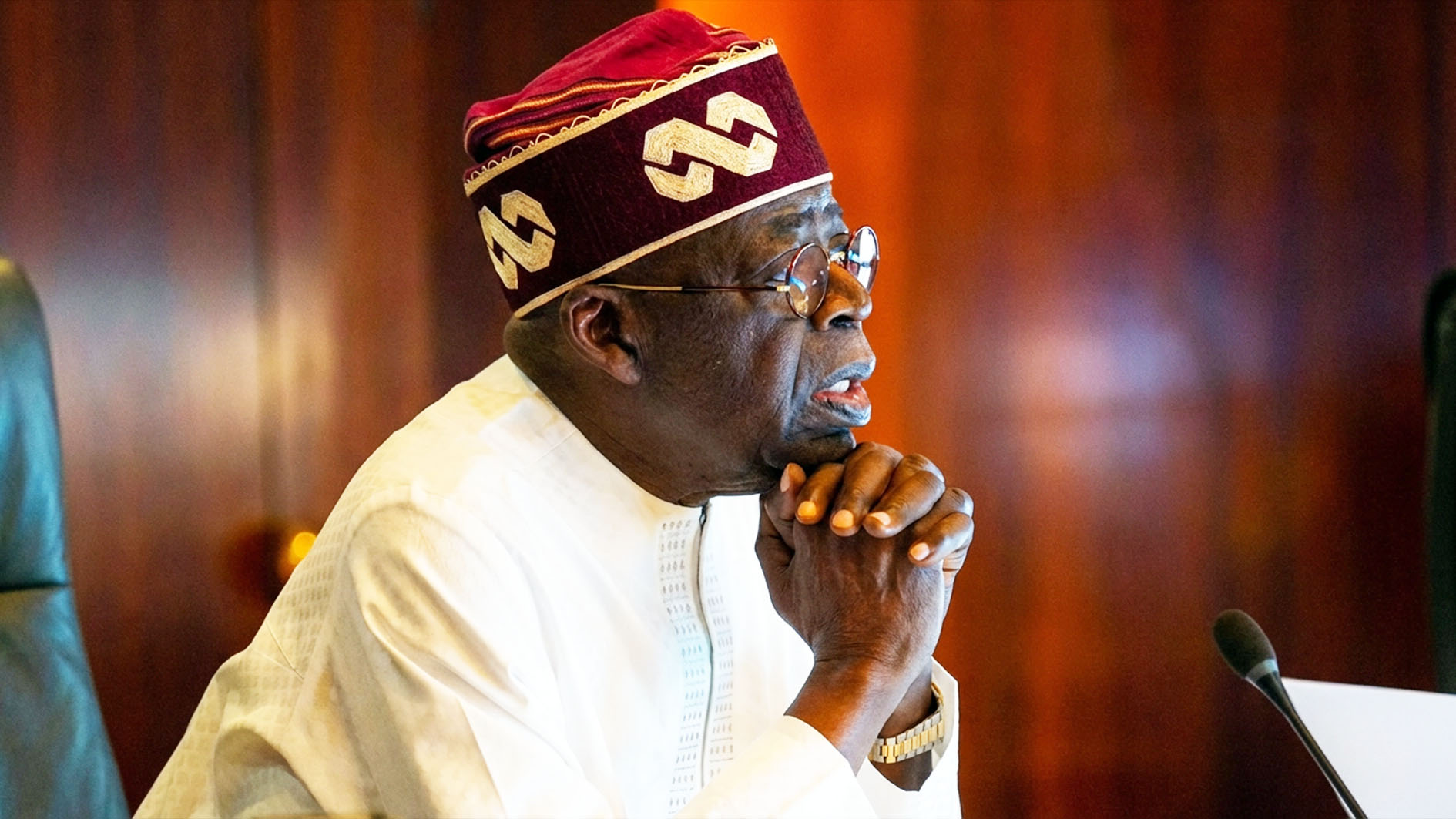
FG Challenges World Bank’s 124% Debt-to-Revenue Warning, Cites Rising Income
The Federal Government has disagreed with the World Bank’s assessment that its interest payments consumed 124 per cent of revenue in the first half of 2026, describing the calculation as misleading and arguing that it fails to capture the full picture of Nigeria’s public finances.
The dispute followed the World Bank’s October 2026 Nigeria Development Update, which reported that the Federal Government spent ₦7.7 trillion on interest payments between January and June 2026, compared with revenue of ₦6.2 trillion.
The figures imply an interest-to-revenue ratio of approximately 124 per cent, meaning the government’s interest bill exceeded its reported revenue by about ₦1.5 trillion during the six-month period.
However, the Federal Ministry of Finance, in a statement issued on Sunday, October 18, argued that the comparison combined debt obligations covering different tiers of government with a revenue figure that did not include all government earnings.
The ministry said the interest-payment figure included debts serviced by the Federal Government on behalf of other tiers of government, including external loans obtained by state governments.
It argued that comparing these obligations with federal revenue alone overstated the ratio because the figures did not cover the same level of government.
The ministry also said the revenue figure excluded independent income already earned by government agencies and enterprises but not yet remitted to the Treasury.
According to the ministry, the timing of tax collections also affects first-half revenue figures, as some statutory payments are concentrated in the second half of the year. It therefore maintained that a six-month comparison should not be treated as a definitive assessment of Nigeria’s debt sustainability.
READ ALSO:
- Mbappé Runs Riot as Real Madrid Crush Sevilla 4-1 Ahead of El Clásico
- Ogun House Fire Horror: Husband Arrested After Wife Dies Following Domestic Dispute
- NLC, Falana Mobilise Nigerians Against Petrol Price Hike, Mount Pressure on Tinubu Govt
To support its position, the government highlighted an improvement in revenue collection between the first halves of 2025 and 2026.
The ministry said Federal Government revenue increased by 72 per cent, rising from ₦3.6 trillion in the first half of 2025 to ₦6.2 trillion in the corresponding period of 2026.
Interest payments, meanwhile, rose by 38 per cent, from ₦5.6 trillion to ₦7.7 trillion over the same period.
The ministry said the difference between interest payments and revenue consequently narrowed from ₦2 trillion in the first half of 2025 to ₦1.5 trillion in the first half of 2026.
It added that the interest-to-revenue ratio fell from 156 per cent to 124 per cent, a decline of 32 percentage points.
The government attributed the improvement to its economic reforms, arguing that revenue was growing faster than interest costs and that the figures did not, on their own, establish that Nigeria was facing a debt crisis.
The ministry further argued that debt sustainability should be assessed using full-year figures, rather than a six-month snapshot that may not reflect the timing of revenue collection and debt payments.
It cited the World Bank’s projection that Nigeria’s full-year 2026 debt service, covering both interest and principal repayments, would amount to 46 per cent of revenue.
The ministry described the projected full-year ratio as a more appropriate benchmark for assessing the government’s debt obligations.
It also defended the Federal Government’s borrowing programme, insisting that borrowing remained within the limits approved by the National Assembly under the 2026 Appropriation Act and the approved borrowing plan.
According to the ministry, the government’s borrowing activities comply with the Fiscal Responsibility Act 2007 and the Debt Management Office (Establishment) Act 2003, with debt information published regularly by the Debt Management Office.
Despite the government’s objections, the reported figures highlight the pressure that rising interest costs can place on public finances. When interest payments absorb a large share of government revenue, fewer resources may be available for infrastructure, healthcare, education and other public services.
The central disagreement, therefore, concerns the appropriate basis for measuring Nigeria’s debt burden. While the World Bank’s reported figures point to interest payments exceeding federal revenue in the first half of 2026, the Finance Ministry insists that differences in government coverage and revenue timing make the ratio an incomplete measure of the country’s fiscal position.
FG Challenges World Bank’s 124% Debt-to-Revenue Warning, Cites Rising Income
News
NLC, Falana Mobilise Nigerians Against Petrol Price Hike, Mount Pressure on Tinubu Govt

NLC, Falana Mobilise Nigerians Against Petrol Price Hike, Mount Pressure on Tinubu Govt
The Nigeria Labour Congress (NLC), human rights lawyer Femi Falana, and pro-democracy activists have called on Nigerians to unite against rising petrol prices and worsening economic hardship, accusing the Federal Government of pursuing policies that have placed an unbearable burden on workers and low-income households.
The labour leaders and activists made the call at a symposium in Lagos held as part of the first memorial activities in honour of late labour activist Abiodun Aremu. They demanded an immediate reduction in petrol prices, improved wages and a review of economic policies they said had eroded the purchasing power of millions of Nigerians.
NLC President, Joe Ajaero, represented by the union’s Acting General Secretary, Benson Upah, said the removal of the petrol subsidy had significantly increased the cost of living, citing rising transport fares, food prices, electricity tariffs and the depreciation of the naira.
Ajaero said workers were struggling to meet basic needs as the cost of essential goods and services continued to rise faster than their earnings.
He argued that many workers had been forced to make difficult choices between paying high transportation costs and walking long distances to their workplaces, while small businesses were also struggling with increasing operating expenses.
The labour leader further criticised the government for failing to provide sufficient relief to cushion the effects of its economic reforms, arguing that the burden of adjustment had fallen disproportionately on ordinary Nigerians.
According to him, the ₦70,000 national minimum wage has lost much of its purchasing power amid rising inflation and the soaring cost of petrol.
“When the minimum wage was set at ₦70,000 in July 2024, petrol sold for approximately ₦668.30 per litre. Today, prices in many parts of the country have exceeded ₦1,400 per litre,” the NLC said in its address.
READ ALSO:
- Buhari Feared Tinubu Presidency, Resisted Pressure to Back Him – Baba-Ahmed Claims
- NAFDAC Probes Corps Member’s Death at Enugu Camp as Fake Drug Claims Emerge
- Nigerian Universities Have Not Expired, Only Teaching Methods, Professor Tells Ojuolape
Ajaero described the situation as unacceptable, insisting that a worker earning ₦70,000 monthly could no longer cope with the rising cost of transportation, food, rent, education and healthcare.
He warned that organised labour would intensify pressure on the government if urgent measures were not taken to address the situation.
The NLC president also disclosed that the union had issued a two-week ultimatum to the Federal Government on October 9, demanding an immediate reduction in petrol prices.
He said the ultimatum was intended to compel the government to respond to workers’ concerns and address the widening gap between wages and the cost of living.
According to the union, failure to meet its demands could force organised labour to consider further action.
Beyond petrol prices, the NLC called for measures to stabilise the naira, reduce inflation, strengthen domestic refining capacity and improve workers’ earnings.
Falana, who chaired the symposium, also challenged the Federal Government’s position on petrol subsidy removal, arguing that governments in other countries continued to subsidise essential goods and services to protect citizens from economic shocks.
The Senior Advocate of Nigeria questioned why Nigeria should treat the withdrawal of petrol subsidies as the only available policy option when other countries provide support for fuel, education, healthcare and other essential services.
He argued that the government should consider alternatives capable of reducing the burden on households rather than allowing rising energy costs to deepen poverty.
Falana also criticised the government’s discussion of a possible petrol landing cost of ₦1,350 per litre, noting that transportation and distribution expenses could push the final pump price higher in different parts of the country.
He said Nigerians needed concrete measures that would make petrol more affordable and ease the pressure on households and businesses.
The lawyer also referred to political figures, including Omoyele Sowore and Donald Duke, who he said had advocated petrol prices below ₦500 per litre if given the opportunity to govern.
Meanwhile, Rashidat Adesina, representing the Joint Action Front (JAF), said the increase in petrol prices since the removal of the subsidy in 2023 had placed a disproportionate burden on workers and poor Nigerians.
Adesina recalled that petrol sold for approximately ₦165 per litre before the subsidy was removed, before rising to around ₦500 and subsequently ₦600 per litre.
She said prices had since climbed to between ₦1,350 and ₦1,400 per litre in some locations, depending on the filling station.
Using ₦1,400 per litre as an example, Adesina noted that a worker earning the national minimum wage of ₦70,000 could purchase only 50 litres of petrol with an entire month’s salary.
She argued that the calculation illustrated the pressure on workers, who must also pay for food, rent, school fees, transportation and other household necessities.
Adesina further accused the government of failing to adequately protect low-income earners from the consequences of its economic policies, calling for a change in the country’s economic priorities.
The speakers collectively demanded lower petrol prices, better wages, measures to stabilise the naira and increased investment in domestic refining as part of efforts to address the cost-of-living crisis.
The renewed calls come amid mounting pressure on the Tinubu administration over the impact of petrol subsidy removal and other economic reforms introduced since 2023.
The NLC’s ultimatum has also raised the prospect of further confrontation between organised labour and the Federal Government if an agreement is not reached within the stipulated period.
The labour movement maintains that urgent intervention is necessary to prevent further deterioration in workers’ living standards, while the activists have urged Nigerians to unite in demanding policies that prioritise economic relief and social welfare.
NLC, Falana Mobilise Nigerians Against Petrol Price Hike, Mount Pressure on Tinubu Govt
-
 metro3 days ago
Suspended Archbishop Ibezim Drags Anglican Primate to Court, Challenges Six-Month Leave
-

 metro3 days ago
Imodi-Ijebu Muslim Community Bets on 20 Chiefs to Drive Education, Economic Growth
-
 metro3 days ago
NAPTIP Raises Alarm as Parents Allegedly Trade Children for Sex, Arrests Woman in Abuja
-
 News3 days ago
FG Draws Red Line on Fuel Subsidy, Warns of Naira Crisis if Reforms Are Reversed
-
 News3 days ago
Tinubu Reappoints INEC Commissioner, Nominates Six Others Ahead of 2027 Elections
-

 Auto3 days ago
Tesla’s Flying Roadster Rekindles Race to Put Cars in the Sky
-
 metro3 days ago
DSS Arrests Maina’s Fugitive Son in Abuja After Six Years on the Run
-

 metro2 days ago
FG Begins Rollout of 3,700 Telecom Towers to Connect 20m Nigerians