

Sports
World Cup 2026: FIFA Adds New Automated Offside Technology to End Delayed Flags

World Cup 2026: FIFA Adds New Automated Offside Technology to End Delayed Flags
The delayed offside flag may soon become obsolete as Fédération Internationale de Football Association (FIFA) has introduced groundbreaking new technology for the 2026 World Cup, implementing advanced semi-automated offside technology for video assistant referees (VAR) that enhances decision-making speed and allows assistant referees to raise the flag immediately instead of waiting for a play to develop.
FIFA will implement an improved version of the VAR system with semi-automatic offside technology, aiming to shorten decision-making time and reduce delays in assistant referees raising the offside flag. The breakthrough of this improvement is that the signal is transmitted directly to the assistant referee on the field instead of only being sent to the VAR room as before. When the AI system definitively identifies an offside play, the linesman will receive an audible “offside, offside” signal directly in their headset, with the entire process of analyzing, checking data, and confirming accuracy taking place within milliseconds.
An immediate audio notification will be dispatched to the assistant if a player is over 10cm offside. Earlier iterations of the technology tested at the Club World Cup and the Intercontinental Cup only alerted officials if a player was greater than 50cm offside. Johannes Holzmuller, FIFA’s Director of Innovation, said this technology has been tested over the past three years at FIFA youth tournaments, initially with a threshold of 50cm, before being narrowed down to 10cm once the system proved reliable. The official will remain in charge of when to raise the flag and stop play. They may keep the flag down if they suspect there has been a malfunction, but FIFA says a series of fail-safe measures are built into the technology to prevent errors. FIFA asserts that this mechanism is designed to virtually eliminate the possibility of the system sending false warnings in situations where there is no offside, only activating when sufficient data is available to verify the information.
Despite its sophistication, the technology has clear limitations. It will still be unable to pick out the closest offsides, and there are restrictions when players are on the ground or when several are too closely positioned. The system also only applies to offside situations based on position, not handling subjective assessments such as whether a player interfered in the situation. In close and complex offside situations with a difference of less than 10cm, or sensitive plays requiring subjective decisions, the VAR room will continue to be responsible for handling those calls.
READ ALSO:
- Schoolchildren Abductions: Pastor Ibiyeomie Drops Bombshell, Names Sponsors
- Band A Users to Get Relief as NERC Orders DisCos Compensation Plan
- Omo-Agege Backs Obi’s 2027 Ambition, Defends Tinubu’s Economic Reforms
FIFA aims to alleviate some of the irritation experienced by fans and players while also minimizing injury risks caused by unnecessary gameplay when an offside call is imminent. The motivation for this technological upgrade was tragically underscored in May 2025, when Nottingham Forest forward Taiwo Awoniyi was put into an induced coma following a collision with a goalpost caused by the assistant’s delayed offside flag. This incident is widely considered one of the primary reasons that pushed FIFA to accelerate this project.
FIFA also announced that realistic, AI-driven 3D avatars of all players will be generated to enhance decision-making accuracy. This will involve producing a digital scan of every one of the 1,248 athletes in the 26-member rosters of the 48 teams. Every player will step into a chamber for scanning, a procedure that will take only 30 to 90 seconds and only needs to occur once during their pre-tournament photo session. Players stand with their arms slightly outstretched so the system can record their physical parameters with high accuracy. This system complements semi-automatic offside technology, using stadium cameras to track the ball and player positions 50 times per second. Sixteen cameras will be installed in every stadium—compared to 12 in Qatar—collecting around 150 million data points per game. Consequently, improved and more distinct offside animations will be implemented at the World Cup, helping television viewers understand the basis of the referee’s decision.
FIFA has also sanctioned the use of technology that can identify whether the ball exited the field prior to a goal being made. This change comes after the debate surrounding Japan’s winning goal against Spain in the 2022 World Cup, when unclear camera angles created confusion. A 3D animation will be developed, similar to goal-line technology, that can display the precise position of the ball. The chip embedded in the ball will show which player last made contact, allowing the VAR to verify whether a corner was the right call under new authorities. The Trionda ball, manufactured by Adidas, incorporates a 500Hz IMU motion sensor chip, allowing it to record data up to 500 times per second. Unlike the 2022 Al Rihla ball where the chip was located in the centre, the Trionda’s sensor is placed on the side. Many experts believe this change aims to help the ball maintain better balance and minimize the impact on its flight path. This technology helps referees accurately determine the point of contact—the moment a player makes contact with the ball—thereby assisting in making faster and more accurate offside decisions.
FIFA has additionally broadened Real-time 3D Recreation to enhance line-of-sight decisions for offsides, making them faster and more transparent. Two virtual feeds are accessible to the VAR and television audience, reflecting the views of each goalkeeper. This season, there were numerous ‘line-of-sight’ offside situations that raised doubts about whether the goalkeeper’s visibility was affected. This innovation aims to provide the VAR with an additional resource to make that choice accurately.
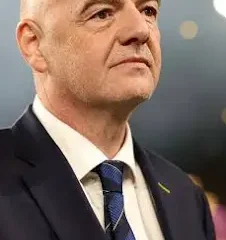
FIFA President Gianni Infantino has framed these innovations as part of a broader commitment to leveraging technology for the benefit of the sport. “We are committed to ensuring that technological innovation benefits every player, team, and fan around the world, and contributes to the development of football—the greatest sport on the planet,” Infantino said in Las Vegas in January. The FIFA World Cup 2026 kicks off on June 11, 2026, and runs through July 19, 2026, with matches hosted across 16 cities in Canada, Mexico, and the United States. The tournament will feature 48 teams playing 104 matches—the largest World Cup in history.
World Cup 2026: FIFA Adds New Automated Offside Technology to End Delayed Flags









Sports
Chaos in Abeokuta as Algerian Fans Attack Coach, Vandalise Stadium After Rangers Defeat
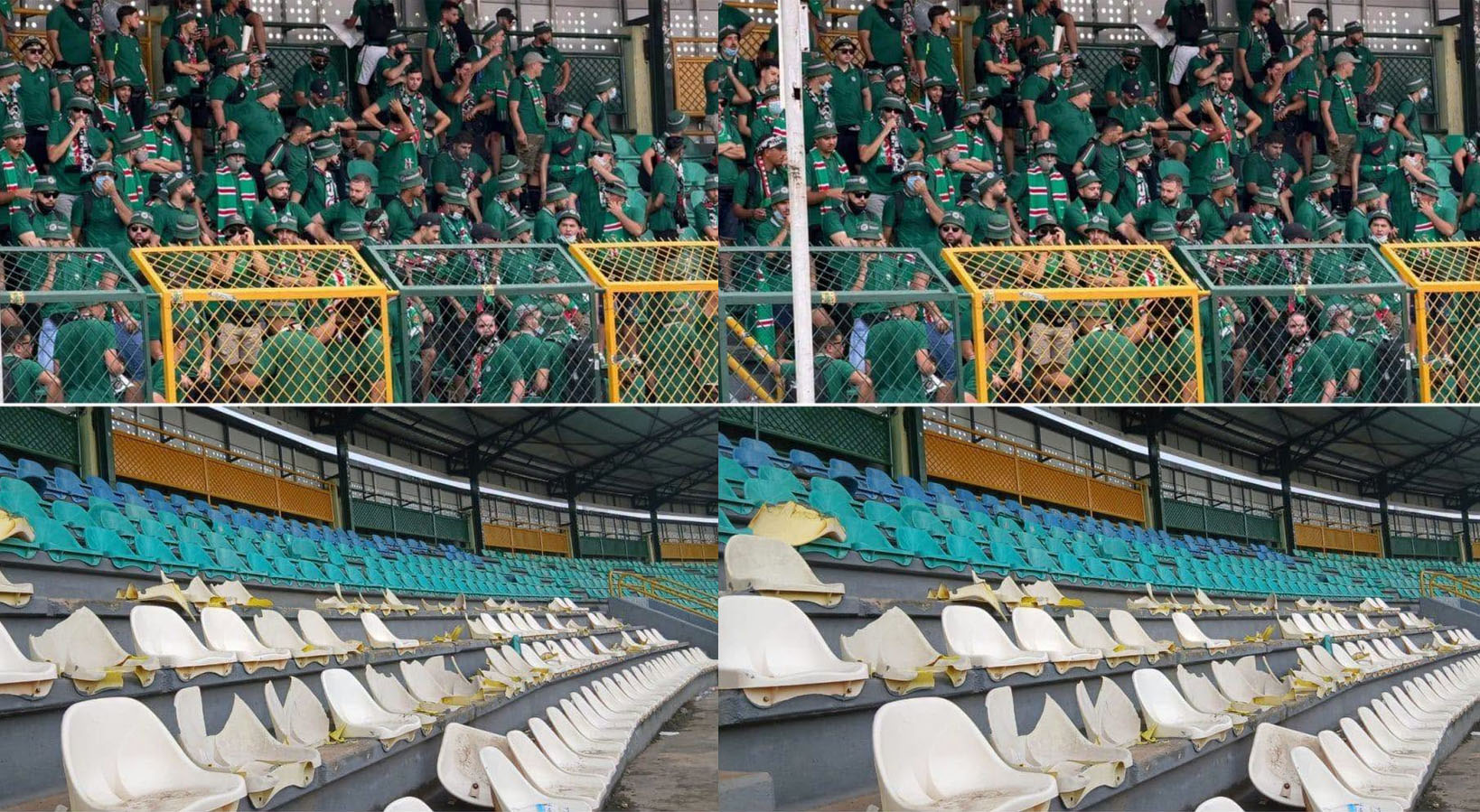
Angry supporters of MC Alger allegedly attacked a member of their club’s technical crew and vandalised stadium facilities after the Algerian side lost 2–0 to Enugu Rangers in the first leg of their CAF Champions League qualifying tie in Abeokuta, Ogun State.
The disorder occurred on Sunday, October 18, 2026, at the MKO Abiola Sports Arena, shortly after Rangers secured a crucial victory against the visiting Algerian champions.
Reports said more than 400 travelling supporters expressed their anger following the defeat, with some allegedly destroying seats in the covered stands and damaging other stadium facilities.
The situation reportedly escalated when some supporters followed members of the MC Alger delegation towards the players’ tunnel, where an assistant coach was allegedly assaulted.
Nigerian police officers attached to the Algerian delegation reportedly intervened and rescued the coach from further attacks, while security operatives subsequently restricted movement around the stadium to prevent additional violence.
READ ALSO:
- Nollywood Mourns as Actress, Beauty Queen Tenia Abraham Dies at 32
- FG Challenges World Bank’s 124% Debt-to-Revenue Warning, Cites Rising Income
- Mbappé Runs Riot as Real Madrid Crush Sevilla 4-1 Ahead of El Clásico
Former Super Eagles striker Victor Ikpeba was also reportedly attacked by members of the Algerian delegation in the VVIP section as he attempted to exchange pleasantries after the match. Further details surrounding the reported incident were not immediately available.
The ugly scenes overshadowed an impressive performance by Rangers, who overcame an early setback to secure a two-goal advantage ahead of the return leg in Algeria.
The Nigerian champions were reduced to 10 players in the first half after goalkeeper Lucky Jimoh was sent off. MC Alger also lost a player when defender Oussama Benhaoua received a second yellow card in the second half.
With both sides reduced to 10 players, Rangers capitalised on their opportunities late in the match. Kenneth Igboke converted a penalty to give the hosts the lead before James Emo scored again to seal the 2–0 victory.
The result puts Rangers in a favourable position ahead of the return fixture scheduled for October 23 in Algiers, where they will attempt to protect their advantage and progress in the continental competition.
However, the reported violence has raised concerns about crowd control, stadium security and the conduct of travelling supporters at African club football matches.
Rangers will also be mindful of their history against MC Alger. In 1976, the Nigerian club won the first leg of their African Cup of Champions Clubs encounter 2–0 but lost the return match 3–0, exiting the competition 3–2 on aggregate. MC Alger went on to win the continental title that year.
The Nigerian side will now seek to avoid a repeat of that outcome as it pursues qualification for the 2026/27 CAF Champions League group stage.
Chaos in Abeokuta as Algerian Fans Attack Coach, Vandalise Stadium After Rangers Defeat
Sports
Mbappé Runs Riot as Real Madrid Crush Sevilla 4-1 Ahead of El Clásico
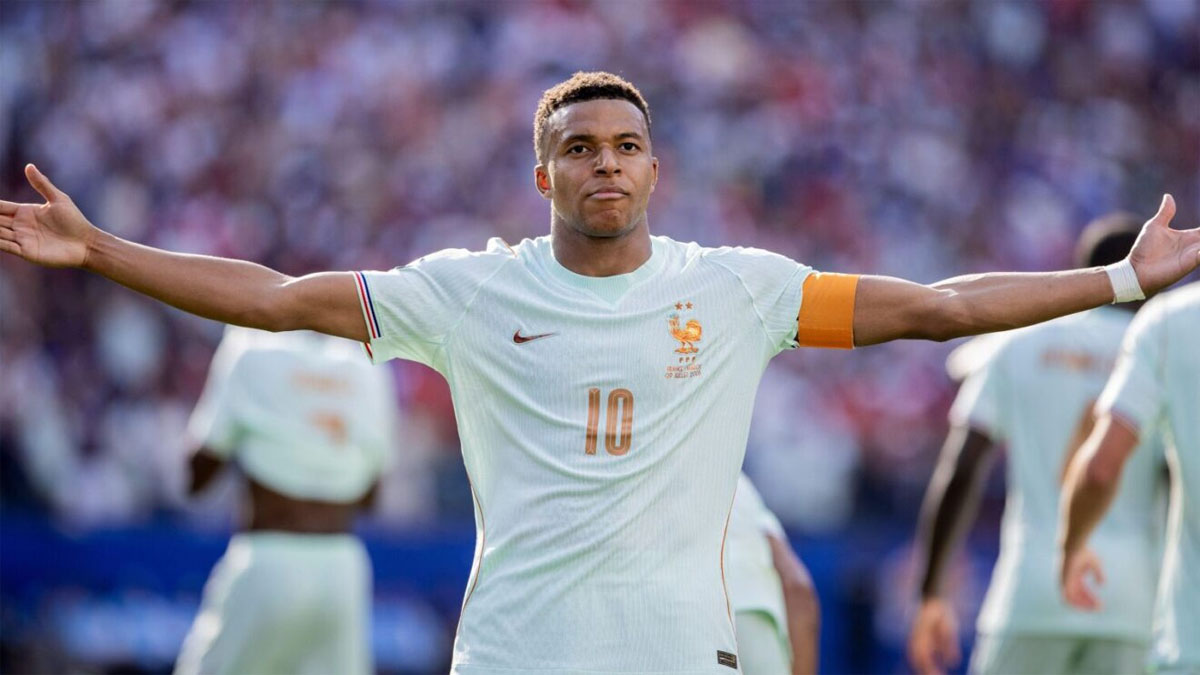
Kylian Mbappé scored twice as Real Madrid defeated Sevilla 4-1 in their La Liga clash at the Santiago Bernabéu on Sunday, October 18, 2026, boosting their confidence ahead of next weekend’s highly anticipated El Clásico against Barcelona.
The French forward produced a standout performance, scoring from open play before converting a penalty to help Real Madrid secure a convincing victory. Arda Güler and Yan Diomande also found the net for the hosts, while Manu Bueno scored Sevilla’s only goal.
Real Madrid took the lead in the 30th minute when Güler collected a pass from Diomande and unleashed a superb left-footed strike into the top corner.
Mbappé doubled the advantage seven minutes later after combining with Jude Bellingham. The striker controlled a clever backheel pass, evaded his marker and goalkeeper Odysseas Vlachodimos, and calmly finished to put the hosts firmly in control.
The Real Madrid forward completed his brace in the 63rd minute, converting a penalty with a cheeky Panenka-style chip after Sevilla defender Andrés Castrín brought him down inside the penalty area.
READ ALSO:
- Ogun House Fire Horror: Husband Arrested After Wife Dies Following Domestic Dispute
- NLC, Falana Mobilise Nigerians Against Petrol Price Hike, Mount Pressure on Tinubu Govt
- Buhari Feared Tinubu Presidency, Resisted Pressure to Back Him – Baba-Ahmed Claims
Sevilla attempted to fight their way back into the contest when substitute Manu Bueno scored in the 80th minute, capitalising on a mistake by Mbappé.
However, Real Madrid responded almost immediately. Diomande collected the ball and unleashed a powerful strike in the 82nd minute to restore the hosts’ three-goal advantage and seal the 4-1 victory.
The result provided Real Madrid with a timely boost before their meeting with Barcelona in El Clásico on October 25. The Spanish giants will look to carry their attacking momentum into the crucial encounter.
Sevilla, meanwhile, were left to reflect on another disappointing result at the Bernabéu as Real Madrid demonstrated their attacking strength and ability to punish defensive mistakes.
Mbappé Runs Riot as Real Madrid Crush Sevilla 4-1 Ahead of El Clásico
Sports
Lamine Yamal Shines as Barcelona Thrash Real Betis 5-2
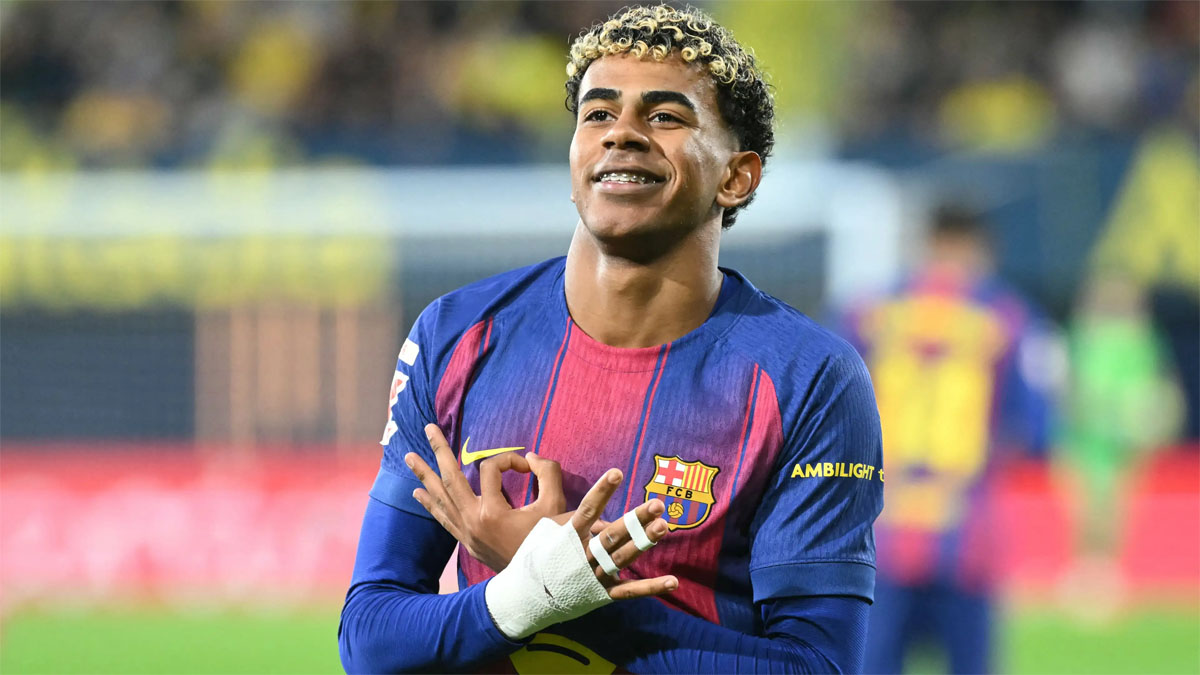
Lamine Yamal delivered a dazzling performance as Barcelona defeated Real Betis 5-2 away from home on Saturday, October 17, 2026, extending their perfect start to the Spanish LaLiga season with a ninth consecutive league victory.
The 19-year-old winger opened the scoring with a superb finish and later provided an assist as Barcelona overcame a spirited Betis challenge at the Estadio La Cartuja in Seville.
Rodri, Gabriel Jesus, Eric Garcia and substitute Dani Olmo also scored for Barcelona, while Valentín Gómez and Ez Abde found the net for the hosts.
The victory took Barcelona to 27 points from nine matches, keeping them five points clear at the top of the LaLiga standings. Real Betis remained third with 19 points following the defeat.
Yamal set the tone in the 10th minute with a moment of individual brilliance. Cutting in from the right, the young forward created space before curling a left-footed effort from outside the penalty area into the top corner, leaving the Betis goalkeeper with little chance.
Real Betis responded in the 27th minute when Pablo Fornals delivered a cross into the box and Valentín Gómez rose above the Barcelona defence to head home the equaliser.
Barcelona regained the lead four minutes before half-time. Rodri powered a header into the net from Fermín López’s corner in the 41st minute, restoring the visitors’ advantage.
READ ALSO:
- Tinubu Scraps Recruitment Waiver Requirement for Federal Universities
- FG Begins Rollout of 3,700 Telecom Towers to Connect 20m Nigerians
- 37 Miners’ Deaths in Custody: Suspended NSCDC Commandant Admits Tragedy Was Avoidable, Apologises to Families
Betis appeared to have drawn level again shortly afterwards when Giovani Lo Celso scored with a spectacular volley. However, the goal was disallowed following a video assistant referee (VAR) review that identified a handball by Cucho Hernández earlier in the move.
Barcelona increased their advantage shortly after the restart. In the 51st minute, Yamal drove down the right flank before squaring the ball for Gabriel Jesus, who finished neatly inside the penalty area to make it 3-1.
Betis responded almost immediately, with Ez Abde finishing a counterattack in the 53rd minute to reduce the deficit to 3-2 and revive hopes of a comeback.
However, the contest changed dramatically a minute later when Betis midfielder Facundo Bernal was sent off following an altercation with Yamal. Bernal was dismissed for violent conduct after headbutting the Barcelona winger, while Yamal received a yellow card for his involvement in the incident.
With Betis reduced to 10 players, Barcelona took greater control of the match and exploited the numerical advantage.
Eric Garcia extended the lead in the 62nd minute after Pau Cubarsí helped direct the ball across goal from a set-piece situation, allowing Garcia to finish from close range.
Substitute Dani Olmo completed the scoring in the 81st minute, curling a right-footed effort into the top corner to seal an emphatic 5-2 victory for the visitors.
The result strengthened Barcelona’s position at the summit of LaLiga, with the Catalan side recording nine wins from nine league matches and scoring 39 goals during that run.
Barcelona have also maintained an impressive start across all competitions, having won their first 11 competitive matches of the campaign.
The victory comes ahead of a demanding week for Hansi Flick’s side, with a Champions League meeting against Paris Saint-Germain and the much-anticipated El Clásico against Real Madrid on the horizon.
For Yamal, the performance further underlined his importance to Barcelona’s attack. His opening goal and assist for Gabriel Jesus proved decisive in a match that remained competitive until Bernal’s dismissal.
Real Betis, meanwhile, will look to regroup after a defeat in which their attacking moments offered promise but defensive difficulties and the red card ultimately worked against them.
Lamine Yamal Shines as Barcelona Thrash Real Betis 5-2
-

 metro3 days ago
FG Begins Rollout of 3,700 Telecom Towers to Connect 20m Nigerians
-

 metro3 days ago
Oyo Baby Trafficking Scandal: Mother, Doctor Arrested Over Alleged ₦2m Sale of Infant
-

 Education3 days ago
Tinubu Scraps Recruitment Waiver Requirement for Federal Universities
-

 News3 days ago
Akpabio Under Fire as Senators Move to Secure His Return as Senate President in 2027
-

 Sports3 days ago
Lamine Yamal Shines as Barcelona Thrash Real Betis 5-2
-

 metro3 days ago
Kano: Soldiers Kill Two Kidnappers, Rescue Victim, Recover ₦10m
-

 Africa3 days ago
Nairobi Mother Says Husband Abandoned Her During Childbirth, Paid Dowry for Another Woman
-

 metro3 days ago
Singlet Dispute Turns Deadly as 23-Year-Old Kills Elder Brother in Kaduna