

metro
Why Bobrisky was re-arrested, flown to Abuja – EFCC

Why Bobrisky was re-arrested, flown to Abuja – EFCC
The Economic and Financial Crimes Commission (EFCC) has re-arrested Idris Okuneye, popularly known as Bobrisky, a controversial social media personality, in Lagos.
The EFCC source explained that Bobrisky’s claims involved bribery and corruption, with accusations that he paid N15 million to EFCC officials to dismiss money laundering charges against him. The EFCC has denied these allegations, suggesting Bobrisky could face new charges for providing false information.
READ ALSO:
- VeryDarkMan gets N2m bail, regains freedom
- FG to introduce CCTV control room on highways
- How to apply as FIRS begins recruitment of tax officers nationwide
“We apprehended him in Lagos, and he will be transported to Abuja,” the source disclosed. “He accused us of bribery and corruption, yet he repeatedly ignored our summons to substantiate these claims. Such serious allegations cannot be ignored. Furthermore, he has also declined to appear before the National Assembly on this matter. We had no option but to take him into custody to ensure he provides evidence to support his accusations.”
Dele Oyewale, Head of Media and Publicity at the EFCC, confirmed Bobrisky’s arrest but refrained from giving additional details.
In a recent Instagram post, Bobrisky alleged that EFCC officials had arrested him, adding that he sustained injuries during an altercation with immigration officers.
The EFCC previously warned that Bobrisky could face charges for providing false information if his allegations prove to be unsubstantiated.
Why Bobrisky was re-arrested, flown to Abuja – EFCC


![[UPDATED] Osun Election: Police Arrest Lawmaker with 200 PVCs, 146 Suspected Electoral Mercenaries](https://newstrends.ng/wp-content/uploads/2026/08/1786781299004-400x240.jpg)
![[UPDATED] Osun Election: Police Arrest Lawmaker with 200 PVCs, 146 Suspected Electoral Mercenaries](https://newstrends.ng/wp-content/uploads/2026/08/1786781299004-80x80.jpg)








metro
Armed Men Raze ADC Chieftain’s House, Beat Family Members in Rivers Attack
Armed Men Raze ADC Chieftain’s House, Beat Family Members in Rivers Attack
Thomas Isaiah recounts harrowing ordeal as political violence escalates in Ikwerre Local Government Area.
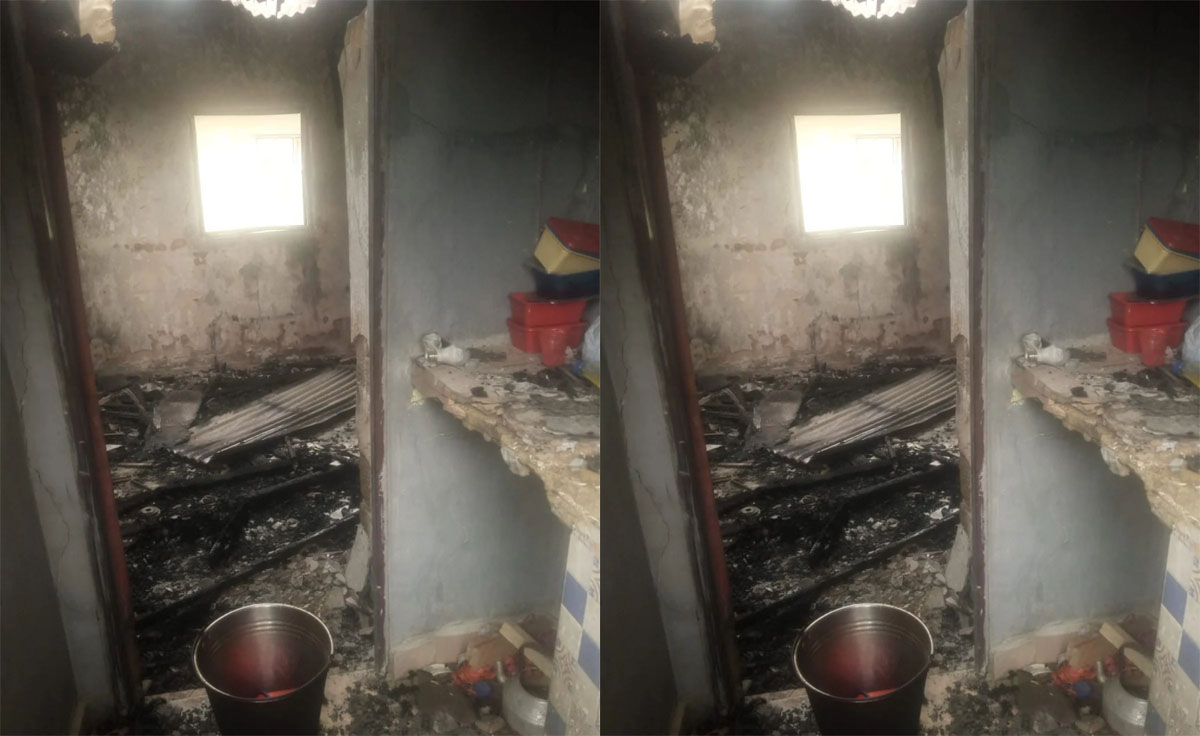
A family building belonging to a chieftain of the African Democratic Congress (ADC), Thomas Isaiah, has been set ablaze by unidentified armed men in Aluu community, Ikwerre Local Government Area of Rivers State. The attack, which occurred hours after Isaiah hosted a youth sensitisation meeting at his compound, has raised fresh concerns about political violence in the state ahead of the 2027 general elections. Isaiah, who serves as Chief Whip and Alternate Leader of ADC in Aluu, alleged that the attack was politically motivated and that the assailants were sponsored by an opposition political party bent on frustrating the ADC’s activities in Ikwerre Local Government Area. The incident follows a pattern of escalating attacks on opposition figures in Rivers State, with observers condemning the development as a dangerous escalation of political intolerance that threatens the democratic process in the region.
Isaiah told Nigerian Tribune that the incident occurred after he held a brief youth sensitisation meeting at his compound in Aluu on the day of the attack. He stated that the meeting was peaceful, starting around 9:00 am and concluding by 12 noon, with all attendees returning to their homes without incident. Later that night, around midnight, Isaiah received a warning call from an anonymous person advising him to take cover and be careful of his movements. “Since this is a security issue, I had to leave my house to stay with my friend,” Isaiah recounted. While staying with his friend, Isaiah fell asleep. When he woke up after 2:00 am, he discovered about 19 missed calls on his phone. Upon returning the calls, he learned that armed men had invaded his compound and set the building ablaze, leaving him to grapple with the devastating news from a distance while his family endured the attack.
READ ALSO:
- Lagos declares Thursday work-free for 2026 Isese Day celebration
- South African Consulate Denies Visa Restrictions on Nigerians
- 2027: Peter Obi lost his chance when he left ADC for NDC – Fayose
Isaiah returned to his compound the following morning to confirm the extent of the damage. He discovered that his house had been completely burnt down, along with tenant apartments, leaving families displaced and without shelter. His certificates and all his personal documents were destroyed in the fire, representing years of personal history and professional achievements reduced to ashes. “My mother was beaten, my grandmother was beaten. Everyone in my compound was tortured,” Isaiah stated, describing the brutal assault on his family members. The physical violence meted out to his elderly relatives has drawn particular outrage, with critics condemning the attackers for targeting vulnerable family members in what appears to be an act of political intimidation designed to instill fear and silence opposition voices.
Some ADC members in the area alleged that the attack was carried out by thugs led by a man identified as Docko, who is said to serve as the Chief Security Officer of the local government. The allegations further claimed that Docko and members of the Organized Security and Peace Advisory Committee (OSPAC) assaulted Isaiah’s mother before setting fire to the family building. The alleged involvement of OSPAC, a community-based security outfit operating in parts of Rivers State, has raised questions about the limits of the group’s authority and the need for security agencies to establish the facts surrounding the incident. It is important to note that the allegations against the suspected OSPAC members have not yet been independently verified, and no conclusion should be drawn regarding responsibility until the appropriate authorities complete their investigation. This distinction is crucial to ensure that innocent parties are not wrongly accused and that justice is served based on concrete evidence rather than speculation.
READ ALSO:
- Electric Vehicles: Six-point blueprint to drive mass adoption, by Metropolitan CEO
- New Mercedes-Benz Atego’s technology, performance raise benchmark in Nigeria’s truck business
- Fuel subsidy: FG records N20.4tn extra resources, spends N30.6tn, says Oyedele
The attack on Isaiah’s residence comes against the backdrop of heightened political tensions in Rivers State. Earlier in March 2026, suspected political thugs attacked the ADC secretariat in Ubima community and the convoy of former Minister of Transportation and ADC chieftain, Rotimi Amaechi. The ADC South-South Zone condemned those attacks as a dangerous escalation of political intimidation against opposition parties, with former Vice President Atiku Abubakar also condemning the incidents as an “assault on democracy” that should not be allowed to fester. In a separate incident, the ADC had raised the alarm over what it described as intimidation of opposition political parties, following a directive by the Chairman of Ikwerre Local Government Area banning all forms of public gatherings without prior approval from his office. The party argued that the directive posed a threat to constitutional democracy and political participation, effectively stifling legitimate political expression in the area and creating an environment conducive to further violence.
The Rivers State Police Command had yet to issue an official statement regarding the latest attack on Isaiah’s residence at the time of reporting. Efforts to obtain official reactions from the police command were unsuccessful as of filing this report, leaving residents and political stakeholders in a state of uncertainty about the security situation. The incident has generated concern among residents and political stakeholders, with many calling for increased police presence and proactive measures to prevent further violence. As the 2027 elections approach, stakeholders are urging all parties to eschew violence and embrace dialogue, warning that the current trajectory of political violence could have grave consequences for Rivers State and Nigeria as a whole. The attack on Isaiah’s residence serves as a stark reminder of the fragility of political tolerance in the region and the urgent need for security agencies to act decisively to protect citizens and uphold the rule of law.
Armed Men Raze ADC Chieftain’s House, Beat Family Members in Rivers Attack
metro
Lagos declares Thursday work-free for 2026 Isese Day celebration
Lagos declares Thursday work-free for 2026 Isese Day celebration
The Lagos State Government has declared Thursday, August 20, 2026, a work-free day to allow residents, visitors and traditional worshippers participate in activities marking the 2026 Ìṣẹ̀ṣe Day celebration.
The annual observance, which celebrates Yoruba indigenous culture, spirituality and heritage, is expected to attract more than three million participants, according to the state government.
The declaration was announced on Wednesday by Idris Aregbe, Special Adviser to Governor Babajide Sanwo-Olu on Tourism, Arts and Culture.
Aregbe described Ìṣẹ̀ṣe Day as more than a public holiday, saying the celebration provides an opportunity to promote and preserve Yoruba traditions while showcasing Lagos as a destination for cultural tourism.
“Ìṣẹ̀ṣe is not a relic. It is a living expression of our traditions and a celebration of Yoruba spirituality as an important part of Nigeria’s cultural and religious landscape,” Aregbe said.
He said the celebration would allow Lagos residents and visitors to experience various aspects of indigenous culture through traditional prayers, rituals, processions, drumming and cultural displays dedicated to the Òrìṣà.
The 2026 celebration is the culmination of a week-long programme of traditional activities being coordinated by the Association of African Traditional Religion Nigeria and Overseas (AATREN).
Aregbe said the continued observance of Ìṣẹ̀ṣe demonstrates the resilience of Yoruba culture and its ability to remain relevant across generations.
READ ALSO:
- South African Consulate Denies Visa Restrictions on Nigerians
- 2027: Peter Obi lost his chance when he left ADC for NDC – Fayose
- Electric Vehicles: Six-point blueprint to drive mass adoption, by Metropolitan CEO
He estimated the global Yoruba population at more than 55 million and noted that Yoruba cultural and spiritual traditions have also survived among diaspora communities in countries such as Cuba, Brazil and Trinidad and Tobago.
“When the drums sound in Lagos on Thursday, they answer drums in Havana, in Salvador, in Port of Spain. Fifty-five million people and counting. Lagos is not observing a local holiday. Lagos is standing at the centre of a global heritage,” he said.
The Lagos Government has designated Ìṣẹ̀ṣe Day as a work-free day since 2023, following a request from the Lagos State Council of Obas and Chiefs.
The policy has continued under the Sanwo-Olu administration as part of its stated commitment to promoting indigenous values, cultural preservation and religious inclusiveness under the THEMES+ development agenda.
Aregbe commended the governor for maintaining the annual declaration and recognised the contribution of traditional rulers and other custodians of Yoruba heritage.
He specifically acknowledged the Oba of Lagos, Oba Rilwan Akiolu, royal fathers, White Cap Chiefs, Babaláwo, Ìyánífá, Olóòrìṣà and other cultural practitioners involved in preserving indigenous traditions.
The large-scale celebration is expected to feature activities across different parts of Lagos, with participants observing traditional rites and cultural programmes associated with Yoruba indigenous religion.
The state government urged participants to celebrate peacefully and respectfully, particularly given the expected turnout.
Aregbe said the celebration also reflects Lagos’ reputation as a diverse society where people from different cultural and religious backgrounds live and participate in public life.
“Three million voices rising in honour of tradition is not noise. It is history, faith and cultural pride in harmony,” he said.
He added that the celebration should not be viewed as an event reserved only for traditional worshippers.
“Whether you worship in a mosque, a church or a grove, Ìṣẹ̀ṣe Day belongs to you, because heritage has no denomination. Lagos remains the city where every heritage finds its place,” Aregbe said.
The August 20 work-free declaration means public servants and government institutions covered by the directive will not conduct normal official business on Thursday. Government activities are expected to resume on Friday, August 21.
The development comes as Ìṣẹ̀ṣe Day continues to receive official recognition in parts of southwestern Nigeria, where traditional institutions and cultural organisations have advocated greater recognition of indigenous festivals and heritage.
Beyond its religious significance, supporters say the annual celebration provides an avenue to preserve indigenous knowledge, music, language, traditional arts and cultural practices while creating opportunities for cultural tourism.
For Lagos, the 2026 celebration is also expected to reinforce the state’s efforts to position its cultural heritage as part of its tourism offering.
With millions expected to participate, the state government has called on residents and visitors to observe the celebration peacefully and respect the different religious and cultural traditions represented in Lagos.
Lagos declares Thursday work-free for 2026 Isese Day celebration
metro
South African Consulate Denies Visa Restrictions on Nigerians
South African Consulate Denies Visa Restrictions on Nigerians
Consul General confirms visa services continue as normal and introduces new digital travel system
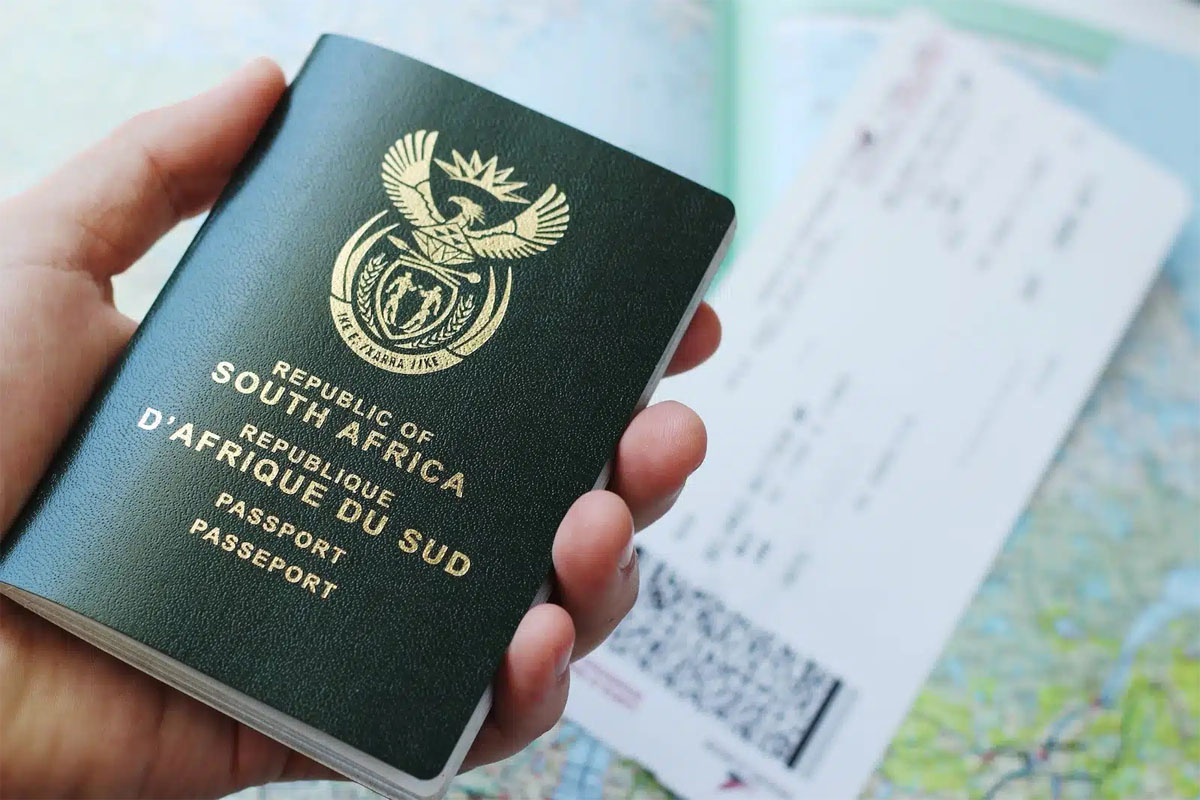
The South African Consulate in Lagos has officially debunked reports that it has stopped issuing visas to Nigerians due to ongoing anti-migrant protests in South Africa. Consul General of South Africa, Prof. Bobby Moroe, made the clarification during a round-table organised by the Nigerian Institute of International Affairs (NIIA) themed “South Africa’s Xenophobia in Comparative Perspective”. He assured that no Nigerian applicant who qualifies for a visa will be denied entry into the country, offering a firm rebuttal to widespread speculation that visa services had been suspended amid rising tensions.
Speaking at the event, Prof. Moroe emphasised that visa issuance remains ongoing despite heightened concerns over xenophobic tensions in parts of South Africa. He stated, “Visas continue to be issued in spite of the ongoing protests and Nigerians are still visiting the country for tourism and other legitimate purposes. We wish to make it clear again that Nigerians under these circumstances faced today will never be discriminated against. No basis will justify why your visa is rejected except that you, for one reason or another may not have qualified with the requirements of the visa.” The Consul General stressed that visa applications would be considered on their individual merits and in accordance with established immigration requirements, drawing a clear distinction between domestic protests and South Africa’s official visa policy, which remains unchanged and non-discriminatory toward Nigerian nationals.
READ ALSO:
- Electric Vehicles: Six-point blueprint to drive mass adoption, by Metropolitan CEO
- New Mercedes-Benz Atego’s technology, performance raise benchmark in Nigeria’s truck business
- Fuel subsidy: FG records N20.4tn extra resources, spends N30.6tn, says Oyedele
Prof. Moroe also announced the recent introduction of South Africa’s Electronic Travel Authorisation (ETA), describing it as a digital system designed to simplify and accelerate travel authorisation for prospective visitors. The new system reduces documentation requirements and replaces aspects of the traditional visa application process, allowing travellers to apply through their mobile devices, which makes the process faster, safer and more convenient. However, it is important to note that Nigeria is not currently among the four countries covered by the initial ETA rollout, as the system remains a future expansion priority for South Africa, meaning Nigerian travellers will still follow the existing visa application procedure for now.
The reassurance comes amid data showing that visa applications from Nigerians have nearly doubled in recent months, reflecting sustained interest in travel to South Africa for business, tourism and education. Despite persistent safety concerns and the repatriation of over 1,400 Nigerians affected by previous xenophobic violence, Prof. Moroe insisted that “South Africa is open for business, South Africa is open for tourism, and South Africa is open for any other form of visit,” signalling that the country remains welcoming to legitimate travellers from Nigeria.
South African missions in Nigeria have confirmed that their visa sections in Lagos and Abuja remain accessible and are actively receiving applications. Key requirements for Nigerian applicants include a completed visa application form with two passport-size photographs, a valid Nigerian passport that must be valid for at least 30 days beyond your return date, and a Yellow Fever vaccination certificate, which is mandatory for travellers from Nigeria and is the most commonly mishandled requirement—it must be presented as the original International Certificate of Vaccination or Prophylaxis (ICVP), not a photocopy or photo. Applicants are also required to provide bank statements showing six months of financial history, along with proof of accommodation and return flight booking. Processing takes a minimum of 15 working days, so early application is strongly advised. The Consul General urged Nigerian travellers to familiarise themselves with South African laws, understand their rights, and know the locations of law enforcement agencies in case of emergencies, ensuring they are well-prepared for their stay.
The clarification comes against the backdrop of persistent xenophobic tensions in South Africa, where foreign nationals have periodically faced protests, hostility and attacks over claims surrounding unemployment and economic competition. Nigerians have been among the foreign nationals affected by previous episodes of xenophobic violence, making reports of any possible restriction on their entry into South Africa particularly sensitive. The Consul-General’s intervention aims to reassure the Nigerian public that no blanket restrictions have been imposed and that eligible travellers will continue to be granted travel authorisation, reinforcing the message that diplomatic ties remain strong and that South Africa values its relationship with Nigeria.
South African Consulate Denies Visa Restrictions on Nigerians
-

 metro2 days ago
Customs Names Importers of 399 Pump-Action Rifles, Hands Over Weapons to NSA Office
-
 metro3 days ago
Police to prosecute Kogi man for allegedly setting wife ablaze
-

 Sports3 days ago
Arsenal thrash Man City 3-0 to win Community Shield
-

 metro3 days ago
NDLEA arrests businessman with cocaine, seizes N3.6bn drugs in Lagos
-

 metro1 day ago
Palliative Care, Not Abandonment: Doctor Clears the Air on Ogogo’s Stage-Four Cancer Treatment
-

 Insurance13 hours ago
NAICOM revokes Universal Insurance licence over ₦15bn capital shortfall
-
 Education2 days ago
WAEC 2026 results: Schools raise alarm over alleged grading anomalies
-
 metro1 day ago
Lagos Pensioners Give Sanwo-Olu 19-Day Ultimatum: Implement Wage Award or Face ‘Mother of All Protests’