

metro
No one is denying us land in Igboland, Yoruba, Hausa in Abia declare
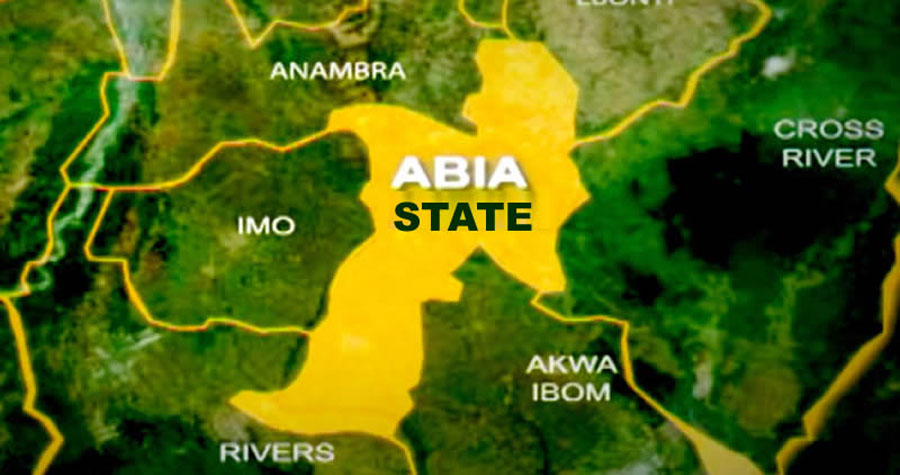
No one is denying us land in Igboland, Yoruba, Hausa in Abia declare
In Abia State, contrary to the wrong insinuation held by some uninformed persons that the people of the Southeast do not sell their lands to outsiders to build houses, investigations have revealed the true position.
Findings by Sunday Sun showed that the Hausa and Yoruba, as well as other people from other tribes outside Igbo land, indeed, live, work, do businesses and own property in Abia State.
The investigation revealed that in Aba and Umuahia, the two major cities in the state, Muslims of Hausa and Yoruba extractions had bought plots of lands in prime areas of the cities where they built their mosques and dwelling apartments.
In Aba, for instance, there is no church that is strategically located than the Yoruba mosque on Azikiwe by Asa Road.
The same is with the Hausa mosque on Mosque Street by Hospital Road, Aba; ditto the Mosque in Umuahia, located close to Isi-Gate, the most sought after location in the state capital.
On personal level, non-natives own property in choice areas of the state.
For instance, Sarika Yaro Danladi is the leader of the Northern community in Abia State and lives in Umuahia.
Outside the thriving cattle business he is involved in, Danladi, who has lived all his years in the Abia State capital, built a hotel in Umuahia he is effectively running.
Danladi some years back was appointed Special Adviser to the Governor of Abia State, which made not only him, but the entire Hausa community in Abia State to have a sense of belonging.
Danladi who has lived for close of 60 years in Abia State, in an interview enthused that most of his family businesses are in the state.
Hear him, “I’m very happy that I’m in Abia, not only in Umuahia. It might interest you to note that at my age, I’m almost 60, my own father was born here, I was born here too, most of our businesses are here, I am married to an Ohuhu (Umuahia) lady.
To cap it all, Danladi who is living in a house he bought land in Umuahia to build, feels very much at home in Abia.
READ ALSO:
- Man commits suicide in Ogun
- La Liga: Las Palmas stun Barcelona 2-1 on 125th anniversary
- Arsenal thrash West Ham 5-2 to go up second in Premier League
His words: “I will be proud to tell you that I am an Hausa/Igbo man. I’m happy staying in Abia and I’m going nowhere. Abia State government has been assisting us in various ways and we are happy with that.”
Like Danladi, Idris Ibrahim, living in his house, is also doing a thriving business in Umuahia and he is not in any way planning to go back to the North anytime soon.
He was born and brought up in Umuahia.
“I attended both primary and secondary schools here in Umuahia and ever since I was born, we have been living peacefully with the Igbo people.
“I am not planning to go back to the North any time soon; as I have nowhere or home to go to if I leave Umuahia. This is the only place I know because I have not stayed in the North more than one week since I was born. What’s the point of leaving? I am comfortable in Umuahia; I am being well treated by the government and people of the state,” he confessed.
Danladi and Ibrahim are not alone in being accorded this sense of belonging in Abia as there are other Northern businessmen who own property and do good business in Umuahia, including Ali and Usman.
The duo spoke on how they have been living in the city peacefully and doing their businesses ever since without any molestation from any quarters.
They added that their host even encouraged them to buy landed property.
Speaking on whether non-natives living in Umuahia are discriminated about, including being denied the opportunity to buy and own landed property in Umuahia, Musa dismissed the insinuation as complete lies, saying rather the contrary is the case.
Hear him: “No, there is nothing like that. Our people doing business in Ama-Hausa and other places in the city are not being discriminated in whatever form, including the opportunity to own landed property in the capital city.”
On his own part, Ali said: “To be frank, I prefer staying in Umuahia because the people are very friendly and accommodating, they don’t disturb us, even when we don’t want to buy landed property here, they encourage us to do so. Some of us own houses in the city, we did not build them on the air.”
Investigations revealed that apart from the Hausa community in Umuahia being allowed to own landed property, both the state government and some individuals have been assisting them in various ways. It was gathered that a former member of the House of Representatives at a point in time, sank borehole in their mosque.
READ ALSO:
- Northern youths defend Barau on tax reforms bills
- NAFDAC alerts to fake anti-malaria drug in circulation
- ASUU declares indefinite strike in Nigerian university
Musa attested to this: “Abia State government always comes around to help us when we have problems. Some individuals are also assisting us. A former member of the House of Representatives sank borehole for us in our Mosque and we remain grateful.”
Away from Umuahia, in Aba, the commercial hub of the state, is the Sariki family among others. Apart from having a bustling business in the city, the family has a princely property in a choice area of Ehi Road, which not only serves as residential area for the Hausa community in Aba, but also used as praying ground during festivities.
Debunking insinuation in some quarters that the Igbo refuse to sell their lands in Southeast to non-Igbo, Alhaji Mohammadu Guzu, an elder of the Hausa community in the commercial city, who himself owns a house on Hospital Road, Aba, said many Northerners own property in the city.
Alhaji Guzu mentioned one late Alhaji Allah, a cow dealer, who was also chairman, Customs Clearing Agent in Aba before he died as having property in the city.
According to Alhaji Guzu, “those saying the Igbo do not sell their lands to non-natives are economical with the truth. I own a house in Aba and the late Alhaji Allah owned more than four houses at Okpulu Umuobo and Ogbor Hill axis of the city before he denied.
“We also own plots of lands at Good Morning and Onions Markets. In fact, an Igbo man bought land close to the Onions Market and gave to us to build our mosque.”
Like the Hausa, the Yoruba and other non-Igbo actors own property and do businesses in the commercial city.
The Yoruba community has its mosque on Azikiwe by Asa Road, a prime parcel of land no church owned by any South easterner can boost of.
Added to that, the late Prof Charles Adeyinka Adisa was a Yoruba man from Ibadan who studied Medicine and Surgery at the University of Ibadan before relocating to Aba, Abia State.
It was revealed that Adisa became professor of surgery at the Abia State University/Abia State University Teaching Hospital, where he served as Dean of Medicine and Head of the Department of Surgery.
Adisa equally served as president of the Aba Chapter of the Nigeria Christian Fellowship between 2004-2008 and chairman of Aba zone (made up of the southeast states) from 2009-2012.
Before his death in December 2020, Adisa it was gathered had acquired a large expanse of land at the highbrow Okpulu Umuobo axis of the city where he established his hospital.
Apart from the hospital, Prof Adisa bought another landed property in the neighborhood where he built a house he lived till death and his family is still said to be living in that house till date.
Another Yoruba man, Jerome Tunde, is making waves in Aba where he has a state-of-the-art printing press.
Tunde is said to have acquired some plots of land in the city where he lives and does his business.
A Yoruba man who gave his name as Yinka said that apart from the two men above, there are many others who own property in the commercial city.
No one is denying us land in Igboland, Yoruba, Hausa in Abia declare
The SUn







metro
Fatal NURTW Leadership Clash in Osun Leaves Two Dead; State Orders Park Shut Down
Fatal NURTW Leadership Clash in Osun Leaves Two Dead; State Orders Park Shut Down
As Olalekan Oyeyemi is buried in Osogbo, authorities transfer murder probe to the State Criminal Investigation Department.
metro
Lagos Power Outage: Ikeja Electric Blames TCN as Businesses, Homes Groan

Lagos Power Outage: Ikeja Electric Blames TCN as Businesses, Homes Groan
Residents and businesses in several parts of Lagos are enduring prolonged power outages, with Ikeja Electric attributing the disruption to significant constraints on the Transmission Company of Nigeria (TCN) network.
The development has triggered frustration among electricity consumers who say the prolonged blackout is disrupting household activities and commercial operations, while increasing their dependence on generators and other alternative sources of power.
Ikeja Electric, one of Nigeria’s largest electricity distribution companies, said the situation was caused by a reduction in the amount of electricity available to it from the transmission network.
According to the company, the transmission constraints have affected the volume of power it can distribute to customers across parts of its franchise area, resulting in extended periods of load-shedding.
The company said it was engaging with TCN over the situation and was working to improve supply to affected communities as soon as additional transmission capacity becomes available.
The latest disruption has affected customers in several parts of Lagos, with residents in areas including Akoka, Egbeda, Ojodu Berger, Ogudu and Shomolu reporting prolonged interruptions.
Some residents said electricity supply had been unavailable for several consecutive days, while others reported intermittent restoration followed by further outages.
The disruption has also affected small businesses and households that rely heavily on electricity for daily activities.
Business operators such as barbers, hairdressers, food vendors, cold-room operators, charging-centre owners, internet-dependent businesses and other small enterprises have been particularly affected by the unreliable supply.
For many households, prolonged outages have also affected refrigeration, water pumping, phone charging, internet access and other basic activities that depend on electricity.
READ ALSO:
- US Court Blocks Trump Visa Rule Limiting Stay of Foreign Students, Journalists
- Sokoto Shuts Mosque After Cleric Stabbing, Names Ulamas Probe Panel
- Iran Rejects US Talks as Trump’s Mixed Signals Deepen Hormuz Standoff
The situation has forced some residents and businesses to increase their use of generators, adding to operating costs at a time when fuel and other energy expenses remain high.
Some consumers have also resorted to commercial charging centres and other paid alternatives to keep phones, rechargeable devices and business equipment operational.
The latest disruption comes amid continuing challenges across Nigeria’s electricity value chain, where problems involving generation, gas supply, transmission infrastructure and distribution networks can affect electricity availability to consumers.
TCN operates the country’s transmission network, while electricity distribution companies such as Ikeja Electric are responsible for delivering available power to customers through their distribution networks.
This distinction is significant in the latest Lagos outage because Ikeja Electric has attributed the immediate supply shortfall to constraints on the transmission network, rather than announcing a fault affecting its entire distribution system.
Power interruptions in Lagos, however, have previously resulted from different causes.
Parts of the state have experienced outages linked to distribution equipment faults, infrastructure damage, planned maintenance and other incidents affecting electricity infrastructure.
Earlier disruptions in Lagos have also been associated with incidents such as tanker fires damaging electricity infrastructure, while transmission maintenance and constraints have caused supply reductions in other instances.
The varying causes mean that the duration and geographical spread of an outage can differ significantly from one community or electricity feeder to another.
Ikeja Electric has apologised to affected customers over the latest disruption and said it understands the difficulties caused by the reduced supply.
READ ALSO:
- Saudi Arabia Vows ‘Firm’ Response as Houthi Attacks Wound 13
- Peter Obi Rejects Anambra Debt Claims, Challenges Soludo Govt to Produce Evidence
- Peter Obi: Release My UNN Academic Records, I Have Nothing to Hide
The company said it was monitoring developments and engaging relevant stakeholders in an effort to restore improved electricity supply.
The latest development has again highlighted concerns over the vulnerability of Lagos residents and businesses to fluctuations in electricity supply.
For many small businesses, prolonged blackouts mean additional spending on diesel or petrol-powered generators, while households face similar costs when alternative electricity sources are required.
The disruption also comes at a time when businesses are already dealing with high operating costs, making extended reliance on generators an additional financial burden.
Consumers have increasingly called for more reliable electricity supply and better coordination among the different operators in Nigeria’s power sector.
The TCN, generation companies and distribution companies form interconnected parts of the electricity supply chain, meaning a constraint at one stage can quickly affect consumers downstream.
For Ikeja Electric customers, the immediate expectation is that transmission constraints will ease and supply will gradually improve across the affected feeders.
Until then, residents and businesses in the affected areas may continue to experience irregular electricity supply depending on available transmission capacity and the operational condition of individual distribution feeders.
The latest outage has therefore renewed the debate over Nigeria’s long-standing electricity challenges and the need for sustained investment in power generation, transmission and distribution infrastructure to provide more stable electricity for homes and businesses.
For Lagos, where thousands of businesses depend on electricity for daily operations, prolonged outages carry consequences beyond inconvenience, affecting productivity, household welfare and the cost of doing business.
Ikeja Electric said it would continue to provide updates as the situation develops and work with TCN to improve supply to affected customers.
Lagos Power Outage: Ikeja Electric Blames TCN as Businesses, Homes Groan
metro
Sokoto Shuts Mosque After Cleric Stabbing, Names Ulamas Probe Panel
Sokoto Shuts Mosque After Cleric Stabbing, Names Ulamas Probe Panel
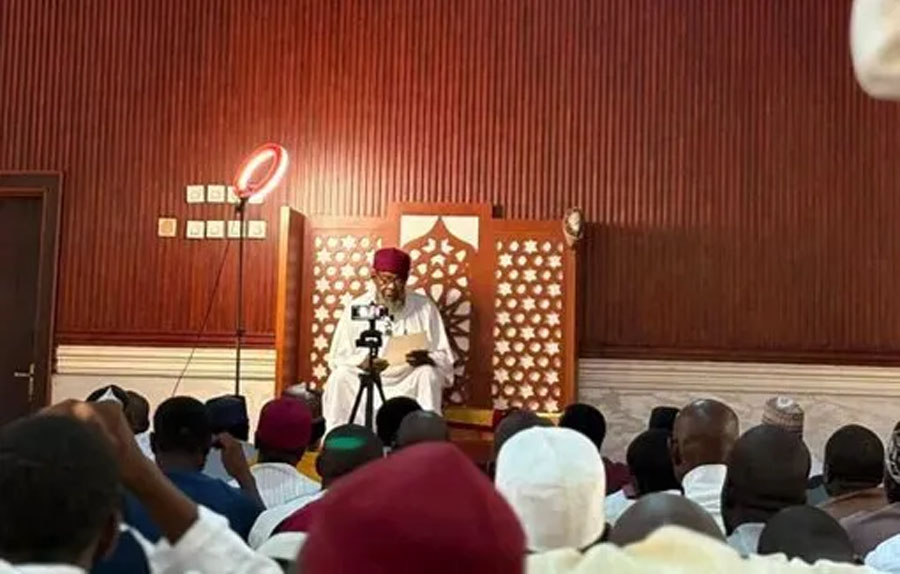
The Sokoto State Government has ordered the immediate closure of the Musa Lukuwa Jumu’at Mosque in Mabera, Sokoto metropolis, after a cleric was stabbed during Friday prayers and his attacker was killed by an angry mob.
The mosque, which the government describes as a crime scene, will remain shut until further notice. A committee of Islamic scholars (Ulamas) has also been constituted to investigate the remote and immediate causes of the incident and recommend measures to prevent a recurrence. The announcement was contained in a statement issued on Tuesday by the Director General, Media and Publicity, Government House, Abubakar Bawa.
The crisis began on Friday, September 11, 2026, shortly after Malam Musa Lukuwa led the Jumu’at prayer. A young man among the worshippers attacked the cleric, stabbing him twice in the neck and left hand. Worshippers overpowered the suspect and beat him to death before security operatives could arrive. Police spokesman DSP Ahmad Rufa’i confirmed that the cleric was rushed to the Specialist Hospital in Sokoto, where he was treated and later discharged. Lukuwa subsequently appeared in a video circulated on social media, with a plaster covering part of his neck, appealing for calm and assuring his followers that he was in stable condition. The Commissioner of Police, Hayatu Hassan Shaffa, condemned the mob action as jungle justice and urged residents to allow due process. “It is imperative that we allow the law to take its course to ensure justice is served appropriately,” Shaffa said. Security personnel have been deployed to Mabera and other flashpoints, while investigations into both the stabbing and the mob killing continue. No arrest has been made in connection with the lynching.
READ ALSO:
- Iran Rejects US Talks as Trump’s Mixed Signals Deepen Hormuz Standoff
- Saudi Arabia Vows ‘Firm’ Response as Houthi Attacks Wound 13
- Peter Obi Rejects Anambra Debt Claims, Challenges Soludo Govt to Produce Evidence
The attack was reportedly linked to a previous sermon in which the cleric cited a Hadith that some scholars, particularly those associated with the Tariqa order, considered offensive to the parents of Prophet Muhammad. Following the controversy, a young man identified as Mai Barewa allegedly threatened to kill Malam Musa Lukuwa and his senior student, Malam Murtala Assada. The cleric and his followers reported the threat to the police, leading to the suspect’s arrest and arraignment. A court later ordered that he be remanded in a correctional facility while the case remained pending. Four days before Friday’s incident, the clerics had also visited the Sokoto State Government House to submit a written complaint. The incident triggered protests and heightened tension around Sahara, Bello Way and Aliyu Jodi, with some businesses closing temporarily as security operatives moved into strategic locations. It came only days after protests erupted over the continued remand of another cleric, Dahiru Mai Barewa, who was accused of threatening Lukuwa and Malam Murtala Bello Assada. Police subsequently arrested about 20 people in connection with that protest.
The government said the committee would examine the circumstances surrounding the tension and make recommendations in the interest of peace and stability in the state. It also ordered a full investigation into the attack and the subsequent killing at the mosque. The state government further dissociated itself from any person, irrespective of status, who hides under the pretext of religion to undermine or disrespect Prophet Muhammad (PBUH), his parents, household and companions. It reaffirmed its “total obedience and respect” for the Prophet, his parents, household and companions, while urging residents to continue to show love and compassion to him. The government appealed to residents to desist from making inciting statements capable of jeopardising the peaceful coexistence for which Sokoto is known. It assured residents of its commitment to protecting the lives and property of every citizen in the state.
Malam Musa Lukuwa is an Islamic cleric from Lukuwa village in Gwadabawa Local Government Area of Sokoto State. He was among the early scholars associated with the Izala movement when it began gaining prominence in Sokoto State. He later became associated with the Salafiyya school of thought and established his own mosque, where he teaches Islamic studies and preaches to his followers. Lukuwa is known for his strict emphasis on adherence to the Qur’an and Hadith. His interpretation of religious practices, particularly issues surrounding the sighting of the crescent moon, has at times differed from the position announced by the Sultan of Sokoto. He maintains that decisions on the commencement and termination of fasting should be based on what he considers credible evidence of the sighting of the crescent, in line with the teachings of the Qur’an and Hadith.
Sokoto Shuts Mosque After Cleric Stabbing, Names Ulamas Probe Panel
-
 News2 days ago
SERAP Threatens Legal Action Over ₦126bn INEC Electoral Funds
-
 Politics3 days ago
Five Islamic Clerics Abducted After Tinubu Re-Election Prayer At Yari’s Zamfara Residence
-
 Opinion3 days ago
‘Tinubu Will Win Again in 2027’ — Charismatic Bishops’ Secretary
-
 Politics1 day ago
2027: Northern Lecturers Back Tinubu, ASUU Disowns Endorsement
-

 metro2 days ago
Mother ‘sold daughter’s abuse videos for $300’: Nigeria child pornography case shocks nation
-

 Sports3 days ago
‘Unacceptable’ — Arteta Furious Over Sunderland Penalty in Arsenal Win
-

 News2 days ago
Petrol Subsidy: Presidency Rejects Atiku’s Plan, Says No Going Back
-

 International3 days ago
US Blockade Tightens As CENTCOM Redirects 100 Commercial Ships From Iranian Ports