

metro
FULL TEXT: Tinubu’s speech at 2025 budget presentation to joint National Assembly
FULL TEXT: Tinubu’s speech at 2025 budget presentation to joint National Assembly
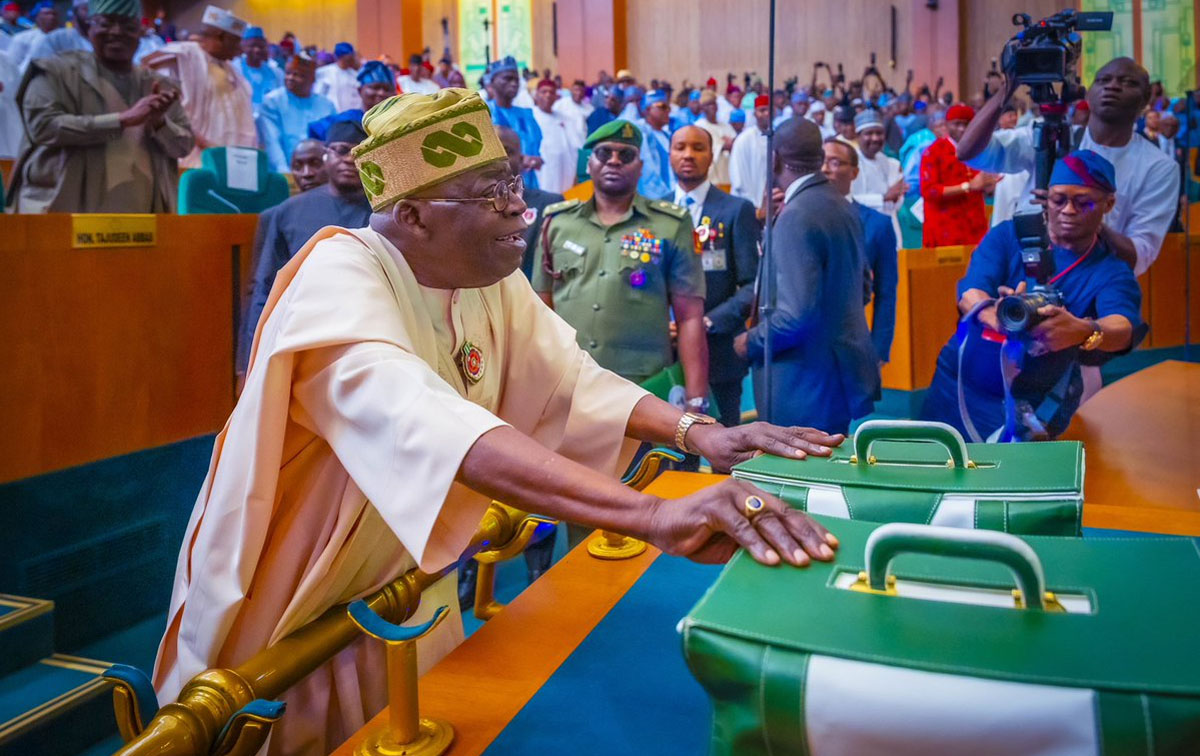
Presentation by His Excellency, President Bola Ahmed Tinubu, GCFR of the 2025 Budget of Restoration: Securing Peace, Rebuilding Prosperity to a joint session of the National Assembly on Wednesday 18th December, 2024.
PROTOCOLS:
— The Vice President, Senator Kashim Shettima
— Senate President, Distinguished Senator Godswill Akpabio
— Right Honourable Speaker, Tajudeen Abbas
— National Chairman of our great party, Excellency, Abdullahi Umar Ganduje
— State Governors here present
— Distinguished Leaders and Members of the National Assembly
— Senior Government Officials here present
— Gentlemen of the press.
My Fellow Nigerians,
1. In fulfilment of one of my constitutional duties and with unyielding commitment to rebuilding Nigeria towards ensuring that we remain steadfast on the journey to a prosperous future, I hereby present the 2025 Budget to the Joint Session of the 11th National Assembly.
2. On this day, before this hallowed chamber, I present to you the 2025 Budget at a time when our country is at a crucial point in its development trajectory.
3. The 2025 Budget Proposal again reinforces our administration’s roadmap to secure peace, prosperity, and hope for a greater future for our beloved nation. This budget christened, “Budget of Restoration: Securing Peace, Rebuilding Prosperity,” strikes at the very core of our Renewed Hope Agenda and demonstrates our commitment to stabilizing the economy, improving lives, and repositioning our country for greater performance.
READ ALSO:
- Fake visa agent, Atolagbe, arraigned for N9.8m student scam
- Russia detains Uzbek man over general’s killing in Moscow
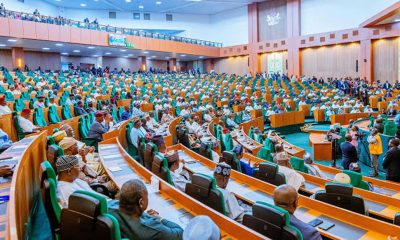
- Heavy security presence in NASS as Tinubu presents 2025 budget today
4. The journey of economic renewal and institutional development, which we began 18 months ago as a nation, is very much underway. It is not a journey of our choosing but one we had to embark on for Nigeria to have a real chance at greatness. I thank every Nigerian for embarking on this journey of REFORMS and TRANSFORMATION with us.
5. The road of reforms is now clearly upon us, and as the President of this blessed nation, I know this less-travelled road has not been easy. That there have been difficulties and sacrifices. They will not be in vain. And we must keep faith with the process to arrive at our collectively desired destination.
6. We must build on the progress we have made in the past eighteen months in restructuring our economy and ensuring it is strong enough to withstand the headwinds of any future shocks of the global downturn.
7. The 2025 budget that I present today is one of restoration. It seeks to consolidate the key policies we have instituted to restructure our economy, boost human capital development, increase the volume of trade and investments, bolster oil and gas production, get our manufacturing sector humming again and ultimately increase the competitiveness of our economy.
8. We do not intend to depart from this critical path to strengthen the Nigerian economy. Just as I believe in the resilience of our economy to withstand the current challenges, I also strongly believe in the resilience of the Nigerian people. Again, I summon the unstoppable Nigerian spirit to lead us on as we work to rebuild the fabric of our economy and existence.
9. The improvements we witnessed in the 2024 budget have led us into the 2025 budget. The goals of advancing national security, creating economic opportunities, investing in our youthful population, infrastructure development, and national re-orientation form the core of the 2025 budget. But more than that, this will lay a solid foundation for Nigeria’s future growth trajectory.
CURRENT ECONOMIC REALITIES AND PROGRESS
10. Distinguished Senate President, Right Honourable Speaker of the House of Representatives, leaders and members of both Chambers of the National Assembly, I report today that our economy is responding positively to stimulus. Our objective is to further stimulate the economy through the implementation of targeted fiscal stimulus packages through public expenditures and specific non-inflationary spending.
11. The reforms we have instituted are beginning to yield results. Nigerians will soon experience a better and more functional economy.
12. Global economic growth for the outgoing year 2024 was projected at 3.2 percent, and against predictions, our country made significant progress.
READ ALSO:
- Owa-Obokun: Court stops Adeleke from appointing monarch from Haastrup family
- Gaza ceasefire talks in final stage, Palestinian negotiator tells BBC
- Abduction: Lawyers slam N100m suit on IGP over Olamide Thomas rights violation
Our economy grew by 3.46 percent in the third quarter of 2024, up from 2.54 percent in the third quarter of 2023.
Our Foreign Reserves now stand at nearly 42 billion US dollars, providing a robust buffer against external shocks.
Our rising exports are reflected in the current trade surplus, which now stands at 5.8 trillion naira, according to the National Bureau of Statistics.
13. These clear results of gradual recovery, among others, reflect the resilience of our economy and the impact of deliberate policy choices we made from the outset.
2024 BUDGET PERFORMANCE
14. I am happy to inform this National Assembly that our administration attained remarkable milestones in implementing the 2024 Budget. In 2024, we achieved:
14.55 trillion naira in revenue, meeting 75 percent of our target as of the third quarter.
21.60 trillion naira in expenditure, representing 85 percent of our target, also in the third quarter.
15. While challenges persist, we improved revenue collection and fulfilled key obligations. The transformational effects of this on our economy are gradually being felt.
PHILOSOPHY OF THE 2025 BUDGET
16. The 2025 Budget seeks to:
Restore macroeconomic stability.
Enhance the business environment.
Foster inclusive growth, employment, and poverty reduction.
17. Our budgetary allocations reflect the administration’s strategic priorities, especially in the implementation of the Renewed Hope Agenda and its developmental objectives.
2025 BUDGET OVERVIEW
18. The numbers for our 2025 budget proposal tell a bold and exciting story of the direction we are taking to retool and revamp the socio-economic fabric of our society.
In 2025, we are targeting 34.82 trillion naira in revenue to fund the budget.
Government expenditure in the same year is projected to be 47.90 trillion naira, including 15.81 trillion naira for debt servicing.
A total of 13.08 trillion naira, or 3.89 percent of GDP, will make up the budget deficit.
19. This is an ambitious but necessary budget to secure our future.
20. The Budget projects inflation will decline from the current rate of 34.6 percent to 15 percent next year, while the exchange rate will improve from approximately 1,700 naira per US dollar to 1,500 naira, and a base crude oil production assumption of 2.06 million barrels per day (mbpd).
READ ALSO:
- Kaduna gov returns Abacha family seized lands by El-Rufai
- Nigerians paid N2.23tn in ransoms to bandits – NBS Report
- Young Delta mother arrested for throwing her baby into river
21. These projections are based on the following observations:
Reduced importation of petroleum products alongside increased export of finished petroleum products.
Bumper harvests, driven by enhanced security, reducing reliance on food imports.
Increased foreign exchange inflows through Foreign Portfolio Investments.
Higher crude oil output and exports, coupled with a substantial reduction in upstream oil and gas production costs.
KEY PRIORITIES: REBUILDING NIGERIA
22. Our budgetary allocations underscore this administration’s strategic priorities, particularly in advancing the Renewed Hope Agenda and achieving its developmental objectives.
23. Highlights of the 2025 Budget Allocations:
• Defence and Security: N4.91 trillion
• Infrastructure: N4.06 trillion
• Health: N2.48 trillion
• Education: N3.52 trillion
24. As we embark on implementing the 2025 Budget, our steps are deliberate, our decisions resolute, and our priorities are clear. This budget reflects a renewed commitment to strengthening the foundation of a robust economy, while addressing critical sectors essential for the growth and development we envision.
Securing Our Nation:
25. Security is the foundation of all progress. We have significantly increased funding for the military, paramilitary, and police forces to secure the nation, protect our borders, and consolidate government control over every inch of our national territory. The government will continue to provide our security forces with the modern tools and technology they need to keep us safe. Boosting the morale of our men and women in the armed forces will remain our government’s top priority.
26. The officers, men, and women of our Armed Forces and the Nigerian Police Force are the shields and protectors of our nation. Our administration will continue to empower them to defeat insurgency, banditry, and all threats to our sovereignty. Our people should never live in fear—whether on their farmlands, highways or cities. By restoring peace, we restore productivity, revive businesses, and rebuild our communities.
Infrastructure Development:
27. When we launched the Renewed Hope Infrastructure Development Fund, it was with the conviction that infrastructure remains the backbone of every thriving economy. Under this programme, we are accelerating investments in energy, transport, and public works. By leveraging private capital, we hope to complete key projects that drive growth and create jobs. We have already embarked on key legacy projects: Lagos-Calabar Coastal Highway and Sokoto-Badagry Highway, which will have a huge impact on the lives of our people and accelerate economic output.
READ ALSO:
- Edo official allegedly involved in rigging nominated as electoral commission member
- INEC recognises Sylvester Ezeokenwa as APGA national chairman
- Real Madrid’s Vinicius Jr. crowned FIFA Player of the Year
Human Capital Development:
28. Our people are our greatest resource. That is why we are making record investments in education, healthcare, and social services:
Our administration has so far disbursed 34 billion naira to over 300,000 students via the Nigeria Education Loan Fund (NELFUND). In the 2025 Budget, we have made provision for 826.90 billion naira for infrastructure development in the educational sector. This provision also includes those for the Universal Basic Education (UBEC) and the nine new higher educational institutions.
We are convinced that Universal Health Coverage initiatives will strengthen primary healthcare systems across Nigeria. In this way, we have allocated 402 billion naira for infrastructure investments in the health sector in the 2025 Budget and another 282.65 billion naira for the Basic Health Care Fund. Our hospitals will be revitalised with medication and better resources, ensuring quality care for all Nigerians. This is consistent with the Federal Government’s planned procurement of essential drugs for distribution to public healthcare facilities nationwide, improving healthcare access and reducing medical import dependency.
Revitalizing Agriculture:
29. Increasing agricultural production is central to our food security agenda, but insecurity has crippled this vital sector. We are supporting our farmers with funding and inputs to reignite productivity. Food security is non-negotiable. In this regard, we are taking bold steps to ensure that every Nigerian can feed conveniently, and none of our citizens will have to go to bed hungry.
30. Distinguished Senate President, Right Honourable Speaker of the House of Representatives, leaders and members of both Chambers of the National Assembly and fellow Nigerians, our 2025 budget proposal is not just another statement on projected government revenue and expenditures. It is one that calls for action.
31. Our nation faces existential threats from corruption and insecurity and suffers from many past poor choices. These challenges are surmountable when we work collaboratively to overcome them. We must rewrite the narrative of this nation together, with every leader, institution, and citizen playing their part.
32. The time for lamentation is over. This is a time to act. A time to support and promote greater investment in the private sector. A time for our civil servants to faithfully execute our policies and programmes. It is a time for every Nigerian to look hopefully towards a brighter future because a new day has dawned for us as a nation.
33. As your President, I remain committed and resolute to continue to lead the charge.
34. This 2025 budget proposal lays the foundation for peace, prosperity, and much needed hope. It is the plan through which a Nigeria where every citizen can dream, work, and thrive in safety can be achieved.
35. It is with great pleasure, therefore, that I lay before this distinguished Joint Session of the National Assembly the 2025 Budget of the Federal Government of Nigeria titled “The Restoration Budget: Securing Peace, Rebuilding Prosperity.
36. May God bless our Armed Forces and keep them safe. May God bless the Federal Republic of Nigeria.
Thank you.
Bola Ahmed Tinubu, GCFR
President, Commander-in-Chief of The Armed Forces, Federal Republic of Nigeria.
FULL TEXT: Tinubu’s speech at 2025 budget presentation to joint National Assembly






metro
State Police Reform: FG Invites Nigerians to Submit Policy Proposals as Draft Bill Nears September Deadline
State Police Reform: FG Invites Nigerians to Submit Policy Proposals as Draft Bill Nears September Deadline
The Presidential Working Group on State Policing has opened a two-week public submission window for memoranda and policy proposals, setting the stage for a landmark legal framework that could redefine security architecture across Nigeria.
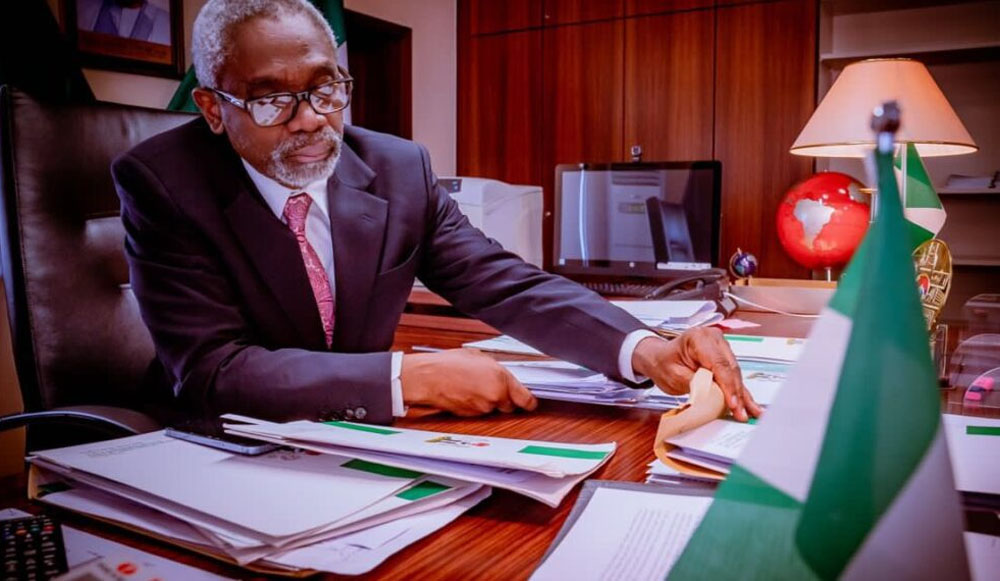
The Federal Government has officially called on Nigerians at home and in the diaspora, civil society organisations, security agencies, academics, professional bodies, and sub-national governments to contribute to the drafting of the proposed National Policing Bill, which seeks to establish a legal and operational framework for state police in Nigeria. The call was made public on Monday by Femi Gbajabiamila, Chief of Staff to the President and Chairman of the Presidential Working Group on the National Policing Bill, following a high-level meeting at the State House, Abuja. The announcement was contained in a statement issued by the Presidential spokesperson, Bayo Onanuga, who confirmed that all submissions will be reviewed and integrated into the draft bill, which will then be subject to further national consultation before being finalised and sent to the National Assembly. The development comes weeks after the National Assembly passed the bill following its transmission by President Bola Tinubu, signalling strong political will to actualise one of the most debated governance reforms in Nigeria’s recent history.
This public consultation exercise is critical because the Working Group is currently reviewing the Police Act 2020, the Police Service Commission framework, police regulations, and other relevant laws to develop a modern, effective, and accountable policing system. The proposed framework is expected to set national minimum standards for policing across all states, define state readiness and certification requirements before any state can operate its own police service, and clarify jurisdictional responsibilities between federal and state police forces. Additionally, the bill will ensure independent oversight and safeguard human rights, guarantee sustainable funding and financial accountability, and prevent the use of state police as a tool for political persecution – a concern earlier raised by the Attorney-General of the Federation, Lateef Fagbemi, who stressed that the legislation is designed to protect citizens from potential abuses of power at the sub-national level.
READ ALSO:
- Biafra Civil War: Gowon says Igbo bank depositors were fully paid, defends Awolowo over £20 policy
- How 15-year-old allegedly staged his own kidnapping to extort N200,000 from father
- TikToker undergoes cleansing after filming Oloolu procession in Ibadan
Nigerians have until August 13, 2026, to submit their memoranda and policy proposals through the dedicated portal at www.nationalpolicingbill.com, marking the close of a two-week submission window. The Presidential Working Group has adopted a seven-week, milestone-driven work programme running from July 27 to September 14, 2026, with the draft Executive Bill scheduled for presentation to President Bola Tinubu on September 3, 2026. Following this, national consultations will be held on the completed draft before it is finalised and transmitted to the National Assembly. All Nigerians, including professionals, academics, security experts, state and local governments, and civil society groups, are encouraged to participate in this historic policy-shaping process.
The new policing framework will impose strict operational readiness requirements on any state seeking to establish its own police service. According to Gbajabiamila, a proposed State Police Service must demonstrate credible arrangements in recruitment and vetting processes, training and capacity development, pay, pensions and welfare, equipment and logistics, custody and detention standards, complaints and discipline mechanisms, data management and reporting, firearms control and regulation, independent oversight bodies, and financial sustainability plans before it begins policing. These stringent criteria are designed to ensure that only states with the institutional capacity and financial resilience can operate their own police forces, thereby preventing a patchwork of poorly equipped or unaccountable state-level security services.
The Nigeria Governors’ Forum, represented by Ogun State Governor Dapo Abiodun, has described the state police initiative as one of the defining reforms of President Tinubu’s administration, expressing the forum’s commitment to ensuring the success of the policy. The Working Group is also considering recommending federal grants to assist states with limited financial capacity in establishing their police services, acknowledging the fiscal disparities among the 36 states. States that are not yet ready to establish their own service will continue to rely on the Nigeria Police Force until they meet the required standards, ensuring that no state is left without adequate security coverage during the transition period.
The final submission to the President will go beyond a conventional bill and is expected to include schedules and explanatory memoranda, a legal audit of existing policing laws, a state readiness framework, a fiscal and implementation note, and a risk register with transition arrangements. This comprehensive approach is designed to ensure that the reform is defensible, auditable, and capable of implementation across Nigeria’s diverse states, addressing everything from constitutional alignment to practical logistics on the ground.
The government has emphasised that this is a people-driven process, and by inviting input from all segments of society – including ordinary citizens, diaspora communities, and professional bodies – the Working Group aims to build a policing system that reflects the aspirations and realities of all Nigerians. As a senior official close to the Working Group noted, this is not just a government bill but a national project in which every Nigerian has a stake in how they are policed. Interested individuals and organisations are encouraged to visit www.nationalpolicingbill.com before August 13, 2026, to submit their memoranda and policy proposals, with all submissions to be reviewed and incorporated into the draft bill ahead of further national consultations.
State Police Reform: FG Invites Nigerians to Submit Policy Proposals as Draft Bill Nears September Deadline
metro
Biafra Civil War: Gowon says Igbo bank depositors were fully paid, defends Awolowo over £20 policy
Biafra Civil War: Gowon says Igbo bank depositors were fully paid, defends Awolowo over £20 policy
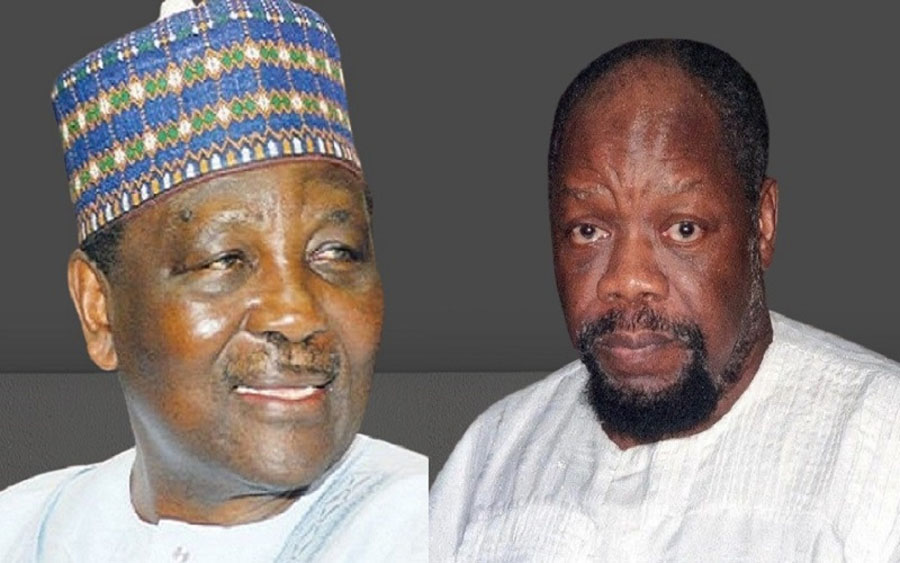
Former Nigerian Head of State, General Yakubu Gowon (retd.), has defended the late Chief Obafemi Awolowo against long-standing criticism over the controversial post-civil war £20 policy, saying the decision was taken collectively by the Federal Government and was not Awolowo’s personal policy.
Gowon also stated that people from the former Biafran territory who could provide evidence that they had money in Nigerian banks before or during the Nigerian Civil War received the full value of their deposits, including accrued interest.
The former Head of State made the clarification in his memoir, My Life of Duty and Allegiance, where he revisited the circumstances surrounding the currency policy introduced after the end of the civil war in January 1970.
The £20 policy has remained a subject of public debate for decades, with critics accusing Awolowo, who served as Federal Commissioner for Finance during the war, of restricting people from the former Biafran territory to a flat payment of £20, regardless of the amount they had held before the conflict.
However, Gowon said Awolowo had been unfairly blamed for a policy that was approved by the Federal Government after consultations and consideration of the economic challenges facing Nigeria at the end of the war.
According to Gowon, the Central Bank of Nigeria established a panel to examine the possible consequences of converting the Biafran pound into Nigerian currency.
He explained that the exercise was difficult because the Biafran currency was not recognised by the Federal Government as legal tender during the war.
Gowon said the large volume of Biafran currency in circulation also created concerns that exchanging all the notes at the same value as the Nigerian pound could have caused serious economic disruption.
READ ALSO:
- How 15-year-old allegedly staged his own kidnapping to extort N200,000 from father
- TikToker undergoes cleansing after filming Oloolu procession in Ibadan
- NiDCOM confirms release of Nigerian girls detained in Mauritius
Economic advisers subsequently recommended that the Federal Government provide a uniform payment of about £20 to each adult from the former Biafran territory, regardless of the quantity of Biafran currency presented.
“We agreed to the proposal and made it our official policy,” Gowon wrote, adding that the government faced major difficulties in determining the volume of Biafran currency in circulation and establishing a practical basis for converting it.
He maintained that the decision was made by the Federal Government and should not be attributed solely to Awolowo.
Gowon further stated that people who had left Nigeria but could provide proof that they held funds in Nigerian banks received the full value of their deposits, including interest, in Nigerian currency.
“Everyone who left Nigeria but had proof that they had money in Nigerian banks got the full amount of their money plus the interest it earned, all in Nigerian currency,” he said.
The former military leader argued that adopting a different approach could have created significant economic and administrative challenges during Nigeria’s post-war recovery.
The Nigerian Civil War, also known as the Biafra War, began in 1967 and ended in January 1970 following the surrender of Biafran forces.
After the war, Gowon declared a policy of “no victor, no vanquished” and introduced the Reconciliation, Reconstruction and Rehabilitation programme, widely known as the 3Rs.
The programme was designed to promote national unity, rebuild war-affected communities and support the reintegration of the former Eastern Region into Nigeria.
Despite the government’s post-war reconciliation agenda, the £20 policy remains one of the most debated aspects of Nigeria’s post-civil war history.
Critics have argued that the policy caused financial hardship for many people in the former Biafran territory, particularly those who lost access to savings, could not provide documentation for their bank deposits or were unable to recover the value of assets affected by the war.
Some historians and commentators have also questioned whether the post-war reconstruction and rehabilitation programmes adequately addressed the economic losses and long-term effects experienced by communities affected by the conflict.
Gowon’s account has renewed public discussion about the Biafra Civil War, the post-war currency policy and Awolowo’s role in the Federal Military Government.
While Gowon maintains that verified Nigerian bank deposits were fully repaid with interest and that Awolowo should not be held personally responsible for the £20 policy, the issue continues to generate debate over post-war justice, economic recovery, historical memory and national reconciliation.
Biafra Civil War: Gowon says Igbo bank depositors were fully paid, defends Awolowo over £20 policy
metro
How 15-year-old allegedly staged his own kidnapping to extort N200,000 from father

The Niger State Police Command has arrested a 15-year-old boy who allegedly staged his own kidnapping in an attempt to extort N200,000 from his father in Suleja.
The teenager was arrested alongside a 17-year-old alleged accomplice after police traced him to a hotel in Suleja, days after his family reported him missing.
The spokesperson for the Niger State Police Command, SP Wasiu Abiodun, disclosed the development in a statement issued on Monday.
According to the police, the 15-year-old left home after attending church on July 20, 2026, but failed to return, prompting concern among his family members.
The following day, the family reportedly received a telephone call from someone who claimed that the teenager had been kidnapped and demanded a ransom of N200,000 for his release.
The matter was subsequently reported at the B Division of the Nigeria Police Force in Suleja, leading to the launch of an investigation.
Police detectives reportedly acted on credible intelligence and traced the teenager to a hotel in Suleja on July 25, where he was found with the 17-year-old.
“On receipt of the information, police operatives of the division commenced an investigation and, acting on credible intelligence, the said Kelvin was found at a hotel in Suleja on July 25, 2026, with his accomplice,” the police spokesperson said.
According to the command, the two teenagers allegedly confessed during questioning that they planned the incident to obtain N200,000 from the boy’s father.
READ ALSO:
- TikToker undergoes cleansing after filming Oloolu procession in Ibadan
- NiDCOM confirms release of Nigerian girls detained in Mauritius
- Power Struggle Threatens Peter Obi-Kwankwaso Alliance Ahead of 2027 Polls
The police said the money was to be shared between them after the ransom had been paid.
“The suspects confessed that they planned to extort the sum of N200,000 from Kelvin’s father, after which they would share the proceeds of the crime,” Abiodun said.
The police said the alleged plan was uncovered before the family paid the requested ransom.
Both teenagers are currently in the custody of the State Criminal Investigation Department, SCID, in Minna, where further investigations are ongoing.
The command said the suspects would be taken through the appropriate legal process after the investigation had been concluded.
The incident has renewed concerns over staged kidnapping, particularly the emotional and financial impact such incidents can have on families.
Security experts have repeatedly warned that fake kidnapping claims can cause panic, place families under severe emotional pressure and divert police resources from genuine cases involving missing or abducted persons.
The case also highlights the importance of reporting suspected kidnappings promptly to security agencies and allowing investigators to handle ransom demands and related threats.
Residents have been encouraged to provide timely and credible information that could help security agencies prevent crime and respond quickly to reports involving missing persons.
The Niger State Police Command said investigations into the alleged self-kidnapping plot were continuing.
How 15-year-old allegedly staged his own kidnapping to extort N200,000 from father
-
 News2 days ago
Oloyede clears air on JAMB’s ₦36m ‘snake swallowed money’ controversy
-
 News2 days ago
475 Police Officers Recalled After Controversial Retirement, Ordered for Mandatory Induction
-

 metro2 days ago
MURIC Hails Oloyede as ‘Game Changer,’ Says He Proved Muslims Can Excel in Public Office
-
 Auto2 days ago
Lanre Shittu Motors Leads Drive to Steer Lagos Students Away from Crime, Donates books to public Schools
-

 Sports2 days ago
Nigeria Shines in Commonwealth Games, Tops Africa with 10 Gold Medals
-
 Auto2 days ago
FRSC Boss: Tinubu’s CNG, EV Drive Creating Jobs, Attracting Investment
-
 metro2 days ago
DSS, Vigilantes Ambush, Kill Notorious Bandit Kingpin Idi Abasu Aiki, Over 60 Fighters in Katsina
-
 metro3 days ago
Peller, Jarvis’ Glamorous Lagos Wedding: N400m Mansion, $20,000 Gift, Over 50,000 Virtual Guests