
Opinion
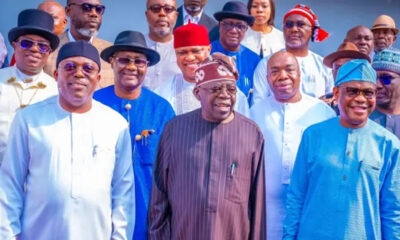
Tinubu’s Buharization of NNPC By Farooq Kperogi
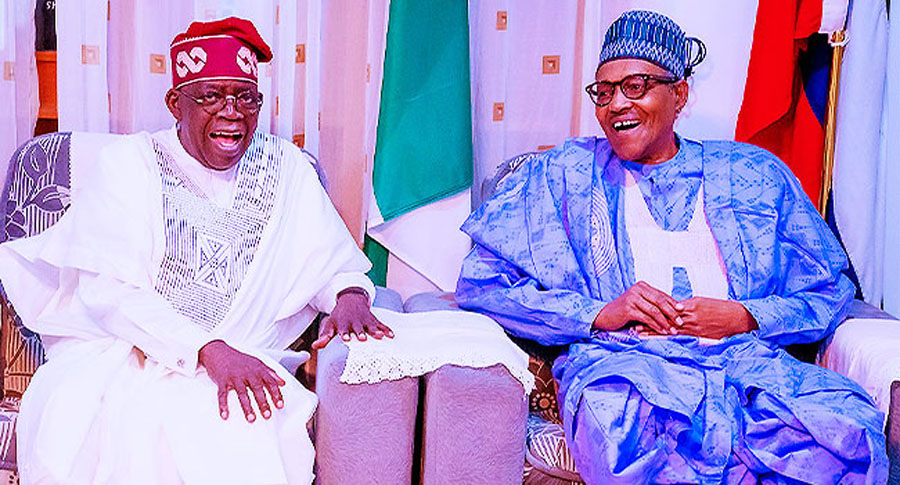
Tinubu’s Buharization of NNPC by Farooq Kperogi
After the sustained, unwarranted personal attacks I endured for eight years from northerners for unswervingly calling out what I called the “embarrassingly undisguised Arewacentricity of Buhari’s appointments” in a February 2, 2019, column titled “Even Ahmadu Bello Would Be Ashamed of Buhari’s Arewacentricity,” I promised that I would look the other way if a southern president returned the favor after Buhari’s tenure.
But promises made in the heat of disillusionment often crumble under the weight of principle.
Ironically, this column was inspired by a well-regarded Yoruba supporter of President Bola Ahmed Tinubu who is worried, in fact embarrassed, by the optics of what he says is Tinubu’s relentless Yorubacentric take-over of the Nigerian National Petroleum Company (NNPC).
His concern wasn’t just partisan discomfort; it was a profound unease about how this nepotistic approach undermines national cohesion.
I frankly hadn’t been paying attention to the internal dynamics at the NNPC, but the acquaintance pointed out that Yoruba people now occupy major positions at the NNPC and that a certain (person) is “being proposed as GMD after Mele Kyari’s term expires” early next year.
I haven’t independently confirmed the accuracy of this claim but given the closeness of the source of information to people in the circles of power, it’s probably best to not dismiss this with the wave of the hand.
His concern is that Tinubu, from the Southwest, is already the minister of petroleum. Senator Heineken Lokpobiri, the Minister of State for Petroleum and Chairman of the NNPC, is from the South-South. Chief Pius Akinyelure from the Southwest is NNPC’s Non-Executive Board Chairman.
READ ALSO:
- Lagos Imam to Tinubu: You haven’t disappointed us
- Ronaldo, Vinicius, Yamal win big at 2024 Globe Soccer Awards [Full list of winners]
- Vinicius should have won Ballon d’Or, not Rodri – Ronaldo
The head of the NNPC Upstream Investment Management Services (NUIMS), Mr. Bala Wunti, my acquaintance pointed out, has been replaced by one Seyi Omotowa. Gbenga Komolafe is the chief executive officer of the Nigerian Upstream Petroleum Regulatory Commission (NUPRC), making him the highest-ranking upstream regulator.
“If a Yoruba man were to be the GMD, another Yoruba man is the Chairman, and yet another Yoruba man is the regulator, that’s extreme lopsidedness,” and other parts of Nigeria would be justified to feel uncomfortable, my acquaintance said.
As with issues of this nature, the reality may be more complex that the surface-level impressions that I have been presented with. Of the 12-member non-executive Board of Directors, I counted at least four names that I recognize as northern, and that includes Kyari, the outgoing GMD.
The 7-member Senior Management Team on NNPC’s website has three northerners (if Kyari is included). That seems fair. Plus, Buhari actually appointed many of the Yoruba people in high places at the NNPC. By these metrics, one might argue that there’s a semblance of balance.
However, Tinubu’s broader public image tells a different story. His administration is rapidly cementing a reputation for Yorubacentric provincialism. Like the late Umaru Musa Yar’Adua, who governed Nigeria as if he were still a Katsina governor, Tinubu appears to be governing Nigeria as though he were still the governor of Lagos.
Just like Yar’adua was elected a Nigerian president but operated like a Katsina governor in Abuja, Tinubu is also, so far, a Nigerian president only in name. His mindset is still that of the governor of Lagos.
With a few notable (and in some cases unavoidable) exceptions, Tinubu’s government is largely the re-enactment of his time as the governor of Lagos. It is, for all practical purposes, an unabashed Lagos-centric Yorubacracy.
To be fair, though, with the possible exception of Olusegun Obasanjo’s administration, all civilian regimes since 1999 have been insular ethnocracies.
My source reminded me of a viral social media post I wrote on January 14, 2019, titled “New IGP: Why Progressive Northerners Should be Embarrassed” where I gave four reasons for being insistently censorious of Buhari’s Arewacentric appointments in response to southerners who asked why I was bothered since I was a northern Muslim who was “favored” by such appointments—“favored,” that is, on the emotional and symbolic plane.
READ ALSO:
- Nigeria Customs Service begins 2025 recruitment [How to apply]
- Dangote, Tinubu, Lookman, Badenoch named among 100 most influential Africans in 2024
- Heavy security in Ilesa as ex-Osun deputy gov emerges new Owa-Obokun
I pointed out that I criticized similar such parochial appointments by previous presidents from the South and that it would be hypocritical to look the other way because I was now “favored” by such appointments.
I said people from my region and religion won’t always be in power, and I wanted to be able to stand on a firm moral pedestal when I criticize future presidents who replicate Buhari’s (and previous presidents’) provincialism.
Most importantly, I said, I was personally embarrassed by Buhari’s insularity and that every progressive northerner should be. I described it as the sort of embarrassment you feel when your best friend who thinks highly of your mother visits you in your home and your mother, during a family dinner, gives you a considerably bigger food portion size and choicer pieces of meat than your friend.
“You feel like screaming: ‘Mom, I know you love me, but you’re embarrassing me by showing overt preferential treatment to me in the presence of my friend’,” I wrote.
The Yoruba acquaintance of mine who alerted me to the creeping Yoruba-centric take-over of the NNPC said he was doing so out of a feeling of the same sense of embarrassment that inspired my rage against Buhari’s appointments that favored the North unfairly, especially in the areas of security.
Tinubu is doing in the economy sector what Buhari did in the security sector. The minister of finance, the governor of the central bank, and every other consequential agency in finance is headed by a Yoruba man. I am not sure Nigeria has ever seen this level of extreme, state-sanctioned ethnocentric domination of a critical segment of national life.
Appointing another Yoruba individual as the head of the NNPC would complete what many already perceive as the ethnic capture of Nigeria’s economic nerve center. It would not only cement Tinubu’s image as an insensitive ethnocrat but also exacerbate public discontent and foster deeper divisions in an already polarized nation.
If Tinubu is unaware of this burgeoning perception, he needs to awaken to its reality. Leadership is not just about policies and actions; it’s also about managing optics and inspiring confidence in a nation’s collective identity.
In a September 5, 2015, column titled “Buhari is Losing the Symbolic War,” where I railed against the exclusion of Igbo people in Buhari’s first appointments, I wrote:
“Symbolism isn’t the same thing as substance. Appointing people to governmental positions does nothing to improve anybody’s lot—except, perhaps, the people so appointed and their immediate families.
“Jonathan’s disastrous 5-year presidency couldn’t even bring basic infrastructure like boreholes to his hometown of Otueke, yet his people derive vicarious satisfaction from the fact of his being Nigeria’s former president.
“Human beings are animated by a multiplicity of impulses, including rational and emotional impulses, both of which are legitimate. When we turn on our rational impulses, we may ask: What would appointing an Igbo man as SGF, for instance, do to Igbo people? The answer is ‘nothing.’
“But we are more than rational beings: we are also emotional beings. That’s why people are invested in symbolism. Appointing someone from the southeast or the deep south is merely a symbolic gesture, but it inspires a sense of inclusion in the minds of many people from that region; it serves as a symbolic conduit through which people vicariously connect with the government.”
This cycle of ethnic favoritism must end if Nigeria is to realize its full potential as a nation. To grow and thrive, we need leaders who can transcend the narrow confines of ethnocracy.
We need leadership that embraces diversity and inclusion, not as buzzwords but as guiding principles for governance. Only then can we begin to heal the fractures that divide us and build a nation that serves all its citizens, regardless of ethnicity or region.
Farooq Kperogi is a renowned Nigerian columnist and United States-based Professor of Media Studies.
Tinubu’s Buharization of NNPC by Farooq Kperogi







Opinion
El Rufai’s Arise News mind game with Ribadu, By Farooq Kperogi

El Rufai’s Arise News mind game with Ribadu, By Farooq Kperogi
El Rufai’s Arise News mind game with Ribadu, By Farooq Kperogi
Opinion
Oshiomhole: Behold the 13th disciple of Christ
Oshiomhole: Behold the 13th disciple of Christ
Opinion
AFCON 2025: Flipping Content Creation From Coverage to Strategy

AFCON 2025: Flipping Content Creation From Coverage to Strategy
By Toluwalope Shodunke
The beautiful and enchanting butterfly called the Africa Cup of Nations (AFCON) emerged from its chrysalis in Khartoum, Sudan, under the presidency of Abdelaziz Abdallah Salem, an Egyptian, with three countries—Egypt, Sudan, and Ethiopia—participating, and Egypt emerging as the eventual winner.
The reason for this limited participation is not far-fetched. At the time, only nine African countries were independent. The remaining 45 countries that now make up CAF’s 54 member nations were either pushing Queen Elizabeth’s dogsled made unique with the Union Jack, making supplications at the Eiffel Tower, or knocking at the doors of the Palácio de Belém, the Quirinal Palace, and the Royal Palace of Brussels—seeking the mercies of their colonial masters who, without regard for cultures, sub-cultures, or primordial affinities, divided Africa among the colonial gods.
From then until now, CAF has had seven presidents, including Patrice Motsepe, who was elected as the seventh president in 2021. With more countries gaining independence and under various CAF leaderships, AFCON has undergone several reforms—transforming from a “backyard event” involving only three nations into competitions featuring 8, 16, and now 24 teams. It has evolved into a global spectacle consumed by millions worldwide.
Looking back, I can trace my personal connection to AFCON to table soccer, which I played alone on concrete in our balcony at Olafimihan Street—between Mushin and Ilasamaja—adjacent to Alafia Oluwa Primary School, close to Alfa Nda and Akanro Street, all in Lagos State.
Zygmunt Bauman, the Polish-British sociologist who developed the concept of “liquid modernity,” argues that the world is in constant flux rather than static, among other themes in his revelatory works.
For the benefit of Millennials (Generation Y) and Generation Z—who are accustomed to high-tech pads, iPhones, AI technologies, and chat boxes—table soccer is a replica of football played with bottle corks (often from carbonated drinks or beer) as players, cassette hubs as the ball, and “Bic” biro covers for engagement. The game can be played by two people, each controlling eleven players.
I, however, enjoyed playing alone in a secluded area, running my own commentary like the great Ernest Okonkwo, Yinka Craig, and Fabio Lanipekun, who are all late. At the time, I knew next to nothing about the Africa Cup of Nations. Yet, I named my cork players after Nigerian legends such as Segun Odegbami, Godwin Odiye, Aloysius Atuegbu, Tunji Banjo, Muda Lawal, Felix Owolabi, and Adokiye Amiesimaka, among others, as I must have taken to heart their names from commentary and utterances of my uncles resulting from sporadic and wild celebrations of Nigeria winning the Cup of Nations on home soil for the first time.
While my connection to AFCON remained somewhat ephemeral until Libya 1982, my AFCON anecdotes became deeply rooted in Abidjan 1984, where Cameroon defeated Nigeria 3–1. The name Théophile Abéga was etched into my youthful memory.
Even as I write this, I remember the silence that enveloped our compound after the final whistle.
It felt similar to how Ukrainians experienced the Battle of Mariupol against Russia—where resolute resistance eventually succumbed to overwhelming force.
The Indomitable Lions were better and superior in every aspect. The lion not only caged the Eagles, they cooked pepper soup with the Green Eagles.
In Maroc ’88, I again tasted defeat with the Green Eagles (now Super Eagles), coached by the German Manfred Höner. Players like Henry Nwosu, Stephen Keshi, Sunday Eboigbe, Bright Omolara, Rashidi Yekini, Austin Eguavoen, Peter Rufai, Folorunsho Okenla, Ademola Adeshina, Yisa Sofoluwe, and others featured prominently. A beautiful goal by Henry Nwosu—then a diminutive ACB Lagos player—was controversially disallowed.
This sparked outrage among Nigerians, many of whom believed the referee acted under the influence of Issa Hayatou, the Cameroonian who served as CAF president from 1988 to 2017.
This stroll down memory lane illustrates that controversy and allegations of biased officiating have long been part of AFCON’s history.
The 2025 Africa Cup of Nations in Morocco, held from December 21, 2025, to January 18, 2026, will be discussed for a long time by football historians, raconteurs, and aficionados—for both positive and negative reasons.
These include Morocco’s world-class facilities, the ravenous hunger of ball boys and players (superstars included) for the towels of opposing goalkeepers—popularly dubbed TowelGate—allegations of biased officiating, strained relations among Arab African nations (Egypt, Algeria, Tunisia, and Morocco), CAF President Patrice Motsepe’s curt “keep quiet” response to veteran journalist Osasu Obayiuwana regarding the proposed four-year AFCON cycle post-2028, and the “Oga Patapata” incident, where Senegalese players walked off the pitch after a legitimate goal was chalked off and a penalty awarded against them by DR Congo referee Jean-Jacques Ndala.
While these narratives dominated global discourse, another critical issue—less prominent but equally important—emerged within Nigeria’s media and content-creation landscape.
Following Nigeria’s qualification from the group stage, the Super Eagles were scheduled to face Mozambique in the Round of 16. Between January 1 and January 3, Coach Eric Chelle instituted closed-door training sessions, denying journalists and content creators access, with media interaction limited to pre-match press conferences.
According to Chelle, the knockout stage demanded “maximum concentration,” and privacy was necessary to protect players from distractions.
This decision sparked mixed reactions on social media.
Twitter user @QualityQuadry wrote:
“What Eric Chelle is doing to journalists is bad.
Journalists were subjected to a media parley under cold weather in an open field for the first time in Super Eagles history.
Journalists were beaten by rain because Chelle doesn’t want journalists around the camp.
Locking down training sessions for three days is unprofessional.
I wish him well against Mozambique.”
Another user, @PoojaMedia, stated:
“Again, Eric Chelle has closed the Super Eagles’ training today.
That means journalists in Morocco won’t have access to the team for three straight days ahead of the Round of 16.
This is serious and sad for journalists who spent millions to get content around the team.
We move.”
Conversely, @sportsdokitor wrote:
“I’m not Eric Chelle’s biggest supporter, but on this issue, I support him 110%.
There’s a time to speak and a time to train.
Let the boys focus on why they’re in Morocco—they’re not here for your content creation.”
From these three tweets, one can see accessibility being clothed in beautiful garments. Two of the tweets suggest that there is only one way to get to the zenith of Mount Kilimanjaro, when indeed there are many routes—if we think within the box, not outside the box as we’ve not exhausted the content inside the box.
In the past, when the economy was buoyant, media organisations sponsored reporters to cover the World Cup, Olympics, Commonwealth Games, and other international competitions.
Today, with financial pressures mounting, many journalists and content creators seek collaborations and sponsorships from corporations and tech startups to cover sporting events, who in turn get awareness, brand visibility, and other intangibles.
As Gary Vaynerchuk famously said, “Every company is a media company.” Yet most creators covering AFCON 2025 followed the same playbook.
At AFCON 2025, most Nigerian journalists and content creators pitched similar offerings: on-the-ground coverage, press conferences, team updates, behind-the-scenes footage, analysis, cuisine, fan interactions, and Moroccan cultural experiences.
If they were not interviewing Victor Osimhen, they were showcasing the stand-up comedy talents of Samuel Chukwueze and other forms of entertainment.
What was missing was differentiation. No clear Unique Selling Proposition (USP). The result was generic, repetitive content with little strategic distinction. Everyone appeared to be deploying the same “Jab, Jab, Jab, Hook” formula—throwing multiple jabs of access-driven content in the hope that one hook would land.
The lesson is simple: when everyone is jabbing the same way, the hook becomes predictable and loses its power.
As J. P. Clark wrote in the poem “The Casualties”, “We are all casualties,” casualties of sameness—content without differentiation. The audience consumes shallow content, sponsors lose return on investment, and creators return home bearing the “weight of paper” from disappointed benefactors.
On November 23, 1963, a shining light was dimmed in America when President John F. Kennedy was assassinated.
As with AFCON today, media organisations sent their best hands to cover the funeral, as the who’s who of the planet—and if possible, the stratosphere—would attend. Unconfirmed reports suggested that over 220 VVIPs were expected.
While every newspaper, radio, and television station covered the spectacle and grandeur of the event, one man, Jimmy Breslin, swam against the tide. He chose instead to interview Clifton Pollard, the foreman of gravediggers at Arlington National Cemetery—the man who dug John F. Kennedy’s grave.
This act of upended thinking differentiated Jimmy Breslin from the odds and sods, and he went on to win the Pulitzer Prize in 1986.
Until journalists and content creators stop following the motley and begin swimming against the tide, access will continue to be treated as king—when in reality, differentiation, aided by strategy, is king.
When every journalist and content creator is using Gary Vaynerchuk’s “Jab, Jab, Jab, Hook” template while covering major sporting events, thinkers among them must learn to replace one jab with a counterpunch—and a bit of head movement—to stay ahead of the herd.
Toluwalope Shodunke can be reached via tolushodunke@yahoo.com

-

 metro2 days ago
IKEDC Sets Feb 20 Deadline for Customers to Submit Valid IDs or Face Disconnection
-

 Education2 days ago
Supreme Court Affirms Muslim Students’ Right to Worship at Rivers State University
-

 metro1 day ago
Lagos Police Launch Manhunt for Suspect in Brutal Ajah Murder
-

 News1 day ago
Aso Rock Goes Solar as Tinubu Orders National Grid Disconnection
-

 Business2 days ago
Naira Could Trade Below ₦1,000/$ With Dangote Refinery at Full Capacity — Otedola
-
 metro3 days ago
Kwara, Katsina Bloodshed: TMC Condemns Attacks, Dismisses ‘Jihadist Preacher’ Claims
-

 metro2 days ago
Army University Professor Dies in Boko Haram Captivity After Nearly One Year
-
 News3 days ago
Tinubu Nominates Ismail Abba Yusuf as NAHCON Chairman, Seeks Senate Confirmation