
Business
Abuja CCTV project: Account for $460m Chinese loan, court orders Buhari govt

A Federal High Court in Abuja has ordered the government of President Muhammadu Buhari to account for $460 million Chinese loan taken for the failed Abuja Closed-Circuit Television (CCTV) project.
The court also ordered the government to “publish the total amount of money paid to Chinese and local companies and contractors and specific details of the names of the companies and contractors and status of the implementation of the project.”
Justice Emeka Nwite gave the orders while delivering judgment in a Freedom of Information suit number: FHC/ABJ/CS/1447/2019 brought by Socio-Economic Rights and Accountability Project (SERAP).
The suit was instituted after Minister of Finance, Zainab Ahmed, in 2019 said, “Nigeria was servicing the loan. I have no information on the status of the CCTV project.”
In his judgment, Justice Nwite agreed with SERAP that “there is a reasonable cause of action against the government. Accounting for the spending of the $460 million Chinese loan is in the interest of the public. It will be inimical for the court to refuse SERAP’s application for judicial review of the government’s action.”
Justice Nwite also said, “The Minister of Finance is in charge of the finance of the country and cannot by any stretch of imagination be oblivious of the amount of money paid to the contractors for the Abuja CCTV contract and the money meant for the construction of the headquarters of the Code of Conduct Bureau (CCB).”
The judge ordered the government “to provide the details clarifying whether the sum of N1.5 billion Naira paid for the failed contract meant to construct the headquarters of the Code of Conduct Bureau (CCB) was part of another loan obtained from China.”
Justice Nwite’s judgment, read in part: “SERAP’s core objectives are to promote human rights, transparency and accountability and anticorruption in Nigeria.”
“I am of the humble view that there is a reasonable cause of action against the government [through the Minister of Finance] and I so hold that SERAP has made out a case to be entitled to the reliefs sought.”
“The law is well settled that where a document or letter is sent by post, it is the law that same is taken or presumed to have been delivered.”
“Following this principle of law and relying on exhibit OS2, SERAP’s Freedom of Information request sent to Ms Ahmed is deemed to have delivered. Therefore, the averment by the government [through her] that they were not served with the letter is hereby discountenance. I so hold.”
Joined as defendants in the suit are Ms Ahmed and the Minister of Police Affairs.
Justice Nwite said, “An order of mandamus is hereby made directing and compelling the government [through the Minister of Finance] to provide and make available to SERAP information on the total amount of money paid to contractors, with specific details of names of companies local contractors involved, from the $460 million loan obtained in 2010 from China by the Federal Government of Nigeria to fund the failed Abuja CCTV contract.”












Business
Dangote Refinery Slashes Petrol Price to ₦774, Ends PMS Bonus Window

Dangote Refinery Slashes Petrol Price to ₦774, Ends PMS Bonus Window
Dangote Petroleum Refinery and Petrochemicals FZE has announced a reduction in the gantry price of Premium Motor Spirit (PMS), commonly known as petrol, by ₦25 per litre, lowering the ex-depot rate from ₦799 to ₦774 per litre. The new pricing took immediate effect on Tuesday, 10 February 2026.
The refinery notified petroleum marketers through its Group Commercial Operations Department, stating:
“This is to notify you of a change in our PMS gantry price from ₦799 per litre to ₦774 per litre.”
Industry checks on platforms like petroleumprice.ng confirmed that the revised price has already been updated across petroleum pricing systems, ensuring transparency for downstream operators and consumers.
In the same notice, Dangote Refinery announced the end of its PMS lifting incentive programme, which had offered marketers bonuses for purchasing within specific volume thresholds. The refinery stated that credits for volumes loaded from 2 to 10 February 2026 would be posted to marketers’ accounts.
READ ALSO:
- El-Rufai: I Supported Tinubu Out of Party Principle, Not Friendship
- Trump Approves Deployment of 200 U.S. Soldiers to Support Nigeria’s Fight Against Terrorists
- Atiku Rejects Mixed Result Transmission
Analysts say the simultaneous price cut and closure of the bonus window signals a shift from volume-driven incentives to a more stable and predictable pricing framework, as the refinery consolidates its domestic market share.
The move comes amid continued volatility in PMS prices following the full deregulation of Nigeria’s downstream petroleum sector and the removal of fuel subsidies. In 2025, ex-depot prices fluctuated between ₦700 and over ₦800 per litre, driven by exchange rate pressures, global crude oil prices, and reliance on imported fuel, which in turn pushed pump prices higher nationwide.
With a production capacity of 650,000 barrels per day, Dangote Refinery — Africa’s largest single-train refinery — has become a key reference point for domestic fuel pricing. Its operations have helped moderate petrol prices, especially in southern and coastal distribution corridors, and reduce Nigeria’s dependence on imported fuel.
Industry observers note that the latest price reduction reflects easing production costs, improved operational efficiency, and increased competition from imported cargoes and modular refineries. As the refinery continues to expand, its pricing decisions are expected to influence national petrol rates, transportation costs, and inflationary pressures.
Dangote Refinery Slashes Petrol Price to ₦774, Ends PMS Bonus Window
Business
Fuel Self-Sufficiency: Dangote Refinery Counters Misinformation on Petrol Imports

Fuel Self-Sufficiency: Dangote Refinery Counters Misinformation on Petrol Imports
The Dangote Petroleum Refinery & Petrochemicals has clarified that there is no importation of finished Premium Motor Spirit (PMS) — commonly known as petrol — into Nigeria, countering recent reports suggesting otherwise. The company stated that locally refined petrol from the Dangote Refinery now meets a significant portion of Nigeria’s domestic demand, marking a major milestone in the country’s journey toward fuel self-sufficiency.
In a statement, the refinery dismissed claims that it imports finished PMS as false and misleading, stressing that such reports misrepresent its operations and could undermine public confidence in Nigeria’s local refining sector. The company also indicated that it has identified individuals behind these claims and warned that legal action may be pursued against parties spreading misinformation.
Oil marketers and industry observers confirm that the refinery has consistently supplied petrol to the Nigerian market, reducing reliance on imported fuel. The move has been welcomed by stakeholders, including the Independent Petroleum Marketers Association of Nigeria (IPMAN), which advised its members to prioritize purchasing petrol from Dangote’s facility to support domestic refining and strengthen local fuel supply chains.
READ ALSO:
- “Electoral Act Amendment: El-Rufai Calls Akpabio ‘Tinubu’s Lapdog’”
- Lookman Reflects on Bittersweet La Liga Debut as Atletico Madrid Fall at Home
- Fayose Claims Presidency Told Wike to Respect Fubara or Risk Losing Job
This announcement comes amid broader efforts to revamp Nigeria’s state-owned refineries. Talks are ongoing between the Nigerian National Petroleum Company (NNPC) and technical partners to enhance capacity at existing refineries, aiming to further reduce the country’s dependence on imported petroleum products.
Analysts say that the rise of local refining through Dangote’s facility is poised to have several benefits for Nigeria, including stabilizing fuel supply, saving foreign exchange, and potentially moderating fuel prices. As the refinery ramps up production, Nigerians can expect more reliable access to locally refined petrol, signaling a shift from historical dependency on imported fuel toward greater energy self-reliance.
The Dangote Refinery, now one of the largest in Africa, continues to deliver substantial volumes of petrol and other refined products across Nigeria, underlining its central role in the country’s energy infrastructure and the nation’s ambition to achieve self-sufficiency in petroleum products.
Fuel Self-Sufficiency: Dangote Refinery Counters Misinformation on Petrol Imports
Business
Naira Posts Strong Comeback, Breaking Two‑Year High Against Dollar
Naira Posts Strong Comeback, Breaking Two‑Year High Against Dollar
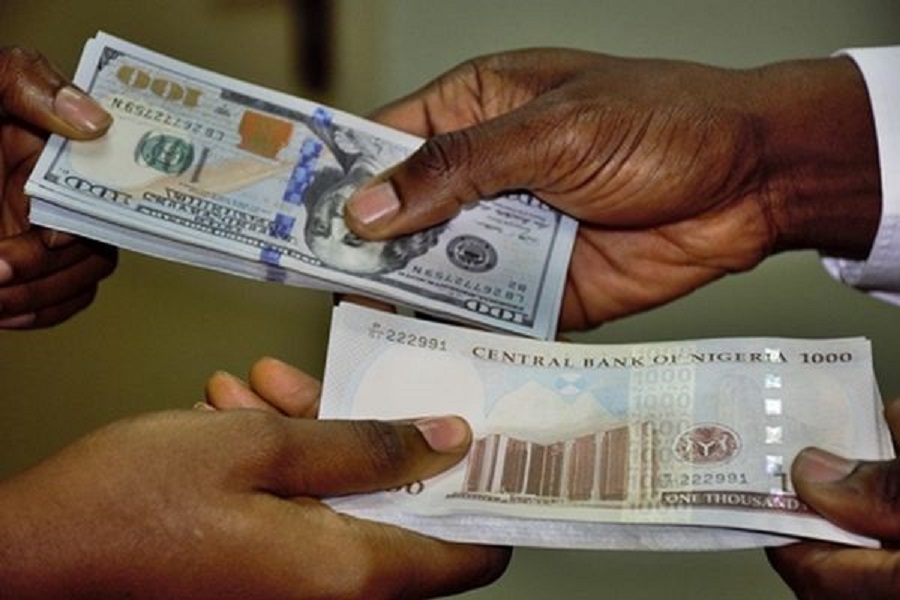
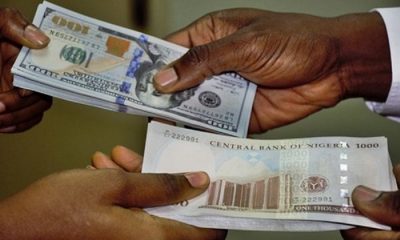
The Nigerian naira has staged a remarkable comeback against the U.S. dollar, defying expectations and posting sustained appreciation across foreign exchange markets as economic conditions improve, external reserves strengthen, and central bank interventions take effect. This upward momentum reflects a significant shift in Nigeria’s currency dynamics, offering potential relief for businesses, investors, and everyday consumers.
In the official foreign exchange market, the naira has recently strengthened to around ₦1,358 per dollar, its strongest level in nearly two years, fuelled by growing foreign exchange liquidity, rising external reserves, and improved investor confidence. At the close of 2025, the naira finished the year with a gain of over ₦100 per dollar, narrowing the gap between official and parallel markets and underscoring its resilience and renewed stability. The country’s external reserves expanded to approximately $45.5 billion, giving policymakers more buffer to support the currency and dampen volatility.
This performance marks a notable shift from previous periods of sharp depreciation, when the naira traded well above ₦1,600 per dollar in official and parallel markets. In contrast, recent data shows continued strengthening, with parallel market rates also improving, trading below ₦1,500 per dollar at various points as foreign exchange supply conditions eased and market distortions reduced.
READ ALSO:
- Nigeria, U.S. Deepen Security Partnership to Combat Terrorism, Banditry
- Malami’s Asset Forfeiture Case: Fresh Applicants Challenge EFCC Interim Orders
- SERAP Sues Power Minister, NBET Over Missing ₦128 Billion
Analysts attribute the rebound to aggressive interventions by the Central Bank of Nigeria (CBN), including increased foreign exchange injections into the market — approaching $800 million in December alone — and renewed sales of dollars to Bureau de Change operators. These liquidity measures helped to boost market confidence and narrow the gap between official and street exchange rates, supporting the naira’s appreciation trend as the new year begins.
Economic forecasts suggest that if current policies and external inflows persist, the naira could continue to outperform projections, with some analysts forecasting it might trade around ₦1,350 per dollar by the end of 2026, a level that would signal sustained recovery momentum for the local currency.
The strengthened naira has also had real‑world impacts on prices, with consumers and traders noting sharper pricing for imported goods like smartphones and other electronics, reflecting less exchange rate pressure on retail costs. This relief in price pressures has contributed positively to market sentiment and consumer confidence.
Despite this progress, currency watchers caution that sustaining the gains will require continued economic reforms, stable inflows from oil and non‑oil sectors, prudent monetary policy, and consistent support for domestic production to reduce reliance on imports. The recent performance, however, is being seen as a turning point — a sign that coordinated policy actions and strengthening macroeconomic fundamentals can deliver tangible gains in exchange rate stability.
As Nigeria navigates the complexities of global financial conditions, the naira’s recent outperformance of the dollar stands out as one of the most notable developments in the country’s economic narrative, offering optimism for continued stability in the foreign exchange landscape.
Naira Posts Strong Comeback, Breaking Two‑Year High Against Dollar

-
 News3 days ago
BREAKING: Tinubu Holds Reconciliation Meeting With Wike, Fubara, Rivers Leaders at Aso Rock
-
 Business3 days ago
BoI Gets CBN Approval to Launch Non‑Interest Banking Window in Nigeria
-

 metro2 days ago
Leadership Crisis at NAHCON as Chairman Abdullahi Saleh Usman Resigns
-
 News2 days ago
US Judge Orders FBI, DEA to Release Tinubu’s Criminal Records, Faults Delays
-

 News2 days ago
Oyo Muslims Reaffirm Loyalty to Sultan on Islamic Matters — Grand Chief Imam
-

 News2 days ago
OWN Calls for Immediate Resignation of INEC Chairman
-

 International2 days ago
US to Deport 18 More Nigerians on ‘Worst-of-the-Worst’ Criminal List (Full Names)
-
 Business2 days ago
Naira Posts Strong Comeback, Breaking Two‑Year High Against Dollar