
metro
Abuja Church Expels Newly Married Woman Over Refusal to Consummate Marriage

Abuja Church Expels Newly Married Woman Over Refusal to Consummate Marriage
An Abuja-based church has expelled a newly married woman, Oyiza, after she allegedly refused to consummate her marriage with her husband, Isaac—an action that has sparked widespread debate over marital consent, religious authority, and women’s rights in Nigeria.
The couple, who were living in Ibadan, got married on September 6, 2025, following the completion of their traditional marriage rites in Okene and a court wedding in Ibadan. Oyiza is originally from Kogi State.
According to accounts presented by the husband and church officials, marital tensions began shortly after the wedding, with Oyiza reportedly declining all attempts at intimacy. She allegedly told her husband she did not love him and later accused her mother of pressuring her into the marriage.
Family members and church leaders reportedly intervened multiple times over several months in an attempt to resolve the matter. Despite repeated marriage counselling sessions, the woman was said to have maintained her position, insisting she was emotionally unprepared for the union.
Isaac claimed that prior to the wedding, Oyiza had expressed doubts about proceeding with the marriage but later reassured him and the church’s marriage committee that she was ready, leading to approval of the wedding plans.
Photos from the ceremony, later circulated on social media, showed Oyiza appearing cheerful among friends and church members. However, Isaac said the marriage quickly deteriorated after the wedding, describing the relationship as emotionally exhausting and restrictive.
READ ALSO:
- Pastor Sentenced to Death by Hanging for Murdering Landlord in Akwa Ibom
- Scientists Warn Popular Hair Extensions Contain Cancer‑Linked Chemicals
- Keyamo Defends APC Amid Public Debate, Says Party ‘Not Made Up of Saints’
In February 2026, the controversy escalated after the church released a video on its YouTube channel announcing Oyiza’s expulsion and excommunication. The church’s International Director stated that five months of mediation had failed.
During the announcement, the cleric used strong and controversial language, accusing Oyiza of spiritual misconduct and urging members to pray against her, claiming she had disgraced the church. He also referenced traditional cultural practices, suggesting that emotional readiness should not prevent marital obligations—remarks that triggered intense backlash online.
The cleric further claimed that his wife received a spiritual revelation alleging that Oyiza was under a supernatural covenant preventing marital relations. These claims were made publicly but remain unverified.
Oyiza was not present during the announcement, and efforts to obtain her response have been unsuccessful.
The incident has since generated nationwide reactions, with many Nigerians, legal commentators, and rights advocates arguing that consent within marriage is non-negotiable and that religious institutions should not compel intimacy or publicly shame individuals over private marital disputes.
The case has reignited conversations around:
- Forced marriage and family pressure
- Consent and bodily autonomy
- Limits of church authority in private relationships
- Mental health and dignity of women
As of the time of reporting, the church has not released any further statement addressing the public criticism.
Abuja Church Expels Newly Married Woman Over Refusal to Consummate Marriage













metro
Women in Plateau Block Burial of 28 Palm Sunday Attack Victims Over Arrests

Women in Plateau Block Burial of 28 Palm Sunday Attack Victims Over Arrests
Residents of Angwan Rukuba in Jos, Plateau State, were left in shock on Tuesday as a funeral service for victims of the Palm Sunday attack was disrupted by protesting women demanding the release of detained youths. The attack, which occurred on Palm Sunday, claimed the lives of at least 28 people, leaving several others injured.
The protesters, many armed with leaves and chanting songs, blocked the entrance to the church where the mass burial was scheduled, insisting that the burial could not proceed until authorities freed three youths reportedly arrested following the killings. Rhoda Aliyu, one of the women leading the protest, said, “We will not allow the burial to take place until our sons are released.” Another protester, Mathew Bulus, added, “Those arrested are innocent. The government should go after the real perpetrators and leave our youths alone.”
The demonstration heightened tensions as about seven bodies were brought to the church. Community sources confirmed that the women, supported by several youths, were calling for the unconditional release of the detained teenagers before proceeding with the burial.
READ ALSO:
- Security Forces Deployed as Bandits Kill Three Residents in Niger Communities
- Resident Doctors Resume Work as FG Reverses Allowance Decision
- FG Deports US Missionary Alex Barbir Over Alleged Role in Nigeria Insecurity
The Palm Sunday attack involved armed assailants—suspected bandits—who stormed Angwan Rukuba and the Gari Ya Waye neighborhoods around 8 p.m., firing indiscriminately at residents and leaving widespread devastation.
President Bola Tinubu, who visited Plateau State following the attack, expressed condolences and directed security agencies to apprehend the offenders. He also ordered the installation of over 5,000 AI-enabled CCTV cameras across the state to enhance 24-hour surveillance and prevent future attacks.
Governor Caleb Mutfwang, who had visited the affected areas, condemned the killings as a well-planned attempt to destabilize the state. He assured residents that justice would be served and urged traditional rulers, religious leaders, and community stakeholders to collaborate with security forces to restore peace. He also commended the people for maintaining calm and avoiding retaliation despite the provocation.
As of press time, security agencies had not responded publicly to the arrests or ongoing tensions. The protest underscores the deep frustration and fear among residents in bandit-affected communities in Plateau State, highlighting ongoing challenges in securing vulnerable areas and ensuring justice for victims.
Women in Plateau Block Burial of 28 Palm Sunday Attack Victims Over Arrests
metro
Security Forces Deployed as Bandits Kill Three Residents in Niger Communities

Security Forces Deployed as Bandits Kill Three Residents in Niger Communities
At least three residents have been killed and several others injured after armed bandits attacked the Lanta, Tunga, and Bagna communities in the Erena ward of Shiroro Local Government Area, Niger State. The attacks, which began around 10:30 a.m. on Tuesday, mark another deadly incident in the region’s growing insecurity crisis.
Eyewitnesses said the assailants arrived in large numbers on motorcycles, operating for several hours without resistance, looting properties and opening fire on residents before fleeing. Local sources warned that the death toll could rise as families continue to account for missing relatives. Many residents have reportedly fled to Erena town, considered a safer nearby settlement.
A local resident said, “So far, we have recovered three bodies. Many others sustained injuries of varying degrees. Many people have fled… We are calling on the government to come to our rescue.”
READ ALSO:
- Resident Doctors Resume Work as FG Reverses Allowance Decision
- FG Deports US Missionary Alex Barbir Over Alleged Role in Nigeria Insecurity
- Iran Lists Tough Conditions for Peace Talks with US
Maurice Bello Magaji, Niger State Commissioner for Homeland Security, confirmed the incident and stated that the government is working with security forces to respond to the attacks and restore order. Officials say reinforcement teams and patrols have been deployed to the affected communities to prevent further casualties.
The attack highlights the deepening insecurity in rural Niger State, where armed bandits have frequently targeted villages, abducted residents, and caused widespread fear. Analysts note that bandits often exploit the remote terrain to carry out raids with minimal resistance, killing civilians, looting homes, and displacing populations.
Local leaders and residents have condemned the attacks, urging both state and federal authorities to intensify security measures and protect vulnerable communities. Meanwhile, displaced residents face uncertainty as they seek safety and access to basic services.
Security agencies have promised to track down the perpetrators, but analysts warn that sustained and coordinated action is necessary to curb banditry in Niger State and prevent further attacks.
Security Forces Deployed as Bandits Kill Three Residents in Niger Communities
metro
Army Debunks Viral Claims by Ex-Soldier ‘Soja Boi’, Insists Allegations Are False
Army Debunks Viral Claims by Ex-Soldier ‘Soja Boi’, Insists Allegations Are False
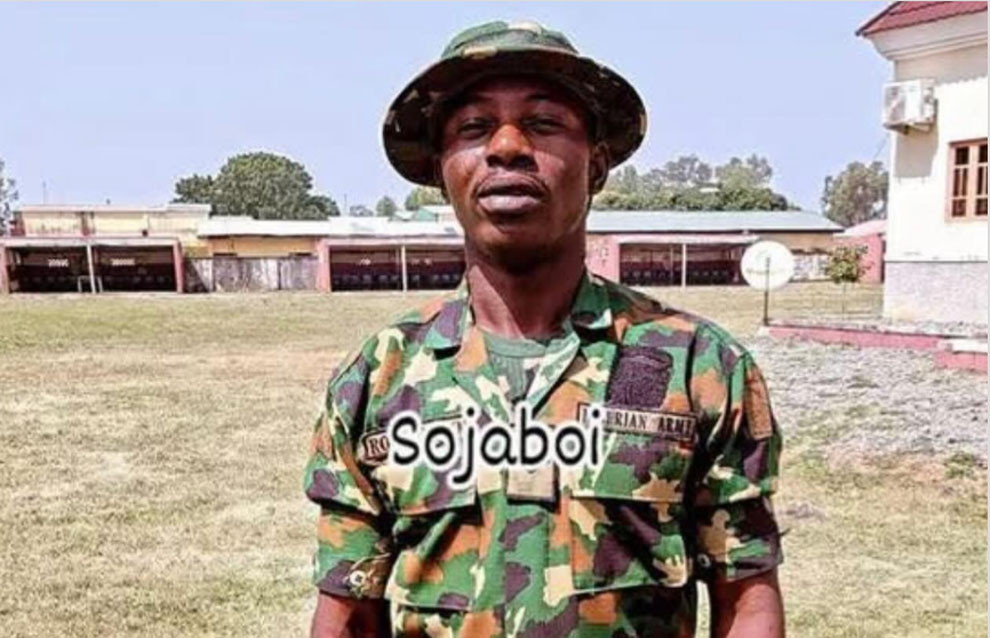
The Nigerian Army has dismissed allegations made by former lance corporal, Rotimi Olamilekan, popularly known as “Soja Boi,” describing his viral interview as misleading, false, and damaging to national security efforts.
In a statement released on April 7, the Army, through its spokesperson Appolonia Anele, clarified that Olamilekan was dismissed due to repeated acts of indiscipline and violations of military regulations, not for “speaking the truth” or expressing political opinions as claimed in the interview.
According to the Army, the former soldier’s dismissal followed due process and was based on serious misconduct, including breaches of the Armed Forces Social Media Policy. These violations, the military said, involved unauthorised media appearances, commercialisation of military identity, partisan content creation, and misuse of military uniform.
The Army stressed that the narrative being circulated online misrepresents the facts and could undermine public trust in the military, especially amid ongoing Nigeria security challenges.
READ ALSO:
- Iran Lists Tough Conditions for Peace Talks with US
- BVN Enrolment Hits 68.6 Million as Growth Slows – NIBSS
- Lagos Announces Partial Road Closures for Project Commissioning
Responding to claims about poor welfare, the Army rejected assertions that personnel receive only basic salaries without additional support. It explained that the Nigerian Army salary structure is governed by the Manual of Financial Administration for Armed Forces of Nigeria (MAFA), which ensures a transparent and structured remuneration system based on rank and years of service.
It added that soldiers are entitled to various benefits, including uniform allowances and service-related entitlements, which are paid directly into their accounts. The Army further noted that personnel deployed in combat zones—such as Operation HADIN KAI—receive operational allowances and mission-specific incentives designed to support their welfare and effectiveness.
The military also debunked claims that troops are forced to purchase their own uniforms and protective equipment, describing such allegations as entirely false. It stated that all necessary kits, including uniforms, weapons, and operational gear, are issued through established logistics systems overseen by ordnance units.
Addressing concerns about troop safety, the Army insisted that no soldier is deployed without adequate protective equipment, including bulletproof vests and helmets. It described claims suggesting otherwise as deliberate misinformation aimed at misleading the public.
The Army warned that spreading unverified information could harm troop morale and national security, urging Nigerians to rely on official sources for accurate updates on military activities.
It concluded by calling on the public to disregard what it termed baseless allegations intended to generate sympathy and discredit the Armed Forces, reiterating its commitment to professionalism, discipline, and the welfare of its personnel.
The development comes as public scrutiny of the military continues to grow, with social media amplifying narratives around military welfare in Nigeria and operational transparency.
Army Debunks Viral Claims by Ex-Soldier ‘Soja Boi’, Insists Allegations Are False

-

 metro3 hours ago
FG Deports US Missionary Alex Barbir Over Alleged Role in Nigeria Insecurity
-
 Politics3 days ago
Adeleke’s Aide Anisu Resigns, Defects to APC
-

 metro1 day ago
MURIC Backs Egba Imams’ Call for Inclusive Leadership in Ogun 2027 Governorship Race
-

 International2 days ago
Netanyahu Condemns ‘Christian Persecution’ in Nigeria in Easter Message
-

 Politics2 days ago
ADC Crisis Halts Makinde, Bala, Lawmakers’ Defections
-

 metro6 hours ago
Lagos Announces Partial Road Closures for Project Commissioning
-

 metro2 days ago
Hajiya Hadiza Attahiru Jega, Wife of Former INEC Chairman, Dies in Abuja
-

 Politics1 day ago
2027: Atiku Signs $1.2m US Lobbying Deal to Engage Trump