

Politics
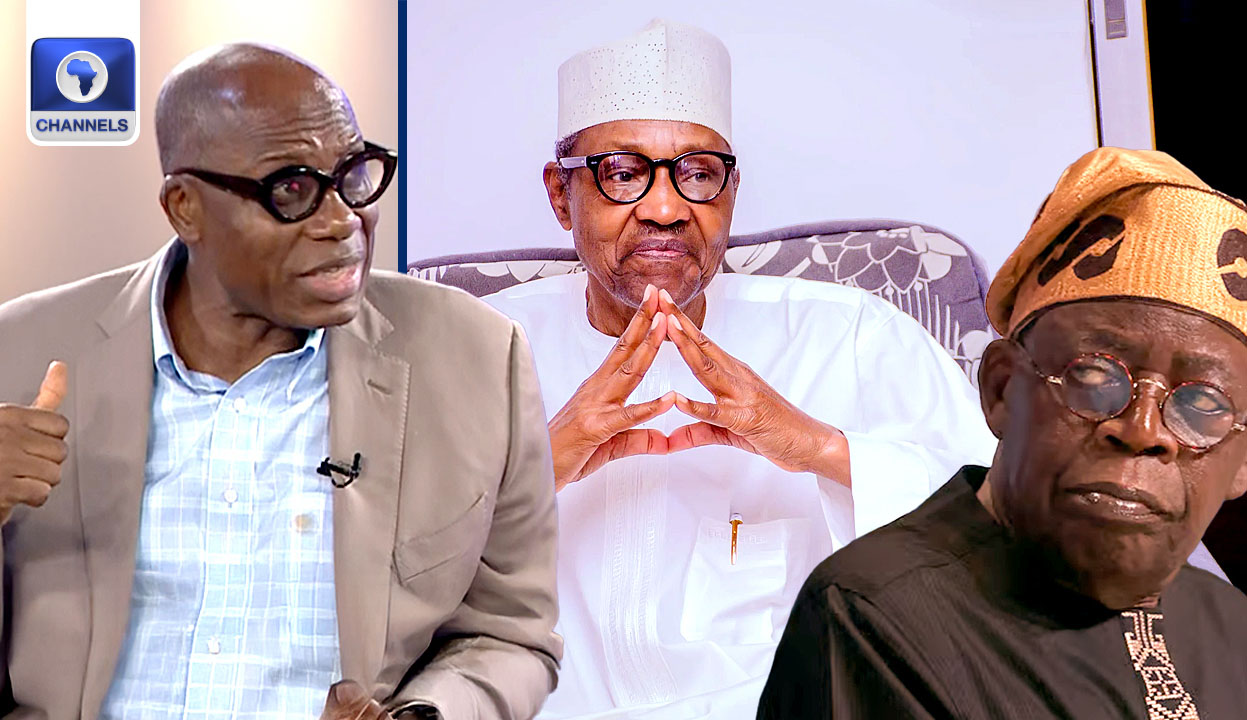
Amaechi Claims Credit for Buhari’s 2015 Victory, Downplays Tinubu’s Role
Amaechi Claims Credit for Buhari’s 2015 Victory, Downplays Tinubu’s Role
Former Rivers State Governor and ex-Minister of Transportation, Rotimi Amaechi, has claimed that he played the pivotal role in securing the victory of late President Muhammadu Buhari in the 2015 presidential election, insisting that President Bola Ahmed Tinubu did not “make” Buhari president.
Amaechi made the remarks during an interview on ARISE News’ Prime Time, where he responded to long-standing claims by Tinubu that his political structure and influence were central to Buhari’s emergence in 2015.
Amaechi challenged Tinubu’s assertion over Buhari’s 2015 victory, saying that while the President played a role in party mobilisation, he personally led more direct efforts that shaped the outcome of the election.
According to him, he was unable to openly dispute Tinubu’s claims at the time because he was serving as a minister in Buhari’s administration, a position that required political caution.
“When we decided to form the APC, while I was a minister, (Tinubu) was claiming he made Buhari president and I couldn’t respond because I was a minister under President Buhari. That would have been suicidal because Buhari could fire you,” Amaechi said.
He explained that his position within the federal cabinet limited his ability to publicly counter political narratives at the time.
Amaechi, who served as Director-General of Buhari’s 2015 presidential campaign, said he coordinated nationwide mobilisation efforts that contributed significantly to the APC’s electoral victory.
READ ALSO:
- Teacher, Church Choir Master Arrested for Murder of 16-Year-Old WAEC Candidate
- US Ends 60-Year Policy, Orders Nigerians, Others Home for Green Card Processing
- Iran Accuses US of ‘Excessive Demands’ as Tehran Weighs Fresh Peace Proposal
“So I couldn’t have said, ‘You are wrong.’ He didn’t make President Buhari president. Not only was I the DG of the campaign, but everybody will bear witness that I did all the battle,” he said.
“I led the Governors’ Forum, criss-crossed the country fighting here and there trying to get Nigerians to know that this is the time for change.”
He further stated that he played a central role in rallying governors and political stakeholders during the formation of the APC coalition, which eventually ended the 16-year rule of the Peoples Democratic Party (PDP) in 2015.
Amaechi was among the key opposition figures involved in the 2013–2014 political realignment that led to the creation of the APC.
The party emerged from a merger of the Action Congress of Nigeria (ACN), Congress for Progressive Change (CPC), All Nigeria Peoples Party (ANPP), and factions of APGA and the PDP.
The coalition went on to defeat then-President Goodluck Jonathan in the 2015 general election, marking a major shift in Nigeria’s political history.
Political observers have continued to argue that both Amaechi and Tinubu played significant but different roles in the APC’s emergence, with Tinubu credited for strengthening the party’s South-West structure and Amaechi for coordinating governors and national campaign operations.
President Bola Tinubu has previously maintained that his political influence and strategic leadership were crucial to Buhari’s electoral success and the formation of the APC.
Amaechi’s comments come amid renewed political tensions among key figures involved in the 2015 coalition, as realignments begin ahead of future elections.
The former Rivers governor is currently positioning himself for the 2027 presidential race under the African Democratic Congress (ADC), where he is seeking the party’s presidential ticket.
He has also intensified criticism of the Tinubu administration in recent months, particularly over economic hardship, inflation, and broader governance concerns.
The renewed exchange of claims has reignited public debate over the political actors who truly shaped Buhari’s rise to power in 2015 and the internal dynamics of the APC coalition.
Amaechi Claims Credit for Buhari’s 2015 Victory, Downplays Tinubu’s Role







Politics
2027: Ajaero Questions Tinubu, Atiku, Obi’s Economic Approach, Highlights Adebayo’s Ideas
2027: Ajaero Questions Tinubu, Atiku, Obi’s Economic Approach, Highlights Adebayo’s Ideas
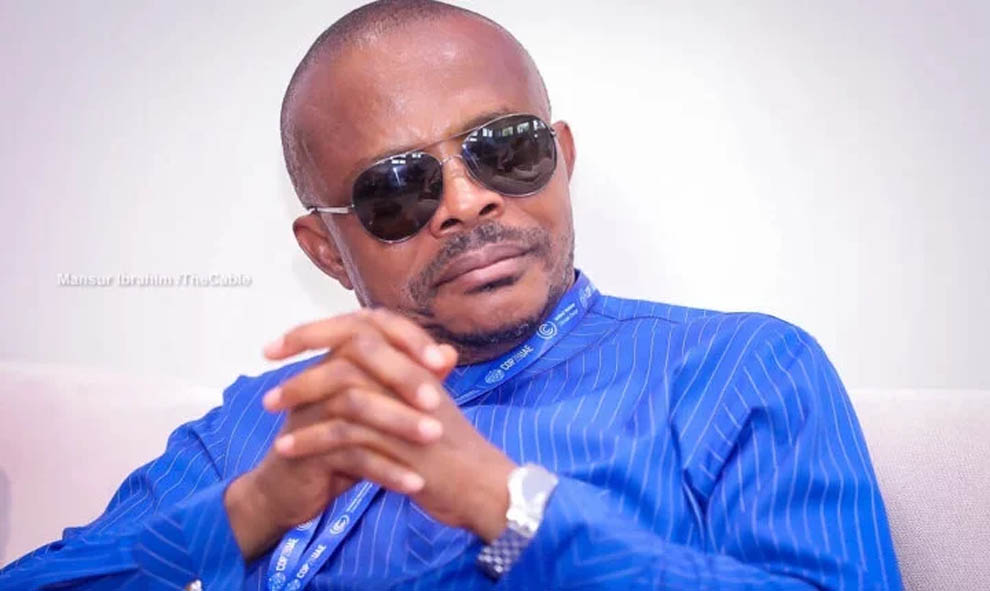
President of the Nigeria Labour Congress (NLC), Joe Ajaero, has questioned the economic positions of President Bola Ahmed Tinubu, former Vice President Atiku Abubakar and Peter Obi, while saying the ideas of Social Democratic Party (SDP) presidential candidate Adewole Adebayo deserve serious attention ahead of the 2027 presidential election.
Ajaero made the comments during an interview with Seun Okinbaloye on Mic On, where he was asked about the economic policies of Atiku and other leading figures in the 2027 race.
Rather than focusing solely on Atiku’s economic proposals, the NLC president highlighted the positions of Adebayo and Accord Party presidential candidate Gbenga Olawepo-Hashim, saying he had examined their ideas and was willing to listen to them.
“I have looked at Gbenga Hashim’s position and I think he’s an expert to an extent. I also looked at Adebayo. I may listen to them,” Ajaero said.
He subsequently contrasted the economic approaches of Adebayo and Olawepo-Hashim with those of Tinubu, Atiku and Obi.
“Peter Obi, Atiku and Asiwaju, they all have the same position and they have shown that they are market people from far right,” he said.
Ajaero’s remarks have drawn attention to the economic debate ahead of the 2027 election, particularly as issues such as inflation, fuel prices, electricity costs, unemployment, wages and declining purchasing power remain major concerns for Nigerians.
READ ALSO:
- Adeleke Signs New Law to Regulate Motor Parks Across Osun
- Tragedy Strikes FMC: Medical Director Loses Two Daughters—A Doctor and a Pharmacist—Within 48 Hours
- 27-Year-Old Woman Allegedly Kills Newborn Hours After Giving Birth in Abuja
Adebayo, who is contesting the 2027 presidency on the SDP platform, has built his campaign around social democracy, increased domestic production, job creation and a stronger role for government in providing public services and expanding economic opportunities.
The SDP candidate has also made energy reform a major part of his campaign, arguing that high energy costs and inadequate electricity supply continue to constrain households, businesses and industrial production.
His policy blueprint, Farewell to Poverty and Insecurity: Governance & Accelerated Development — Blueprint of a New Nigeria, 2027–2031, proposes mechanisms for monitoring government performance through measurable targets, periodic assessments and implementation milestones.
Adebayo has also advocated greater emphasis on domestic production, with the argument that Nigeria must reduce its dependence on imports and foreign exchange while strengthening local industries and productive capacity.
Olawepo-Hashim, whom Ajaero also mentioned, has similarly made energy and industrialisation central to his economic programme. His proposed Energy First agenda focuses on increasing domestic energy production, expanding refining capacity and reducing energy costs.
Ajaero’s comments do not amount to a formal endorsement of Adebayo or Olawepo-Hashim for the 2027 presidential election. Rather, the NLC president said their economic proposals were sufficiently different from those of the politicians he discussed to warrant further engagement.
The intervention comes as political parties and presidential candidates increasingly position their economic policies at the centre of the 2027 campaign, with competing proposals on fuel pricing, taxation, electricity, wages, industrialisation, employment and social protection.
For the NLC, which represents organised labour and has been at the forefront of debates over wages and the impact of economic reforms on workers, the direction of the next administration’s economic policy is expected to remain a major issue ahead of the election.
With the 2027 political contest gathering momentum, the competing economic visions of the presidential candidates are likely to face increased scrutiny from organised labour, businesses and voters as parties intensify their campaigns.
2027: Ajaero Questions Tinubu, Atiku, Obi’s Economic Approach, Highlights Adebayo’s Ideas
Politics
2027: Soludo Govt Accuses Peter Obi Of Plot To Destroy APGA
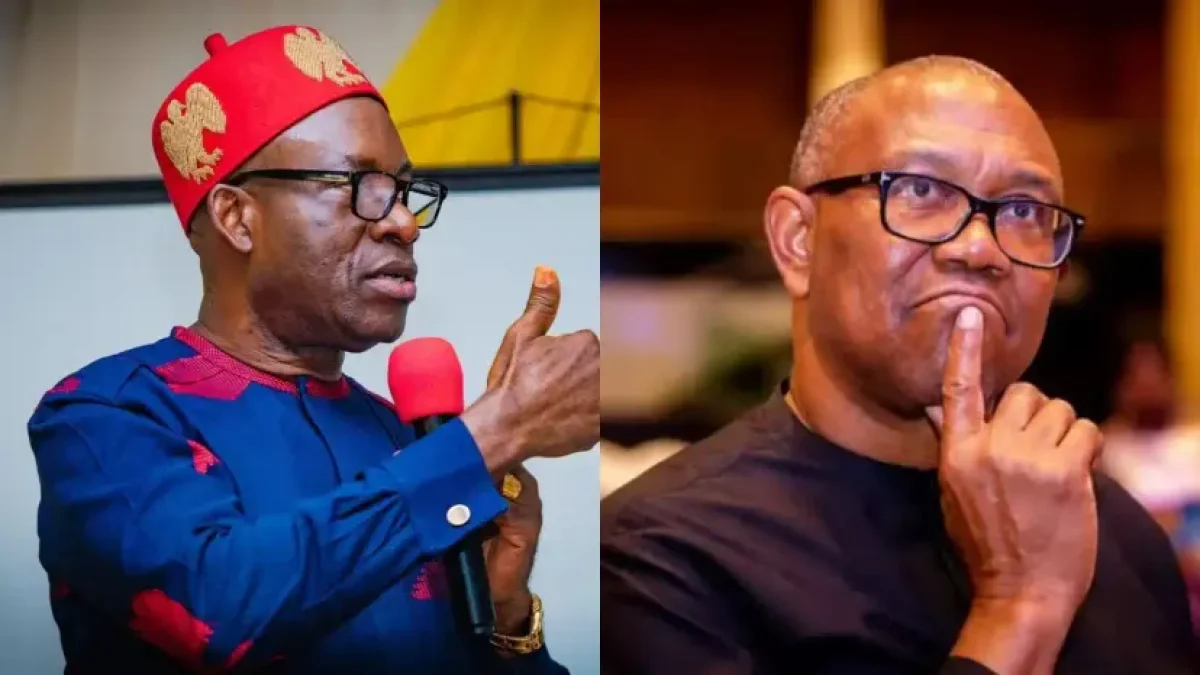
2027: Soludo Govt Accuses Peter Obi Of Plot To Destroy APGA
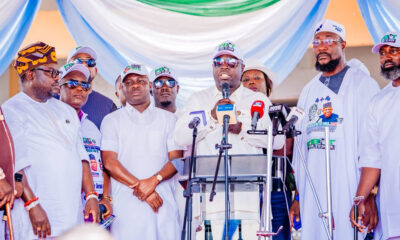
The Anambra State Government has declared former governor Peter Obi and his Nigeria Democratic Congress (NDC) a threat to the All Progressives Grand Alliance (APGA) ahead of the 2027 presidential election, urging APGA supporters to resist the opposition party.
The state government made the declaration in a message issued through its New Media office on Monday, accusing Obi of working to weaken the party that gave him the platform to become governor of Anambra.
The government described its message as a “betrayal alert” to APGA supporters, alleging that Obi had been seeking to undermine the party since leaving it in 2014.
It urged party members in the state not to be swayed by Obi’s current political influence, arguing that APGA remained the political platform responsible for his emergence as governor.
The government said, “Since 2014, Obi has had one mission: to destroy the party that made him,” while calling on APGA members to defend the party ahead of the 2027 elections.
The development comes amid an increasingly tense political relationship between Obi and the administration of Governor Chukwuma Soludo.
READ ALSO:
- MURIC Accuses OAU International School of Restricting Hijab-Wearing Students
- Israeli Forces Reportedly Destroy School, Burn Homes in Southern Lebanon
- Nine Zamfara Lawmakers Dump APC for ADC Ahead of 2027
Obi governed Anambra from 2006 to 2014 on the APGA platform before leaving the party for the Peoples Democratic Party (PDP). He later joined the Labour Party, under which he contested the 2023 presidential election, before becoming the presidential candidate of the NDC ahead of the 2027 election.
The former governor remains an influential political figure in the South-East, particularly in Anambra, where his 2023 presidential campaign recorded strong support.
The Anambra government’s latest position also comes against the backdrop of APGA’s alignment with President Bola Ahmed Tinubu ahead of the 2027 presidential election.
The state government has previously defended its relationship with the President and maintained that supporting Tinubu does not conflict with APGA’s interests.
However, Obi’s emergence as the NDC presidential candidate has created a new political challenge for APGA, particularly because of his longstanding influence among voters in Anambra and the wider South-East.
The NDC has rejected the allegations against Obi, accusing the Soludo administration of attacking the former governor because of concerns about his popularity.
NDC Director of New Media and Strategic Communications, Theo Abu Agada, described the state government’s position as political blackmail and maintained that the party was confident of its prospects in the 2027 election.
The latest exchange has further widened the political divide between the camps of Peter Obi and Chukwuma Soludo, with both sides increasingly positioning themselves ahead of the 2027 presidential contest.
For APGA, the emergence of Obi and the NDC presents a particularly sensitive political challenge because of the former governor’s history with the party and his continued influence in Anambra.
The 2027 election is therefore expected to produce a major political contest in the state, with APGA seeking to retain its influence while Obi’s NDC attempts to convert his personal support base into wider electoral backing.
2027: Soludo Govt Accuses Peter Obi Of Plot To Destroy APGA
Politics
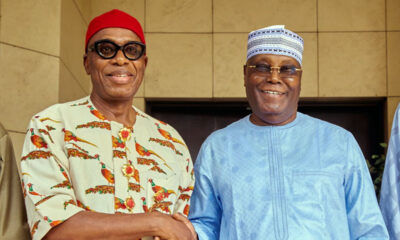
Nine Zamfara Lawmakers Dump APC for ADC Ahead of 2027

Nine Zamfara Lawmakers Dump APC for ADC Ahead of 2027
Nine members of the Zamfara State House of Assembly have left the All Progressives Congress (APC) and defected to the African Democratic Congress (ADC) ahead of the 2027 general elections.
The lawmakers cited concerns over insecurity, internal party divisions and what they described as inadequate attention to the welfare of residents and their constituents as reasons for their decision.
The lawmakers are Aliyu Ango Kagara, representing Talata Mafara South; Muktar Nasir, representing Kaura Namoda North; Faruk Dosara Musa, representing Maradun I; Basiru Bello, representing Bungudu West; Bashir A. Masama, representing Bukkuyum North; Ibrahim T. Tukur, representing Bakura; Nasiru Abdullahi, representing Maru North; Yusuf Muhammad Anka, representing Anka; and Bashar Aliyu, representing Gummi I.
Speaking on behalf of the lawmakers, Kagara said their concerns about the security situation in Zamfara had contributed to disagreements with the state government.
He said the lawmakers had raised the issue of insecurity on the floor of the Assembly, but that their position led to disagreements with Governor Dauda Lawal and their subsequent suspension.
READ ALSO:
- Temi Nkem Wins N160m BBNaija Season 11 Grand Prize
- Nigeria — My Country of Destiny
- Ex-APC Women Leader Found Dead With Throat Slit in Bauchi
Kagara also alleged that joining the APC did not resolve their grievances, claiming that some party leaders failed to give them what they considered a fair hearing.
Earlier, some of the lawmakers announced their resignation from the APC in separate letters dated October 4, 2026.
In the letters, the lawmakers cited issues including insecurity, alleged injustice, internal divisions, uncertainty and concerns about governance.
One of the lawmakers also alleged that members of the Assembly had gone about 32 months without receiving salaries, allowances and other entitlements.
The claims about unpaid entitlements and other grievances are allegations by the affected lawmakers and have not been independently established in the reports.
The APC in Zamfara initially said it had not received official copies of the resignation letters. The party’s publicity secretary, Ibrahim Birnin-Magaji, said the documents had been seen on social media and that the party was awaiting formal communication through the appropriate party structures.
The defection represents a significant political realignment in Zamfara ahead of the 2027 elections, with the movement of the lawmakers potentially affecting the political balance within the state legislature.
Nine Zamfara Lawmakers Dump APC for ADC Ahead of 2027
-

 metro3 days ago
NYSC Kidnap: Abductors Demand N950m for 19 Prospective Corps Members in Imo
-

 metro2 days ago
‘I Thought I Was Dead’ — Hairstylist’s Daring Escape From Kidnappers After Benin-Ore Ambush
-
 metro3 days ago
Amaechi: Tinubu’s Policies Made My Mother’s Drugs Unaffordable
-

 metro3 days ago
Tension as Kidnappers Threaten to Kill Abducted Oyo Corps Members
-

 metro20 hours ago
Tragedy Strikes FMC: Medical Director Loses Two Daughters—A Doctor and a Pharmacist—Within 48 Hours
-

 Politics3 days ago
Wike to Amaechi: What Did You Bring to Rivers After 24 Years in Power?
-

 International3 days ago
Nigerian-Born Ex-Professor Jailed 78 Months Over $1.3m US Student Aid Fraud
-

 metro23 hours ago
Transporters Urge IGP Disu to Arrest Illegal Highway Tax Collectors