
Entertainment
Anger as Harry, Meghan interview sparks new race debate in UK
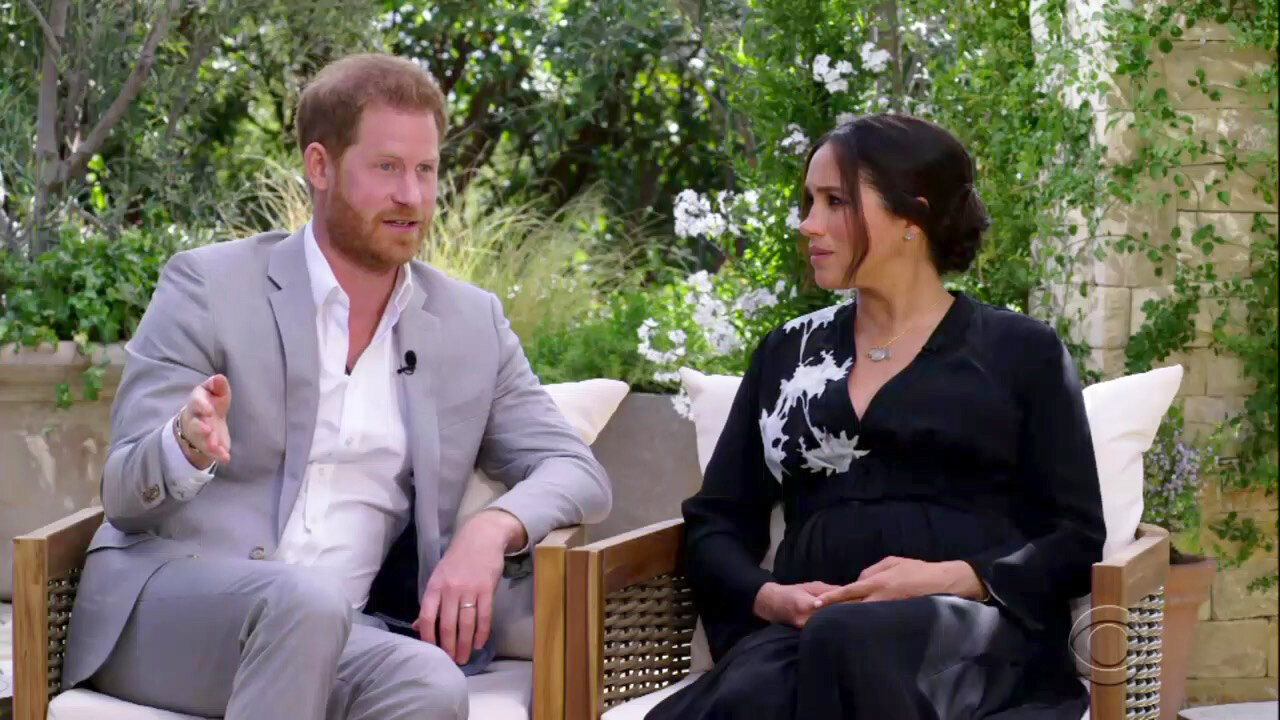
Prince Harry has come a long way in educating himself about race since his youthful days, when he used an offensive slur against a fellow army cadet from Pakistan and dressed up as a Nazi soldier at a party.
In an explosive interview with Oprah Winfrey, Queen Elizabeth II’s grandson explained that his mixed-race wife Meghan had helped him on his journey of awareness, and he wanted his family, the media and Britain at large to educate themselves too.
“I’ve spent many years doing the work and doing my own learning,” the 36-year-old said, noting his privileged background meant “I wasn’t aware of” racial issues on the whole.
“But my God, it doesn’t take very long to suddenly become aware of it,” Harry said, reflecting years on from his early 20s, when the details emerged of the fancy-dress party and his calling the fellow cadet a “Paki”.
The interview has certainly sparked new debate about race in Britain, but there is little common ground between white commentators and black voices following Harry’s assertion that racism was a “large part” of the reason why he and Meghan quit the UK for North America.
“America has a long and profoundly tragic history when it comes to racism. But they acknowledge it and they know it,” Lola Adesioye, a British commentator on race based in New York, told AFP. “I still feel that the UK has a sort of delusion about its racial standing, and the idea that racism is not a really a thing in the UK, ‘that’s an American problem’, and that the UK is much more integrated,” she said.
“So when you hear someone like Meghan Markle who’s clearly a modern woman talking about some of the racial issues that she confronted in the royal family… people asking about what colour will your son be, is something that is very hard for people in America to get their heads around.”
Buckingham Palace said the queen took the claims of racism “very seriously” and they would be addressed by the family privately, even if “some recollections may vary”.
Historian David Olusoga, author of the book “Black and British: A Forgotten History”, said the allegations should force a reckoning for both the royal family and the UK.
“Yet rather than use this moment to embark upon an honest national conversation about race and racism there will, I fear, be further demonisation of Meghan and Harry,” he wrote in The Guardian newspaper on Tuesday.
“Trapped in denial — about everyday racism, structural racism, slavery and empire — there are parts of British society that appear incapable not just of change but even of its necessary precursor: honest self-reflection.”
Journalist Piers Morgan — one figurehead of the anti-Meghan, “anti-woke” camp — stormed out of his own TV studio Tuesday as a black presenter dissected the racial tinge to the UK press coverage of Meghan before and after her 2018 wedding to Harry.
Morgan returned later for a painful interview with Meghan’s estranged father Thomas Markle, who said the couple’s claims that an unidentified royal wanted to know the likely skin tone of their unborn son were “bullshit”.
There is deep divide between those who believe Meghan’s remarks on race and self-harm, and others who view her as a publicity-seeking Hollywood export who by her own admission failed to learn anything about her future role before the wedding.
The debate is all the fiercer coming after nearly a year of Black Lives Matter protests sparked by the death of George Floyd as he was held by the US police.
Prime Minister Boris Johnson is refusing to get involved, other than to laud the queen’s “unifying role” for Britain and the 54-nation Commonwealth she heads, most of whose 2.4 billion people are not white.
But his government set out its stall in new policing legislation introduced Tuesday that would raise the maximum penalty for criminal damage of a memorial from three months to 10 years.
That followed the government’s stated intention to prosecute BLM protesters in Britain who last year toppled a statue of a 17th century slave merchant and defaced another of Winston Churchill. Politicians from Johnson’s ruling Conservative party have also railed against organisations such as the BBC and National Trust, which manages more than 500 stately homes, for seeking to educate the public more about Britain’s colonial and slaving past. – Press ‘not racist’ – Those supporting Meghan can produce many examples of double standards, including side-by-side comparisons of newspaper headlines on coverage of Meghan and her white sister-in-law Kate.
One notorious jibe came in 2016, soon after the couple started dating. “Harry’s girl is (almost) straight outta Compton,” the Daily Mail wrote of the Los Angeles native, describing her upbringing close to a district known for its gang violence.
Prince Harry told Winfrey that the UK press, especially tabloid newspapers, were “bigoted”. That sparked an angry denial from the Society of Editors, a guild of senior British newspaper journalists, some of whose members have faced lawsuits from the royal couple.
The UK media has a responsibility to hold people to account, it said.
“If sometimes the questions asked are awkward and embarrassing, then so be it, but the press is most certainly not racist.” That prompted bafflement on social media from many journalists, noting the bigotry they themselves had witnessed in newsrooms and the lack of racial diversity in the UK media as a whole.
Marcus Ryder, a professor in media diversity at Birmingham City University, said the editors’ claim was “utterly bizarre”.
“To say the press is not racist is like saying society is not racist,” he told AFP, adding: “The idea that race doesn’t play a part in (Meghan’s) coverage is naive.”
-AFP


Entertainment
Brymo Sparks Debate After Saying Men Who Apologise to Women Deserve Suffering

Brymo Sparks Debate After Saying Men Who Apologise to Women Deserve Suffering
Nigerian singer and award-winning songwriter Ọlawale Ibrahim Ọlọfọrọ aka Brymo has ignited a heated online debate after making a controversial statement about relationships and apologies, drawing both criticism and support from fans and social media users.
The Ara crooner took to Instagram to write: “Nobody deserves to suffer than men who apologise to women when the women are wrong. And suffer they will from here, and for the rest of humanity’s earthly existence.”
Brymo’s comment quickly went viral, sparking mixed reactions. Critics argue that his statement is overly harsh and undermines the value of emotional intelligence, accountability, and compromise in relationships. They emphasise that apologies are often a means of maintaining harmony, not merely an acknowledgment of fault.
READ ALSO:
- Boko Haram/ISWAP Attack Borno Police Station, Kill Four Officers, Hunter
- NDLEA Arrests Lagos Pastor, Wife With 11kg Skunk Cannabis
- Hajiya Hadiza Attahiru Jega, Wife of Former INEC Chairman, Dies in Abuja
On the other hand, some social media users defended Brymo, saying he was highlighting scenarios in which men assume undue responsibility, often at the expense of their own well-being, and that his remark reflects frustration with such dynamics rather than a literal prescription.
The discussion has since dominated social media platforms, trending across Twitter, Instagram, and Facebook, with users debating gender dynamics, accountability, and healthy communication in relationships. Many commentators also noted Brymo’s history of making provocative statements, suggesting that his comments are intended to spark broader reflection on social norms.
The incident has reignited conversations around emotional responsibility, relationship etiquette, and gender expectations, showing how public figures in Nigeria influence debates on cultural and social issues.
Brymo Sparks Debate After Saying Men Who Apologise to Women Deserve Suffering
Entertainment
Nollywood Actress Laide Bakare Sets Strict Dating Rules: No Men in Her Home

Nollywood Actress Laide Bakare Sets Strict Dating Rules: No Men in Her Home
Nollywood actress Laide Bakare has opened up about her approach to dating, relationships, and personal boundaries, revealing why she does not allow men she is seeing to visit her home unless there is a serious commitment such as marriage.
Speaking during an interview with fellow actress Ayo Adesanya, Bakare emphasized the importance of self-respect, responsibility, and clear boundaries in relationships. She expressed that while she can like, appreciate, and respect a partner, she does not subscribe to being “in love” lightly.
“I do not love, I like. I appreciate. I respect,” Bakare said, explaining that liking someone allows her to value companionship without blurring emotional boundaries or creating unrealistic expectations.
On the subject of dating logistics, she stated firmly that a man should not have free access to her home. “How will that work? You people are dating and the man will be coming to your house without marriage? It has never happened,” she questioned. She stressed that personal space is sacred and should be shared only when trust and commitment are established.
READ ALSO:
- Haaland Hat-Trick Fires Manchester City Past Liverpool in FA Cup Quarter-Final
- Autopsy Confirms Destiny Boy Died from Toxic Substances
- DHQ Reveals Over 60% of Terrorist Fighters Not Ideologically Driven
Bakare further noted that she expects a partner to take responsibility in the relationship by hosting her in his own space, even if it is rented or modest. “In his house, he’s the man. You should be responsible. You should carry me to your house,” she said, underscoring that a man’s ability to provide and host reflects maturity and seriousness.
The actress clarified that these rules are not about rejecting companionship but about protecting her peace and emotional well-being. By setting boundaries, she believes that relationships are built on respect, accountability, and clarity of intentions.
Social media reactions to Bakare’s remarks were mixed. While many fans praised her for championing self-respect and healthy dating standards, others debated whether her approach was too traditional for modern relationships. Entertainment commentators have noted that her statements contribute to a broader discussion on privacy, dignity, and emotional safety in dating, particularly in the context of celebrity culture.
Bakare’s comments have sparked conversations about the need for personal boundaries and deliberate choices in romantic engagements, highlighting that true respect and commitment should precede access to intimate spaces.
Nollywood Actress Laide Bakare Sets Strict Dating Rules: No Men in Her Home
Entertainment
Blessing CEO Defends Breast Cancer Fundraiser Amid Backlash
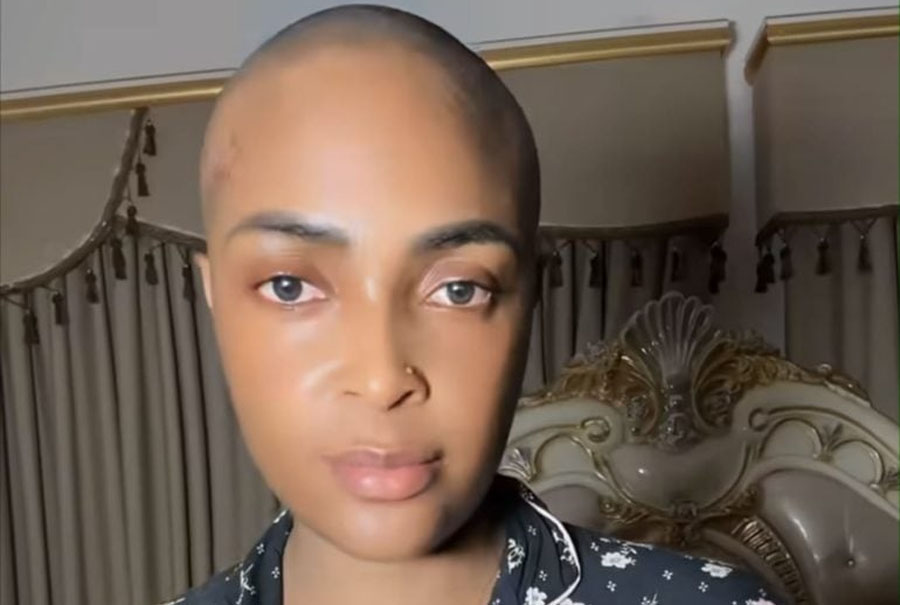
Blessing CEO Defends Breast Cancer Fundraiser Amid Backlash
Nigerian social media influencer Blessing CEO has addressed critics demanding refunds from her breast cancer fundraising campaign, insisting that donations were voluntary and defending her decision not to share her medical test results publicly.
Blessing first disclosed her breast cancer diagnosis in January and appealed to the public for financial support to cover her surgery and treatment. While many supporters contributed, some critics accused her of faking her illness to solicit funds, and a few have demanded refunds online.
In a viral video posted on Thursday, Blessing explained that the planned surgery has been delayed due to backlash. She said additional medical tests and post-surgery care have increased the overall cost, and that seeking financial support early was a precaution to avoid delays at a more critical stage of her condition.
READ ALSO:
- Men Encouraged to Ejaculate More to Reduce Prostate Cancer Risk
- Fire Engulfs Yaba Market in Lagos, Traders Suffer Huge Losses
- JAMB Debunks 2026 UTME Postponement Rumour, Issues Fraud Warning
The influencer emphasised that she cannot share her cancer test results online due to privacy regulations and patient confidentiality. She added that even if disclosed, most online critics would not be able to correctly interpret the medical information.
“If I show you the result, can you interpret it? Show me one cancer patient who came to the internet to show their results. Because I came out and said lovers help me,” she said, highlighting the voluntary nature of donations.
Blessing also stressed that many critics commenting on her fundraising lack knowledge about cancer and patient privacy, and reiterated that supporters who understand the situation have contributed willingly. “If you do not trust me, do not give me your money. If you do not want to give, keep your money. I do not put a gun to your head to give me your one naira,” she added.
Supporters have defended her approach, noting that medical crowdfunding is a common practice in Nigeria, where high treatment costs and limited insurance coverage make financial assistance necessary for many patients. Experts also emphasise that sharing medical results publicly is not recommended, and privacy and transparency must be balanced carefully when fundraising online.
The controversy has sparked a broader discussion on digital fundraising for medical treatment, patient privacy, and the responsibilities of influencers in sharing personal health journeys online. Blessing CEO maintains that her decision is aimed at protecting her privacy while ensuring she can access necessary care.
Blessing CEO Defends Breast Cancer Fundraiser Amid Backlash

-
 metro3 days ago
VeryDarkMan Dares Sowore Over Blord’s Kuje Prison Remand
-
 metro1 day ago
Pastor Found Dead in Guest House After Night Out With Married Female Church Member
-
 metro2 days ago
Tinubu Approves 1,000 Forest Guards, Orders 5,000 CCTV Cameras to Boost Security in Plateau
-

 International2 days ago
Iran Announces ‘Bounty’ on US Pilots After Claiming Downing of Fighter Jet
-

 Health24 hours ago
Men Encouraged to Ejaculate More to Reduce Prostate Cancer Risk
-
 Politics21 hours ago
Adeleke’s Aide Anisu Resigns, Defects to APC
-

 Politics1 day ago
Wike: PDP Not Financially Ready for 2027 Presidential Election
-
 Sports2 days ago
UEFA Threatens to Strip Italy of Euro 2032 Hosting Rights