

Opinion
Eedris ‘teargasses’ Tinubu; Ali Baba ‘besaints’ Obasanjo
Eedris ‘teargasses’ Tinubu; Ali Baba ‘besaints’ Obasanjo
Tunde Odesola
(Published in The PUNCH, on Friday, April 18, 2025)
Nose – off-centre; mouth – misshapen; eyes – squinted; ears – rabbity; every Nigerian is familiar with this green face without a grin. On the green face, teary streams gutter down the sides of the nose, towards the nostrils, coursing to the chin. This is Nigeria and its map.
The tears streaming on each side of the green face typify the River Niger and River Benue, which meet at the base and confluence of the nose at Lokoja, meandering through Onitsha and the Niger Delta – the chin of the Nigerian face.
Death is the cessation of life. To die, in the Hausa language, means ‘ya mutu’. I don’t need the letter ‘d’ in the ‘death’ referenced in the preceding sentence, but I will use the letter ‘y’ in the ‘ya mutu’ phrase. After centuries of running deep, River Niger and River Benue have etched a big letter ‘Y’ on the Nigerian map.
The northern and southern protectorates of Nigeria were amalgamated in 1914. Today, an x-ray of the letter ‘Y’ engraved by the two longest rivers on the Nigeria map, more than ever before, shows the frayed thread of colonial suture, threatening to rip apart. Successive leaders chanted CHANGE, but both rivers are drying up due to climate change. The discernible warned before polls; now we can all see that they pay lip service to Nigeria and global warming.
For ‘Ya mutu’ not to be written as an epitaph for Nigeria soon, the threat to the riverine ‘Y’ on the Nigerian map should be taken as a call for national rebirth. Rivers are natural sources of rejuvenation, but the ‘Y’ of the two rivers that geographically suture Nigeria together is a yoke. Let’s break the yoke!
A grandmaster of Nigerian comedy, Atunyota Alleluya Akpobome, is an influential personality. Popularly called Ali Baba, the ace comedian earns a living cracking ribs. In doing his job, Ali Baba mimics and distorts reality. In distorting reality, he could change the letter ‘y’ in his name, Atunyota, to ‘r’, thus becoming Atunrota. In the Yoruba language, Atunrota means someone who fools people, and Ali Baba fools his audience with his crazy jokes.
READ ALSO:
- FG secures release of 6 women arrested for human trafficking in Cape Verde
- Trump mulls closure of US embassies in Africa
- Breaking: Virgil van Dijk signs new contract at Liverpool
On April 1, last year, Ali Baba came out with a viral post, saying his family had been blessed with a triplet. With the viral post emerging on April Fools’ Day, I had thought, “This Atunrota man can’t fool me.” But, lo and behold, Ali Baba wasn’t fooling, he was for real – he had truly become Baba ibeta.
Ali Baba was born on June 24, 1965, inching within a scraping distance of 60. I don’t know what fascination he has with April, but he has come out with a viral video in April 2025. In the video, Ali Baba, who spoke in a podcast, “Outside the Box,” revealed the political tactics of ex-President Olusegun Obasanjo.
Initially, I was cautious. Was Ali Baba in his prankish element? I asked myself repeatedly as I watched the video. No. Ali Baba wasn’t kidding. To show his seriousness, he asked the host if he could read from his phone, and he fished it out of his pocket and read out the private chat he had with Baba Obasanjo.
Since Ali Baba attained national prominence many years ago, trust has been the bedrock of his career. He is friends with many of Nigeria’s Who’s Who. My bosom friend, Duke Orusara, an Urhobo like Ali Baba, told me Atunyota means ‘Let us say the truth’. I believe Ali Baba was saying the truth in his podcast on OBJ.
In the interview, Atunyota recalled that Obasanjo had thought he was going to run for an elective post. So, OBJ gave Ali Baba the template needed to win a presidential election in Nigeria.
With the headline, ‘Infiltrate parties, secure governors’, Alibaba outlines Obasanjo’s political strategies for winning election, The PUNCH, on April 6, 2025, published the story of the podcast.
According to the podcast, Obasanjo told Ali Baba how to violate Nigeria’s electoral process and win fraudulently. Either as a joke or as an expression of the Nigerian reality, Obasanjo’s teaching in the podcast showed the truth of Nigerian politics. It showed the minds of those who lead the country and why Nigeria can never attain development. Obasanjo sees power as grabbable, Tinubu sees it as snatchable, Muhammadu Buhari sees it as a birthright, Goodluck Jonathan sees it as a toy, and Nigeria tumbles downhill.
To win a presidential or governorship election, Obasanjo counselled Ali Baba, “You need seven governors to win an election: Lagos, Bayelsa, Delta, Rivers, Kano, Kaduna and the CBN governor.”
When Ali Baba reminded him Kano and Kaduna do not have money, Obasanjo said that the two states were for numbers, just as money was for numbers, too.
Reading further, Ali Baba quoted Obasanjo saying, “You need 44 of the most popular senatorial districts. You need to have awarded 10 contracts, and 15% of those contracts can give you a marginal impact at the polls. And you must award this contract in your first year of assumption of office.
“If you don’t do that, then you can’t ask the people for anything because when you give them at the first year of your getting into office, when it’s time for elections, you just tell them ‘Do you want to continue this contract or…?”
READ ALSO:
- Bayelsa lawmaker, Wike’s ally exchange blows amid tension over scheduled event [VIDEO]
- How Obasanjo, Jonathan, Buhari paid lip service to power sector – Minister
- Hoodlums attack Senator Natasha’s family residence in Kogi
According to Alibaba, Obasanjo also advised that pending cases of corrupt former governors who are ‘loaded’ should be suspended, even as Obasanjo advised him to have a hand in appointing all ruling and opposition parties’ chairmen.
Obasanjo was the man who said his kinsman and winner of the June 12, 1993 presidential election, Chief MKO Abiola, wasn’t the messiah Nigeria needed, after the business mogul and politician had been killed for winning the freest election in the nation’s history. His eight-year democrazy rule laid the foundation for the sky-high corruption bedevilling the Fourth Republic today. Anytime Obasanjo speaks, I see the ostrich, its buried head and exposed rump.
Now, come with me to Bourdillon, the Tinubu family house, where I’ll drop by to see Seyi, the son of the President.
Knock, knock, knock on Bourdillon gate.
“Hello.”
“Yes, how may I help you?”
“My name is Tunde, a journalist; I’m here to see Seyi.”
“Seyi?” Which Seyi?
“Seyi Tinubu, the President’s son.”
“Ha! You call Arole by name!? Who are you?”
“Yes, Seyi is a public figure and the son of our President, but I’m older than him.”
“Older than him? OK! He’s in Aso Rock; tell your age to take you to Aso Rock, Methuselah.”
(Slams the gate!)
At 39 years of age, I had expected Seyi to be weaned off his father’s apron strings and stand on his own like the other children of the President, who don’t live in the shadow of their father.
Seyi and his elder sister, Folasade, are the most politically exposed children of Tinubu. Officially, Folasade, in her post as the Iyaloja General of Nigeria, is the head of all market women in Nigeria. But Seyi presents like a catalyst. Seyi caresses the girth of power and hugs the width of wealth, thinking his father’s mystique will protect him from political arrows. He goes to the sea yet despises the splash of water.
In chemistry, a catalyst is a substance that speeds up a chemical reaction without itself being consumed in the reaction. A catalyst can be likened to a baker who works in a bakery without feeling the heat. Seyi wants to be seen as a smooth operator – he goes everywhere sandpapering the atrocities of his father’s reign and feathering his own nest.
Seyi lives in Aso Rock with his father. He’s much more visible than the First Lady, Mrs Remi Tinubu, inspecting a brigade of honour here and breaking Ramadan fast there. Seyi is more visible than any minister, Tinubu’s chief of staff and advisers. Seyi seems to be operating an invisible Office of the First Son. Seyi is looking for something on Lagos beach. It is a needle. Seyi needs his father and his wisemen to find the needle and raise his hand up in 2027.
The Office of the First Son is powerful. It’s more powerful than any government ministry or agency. That’s why the lickspittles at the Nigerian Broadcasting Commission lashed out at hip-hop singer, Eedris Abdulkareem, banning his song, “Tell Your Papa,” which lampoons the Tinubu administration.
Declaring ‘Not-To-be-Broadcast’ fatwah on the viral song, the NBC quoted Section 3.1.8 of its code, saying, “This section prohibits content deemed inappropriate, offensive, or in breach of public decency from being aired on Nigerian broadcasting platforms.”
In its ban order to all broadcasting stations in the country, the NBC woefully failed to mention just one word or phrase or clause or sentence in Eedris’ song that breached the NBC Code.
Eedris’ song says nothing new. The song is a lamentation of the sufferings Nigerians daily go through amid government’s insensitivity, telling Seyi to tell his father that Nigerians are suffering, after all, “omo ina la n ran sina,” literally meaning, “It is the son of fire that is sent to fire.”
If Seyi has the right to defend his father, Eedris also has the right to protest the bad policies of the Tinubu government affecting him.
Obasanjo banned Eedris’ song, “Jagajaga”, Tinubu bans “Tell Your Papa;” hypocrisy has caught OBJ and Jagaban in the same bed.
Email: tundeodes2003@yahoo.com
Facebook: @Tunde Odesola
X: @Tunde_Odesola
Eedris ‘teargasses’ Tinubu; Ali Baba ‘besaints’ Obasanjo





Opinion
2027: Competence, Not Zoning, Should Decide Nigeria’s Next President — Imasuagbon
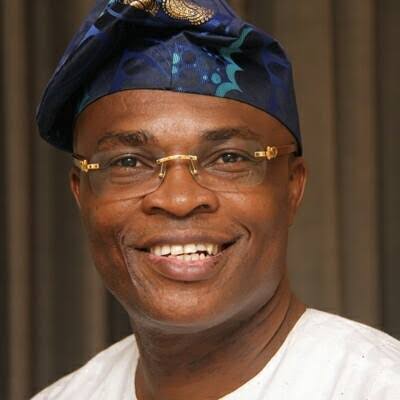
Nigerians should look beyond ethnicity, region and the longstanding debate over rotational presidency when choosing the country’s next leader, according to a chieftain of the African Democratic Congress (ADC), Kenneth Imasuagbon.
The former Edo State governorship aspirant said the priority ahead of the 2027 election should be finding a president with the ability to confront Nigeria’s economic, security and infrastructure challenges.
Speaking to journalists in Benin, Imasuagbon argued that presidential rotation is not a requirement of the Nigerian Constitution and should therefore not outweigh the question of competence.
He said voters should be more concerned about replacing poor schools with better ones, improving healthcare and addressing hardship than debating where the next president comes from.
Imasuagbon specifically appealed to voters in the South to support former Vice President Atiku Abubakar, who is contesting the 2027 presidency on the ADC platform.
According to him, Atiku has demonstrated the experience and determination needed to improve the country, describing the former vice president as someone capable of promoting national unity and fairness.
He also accused the Bola Tinubu administration of worsening economic pressure through policies including the removal of fuel subsidy, while expressing concern about the condition of roads, electricity and other infrastructure.
Imasuagbon argued that the next administration must focus on practical improvements in areas such as power, transportation, employment, security and public services.
The ADC chieftain also dismissed the idea that the ruling All Progressives Congress (APC) would automatically benefit from its incumbency advantage in 2027.
He maintained that the electorate ultimately determines the outcome of an election, arguing that voters could change the political direction of the country if they were determined to do so.
Imasuagbon further criticised what he described as regional and ethnic considerations in the distribution of political appointments and opportunities, insisting that the next president should give Nigerians across different parts of the country a sense of belonging.
His comments come as political parties and their candidates intensify preparations for the 2027 presidential election.
Opinion
Lesson from Dotun Oladipo’s Brave Daughters, by Bamidele Johnson
Lesson from Dotun Oladipo’s Brave Daughters, by Bamidele Johnson
I hope to grow old. I want to see my kids become real adults, find their own feet, make mistakes, recover from them, and perhaps one day complain that their own children are giving them grey hairs. I want that plainly stated before anything else, as everything that follows might read as a man agreeing to an early exit rather than a man simply being honest about the odds.
I want the decades. I want to become the grandfather who repeats the same stories until nobody bothers correcting him anymore. But wanting a thing and being granted are different things. The last year has made that difference harder to ignore than I would like. I have lost many friends recently to keep thinking that optimism is my natural resting state. Some of these men had better blood pressure than mine, better habits, better everything that is supposed to count. It did not save them.
There is no formula I know that reliably separates the men who make it to 70 from those who do not. Anyone who says he knows one is selling something. So, I do not assume that old age is an already booked destination. Even if I once did, which I doubt, the last three years have cured me of such an illusion. As such, I treat it as a hope rather than an expectation, and I have found that a more honest way to live.
It is exactly why I want something placed on record now, while I am still able to place things on record, rather than leave it for people to guess what my wishes were in the fog of a funeral week. If I do not make old bones, my children are not to be asked to read tributes at my funeral. Not one line, however short, however lovingly written.
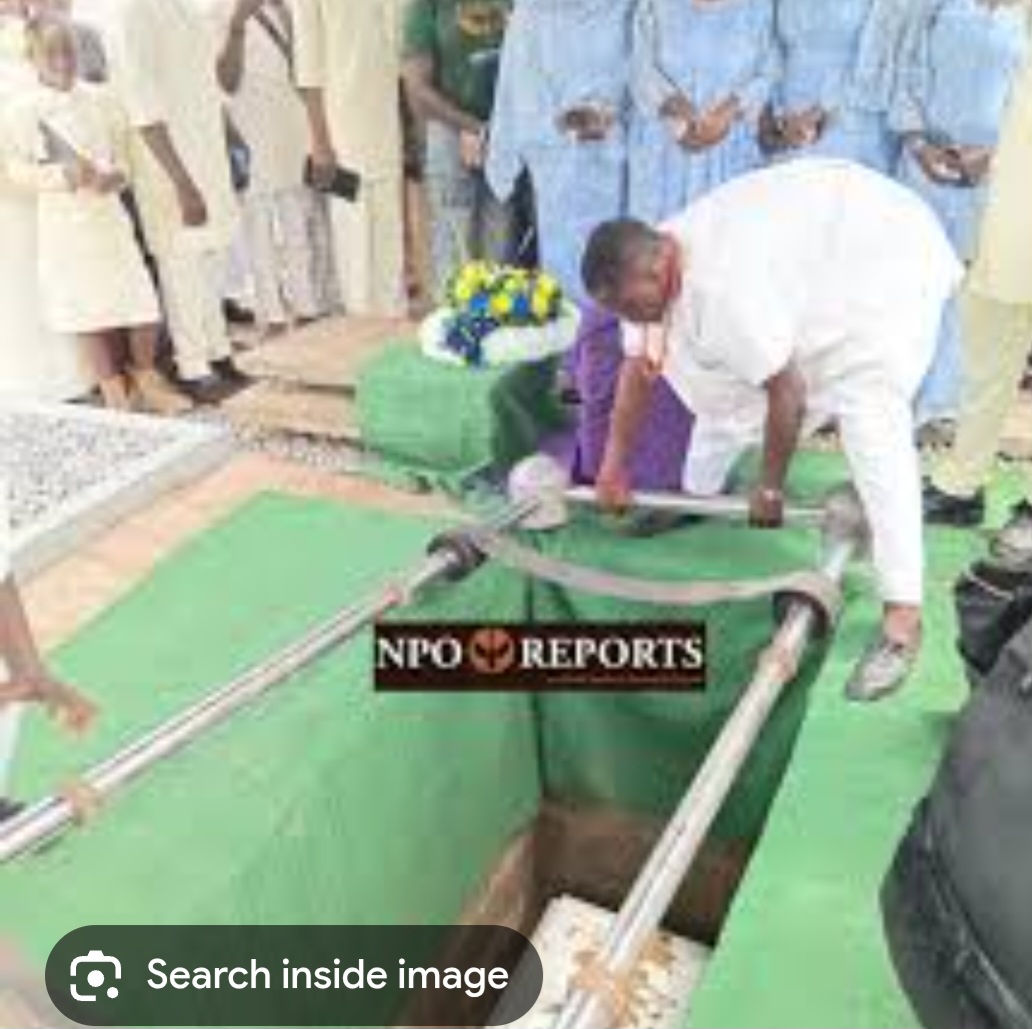
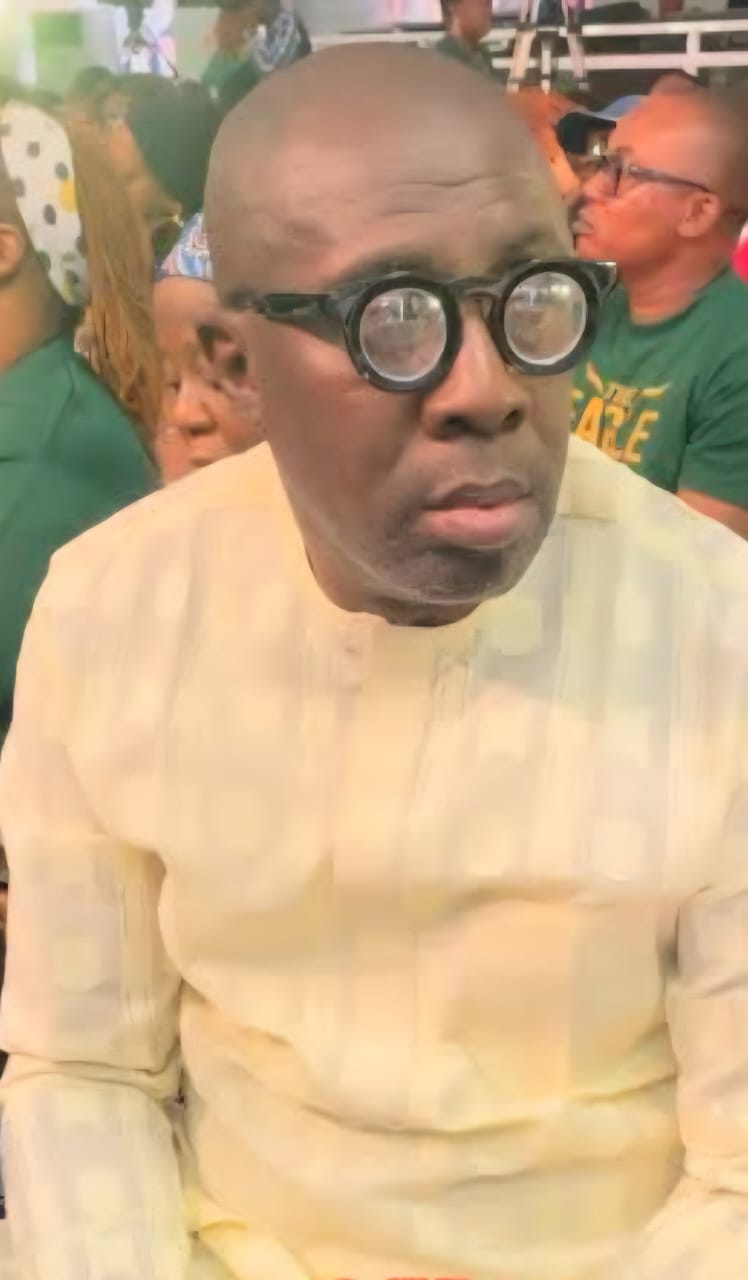
This, for me, was settled today rather than re-opened. At Dotun Oladipo’s funeral service, his three daughters took turns to read their tributes to their dad, and I found myself watching them with awe. There was a kind of strength in them that I do not possess. It is the strength needed to stand in front of a hall brimming with grieving adults and speak about a man they have just lost. Forever. Strength, however, is not the same as ease. I could see plainly what that strength was costing them as they read. Their voices caught. Their composure held and then did not hold and then held again through sheer will.
In front of them, in the pews, men and women considerably older than them came undone in ways the girls themselves were somehow managing to resist. I went mightily close. Some of the sobbing was quiet, the type people try to fold into a handkerchief. Some of it was not quiet at all, the kind that announces itself whether or not you want it.
Those young women honoured their father with a grace that is beyond me. What they did was astonishing. So, what I am attempting is an observation of a custom I have now watched wound people. This was not the first time I had watched this particular ritual extract more than it should from people already running on fumes. I saw an earlier and harder version of it at a friend’s wake back in 2015.
The first son was called forward to read his father’s tribute, and he could not do it. He tried, but the words would not come, and he stood there in front of a crowd of mourners, with his grief simply refusing to organise itself into sentences. The officiating minister, rather than releasing him from the task, urged him to continue. I sat fizzing with sorrow and ire. He could not go on and, eventually, the minister accepted, but not before insisting a while longer than it should have reasonably taken. His younger brother was called up next, presumably on the theory that if one grieving son could not manage it, maybe another one could. He flunked it in the same way. Grief does not distribute itself more conveniently among siblings just because a programme has been printed and needs to be followed.
I have turned that memory over many times since, trying to work out why this part of the rites is treated as mandatory in the first place. I have not found a satisfying answer. Maybe it comes from a belief that a child’s words carry more weight than anyone else’s, which may even be true, but weight is exactly the problem when those carrying it are struggling to hold themselves together with nothing but adrenaline and the fear of dissolving in public.
Maybe it is simply inertia, the reason we still do a hundred things at funerals that nobody can explain the original purpose of. Either way, I have stopped looking for the justification. I no longer think one exists that is good enough to weigh against what I watched happen to that boy in 2015.
So, let this stand as my instruction rather than my preference, the kind of thing I would rather state plainly now than leave for my children to infer later from how uncertain I sound when the subject comes up in passing. If I do not get the old age I am hoping for, my children will not be asked to read a single word over my body. Someone else can speak for me. A friend, a stranger with a steadier voice and a smaller stake in the loss, anyone whose grief will not be quite so total that standing upright becomes almost impossible.
My children, of course, will sit in front and fall apart if that is what the day requires of them, but without the microphone. That, at least, is one small mercy I intend to arrange for them while I am still here to arrange it.
Dotun deserved every bit of the send-off his daughters gave him today, and I suspect he would have been the first to tell them to sit down and let someone else carry the weight for a while. He did not get a say in that, as none of us ever do once we are the ones being spoken of rather than the ones speaking. Rest well, Dotun. You raised three young women whose strength I will not soon forget. That alone says everything worth saying about the man you were.
Opinion
‘Tinubu Will Win Again in 2027’ — Charismatic Bishops’ Secretary
‘Tinubu Will Win Again in 2027’ — Charismatic Bishops’ Secretary
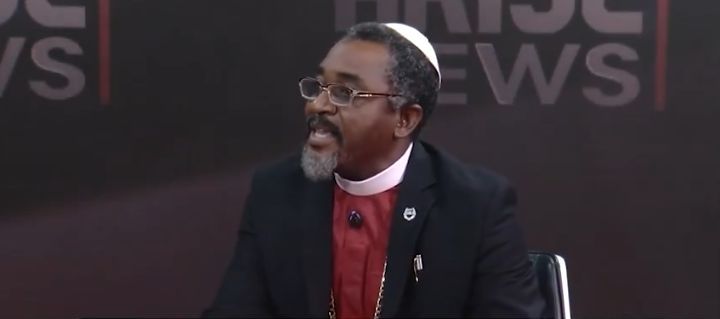
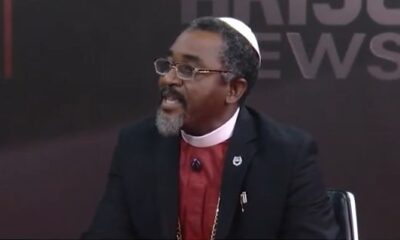
A senior Nigerian cleric, Archbishop Chivir Chianson, has declared that President Bola Tinubu will retain the presidency after the 2027 general election, attributing the prediction to a message he said came from God.
Chianson, who serves as Secretary General of the Charismatic Bishops’ Conference of Nigeria, made the statement while appearing on Arise Television on Saturday.
Rather than basing his prediction on political calculations, the archbishop said his confidence came from what he described as the prophetic role of bishops.
He maintained that the conference had previously spoken about Tinubu’s political future based on what he said was divine revelation and that the President would return for another term.
Chianson also predicted that Tinubu’s performance would improve if he wins the 2027 election.
READ ALSO:
- DSS warns Osun churches, mosques, markets over alleged terrorist attack plot ahead of 2027
- ‘Tinubu Will Win Again in 2027’ — Charismatic Bishops’ Secretary
- Fake miracles, bogus grants: How clerics allegedly fleece Nigerians of millions
Addressing the political opposition, the cleric said the bishops could not be blamed if rival parties failed to unite or organise themselves effectively ahead of the election.
He also sought to clarify the position of the bishops when dealing with government, saying their role in speaking truth to power did not mean they should approach political leaders with hostility or disrespect.
According to him, the Constitution, alongside their religious convictions, should guide how they engage the President and the country.
Chianson said he was sufficiently confident in his prediction to promise that he would return to the Arise TV studio after the 2027 election, when he expects the result to demonstrate that the bishops’ prophecy was correct.
His comments add a religious dimension to the increasingly active political conversation surrounding the 2027 presidential race.
‘Tinubu Will Win Again in 2027’ — Charismatic Bishops’ Secretary
-
 News2 days ago
SERAP Threatens Legal Action Over ₦126bn INEC Electoral Funds
-
 Politics2 days ago
Five Islamic Clerics Abducted After Tinubu Re-Election Prayer At Yari’s Zamfara Residence
-
 Opinion2 days ago
‘Tinubu Will Win Again in 2027’ — Charismatic Bishops’ Secretary
-
 Politics22 hours ago
2027: Northern Lecturers Back Tinubu, ASUU Disowns Endorsement
-

 metro2 days ago
Mother ‘sold daughter’s abuse videos for $300’: Nigeria child pornography case shocks nation
-

 Sports2 days ago
‘Unacceptable’ — Arteta Furious Over Sunderland Penalty in Arsenal Win
-
 News1 day ago
Nwifuru Dismisses Cubana Chief Priest as ‘Attention-Seeker’
-

 News2 days ago
Petrol Subsidy: Presidency Rejects Atiku’s Plan, Says No Going Back