

Politics
Another Labour Party Rep defects to APC
Another Labour Party Rep defects to APC
Fom Daniel Chollom, a Labour Party member of the House of Representatives, announced his defection to the All Progressives Congress (APC) on Tuesday, citing internal party crises and a desire to collaborate with the President to advance the nation’s development.
In a letter read by Speaker Abbas Tajudeen during plenary, Chollom explained that the leadership tussle within the Labour Party left him uncertain about which faction to align with, hampering effective representation. After careful reflection, he stated that joining the APC would better serve the interests of his constituents.
Chollom expressed gratitude to the Labour Party for the platform that enabled him to secure his seat but emphasized that his move to the APC was motivated by the need to contribute meaningfully to delivering democratic dividends to Nigerians.
READ ALSO:
- Obasanjo: Nigeria’s huge debt burden to current, next generations
- LASUMA gives Lagos varsity students scholarships, celebrates leaders (Photos)
- Gunmen kidnap Yahaya Bello’s aide in Okene
Reactions from Minority Leaders
Minority Leader Kingsley Chinda criticized Chollom’s defection, arguing that he failed to follow due process. Chinda insisted that Chollom should have resigned from the Labour Party at the ward level and provided proof to the House before submitting his defection letter. He further called for Chollom’s seat to be declared vacant.
Deputy Minority Whip George Ozodinobi went a step further, labeling defectors from the Labour Party as lacking ideology. He accused them of undermining the Labour Party’s credibility and depriving the House of high-quality representation.
Ozodinobi added, “It is disheartening that these members defect when there is no legitimate crisis in the Labour Party. Their actions are disappointing, and even the APC should be wary of trusting them.” He reiterated the call for Chollom’s seat to be declared vacant, pledging to pursue all necessary measures to achieve this.
Another Labour Party Rep defects to APC






Politics
Buhari Feared Tinubu Presidency, Resisted Pressure to Back Him – Baba-Ahmed Claims

Buhari Feared Tinubu Presidency, Resisted Pressure to Back Him – Baba-Ahmed Claims
The National Chairman of the Peoples Redemption Party (PRP), Hakeem Baba-Ahmed, has claimed that former President Muhammadu Buhari had reservations about President Bola Ahmed Tinubu succeeding him in 2023, describing the current President as “bad news” for Nigeria.
Baba-Ahmed made the allegation at a summit organised by the Northern Elders Forum (NEF), where he criticised Tinubu’s administration and questioned the President’s handling of the country’s economic and political challenges.
According to him, Buhari resisted pressure from some political associates who wanted Tinubu to emerge as his successor after the 2023 general election.
“Even Buhari saw Tinubu as bad news for this country. In fairness to him, he is not around him. Buhari resisted some people who insisted it had to be Tinubu,” Baba-Ahmed said.
He did not identify the individuals who allegedly pressured Buhari or provide further details of the former President’s reported reservations about Tinubu’s candidacy.
Baba-Ahmed also revisited Tinubu’s declaration of “Emilokan”, a Yoruba expression meaning “it is my turn”, during the build-up to the 2023 presidential election, arguing that Nigerians should have examined the statement more critically.
“Nigerians ought to have known there was something wrong the day Tinubu said ‘It’s my turn’. Maybe we missed it,” he said.
Questioning the purpose behind the declaration, Baba-Ahmed argued that the presidency of a country with more than 200 million people should be about public service rather than the fulfilment of an individual’s political ambition.
The PRP chairman further accused the Tinubu administration of worsening the country’s difficulties, citing economic hardship and what he described as failures across key areas of governance.
READ ALSO:
- NAFDAC Probes Corps Member’s Death at Enugu Camp as Fake Drug Claims Emerge
- Nigerian Universities Have Not Expired, Only Teaching Methods, Professor Tells Ojuolape
- Kano: Soldiers Kill Two Kidnappers, Rescue Victim, Recover ₦10m
He argued that the President should not prioritise his ambition for a second term over the welfare of Nigerians, insisting that the country needed a change in direction.
Baba-Ahmed also expressed confidence that Nigeria would overcome its current challenges, describing its people as resilient despite the economic and political difficulties confronting the nation.
“We are very resilient people. We have seen crises bigger than this, and we survived it. We survived this one, and we will survive this one,” he said.
On the 2027 general election, Baba-Ahmed disclosed that opposition parties were working towards a coalition to challenge Tinubu, adding that the alliance would seek to unite political interests behind a single candidate.
He urged Nigerians opposed to the President’s re-election bid to support whoever emerges as the coalition’s candidate.
Baba-Ahmed also called on the Independent National Electoral Commission (INEC) to ensure that the 2027 elections are credible and reflect the wishes of voters.
Tinubu succeeded Buhari on May 29, 2023, after winning the presidential election on the platform of the All Progressives Congress (APC). His administration has introduced major economic reforms, including the removal of petrol subsidies and changes to the foreign exchange system, which have generated sustained public debate over their impact on households and businesses.
Baba-Ahmed’s claim about Buhari’s alleged opposition to Tinubu’s emergence has not been independently established in the account of the summit. His remarks come amid growing political manoeuvring ahead of the 2027 elections and renewed criticism of the President’s performance by opposition figures.
Buhari Feared Tinubu Presidency, Resisted Pressure to Back Him – Baba-Ahmed Claims
Politics
2027: Shehu Sani Breaks Silence on Claims Kwankwaso Is Working for Tinubu
2027: Shehu Sani Breaks Silence on Claims Kwankwaso Is Working for Tinubu
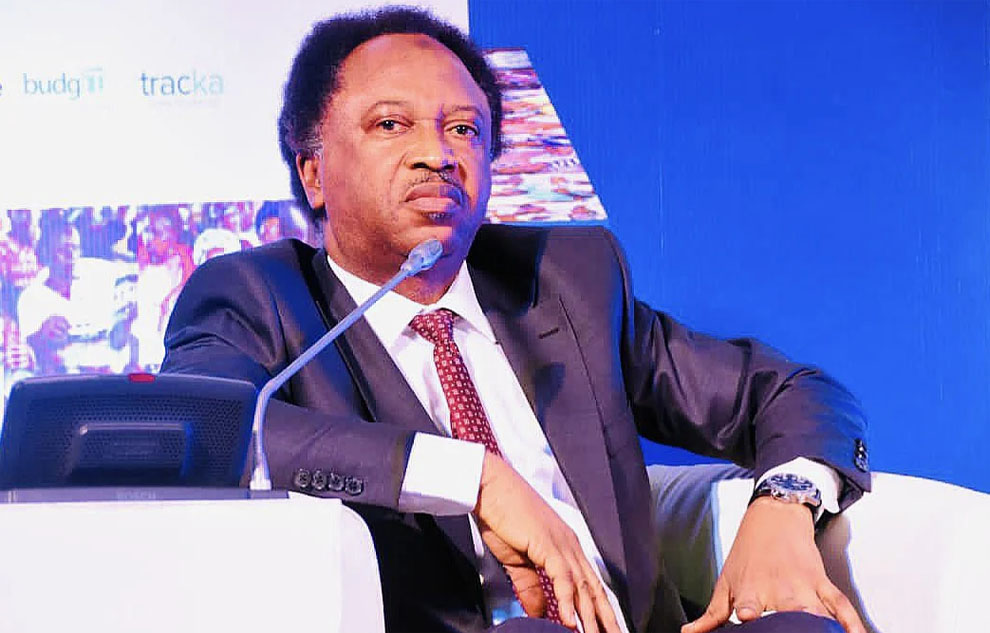
Former Kaduna Central senator Shehu Sani has defended Rabiu Musa Kwankwaso against allegations that the former Kano State governor is working to advance President Bola Ahmed Tinubu’s re-election bid, blaming supporters of the African Democratic Congress (ADC) for what he described as a smear campaign following Kwankwaso’s political split with Peter Obi.
Sani made the remarks in a post on his verified X account while reacting to accusations by the ADC Presidential Campaign Council that Kwankwaso was undermining opposition efforts ahead of the 2027 presidential election.
“The ADC guys are still bitter about the Peter and Kwankwaso divorce, hence the smear that they are working for the ruling party or the President,” Sani wrote.
The former lawmaker argued that Obi and Kwankwaso were established politicians with independent political identities and should be allowed to make their own decisions about political alliances without facing hostility from former allies.
According to him, political figures should have the freedom to associate with political parties and coalitions of their choice or withdraw from them without being accused of working against the interests of the opposition.
“No consideration to the fact that they are all accomplished politicians with their own independent track records, and have the right to associate and disassociate,” he added.
READ ALSO:
- Omoda, Jaecoo Storm Europe as Global Sales Surge 123% to 73,421
- 16-Year-Old Girl Recounts Horror of Hookup Encounter, Says Man Threatened Her With Knife, Acid
- Ex-Super Eagles Coach Westerhof Battles Colon Cancer in Critical Condition, Wife Seeks Help
Sani further criticised political groups that, in his view, attempt to control their members or punish them for choosing a different political direction.
“This is the price they will continue to pay for refusing to be supplementary, and disposable cargoes in someone’s container,” he stated.
He added: “Political parties shouldn’t be cultish groups where one can’t pull out in peace.”
The comments came after the ADC Presidential Campaign Council accused Kwankwaso, who is now the running mate to Obi under the Nigeria Democratic Congress (NDC), of weakening the opposition through his criticism of former Vice-President Atiku Abubakar.
Kwankwaso had called on Atiku, the ADC’s presidential candidate, to step aside for Obi, prompting a strong reaction from the ADC campaign council.
In a statement, the council’s Director of Media and Publicity, Kola Ologbondiyan, described Kwankwaso’s intervention as reckless and self-serving, alleging that it could deepen divisions among opposition politicians and benefit Tinubu and the ruling All Progressives Congress (APC).
Ologbondiyan argued that opposition figures should concentrate on challenging the Tinubu administration rather than attacking one another or attempting to influence the choice of presidential candidates in rival parties.
The ADC campaign council also questioned Kwankwaso’s political calculations, alleging that his actions were driven by personal ambition and future political negotiations rather than a genuine effort to strengthen the opposition.
However, Sani’s response challenged the suggestion that Kwankwaso’s departure from the ADC-led opposition arrangement amounted to support for Tinubu. He maintained that political disagreements and changes in alliances should not automatically be interpreted as evidence of collaboration with the ruling party.
The disagreement reflects the growing tensions among opposition politicians as parties and political leaders position themselves for the 2027 elections.
Obi and Kwankwaso’s move to the NDC followed their departure from the ADC-led opposition coalition, which had sought to bring prominent political figures together behind a common platform to challenge Tinubu.
Their exit has complicated efforts to maintain a united opposition front, with competing presidential ambitions and disagreements over candidate selection continuing to shape political discussions.
For now, the allegations that Kwankwaso is advancing Tinubu’s interests remain a claim by the ADC campaign council, while Sani has publicly rejected that interpretation. Neither the accusation nor Sani’s response, on its own, establishes that Kwankwaso is secretly working with the President.
The exchange underscores the widening political differences among opposition figures as the race towards 2027 gathers momentum.
2027: Shehu Sani Breaks Silence on Claims Kwankwaso Is Working for Tinubu
Politics
2027: Kwankwaso Signals Fuel Subsidy Comeback as NDC Vows to Crash Petrol Prices
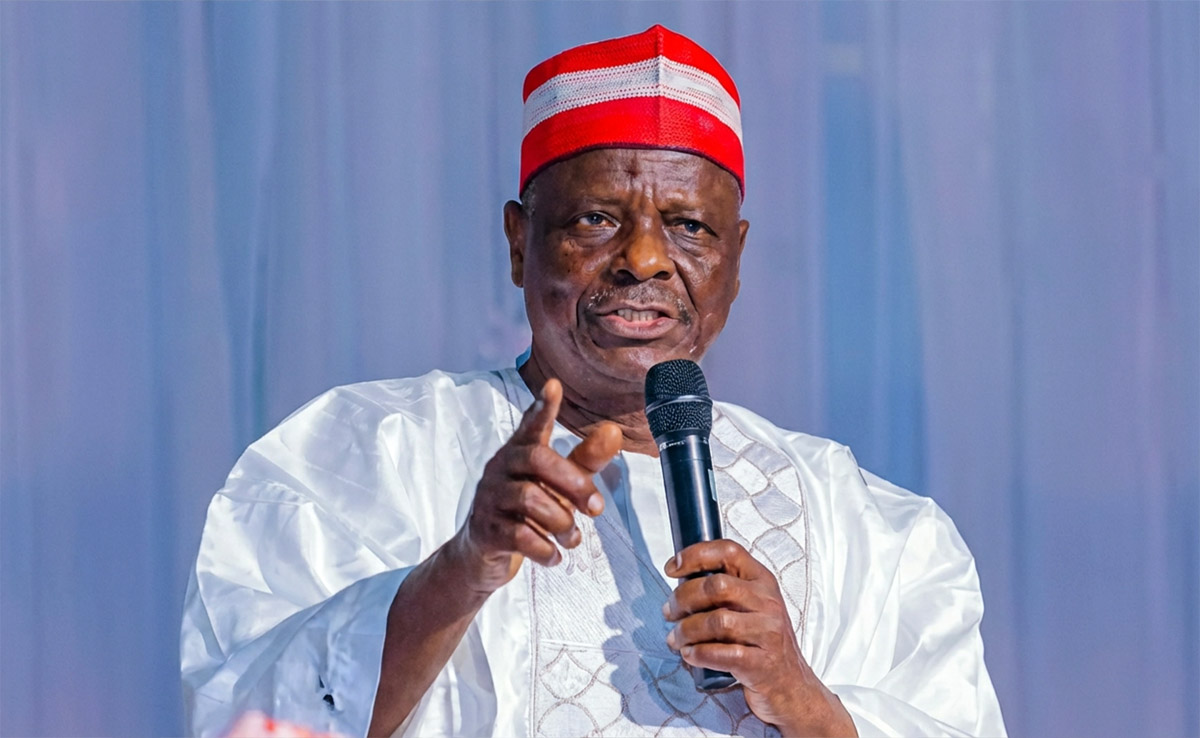
The Nigeria Democratic Congress (NDC) has signalled its willingness to consider restoring petrol subsidy if it wins the 2027 general election, with its vice-presidential candidate, Rabiu Musa Kwankwaso, promising to explore all necessary measures to reduce fuel prices and ease the economic hardship facing Nigerians.
Kwankwaso made the declaration during an interview on Channels Television’s Politics Today on Thursday, October 15, saying the party’s leadership was united on the need to make energy more affordable.
The former Kano State governor said he, the NDC presidential candidate, Peter Obi, and the party’s leader, Seriake Dickson, had aligned their positions on addressing the high cost of energy in the country.
According to Kwankwaso, the party would consider whatever measures were necessary to bring down petrol prices, including a possible return to fuel subsidy.
He argued that the cost of petrol had become a major burden on households and businesses, contributing to higher transportation fares, rising food prices and increased operating costs for companies.
The NDC candidate said an incoming government would need to examine available policy options to reduce the pressure on Nigerians, particularly low-income earners and small businesses struggling with the rising cost of living.
READ ALSO:
- NAF Deploys Pumps in Desperate Push to Recover Submerged Aircraft After Crash Killed 25
- Rivers Police Remove DPO as Suspected Cultists’ Outpost Renovation Sparks Probe
- Osun Murder: Three Arrested as Police Recover Weapons, Link Suspect to Earlier Killings
Kwankwaso also identified corruption and irregularities in the petroleum industry as issues that must be addressed to ensure Nigerians benefit from reforms in the sector.
He suggested that reducing waste and tackling abuses could help improve the management of public resources and support efforts to make petroleum products more affordable.
The comments reopen the debate over fuel subsidy removal, one of the most consequential economic decisions taken by President Bola Ahmed Tinubu, who announced the end of the policy during his inauguration on May 29, 2023.
The removal led to a sharp increase in petrol prices, with the effects spreading across transportation, food distribution, manufacturing and other sectors of the economy.
The Tinubu administration has defended the decision as part of broader economic reforms intended to reduce the government’s subsidy burden and redirect public funds towards other priorities. However, the resulting increase in living costs has remained a major concern for many Nigerians.
Kwankwaso’s statement suggests that the NDC would be prepared to revisit the policy if elected in 2027. However, the party has yet to publish a comprehensive framework explaining how a possible subsidy scheme would operate, how much it would cost or how the government would fund it without creating additional pressure on public finances.
Questions also remain about the proposed safeguards against corruption, the method of determining eligible beneficiaries and whether any intervention would involve a blanket subsidy or a more targeted arrangement.
The NDC’s position is expected to feature in the wider debate over economic policy ahead of the 2027 presidential election, as political parties outline their plans for addressing high petrol prices, inflation and the cost-of-living crisis.
For Nigerians facing elevated transportation and household expenses, the central issue will be whether the party can translate its promise of cheaper petrol into a practical, transparent and financially sustainable policy.
2027: Kwankwaso Signals Fuel Subsidy Comeback as NDC Vows to Crash Petrol Prices
-
 metro3 days ago
Suspended Archbishop Ibezim Drags Anglican Primate to Court, Challenges Six-Month Leave
-
 metro3 days ago
Imodi-Ijebu Muslim Community Bets on 20 Chiefs to Drive Education, Economic Growth
-
 metro3 days ago
NAPTIP Raises Alarm as Parents Allegedly Trade Children for Sex, Arrests Woman in Abuja
-
 News2 days ago
FG Draws Red Line on Fuel Subsidy, Warns of Naira Crisis if Reforms Are Reversed
-
 News3 days ago
Tinubu Reappoints INEC Commissioner, Nominates Six Others Ahead of 2027 Elections
-
 metro3 days ago
DSS Arrests Maina’s Fugitive Son in Abuja After Six Years on the Run
-

 Auto3 days ago
Tesla’s Flying Roadster Rekindles Race to Put Cars in the Sky
-

 Entertainment3 days ago
Toyin Abraham Breaks Silence as Leaked Audio Sparks Fresh Nollywood Feud