
Politics
APC Secures Full Control of Zamfara Assembly as Speaker, 12 Lawmakers Defect
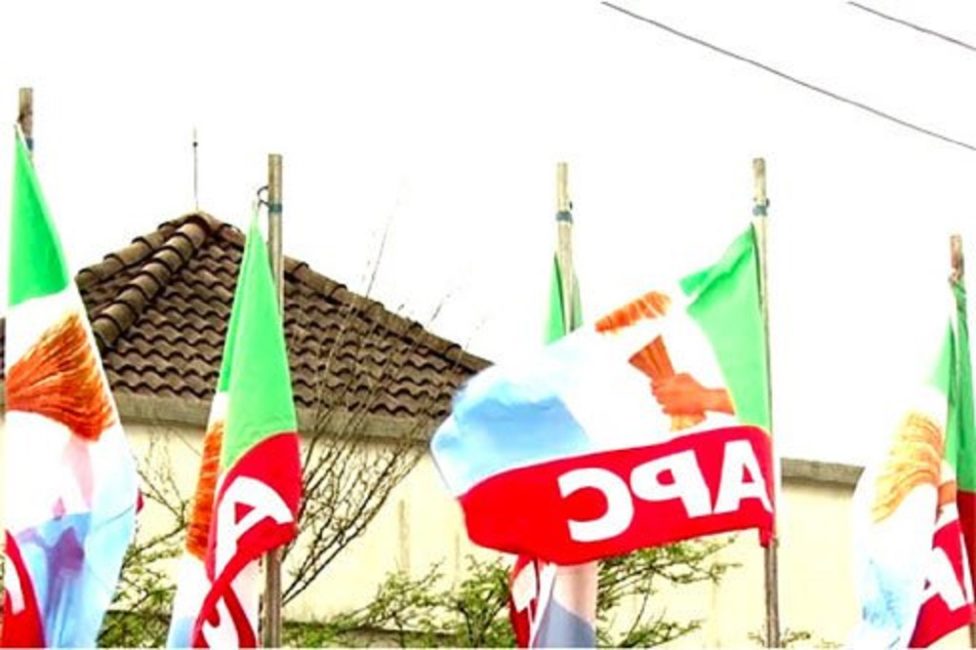
APC Secures Full Control of Zamfara Assembly as Speaker, 12 Lawmakers Defect
The Speaker of the Zamfara State House of Assembly, Bilyaminu Moriki, has led a major political realignment in Zamfara State following his defection from the Peoples Democratic Party (PDP) to the All Progressives Congress (APC), alongside 12 other lawmakers.
The development effectively hands the APC full control of the Zamfara State House of Assembly, marking a significant shift in the state’s political structure and strengthening the ruling party’s grip on legislative affairs.
The defection is widely interpreted as a move to align the Assembly with the political direction of Governor Dauda Lawal. With the Speaker and a majority of lawmakers now in the APC, the party is poised to exercise greater influence over lawmaking, oversight functions, and policy implementation in the state. Analysts say the consolidation of both executive and legislative arms under one political platform could ease the passage of government policies and budgets, potentially reducing friction between the two arms of government. However, critics warn that such dominance may weaken opposition voices and reduce legislative scrutiny, a key element of democratic governance.
The mass defection represents a significant setback for the PDP in Zamfara, where it previously held considerable influence within the Assembly. The party is expected to reassess its strategy in the state as it grapples with the loss of key figures and legislative strength. Political observers note that defections of this scale are often driven by a mix of strategic calculations, internal party disagreements, and the desire to align with prevailing power structures, particularly as political actors begin to position themselves ahead of future electoral cycles.
As of the time of filing this report, neither the defecting lawmakers nor the state chapter of the PDP had issued detailed statements explaining the reasons behind the move. Similarly, the APC is yet to formally announce the defection, although party insiders have reportedly welcomed the lawmakers into its fold.
With the APC now firmly in control of the Assembly, attention is expected to shift to how this new political configuration will impact governance in Zamfara. Stakeholders say the coming weeks will reveal whether the development translates into improved policy coordination and service delivery, or raises concerns about political plurality and accountability.
APC Secures Full Control of Zamfara Assembly as Speaker, 12 Lawmakers Defect







Politics
2027: Abia APC Assures Tinubu of 80% Votes, Dismisses Claims of Otti’s Support
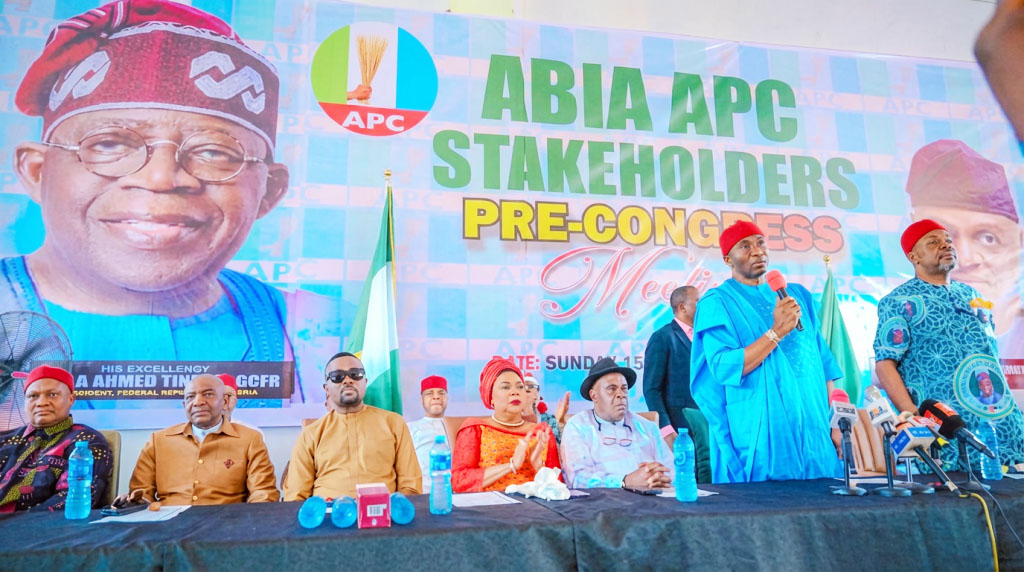
2027: Abia APC Assures Tinubu of 80% Votes, Dismisses Claims of Otti’s Support
The All Progressives Congress (APC) in Abia State has declared its readiness to deliver over 80 percent of votes for President Bola Ahmed Tinubu in the 2027 presidential election, while dismissing reports suggesting that Governor Alex Otti may be working to support the President’s re-election bid.
The position was contained in a statement issued by the state APC Publicity Secretary, Uche Aguoru, who described the reported claim as misleading and politically motivated. The party argued that it would not be deceived by what it called a “self-serving narrative” allegedly aimed at influencing public perception.
According to the APC, the party remains firmly in control of its structures across the state and is confident in its ability to mobilise voters ahead of the 2027 elections. It maintained that its grassroots networks and support base would be instrumental in securing a decisive victory for President Tinubu in Abia.
READ ALSO:
- One Dead as Improvised Explosive Device Detonates in Kwara Community
- 5 Killed in Cult Violence in Lagos as Police Arrest 18 Suspects
- FCT Police Arrest 7 Over NURTW Clash, Deny Claims of Shooting at Members
The party also referenced the 2023 general elections, stating that Governor Alex Otti and his political platform had previously rejected the outcome of the presidential poll. It further alleged that supporters and associates of the governor have been critical of the President’s policies on social media.
The statement accused the governor’s camp of indirectly projecting support for President Tinubu through intermediaries rather than making an open declaration. It contrasted this with other political leaders, citing examples of governors who have publicly aligned with the President.
The APC emphasized that such alleged indirect overtures should not be taken at face value, describing them as politically strategic rather than genuine. It urged President Tinubu to rely on the party’s established structures in the state, which it claims are capable of delivering a significant vote margin.
The party further stated that it has strengthened its grassroots mobilisation through various affiliated support groups, which it said are actively promoting the administration’s Renewed Hope Agenda across communities in Abia State.
Among the groups mentioned were the Renewed Hope Partners, Renewed Hope Ambassadors, City Boys Movement, and Relax Tinubu Is Fixing Nigeria, which the party said have been instrumental in expanding outreach and political engagement at the local level.
The APC concluded that it remains united, organised, and strategically positioned to achieve its electoral target in 2027, projecting not less than 80 to 90 percent of votes for President Tinubu in the state.
The development comes as political activities gradually build up ahead of the next general elections, with parties across the country intensifying internal consolidation and grassroots mobilisation efforts.
2027: Abia APC Assures Tinubu of 80% Votes, Dismisses Claims of Otti’s Support
Politics
Obi, Makinde, Dickson Visit Kwankwaso, Fuel Coalition Rumours
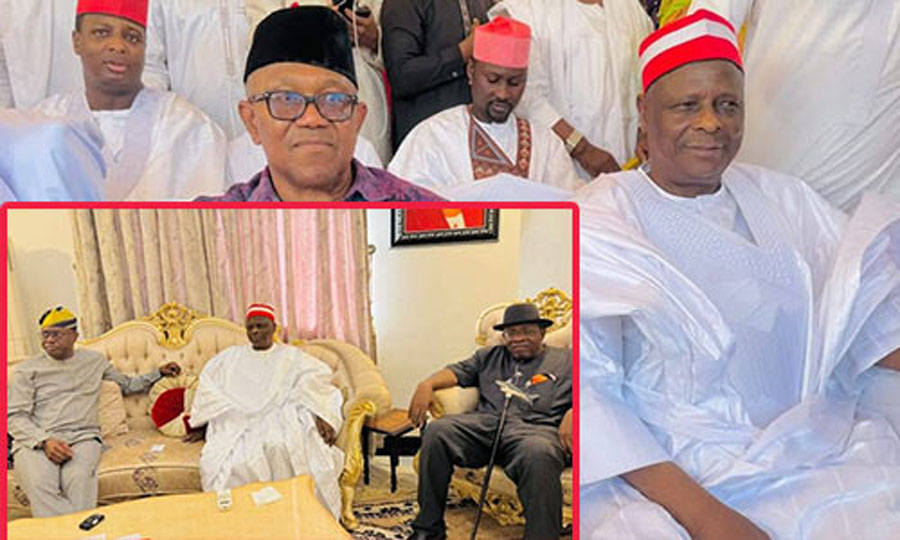
Obi, Makinde, Dickson Visit Kwankwaso, Fuel Coalition Rumours
The 2023 presidential candidate of the New Nigeria People’s Party, Rabiu Kwankwaso, on Sunday hosted a high-profile delegation of political figures at his Kano residence, fueling renewed speculation about possible alliances and realignments ahead of the 2027 general elections.
Among those received were former Anambra State governor and 2023 presidential candidate of the Labour Party Nigeria, Peter Obi; Oyo State governor, Seyi Makinde; and former Bayelsa State governor, Senator Seriake Dickson.
The meeting, which took place during the Sallah celebrations, has drawn significant political attention due to the calibre of attendees and the timing, as discussions around opposition unity and potential coalitions intensify across the country.
Although described as a social visit, political observers
say the gathering could carry broader implications, especially as Nigeria’s political landscape begins early positioning ahead of the next electoral cycle. The presence of key opposition figures from different geopolitical zones has further strengthened speculation about ongoing consultations toward a possible opposition coalition.
Kwankwaso, who leads the Kwankwasiyya movement and remains a dominant political figure in northern Nigeria, has been at the center of recent discussions about a potential shift in alliances. Reports suggest he may be considering alignment with a broader opposition bloc reportedly being discussed among political stakeholders, with some linking the emerging conversations to the African Democratic Congress.
READ ALSO:
- Tinubu Secures France Military Support to Boost Fight Against Terrorism in Nigeria
- State Police: Governors Submit Proposal to National Assembly Over Insecurity
- Kidney Failure: Experts Warn Nigerians to Drink Water, Exercise, Rest
Governor Makinde’s participation is also viewed as politically significant given his influence within the opposition and his role in ongoing internal dynamics within the Peoples Democratic Party. The PDP has continued to grapple with internal disagreements and factional tensions, which have shaped political alignments and strategic decisions ahead of future elections.
Similarly, Seriake Dickson’s presence has attracted attention following his recent involvement in the unveiling of the National Democratic Coalition, a new political platform that has further contributed to conversations around restructuring opposition forces.
While no official agenda was disclosed, Kwankwaso, in a post on his verified X (formerly Twitter) account, described the meeting as part of Sallah celebrations and a moment of goodwill among political leaders.
“Delighted to host Their Excellencies, Peter Obi, Seyi Makinde, and Seriake Dickson at my Kano residence for this joyful Sallah celebration. Wishing everyone peace, blessings, and prosperity,” he wrote.
Despite the social framing, analysts say such gatherings often serve as informal spaces for political dialogue, networking, and early-stage negotiations in Nigeria’s evolving political environment.
Political commentators note that discussions around coalition building, defections, and opposition unity have gained momentum as parties and key figures begin to strategise ahead of 2027. Any potential alignment involving figures like Kwankwaso, Obi, and Makinde could significantly influence voter dynamics and reshape the balance of power in future elections.
However, as of now, no official confirmation has been made regarding any defection, merger, or formal political alliance emerging from the meeting.
The gathering nonetheless underscores the growing pace of political consultations across party lines, as Nigeria’s leading opposition figures continue to explore possible pathways toward collaboration in a bid to strengthen their position ahead of the next general elections.
Obi, Makinde, Dickson Visit Kwankwaso, Fuel Coalition Rumours
Politics
Kwara Christians Demand Christian Governor in 2027

Kwara Christians Demand Christian Governor in 2027
Christian leaders and stakeholders in Kwara State, under the banner of the Coalition of Concerned Christian Stakeholders, have intensified calls for major political parties to field a Christian candidate for the 2027 governorship election, emphasizing fairness, inclusivity, and equitable representation.
At a press briefing in Ilorin, coalition spokesperson Rev. Dr. Jonathan Adeboye stressed that the push for a Christian governor is not a religious campaign but a call to ensure that the state’s leadership reflects its diverse demographic and religious composition. “The advocacy for a Christian governor in 2027 is about promoting inclusivity and preventing exclusionary tendencies,” he said.
Rev. Adeboye highlighted that since the return of democratic rule in Kwara State, only one Christian — Chief Cornelius Adebayo, who served briefly in 1983 — has held the governorship. He listed the sequence of past civilian governors to underscore the disparity:
- Alhaji Adamu Attah (1979–1983) – Muslim
- Chief C.O. Adebayo (1983) – Christian
- Sen. Shaaba Lafiagi (1992–1993) – Muslim
- Alhaji Mohammed Lawal (1999–2003) – Muslim
- Dr. Abubakar Bukola Saraki (2003–2011) – Muslim
- Dr. Abdulfatah Ahmed (2011–2019) – Muslim
- Mallam Abdulrahman AbdulRazaq (2019–present) – Muslim
READ ALSO:
- Sokoto Cleric Defies Sultan, Holds Eid al-Fitr Prayer Over Moon Sighting Dispute
- China Slams Killing of Iran’s Ali Larijani, Urges Immediate Ceasefire
- Iran Again Threatens to Destroy Region’s Energy Facilities if Attacked
“A Christian last served as governor in 1983, over 40 years ago,” Adeboye noted, stressing the importance of balanced political representation in a state comprising Yoruba, Nupe, Baruba, Fulani, Igbo, and Hausa communities, and adherents of Christianity, Islam, and Traditional religions.
The coalition argued that while the preferred candidate may emerge from any senatorial district, priority should be given to Kwara South, which has a significant Christian population. “The Government House belongs to all Kwarans, irrespective of tribe, religion, or minority status. It is our collective responsibility to ensure fairness and inclusivity,” Adeboye said.
The group also clarified that the demand is not intended to fuel sectarian politics, but to ensure that all communities feel represented in the state’s highest office. Other civil society groups, including the Kwara Inclusion Advocates, have echoed similar sentiments, emphasizing equitable leadership, political stability, and social cohesion ahead of the 2027 general elections.
Analysts note that the coalition’s call reflects broader discussions around merit, competence, and diversity in candidate selection, underlining the need for political parties to consider religious and regional representation when nominating governorship candidates.
As Kwara State prepares for the 2027 elections, the call for a Christian governorship candidate is expected to shape political discourse and influence party strategies in the coming months.
Kwara Christians Demand Christian Governor in 2027

-
 Entertainment2 days ago
Baba Ijesha Speaks Out After Prison Release, Denies Sexual Assault Conviction
-

 metro2 days ago
Ozoro Festival Controversy: 15 Suspects Arrested, Community Denies Rape Claims
-

 metro2 days ago
Over 150 Bandits Reportedly Die in Sokoto Water Accident
-

 metro3 days ago
Shock as Governor Oborevwori’s Aide Collapses, Dies at Event
-

 News3 days ago
US Deploys MQ-9 Drones, 200 Troops to Support Nigeria’s Counterinsurgency Efforts
-
 Entertainment2 days ago
Abiodun Ayoyinka Rebrands as Bondu Alaska Amid Papa Ajasco Identity and Brand Dispute
-

 News2 days ago
Nigerian Army Opens Portal for 91st Regular Recruits Intake
-
 metro2 days ago
Jehovah’s Witnesses Update Blood Transfusion Policy to Allow Own Blood Use