

News
As Tinubu signs tax reform bills, VAT remains 7.5%, CIT 30%

As Tinubu signs tax reform bills, VAT remains 7.5%, CIT 30%
President Bola Ahmed Tinubu on Thursday signed the four tax reform bills recently passed by the National Assembly, retaining Value Added Tax (VAT) at 7.5% and the Corporate Income Tax (CIT) at 30% without any increment.
The bills are the Nigeria Tax Bill (Ease of Doing Business), which aims to consolidate Nigeria’s fragmented tax laws into a harmonised statute; and Nigeria Tax Administration Bill, which will establish a uniform legal and operational framework for tax administration across federal, state, and local governments.
Others are the Nigeria Revenue Service (Establishment) Bill, which repeals the current Federal Inland Revenue Service Act and creates a more autonomous and performance-driven national revenue agency— the Nigeria Revenue Service (NRS); and the Joint Revenue Board (Establishment) Bill, which provides for a formal governance structure to facilitate cooperation between revenue authorities at all levels of government.
There were concerns over the potential of the Bills in further increasing taxpayers’ burden even as the planned increase in value added tax from the present 7.5 per cent also generated concerns.
At the signing ceremony at the State House, President Tinubu said that the occasion presented a new lease of life to every Nigerian and future generation and described the laws as pivotal to the success of the administration’s reforms and the country’s prosperity.
READ ALSO:
- Saudi Arabia supports Palestinian authority with $30m
- No known intelligence that Iran moved uranium – US defence chief
- Ten Nigerian judges sacked for falsifying age to extend tenure
“What we did a few minutes ago is the way forward for our country’s prosperity. Leadership must help people take off, lead the way, and navigate every turn and twist. We must help them reach their destination. That is what we are doing.
“We are in transit; we have changed the roads, we have changed some of the misgivings, we have opened the doors to a new economy, business opportunities. We have shown the world that Nigeria is ready and open for business,” the president stated.
President Tinubu commended the leaders and members of the National Assembly for passing the bills despite initial misunderstandings.
“It was initially difficult, but not all roads will be easy in nation-building. What you have provided is leadership and courage in the face of mounting disputes. Nowhere in the world would tax reforms be easy,” the president said.
Implementation begins in January – Adedeji
Addressing State House correspondents shortly after the president signed the bills, Chairman of the Nigeria Revenue Service, Zach Adedeji, disclosed that the implementation of the newly signed four tax fiscal reform laws will commence by January 1st, 2026.
According to him, the modalities will be put in place ahead of the implementation.
Adedeji explained that the six-month period between the enactment of the new fiscal laws is designed to give ample time to those saddled with the implementation to carefully prepare and ensure that all Nigerians are adequately sensitised.
According to Adedeji, the Federal Inland Revenue Service, FIRS by the signing of the bills into Law is now the Nigeria Revenue Service, explaining that the new law now defines the NRS’s expanded mandate, including non-tax revenue collection, and lays out transparency, accountability, and efficiency mechanisms.
READ ALSO:
- Reps probe police over weapons’ supply contracts, assets’ sales
- Abu Sufyan’s death, a great loss to Nigeria Muslims
- Three Palestinians killed during Israeli settler attack on West Bank village
“The Nigeria Revenue Service (Establishment) Bill, the third bill, repeals the current Federal Inland Revenue Service Act and creates a more autonomous and performance-driven National Revenue Agency.
“Two hours ago, before we were FIRS, now we are Nigeria Revenue Service with expanded scope to focus on tax collection and with match efficiency.”
The Chairman, Presidential Committee on Tax Reforms, Taiwo Oyedele, said President Tinubu had directed proper implementation of the laws while ensuring collective participation of all stakeholders.
“We are prepared. It is not something we can do alone, even from the government side. It’s something we have to be collective about.”
Oyedele added that the committee will now include the private sector, public sector, civil society, professional bodies as well as international partners.
“The private sector, public sector, civil society, professional bodies, etc? Tax consultants, everyone, including our international partners, who mean well will work for Nigeria.”
During an interview on Channels Television on Thursday, Oyedele said households earning N250,000 or less per month will be exempted from paying tax under the new fiscal laws.
Oyedele explained that the new laws are aimed at driving economic growth and easing the financial burden on low-income earners.
He also said that the reforms are structured to protect struggling families, encourage productivity, and reduce the stress on middle-income earners, while making the wealthy contribute a bit more.
He said the intention is not to increase taxes but to make the system more efficient, fair, and targeted.
“This tax law will not give you cash in your pocket, but at least it won’t take your cash away if you are poor,” he said.
He added that no Nigerian who earns below N250,000 monthly would be required to pay taxes because “they don’t even have enough” to meet basic needs.
As Tinubu signs tax reform bills, VAT remains 7.5%, CIT 30%
Daily Trust






News
Adunni Ade Reveals Christian Fans Unfollowed Her After Publicly Identifying as Muslim
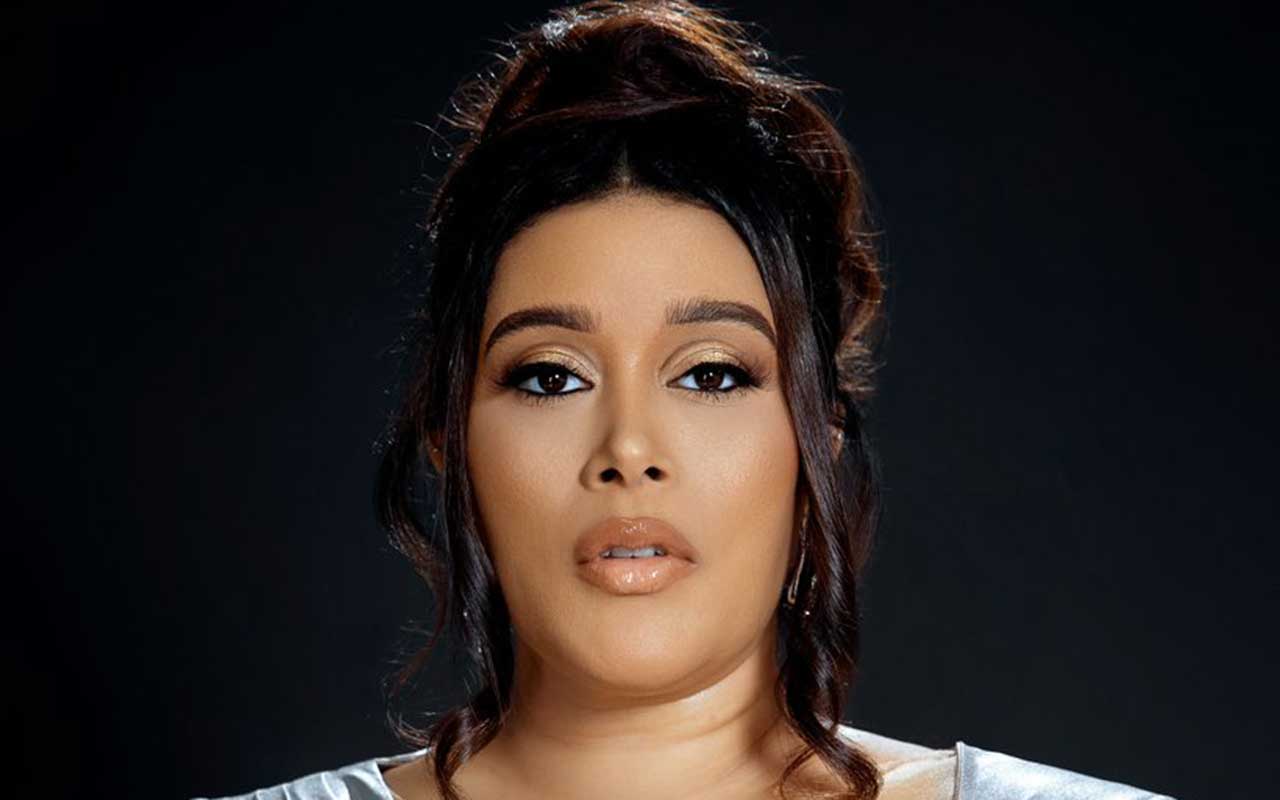
Adunni Ade Reveals Christian Fans Unfollowed Her After Publicly Identifying as Muslim
Nollywood actress Adunni Ade has opened up about the reaction she received after publicly identifying as a Muslim, revealing that some of her Christian fans unfollowed her because of her religious identity.
The actress said she initially found it difficult to openly discuss her faith because of what she described as the pressures associated with being a public figure in the Nollywood industry.
According to Ade, publicly identifying as a Muslim within the Nigerian film industry can be difficult, and she described the situation as “almost forbidden” based on her personal experience.
She explained that she eventually became tired of keeping her religious identity private and decided to be open about her faith.
Ade said the decision came with consequences, including losing some followers and receiving messages from people who questioned her choice.
“Some people unfollowed me. I got DMs from people trying to cast out spirits. Some people prayed for me,” she said while discussing her experience.
However, the actress added that she also received considerable support from Muslims, many of whom welcomed her more warmly after she publicly acknowledged her faith.
READ ALSO:
- Raphinha Runs Riot as Barcelona Thrash Racing Santander 7-2
- 2027: Sowore Rejects Utomi’s Coalition Talks, Says AAC Won’t Join Opposition Alliance
- Sani Abacha’s Son Emerges Kano PDP Governorship Candidate for 2027
Ade stressed that her decision to practise Islam should not be interpreted as an attack on Christianity or Christians.
She said she had experienced both Christian and Muslim religious environments and was not suggesting that Christianity was a bad religion. Rather, she explained that Islam was the faith that worked for her personally.
The actress’ comments have renewed attention on her long-standing and publicly discussed religious journey, which has included experiences with both Christianity and Islam.
Ade had previously spoken about her faith in 2020, explaining that she was born and raised Muslim but grew up in a family where different religious traditions were represented.
She said her father allowed his children to choose their preferred religion, while members of her extended family included both Christians and Muslims.
The actress also disclosed that she attended different Christian churches, including Mountain of Fire and Miracles Ministries (MFM), Redeemed Christian Church of God (RCCG), Christ Living Apostolic Ministry (CLAM) and Christ Apostolic Church (CAC).
Ade said she later returned to Islam on December 31, 2016, after reflecting on her religious identity and concerns about how people might react to her decision.
She said at the time that returning to Islam made her feel happier and more fulfilled.
Her religious identity also came under renewed public discussion in 2026 after she was seen attending an event at a Celestial Church of Christ in Lagos.
Following questions from social media users about whether she had returned to Christianity, Ade clarified that she remained a practising Muslim.
She explained that her presence at the church-related event was connected to her professional relationship with the celebrant and was not evidence of a change in her religion.
Ade’s latest comments therefore provide further context to a faith journey she has discussed publicly over several years.
While describing her experience as difficult at times, she maintained that her decision to openly identify as a Muslim was ultimately a personal one.
Her statement that being openly Muslim in Nollywood is “almost forbidden” reflects her personal experience and perception; it should not be taken as evidence of a formal industry-wide rule restricting actors from publicly identifying with a particular religion.
The actress’ disclosure has also highlighted the wider challenges public figures can face when personal beliefs become subjects of public discussion, particularly in an industry where celebrities often maintain diverse fan bases with different religious and cultural backgrounds.
Adunni Ade Reveals Christian Fans Unfollowed Her After Publicly Identifying as Muslim
News
FG Targets 95% NIN Coverage by December 2026
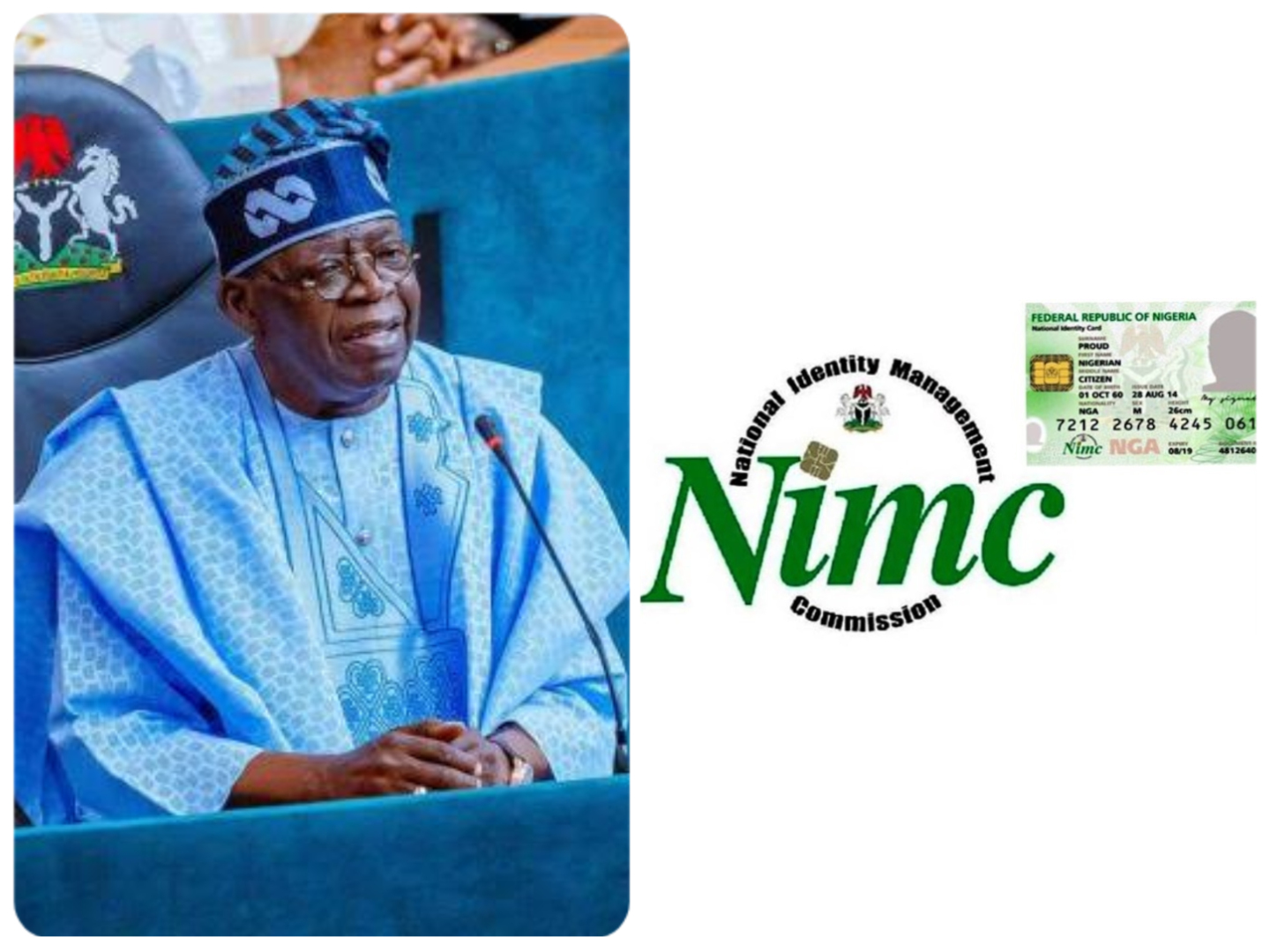
FG Targets 95% NIN Coverage by December 2026
The Federal Government is targeting 95 per cent National Identification Number (NIN) coverage nationwide by December 2026 as it expands Nigeria’s digital identity system.
President Bola Tinubu announced the target during the 2026 National Identity Day celebration in Abuja, where he was represented by Chief of Staff Femi Gbajabiamila.
The President said NIN enrolment had risen to about 142 million, up from more than 80 million recorded when his administration came into office.
To reach the new target, the government plans to expand registration through ward-level enrolment, mobile registration initiatives and licensed agents. Reports from the event said free enrolment is being extended to all 8,809 wards across the country.
Identity System for Digital Economy
Tinubu said the government wants to build an identity infrastructure that can support Nigeria’s growing digital economy.
He said a secure national identity could make it easier to access services while supporting areas such as digital banking, healthcare, transportation and government programmes.
The President also said the expansion must go hand in hand with safeguards for citizens’ privacy and dignity.
Beyond enrolment numbers, he said the government was working towards a more connected digital public system, including electronic health records, e-transport services and a more coordinated national data architecture.
The NIMC’s ongoing expansion therefore aims not only to register more Nigerians and legal residents, but also to make the identity system a key part of how people access digital and public services.
FG Targets 95% NIN Coverage by December 2026
Education
25 Universities, Teaching Hospitals Get Solar Power Under REA Programme

25 Universities, Teaching Hospitals Get Solar Power Under REA Programme
Twenty-five federal tertiary institutions have been connected to solar electricity under the Rural Electrification Agency’s (REA) Energizing Education Programme.
The REA Managing Director, Abba Aliyu, disclosed this during the commissioning of a 3MW captive solar hybrid power project at Yakubu Gowon University, Abuja.
According to Aliyu, the programme covers 22 federal universities and three affiliated teaching hospitals and has deployed more than 100MW of clean energy.
He said the initiative now benefits over 300,000 students and 50,000 academic and administrative staff.
Aliyu added that the new 3MW facility would power key university facilities, including lecture halls, laboratories, ICT systems, administrative buildings and campus lighting.
Meanwhile, Minister of Power Joseph O. Tegbe said reliable electricity was essential to supporting teaching, research, healthcare and digital services in universities.
He stressed that the long-term performance of the solar projects would be more important than their commissioning.
Vice-Chancellor of Yakubu Gowon University, Prof. Hakeem Babatunde Fawehinmi, also said dependable electricity was critical to the institution’s academic and research activities.
25 Universities, Teaching Hospitals Get Solar Power Under REA Programme
-

 Politics3 days ago
2027: Northern Lecturers Back Tinubu, ASUU Disowns Endorsement
-

 metro3 days ago
Police Arrest Mother Over Alleged Brutal Abuse of 7-Year-Old Girl in Anambra
-

 Sports2 days ago
‘I Was Never the Chosen One’ — Dembele Responds to Mbappe
-

 International1 day ago
Islamic Council Condemns Attempted Attack on Holy City of Mecca
-

 metro2 days ago
Lagos Power Outage: Ikeja Electric Blames TCN as Businesses, Homes Groan
-

 Education2 days ago
JAMB Moves 2027 UTME Time — Here’s What Candidates Need To Know
-
 News1 day ago
Keep Politics Out of My Office — Ogbomoso Grand Chief Imam Warns Politicians, Bloggers
-
 Politics2 days ago
2027: APC Governors Reject Wike’s Rainbow Coalition, Insist on Party Loyalty