
Education
ASUU strike: ‘Additional N560bn needed to pay varsity teachers’

Additional N560 billion may be needed by the Federal Government to meet university teachers’ demand for increased annual pay, a top government source has said.
The government is said to spend N372 billion annually on university education alone, including lecturers’ salaries.
Based on talks with the Academic Staff Union of Universities (ASUU), a professor could earn, at least, N2 million monthly.
The Nation reported on Wednesday that the government offered about N1 million monthly salary for a professor, which is a 100 per cent rise.
President Muhammadu Buhari on Tuesday moved to break the ice by personally meeting with the leadership of ASUU, the Senior Staff Association of Nigerian University (SSANU), the National Association of Applied Academic Technologists, NAAT and the National Association of Non-Academics of Educational Institutions Staff Union (NASU)
At the end of the meeting, which was attended by representatives of relevant government ministries and agencies, Buhari directed Education Minister Adamu Adamu to end the strike within two weeks.
The government had at the parley cited dwindling oil revenue as a major hindrance to its inability to meet demands by ASUU, SSANU, NAAT and NASU.
Investigation by The Nation revealed yesterday that based on Buhari’s directive of Buhari, Finance and National Planning Minister Zainab Ahmed, Adamu, the Budget Office and National Wages and Salaries Commission and other agencies have been working on the modalities to meet the unions’ demands without much shock on the economy.
READ ALSO:
- INEC battles 334 pre-election cases, to publish gov candidates’ particulars today
- Joe Biden Tests Positive for COVID-19, Shows Mild Symptoms
- 2023: Court okays suit seeking Tinubu’s trial over alleged perjury
A source said while the government acceded to agitations for a pay rise and release of revitalisation funds to universities, it was also weighing other options.
One of the options, according to him, is to lay the cards on the table for the unions to appreciate and bear with the government.
The source said: “Presently, the government is spending N372 billion annually on university education alone, including lecturers’ salaries. The government also spends billions on polytechnics and colleges of education.
“If ASUU insists on N2 million per month for a professor, the Federal Government will have to cough out an additional N560 billion to be able to meet the expectations of ASUU.
“There is no way the economy can accommodate such an increase. The government and the lecturers have to sit down to face the reality and design a middle course approach to end the strike.”
On revitalisation funds, a source said the Buhari administration has been paying them “in a gradual manner.”
His words: “The agreement ASUU reached with the government of ex-President Goodluck Jonathan was in respect of N1.3trillion Revitalisation Funds. But in line with the economic situation, the Buhari administration reached understanding to release the first tranche of N220 billion. We have paid up to 70 per cent since 2016.
“From March to August last year, we paid about N92.7billion to varsities apart from a consequential adjustment of minimum wage in universities which resulted in 10 per cent pay rise from 2019.
“The differential from the adjustment was paid to university teachers in May this year despite the fact that they are on strike. The universities got an additional N27 billion.
“The polytechnics and Colleges of Education got N4.5 billion and N5.5billion respectively. The Buhari administration has done a lot for the university system but ASUU does not reckon with the best offered its members.
The source also dismissed the comparison of Nigeria’s university pay structure with Rwanda, Ghana, South Africa and Uganda.
He said: “Even at the renegotiation table on Federal /ASUU 2009 Agreement, the National Universities Commission’s recommendation was rejected.
“How many universities are in these African countries? What is the population of their lecturers? We have a peculiar situation with peculiar problems.
“The renegotiation talks were stalled because ASUU does not want to be guided by the technical advisers from the Federal Ministry of Finance and National Planning and Budget Office.
“They drove away experienced directors from the Office of the Head of the Civil Service of the Federation and the National Salaries and Wages Commission.
“Instead, they are hanging on to the report of Prof. Nimi Briggs Renegotiation Committee on the 2009 Agreement. The committee even offered professors additional steps from Step 10 to 13.”







Education
Jigawa Arrests Seven Teachers for Cheating During Competency Test

Jigawa Arrests Seven Teachers for Cheating During Competency Test
The Jigawa State Government has arrested seven teachers for allegedly engaging in examination malpractice during a large-scale teacher competency assessment involving over 8,400 educators. The arrests are part of the state’s ongoing efforts to improve accountability, professionalism, and learning outcomes in public schools.
The assessment, conducted by the Jigawa State Universal Basic Education Board (SUBEB), is described as a Teacher Training Needs Assessment, aimed at identifying gaps in teachers’ knowledge and skills to inform targeted training programs.
Chairman of SUBEB, Haruna Musa, confirmed that the affected teachers have been handed over to the police for investigation, emphasizing that the exercise is more than a routine test. “This assessment is not just about testing knowledge; it is about restoring integrity and professionalism in our schools,” he said.
READ ALSO:
- US-Iran Conflict: MAN Outlines Urgent Steps to Shield Nigerian Manufacturers
- Bandits Kill Two Abducted Women in Kaduna After Ransom Payment
- 2027: Atiku Signs $1.2m US Lobbying Deal to Engage Trump
Musa noted that examination malpractice, whether by teachers or students, undermines the credibility of the education sector and would not be tolerated. He also warned against absenteeism and involvement in partisan politics during school hours.
According to officials, the arrests are intended to serve as a deterrent to others and reinforce the government’s commitment to enforcing discipline and ethical conduct in schools. The arrested teachers are currently in police custody, and investigations are ongoing to determine whether additional personnel were involved.
Education experts have described the crackdown as a critical step toward safeguarding learning standards, emphasizing that teacher integrity directly impacts student achievement and the overall quality of education.
The Jigawa competency test reflects the state government’s determination to ensure that only qualified and competent personnel remain in the public education system, highlighting broader efforts to improve educational outcomes and accountability across Nigeria.
Jigawa Arrests Seven Teachers for Cheating During Competency Test
Education
JAMB Debunks 2026 UTME Postponement Rumour, Issues Fraud Warning
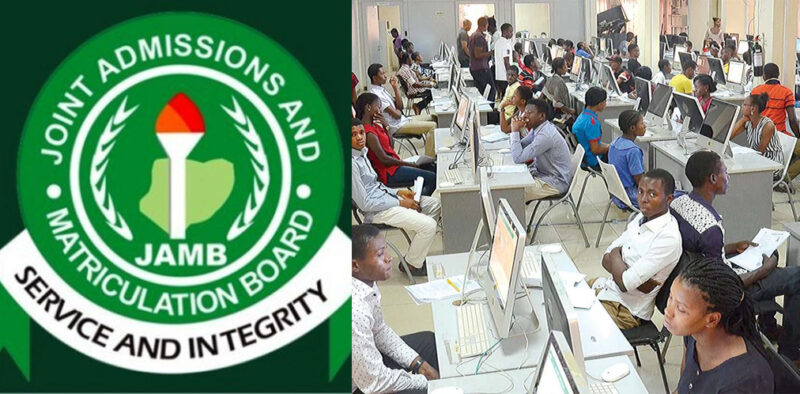
JAMB Debunks 2026 UTME Postponement Rumour, Issues Fraud Warning
The Joint Admissions and Matriculation Board (JAMB) has dismissed reports claiming that the 2026 Unified Tertiary Matriculation Examination (UTME) has been postponed, describing the circulating notice as fake, malicious, and misleading.
In a statement released on Saturday, the board urged candidates to disregard the false information, stressing that it did not originate from JAMB and should not be taken seriously.
“Our attention has been drawn to the malicious press release stating that the 2026 UTME has been postponed. The general public, particularly candidates, are hereby informed that the press release is fake and did not emanate from us. Kindly disregard it. All activities on the 2026 UTME continue as scheduled,” the board stated.
READ ALSO:
- Gunmen Kill Three in Jos Community Hours After Tinubu Visit
- Amnesty International Condemns Wike Over ‘Violent Remark’ Against Journalist
- Pastor Found Dead in Guest House After Night Out With Married Female Church Member
JAMB reaffirmed that the 2026 UTME exam dates remain unchanged, with the nationwide examination set to hold from April 16 to April 25, 2026 at accredited Computer-Based Test (CBT) centres.
The clarification comes after the 2026 UTME mock examination held on March 28 experienced technical issues in several CBT centres, which led to confusion and speculation about a possible postponement. According to JAMB, 224,597 candidates registered for the mock exam, while 152,586 successfully sat for the test across 989 CBT centres nationwide. The board disclosed that over 20 CBT centres have been delisted due to technical failures, as part of efforts to ensure a smooth and credible main examination. JAMB assured candidates that lessons from the mock exercise would be used to improve system performance and prevent disruptions during the main UTME.
The board also raised concerns over fraudulent messages circulating online, especially on WhatsApp, where individuals falsely claim they can boost or manipulate UTME scores. JAMB warned that such claims are criminal and deceptive, stressing that any candidate found engaging in such activities risks disqualification, cancellation of registration, or withholding of results.
JAMB advised candidates to rely only on official updates from the board and avoid spreading or believing unverified information that could cause panic. The examination body reiterated its commitment to delivering a credible, transparent, and technology-driven UTME, urging candidates to remain focused as the examination approaches.
JAMB Debunks 2026 UTME Postponement Rumour, Issues Fraud Warning
Education
Ghana Sweeps Top Three Positions in 2025 WASSCE, Outshining Nigeria, Others
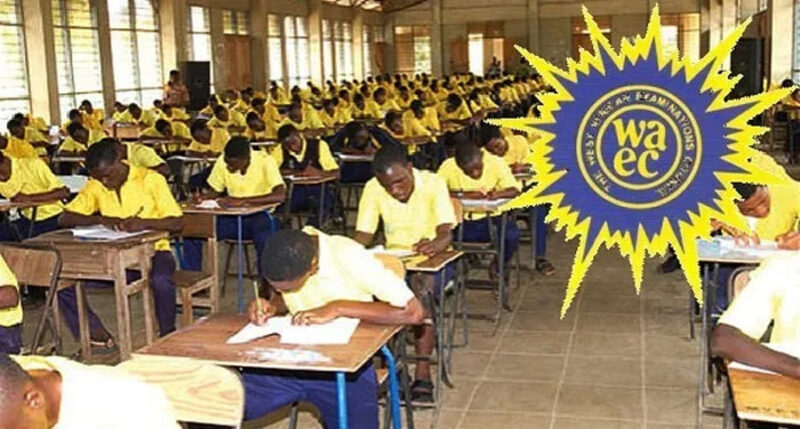
Ghana Sweeps Top Three Positions in 2025 WASSCE, Outshining Nigeria, Others
Ghanaian students have once again demonstrated outstanding academic excellence in the 2025 West African Senior School Certificate Examination (WASSCE) for School Candidates, claiming the top three ranks across the five participating countries. The achievement was highlighted during the 74th Annual Council Meeting of the West African Examinations Council (WAEC), held from March 24 to 28, 2026, in Accra, Ghana.
Out of 2,612,830 candidates from Ghana, Nigeria, The Gambia, Liberia, and Sierra Leone, three students from Ghana recorded the highest cumulative scores, confirming the country’s leading position in regional education.
Miss Huda Suglo Suleman emerged as the overall best candidate in West Africa, also receiving the prestigious Augustus Bandele Oyediran Award for her top performance. She was closely followed by Miss Paula Adzo Elinam Sowu in second place and Miss Matthea Aba Andoh in third.
READ ALSO:
- Tinubu Approves 1,000 Forest Guards, Orders 5,000 CCTV Cameras to Boost Security in Plateau
- EFCC Seeks Permanent Forfeiture of 57 Properties Linked to Ex‑AGF Malami
- Heavy Security Deployed at INEC Headquarters Abuja Amid Planned ADC Protest
Ghana’s Vice President, Jane Opoku-Agyemang, representing President John Dramani Mahama, praised WAEC for its 74 years of promoting educational standards and regional cooperation. However, she and other officials raised concerns about the rise in examination malpractice, which they warned could undermine the credibility of the council’s work.
During the meeting, Professor Ernest K. Davis, Ghana’s Chief Government Nominee, was elected Vice Chairman of WAEC for a one-year term, succeeding Liberia’s Amos Armah Fully. The council also honored Professor William Asomaning as a Distinguished Friend of the Council for his contributions to education in the region.
The Ghana Minister of Education, Haruna Iddrisu, represented by Deputy Minister Dr. Clement Apaak, emphasized the role of WASSCE in building intellectual and practical skills for national development. He also confirmed Ghana’s return to the international WASSCE starting from the 2026 examination cycle.
The 2025 WASSCE results underscore Ghana’s dominance in regional academic performance, setting a benchmark for other countries, including Nigeria, which aims to improve its own outcomes in future exams. The 75th WAEC Annual Council Meeting is scheduled to be hosted by Nigeria in March 2027, continuing the rotational tradition among member states.
Ghana Sweeps Top Three Positions in 2025 WASSCE, Outshining Nigeria, Others

-

 Health3 days ago
Men Encouraged to Ejaculate More to Reduce Prostate Cancer Risk
-
 Politics3 days ago
Adeleke’s Aide Anisu Resigns, Defects to APC
-
 metro20 hours ago
MURIC Backs Egba Imams’ Call for Inclusive Leadership in Ogun 2027 Governorship Race
-

 Entertainment3 days ago
Nollywood Actress Laide Bakare Sets Strict Dating Rules: No Men in Her Home
-

 International2 days ago
Netanyahu Condemns ‘Christian Persecution’ in Nigeria in Easter Message
-

 Education3 days ago
JAMB Debunks 2026 UTME Postponement Rumour, Issues Fraud Warning
-

 metro3 days ago
Autopsy Confirms Destiny Boy Died from Toxic Substances
-
 Politics2 days ago
ADC Crisis Halts Makinde, Bala, Lawmakers’ Defections